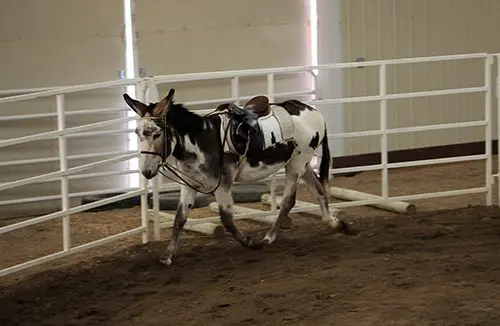
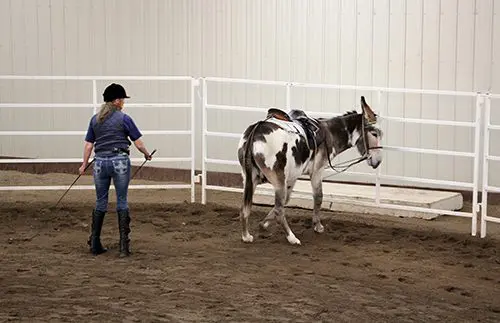
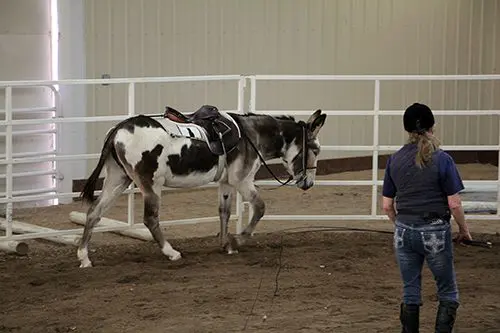
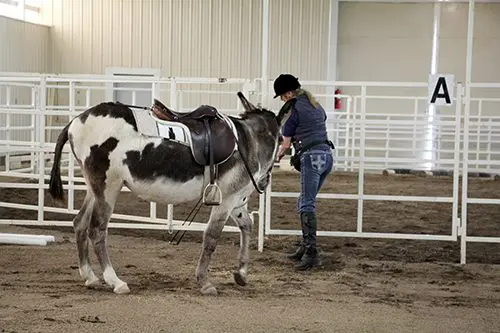
LTR Training Tip #76: Canter Under Saddle in the Open Arena
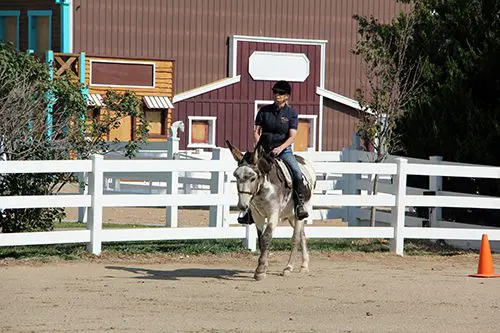
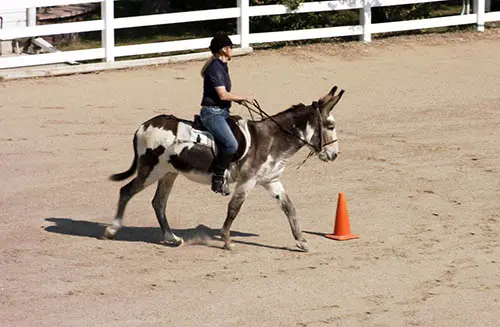
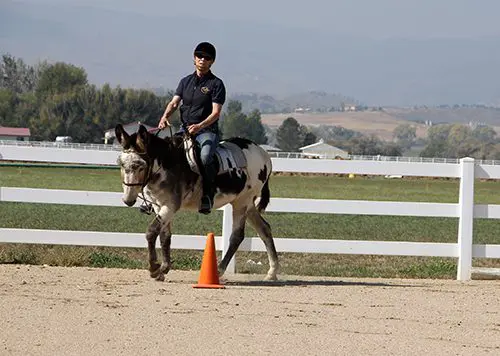
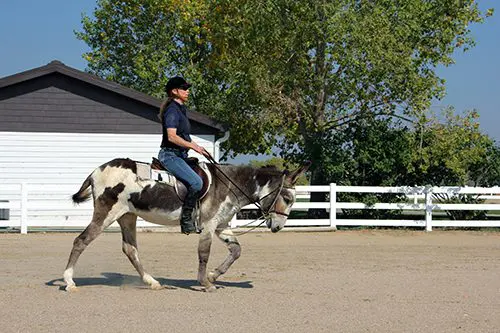
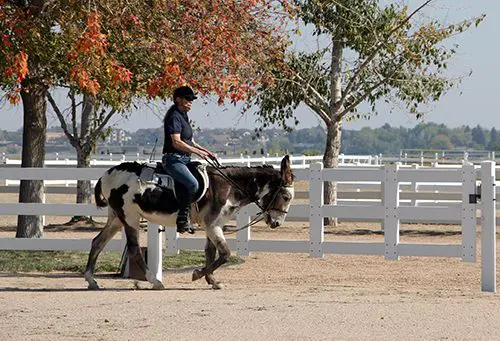
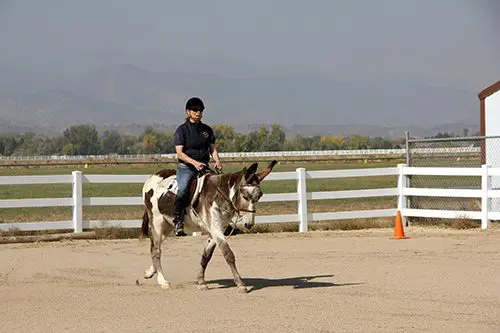
Starting your equine at canter in an open arena requires a systematic and simple approach to sustain good balance and posture.
Chasity continues to improve. We have cut the size of her obese, cresty neck by 70%. Her back is finally elevated. The spinal and abdominal muscles are much better conditioned and support her good posture. She has come a long way. She is submissive to the “Elbow Pull” and ready to begin her combination exercises in Lunging and Ground Driving. Chasity is happy that she gets to do these exercises with her “boyfriend,” Wrangler! He is her inspiration. They are so funny together!
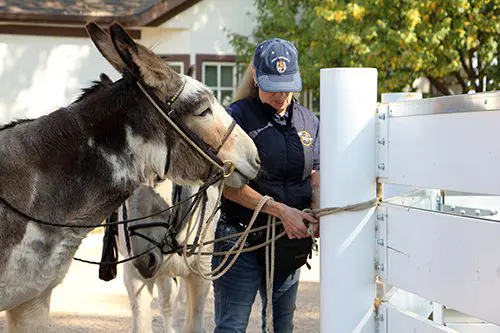
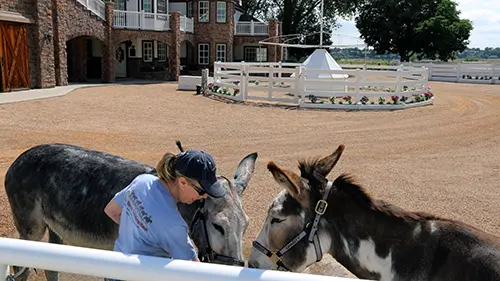
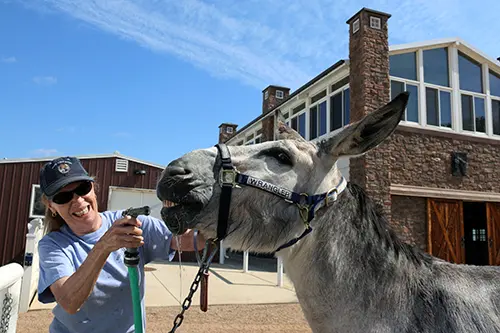
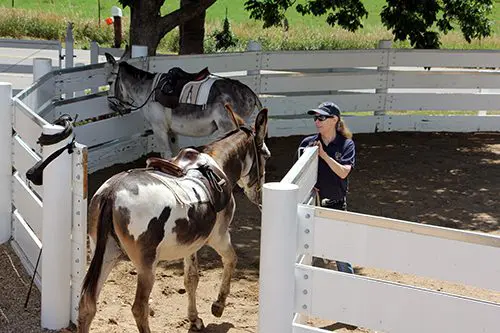
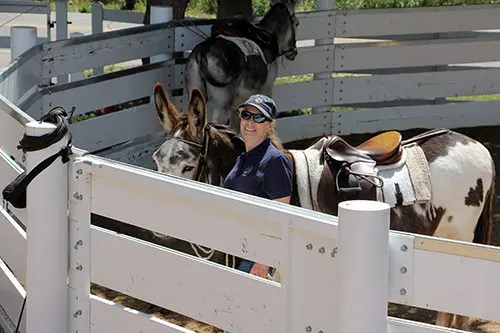
Chasity executes the gate perfectly and then stops to pose for a picture with me. Then we adjust her “Elbow Pull” and make sure she flexes at the poll to submit. This self-correcting restraint will provide resistance if she tries to carry her head too high which would result in hollowing her neck and back, and thus, compromising her good equine posture.
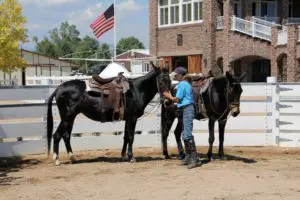
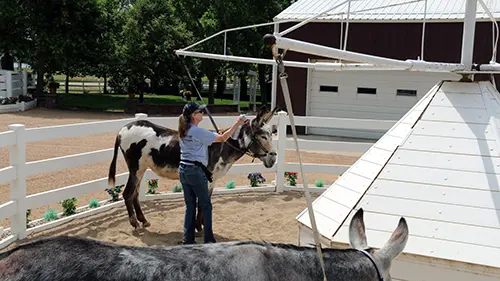
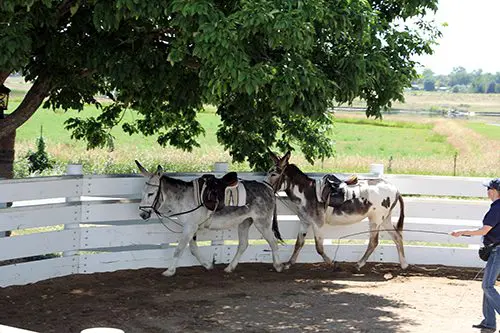
Once everything is adjusted on Chasity and Wrangler, we pose for a picture. Then they both go obediently to the rail and begin work at the walk. I have added the reins to Wrangler’s bridle to keep him from carrying his head too low. That is not an issue with Chasity. It is not usually a problem with with Wrangler either, but it is in the nineties today and very hot. Wrangler gets very lazy in the heat!
They are both stepping out nicely and exhibiting a pretty fair “working walk.” After five rotations at the walk, I ask for the trot. They are both stepping well underneath their centers of gravity and Chasity is submitting to the pressure from the “Elbow Pull.” This means she is in better equine posture with improving self-carriage.
After five rotations at the trot, I ask them for a halt and they are prompt in their response. They are rewarded and then proceed forward and after one rotation, I ask them to reverse. It is the best reverse yet!
I am so proud of Chasity! She is really holding her good posture nicely for prolonged periods of time now, even at the trot!
Chasity is gaining a lot of core strength and power to her gaits. The halts are mostly square on the landing and do not need to be corrected. Chasity is finally learning to use her hindquarters properly and she is no longer getting locked up in the right hip joint. It is now adequately supported symmetrically by the core elements: muscles, tendons, ligaments and soft tissue. Her joints operate correctly and will not wear irregularly.
After five rotations at walk and then trot in the opposite direction, Chasity was finally ready for her first Ground Driving lesson! When asked, she walked off nicely.
I had Ground Driven Wrangler first, so Chasity got to see what this was all about. She submitted softly to the lines and remained “on the bit” as we walked along. She turned easily when asked to do the “S” turn through the middle of the Round Pen.
But suddenly, we had a “Donkey Moment” when she abruptly bolted toward Wrangler! I let the lines slide through my hands, hoping she would slow down…but she didn’t! I dug my heels into the ground to try to stop her, holding the lines with just one hand so I wouldn’t lose my balance. Wrangler just dropped in behind her at the walk.
Chasity was at a fast trot around Wrangler when he decided to help me by leaning his body into the lines. This put more pressure on her bit and helped me to get her slowed down…Thanks, Wrangler!!!
Once she had slowed down, Wrangler moved away and allowed me to turn her into the rail and ask for a reverse to the right. Chasity calmed down immediately and decided to comply with my wishes… thankfully!
Chasity was still full of energy, but submitted to the pressure on the lines as I walked behind her in sync with her hind legs. I slowly crept back up the lines with my hands and got a bit closer to her hindquarters
Then I asked Chasity for the halt and a few steps of the reinback…not too many steps at first. I rewarded her efforts with a handful of crimped oats. Her first time on the drive lines had gone very well indeed… even WITH the “Donkey Moment!” It’s always good to keep your sense of humor when working with donkeys and be ready to be VERY patient! Donkeys need to process things THEIR WAY!
The Hourglass Pattern helps your equine to build good postural balance and core strength with symmetrical muscle development.
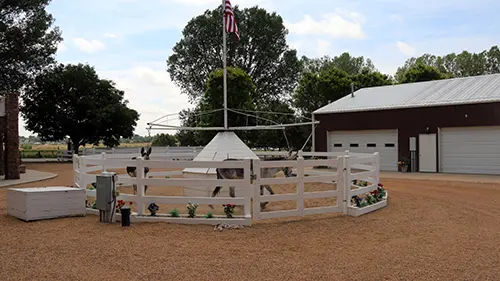
It was a rainy day, so I decided to have Chasity and Wrangler’s workout take place in the indoor arena Round Pen. I had not planned to film this workout, but since the Round Pen was a lot further from the Tack Barn than my outdoor Round Pen, I decided to take my chances and try to lead Chasity and Wrangler together! I thought that would be film-worthy for sure. Those of you that have tried to lead ONE donkey around puddles in the road and other such “scary things” know that you cannot count on their compliance. All you can do is HOPE for it! As it turned out, Chasity and Wrangler were very good all the way to the Round Pen, but there were still surprises to come!
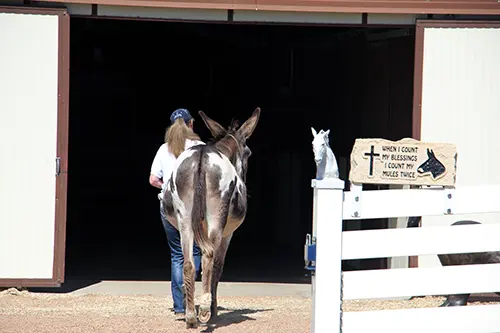
They both stood quietly while I unlatched the gate as they had done dozens of times before, then waited patiently as I opened it.
They executed the gate perfectly together. This is a testament to my belief that when these kinds of movements are consistently done exactly the same way, it eliminates confusion and promotes compliance. They happily received their rewards of crimped oats from my fanny pack.
I then tied Wrangler to the fence with the “Elbow Pull” where he would wait while I adjusted Chasity’s “Elbow Pull.” Chasity checked out the new work space.
First I adjusted Chasity’s “Elbow Pull” and then I adjusted Wrangler’s to keep them from raising their heads too high and inverting their neck and back.
They both walked casually with no pressure from the “Elbow Pull” at all. When asked to trot, Chasity was “up against” the “Elbow Pull” at first, but was still stepping well underneath her body and striking her hind feet directly under the center of balance.
It was after the reverse that I discovered that Chasity was in heat and Wrangler decided he would like to mount her! So, I deliberately and quietly took him from the Round Pen and tied him up outside the fence. Chasity resumed her workout alone. She did lovely at the walk and kept the “Elbow Pull” loose, even throughout the reverse!
When I finally asked for trot, she was hot to trot! Chasity was definitely improving her ability to maintain her self-carriage and good posture. When the “Elbow Pull” is properly adjusted, it will encourage each individual equine’s BEST posture. It should NOT force their head down.
When asked to “Whoa,” Chasity happily complied and then turned to me for her next command. I asked for the “Reverse” and she was prompt in her response.
Then Chasity resumed her calm forward motion at the working walk, maintaining a loose “Elbow Pull.”She has made marked improvement in just 4 short weeks of Round Pen work after 3 months of leading for core strength and balance in the “Hourglass Pattern.”
When I asked for trot, she showed me she was a bit tired and was back up against the “Elbow Pull,” but she was still tracking well underneath her body and holding an acceptable posture.
When my female equines are in heat, I lighten the pressure on them and quit when I see they are tiring. This keeps them from getting “grumpy” and helps them to maintain a happy attitude toward me and the training.
Chasity and I exited the Round Pen in perfect form and then went to get Wrangler. Building a good relationship with your equine makes EVERYTHING easier!
Wrangler was standing sideways to the fence, but moved over promptly upon command. I wanted him on my right. He was still mesmerized by Chasity in heat, but he was still a gentleman and complied with my wishes! I love it when they behave so well!
Chasity flirted with Wrangler and he reciprocated while I untied his “Elbow Pull” and released him. Then we all marched together to the Tack Barn where they were untacked, then returned to the barn yard for turnout and more intense flirtation! Love was in the air!
TRAINING MULES AND DONKEYS
CHAPTER 28
Fine-Tuning the Aids
By Meredith Hodges
As you attempted the exercises in balance by riding without the aid of your reins, you probably discovered a lot more shifting of your own balance than you imagined. This nearly imperceptible shift of balance, however, can grossly affect the balance of your mule. Until now, I have always given you a visual point of reference by allowing you to glance down at the outside front leg. Now you will want to be more inwardly conscious of your own body position.
You need to repeat many of the old exercises to cultivate this kind of sensitivity. This time, close your eyes for brief periods to get the “feel” of each movement in your own body. Do not simply allow your mule to travel freely in any direction, because this
will not give you an accurate feeling for any specific task—you must plan your course of action. If, for instance, you set up your mule to bend through and impulse out of the corner, you can close your eyes for a few seconds down the long side and feel the balance that comes out of that corner when the movement is executed correctly. In this particular situation, once you’ve closed your eyes, you may notice that your animal is starting to leans lightly to the inside. A squeeze/release from your inside leg, sending your mule forward and into the outside rein, corrects the balance and keeps him going straight down the long side.
Your seat bones are closest to your body’s center of gravity, making them the best sensors for balance. “Feel” the weight shift from one seat bone to the other through turns and circles, and then even out as you ride straight lines and diagonals. You will soon discover that, in order to do a circle in better balance, you must have slightly more weight on the outside seat bone. This situates your weight over the outside hind leg, which is the impulsion leg. Putting the weight over the outside hind leg clears the mule’s shoulders, allowing freer movement in front. If you ride on your inside seat bone, the weight begins to fall to the inside of the circle and puts pressure on the shoulder, inhibiting the upright, forward balance and this will put your mule on the forehand instead of engaging the hind quarters.
Remember to plan your course of action and use your half-halts between changes of direction and transitions from one gait to another. You cannot expect your mule to maintain his balance when he is constantly being surprised with changes of direction or gait. Use your eyes correctly to enhance your balance and to help you more realistically plan your course. Teach yourself to be accurate with your eyes—look well ahead at all times and try to stay exactly on the lines and the arcs of your circles. When you plan a circle, look halfway around your circle so you can plan the arc more accurately, and then you can make the next half of the circle the same as the first half to complete your circle with minimal trouble. Keep your eyes on a visual horizontal line that runs parallel to the ground. Remember—you have two eyes, and any movement as slight as a tip of your head to one side or the other can affect the upright balance of your mule. Dropping your eyes to the ground shifts your mule’s balance forward and onto his shoulders, again interrupting his balance.
Do small circles, but only as small as your mule can handle without losing his balance. Once he can easily maintain his balance without interruption, you can begin to decrease the size of the circles. Keep movements planned and large. This will give your mule plenty of response time through planned movements and will allow you to ride and correct the balance with more ease. If, for some reason, your mule loses his balance, falls out or rushes, stop him by using even pressure on both reins, with a squeeze/release action. Back him up slowly and deliberately remembering to walk backward with your seat and legs, one step at a time, and then calmly go back and try to repeat the movement. If he makes the same mistake a second time, halt, back up and then walk through the area that is giving you the problem. Resume trotting or cantering when he complies. When you approach that area again, slow him down again, go through and resume your plan.
If he “ducks out” with you and begins to run, keep your connection on the rein that he has pulled as best as you can, and try to stop him by pulling on both reins together with a light squeeze/release action. Try to verbally calm him, and when he finally stops, praise him for stopping. Then, turn him with the rein that he has just pulled out of your hand, and return him to the task. Do not try to pull him around with the other rein, because this will cause him to lose his balance and will frighten him even more. If he is praised for stopping, he will not be afraid to stop. If he’s punished for running, he may never want to stop.
The main goal is to cultivate a mule that is moving calmly between your two hands and your two legs and responsive to changes in your aids—to your seat, to your legs and to your hands. If you keep your eyes focused ahead and your hands and legs evenly balanced over your seat bones, you can strongly affect your mule’s vertical balance. Your correct and repetitive use of the aids will eventually allow your mule to become lighter in the bridle and more responsive. In addition, his muscles will begin to be properly conditioned. An animal that is restrained and forced will develop muscles incorrectly. In turn, this will cause him stiffness through many movements. Most commonly, you see a slight “U” in the base of the neck in front of the withers. This is caused by stiffness in the poll from riding from front to back, rather than from back to front. Actually, the stiffness will transmit to other parts of the body and can cause chronic soreness, but the most obvious signs show in the neck and poll. Incorrect development of the muscles will undoubtedly inhibit your mule’s best performance.
I ride my equines diagonally through the aids to get the best lateral and vertical response. I want to maintain a good forward movement, which means that the impulsion must come from the hindquarters and from the push forward. Think of your hands and legs as four corners of a box that contains your mule. If you push forward on one side at a time from, say, left leg to your left hand, it leaves the other whole side of the animal unchecked, and he will proceed forward with a tendency to drift into the “open” side. This is why you have to ride alternately and diagonally from the left leg to the right hand and from the right leg to the left hand. It is why you ride from back to front, leg to hand, in a diagonal fashion—it pushes your mule from the outside leg forward into a straight and balanced inside rein, and from the supportive inside leg to the outside rein—he remains upright on the arcs and sufficiently bent. The wider the space between your legs and between your hands, the more lateral “play” you will feel in your mule. If you keep your hands close together and your legs snugly around his barrel, there is a lot less lateral “play” and a great deal more accuracy when doing your patterns. Think of your legs and hands creating a “train track” with rails between which your mule must move. The wider the space between your hands and legs, the more “snakier” his movements will become.
But what if he will not turn without you really pulling on the inside rein? He will turn if you do it correctly. Remember: It doesn’t matter how far you turn his head to the side. His head is not attached to the ground and he will only go where his legs go. You will be helpful to your mule and correct if you always try to keep his head and neck straight, in front of his shoulders. When you wish to turn, give a slight half-halt to slow for the turn. Be sure to support your mule with your legs as you do this—the inside leg should become stronger with each squeeze and give with each release. Keep your outside rein slightly checked back compared to your inside rein (which pulls and releases), and hold your hand in close to the withers on the outside. Do not check too hard or your mule will turn out instead of around the circle. Take your inside rein away from the withers a little to encourage the turn, but be careful not to take it any farther than necessary, because this will disconnect your mule’s hindquarters from his shoulders. As you repeatedly do this exercise, your mule will learn to bend his body through his rib cage, and not just his head and neck, to the arc of the circle. If necessary, you can counter bend his head and neck to move the shoulders onto the arc of the circle, but do not counter bend too much or you will get a turn instead.
The finer you tune your own aids, the lighter and more responsive your mule will become. To summarize: Plan your course of action; in the beginning, keep movements large and flowing; keep your eyes looking ahead; and keep your aids even and close in, employ the aids laterally, while being strong and encouraging from back to front, vertically. Do not be too concerned about where your mule’s nose is if his body is correct. As he becomes more confident, fit and relaxed, and as your aids become more correct, his head and neck will drop into the improved posture of their own accord. If you try to set the head and neck on the vertical before the body has been conditioned to balance and round, you will produce an animal with a hollow back and a lot of vertical and lateral stiffness. This will prevent him to correctly respond to your aids even if he wants to, because he will be physically unable to do so. It may take a little longer to correctly condition both your body and his, but the result is a sound, cooperative animal, possessing the mental and physical qualities necessary for the best performance upon your request. You may even experience the surprise of good posture, balance and strength in your own body, as well.
To learn more about Meredith Hodges and her comprehensive all-breed equine training program, visit LuckyThreeRanch.com, MEREDITH HODGES PUBLIC FIGURE Facebook page, or call 1-800-816-7566. Check out her children’s website at JasperTheMule.com. Also, find Meredith on Pinterest, Instagram, MeWe, YouTube and Twitter.
Covered in TRAINING MULES & DONKEY: A LOGICAL APPROACH TO TRAINING, TRAINING WITHOUT RESISTANCE, EQUUS REVISITED and A GUIDE TO RAISING & SHOWING MULES at www.luckythreeranchstore.com.
© 2024 Lucky Three Ranch, Inc. All rights reserved.

Whenever you ride, always practice the elements of good Horsemanship.
Chasity has made marked improvement in the past two weeks with her work in the Round Pen with Wrangler. They really enjoy working together and always give me their very best effort! Their bodies are really improving with the work even though their lessons are only once a week! Chasity’s infection is completely gone, her Lordosis (sway back) is no longer there and the fat on her neck crest has shrunk significantly. It will still take a very long time to get it down to where it should be. There is simply no quick way to do this that would still be healthy for her, but she has come a LONG WAY already!
Although Wrangler is still sporting some belly hair that makes his torso look thick, both donkeys are at optimum health and weight. It is June so they have not yet shed their coats completely. Still, their hair coats are healthy and soft due to their diet and weekly grooming. I use a plastic human multi-bristled hair brush with a sprinkle of Johnson’s Baby Oil in the manes and tails for hair protection and to keep them from chewing on each other’s manes and tails. The weekly grooming with the hairbrush aerates the coat and keeps the hair healthy. They can then shed all the dead hair and not just what is on top. It also prevents breakage and uneven growth. I never body clip unless they are showing and never do the insides of the ears. Their hair coats insulate them from the heat and cold, and protect them from insects when the hair is properly maintained. They will be fully shded by August and grow their winter hair in September.
Wrangler is taken to the Round Pen first and executes the gate perfectly! I always do gates exactly the same way and reward so all my equines know what to expect and can behave accordingly with no fuss.
I tie Wrangler with the “Elbow Pull” and then go to get Chasity. She also executes the gate perfectly while Wrangler waits patiently! When you do things in a way that they always know what to expect next, there is no anxiety and therefore, no need for a “Patience Pole” to teach them to stand quietly.
I then adjusted Chasity’s “Elbow Pull” such that she has plenty of slack to raise her head, but not enough to raise it so high that she inverts her neck and back. If she tires during the lesson, she can lean against it without sacrificing her good equine posture until she can regain self-carriage again. It will put pressure on the poll, bit rings, forearms and back when she leans on and will be taut (but not tight) and when she is in total self-carriage, it will remain loose. It is a similar concept as a ballet dancer using their balance bar.
We posed for a picture before I adjusted Wrangler’s “Elbow Pull.” I allow those who already have consistent self-carriage a lot more slack than I do those who are first starting out.
Wrangler is carrying his head and neck a bit low today, but I believe he is just stretching his back that probably got sore from his antics in the larger pen yesterday when he was first turned out with Chasity! Simply put, he played a bit too hard! Chasity is starting to carry her own good posture much better and is not leaning on the “Elbow Pull” as much as she did just two weeks ago!
They each took their turn and executed very nice reverses when asked…first Chasity and then Wrangler! People often have problems lunging their donkeys, but taking things slowly and in the right logical sequence seems to help a lot! I am also grateful that I have one senior donkey to help me teach the “newbie.” It saves a lot of running and encouragement with the whip. And, they enjoy working together a lot more than alone!
Chasity really has her good posture down nicely and is keeping the “Elbow Pull” loose during the five rotations at walk in each direction. This direction, she really got enthusiastically engaged at the trot and only slightly leaned on her “Elbow Pull.” I could have taken up the slack on Wrangler’s “Elbow Pull” for this trot rotation and he would have done better, but he wasn’t excessively bad so I opted no to do it.
I did one more extra lap at a good working walk and Chasity showed me her BEST posture! I am so pleased with her improvement and so is she!!! Wrangler waits patiently for his turn to go back to the work station in the Tack Barn. What great donkeys they are!
By Meredith Hodges
In Part 1 of Rock and Roll: Diary of a Rescue, we learned about the discovery and rescue of Belgian draft mules, Rock and Roll, by Meredith Hodges and her team of experts. As the pair’s rehabilitation continues, the road to recovery gets tougher. But for every health setback, there is a personality breakthrough with these courageous and now-trusting gentle giants—and always a reason to hope.
By May of 2011, both mules were beginning to bond well with me and I was able to separate them during workouts. I knew I would have to develop a strong bond with Roll in case Rock didn’t make it, and we all knew the odds were not in Rock’s favor. Being alone with me in the round pen helped Roll to concentrate on the tasks at hand. His way of going was markedly improving with each new lesson.
Both mules could now square up
properly and move in a much more balanced frame, although holding that balance was intermittent. The personality of each mule began to emerge and they became more willing to play games and to be touched and kissed about their heads. Rock was much more overt about his pleasure during the massages, and we could finally tell that they were beginning to trust us.
By mid-June, we were able to take the pads off Rock’s back feet and reset the shoes without the pads. He had grown three-eighths of an inch of sole on both hind feet and the rotation began to improve in one back foot. Both mules were feeling much better and were actually engaging in play during turnout. Next, we discovered that due to the concussion to his rear feet from improper use during driving in the past, Roll had side bones in his right hind foot. This caused him to twist that foot as it grew out between trims, so we put shoes on his back feet as well.
Rock loved our newly acquired mini donkeys and, during turnout, he would stand by their pen for the better part of the day. Here they all are on the Fourth of July, 2011.
By that time, Rock and Roll both looked magnificent! Considering the extent of Rock’s past neglect and injuries, he had gained incredible muscle tone and balance. His eyes were bright and alert, his coat was shiny and his feet were much improved (although they still exhibited a hint of chronic founder).
Roll’s fat and lumpy body had changed dramatically. Now his body was more symmetrical and balanced, and he also sported a shiny coat and balanced feet. His eyes were alert and his appearance of laziness had completely vanished.
However, by the end of July, Rock once again began to lose muscle tone over his right hip and his front feet became very sore. We thought he and Roll may have been playing too hard, which could have caused Rock to injure himself again, so we separated them into adjoining pastures during daily turnout. At night they remained in their respective stalls and runs, side by side. Custom-made boots were ordered for Rock’s front feet to help alleviate the pressure, but unfortunately we had to wait until the first of November for delivery of the boots. By the time they arrived, they were of use for only about two weeks before the weather changed. The wet snow and mud became packed in the boots, causing Rock too much pain on the dropped soles of his feet.
While Rock was on three weeks of rest during August, he developed swelling in his sheath. He was treated with an anti-inflammatory for two weeks, but the swelling didn’t go down. Since his front feet seemed better, I decided to resume his physical therapy. Although the structured movement helped the swelling go down, it migrated to the midline of his abdomen. After two weeks of hot packing the abdomen twice a day, the swelling finally disappeared. Because Rock was becoming stronger and getting up and down more often, he was beginning to develop sores on his knees, fetlocks and hocks, and “shoe boils” on his underbelly (pressure sores caused by his hooves when lying down), all of which needed to be frequently tended to.
In September, once again there was swelling on Rock’s underside midline, which also seemed to cause him to get weaker musculature in the hips. The swelling was hot-packed, and it disappeared fairly quickly this time. By mid-October, Rock was lying down for prolonged periods of time—unhealthy for an equine—so his support team of three veterinarians, two equine chiropractors, his equine masseuse and I got together to assess his condition. All 2000 plus pounds of his weight was being shifted off his three bad feet and onto his left hind leg, causing it to track behind the right front when he walked. We decided on a regimen of phenylbutazone (a non-steroidal anti-inflammatory drug), minimal exercise, plenty of rest and icing of his feet for 15-20 minutes twice daily. Things were not looking good.
No matter what was asked of him, Rock always gave it his all. We babied him through turnout, chiropractics, trims, and massage, but it finally got to the point where we could barely get his back feet off the ground to apply the hoof dressing. We decided to remove his shoes. That day, he was so weak in the hindquarters we could not replace them and couldn’t even trim the feet without running the risk of him falling down. We waited a couple of weeks before we trimmed his heels with the aid of a custom-made, six-inch equine jack stand. That seemed to help through November and part of December, but Rock still needed the Thrush Buster and Rainmaker for hoof health. He was able to tip his hind feet forward and let us have the bottoms of his feet for a few seconds at a time so the medication could be applied. Finally, he just couldn’t manage having his feet elevated at all—the pain was too great. Around this time, we noticed that the swelling had again cropped up in his midline abdomen, which led to another week of hot packing it twice a day.
After Christmas, I decided to resume a modified version of his physical therapy. Trooper that he was, he tried with all his might, but his hips were listing terribly to the left, and the first time he went over the three one-inch ground poles, he crashed into every one of them. His third time over, he grazed just one. When I put him back in his pen, he immediately laid down. I then noticed the bulging in the coronet band of his left hind foot. He was “sinking!” We immediately called the vet and he confirmed my fear. The lamina was pulling away from the hoof wall and allowing the bones to “sink” through the sole of Rock’s hoof. It wouldn’t be long before the other feet would quickly follow suit. It was clear that he was in agony and would have to be put down, so our vet came out the ranch, loaded Rock up with anti-inflammatory and pain medications and said he would be back the next afternoon.
Every day for a year, I prayed for a miracle for Rock and each time I prayed, he got better. I now wondered if God would give us yet another miracle and let him live—but it wasn’t meant to be. On December 27th, 2011, surrounded by his Lucky Three family, our beautiful Rock took his last steps. We all knew it was time for us to let him go. Rock was euthanized at home and died peacefully, with his head resting in my hands.
My vet Greg Farrand informed me that the president of Colorado State University had pulled together a team for Rock’s necropsy and the preservation of his skeleton as a teaching aid for the CSU Veterinary Sciences department.
When the necropsy came back, it showed not a single fracture of Rock’s pelvis, but rather multiple old fractures in the socket of the hip joint. The bottom of the socket was almost completely gone and there was a hole the size of a dime at the top of the socket. The head of the femur had no cartilage left and there was fibrosis and cysts full of fluid the entire length of the femur stem.
I have come to realize that our courageous and noble Rock gave us more than one miracle. He had been able to live one more year of life with a severely shattered hip joint and compromised femur. He proved that our balance and core muscle therapy can work wonders! And he lived long enough to give his half-brother, Roll, the chance to bond with people who will love and care for him for the rest of his life. Thank you and God bless you, Rock. We will miss you.
To learn more about Meredith Hodges and her comprehensive all-breed equine training program, visit LuckyThreeRanch.com, MEREDITH HODGES PUBLIC FIGURE Facebook page, or call 1-800-816-7566. Check out her children’s website at JasperTheMule.com. Also, find Meredith on Pinterest, Instagram, MeWe, YouTube and Twitter.
Covered in TRAINING MULES & DONKEY: A LOGICAL APPROACH TO TRAINING, TRAINING WITHOUT RESISTANCE, EQUUS REVISITED and A GUIDE TO RAISING & SHOWING MULES, ROCK & ROLL: DIARY OF A RESCUE 2-PT DOCUMENTARY (VOD & DVD) at www.luckythreeranchstore.com.
© 2012, 2016, 2020, 2024 Lucky Three Ranch, Inc. All Rights Reserved.
By Meredith Hodges
I first saw Rock and Roll at the National Western Stock Show in January of 2010. The two Belgian draft mules looked enormous in the 12′ X 12′ stalls in the holding area. They had been rescued from slaughter at an auction in Kiowa by my two friends, Fran and Larry Howe, owners of the Bitterroot Mule Company in Bennett, Colorado. My friends explained why they couldn’t resist trying to help the two draft mules. They were the largest mules any of us had ever seen. Roll was supposedly 16 years old at 17 1/2 hands and Rock supposedly 17 years old at 18 hands. Both mules were severely underweight. Rock had recently been treated for abscesses, which required the removal of two molars. The two draft mules stood quietly, seemingly unaffected, as we stared in total amazement. A rescue attempt was certainly worth trying.
In August of 2010, I saw Roll again at the Larimer County Fair. Larry drove him in the Single Hitch classes and, when I was able to speak to him, he and Fran told me Rock could not come to the show. He had come up lame. Roll had put on weight and was looking better than he had looked in January however, he still appeared to be stressed. Longears have been known to die from depression, so one of my main concerns was if Rock died, Roll could become depressed and might not live very long. Fran and Larry decided that this rescue was more than they could handle and asked if I would be interested in
taking the pair. I agreed, and after we had quickly made a suitable space for them, Rock and Roll were delivered to the Lucky Three Ranch on December 5th, 2010. One look at the way Rock was moving and we knew this was going to be difficult at best.
Rock and Roll were obedient, but suspicious animals. Their eyes lacked expression and were cloudy in spots, and their coats were oily and dull, something that is not apparent in photographs. Their hooves looked irregularly trimmed and out of balance, with prevalent stress rings on all four feet of each mule. They had clearly been foundered more than once and their bodies were riddled with scar tissue. Roll listed to the right and walked with a twist to the right hind foot. Rock had to lift and swing his right hind leg to the side in order to walk forward. The leg appeared calcified and restricted in every joint. Neither mule could freely reach forward through the shoulders and hips, nor place each foot in a regular rhythmic fashion. There was muscle atrophy throughout their bodies, and their bellies hung from the spine, with no apparent musculature in the abdomen or over the top line. There was hope for some recovery with Roll, but when my well-respected equine masseuse, Joanne Lang, C.M.T. and I assessed Rock, we knew there would be limitations as to what could be done for him. We both knew we might be setting ourselves up for a broken heart, but for Roll’s sake, we agreed to try to make Rock comfortable for as long as we could.
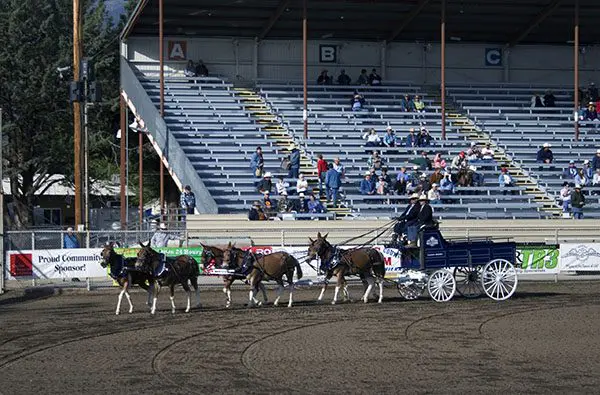
Before beginning therapy, Joanne and I gathered all the information we could on Rock and Roll. This was not an easy task, as there were no registration or health papers, only the information that Bitterroot Mule Company could provide. The pair was not eating very well, and by the way he was turning his nose up at the feed, I suspected Rock might even have ulcers. Fran and Larry told me what they had fed the mules. I promptly took them both off the feed that would clearly be, in my experience, too rich for them and put them on our standard equine diet. Because both mules were branded, we were able to identify the brands as coming from the Hunt Limousine Cattle Ranch in Elizabeth, Colorado. We later discovered that the Hunt Limousine Cattle Ranch had obtained Rock and Roll when they were just three years old from an Amish Family in Lancaster, Pennsylvania. Both Rock and Roll were out of sister Belgian mares, and by the same jack. Rock and Roll mostly pulled a wagon for birthday parties for 6 yr olds at the ranch. They also pulled the wagon for a nearby church so they could sing Christmas carols in the towns of Elizabeth and Kiowa, Colorado, and were also used to pull Grand Marshalls and other dignitaries in local parades.
Rock and Roll, along with two other teams were well taken care of and loved deeply by the family who cared for the ranch. A ranch wife to one of the hands took the responsibility of scheduling routine farrier appointments and vaccinations for them and ten other ranch horses. Unfortunately the ranch was eventually in a position in 2002 when they had to be sold. The family who cared for them was “heart broke and sad.” At that point, they were healthy and weighed 2500 pounds each. What happened afterwards is still a mystery, but one thing was tragically clear—they were overworked, out of good posture and not properly fed. Many people just don’t realize that even big draft mules need the benefit of a healthy diet and a specialized exercise program, especially before starting work in harness.
Within days after changing their feed to our crimped oats mix with Sho Glo, Mazola corn oil and grass hay only, the two mules’ appetites improved. There was a drastic change in their coats and their eyes began to come alive. We gave them a small turnout area just off their runs and along the county road, so they could watch the people going by and the cattle grazing on the other side. Rock would go into the corner of the pasture and just stand and stare for hours, not moving until he was called back in.
I noticed that Rock did not lie down or roll, but considering how neglected they had been, this didn’t really surprise me. Because of the muscle atrophy in his right hip, we decided that we should get started with Rock immediately. So, the very afternoon they were delivered, Rock got his first massage. He was tolerant of the massage, but we soon discovered that touching his face was out of the question. Both mules would shy away if anyone so much as raised a hand or made any small abrupt movement in their presence. We also noticed that Rock had a perpetual and distinctive worried “V” in his eyebrows over both eyes. A health check with our veterinarian was scheduled and we continued equine chiropractic, using the same equine chiropractor that was used when Fran and Larry first got Rock and Roll. After a couple of months of chiropractics, regular farrier and vet visits with massage and physical therapy done on a weekly basis, Rock was finally able to get down on his left side and roll. He and Roll then began to play!
Our farrier Dean Geesen came out to the Lucky Three and gave both mules their first official trims. Our support team agreed that it would be a long time before their feet would begin to look normal. During a farrier visit in March, we discovered that Rock had two old abscesses in his left front hoof. Dean was guarded about whether or not Rock’s hooves would ever be okay again. But Rock was a real trooper and although it was very difficult for him, he managed to yield all four feet when asked.
When our veterinarian Greg Farrand checked his eyes, he found cloudiness and thickening over the corneas. He was put on a regimen of eye drops three times a day to stave off chronic abrasion of the eye. Within days, Rock was chasing bunnies around the small turnout pasture—no more standing in the corner! Greg also did a walking palpation to see if he could determine what was causing the lameness in Rock’s right hip. He thought he felt a fracture on the face of the pelvis, but there was no way to really tell exactly what was going on. To find out for certain, Rock would have to be taken to Colorado State University, sedated and turned upside down in order for any necessary radiograms or ultrasound tests to be performed. We all agreed that this process would be far too traumatic for him. We opted to just be
very careful and not to do any manual range-of-motion movements on that leg for fear of making it worse. Instead, I discovered a way to have Rock do range-of-motion exercises on his own during physical therapy and my adjustments worked well. Rock and Roll continued to improve. Roll even graduated from the leading core muscle exercises to the round pen core muscle exercises. Rock and Roll began to play and argue with each other. The pair seemed to be gaining strength and proprioception (body awareness), and both seemed to be feeling much better overall. After a very short time, both mules
complied—on verbal commands alone—to correct their own balance and square up at every halt…because it felt good!
In mid-March, we had Rock’s feet x-rayed and it was found that there was 45 degrees of rotation in both hind feet. There was no rotation in front, although the front feet did have multiple stress rings, collapse of the hoof wall and were starting to exhibit seedy toes. Rock couldn’t stand on the four-inch blocks the vet used to x-ray him, so we made do with a couple of two-by–four boards. Even when the farrier worked on him, we would have to put Rock’s rear feet on an equine jack stand to trim him. After learning to successfully execute his balancing pattern during physical therapy, we noticed that the soles of Rock’s feet were beginning to wear away. When the x-rays came back, they showed that only a quarter of an inch of sole was left on the bottoms of each of his rotating hind feet. We then immediately got shoes on those back feet! We began a regimen of Thrush Buster and Rainmaker hoof dressing by Farnam on both mules’ hooves in order to help the hooves to begin to grow back in a healthy way. By April, Rock had grown three-eighths of an inch more sole on his hind feet and was actually trotting over his ground poles!
Now that Rock was feeling better, the worried “V” over his eyes began to disappear. He was actually getting up and lying down, but due to the difficulty he had, he began to get sores on his hocks that needed to be wrapped and tended with Panalog ointment. Although the sores were obviously very painful, Rock allowed me to wrap them and doctor them with little complaint. Once wrapped, he happily munched his oats reward for his stellar behavior and gently placed his forehead on my chest in a clear gesture of gratitude.
In Part 2 of Rock and Roll: Diary of a Rescue, Rock’s roller-coaster progress of victories and set-backs continues, as Roll slowly comes out of his shell and learns to trust us and—even more importantly—himself. Our regimen of compassion, patience and therapy goes on as Rock and Roll touch everyone’s soul by proving that they are ready and willing to give it everything they’ve got, right from their hearts.
To learn more about Meredith Hodges and her comprehensive all-breed equine training program, visit LuckyThreeRanch.com or call 1-800-816-7566. Check out her children’s website at JasperTheMule.com. Also, find Meredith on Facebook, YouTube, Pinterest, Instagram, MeWe and Twitter.
Covered in TRAINING MULES & DONKEY: A LOGICAL APPROACH TO TRAINING, TRAINING WITHOUT RESISTANCE, EQUUS REVISITED and A GUIDE TO RAISING & SHOWING MULES, ROCK & ROLL: DIARY OF A RESCUE 2-PT DOCUMENTARY (VOD & DVD) at www.luckythreeranchstore.com.
© 2012, 2016, 2020, 2024 Lucky Three Ranch, Inc. All Rights Reserved.
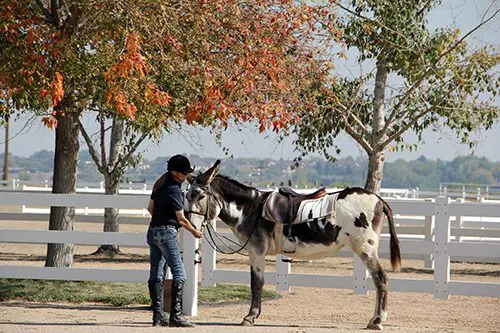
Following a seasoned animal through the hourglass pattern for their first time in the open arena will give your equine more confidence and decrease the incidence of resistance.
By Meredith Hodges
No training series would be complete without examination of the principles and philosophy behind the training techniques. The philosophy of my training techniques is based on the principle that we are not, in fact, training our equines. In fact, we are cultivating relationships with them by assigning meaning to our own body language that they can understand.
Since our own level of understanding changes and grows over time, we must assume that so does that of our animals, and we must gauge our explanations accordingly. In the beginning, the emotional needs of the young equine are quite different from that of an older animal. They need to overcome a lot of instincts that would protect them in the wild, but are inappropriate in a domestic situation. In this case, our focus must be on developing friendship and confidence in the young animal, while establishing our own dominance in a non-threatening manner.
We do this through a lot of positive reinforcement in the beginning, with gentle touch, reassuring voice, and lots of rewards for good behavior. Our expressions of disapproval are kept at a minimum. As he grows with us, the equine will realize that we do not wish to harm him, and will next develop a rather pushy attitude in an attempt to assert his own dominance – once that he is confident that his behavior is acceptable. When this occurs, we must re-evaluate our reward system and save excessive praise for the new things as he learns them and allow the learned behavior to be treated as the norm, praised more passively, yet appreciated. This is the cultivation of a delicate concept of give and take in a relationship from the emotional standpoint. As in any good relationship, we must learn to be polite, considerate and respectful of our mules, donkeys, horses, ponies and hybrids. After all, as my grandmother used to say, “You can catch more flies with sugar that you can with vinegar!”
From the physical standpoint, there are also a lot of things to consider of both mule and trainer. In the beginning, unless you are a professional trainer with years of proper schooling, you are not likely to be the most balanced and coordinated of riders, lacking absolute control over your own body language. By the same token, the untrained equine will be lacking in the muscle coordination and strength to respond correctly to your cues that guide him to perform certain movements. For these reasons, we must modify our approach to fit each new situation and modify again to perfect it, keeping in mind that our main goal is to establish a good relationship with our equine and not just to train him! It is up to the trainer to decide the cause of any resistance, and to modify techniques to temper that resistance – be it mental or physical.
For instance, we had a 3-year-old mule learning to lunge without the benefit of the round pen. The problem was that she refused to go around you more than a couple of times without running off. Assess the situation first by brainstorming all the probable reasons she might keep doing such an annoying thing. Is she frightened? Is she bored? Is she mischievous? Has she been calm and accepting of most things until now? And most important, is my own body language causing this to occur?
Animals are all quite different, as are humans, and each individual will learn in his own way, as do humans. Once in a while, you meet an animal that is not able to learn things in a conventional manner. He perceives things just differently enough to make it extremely difficult. In the case of the mule that would not lunge independently on the line, we found that she needed additional learning aids. You can either put a round pen around the animal to “force” him to comply, or you can wait until he is broke to saddle before you try to lunge him again with just the line. If you only have an arena, you can lunge the equine in the corner and the two fenced sides will help him to stay on the circle. This certainly helped her!
I have worked with many mules that wouldn’t lunge first, but would ground-drive and accept a saddle and rider with no problem. After this they seem to lunge quite easily! Learn to be fair and flexible in your approach to problems as you would for anyone you were interested in getting to know. Be firm in your own convictions, but be sensitive to things that can change and be willing to make those changes as the occasion arises!
As mental changes occur, so do physical changes. As muscles develop and coordination gets better, the animal will gain confidence. As a trainer, you will need to do less and less to cause certain movements. For example, in the case of the leg yield, you may have to turn your mule’s head a little in the opposite direction to get him to step sideways and forward. As he becomes stronger, more coordinated, and understands your request, you can then begin to straighten his body more with less effort. Granted, we have begun by doing this the wrong way, yet we have put our mule “on the road” to the right way. We have assimilated an action in response to our leg that can now be perfected over time. In essence, you have simply said, “First you learn to move away from my leg, then you can learn to do it gracefully!”
The same concept works in the case of the trainer, or rider. Sometimes you must do things that are not quite right in the beginning to get your own body to assimilate correctness. As I have said, we all perceive things a little differently and it depends on how we are introduced to something whether or not we can understand or perform it. It is nearly impossible for the inexperienced horseman to perceive and control unused seat bones as a viable means of control of the equine. In the beginning, reins and legs are much easier to use to complete such a task.
In training horses and mules, there is really little difference in one’s techniques or approach, provided we maintain patience and understanding and a good rewards system. The major difference between these two equines is their ability to tolerate negative reinforcement, or punishment. The mule, being part donkey, does not tolerate punitive action very well unless he is fully aware that the fault was his own and the punishment is fair. For instance, you ask for a canter lead and your mule keeps trotting, one good smack with the whip, or one good gig with the spurs, is negative reinforcement that will bring about the desired response, but be careful of an over-reaction from an overdone cue. More than one good smack or gig could cause either a runaway or an extremely balky animal. This kind of resistance comes from the donkey and requires a much different approach when training donkeys. The horse part of the mule allows us an easier time of overcoming this type of resistance in mules, making them different and easier to train than donkeys.
It is the innate desire of all humans to control their own lives both emotional and environmental. When we cannot, we become panicked and confused about our situation. We doubt ourselves, our abilities, and our self-worth. If we do not maintain a sense of humor about those things that we cannot control and learn to accept that which we cannot change, we are doomed to a life of depression and failure. Horses can be controlled and even some mules can be controlled for the most part, but it is my experience that donkeys are only controlled when they so desire.
Donkeys are affectionate, amicable characters, and possess such a sensitive nature that one would think punishment a real deterrent from bad behavior – but when you punish a donkey, you will be met with a tough hide and unbelievable avoidance behaviors which often cause more resistance than it’s worth! As if this isn’t enough, if you do punish your donkey for something, the next time he even comes close to the same action, he may anticipate your punishment and go straight to the avoidance behavior before he actually makes the mistake. For this reason, it is better to try to ignore the mistakes, focus on the successes and reward the equine with lots of praise. If something in your training isn’t really necessary to your final objectives and you encounter this resistance, such as I did during lunging training, then just drop it and go on to something else that they can do easily. There is plenty of time to learn it at a later date.
To learn more about Meredith Hodges and her comprehensive all-breed equine training program, visit LuckyThreeRanch.com, MEREDITH HODGES PUBLIC FIGURE Facebook page, or call 1-800-816-7566. Check out her children’s website at JasperTheMule.com. Also, find Meredith on Pinterest, Instagram, MeWe, YouTube and Twitter.
Covered in TRAINING MULES & DONKEY: A LOGICAL APPROACH TO TRAINING, TRAINING WITHOUT RESISTANCE and EQUUS REVISITED at www.luckythreeranchstore.com.
© 1989, 2016, 2024 Lucky Three Ranch, Inc. All Rights Reserved.
Chasity had no way of knowing that she was about to graduate from the Hourglass Pattern to the Round Pen today, nor did she really care! She knows that every experience with me is happy and rewarding! So, she was waiting patiently at the stall door for me to come get her after I had already gotten Wrangler, her beau, from his stall! She put on her “happy face” and proceeded to the Tack Barn with a spring in her step!!!
She was particularly happy to see Wrangler standing at the work station! I cleaned both of their eyes, ears and nostrils with no problem at all! They were both eager to find out what was coming next!
After her initial introduction to the “monster vac,” this time she did not even bat an eyelash! It was of no consequence to her anymore…she was BRAVE now! I rewarded her and marveled at how her neck was improving! The fat was disappearing and her neckline was becoming straighter. Hallelujah!
I asked Chasity to do her stretches first to the right and then to the left. Her response was becoming much more flexible and symmetrical on both sides.
The Courbette (on Chasity) and the Passier (on Wrangler) are two used All Purpose English saddles that I bought over 35 years ago, that fit all my mules and donkeys, and are in as good condition today as the day that I bought them! I centered them on their backs and adjusted the crupper to keep them in place!
I bridled them both and took Wrangler to the Round Pen first. Then I tied Chasity on the outside of the Round Pen and she watched while I lunged Wrangler.
Then it was her turn! I adjusted the “Elbow Pull” self-correcting restraint to the right tension and asked Chasity to flex at the poll. Then we began lunging. She leaned on the “Elbow Pull,” but it kept her from hollowing her back and neck while still allowing her to reach well underneath her body with her hind legs.
After five rotations in one direction, I stopped her and asked for a reverse. She hesitated, but eventually understood what I was asking of her and happily trotted off. She did make me work a bit to keep her going, but she was beginning to relieve a bit of the tension on the “Elbow Pull.”
Since things were going so well, I rewarded Chasity and flexed her neck again. I decided to allow Wrangler to help show her how it is done for five more rotations in each direction. That would be all I would need to do on a 85+ degree day with their shedding not quite completed. Wrangler was amazing! They had not been turned out together yet, so I thought he might be silly with her, but he was all business!
Of course, Wrangler did the reverse quickly and perfectly while Chasity took a little persuading. Wrangler just walked confidently and patiently, keeping his good posture with the “Elbow Pull” loose, while he waited for her to catch up. For two thirteen year olds, they were awesome!
Although Wrangler has been with me for three years, and Chasity for only three months, I find it amazing how quickly they happily come to their ideal equine posture. They exit their lessons renewed and refreshed!
By Meredith Hodges
Long before the Founding Fathers drafted our constitution, the roots of America were as a religious nation under God. Today’s mule also has his roots in religion. The mule’s ancestor—the donkey—is mentioned in the Bible numerous times as an animal acknowledged by God and blessed by Jesus Christ. The donkey was even chosen to bring Mary and Joseph to Bethlehem and, later, as the mount Jesus himself used for his ride into the city of Jerusalem.
Throughout the development of our country—one nation under God—the American mule has been used to pull the mighty Conestoga Wagons of the pioneering settlers moving Westward, as a pack animal for settlers, miners and traders, and as an important part of our country’s defense in times of war.
As early-nineteenth-century America continued to develop and its population grew, the American people came to depend more and more on self-sustaining agriculture. Because of the mule’s extraordinary ability to work long hours in sometimes harsh and unrelenting climates, his sure footedness which allowed them to cross terrain not accessible by any other means, and his resistance to parasites and disease, he became the prized gem of agriculture and remained so for the next hundred and fifty years.
From the day the Erie Canal first opened on October 26, 1825, mules and donkeys were always used to pull the heavy barges. Inevitably, songs like Thomas A. Allen’s “Low Bridge, Everybody Down,” which praises a mule named “Ol’ Sal,” became part of America’s folk song tradition. In the early days of the Erie Canal, men and their mules lived side by side on the barges—the mules were even brought onboard when they were not towing, and safety ramps were placed at intervals up the banks of the canals, in case an unlucky mule accidentally slipped into the canal and could not negotiate its steep walls to climb back out.
In 1882, the Harmony Borax Works opened with one big problem—how to get their product 165 miles across the treacherous Mojave Desert from Death Valley to the nearest railroad spur. The answer? Mules! “The borax wagons were built in Mojave at a cost of $900 each…When the two wagons were loaded with ore and a 500-gallon water tank was added, the total weight of the mule train was 73,200 pounds or 36 and a half tons. When the mules were added to the wagons, the caravan stretched over 100 feet. The Twenty Mule Teams hauled more than 20 million pounds of borax out of Death Valley between 1883 and 1889.” 1
When American coal mining was booming, the mule was such a valuable member of the mining process, that a good mining mule was considered to actually be more valuable than a human miner. Mining has always been a dangerous business, and the mining mule’s innate sense of self-preservation was well known. “Mules are very smart…They know what they can do and would never do anything they couldn’t or would not want to do. Mules were known to pull at least three full mine cars full of coal. If you hooked up a fourth car they would balk at any commands and just stand there. No way would they pull the fourth car!” 2
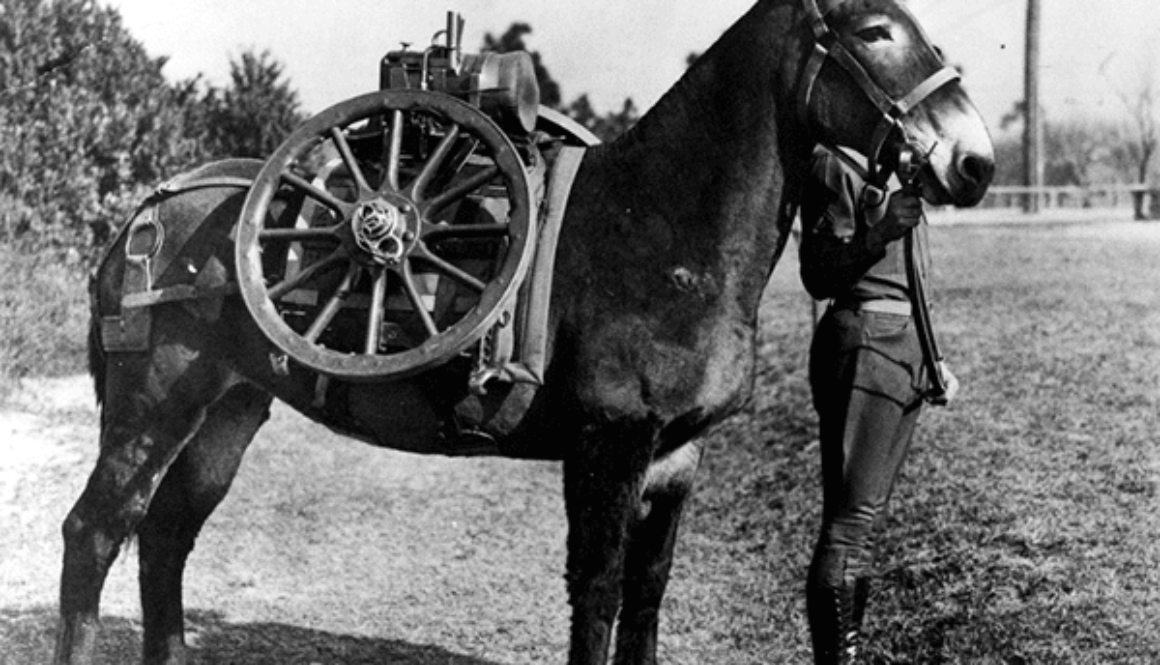
Because of their traits of strength, intelligence and loyalty, mules were a crucial part of our country’s greatest conflicts, from the Civil War through the Spanish American War, and in both World War I and World War II. A well-known tale from the Civil War states that, “In a battle at Chattanooga, a Union general’s teamsters became scared and deserted their mule teams. The mules stampeded at the sound of battle and broke from their wagons. They started toward the enemy with trace-chains rattling and wiffletrees snapping over tree stumps as they bolted pell-mell toward the bewildered Confederates. The enemy believed it to be an impetuous cavalry charge; the line broke and fled.” 3 During World War I, mules and horses were still the primary way that artillery was carried into battle. Although the 75mm Howitzers proved too heavy for most horses, it was a common sight to see the big guns strapped to the back of a sturdy mule.
One of the world’s greatest natural wonders, the Grand Canyon, has been home to mules since the 1800s. First brought in by prospectors, it was soon realized that the tourists wanted a way down to the Canyon floor, and so began the Grand Canyon mule pack trips. Famous mule-riding visitors to the Grand Canyon have included Presidents Theodore Roosevelt and Howard Taft, famed naturalist John Muir and painter/sculptor Frederic Remington.
We Americans have worked alongside our mules and donkeys for centuries and have often taken their generous contributions for granted in the course of our country’s fast-paced growth, but the mule and donkey are likely to remain with us as long as they can find a way to make their contributions to society.
Those of us who attend Bishop Mule Days every year and many longears lovers across this country are very well-acquainted with the incredible assets of the mule, and look forward to singing his praises every year on October 26th, when Mule Appreciation Day rolls around. Let us never forget to thank our trusted companions for all they have contributed to building this great country of ours!
To learn more about Meredith Hodges and her comprehensive all-breed equine training program, visit LuckyThreeRanch.com, MEREDITH HODGES PUBLIC FIGURE Facebook page, or call 1-800-816-7566. Check out her children’s website at JasperTheMule.com. Also, find Meredith on Pinterest, Instagram, MeWe, YouTube and Twitter.
Covered in TRAINING MULES & DONKEY: A LOGICAL APPROACH TO TRAINING, TRAINING WITHOUT RESISTANCE, EQUUS REVISITED and A GUIDE TO RAISING & SHOWING MULES at www.luckythreeranchstore.com.
© 2012, 2013, 2015, 2016, 2017, 2024 Lucky Three Ranch, Inc. All Rights Reserved.
1 http://www.nps.gov/deva/learn/historyculture/twenty-mule-teams.htm
2Mine Stories, The No. 9 Mine & Museum,Lansford, PA.
3The Horse in the Civil War, by Deborah Grace
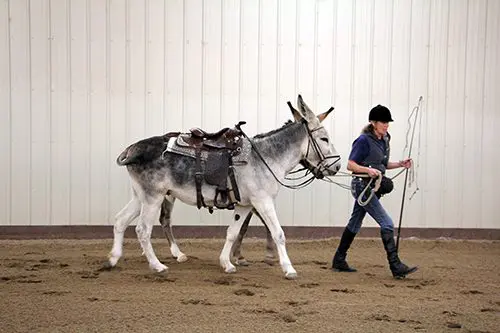
Wrangler always eagerly awaits his weekly lessons! When things are predictable and are not “drilled,” your equine will look forward to his time with you. I always try to keep lessons short (30-40 minutes), done in a logical order and consistent in the task executions. For instance, we always walk the same way, with the lead in my left hand, with a loose connection to his head to encourage self-carriage, repeated verbal commands and I walk with my feet in sync with his front legs. The gates are always executed the same way. He is rewarded with crimped oats from my fanny pack when halted and waits patiently while I close and latch the gate. Even though Chasity is tied outside of the Round Pen, Wrangler’s attention is 100% on me. Minimizing distractions by being consistent with the way we do things will create a solid base of habitually good behavior.
Wrangler continues to stand quietly while I make sure his saddle is centered in the middle of his back and the tension on the crupper is adequate, but not too tight. He should be able to relax his tail. I check both girths to make sure they are snug but not too tight (the front girth tighter than the rear girth), adjust the tension on the “Elbow Pull” and make sure the fleece at the poll is centered to prevent undue chafing when he has to “lean” on the “Elbow Pull.” The “Elbow Pull” will not tie his head down, but it will prevent him from raising his head so high that he inverts his neck and spine. It will assure that he is in a good balanced equine posture during his workout.
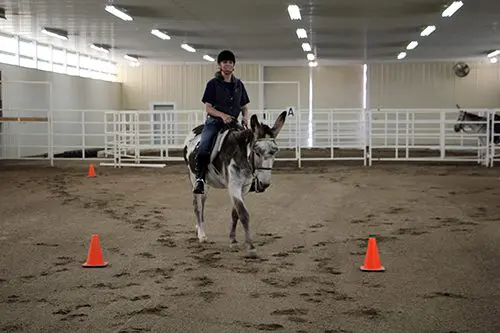
I first ask Wrangler to walk for five rotations before asking him to trot. Occasionally, he will be so full of energy that he offers the trot first. If he trots, I just adjust and let him do five rounds of trot first and let him walk five rotation afterwards. To start, I only asked for walk and trot until Wrangler began to break into canter by himself. I then added one rotation at canter after the five rotations at trot before allowing him to walk.
I will add one more rotation at canter in each of the upcoming lessons. Then his warm-ups will consist of five rotations of each…walk, trot, canter, walk…then a reverse, and the same progression in the opposite direction before mounting him. He should always slow to a walk before executing the reverse so it is done in good postural balance.
This will begin to improve his balance and build his bulk muscle symmetrically.
After checking both girths one more time, Wrangler stands stock still as I mount him. I offer his oats on both sides as I did in our first mounting session in the Tack Barn. This is to make sure I keep his attention on ME! The oats are taken politely. He fully understands that these are NOT treats, only REWARDS for good behavior.
Once mounted and seated in balance, I ask Wrangler for a rein back with a few more steps than he had done in his previous lesson. He responds nicely to the squeeze/release motion of my little fingers.
I keep a very light contact with the bit as we proceed forward. We add circles at random points along the rail to add variety to the workout and keep it interesting. We work on staying erect while he bends to the arc of the circles through his rib cage.
Wrangler’s “Elbow Pull” remains consistently loose as he walks leisurely along the rail and executes the “S” turns for changes in direction.
Wrangler gives Chasity a wink as he passes the spot where she is tied along the rail. She is proud of how well her “beau” is doing and watches intently! Wrangler is soft, flexible and elastic in the bridle. This is exactly what I want from him. We will be able to graduate to a larger area next week!
Wrangler spotted a jogger coming toward us along the road and didn’t quite finish his square halt, but halted nevertheless. I prudently waited for the jogger to go by before I asked him for a rein back and he complied easily.
I think too many of us get in too much of a hurry to RIDE and forget that our equine athletes need the same consideration from us that human athletes get from their coaches. They need to do exercises that prepare their bodies for the “game.” When they are adquately prepared, their skeleton is symmetrically supported, joints are able to operate as intended and do not develop arthritis from uneven wear of the cartilage, and the internal organs can function in good health at maximum capacity. When we are patient and take the time to prepare our equines properly, there is much to be gained…a happy and willing equine companion that is capable of performing to their optimum ability. Training really CAN be safe and resistance-free! Being herdbound is not an issue because they really enjoy being with YOU as much as, if not more than, they enjoy being with their equine friends!
After a brief session with an assistant at his head, your equine will have more confidence and will be more willing to go forward without the assistant.
Horses and mules will require a different kind of correction when bucking in order to get the best results from each of them. Meredith explains the difference and what to do.
6-2-20
Chasity is now regularly coming to her stall door and is always anxious to see what the next challenge will be. The one thing she HAS learned is that she will never be hurt by anyone here. Cleaning her ears was a necessary evil at first, but she now enjoys the gentle cleaning as I wipe the rag with the grain of the hair to get the dirt from her ears. And she loves having clean ears! We are ALWAYS consistent and stay with the routine about everything we do with all of our equines. They appreciate knowing what comes next. Ours is a NO ANXIETY zone, but that doesn’t mean we do not challenge them and set boundaries for good behavior. Chasity is about to be tested to the max with her next new challenge!
Chasity really enjoyed the brisk brushing with the multi-bristled human hair brush. It is the only brush that I have found the really expedites shedding and leaves the coat soft and shiny. It reaches deep in the coat and aerates the hair shafts. After the brushing, it is followed with either the shedding blade to remove the loosened hair laying on top, or….there is an introduction to the VACUUM CLEANER!!! Chasity was not too sure about this BIG BLUE THING that rolled!
We always take the introduction of new things slowly. I gently coaxed Chasity toward the vacuum cleaner. This was an approach that she recognized from her obstacle training and moved furtively toward me to receive her reward of crimped oats.
She watched the cameras while I went to plug it in. The loud sucking noise startled her! I acknowledged her concern and calmed her with a soothing voice.
But then it was time for the business of vacuuming HER! I use the cotton lead rope for control, but she is prevented from going backwards with the second hitch rail tie made of a stout braided nylon rope with bull snaps on each end. The last thing you want is for the rope to break! I talked to Chasity and ask her if she would rather calm down and step forward to receive her reward…she thought about it…I waited patiently…
…and she decided that was a pretty good idea! She tentatively accepted the vacuum on her forehead. This is a spot where they generally like to be vacuumed first.
I laughed as she made a plea for help from the camera people! Then I had to straighten out the hose and she was certain that big black coiled “snake” was going to get her!
She wasn’t exactly pleased, but she allowed me to begin to vacuum her neck…and then her shoulder. I kept a hand on her so she could feel my caring support.
It didn’t take long for her to calm down and allow me to vacuum the rest of her body. She discovered that it actually felt pretty good!
Then I looped the “BIG BLACK SNAKE” over the hitch rail to prepare to do the other side. She sat back on the rope again, but was easily coaxed forward again.
Things are always different from one side of an equine to the next. So, when I approached from the other side, she again sat back on the rope, but came forward again quickly to receive her reward.
I did her forehead again while she fixated her gaze to the camera people. When I got to her body, she was fixated on the BIG BLUE BOX, but not bothered at all by the suction, or the hose.
After I finished her right side, I knelt by the BIG BLUE BOX and asked her to come and investigate which Chasity did willingly. She had conquered the challenge of the MONSTER VAC!!!
By Meredith Hodges
My philosophy is based on the principle that I am not, in fact, “training” donkeys and mules. Rather, I am cultivating relationships and establishing a lifestyle with them by assigning meaning to my body language that they can understand, while I learn what they are trying to indicate to me with their body language.
In the same way that my own level of understanding changes and grows over time, I believe that my animals’ understanding grows, too. In the beginning, the emotional needs of a young mule or any equine are different from those of an older animal. The young animal needs to overcome many instincts that would protect him in the wild, but are inappropriate in a domestic situation. In a domestic situation, the focus must be on developing friendship and confidence in the young equine, while establishing my own dominance in a non-threatening manner. This is accomplished through the use of a great deal of positive reinforcement early on, including gentle touches, a reassuring voice and lots of rewards for good behavior. Expressions of disapproval should be kept to a minimum and the negative reinforcement for bad behavior should be clear, concise and limited.
As your young equine grows and matures, he will realize that you do not wish to harm him. Next, he will develop a rather pushy attitude in an attempt to assert his own dominance (much like teenagers do with their parents), because he is now confident that this behavior is acceptable. When this occurs, reevaluate your reward system and save excessive praise for the new exercises as he learns them. Note, however, that a gentle push with his nose might only be a “request” for an additional reward and a polite “request” is quite acceptable in building a good relationship and good communication with your equine. Allow the learned behavior to be treated as the norm, and praise it more passively, yet still in an appreciative manner. This is the concept, from an emotional standpoint, of the delicate balance of give and take in a relationship. As in any good relationship, you must remain polite and considerate of your horse, mule or donkey. After all, “You can catch more flies with sugar than you can with vinegar.”
Many details of both animal and trainer must also be considered from a physical standpoint. In the beginning, unless you are a professional trainer with years of proper schooling, you are not likely to be the most balanced and coordinated of riders, and you may lack absolute control over your body language. By the same token, the untrained equine will be lacking in the muscular coordination and strength it takes to respond to your request to perform certain movements. For these reasons, you must modify your approaches to fit each new situation, and then modify again to perfect it, keeping in mind that your main goal is to establish a good relationship with your animal and not just to train him. It is up to you, the trainer, to decide the cause of any resistance from your equine, and to modify techniques that will temper that resistance, whether it is mental or physical.
Here is an example: I had a three-year-old mule that was learning to lunge without the benefit of the round pen. The problem was that he refused to go around me more than a couple of times without running off. I first needed to assess the situation by brainstorming all the probable reasons why he might keep doing such an annoying thing. Is he frightened? Is he bored? Is he mischievous? Has he been calm and accepting of most things until now? And, most important, is my own body language causing this to occur? Once I was willing to spend more time with regard to balance on the lead rope exercises and proceeded to the round pen to learn to balance on the circle, I soon discovered that developing good balance and posture was critical to a mule’s training. The reason my mule was pulling on the lunge line so hard was because he just could not balance his own body on a circle. Once I reviewed the leading exercises with him—keeping balance, posture and coordination in mind—and then went to the round pen to learn to balance on the circle, I noticed there was a lot less resistance to everything he was doing. I introduced the lunge line in the round pen and taught him how to circle with slack in the line. And, I realized that it was also important to time my pulls on the lunge line as his outside front leg was in suspension and coming forward. It didn’t make much difference in the round pen, but it was critical to his balance in the open arena so the front leg could be pulled onto the arc of the circle without throwing his whole body off balance. After learning that simple concept, lunging in the open arena on the lunge line was much easier and he did maintain the slack in the line while circling me.
Like humans, all animals are unique, and like humans, each learns in his own way. Learn to be fair and flexible in your approach to problems. It is best to have a definite program that evolves in a logical and sequential manner that addresses your equine’s needs physically, mentally and emotionally. Be firm in your own convictions, but be sensitive to situations that can change, and be willing to make those changes as the occasion arises. This is what learning is all about for both you and your equine.
Just as mental changes occur, so do physical changes. As your equine’s muscles develop and coordination improves, you will need to do less and less to cause certain movements. For example, in the case of the leg-yield, you may have to turn your animal’s head a little too far in the opposite direction to get him to step sideways and forward. You will need to guide him more strongly with the reins and kick harder. As he becomes stronger and more coordinated, and begins to understand your aids, you can then start to straighten his body more toward the correct bend and stay quieter with your aids. Granted, you began by doing things the “wrong” way by over-bending your equine and by over-using your aids, yet you put him “on the road” to the right way. You assimilated an action in response to your leg that can now be perfected over time. In essence, you have simply told your equine, “First you must learn to move away from my leg, and then you can learn to do it gracefully.”
The same concept works in the case of the trainer or the rider. Sometimes you must do things that are not quite right in the beginning to get your own body to assimilate correctness. In the beginning, a rider cannot “feel” the hind legs coming under his seat, so he needs to learn by watching the front legs moving forward along with his hands. With practice, the rider will develop the “feel” and will no longer need to watch the front legs moving forward. Remember, we all perceive things a little differently, and our perception depends on how we are introduced to something and on whether or not we can understand or perform a task.
It is nearly impossible for the inexperienced horseman to perceive and control unused seat bones as a viable means of controlling the animal. Reins and legs are much more prevalent. In order to help such a rider perceive their seat bones more clearly, it sometimes helps to start by involving the whole lower body. Earlier in this book, I suggested that, to begin facilitating this action, you pedal forward in conjunction with the front legs. Connecting this action with the front legs of the equine allows you to “see” something concrete with which you can coordinate, plus the pedaling encourages necessary independent movement in the seat bones from side to side and forward. When you begin to “feel” this sensation, you can begin to understand that when the foreleg comes back, the corresponding hind leg is coming forward under your seat bone. When you understand this, both mentally and physically, you can begin to pedal backward, which will cause you to be in even closer synchronization with your equine’s body. As your leg muscles become more stable, actual movement in your own body becomes less, more emphasis is directed toward your center of gravity and more responsibility is placed on your seat bones. Using this approach, your muscles are put into active use and coordinated with your animal’s body through gymnastic exercises, which will eventually lead to correct positioning and effective cueing.
Achieving balance and harmony with your equine requires more than just balancing and conditioning his body. As you begin to finish-train your equine, you should shift your awareness more toward your own body. Your equine should already be moving forward fairly steadily and in a longer frame, and basically be obedient to your aids. The objective of finish-training is to build the muscles in your own body, which will cause your aids to become more effective and clearly defined. This involves shedding old habits and building new ones, which takes a lot of time and should be approached with infinite patience. There are no shortcuts. In order to stabilize your hands and upper body, you need to establish a firm base in your seat and legs. Ideally, you should be able to drop a plumb line from your ear to your shoulder, down through your hips, through your heels and to the ground. To maintain this plumb line, work to make your joints and muscles in your body more supple and flexible by using them correctly. Don’t forget to always look where you are going to keep your head in line with the rest of your body.
As you ride your equine through the walking exercise, try to stay soft, relaxed and flexible in your inner thighs and seat bones. Get the sensation that your legs are cut off at the knees, and let your seat bones walk along with your animal, lightly and in rhythm with his body. If he slows down, just bend your knees and bump him alternately with your legs below the knees, while you keep your seat and upper legs stable and moving forward. To collect the walk on the short side, just bend both knees at the same time, bumping your equine simultaneously on both sides, while you squeeze the reins at the same time. Your legs should always have contact with your animal’s body in a light “hugging” fashion and real pressure should only come during the cues.
In order to help you stay over the middle of your equine’s back on the large circle, keep your eyes up and looking straight ahead. Shift your weight slightly to the outside stirrup, and feel it pull your inside leg snugly against your animal. Be sure that your outside leg stays in close to his barrel as you do this. On straight lines, keep your legs even, but on the arc, and look a little to the outside of the circle. This will bring your inside seat bone slightly forward, allowing your legs to be in the correct position for the circle. This technique is particularly helpful during canter transitions.
Most people feel that they do not balance on the reins as much as they actually do. If you balance on the reins at all, your equine will be unable to achieve proper hindquarter engagement and ultimate balance. To help shift the weight from the hands and upper body to the seat and legs, first put your equine on the rail at an active working walk. On the long side, drop your reins on his neck and feel your lower body connect with his body as you move along. You will need to tip your pelvis forward and stretch your abdominal muscles with each step in order to maintain your shoulder to hip plumb line. If your lower leg remains in the correct position, your thigh muscles will be stretched over the front of your leg from your hip to your knee. There is also a slight side-to-side motion as your animal moves forward that will cause your seat bones to move independently and alternately forward. There is no doubt that you can probably do this fairly easily right from the start, but to maintain this rhythm and body position without thinking about it takes time and repetition.
When you are fairly comfortable at the walk, you can add some variation at the trot. Begin at the posting trot on the rail. When your equine is going around in a fairly steady fashion, drop your reins on his neck and continue to post. As you post down the long side, keep your upper body erect and your pelvis rocking forward from your knee. Your knee should be bent so that your legs are positioned on the barrel of your animal. Raise your arms out in front of you, parallel to your shoulders. If your equine drifts away from the rail, you need to post with a little more weight in your outside stirrup. As you go around corners, be sure to turn your eyes a little to the outside of the circle to help maintain your position. As you approach the short side of the arena, bring your arms back, straight out from your shoulders, and keep your upper body erect. As you go through the corners, just rotate your arms and upper body slightly toward the outside of your circle. When you come to the next long side, once again bring your arms in front of and parallel to your shoulders, and repeat the exercise.
Notice the different pressure on your seat bones as you change your arm position. When your arms are forward it will somewhat lighten your seat, while having your arms to the side will tend to exert a little more pressure. Consequently, you can send your equine more forward with your seat as you go down the long sides. On the short sides, you can shorten that stride with a little added pressure from the seat bones. When you wish to halt, put your arms behind you at the small of your back to support an erect upper body. Let your weight drop down through your seat bones and legs to total relaxation and an entire halting of movement. Remember to use your verbal commands—especially in the beginning—to clarify your aids to your animal. If your equine doesn’t stop, just reach down and give a gentle tug on the reins until he stops. Before long, he will begin to make the connection between your seat and your command to “Whoa,” and your seat will take precedence over your reins.
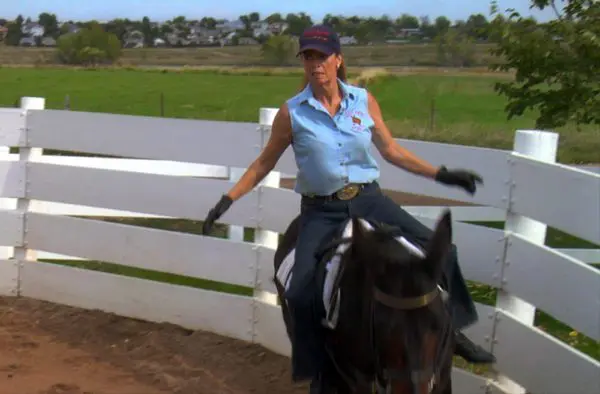
When you and your equine have become adept at the walk and the trot, add the canter. At the canter, however, keep your arms out to the side and rotate them in small backward circles in rhythm with the canter. Be sure to sit back and allow only your pelvis, your seat and your thighs to stretch forward with the canter stride. Keep your upper body erect and your lower leg stable from the knee down. Once your equine has learned to differentiate seat and leg aids in each gait and through the transitions on the large circle, you can begin to work on directional changes through the cones.
As you practice these exercises, you will soon discover how even the slightest shift of balance can affect your animal’s performance. By riding without your reins and making the necessary adjustments in your body, you will begin to condition your own muscles to work in harmony with those of your equine. As your muscles get stronger and more responsive, you will cultivate more harmony and balance with him. As you learn to ride more “by the seat of your pants,” you will encounter less resistance in your equine, because most resistance is initiated by “bad hands” due to an unstable seat. As you learn to vary the pressure in your seat accordingly, you will also encounter less resistance in your animal through his back. Having a secure seat will help to stabilize your hands and make rein cues much more clear to your equine. The stability in your lower leg will also give him a clearer path to follow between your aids. Riding a balanced seat is essential to exceptional performance.
To learn more about Meredith Hodges and her comprehensive all-breed equine training program, visit LuckyThreeRanch.com, MEREDITH HODGES PUBLIC FIGURE Facebook page, or call 1-800-816-7566. Check out her children’s website at JasperTheMule.com. Also, find Meredith on Pinterest, Instagram, MeWe, YouTube and Twitter.
Covered in TRAINING MULES & DONKEY: A LOGICAL APPROACH TO TRAINING, TRAINING WITHOUT RESISTANCE, EQUUS REVISITED and A GUIDE TO RAISING & SHOWING MULES at www.luckythreeranchstore.com
© 1990, 2016, 2017, 2024 Lucky Three Ranch, Inc. All Rights Reserved.
Having your equine stand still during mounting is the result of a calm and sensible approach to ALL phases of the preliminary groundwork. Going forward with a logical and sequential approach will help the equine to stay calm and prevent any resistance.
By Meredith Hodges
Imprinting is defined as “rapid learning that occurs during a brief receptive period, typically soon after birth or hatching, and establishes a long-lasting behavioral response to a person or object as attachment to a parent or offspring.” 1 When we speak of “imprinting” in the scientific sense, it is a reference to the way the brain accepts input. The brain compartmentalizes impressions and images, and the animal reacts to the stimulus that the image produces. A collection of “imprints and images” produces memories. Imprinting training with a foal of any breed will give him a jump-start on his life with human beings.
Imprinting is more than getting your foal used to people. He’s going to spend the rest of his life with human beings, so he should get used to your touch, your voice, your smell and, especially, your handling of him. Handling your foal the minute he is born is a wonderful way to bond with him, and you will learn how he likes to be touched in order to produce a positive response. This early imprinting lays a foundation of trust for the training to follow.
Although it is commonly accepted that initial imprinting on the foal’s brain occurs only during a brief receptive period when initial contact is made during the first few days of life, it does provide a foundation on which to expand exposure to a human being through your foal’s five senses of touch, taste, smell, hearing and sight that leave impressions on the equine brain and will affect the way he interacts with a handler beyond what his dam may teach him. If the initial contact with humans leaves a positive impression, a foal will be more likely to be curious about humans than afraid of them. Because of this early contact, continuing imprinting then becomes an ongoing process that builds on the initial imprinting that is introduced at birth.
A calm, well-mannered mother helps produce a well-mannered foal, so if your mare or jennet is not easy to handle, she needs imprint training before the foal is born. Mares, and particularly jennets, can become very aggressive in defense of their offspring, so it is advisable to imprint even a mature mare or jennet so she will be safe to be around when she finally foals.
When imprinting your foal, think about the kind of adult you want him to be. A foal is very similar to a human baby regarding emotional needs—both need attention, love, guidance and praise to become loving, cooperative adults. Start your relationship with a positive attitude and approach your foal with love, patience, kindness and respect. Be sure to set reasonable boundaries for his behavior through the way you touch him and speak to him, the facial expressions you use, and even how you smell when you are around him so he can learn to trust and respect you and be happy at the sight of you.
It doesn’t matter if your equine is a young foal or an older animal—he needs imprint training. It will set the stage for the way he relates to humans for the rest of his life. Imprinting stimulates all of his five senses: touch, hearing, taste, smell and sight. This leaves an indelible impression on your equine’s brain as to how you expect him to behave, which—over time and with repetition—becomes his new natural way of responding.
The most important sensation to which you can expose your equine is touch. If your touch is gentle and considerate, it will feel good to him and he will be interested in your attention. When you run your fingers over his body, being careful not to press too hard on sensitive areas, he will experience pleasure and begin to look forward to your visits. Learning how your equine likes to be touched will also help things go more smoothly when you begin grooming him and tacking him up and during his training lessons, when he must learn to take his cues from your hands, legs and other aids. Even how you mount and sit down in the saddle—for instance, how your seat is placed on his back—denotes your consideration of him through touch. The wrong kind of touch, no matter how slight, can be a trigger for adverse behaviors. However, the right kind of touch—done correctly—produces pleasure in your equine and instills a willingness to perform in a positive way each time you interact with him.
To begin imprinting training, run your hands all over your equine’s body and down his legs, and put your hands in his mouth and in his ears. His reactions will help you learn how he likes to be touched. Getting your equine used to touch in this way eventually evolves into exposing him to grooming and working with tack and equipment. You are continuing to build on the initial imprinting work, but now, when you are grooming, the grooming tools will become extensions of your hands, and when you introduce various tack and equipment like clippers, they will also become an extension of your hands. Allow your equine to use his sense of touch (usually with his nose) when introducing any new object. Work toward getting your equine’s response to your touch as highly sensitive as possible, so that he can use his own body language to communicate with you. NOTE: Many owners pat their equine on the top of the head with the flat of their hand as a sign of affection, without realizing that, as a rule, most equines don’t take kindly to people patting their foreheads or faces. A pat on the forehead works if you want to distract your equine, but save it for that purpose only. It is much better to show affection by stroking your equine (always in the direction in which his hair lies), in a soothing and reassuring manner.
The tone of your voice is another important element of imprinting. If your general tone is soothing and encouraging, he is more likely to comply. Then, when he needs to be disciplined, the change in your tone of voice will convey your disapproval before you even have to touch him to make a correction—giving him the opportunity to straighten up before you actually need to apply the physical backup of negative reinforcement. If, no matter what the situation, you always speak in low tones, he will not be able to differentiate between what’s acceptable and what is not, but if you modulate your voice to clearly express what you want to convey, your equine will be much better able to understand and react appropriately.
Equines have an excellent sense of smell—for instance, they can smell danger from miles away. They can also smell people, and they are much more likely to warm up to a person who smells “good” to them. Smelling good to an equine has nothing to do with soaps or perfumes or deodorants. Oats and hay are smells that all equines immediately recognize and love, so if you dole out oats rewards correctly and you actively participate in the feeding and care of your equine, you will mostly smell like crimped oats throughout lessons, making you VERY attractive to your equine!
The next sense to which you should appeal is your equine’s sense of taste (a no-brainer). When you dispense the oats reward for all of his new positive behaviors, he associates that wonderful taste with you and will follow you to the ends of the earth to get more oats.
When the equine’s five senses are truly pleased, the very sight of you will prompt the memories and impressions on his brain that you have instilled in him during imprinting. The impression you have left with him is positive, encouraging, kind, considerate and respectful, and his reactions to you will also be positive and willing.
As you begin your equine’s imprinting, make sure you include an equal measure of fun. As with children, if you make learning fun, it comes more easily. By encouraging your young foal or older equine’s enthusiasm for learning, you’ll cultivate and enhance your equine’s desire to please and to serve.
Imprinting training is truly an ongoing learning experience. When touching a newborn foal, keep in mind that the foal is coming out of the protected environment of the womb, where he’s had pressure from the amniotic fluid over his entire body. Suddenly, he’s born into an entirely foreign environment and, soon after, a human appears out of nowhere and begins touching him. Initially, this is like being tickled all over, so at this point, imprinting serves as a desensitization technique to human touch. Desensitization doesn’t mean you want your equine to become totally desensitized to you—just that you don’t want him to jump out of his skin every time you touch him. Always strive for a positive interaction between you and your equine.
Pay attention to the way your equine’s hair lays and stroke his coat in that direction only. There is more fatty tissue down the neck and over the back, so you can press a little harder when touching these areas. Going with the hair and using the flat of your hand, learn to gauge how much pressure you can apply to the fatty areas. Then, as you work your way down to where the fatty tissue becomes thinner, be sure to ease up on the pressure over the bony areas.
Always keep an eye on your equine and watch his face—he’ll let you know if he is experiencing pleasure or displeasure. If you observe wrinkling around his mouth, if his ears are laid back flat or if he stomps a foot, he is showing displeasure. A soft eye, a relaxed, contentedly chewing mouth and an absence of tension in his body denotes pleasure. So when you are engaged in training, pay special attention to your equine’s body language and adjust your own touch accordingly.
Work on evolving your own body language as a natural and truly wonderful way to “talk” with your equine. You can also use verbal language, but body language should be your primary form of communication.
Making use of your equine’s five senses to expand the meaning and benefit of imprinting can really work in your favor and will leave an indelible impression on your equine’s brain that will engage his attention and expedite the learning process. The result will be a deep and meaningful relationship with your equine not just now, but for the rest of his life.
To learn more about Meredith Hodges and her comprehensive all-breed equine training program, visit LuckyThreeRanch.com, MEREDITH HODGES PUBLIC FIGURE Facebook page, or call 1-800-816-7566. Check out her children’s website at JasperTheMule.com. Also, find Meredith on Pinterest, Instagram, MeWe, YouTube and Twitter.
Covered in TRAINING MULES & DONKEY: A LOGICAL APPROACH TO TRAINING, TRAINING WITHOUT RESISTANCE, EQUUS REVISITED and A GUIDE TO RAISING & SHOWING MULES at www.luckythreeranchstore.com.
© 2013, 2016,2024 Lucky Three Ranch, Inc. All Rights Reserved.