

MULE CROSSING: Training Longears: What’s the Difference? Part 1
 By Meredith Hodges
At first glance, it seems those of us who train equines have very similar methods. This is not unusual considering we build our programs on time tested techniques and only make changes in approach when certain things are not working well. We often begin to interact with equines at a very young age and are the product of what we learn from others, and from our own mistakes. The things we learn shape our attitude and approach to riding equines, and riding is first and foremost in our minds right from the beginning. Growing up, we rarely hear anything about groundwork training and when we do, we don’t usually want to spend too much time with it.
 Our youthful exposure is limited to the equine trend of the decade and popular breeds of horses unless we are fortunate enough to be the son, daughter or friend of a diverse trainer…and the first thing most people learn about mules is usually negative. Mules have taught me to be kind, respectful, patient and logical in my approach to elicit the best response. When problems arise, I don’t need to fix them, only myself! And when I do, they do the right thing.
When working with horses, we get away with shortcuts in training because the horse is more easily manipulated than the mule or donkey. After training horses for many years before riding Longears I really thought I knew how to ride and train. Much to my chagrin, my introduction to mules showed me just how much more I had to learn to be a truly competent and humane equestrian! I could get a lot from mules and donkeys with horse training techniques, but they did not seem to be as energetic, engaged and consistent. As the level of difficulty increased, I got less and less compliance with my “horse” approach and in time, I was truly humbled! I knew I had to modify my techniques!
I realized that if I wanted to improve my skills and get a better response from my long-eared equine partners, I had to go back to the beginning, start over and pay closer attention to what they needed from me in order to do what I asked. They say there are multiple ways available to the same end, which is true, but what I discovered in my years of training mules and donkeys is that there really is only one BEST way for the best results…their way! This applies to all my equines though my horses tend to be less confident and assertive than the Longears.
 Training begins with nutrition and the way your equine is fed. An equine that is fed at a specific time each day is far less stressed than those with inconsistent feeding times and will learn easier. What you feed and how is critical. Equines should be fed in stalls and runs, or in dirt pens and then have monitored turnout times during the day for good health. There are various feeds today designed for the performance equine, researched by scientists in laboratories who seldom see the long-term results of these feeds. These feeds often produce faster growth and give the young equine an appearance of adulthood. When they are not allowed to grow at their natural pace (phases that often make them look awkward and gangly) the bones grow too fast and do not have the chance to harden the way they should.
For optimum bone growth, they need to grow a little and be stressed for awhile before the next burst of growth to become hard. The most obvious example of this can be witnessed in yearling halter classes at today’s shows. Equines used to exhibit very high haunches and low withers as yearlings, lacked muscle tone and were quite awkward looking. They did eventually evolve into beautiful animals, but it took time. These days, you generally see what appears to be a young, but very adult-looking horse with relatively even growth front and back and unusual muscle tone. As they age, bones and soft tissue are not as easily sustained, they become arthritic or have other old-age problems and their longevity of use is compromised. Those equines whose growth has not been artificially accelerated tend to do better and live longer.
 Many of today’s feeds can cause hypertension, an inability to concentrate on their job and more frequent occurrences of colic and founder. This is why we feed a crimped oats mixture and good quality grass hay only. Any elaborated products and alfalfa hay can create problems later.
Why feed the oats in the evening? In the spring, your equines should be introduced to new pasture grass slowly. This means you feed in a dry area or small pen and let them out for limited periods of time. For instance, if they were going to be fed at 5P.M., you would only let them out at 3-4P.M. to start. When they know they will have oats, they will come back much easier.
 Can I leave my longears on pasture? The answer is no, you really shouldn’t. Donkeys are desert animals and can subsist on practically nothing. The mule is half donkey and has the same trait. If left on pasture, Longears gain weight quickly that can lead to obesity and eventually colic or founder. This is also true of horses that are easy keepers. It’s better to be safe than sorry and monitor feeding more carefully. This includes where you place their feed. If multiple animals are together in a dry pen, use feed buckets or pans and keep them at least 16 feet apart to avoid fighting and possible injury. Don’t feed on the ground. Keep hay in bunks, racks or over matted or other clean, hard surface areas to minimize ingestion of sand and dirt.
What do I use for rewards during training? I wear a fanny pack of crimped oats and dispense them as rewards. Crimped oats are healthy, they get the additional energy they need while they are working and above all else, they will not get sated on them like they will on carrots, apples, horse treats, etc. Diversity in the rewards will cause diversity in their behavioral responses. I strive for confidence, obedience and consistency in my equines.
What if he becomes aggressive toward the rewards? Isn’t it better to avoid this by no food rewards? The equine will give you his best if he is “paid well.” Good behaviors that are rewarded with a food reward will be more likely to be repeated. There is a very specific correction for those who become too aggressive for the oats: Say “No” very loudly. Use the flat of your hand with a well-placed slap on the side of the mouth and put your hand in front of his face like a stop sign. He will fling his head up and to the side to avoid you and start to step back at which time you take oats from the fanny pack, quickly step forward and offer the reward while saying “Thank you for giving me my space.” The next time he tests you, you will only need to put your hand up like a stop sign and say “No!” He will then step back and wait for his reward.
The equine that receives food rewards will not only offer more during training, but he will learn how to take things from a human’s hand safely. When they are regularly given rewards, equines learn how to be gentle and careful about receiving those rewards. They will avoid biting down on your hand or fingers. Those who do not get this practice are more apt to accidently bite your fingers…or the fingers of some poor unsuspecting person who naively wanted to stop and feed your animal.
 What is the difference between my methods and Clicker Training? Both are based on Behavior Modification where good behaviors are rewarded and the reward used is the same healthy crimped oats that they are normally fed. Clicker Training lets the animal know by the clicker that a reward is coming before the reward is dispensed. You might use the same reward, but using your voice instead of the clicker is much more personal and communicative.
I prefer to use my voice because it is far more enticing and engaging. If you learn how to respond verbally to your equine’s good and bad behaviors instead of using a device, you will invite an intimate bond between you that is more mutually satisfying. Over time, the verbal language will continue to grow from short commands to actual conversations, very much like children learn language. Equines may not be able to learn to speak English, but if you are a good listener, calculated and consistent in your approach, they can certainly learn to understand it!
To learn more about Meredith Hodges and her comprehensive all-breed equine training program, visit LuckyThreeRanch.com, MEREDITH HODGES PUBLIC FIGURE Facebook page, or call 1-800-816-7566. Check out her children’s website at JasperTheMule.com. Also, find Meredith on Pinterest, Instagram, MeWe, YouTube and Twitter.
Covered in TRAINING MULES & DONKEY: A LOGICAL APPROACH TO TRAINING, TRAINING WITHOUT RESISTANCE and EQUUS REVISITED at www.luckythreeranchstore.com.
© 2010, 2016, 2024 Lucky Three Ranch, Inc. All Rights Reserved.
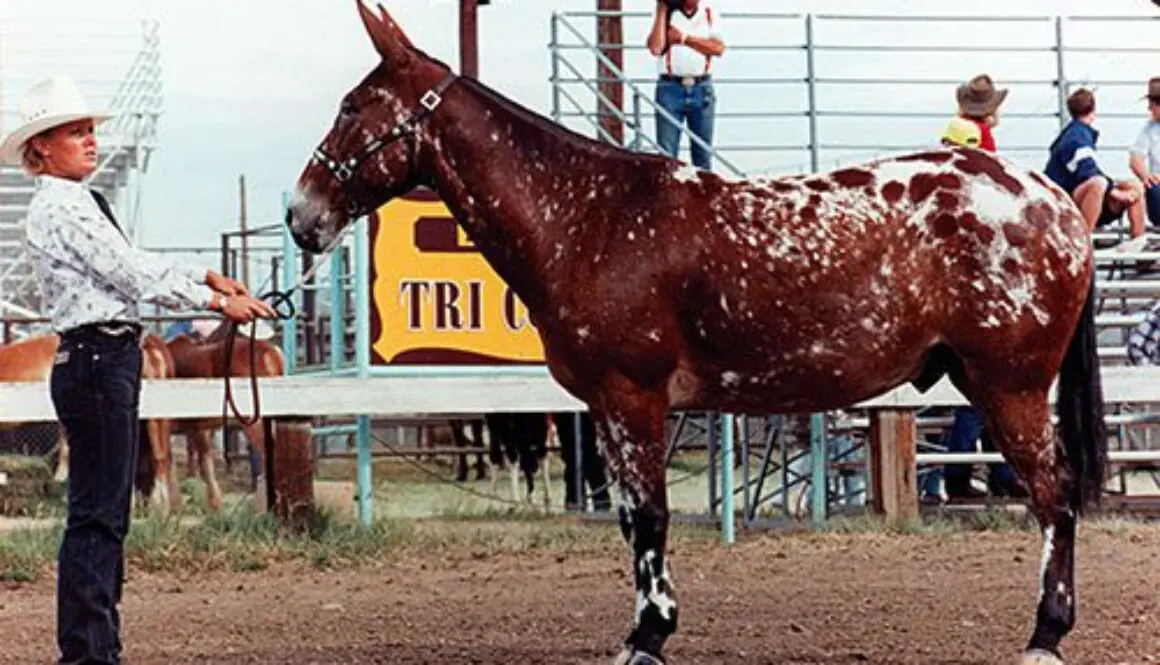
 By Meredith Hodges
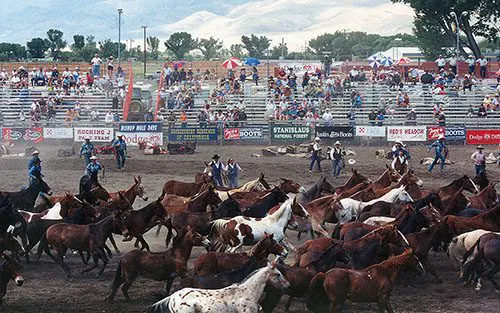
 The gift we have found with Longears is one that needs to be shared with others that they might also experience the joy and pleasure of these animals. In this hustle-and-bustle world, it is easy to miss out on the things that are really important like love, sharing and simple pleasures derived from personal growth. Mule and donkey shows are the vehicle we can use to bring these things to light and revitalize the appreciation of Longears. The show ring is a place where mules and donkeys can exhibit the results of experiments in a new realm of performance. Challenges are made and met with both humor and enthusiasm.
 transportation, inopportune geographical locations and the fear of politics. We must remember, however, that this intimidation was born of the horse show formats. There are literally millions of horses being shown all over the world and out of necessity the shows were divided and specialized according to ability and breeding. This is the only fair way to progress and still accommodate the growing numbers of equines and their owners. In the midst of this overwhelming competitive spirit, we sometimes lose sight of the true benefits of showing. Showing should be an opportunity to test your equestrian skills and to share new ideas and concepts with others. It should be fun and enlightening.
 Because mule and donkey showing is relatively new, there is much to be gained by participation. Those who feel that their animal is not of show quality can still attend shows and learn a lot about Showmanship, grooming and training skills. This development of new skills can make all the difference between show quality or not, particularly in performance events. Newcomers to showing also give the audience something extra-special. Their enthusiasm is often contagious and the audience is subtly invited to virtually join in the show. This is something that they too could manage and enjoy. Those who feel they just cannot get in enough training time can still participate in today’s donkey and mule shows as the class roster will usually include a lot of fun classes. If they do not, it is a relatively simple matter to contact show representatives and request these classes for your area. There are enough mule and donkey clubs today to sponsor all kinds of shows and one need only contact any one of then to acquire any information needed.
 Time and money are a great hindrance to showing today. Economic problems are quite prevalent these days, but as they say…”where there’s a will, there’s a way!” With careful planning and setting of priorities, one can determine the number of shows to attend in a season. Those of us who sponsor and work on shows are sensitive to the needs of our exhibitors and are willing to help in every way we possibly can. Most donkey and mule shows are not all that expensive and can be managed fairly easily. At most of the larger shows, those who wish can tie up to their trailers and save the stall fees. This is true in a lot of regions. Entering fewer classes will also save money and still provide you with the important learning and social benefits of showing. There are so many different sizes, colors, and abilities in mules and donkeys that we really need as many to participate as possibly can to properly represent our longears breeds.
 ast, but certainly not least, a word about politics. In the mule and donkey industry, we are promoting donkeys and mules. As individual animals meet new challenges and succeed, we should all feel a little warmth and joy for that individual who has obviously worked long and hard, and who stands as a representative of his breed. We can all be proud of his contribution to a greater cause. When in competition, compete against yourself and learn to derive joy and pleasure from your own improvements. There is a lot that showing has to offer besides ribbons and trophies. Showing gives you the opportunity to test your skills and to measure successes. It affords one the opportunity to assess different skills, make personal choices and to expand social interaction and education among those of similar interests. But most of all, showing gives each of us the opportunity to do our part in support of our beloved donkeys and mules!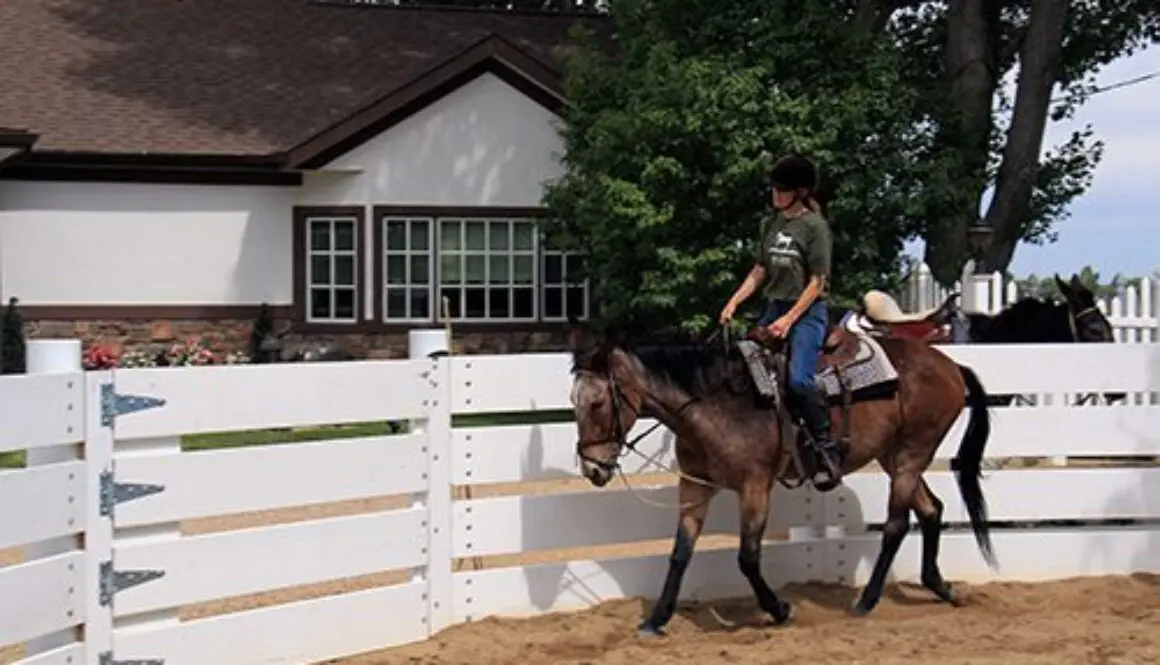


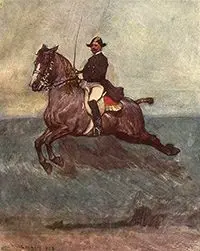 Why does Dressage training lend itself so well to training mules? In order to answer this question, we need to have a clear understanding of what Dressage really means and how it pertains to the mule’s mental and physical development in relationship to our own expectations. When most of us think of Dressage, we picture in our minds those elegant Lipizzaner stallions of the Spanish Riding School in Vienna, Austria.
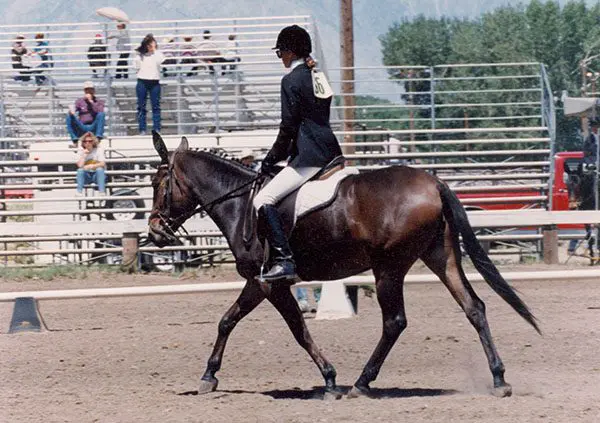 I have found that my mules will exhibit resistant behavior when they are confused or frightened, but never out of “stubbornness.” Often, we take it for granted that, since a young mule can walk, trot, canter, back up, etc. by himself, he should be able to do all these things with us astride. What many people don’t realize is that mules are born with as diverse postures as humans, and there are few mules that will exhibit good equine posture without being constantly reminded. People compensate continually for deficiencies in their own body structure, and posture will vary from person to person and situation to situation. For example, a straight-backed chair will cause most of us to sit up straight, which is healthy for the spine and neck. On the other hand, the sinking comfort of a plush couch will produce a collapsed posture, which can eventually produce sore back and neck muscles. In a similar way, a mule will have to sacrifice his good posture to accommodate an unbalanced and inexperienced rider.
 By taking the time to condition and strengthen their muscles, we allow our mules to engage in physical exercise that is not taxing and painful, thus, keeping their mental attitude fresh and happy. By conditioning your mule in a carefully sequenced pattern of exercises, you will more often avoid the possibility of throwing him off balance and into the confusion and fear that will lead to resistance and disobedience. With your own posture in mind, you can develop the rider and mule as one unit. The process is slow but thorough, and mutually satisfying.
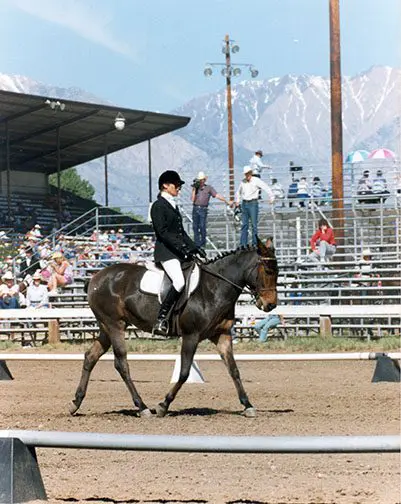 Equipment use plays an important part in the breaking saddle used, but many trainers today will agree that the less complicated equipment is used in the beginning, the better. The Western saddle may certainly be used for breaking but, from the mule’s standpoint, the Western saddle is heavier and there is quite a lot of leather between you and your mule, which can cause a certain amount of interference in communication. If the mule cannot “feel” his rider well, often times a leg or rein aid can come as a surprise and produce a response that is predisposed to resistance. For this reason, I prefer to start training in an all-purpose—or Dressage—saddle. However, I would recommend training in a Western saddle for the less-experienced rider, or if you are training a more easily excitable animal.
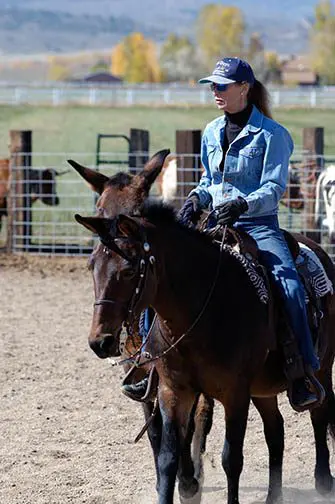 As in any exercise program, it is not advisable to drill and repeat every day. With a mule, as with any athlete, muscles need to be exercised and then allowed rest for a day or two between workouts to avoid serious injury. In between Dressage days, you can take your mule for a simple trail ride or just let him rest. The time-off and a variety of activities will keep him fresh and attentive. Three times a week is usually sufficient, with Dressage training for his proper development and conditioning, two days of simple hacking or trail riding and two days of rest. This also takes the pressure off of you. If you’re not into riding on a particular day, you won’t feel like you have to because your mule will retain his learning without the added stress of drilling day after day. Try to think of your mule’s training in terms of yourself: Would you care to be drilled to exhaustion day after day? How would you feel mentally and physically if you were? Dressage—whether it is basic or the most advanced—is a French word for training. It is thoughtful, considerate and kind, and will produce a mule that is mentally and physically capable of doing anything you might like to do with a relaxed and willing attitude. It may take a little longer, but the result speaks for itself.
 There are so many equine-related products on the market today that it is often difficult to decide which ones you really need and which ones you don’t. For instance, the subject of Splint Boots and Leg Wraps can be very confusing. How do you know when to use them? What types of Leg Wraps or Splint Boots are best? Do they really help? In what ways do they help? What kind of material should they be made from? And the list of questions goes on.
 are also used for support during training. These types of wraps are commonly used during Dressage training and typically only cover the Cannon Bones and not the fetlocks and pasterns. If you use Polo Wraps, or quilted cotton pads and wraps, learn to wrap them correctly to avoid pressure points that could cause circulation problems. Begin the wrap by placing the quilted pad or cotton pad in place around the Cannon Bone. Start the wrap at the center of the Cannon Bone, measure the tension on the wrap to make sure it does not interfere with circulation, that it is just snug and wrap down to the Fetlock joint. Then wrap upwards to just below the knee and Velcro the wrap in place. To keep the wrap from sliding down, use Duct tape just below the knee with one rotation of a tighter wrap to keep it in place. Consult with a professional to learn the proper wrapping technique. It is usually a hands-on lesson with a lot of practice! When they have lost their elasticity, it is time to throw them out.
 After his basic training, when your equine is participating in more stressful activities such as Jumping, Endurance, Reining and Racing (or in the case of an injury), it may become necessary to use a more supportive boot to lightly support already conditioned muscles and tendons. Support boots are designed to provide even support over the entire area that they cover. Be careful that they are neither too tight, nor too loose. You don’t want the boots so tight that they cut off the blood supply to the covered area, or not flexible enough to allow the joints to move freely. However, you don’t want them so loose that they ride down the legs.
 lameness if damaged, even by a small, seemingly insignificant cut or bump. If a hoof is unusually dry, severe cracks can occur. It is advisable to routinely use a hoof dressing in addition to the “Bell Boots’ to prevent traumatic cracking during repeated concussion.
 You might be asking yourself, “How can I tell a minimal support boot from a fully-functional medical support boot?” This can be quite confusing considering all the different kinds of leg wraps and splint boots that are out there. Some even look identical, but are not. Off-brand Splint Boots look a lot like Pro Choice Splint Boots, but they are made from inferior-quality materials that do not afford the degree of support and flexibility needed for successful therapy. Although these off-brands are designed for support and do cover the joints, they should be considered as more of a protective boot than a Therapeutic Boot. Splint Boots are strictly for the protection of the Cannon Bones because they do not cover the joints and offer very little support.
 By Meredith Hodges
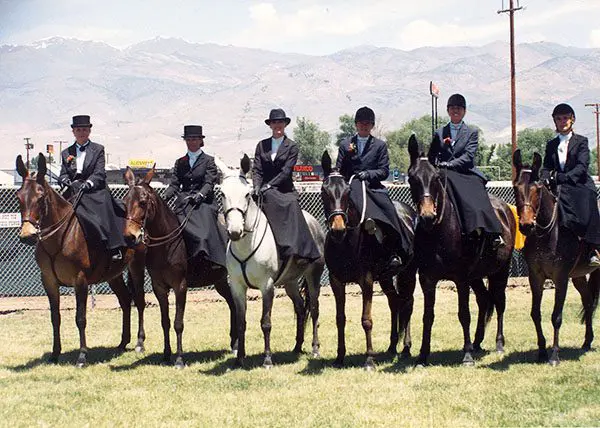
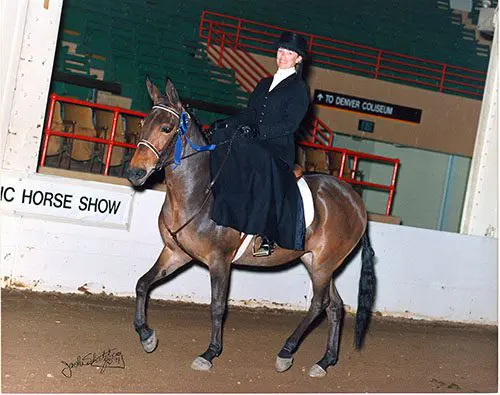
 Mules can be lovely, obedient and secure Side Saddle mounts when they are brought along correctly as has been exhibited nationally by Crystal Elzer and her mule, Final Legacy. I also fondly remember Ann Hathaway and her Dressage mule, Baby Huey, exhibiting Side Saddle in the Bishop Mule Days parade years ago. I judged the A.D.M.S. Nationals in Austin, Minnesota, and again, I witnessed a sprinkle of elegant Side Saddle riders on mules. In the state of Colorado, there was a surge of Longears Side Saddle riders beginning in 1983. The Side Saddle class for mules at the National Western Stock Show in Denver, Colorado previously had no less than 10 entries in the Side Saddle Class since its beginning in 1983 when an entire mule division was brought back after a long absence from the show.
 Generally speaking, people are quite impressed with the ladies who ride aside, and a common question often arises, “You sure look elegant, but how on earth can you stay on that way?!”
 My daughter, Dena and I truly enjoyed riding aside both in shows and in parades. Dena was thrilled to be able to finally best seasoned Side Saddle rider, Crystal Elzer in the Bishop Mule Days Side Saddle class. Crystal was a practiced Side Saddle competitor from California at Bishop Mule Days that had bested her for the previous three years.
 The training of your equine for Side Saddle should be accomplished fairly easily if your animal has a good foundation to start, and those trained in Dressage will convert the most easily. The absence of the leg on the right side gives problems most often during the left lead canter and during the leg yield left. Though many ladies will use a whip as a substitute for the right leg, it is not necessary. The animal at the higher levels of training (1st Level Dressage and above) have learned to follow your seat, and will do quite nicely staying under your seat as you move through the patterns. If your animal needs additional support, it can come through supportive indications through the reins. To achieve the left and right lead canter, for example, a slight push with your seat and a squeeze/release on the indicating directional rein will tell your animal the correct lead to take. It’s that simple!
 There are quite a few existing Side Saddle organizations today that are available to those of you who might be interested in taking lessons and participating in shows and award programs. You can check your local area for one near you or you can contact the International Side Saddle Organization, 75 Lamington Rd., Branchburg, New Jersey, 08876-3314, (706) 871-ISSO (4776),
  If you think you might be interested in learning to ride aside, contact one of these organizations to find out what people you should contact in your area to help you and others that share your interest. The feeling of elegance and accomplishment is unmatched. Our world could use a little more whimsy and romance to help the modern woman to enjoy her dignity and elegance in this fast-paced world. Hats off to the lovely ladies who ride aside!
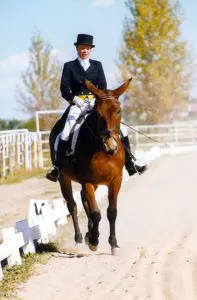 In order to perform the shoulder-in properly, it is important to understand its purpose. The shoulder-in causes the equine to engage his hindquarters so that they carry the bulk of his weight, giving him more freedom and suppleness in his shoulders and front quarters. A strong base must be established to carry this weight forward while the shoulders remain light and free to proceed forward while tracking laterally.
 Begin by walking your equine around the perimeter of the arena. When you reach the corner before the long side, make a ten-meter (30-foot) circle. As you close your circle at the start of the long side of the arena, maintain the bend that you had for the circle, using steady pressure on your inside rein. At the same time, nudge your equine with alternate leg pressure in synchronization with his hind legs as they each go forward. Squeeze your outside rein at the same time that you squeeze with your outside leg, and then release the outside rein. Ride the hindquarters straight forward from your seat and legs, as you offset the shoulders with your hands. Be careful that your inside rein is not so tight that your animal bends only his neck to the inside. As you squeeze with the outside aids, feel your equine rock his balance back to the hindquarters, giving you the sensation of pedaling backward on a bicycle. Simultaneously, you should feel the front quarters begin to lighten and become supple.
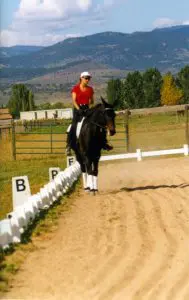 Take your time and don’t try too hard. Be content at first with two or three steps of shoulder-in and then straighten him down the long side of the arena. After a few accurate steps of shoulder-in, as he straightens his body, you will feel him surge forward with more energy. Collect and slow your equine’s gait through the short side of the arena and then repeat the exercise on the next long side. As your equine begins to understand the concept of rocking his balance to the hindquarters, the surge of energy that you feel when he straightens will become more and more powerful.
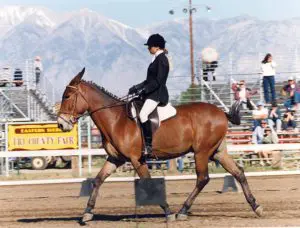 down the long sides. To add variation, ask him to lengthen across the diagonals (from corner to corner) as well. Your equine’s first impulse will probably be to shift his weight to the forehand and just speed up. For this reason, do not push him too hard too soon. At first, just ask for a little more energy—be aware that your rhythm and cadence will not be lost as his stride increases. He will just be spending more time in suspension. Keep the forehand light and free while you ride the hindquarters. Let your hand open slightly with the foreleg going forward on the same side, and close as the leg comes back. This will help you to determine how far you can let that stride go before the balance begins to shift forward. It will also allow you to check the balance with your hands before it begins to shift. If he has too much difficulty, you should go back and practice lengthening over ground rails again to gain more strength and coordination.
 As your equine gains strength in the hindquarters and is better able to carry your weight, his lengthened gaits will continue to improve until, perhaps a year or so later, he will be able to fully extend his stride at the walk, trot and canter. I caution you, however, that if your animal begins to rush, ask for less.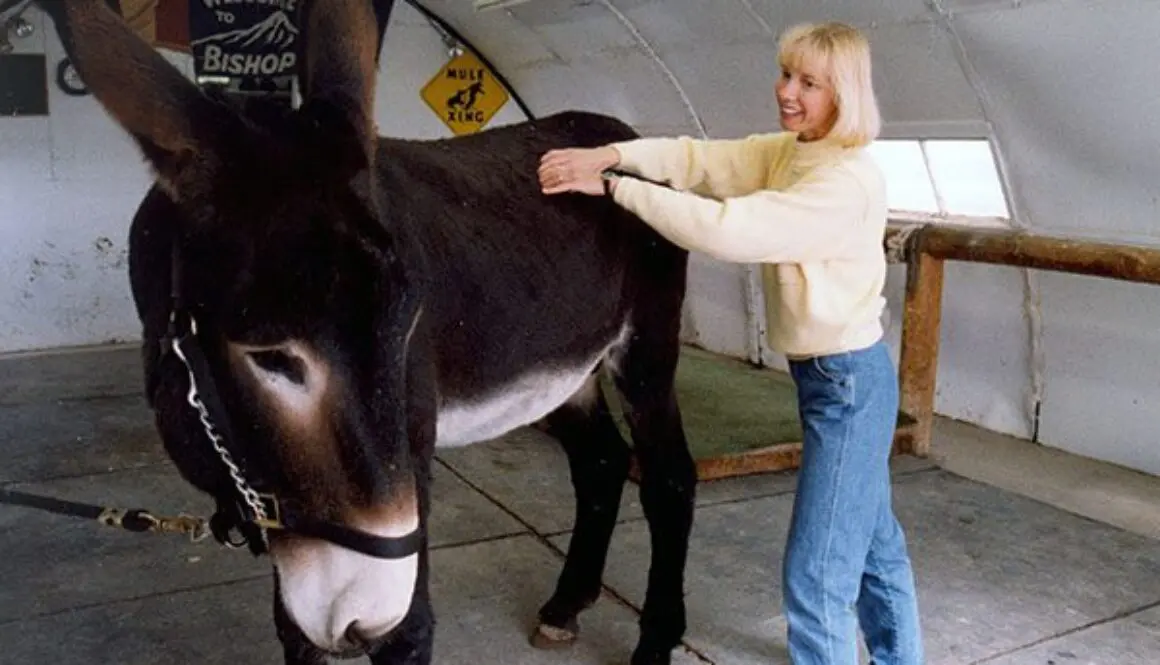
 Massage History
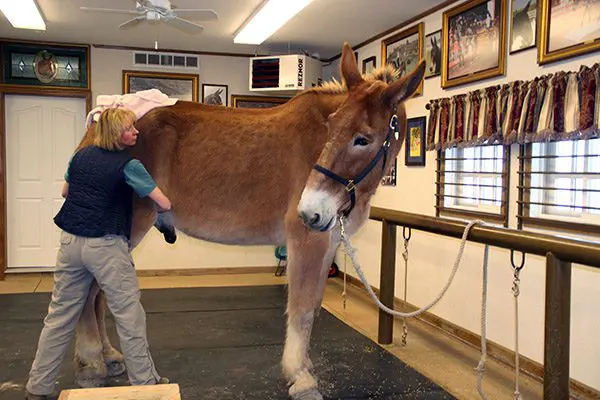 United States. Familiar French terms to describe four broad categories of massage (effleurage, petrissage, tapotement and frictions) were made popular by Johann Mezger. In the 20th century, their work was developed further by their students, and eventually found its way into regular medicine and the alternatives of health and healing. Swedish massage is a popular genre of classic Western massage. It includes Swedish movements, several forms of hydrotherapy, heat lamps, diathermy and colonic irrigation. Swedish massage is still offered at health clubs, some YMCAs, resorts and private clinics, although its heyday was between the 1920s and the 1940s.
 When we ride our animals daily and ask them for repeated movements in Jumping, Reining or Dressage, we demand a lot of their muscular and skeletal systems. This can shorten muscle fibers, restricting range of motion and putting undue stress on muscles and joints. Unforeseen problems can result such as lameness, arthritis, disk degeneration, or worse—a ruptured disk. These crippling dysfunctions do not always wait for the animal to age before they appear. Simple massage can prevent various injuries throughout your animal’s lifetime. Don’t wait for obvious injury to occur—preventive massage increases the length of the muscle fibers, taking pressure off the joints.
 When the muscles are allowed to contract and expand to their full length, they are able to absorb important nutrients that reduce fatigue. Massage also increases blood flow, which helps the body flush harmful toxins, such as lactic acid, that build up from normal use. Massage aids in reprogramming the nervous system to break patterns that can cause atrophy or knotted tissue. The following information is an introduction to some of the basic techniques of massage, which will enable you to identify areas of discomfort in your equine. It is not intended to replace the care of a licensed massage therapist or veterinarian. If you are unsure as to the severity of an injury, consult your vet!
 Palpate along the neck, beginning behind the ears and working your way back to the shoulder. Be sure to check the entire neck from poll to shoulder. Is one side more sensitive than the other? Ribs are a very sensitive area. Check each rib and between the ribs. If your donkey is nippy while being cinched or refuses to change leads, it could be from soreness in this area.
 The neck is a good place to begin your massage, making small circles with your fingertips. Imagine your circles as eyes, searching out lumps and bumps under the skin that are knots in the muscle fibers. Start behind the ears and work your way back to the shoulders. If your animal is heavy in the bridle, if he tips his head to one side, or if he has difficulty bending through the neck, he is exhibiting stiffness in this area.
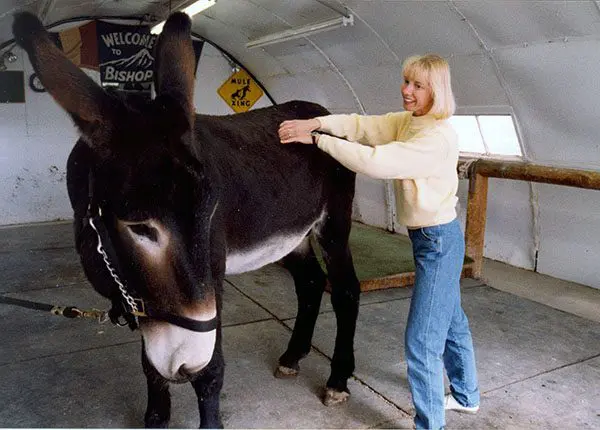 Ribs are a very sensitive area and can refer pain in many directions. Make sure to check each rib and the area in between them. Keep in mind that they span from the back to the belly; this is a large area of sensitivity due to the lack of muscle cover. Include the back when working on the ribs, using your fingertips to feel each vertebra and compare each side for symmetry. If you keep this area relaxed and flexible, your equine will bend more easily throughout his body.
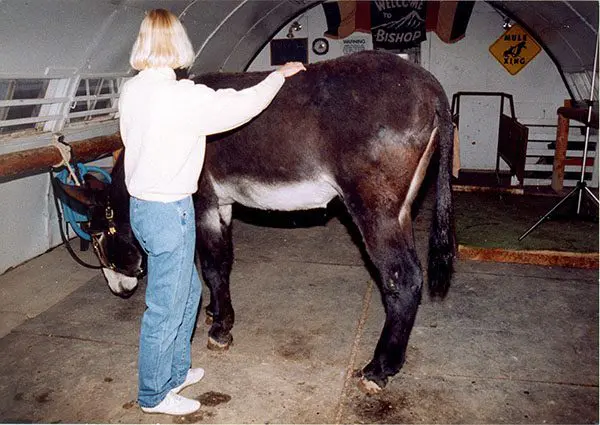 your hand to let you know that it feels good. If he moves away, he is telling you that you are exerting more pressure than he can comfortably endure, and you should go back to using your fingertips. When massaging the hips, the lower back and the last few ribs should be included. Soreness in this area can result from athletic movements like jumping, collection, sliding stops and rollbacks.
 A raised head and perked ears may indicate sensitivity. He is asking for lighter pressure, so learn to pay attention to the things your animal tells you about his body. This animal is still concerned about the pressure. Sometimes you will assume that your pressure is so light it can do nothing, but less is best.
 The front legs are a good place to begin your passive range-of-motion exercises. Be prepared to let go and get out of your animal’s way. Shake the limb under the animal and then move the limb forward and back, always being aware of his limitations. Each time you work with your animal, his range will increase.
 Massage therapy should never be harmful. For the sake of safety and comfort, do not attempt massage therapy for rashes, boils, open wounds, severe pain, high fevers, cancers, blood clots, severe rheumatoid arthritis, swollen glands, broken bones, direct trauma or if there is any chance of spreading a lymph or circulatory disease, such as blood poisoning. Avoid direct pressure on the trachea.
 Each time you ride, take the time to quickly go over your animal and assess his sensitive areas: check his range of motion to detect stiffness in the joints. Paying this kind of attention to his body will enhance his athletic performance and provide him with a wonderfully relaxing reward. Stretching the front leg forward is a great movement to make sure that the girth is not pinching your equine after he is saddled. Give your equine the preventive care that he deserves to make your way to a mutually satisfying relationship.


 Before most of us learn anything about horses, mules and donkeys, we tend to initially perceive them as large, strong and durable animals that can safely carry us anywhere we want to go and can participate in any number of equine events. This is essentially true. However, there can be a number of pitfalls along the way if you do not educate yourself and practice good maintenance, feeding and training practices.
 Let’s take this one step at a time. First, make sure that your equine is stabled in a place where he has adequate shelter from the elements, plenty of room to exercise himself when you are not there, clean water and a good feeding schedule. When an equine is nervous or high strung, it can usually be attributed to this very elemental beginning. Many show horses are kept in 12-foot by 12-foot stalls with limited turnout during the day, usually only an hour or two. Think about this for a minute. The equine is a grazing animal and his natural health is enhanced by what he eats and the fact that he is moving with his head down most of every day of his life. The only time his head is truly raised is when he is on alert.
 Muscles in the equine’s body, like our own, are structured in distinctive layers and are supported by ligaments and tendons. These muscles need to be strengthened in a specific order for optimum performance. Whether he is a foal or an older animal, his athletic conditioning needs this taken into consideration. The first exercises should be passive and easy to facilitate the strengthening of the core muscles closest to the bone. This is done with exercises on the lead line. It is not as important that he learns to negotiate obstacles on the lead line as it is how he negotiates the obstacles on the lead line.
 For instance, when approaching a bridge, walk with your equine’s head at your shoulder as if you were in a showmanship class. Stop at the foot of the bridge and encourage your equine to stretch his nose down and investigate the bridge in order to allay any fears he might have. When your animal has indicated he is not afraid by once again raising his head level with his withers, you can proceed. Face the bridge straight on, looking straight ahead and, while keeping his head at your shoulder, take the first step straight forward and onto the bridge, making sure he follows and places one front foot on the bridge itself. Next, ask him to place the other front foot onto the bridge, stop, square up his four feet (as in Showmanship) and reward. Continue forward in a straight line. Once all four of his feet are on the bridge, stop, square up and give him a reward. Then continue across the bridge maintaining your own good posture, hesitate at the last step, and then step off carefully, in good balance and with a coordinated effort. Ask him to place his two front feet on the ground while leaving the back feet on the bridge, stop, square up and reward. Your equine will learn to follow your lead and execute the task in the same balanced and coordinated manner and will be able to halt on command at any location.
 Halters that are too loose allow too much lag time between the time you ask by giving a tug and the time the equine receives the message. This usually results in an over-reaction from your equine and then an over-reaction from you as you try to correct the mistake. A halter that is too tight can be a distraction because it can create sore spots—the equivalent to a headache and no one likes to perform with a headache! The lead line typically should be a length that you can easily handle and that will give your equine some room to move away, but that can be reorganized easily, usually about six to eight feet long.
 This is when it can be beneficial to know the basics of equine massage therapy. There is a lot that you, as your equine’s trainer, can do without a professional equine masseuse, but you should always consult with a professional for lessons on how you can do your part. Make sure that the equine masseuse you decide to use is a person who knows equines and has at least 500 hours experience with equine massage therapy. Once you learn some massage techniques, you can often alleviate minor soreness exhibited by your equine. When your equine senses that your goal is to make him comfortable as well as successful in his work, he will be much more willing and able to comply.
 The ideal mule should have a head that is slightly longer than that of a horse, but proportionate to the size of the mule’s body. The features should be prominent and give an overall pleasant appearance. The ears should have length and be nicely shaped, and the eyes should be large, soft and kind, reflecting the mule’s health and intelligence. The forehead should be broad, tapering to a small and delicate muzzle, with a shallow mouth and well-aligned teeth, and the nostrils should be wide to allow for adequate respiration while working. Both the mare and the jack are responsible for the shaping of these characteristics, but the jack has primary responsibility where the length of the ear and the mass of bone are concerned. A jack with a longer ear will, more often than not, throw a longer ear to the mule, while the shape of the ear is determined primarily by the mare. The attractive or unattractive head of the jack can emerge in the resulting mule, so be sure to carefully consider the head on the jack to be used for breeding to produce an attractive head on your mule offspring. Standard-sized jacks and Large Standard jacks most often have a more refined head, while the head of a Mammoth jack may be less refined and possess
  thicker bone, particularly around the eyes and jaw line. In the case of saddle mule production, massive bone on an otherwise attractive head can be very unattractive, so using the smaller jacks would be better for a more refined look in your saddle mule (which is also true for the rest of the mule’s body).

 The shoulders of the mule should be at a nearly 45-degree angle, with a broad collar surface. Most mares will have this angle, but donkeys have a tendency toward short, steep shoulders, so, to insure that the mule has good shoulders and hips, consider a jack with good length and a lower angle through the shoulders and hips.
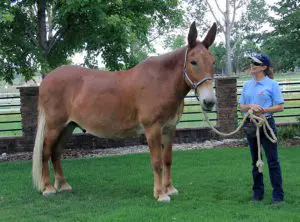 The chest of the mule should be deep and prominent, broad and well developed (it should resemble a turkey’s breast), with little or no line of separation (as is seen in a horse’s chest). Since jacks are generally narrower through the chest than are mares, the mare chosen for breeding should exhibit much width and depth through the chest to compensate for the lack of it in the jack.
 If a stockier mule is desired (as in the case of breeding for pack or draft mules), a stockier mare bred to a Mammoth jack will produce the desired thickness of bone in the legs of the mule. If a more refined Thoroughbred appearance is desired, the mare should be bred to a Standard or Large Standard jack in order to reduce the mass of the bone in the legs of the mule and retain refinement throughout the body. This does not affect the height of the mule, as the mare is primarily responsible for the mule’s height, while the jack is primarily responsible for the mule’s bone thickness. The forearm and stifle in the mule should be well developed and thickly covered with smooth muscle that tapers to the knee and hock in regular, well-defined lines. Again, these muscles should be thick and smooth, but not bulging, as in horses. The mare will compensate for the limited bulk muscling in the donkey jack, and the jack will contribute and maintain the smoothness of that additional bulk muscle in the mule.
 The coat and hair of the mule should be soft and shiny, covering pliable skin. The coat should be soft to the touch, denoting good skin health. Length and thickness of the coat are contributed by both jack and mare. Since donkeys have a typically thick coat of hair, a mare with a thinner coat will balance this thick hair coat in the mule, making him look sleeker and more horse-like than his donkey sire.


 Desensitization should be humane and considerate—never abusive. When we say we want to desensitize an animal, it simply means that we want him to become accustomed to touch and handling all over his body, particularly in areas such as his head, legs and rear quarters, where he is apt to be the most sensitive. An animal that has not been politely desensitized will tend to react more violently to touch. When properly teaching your mule to become desensitized, your touch should be presented in a pleasurable way, so that your mule not only learns to tolerate it, but to actually enjoy it and look forward to it. An old-time method such as “sacking out” is a somewhat crude technique that is used to desensitize an animal by tying the mule in a corner where he cannot flee, and then flinging a tarp or large canvas all over his body, including the head. Often times, it creates more problems than it can solve because it is rarely done politely. A mule that has been “sacked” about the head can actually become more sensitive because this inconsiderate approach teaches him that humans cannot be trusted. He perceives that they will fling things over his head, blinding him and causing him anxiety for no apparent reason. The mule will stand still only because he cannot move, but if he is given the opportunity to flee or fight back, he will more than likely do so. Thus, the old “obstinate mule” myths are actually most often the result of some fault of the trainer, and not the mule. Sacking out more politely will eliminate these kinds of potential bad habits.
 When his nose is finally up to the rail, run your lead around the post and come through the noseband on his halter and around the post again. Then tie him off snugly, so that his nose is tied as closely as possible to the hitch rail, making sure there is no slack. Now begin softly stroking your mule’s nose, using gentle yet firm strokes. Next, work your way up his forehead, and finally toward his ears. NOTE: Remember to use soft, gentle yet firm strokes, going with the grain of the hair and never against it. Do not “pat” your mule—it’s too threatening.
 When he will tolerate this, you can then cradle the ear in your fingers and with your thumb, begin to gently rub upward on the inside of the edge of his ear. Do not go too deep into the ear at first. After he is calm with this, you can begin rubbing downward into the ear with your fingers, while cradling the ear in your opposite hand, being very careful not to go too deep. Watch his eyes and allow him to “tell” you how deep to go. If it feels good, his eyebrows will raise and flicker. If he doesn’t like it, he will simply jerk his head away and that is your cue to lighten up. Most mules love to have the insides of their ears rubbed, so find the areas inside your mule’s ear that actually give him pleasure. Each individual mule will be different.
 In the next step, you will be in the same position, but you will close your hand around your mule’s ear and hold it with just enough pressure that he cannot jerk your hand loose. Do not hold too tight, grab or pull the ear—just maintain a quiet, gentle hold on the ear and go with his movement. If he pulls away, just slightly tighten your grip on the ear until he stops pulling and then lighten your grip again. Tighten only when he pulls away, and then immediately release when he stops resisting—tighten and loosen your grip as needed, and be sure to follow his movement. He will soon learn that if he doesn’t fight it, there is no discomfort. Never tightly grip his ear and do not tighten your grip any more than you need to in order to hold onto the ear—you never want to induce pain. Once your mule is tolerant of you holding his ear in this fashion, you can introduce the clippers, should you desire, using the same guidelines of tightening gently yet firmly when he pulls and releasing when he submits. However, introduce the clippers only after he has completely accepted you holding his ears.
 When you return with the difficult mule, tie him as before, stand directly in front of him (with the hitch rail between you) and gently remove the bridle with both hands lifting and sliding the crown piece over both of his ears simultaneously, so there is little pressure on his ears as it slides over them. If he still holds the bit in his mouth, hesitate for a minute when the bridle is off his ears and allow HIM to drop the bit. Removing the bridle this way will help to avoid chafing the ears and will avoid the bit hitting his teeth before you remove the bridle the rest of the way. Always removing the bridle in this fashion will encourage him to drop his head and will prevent bad habits such as pulling away or flinging his head.
 When your mule gets used to having his ears handled and being bridled while snubbed and haltered, you can then begin dropping the halter and loosely tying him while he is being bridled. Sometimes it takes a couple of weeks before you can drop the halter—this will vary depending on the individual mule, so just be patient. Your quiet, gentle perseverance will eventually win out and your mule’s ears will be desensitized and quite manageable. After you have mastered his outer ear and inner ear, you may find that your mule actually enjoys having his inner ear stroked or scratched, and bridling becomes easy. Integrating washing his face and cleaning his nostrils and ears during the grooming process should further help him to accept having his ears handled. Handling your mule’s ears can actually become a truly pleasurable experience for your Longears.
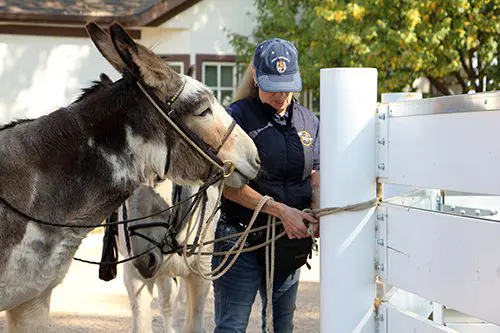


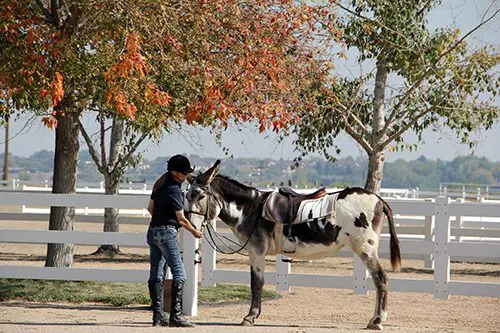


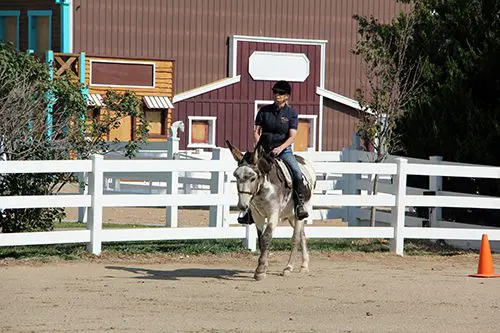


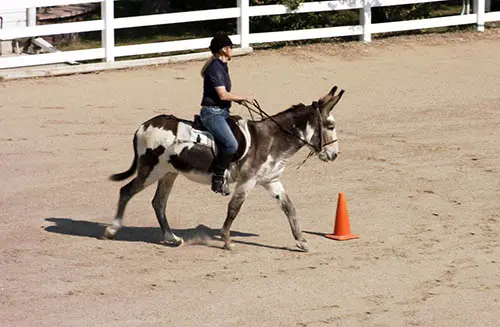
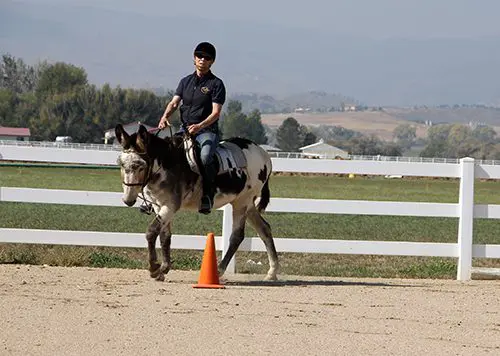
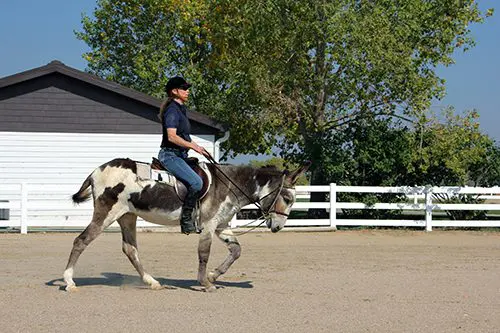


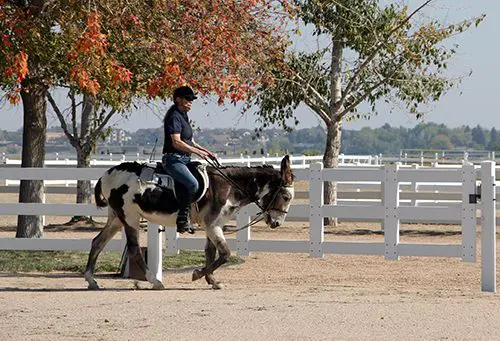


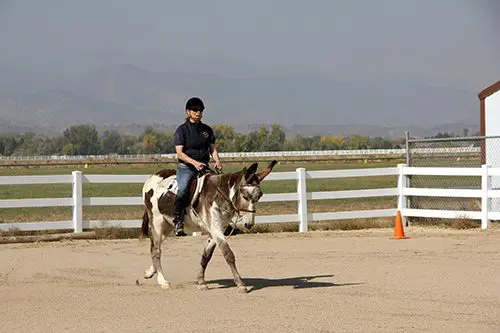


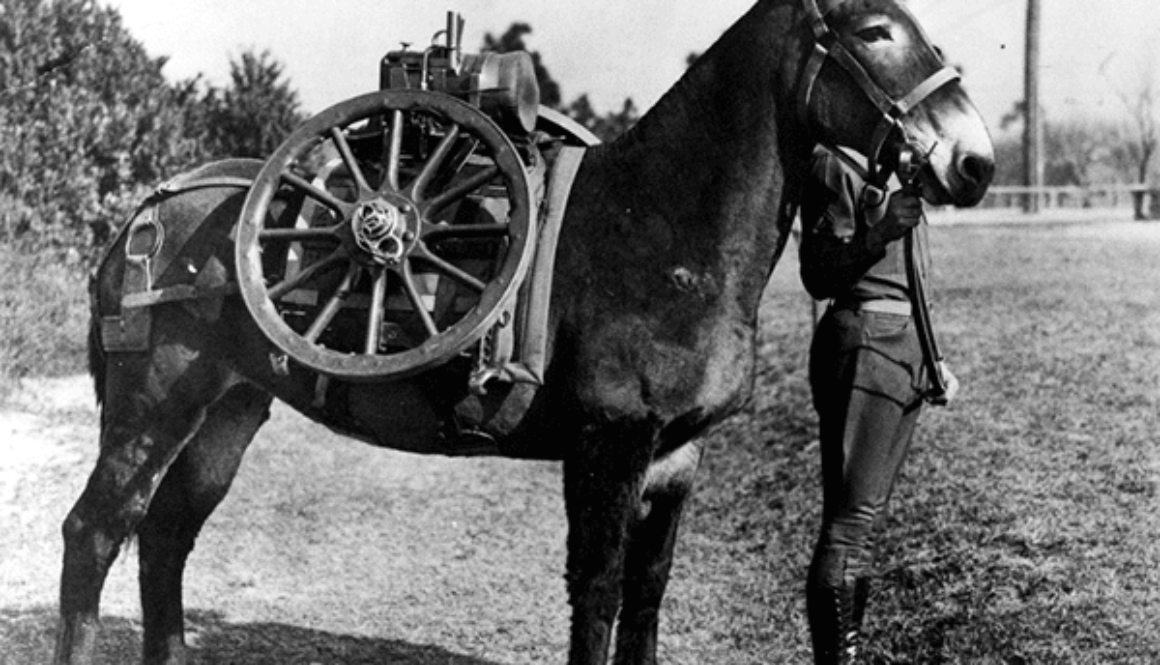
 Mules played an important role in our country during the Reconstruction Period: they patiently worked the fields, packed necessary artillery for the army, and served as a durable riding and driving animal in the westward movement. With the coming of the industrial age, their uses were minimized and they were faced with the possibility of extinction in the march of progress. Today, through the persistent determination of mule enthusiasts, mules are once again emerging as a conceivable asset to our economy and a unique form of athletic achievement and entertainment.
 They will generally follow you around until you leave the field, begging for attention or simply observing you closely from a safe distance. Mules have a genuine desire to make friends with those other than their own species. Also, they are a very sensitive animal and can read your intentions through the tone of your voice and your body language.
 Still, the most important thing to remember is to praise the mule with caressing and scratching when he does what you desire and back it up with the food reward. Mules love this kind of attention and will do their best to get it. If they are rewarded immediately when they are behaving as desired, the desired behavior will eventually become the norm. If bad behavior is ignored or gently reprimanded, it will fade to a minimum. The result is a pleasant, affectionate, and dependable animal.
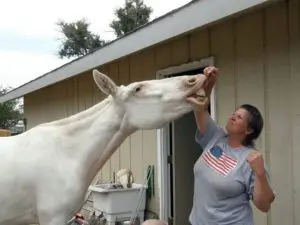 Mules and donkeys are wonderful animals. They’re strong, intelligent and what a sense of humor! But training a mule or donkey is different from training a horse. They require love patience, understanding and a good reward system. Negative reinforcement should be used sparingly and only to define behavioral limits. The result is an animal that is relaxed, submissive, obedient, dependable and happy with his work.
 long ago when there was virtually nothing published on this subject. Those of us who were training needed to use educational resources published on horse training and modify those techniques to better suit our Longears. This still left a lot of room for trial and error…and frustration for both the trainer and the animal.
 increased interest has come an increase in the numbers of animals that need to be trained each year. The few trainers who are competent with Longears could not possibly train even most of the animals that need it, even if it were geographically possible
 home and become a problem within as little as three months. It is important to take an active part in the training of your Longears. The more you can be a part of the training, the better for both you and your animal. Even if your mule or donkey is with a competent trainer, you need to plan on spending at least two days a week with your animal and the trainer so that your animal learns to trust you as well as the trainer. Being present and interactive with your animal at feeding time will solidify the trust he gains.
 series proves that this was a great way to reach people and help them to reach new levels of communication with their animals. People who never before had the courage nor confidence to even attempt such a thing are discovering the self satisfaction and elation of training their own mules and donkeys. Most people tell me it is the best part of their day when they can work with their animals. They are quite surprised at how easy it is to establish a routine that fits with their other weekly activities…thanks to the intelligence and forgiveness of these wonderful animals.
 At first, you might think there just isn’t enough time to spend with your animal to accomplish all this, but somehow we all manage to make time for these things when we have children. We learn to experience and grow with our children, as we can also do with our animals by being realistic with our expectations at each stage of growth and training. We give ourselves the time to do this without the pressure of being hurried. There are few times in this world when we are really able to “stop and smell the roses.” Longears can afford us this very special time if you only let them. Look upon the time with your donkey or mule as you would look upon the time you spend with your child. Some days will be for learning and some for just plain fun. When there are learning days, try to make them fun and stress-free. Someday you’ll find yourself saying: “I can’t believe he has turned out to be so good. I never really felt like I was ‘training’ him!”
 By Meredith Hodges
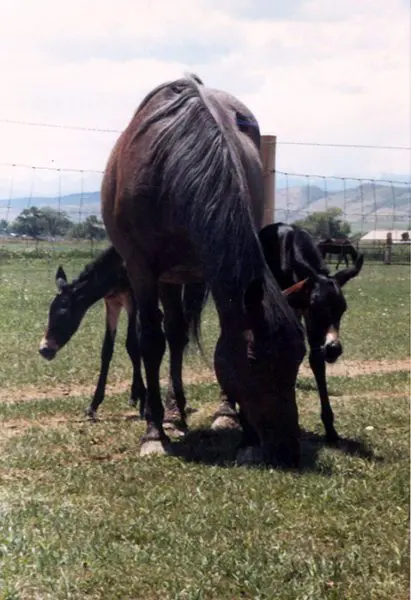 Mule foals are not too much different than human infants in their emotional needs. They require lots of attention, love, guidance and praise if they are to evolve into loving, cooperative and confident adults. In your efforts to get your young foal trained, bear in mind that he is still a child. If he is expected to fulfill too many adult responsibilities too quickly, he can become overwhelmed, frustrated and resistant. This is why it is important to allow your foal to have a childhood. You can turn this time into a learning experience by playing games with your foal that will help him to prepare for adulthood without imposing adult expectations on him when he is too young.
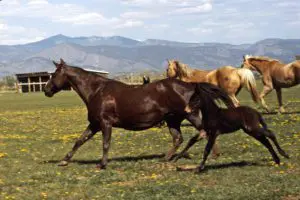 The first component of developing a well-adjusted adult mule is to establish a routine that will give your mule foal a sense of security and trust in you. Having a definite feeding schedule can help a lot. If you take a few minutes each morning and evening to scratch and pet your foal while your foal’s dam is eating and after he has finished nursing, he will associate you with a very pleasurable experience. If his dam is busy eating, she will be less likely to think about running off with him. If your animals are on pasture, a short visit once or twice a day with a ration of oats and plenty of petting while paying special attention to the intensity of your touch on his body will accomplish the same thing.
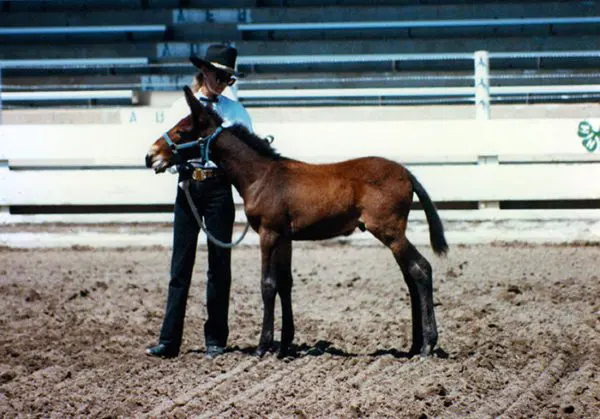 When your mule gets a little older and is ready to be halter broken, you can use your pleasurable status with him to your advantage. First, halter him and tie him to a fence with a safety knot (see DVD #1 n my Training Mules and Donkeys series). Leave him like this each day after breakfast for about half an hour, making sure to return to him every ten minutes. Each time you return, if he doesn’t become tense and struggle, untie him and ask him to follow you. If he refuses, just tie him up again and come back again ten minutes later and try again. If he comes with you, even if it is only one step the first time, take his halter off and play with him for a little while and then end the lesson. This will maintain your pleasurable status with your foal while he learns the things he will need to know as a young adult. In the next lesson you can ask for more steps before playing and ending the lesson
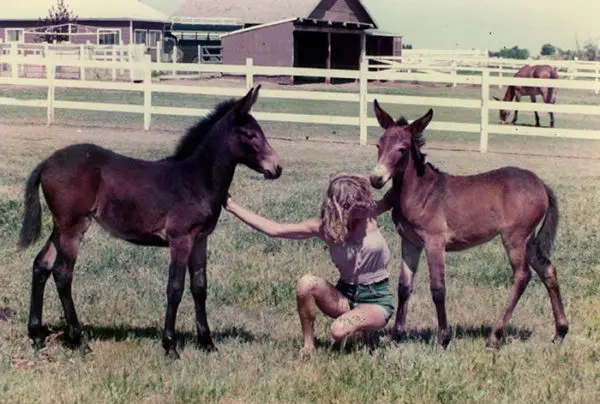 When handling your mule foal, always be sure to give him time to relax and accept a situation…and he probably will. Never get in a hurry and do not try to force anything—or your foal will be happy to oblige you with more resistance than you ever imagined possible! And remember, you can catch more flies with sugar than you can with vinegar, so go out there and have a good time with your little longeared pal. He’ll be glad to be your best friend if you learn how to be his best friend.
 As you ride your equine through walking exercises, try to stay soft, relaxed and following forward in your inner thighs and seat bones. Get the sensation that your legs are cut off at the knees and let your seat bones walk along with your animal—lightly, and in rhythm with him. If he slows down, just bend your knees and nudge him alternately with your legs below your knees, while keeping your seat and upper legs stable and moving forward. While your legs are still, they should rest gently on his sides in a “hug.” Do not push forward in your seat, but allow him to carry you forward. When collecting the walk on the short side, just bend both knees at the same time, nudging your equine simultaneously on both sides, while you squeeze the reins at the same time.
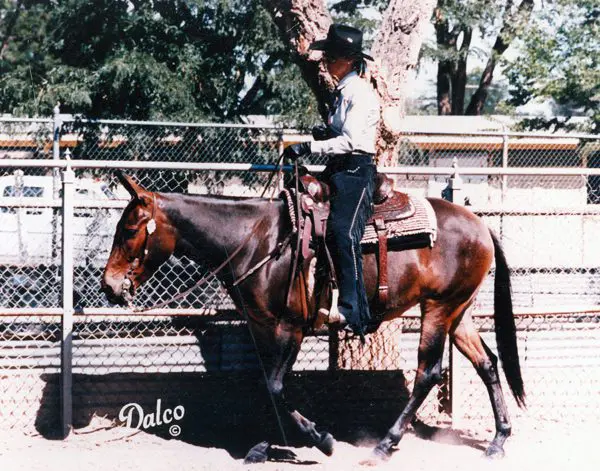 Most of us feel that we do not balance on our reins as much as we actually do. If there is any balancing on the reins at all by the rider, your equine will be unable to achieve proper hindquarter engagement and ultimate self-carriage. Here is a simple exercise you can do to help shift the weight from your hands and upper body to your seat and legs. Begin by putting your equine on the rail at an active working walk. On the long side, drop your reins on his neck and feel your lower-body connection with him as you move along. In order to maintain your shoulder-to-hip plumb line, you will find that you need to tip your pelvis forward and stretch your abdominal muscles with each step. If your lower leg remains in the correct position, this will also stretch the thigh muscles on the front of your leg from hip to knee. There is also a slight side-to-side motion as your animal moves forward that will cause your seat bones to move independently and alternately forward. There is no doubt that you can probably do this fairly easily right from the start, but to maintain this rhythm and body position without thinking about it takes time and repetition.
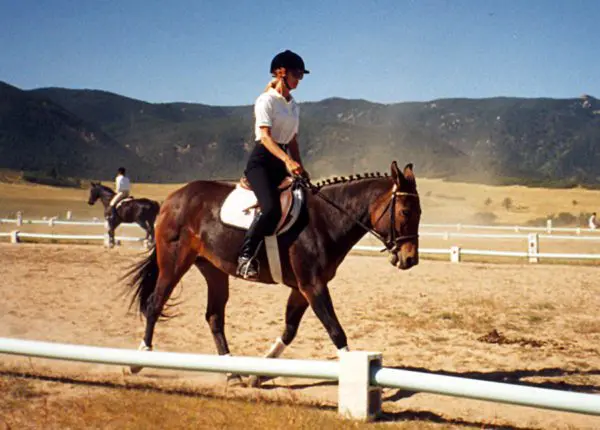 If your animal drifts away from the rail, you will need to post with a little more weight in your outside stirrup. As you go around the corners, be sure to turn your eyes a little to the outside of the circle to help your positioning. As you approach the short side of the arena, bring your arms backwards and straight out from your shoulders in a “T” formation, while keeping your upper body erect. As you go through the corners, just rotate your arms and upper body slightly toward the outside of your circle. When you come to the next long sides, bring your arms, once again, in front and parallel to your shoulders and repeat the exercise.
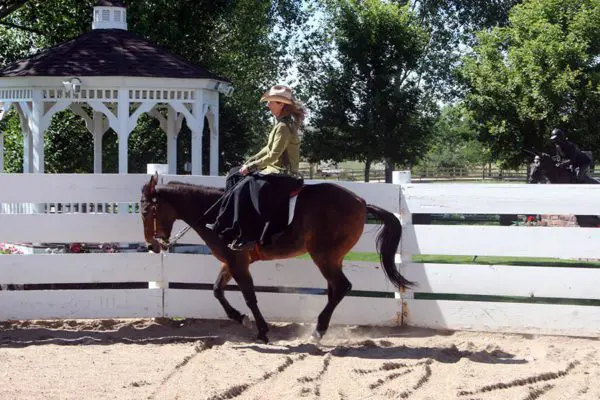 Notice the different pressure on your seat bones as you change your arm position. The forward arms will somewhat lighten your seat, while your arms to the side tend to exert a little more pressure. Consequently, you can send your animal more forward by using your seat as you go down the long sides, shortening that stride with a little added pressure from the seat bones on the short sides. When you wish to halt, put your arms behind you at the small of your back to support an erect upper body, and let your weight drop down through your seat bones and legs. Also, remember to use your verbal commands often in the beginning to clarify your aids (effect of the seat, legs and hands) to your equine. If your equine doesn’t stop, just reach down and give a gentle squeeze/release on the reins until he stops, but be sure to remain relaxed and continue to drop your weight into your seat and legs. Keep your inner thighs relaxed and flexible. Do NOT squeeze! Think DOWN through your legs on both sides. Before long, he will begin to make the connection between the weight of your seat and your command to “Whoa,” and your seat will take precedence over your reins.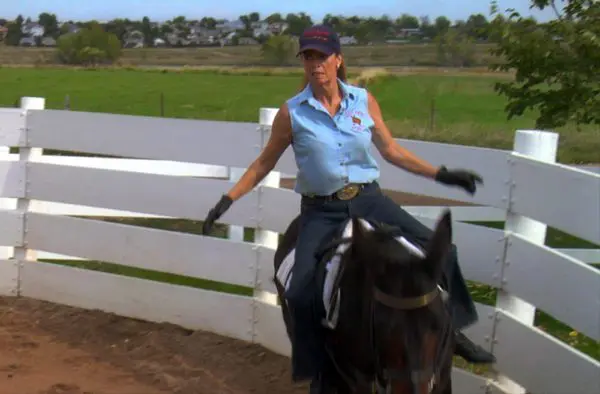

 By Meredith Hodges
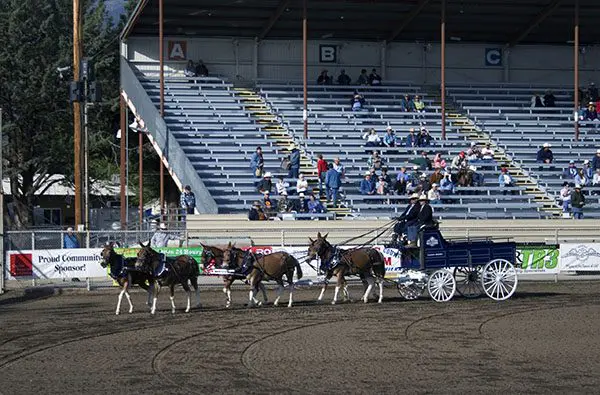 They are limited only by the imagination of The gift we have found with Longears is one that needs to be shared with others so that they might also experience the joy and pleasure these animals have to offer. In this hustle-and-bustle world, it is easy to take for granted the importance of love, sharing and simple pleasures derived from personal growth. Mule and donkey shows are a vehicle we can use to bring these things to light and revitalize the appreciation of Longears. The show ring is a place where mules and donkeys can exhibit the results of experiments with their owners and trainers, in exceptional horsemanship and performance, where challenges are met with both humor and enthusiasm. They can be pets, performers, pleasure mounts, or just plain hard workers.
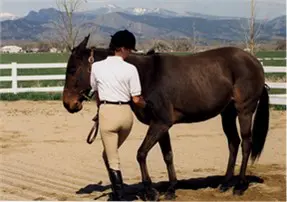 Because showing mules and donkeys is relatively new, there is much to be gained by participation. Those who feel that their animal is not of show quality can still attend shows and learn a lot about Showmanship, grooming and training skills. This development of new skills can make the difference between show quality or not, particularly in performance events. Newcomers to showing also give the audience something extra-special. The enthusiasm of the newcomer is often very contagious and the audience always finds Longears shows incredibly entertaining. They feel that this is something that they too could manage to do and enjoy. Those who feel they just cannot put in enough training time can still participate in a lot of the plain old fun classes that the show rosters include. There are enough mule and donkey clubs today that sponsor all kinds of shows and all one needs to do is contact any one of them to acquire the information that you need.
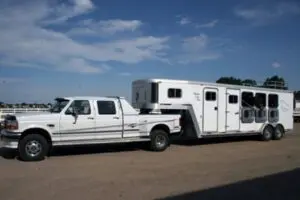 Geographical locations and transportation can also restrict showing opportunities. With a little help and a lot of ingenuity, these issues can be resolved. One just needs to decide which shows would benefit them the most and then plan accordingly. If the show is some distance away, families, or groups, can pool their efforts and cut expenses dramatically. The growth of the mule and donkey industry has increased the number of shows throughout the country. They are now more numerous in remote areas and easy to reach. If you live in a really remote area, you might want to start a Longears Group and host your own schooling shows, or you can always request permission to ride in the Open Classes at Horse Shows in your area. Either way, you are doing important work in the promotion of Longears!