 By Meredith Hodges
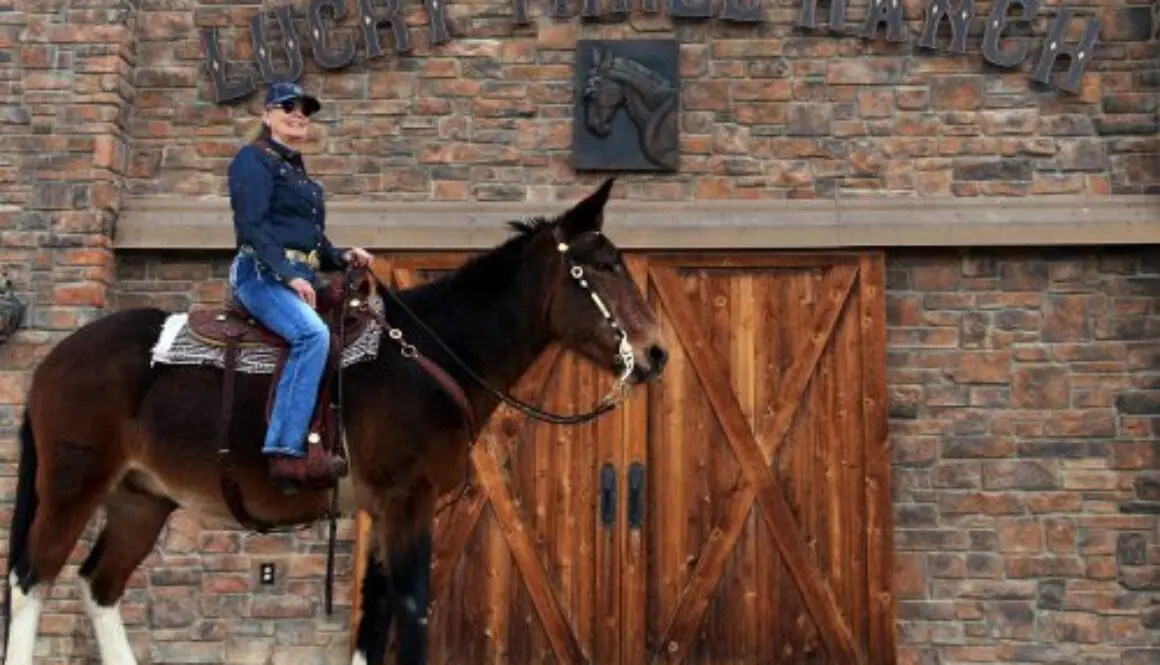
Bea was the epitome of good manners and propriety, and is therefore allowed in the house! She has been known to help with the dusting, but she also enjoys a good game of cards or a hearty round of eight ball.
She has a little trouble with the pool cues, but her nose will sometimes suffice. She is a little leery, however. Chalk on one’s nose can be a little humiliating! Especially to a perfectionist!
Although Bea isn’t particularly fond of football, she does love the Broncos like any true Coloradoan. Nothing was more exciting than when the Broncos won the Super Bowl!
The owner of the Embassy Suites hotel in Fort Collins, Colorado made a bet with one of his employees that the Green Bay Packers would win the Super Bowl that year. If he was right, the employee would have to sit outside the hotel for a whole day on a toilet seat in his boxers. If the Broncos won, the owner would have to paint his face orange and blue and ride a mule all the way around the hotel. Well, guess who won and, guess who the mule was?! Yes, it was our own Lucky Three MaeBea C.T.!
Bea, dressed to the nines in Bronco gear and sporting a Bronco flag, carried the humbled Green Bay Packer fan and hotel owner proudly around the hotel while reporters scrambled asking questions and taking pictures. Later that day, she was on the five o’clock news in all her glory!
Bea was a natural born movie star! The cast always loved to work with her because she was always so willing and cooperative. A day of shooting can be quite exhausting, but Bea never was one that needed more than one or two takes. You told her what to do and she just did it. She put her heart and soul into everything she did and her expressions and actions were always appropriate. She helped me to produce three hardbound books, three manuals, eleven training videos and three documentaries and over fifty half-hour programs for television. Our website is now loaded with Training Tips, Video On Demand and access to our YouTube Channel, Facebook and Twitter posts, all based on the knowledge that I gleaned from this unique and amazing partner.
Although they never finished the movie, DIX Country Pictures chose Beaas Wadi’s understudy from hundreds of applicants.
She did a photo shoot in which she appears on the Colombian Relief poster with Juan Valdez! While we were shooting, it was hard to keep a straight face. Here we were in the middle of a grassy pasture, asking Beato put on her best sad face… without eating the grass! Of course, in true form, she did as we asked, but her facial expressions kept us in stitches!
In 1998, we did a shoot with the Discovery Channel and Bea can be seen as the mule in their production of “The Ultimate Horse.” What a gal!
Bishop Mule Days is always fun and exciting, but one of the things Bealiked the most was to be in the Bishop Mule Days Drill Team. She spent more than 10 years on the team and worked her way into the coveted leader position. Our drill instructor, “Sarge” was tough, but so was Bea!
One year, during drill team practice at the gallop with 30 other mules, we were doing the frightening “Crossfire” when her split-ear bridle came off and fell to her chest. I hollered at “Sarge,” but she wasn’t the least bit sympathetic and said, “Just keep going!” Well, Bea finished the entire drill without her bridle and never missed a lick!
Another time, Diane Hunter was riding her in the drill team when she got into some really deep dirt and tripped and fell right on top of Diane and the flag. I saw what happened and saw Diane pinned underneath Bea’s body. Everybody stopped cold and I hollered at Bea to stay still which she did. “Sarge” and I ran over to assess the situation and once we got to Diane and figured out that it was OK for the mule to get up, we told Bea to get up and she did…very carefully. “Sarge” turned to Diane and said, “You know, you owe your life to that mule. Any other mule would have got right up and probably would have kicked your head in!”
Everyone loves a parade and Bea was no exception! She competed in numerous costume classes and parades, but dressing up for the holidays was her favorite. She placed first in many a parade and had no problem with any theme you might want to try.
She loved to wear her Santa hat at Christmas time and she made a pretty scary wicked witch on Halloween!
Bea participated in the American Donkey & Mule Society entry in the 1988 Tournament of Roses Parade ridden by Gary Hodges in English attire along with her two stable mates, Lucky Three Sundowner ridden Dressage by me (Meredith Hodges) and Lucky Three Ciji ridden by Diane Hunter in Fox Hunting attire.
Bea may be a perfectionist, but she was certainly not a prude. She was always willing to try anything you might ask. At home, Bea worked hard checking fences, moving cattle and much more.
Early in the fall one year, two cowboys asked me if I wanted to help them move some cattle down from the high country and asked if I thought my mule could do it. I nodded confidently and we were off. We drove those cattle up and down the rocky terrain through thickly wooded trees, shrubs and bushes. We were headed up one hill behind the cattle and the two cowboys when we came upon a three foot diameter tree that had fallen across our path. The cattle dove into the underbrush on either side of the tree, the cowboys slid to an abrupt halt and Bea came right up the middle, jumped the tree and stayed on the heels of those cattle the entire way! No one was more surprised than those two cowboys, except maybe their horses!
The Northern Colorado Horse Trials cross-country phase was held at Lory State Park in Fort Collins, Colorado. Each year, our club is responsible for repairing and setting up new jumps on the course. The only hitch is that there are no motorized vehicles allowed in the park. We had dozens of heavy telephone poles to move in order to do our job. Of course, the event horses weren’t up to the job, but Bea certainly was! She pitched in and dragged those poles to their new locations and helped build and repair the jumps. Then, a couple of weeks later, she came back and competed to second place in the competition itself! Talk about versatility!
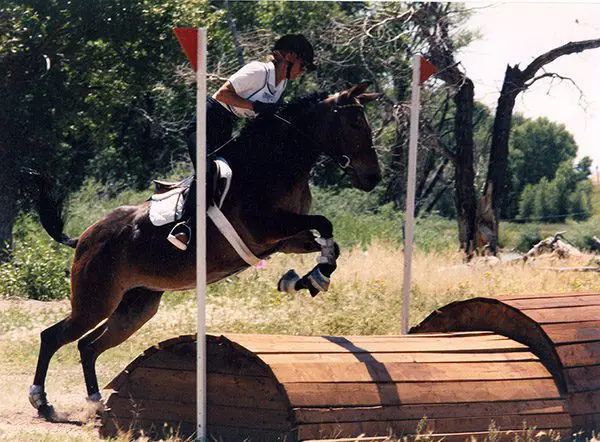
Bea loved to jump! It took Dressage to get her elevated in front enough to be proficient at jumping, but once we got her there, she cleared fences without batting an eyelash. She always took the jumps right over the center and never expended any more energy than necessary to clear the fence in beautiful form.
She competed in the Bishop Mule Days jumping classes for almost a decade coming in second only to the infamous pair, Lou Moore-Jacobsen and Empress Josephine. One year, she actually took first against Empress Josephine when she was penalized for clipping a rail in the last go round. Lou and Josephine knew from then on, they could not make even the smallest error against Bea or the competition would be lost.
Her shortened frame allowed her to make sharp turns and still clear the fences in timed classes where she would ordinarily be at a disadvantage against taller mules.
Everything Bea did with the bridle, she would do without the bridle and jumping was no exception. She did bridleless courses at home and in exhibition. In one exhibition, she did a Dressage and bridleless jumping exhibition to music performed by the Denver Symphony Orchestra as a tribute to our troops during Desert Storm.
Bea was the eternal perfectionist and only clipped two rails in her entire jumping career. She was horrified when it nicked her freshly polished hooves!
In 1986, Bea and I began lessons with instructor/trainer Melinda Weatherford in Dressage. The same year, I went to the United States Dressage Federation Convention and introduced them to the idea of allowing mules such as Bea to compete in dressage schooling shows and competitions. There were some discrepancies in the rules, but they finally decided to allow mules in lower levels at schooling shows with the discretion of the individual show committees. This was a major breakthrough for mules in equine society!
A few years later, she was instrumental in helping to get dressage classes added to Bishop Mule Days which has in more recent years become quite popular and a wonderful showcase to demonstrate how very well trained these mules can actually be.
She has shown dressage in all sorts of different disciplines: Dressage Shows, Dressage Schooling Shows, Two-Phase Combined Training Shows, Three-Phase Combined Training Shows and in Two-Phase Combined Driving Shows. Her scores were always high and she was always in the ribbons right from the start. The most remarkable thing about the training in Dressage was how it enhanced her driving skills so drastically that she won the first, second and the only two Two-Phase Driving Shows she had ever entered. People were always skeptical to start, and the first to applaud her performances after they saw her! The most prevalent comment during the ribbons ceremonies was, “My God! It’s a mule!”
For a decade, Bea was shown in numerous classes by my daughter, Dena Hodges from the age of six to sixteen. They showed together in Western Pleasure, English Pleasure, Driving, Mule Jumping, and Two-Phase Combined Training shows. They were always in the ribbons and most often first or second in their class.
In later years, she served as a mount for my two stepchildren (six years and ten years) on mountain trail rides, during lessons, and over jumps at the ranch. It was almost comical to see how carefully she would go over the 18” jumps with a child on her back so as not to unseat them!
When we were in Salt Lake City, Utah showing, my nieces and nephews who lived in Alpine came to see her and were thrilled to be able to take a ride around the fairgrounds with their cousin, my daughter, Dena on Bea. As usual, Bea was infinitely careful and protective of the children.
Bea was everyone’s favorite mule to ride. She carried amateur riders into the ribbons in numerous shows as well as being a schooling mule for students during riding lessons for all ages and abilities here at the Lucky Three Ranch.
Her kind and obedient manner made her a truly safe mount. She was always aware of her riders’ abilities and helped them any way she could to stay on board and ride effectively. With her help, as an instructor, I am more easily able to assess the ability of the students and thereby, better able to teach at appropriate levels. She was truly a remarkable individual!
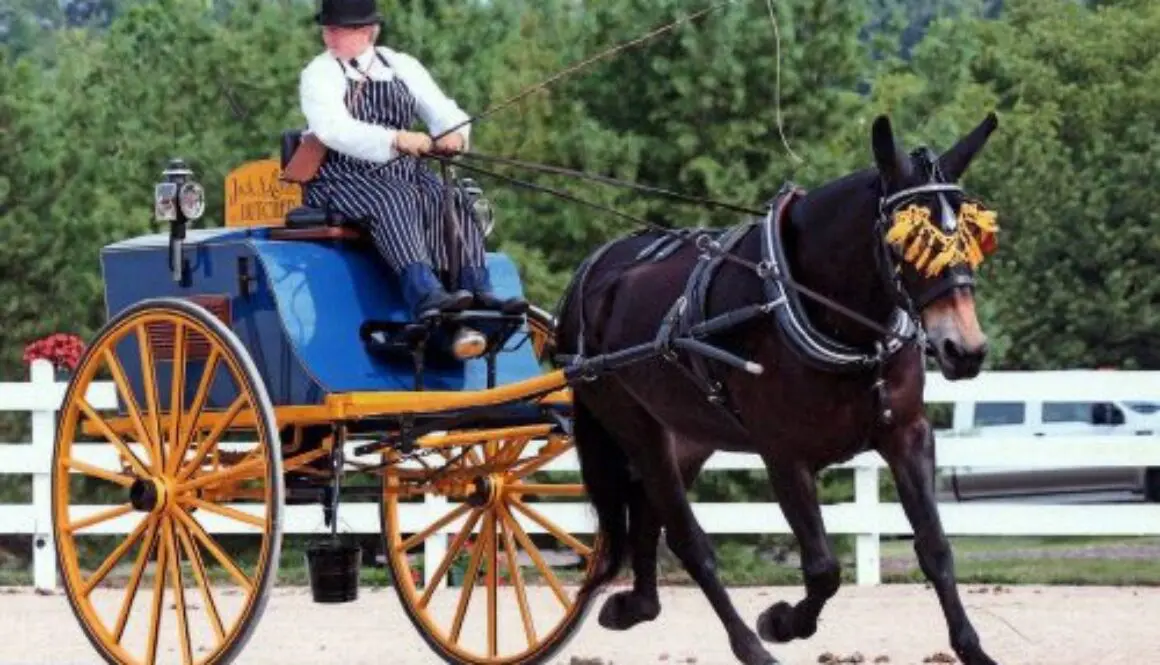
Driving was always one of Bea’s strengths. I remember when I broke her to drive. I didn’t really know what I was doing. She took to the harness well, ground drove along side of the cart and didn’t seemed to be bothered by any of it, so within three days, I hitched her to the cart and proceeded to lead her out to the pasture where we would have more room. We were going around a 90-degree turn as I was leading her, hitched to the cart, when one of the wheels caught on the fence. She did a quick little scoot for a step or two which only caused the cart to flip over. She wound up with on of the shafts over her head and the other between her front legs. She stopped cold and allowed me to right the cart and get her untangled. Then we went out to the pasture and had our first drive with me in the cart with no further incidents. No big deal!
She was a driving star! She loved it and won nearly every driving class she ever entered. She competed in numerous driving related events. In breed shows, she competed in Pleasure Driving, Drive & Ride, Gambler’s Choice and Obstacle Driving. She went on to win at the only 2 Two-Phase Driving shows she’d ever entered, showing in Dressage Driving and the Cones Scurry (accumulated points) against…YES, horses again!
She schooled numerous students in driving and was so good with her verbal commands that if I let a student drive and they went dangerously to the left and I said, “Gee,” she would ignore the student and do what I asked to keep things safe. What a mule!
Bea was always so steady that she was the perfect Side Saddle mount. She competed in Side Saddle at numerous shows and won many of those classes. She competed in Side Saddle at the National Western Stock Show with several different riders, but always placed in the top three regardless of who was riding her.
Bea gave many exhibitions in Side Saddle at various fairs and events, always impressive to the people who were fortunate enough to be there.
In the 1990s, Bea was part of the Bishop Mule Days ladies’ Side Saddle Quadrille that showed in the parade and Grand Entry. She was ridden by a total stranger of limited ability and got her safely through the event. Beahad won herself yet another devoted fan!
In 1993, I rode her Side Saddle in the Inaugural parade in Washington D.C. It was a grueling 24 hours, standing around waiting to go in very cold weather and in the midst of more “mule eaters” than you could count. Bea seemed to take exception to the 50-foot Elvis Presley float, but otherwise handled the whole situation with her usual grace and dignity. Bea must have caught Clinton’s eye as she strolled elegantly past the viewing area because he turned away from the man he was speaking to and gave her a hearty thumbs up! We responded in kind and in her usual style, Bea smiled broadly!
Western Pleasure was fairly easy for Bea because her stride was so short, but when it came time to try her hand at English performance, this was a definite disadvantage. She had a rather short neck which made it difficult for collection, and her downhill build made it hard for her to lengthen her stride. But again, Bea gave her very best and cooperated when we lightly weighted her front legs to encourage some reach. In nine months, she had increased her length of stride by 18 inches!
She was on her way to a career in English events. We began enhancing her English performance with Dressage in 1986. She continued to improve, winning numerous English flat classes and always placing in the top five.
She competed against horses in a few Western classes and did well, but she really began to beat them consistently in the English classes. Mule shows alone could never offer Bea enough of a challenge, so competing against horses offered her the opportunity to push herself farther. And she did, to the disgust of many a horse person!
Bea was always an impeccable trail mule both in the show and on the trail. She did not always show in a lot of Trail classes because she showed so many other classes, but her technique was careful and deliberate. She would always wait for the cues from her rider and respond accordingly.
Trail experience for her was the simple enjoyment of many rides in the treacherous Rocky Mountains. I remember a specific time we went up a trail that was particularly narrow and steep. She was leading four people on horseback, when the trail disappeared into a rock slide. She was trapped on the narrowest part of the trail with four horses behind her. She couldn’t turn around and she couldn’t back up. After assessing the situation, I asked her to do a 180-degree turn on the haunches and swing her front legs over the 100-foot ledge to get turned around. She did as I asked and got us through that compromising situation with the finesse of a ballet dancer! The people on the horses were nothing short of amazed! When we went trail riding, or down the road, everyone wanted to ride Bea!
Bea began her show career as a Driving and Western Pleasure/Trail mule. She showed heavily in numerous Western classes over several years from 1984 to 1989 always placing in the top five.
She competed in numerous Western classes: Western Pleasure, Youth Western Pleasure, Trail, Western Riding, Reining, and a combination Trail/Reining class called Ranch Riding. She had several different riders over the years and was always willing to give her best for anyone who rode her.
Her accomplishments were so extensive that it would be impractical to list them all. In addition to showing Western, she did Western exhibitions at various local events and was the subject of many a newspaper or magazine article throughout her career.
Bea began her show career in Colorado in 1982 showing at halter as a two year old. She then showed successfully at Bishop Mule Days at Halter in 1985 and placed second in one of their largest halter classes for adult mules. The same year, she showed her expertise in Driving by placing first in the Mule Driving class. She continued to be competitive with world class competition in driving at Bishop taking firsts and seconds for numerous consecutive years in Mule Driving and Drive & Ride.
She then went on to show in Western Pleasure, English Pleasure, Hunter hack, Hunter Under Saddle, Jumping, and Side Saddle at Bishop and in other shows across the country, winning firsts and seconds in Mule Jumping and Side Saddle classes. Her smaller stature seemed to keep her out of the ribbons in the English flat classes, but her performance was always impeccable.
She continued to compete for more than a decade in Driving, Drive & Ride, Mule Jumping, always in the top 3 places. Although these were her strongest classes, Bea was always above average in any class in which she competed. Often, she would do 13 classes a day in various shows without complaint. What a trooper! She was inducted into the Bishop Mule Days Hall of Fame in 2006 and passed away at the age of 33 years in 2015. She was one of those truly MAGNIFICENT mules
To learn more about Meredith Hodges and her comprehensive all-breed equine training program, visit LuckyThreeRanch.com, MEREDITH HODGES PUBLIC FIGURE Facebook page, or call 1-800-816-7566. Check out her children’s website at JasperTheMule.com. Also, find Meredith on Pinterest, Instagram, MeWe, YouTube and Twitter.
Covered in TRAINING MULES & DONKEY: A LOGICAL APPROACH TO TRAINING, TRAINING WITHOUT RESISTANCE and EQUUS REVISITED at www.luckythreeranchstore.com.
© 2000, 2016, 2024 Lucky Three Ranch, Inc. All Rights Reserved.



 By Meredith Hodges
 owner would have to paint his face orange and blue and ride a mule all the way around the hotel. Well, guess who won and, guess who the mule was?! Yes, it was our own Lucky Three MaeBea C.T.!
 Although they never finished the movie, DIX Country Pictures chose Beaas Wadi’s understudy from hundreds of applicants.
 In 1998, we did a shoot with the Discovery Channel and Bea can be seen as the mule in their production of “The Ultimate Horse.” What a gal!
 Everyone loves a parade and Bea was no exception! She competed in numerous costume classes and parades, but dressing up for the holidays was her favorite. She placed first in many a parade and had no problem with any theme you might want to try.
 Bea may be a perfectionist, but she was certainly not a prude. She was always willing to try anything you might ask. At home, Bea worked hard checking fences, moving cattle and much more.
 shrubs and bushes. We were headed up one hill behind the cattle and the two cowboys when we came upon a three foot diameter tree that had fallen across our path. The cattle dove into the underbrush on either side of the tree, the cowboys slid to an abrupt halt and Bea came right up the middle, jumped the tree and stayed on the heels of those cattle the entire way! No one was more surprised than those two cowboys, except maybe their horses!
 there, she cleared fences without batting an eyelash. She always took the jumps right over the center and never expended any more energy than necessary to clear the fence in beautiful form.
 Her shortened frame allowed her to make sharp turns and still clear the fences in timed classes where she would ordinarily be at a disadvantage against taller mules.
 In 1986, Bea and I began lessons with instructor/trainer Melinda Weatherford in Dressage. The same year, I went to the United States Dressage Federation Convention and introduced them to the idea of allowing mules such as Bea to compete in dressage schooling shows and competitions. There were some discrepancies in the rules, but they finally decided to allow mules in lower levels at schooling shows with the discretion of the individual show committees. This was a major breakthrough for mules in equine society!
 She has shown dressage in all sorts of different disciplines: Dressage Shows, Dressage Schooling Shows, Two-Phase Combined Training Shows, Three-Phase Combined Training Shows and in Two-Phase Combined Driving Shows. Her scores were always high and she was always in the ribbons right from the start. The most remarkable thing about the training in Dressage was how it enhanced her driving skills so drastically that she won the first, second and the only two Two-Phase Driving Shows she had ever entered. People were always skeptical to start, and the first to applaud her performances after they saw her! The most prevalent comment during the ribbons ceremonies was, “My God! It’s a mule!”
 For a decade, Bea was shown in numerous classes by my daughter, Dena Hodges from the age of six to sixteen. They showed together in Western Pleasure, English Pleasure, Driving, Mule Jumping, and Two-Phase Combined Training shows. They were always in the ribbons and most often first or second in their class.
 Driving was always one of Bea’s strengths. I remember when I broke her to drive. I didn’t really know what I was doing. She took to the harness well, ground drove along side of the cart and didn’t seemed to be bothered by any of it, so within three days, I hitched her to the cart and proceeded to lead her out to the pasture where we would have more room. We were going around a 90-degree turn as I was leading her, hitched to the cart, when one of the wheels caught on the fence. She did a quick little scoot for a step or two which only caused the cart to flip over. She wound up with on of the shafts over her head and the other between her front legs. She stopped cold and allowed me to right the cart and get her untangled. Then we went out to the pasture and had our first drive with me in the cart with no further incidents. No big deal!
 Bea was always so steady that she was the perfect Side Saddle mount. She competed in Side Saddle at numerous shows and won many of those classes. She competed in Side Saddle at the National Western Stock Show with several different riders, but always placed in the top three regardless of who was riding her.
 In 1993, I rode her Side Saddle in the Inaugural parade in Washington D.C. It was a grueling 24 hours, standing around waiting to go in very cold weather and in the midst of more “mule eaters” than you could count. Bea seemed to take exception to the 50-foot Elvis Presley float, but otherwise handled the whole situation with her usual grace and dignity. Bea must have caught Clinton’s eye as she strolled elegantly past the viewing area because he turned away from the man he was speaking to and gave her a hearty thumbs up! We responded in kind and in her usual style, Bea smiled broadly!
 when we lightly weighted her front legs to encourage some reach. In nine months, she had increased her length of stride by 18 inches!
 the trail disappeared into a rock slide. She was trapped on the narrowest part of the trail with four horses behind her. She couldn’t turn around and she couldn’t back up. After assessing the situation, I asked her to do a 180-degree turn on the haunches and swing her front legs over the 100-foot ledge to get turned around. She did as I asked and got us through that compromising situation with the finesse of a ballet dancer! The people on the horses were nothing short of amazed! When we went trail riding, or down the road, everyone wanted to ride Bea!
 she did Western exhibitions at various local events and was the subject of many a newspaper or magazine article throughout her career.
 A horse can be dominated by man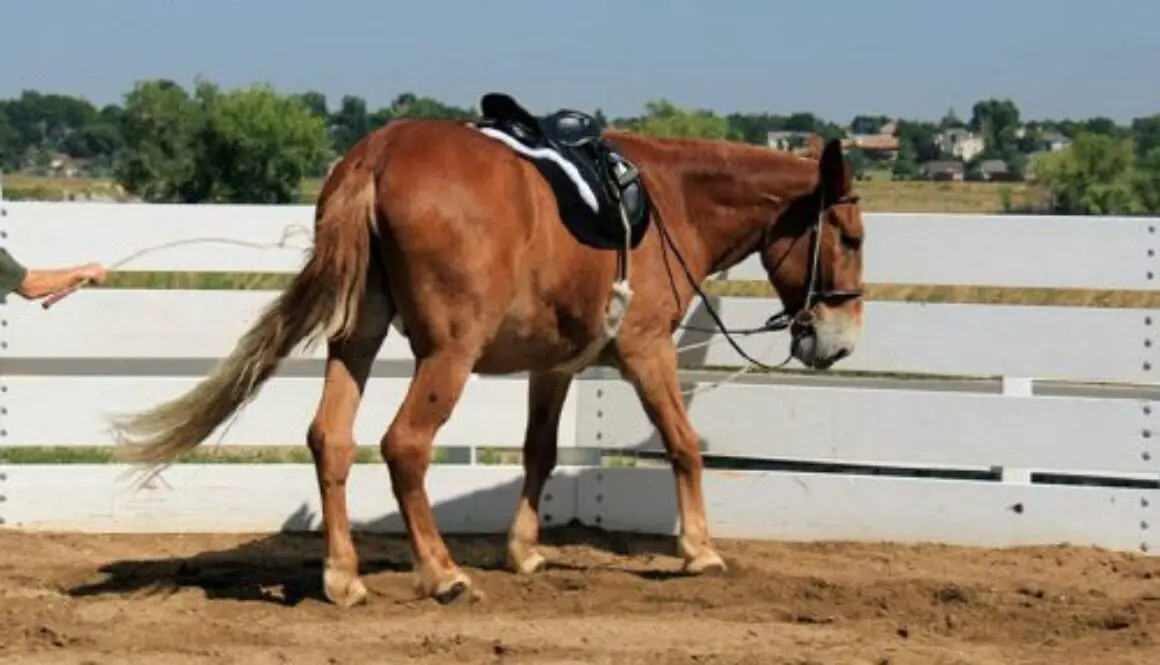
 Even if all I was going to do was rescue equines, I knew I would have to have at least some experience in equine management and training, so I read numerous training books and attended many clinics and seminars. The more I learned, the more overwhelmed I became. There were so many vastly different ideas about how to do things with equines. Different authors wrote about different stages of training and they all had a different approach. There was no one author who produced anything with continuity from foal all the way to advanced levels of training. To make matters worse, in the early 1970s when I got involved with Longears, I found that there was virtually nothing available about training them for recreational purposes. That is when I decided to begin documenting everything I learned that worked well (and forgot about what didn’t).
 Like most people, I started off thinking that leaving equines to just be equines without human interference was the ideal. Oh, how they would just love to exist in a large plot of pasture to live out their days in leisure! I soon found out how deadly that could be to an equine. Equines in the wild will travel for miles, exercising and grazing sporadically, balancing their diet and exercising themselves. Since the majority of the world’s equines are not wild and can no longer run free (no more wide-open spaces available), leaving them alone in a pasture to eat freely only results in obesity and all the ailments that go with it. In reality, allowing this “free grazing” is a passive form of neglect, and is usually the result of just plain human laziness. Equine owners may often feel like they “do not have the time” to do everything correctly, when, in actuality, it takes less time (and is less costly) to correctly feed, manage and train equines. That is how I can successfully be the sole trainer of 30 equines at this late date in my life.
 Trainers in general advise owners to set things up so it is hard for the equine to do the wrong thing. Why not just concentrate on setting him up to be able to easily do the right thing? Wouldn’t you get a better reaction from your equine if he received rewards for a job well done rather than focusing on the punishments and intimidation if he didn’t comply?
 Restraints should only be used to suggest compliance to the equine and not for complete control over any resistance. Patience, calmness and purposeful action during the use of restraints are all paramount in teaching the equine how to cope with things that are difficult for him. In the use of restraints, one runs the risk of being more severe than intended, which will have a negative impact on the equine’s response to the restraint used. I have discovered some very simple restraints that work well.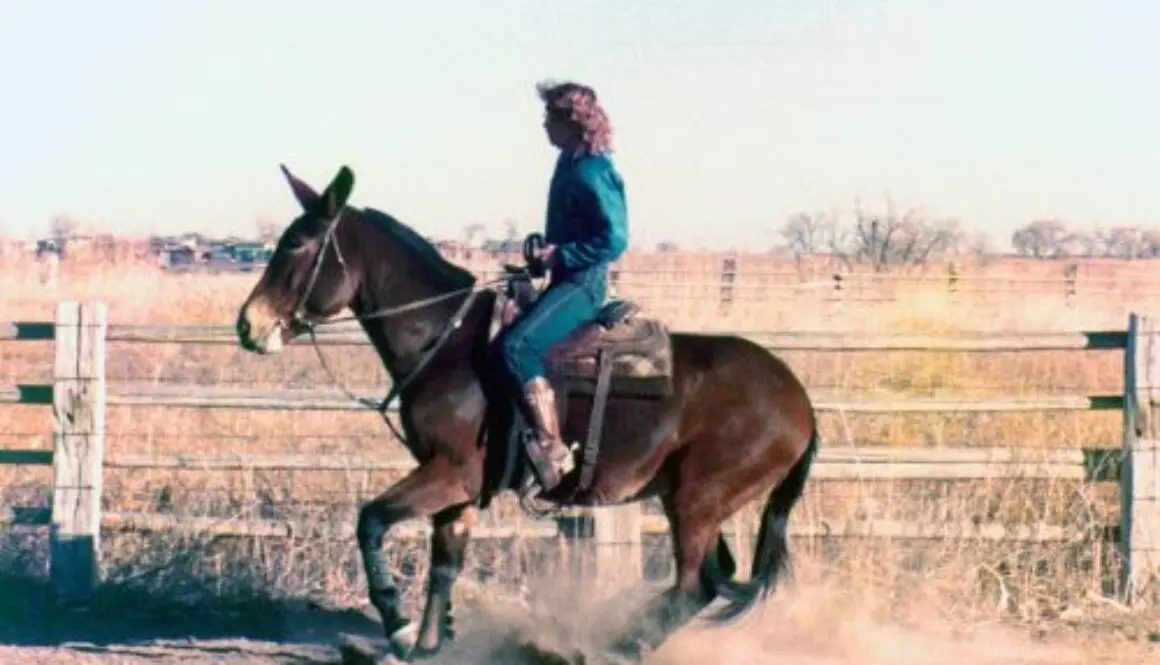
 In the early sixties, mules were among those animals quickly becoming extinct in this country. Thanks to the formation of clubs such as The American Donkey and Mule Society, founded in 1967, and the British Donkey Breed Society, founded in 1966, the trend was reversed and the animals began to get the recognition they justly deserved.
 For those of you who are unfamiliar with the breeding of a mule, he is the cross between a male donkey, called a jack, and a female horse, a mare. The reverse of that–a cross between a male horse, a stallion, and a female donkey, a jenny on jennet–is called a hinny, although many still refer to them as mules. Years ago people used low quality mares to breed to jacks to obtain mules, but today we are improving the breed by crossing better quality animals to obtain better and stronger mules.
 Many have asked about the training of mules. Training mules is much like training horses, but sophisticated trainers would probably agree that they are more like teaching young children. A mule is more likely to perform to the best of his ability if he is allowed to build trust in his trainer. This is where mules and horses differ. Horses have a forgiving nature and are able to forget a loss of temper by the trainer; mules do not forget. When a mule is nervous about a trainer, his ability to perform for the trainer is impaired. Pat Parelli, a California mule trainer, put it quite nicely: “Mules separate crude trainers from artistic trainers.” The mule handled by a crude trainer will generally epitomize the traditional belief that mules are stubborn and ornery. The mule handled by an artistic trainer will not. A technique widely used among mule trainers with great success is the psychological science of Behavior Modification, whereby the animal’s natural behaviors are modified to achieve the desired response through the use of positive reinforcement. Negative reinforcement is also used sparingly. When using negative reinforcement, one must remain calm, patient, and just to ensure the success of the temporary discipline. One must remember that negative reinforcement does not build desirable behavior. It is only used to stop a bad behavior long enough to substitute a desirable behavior. A mule trained in this manner will become a more trustworthy, willing, and predictable friend and companion. Let’s dispel the old saying that mules are “stubborn” and “ornery” and say that there are really no bad mules, only bad trainers.
 The Mule Days celebration in Bishop, California is the largest mule show in the world. Mule lovers, their friends and family enjoy four days of mule-related fun and entertainment. At this particular show there is a little something for everyone: Western cuisine, games, dancing, and conversation in addition to the mule show itself. In 1984, there were over 70 different classes and events for the competitors such as Pleasure classes, Reining classes, Trail, Musical Tires, Barrel Racing and Pole Bending. Also Jumping, Cattle Penning, Steer Stopping, Team Roping, and a Balloon Bust. For the packers: Pack Train classes, Packing contests, Box Hitch and Diamond Hitch packing contests (pro and non-pro), Team Packing and the Team Packing Scramble which you have to see to believe! There are Halter classes, Pulling, Driving classes, and for you race fans: Chariot races, Flat Track races, and yes, even a Backwards race! To highlight the events, there are featured performances by special people and mules. Almost every year, the 20-mule team makes an appearance and in 1981 Slim Pickens, Grand Marshall of the Mule Days Parade, drove his team to victory in a chariot race! In 1984, Colorado’s own Al Kaly Shrine Temple Mule Train World Champion Drill Team out of Colorado Springs gave a memorable performance on their beautifully matched, black army mules. This mule show brings together so many people with different backgrounds and interests for a perfectly glorious weekend. Each year leaves you looking forward to the next.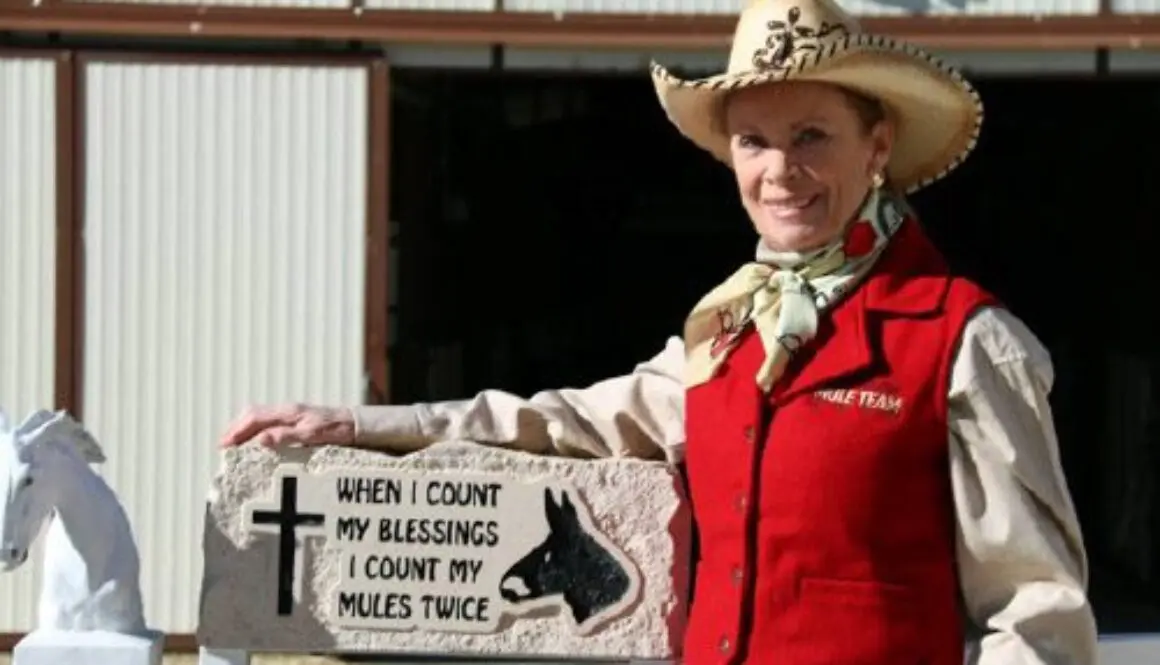
 By Meredith Hodges
 In 1979, I witnessed my first Bishop Mule Days Sierra Nevada packer’s rendezvous. That was where my career in training mules and donkeys in every recreational equine event began. I was “ass-tonished” at the impeccable way these knowledgeable men and women handled their mules, wagons, packs and equipment with such grace and dignity…and not without a proper measure of good humor! I caught a very bad case of “Mule Fever” and began my own pursuit with Longears in ALL forms of equine athletics. Bishop Mule Days grew from the weekend packer’s rendezvous into the weeklong show over Memorial Day weekend that it is today and they continue to add new classes each year to accommodate the accomplishments of a lot of Longears-lovers like myself along the way. Little did I know, the friendships I started then were to last a lifetime!
 In 1980, I founded the Lucky Three Ranch in Loveland, Colorado and embarked on a breeding and training program of my own with Lucky Three Sundowner, the last mule and Little Jack Horner, the last donkey jack born at Windy Valley Ranch in 1980. Sundowner was shipped to the ranch right away, but Little Jack Horner had to wait and be picked up a year later. Just outside of Sparks, Nevada in 1981, we were hailed to pull over by a jolly and quite charming man, Ernie Fanning who ran up to my truck and blurted through the driver’s side window, “I just KNOW you have a Windy Valley jack in the back of that trailer!” To this day, I don’t know how he could tell it was a Windy Valley jack only by the head and ears that showed above the stock trailer back door. All I can say is that man certainly knew his mules and donkeys, and I made yet another friend for life that day!
 Years passed, Bishop Mule Days grew as did my love for Longears and the people that came with them. I bred and showed Longears for many years, then judged and began a promotional career in support of Longears everywhere. Bishop Mule Days was where I met Bonnie Shields, the leading half-ass Tennessee Mule Artist and illustrator for my children’s series of books and DVDs, Jasper the Mule. Even though I no longer showed, I was still a welcome part of the Bishop Mule Days rendezvous family year after year as a respected dignitary and sponsor. One of our greatest thrills was when Bonnie, Jasper and I were invited by Bobby Tanner to ride in the old Borax Wagons pulled by the 20-Mule Team in the Bishop Mule Days parade three years in a row (2012-2014). What an incredible honor that was!
 On January 1, 2017, the new Borax Wagons and the 20-Mule Team made their debut in the Tournament of Roses parade in Pasadena, California. They held a practice in the desert near Bishop before they left for the parade and the mules all did great! On the parade route, they would be asked to make a tight turn onto Colorado Avenue in the midst of a lively crowd and would be asked to “jump the chain” to make that turn. What a spectacular feat to behold and they did it beautifully on parade day.
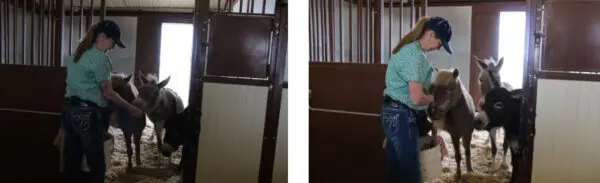
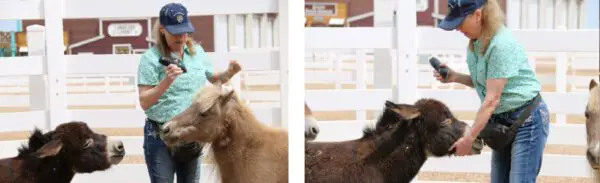
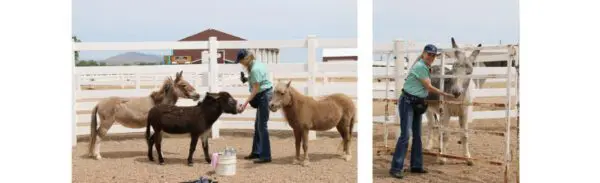
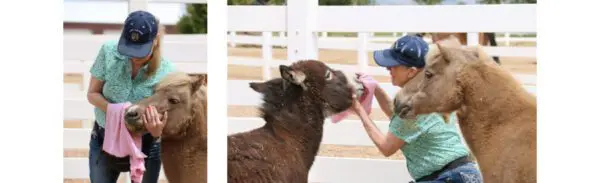
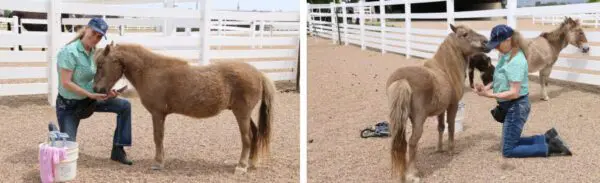
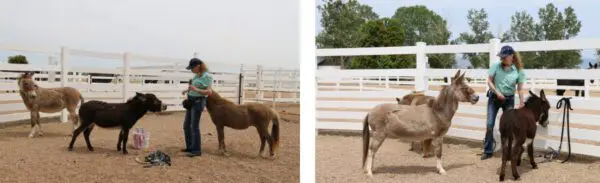
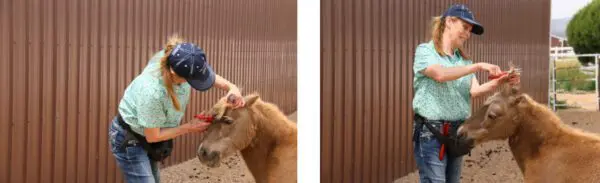
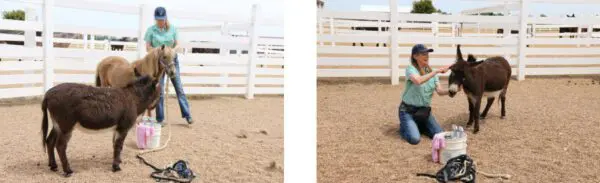
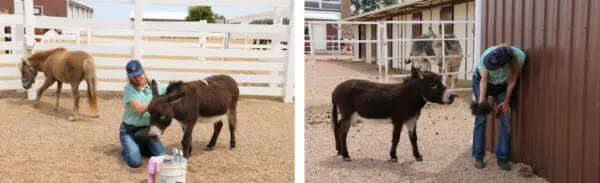
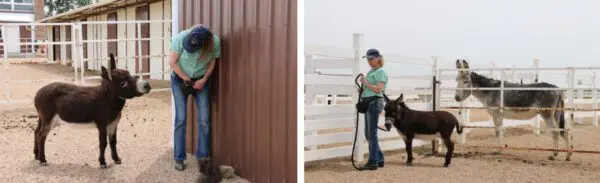
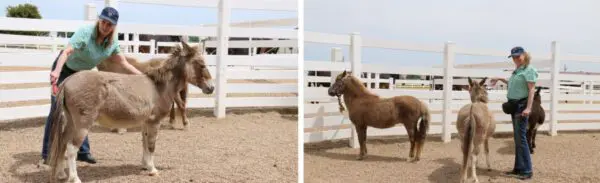
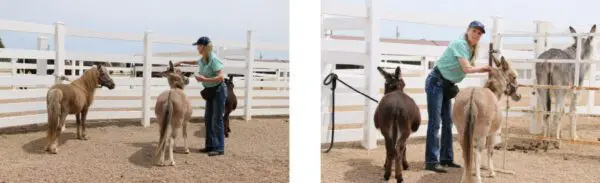
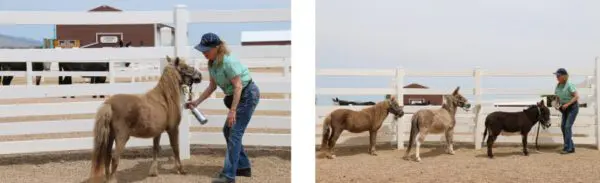
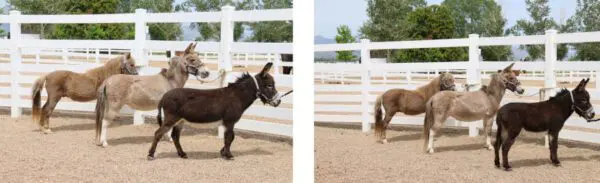

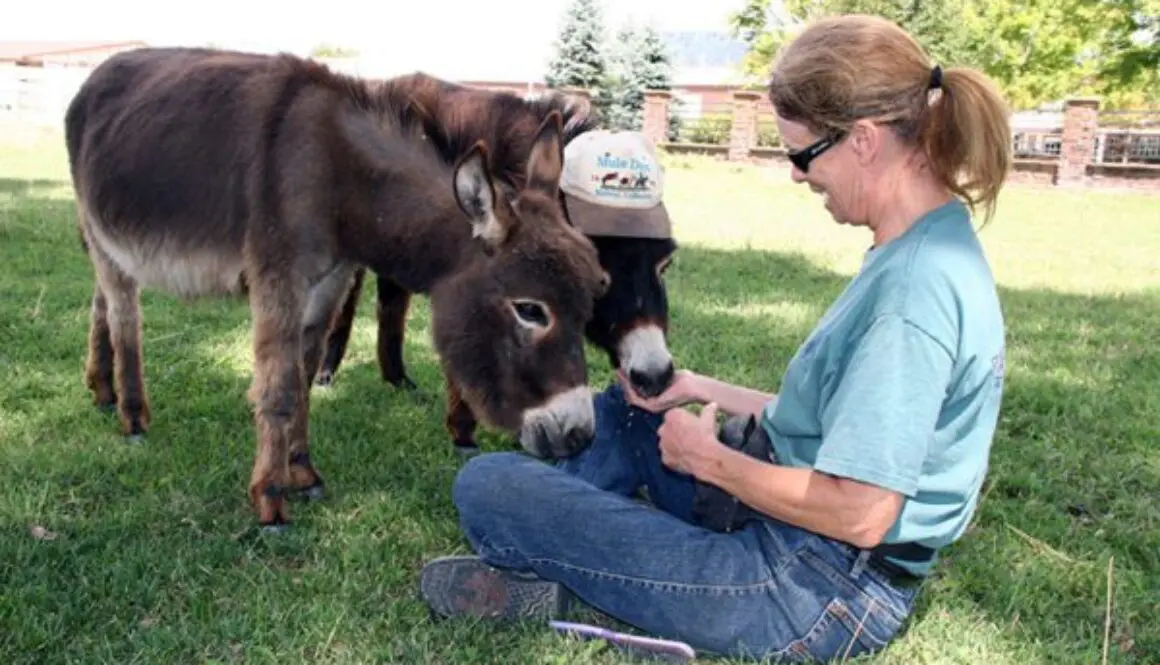
 Miniature horses, donkeys and mules all have one thing in common; everyone else is taller than they are! That makes eye contact with the trainer very difficult if not impossible for them. As the saying goes, the eyes are the window to the soul so it is understandable that they would become anxious if they are unable to look into a person’s eyes to decide whether they are friend or foe. I have five miniature equines: a mini horse named Mirage, a mini mule named Franklin, a mini molly mule named Francis, and two mini donkeys named Augie and Spuds. To help them all succeed and thrive, I’ve structured my training program for them based on the same one I use for all of my other equines, with one important modification. With safety always as my first priority, I work with my minis from a lower position whenever it’s safe to do so. That way, I can make eye contact with them, and I make certain they are always lavishly rewarded with an oats reward for their compliance. The results have been amazing! I’ve received total cooperation from them almost all of the time.
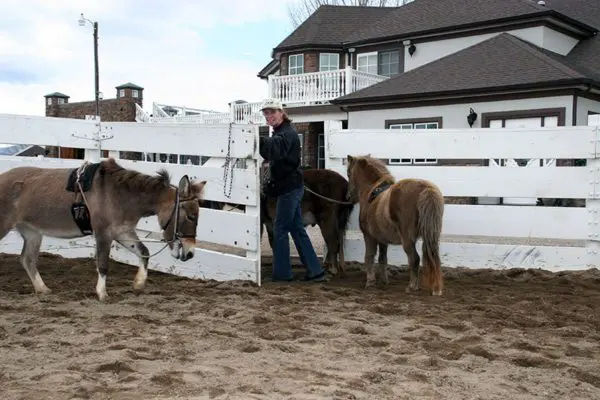 None of my minis were born at my ranch, so I knew that they would each first need to explore their surroundings a little at a time, and would also need ample time to get used to my staff and me. Mirage, the miniature horse, was my first mini. It wasn’t long after I acquired him that I acquired Franklin, the mini mule, who quickly became Mirage’s buddy. Since both Mirage and Franklin had previous training and because minis seem to accept training more willingly when done with a partner, we did all of Mirage’s and Franklin’s groundwork lessons together and, true to form, they learned very quickly because they were allowed to be together.
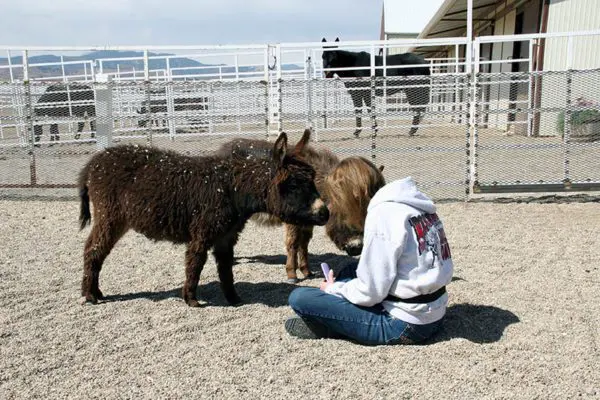 I think it is critically important that all equines have a space they can call their own—their personal oasis of comfort and privacy—so when I got my mini donkeys, Augie and Spuds, I decided that the first thing they would learn about was their living quarters or, as I like to call it, their “bedroom.”
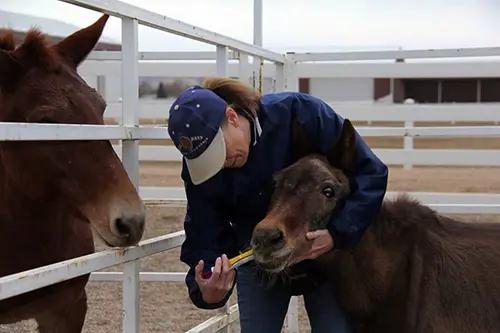
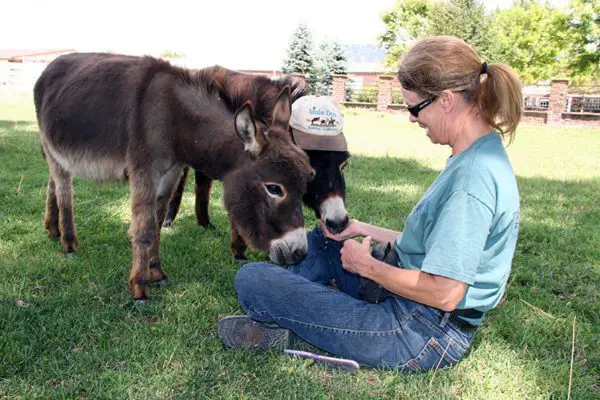 When your mini is comfortable with you coming into his pen and interacting with him, the next step is to ask him to go into a bigger turnout area, where you should repeat the same simple lessons. Now that your mini can be loose in a larger space, ask him to come to join you for another picnic. After a few times, bring a hairbrush with you (It’s the most efficient brush to use on donkey hair).
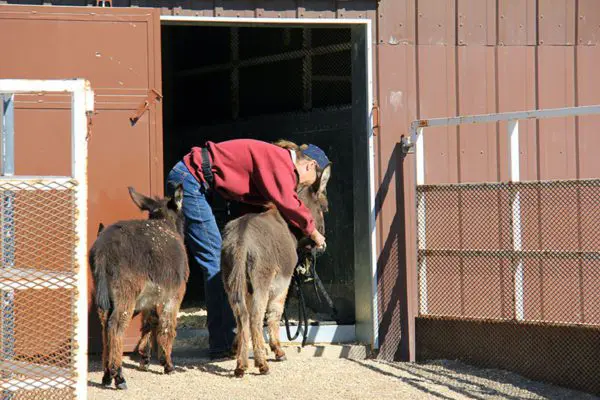
 A halter doesn’t even come into play until after grooming in the pen is easily achieved and your mini will follow you to and from the pen without the halter. When it is time to introduce the halter, bring it with you into the pen for your picnic. Do the brushing and then show your mini the halter while you sit on the ground. When he sniffs the halter, he should be rewarded. Once he is unafraid of the halter, hold it on both sides of the noseband, feed your mini some oats, and then gently push the noseband of the halter over his nose and then take it off, rewarding him again. At this point you’ve got all kinds of oats in your lap and your mini’s got his head down, eating the oats, so when you put the noseband on again, just reach over his neck, grab the strap of his halter on the other side, bring it behind his ears and fasten it. If done correctly, this should not bother him. Then reward him with more oats, pet him as he complies and say, “Oh, how good is that?!” You can then take the halter off again and end the first lesson there.
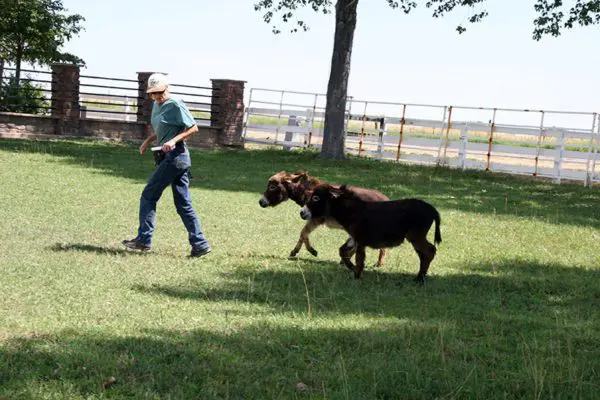
 Once your mini is used to having his halter put on, let him graze while supervised in a larger pasture area with his halter on while he drags the lead rope behind him. When you want him to walk away from you, simply stand up and let him go off on his own. After a few minutes, approach him again, grab the end of his lead rope and sit down again. You can give a little tug, say his name and ask him to “Come.” He should come easily when you gently tug on his lead rope. This action makes him look at you and think, “Oh, my human is sitting down again, so I’m going to come over and get more oats!” As he comes toward you, take up the slack on his approach. Once he comes to you easily, you can stand up and ask him to come while you’re standing up and reward him for it. And that’s how to teach a mini to follow you.
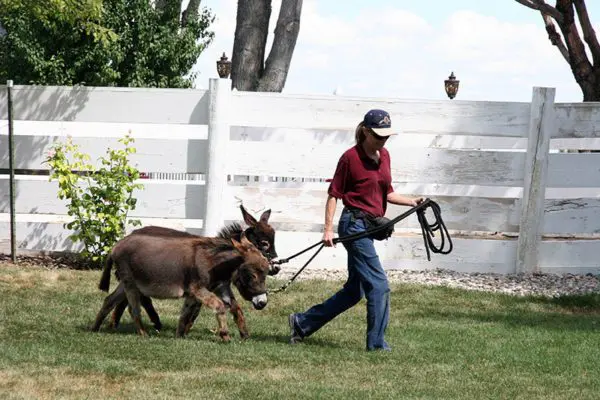 Breaking things down into little do-able steps seems like a long process in the beginning, but as your mini begins to understand the reasoning behind your approach, his reactions to tasks will become calmer, more automatic and more natural for him. When you allow your mini to learn to follow your lead without the halter in the beginning of each task, learning to follow you on the lead rope will be a lot easier for him, and when you finally move on to more specific tasks in training, he will oblige you much more willingly. In Part 2 of “Getting Down With Minis,” I will cover how to approach the tasks necessary for formal training.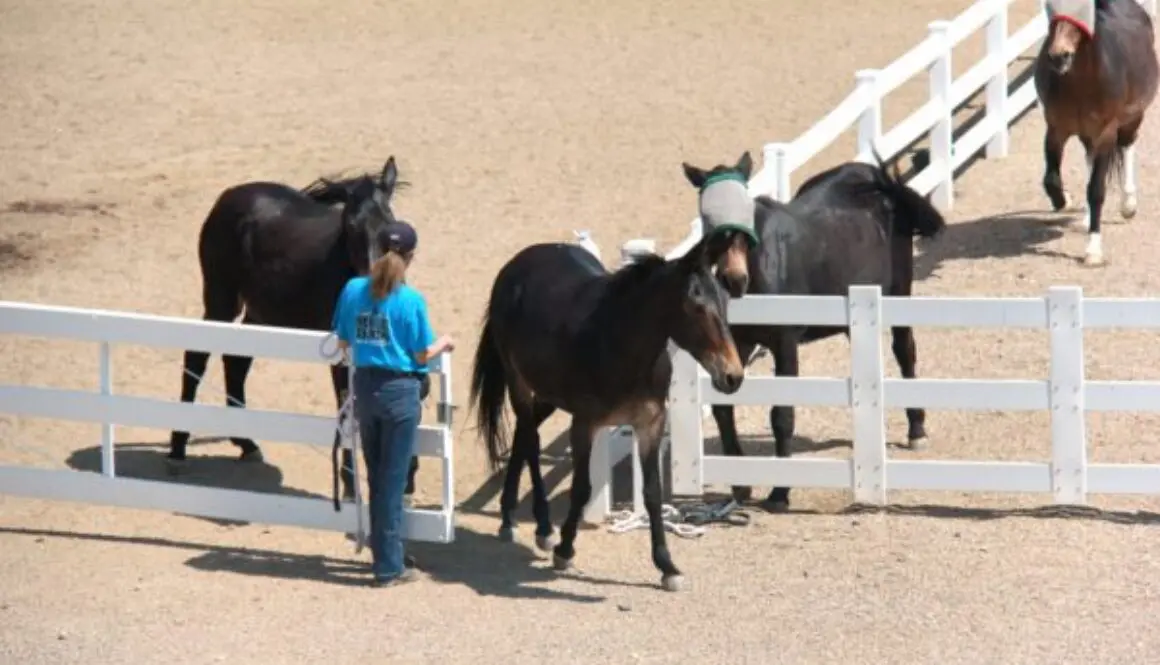


 When the mule was delivered, things didn’t seem right to Kathleen. This one was much too friendly and much easier to handle than the mule she had previously seen. She called the man who sold it to her and told him she had the wrong mule. He simply replied, “Oh, you noticed.” She made him pay for the return shipping and she finally got the mule she truly loved, who she named John Henry. And that was the beginning of a legacy!
 In early 2014, famed artist and wood carver, Dennis Page, asked my friend, Bonnie Shields (Tennessee mule artist and illustrator of my Jasper the Mule series), about a model for a “rocking mule” that he was going to carve out of wood. She suggested that he might want to model it after a ceramic sculpture she had done of John Henry, and he did just that. The wood-carved rocking mule of John Henry stands 48 inches tall and is just gorgeous! In fact, it is so beautiful that I bought it when it was finished.
 John Henry was one of a kind and is sorely missed, especially by Kathleen. But she is elated that her beloved mule and his legacy are being honored with his own exhibit here at Loveland Longears Museum and Sculpture Park in Loveland, Colorado. Kathleen and John Henry had a wonderful time together, touching so many lives and showing everyone just how extraordinary a mule can truly be. Thank you, John Henry for opening people’s minds to the superior versatility of the mule and for paving the way for so many other mules to follow in your footsteps toward extraordinary equine achievement!
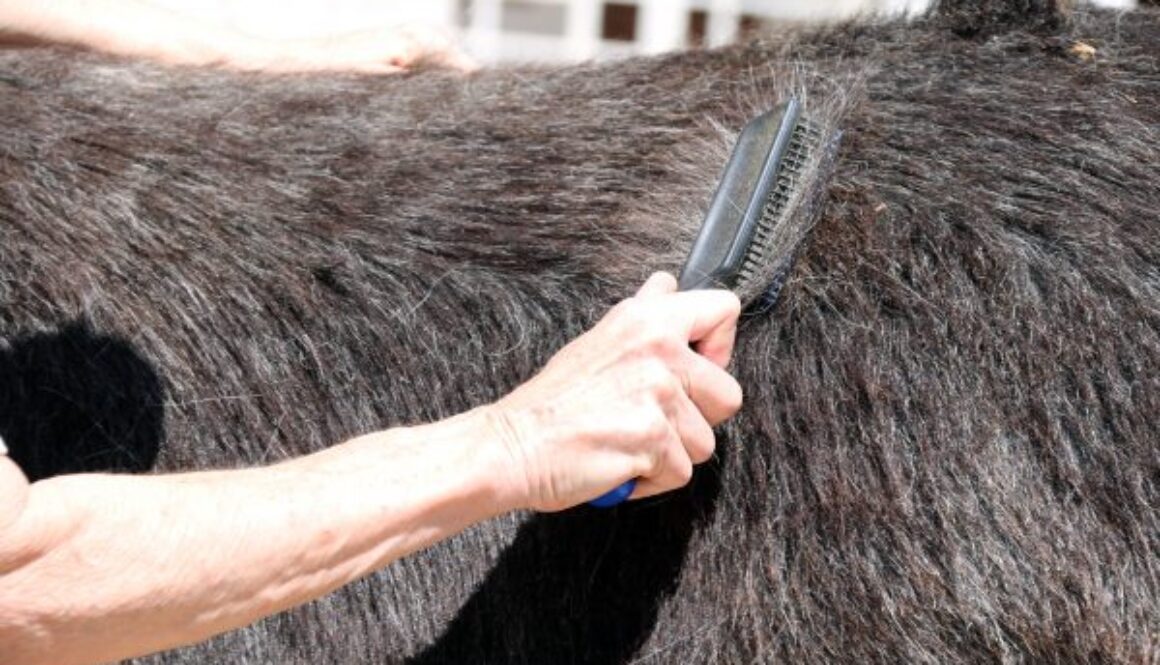
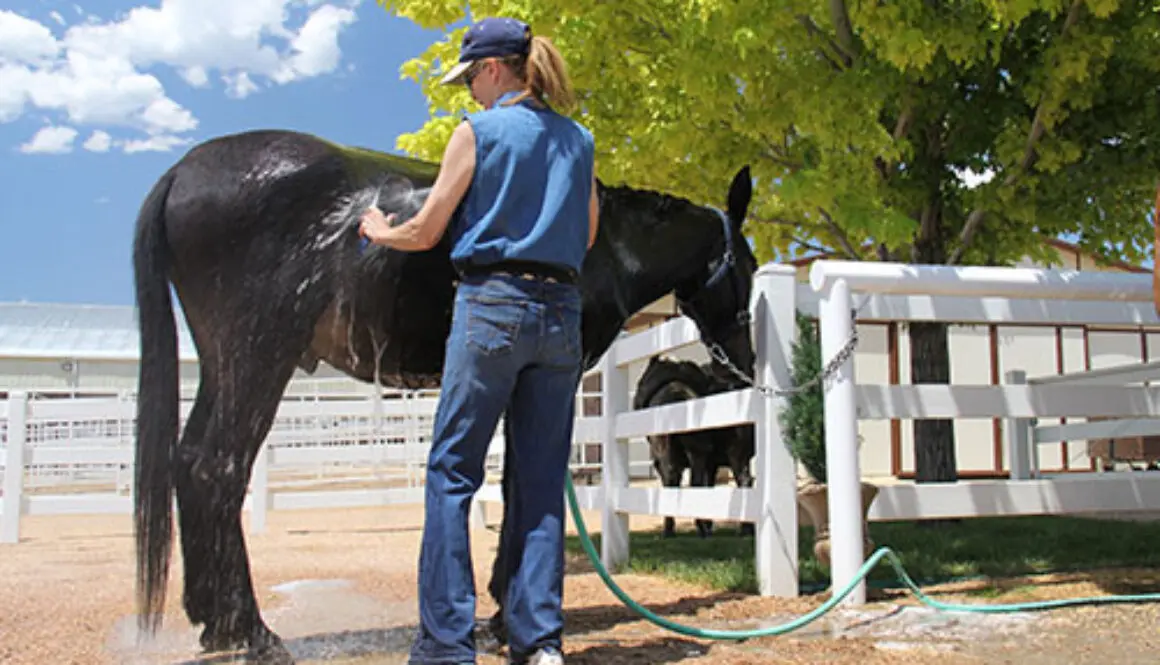

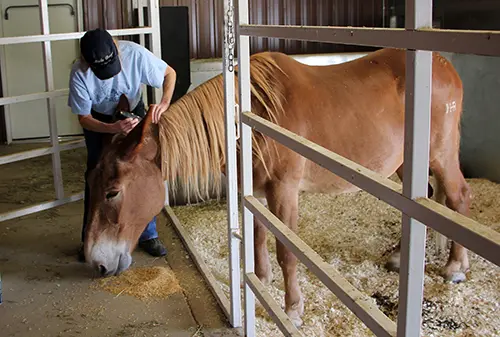
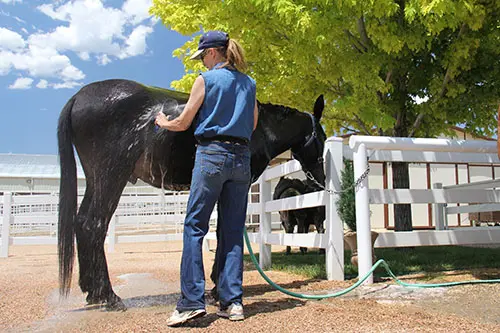
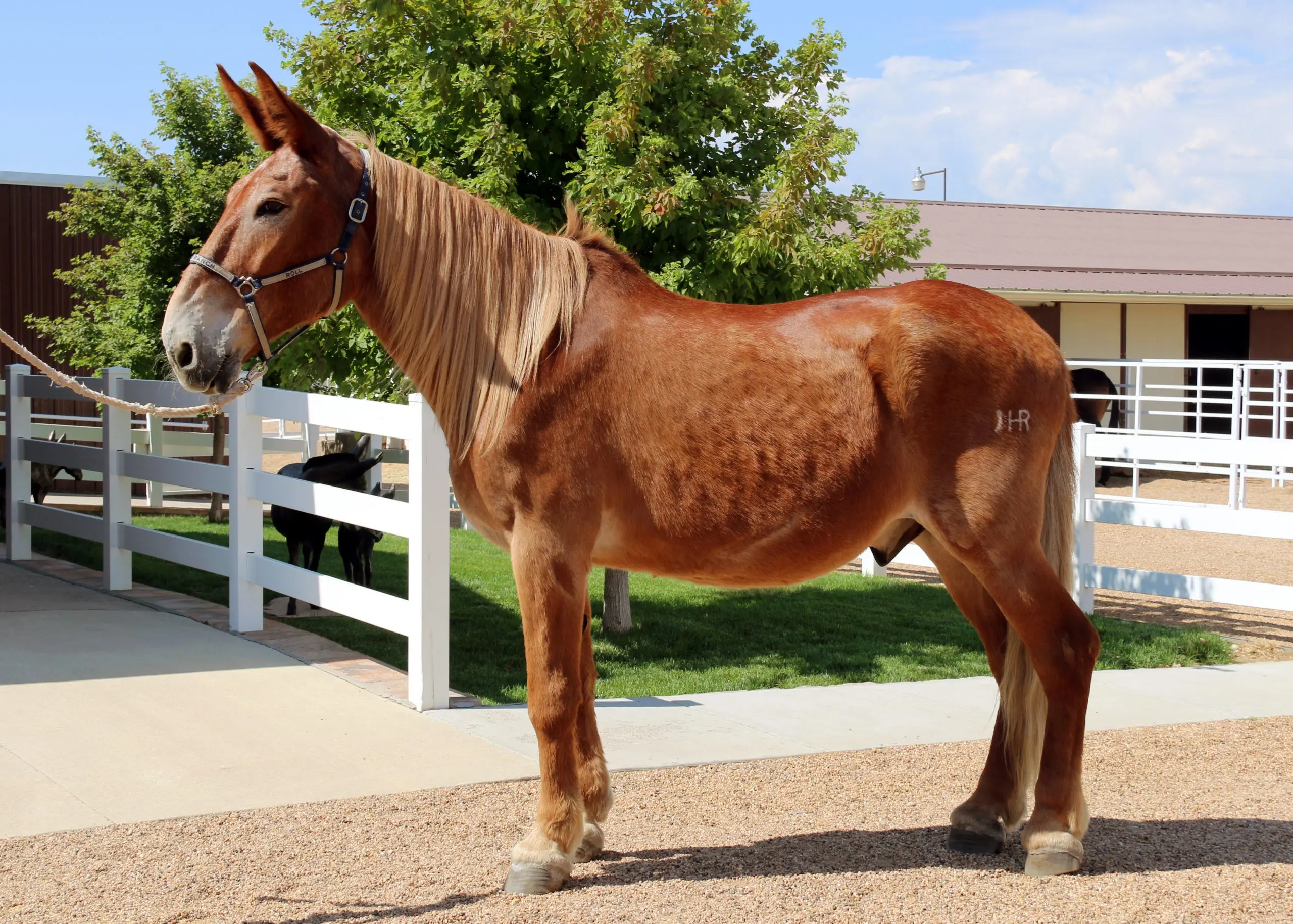
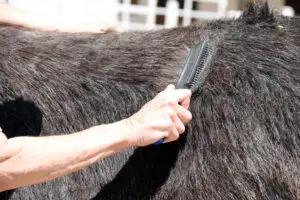 After grooming the left side, move to the right side. Brush the head with a Dandy brush and use a multi-bristled human hairbrush on the mane and tail. By adding a little Johnson’s Baby oil to the mane and tail during grooming, you can train a mane to fall to one side and keep other equines from chewing on manes and tails. Finish with a soft body brush. Finally, use the grooming cloth to wipe around the ears, face, eyes, nose, lips, sheath (if it’s a male) and the dock of the tail.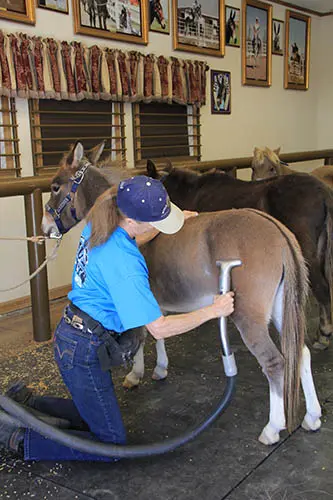

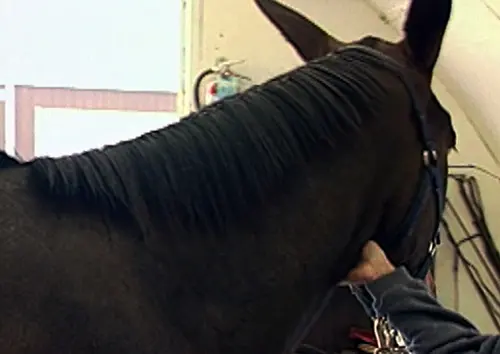
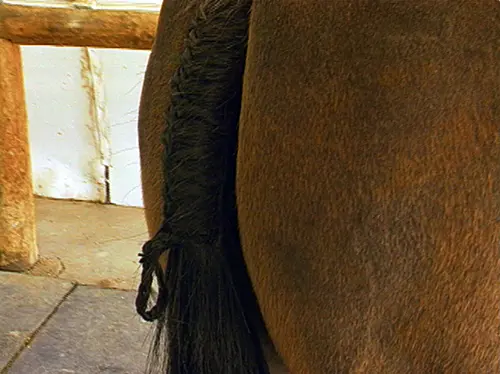
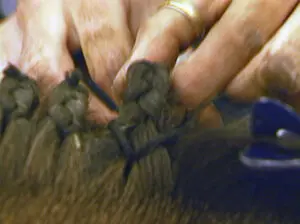 You can spritz a little water and hair spray to make the hair easier to handle. The quickest way to secure the braids is by using tiny rubber bands. It’s also very easy to do and it’s great for one-day shows or quick changes between classes.
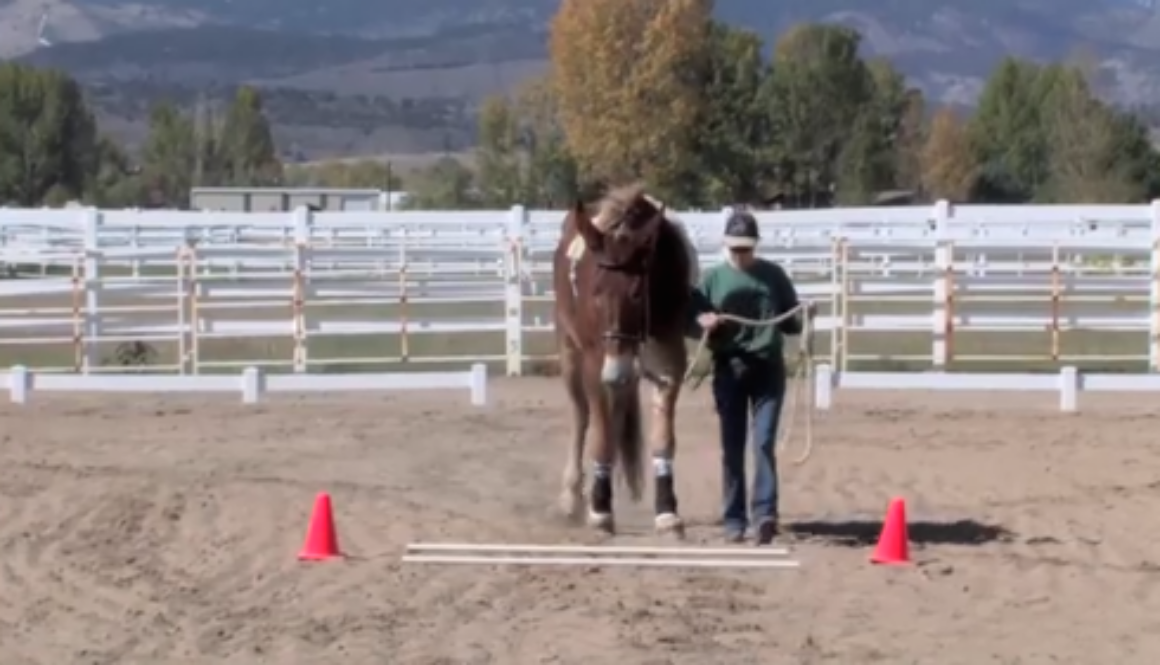
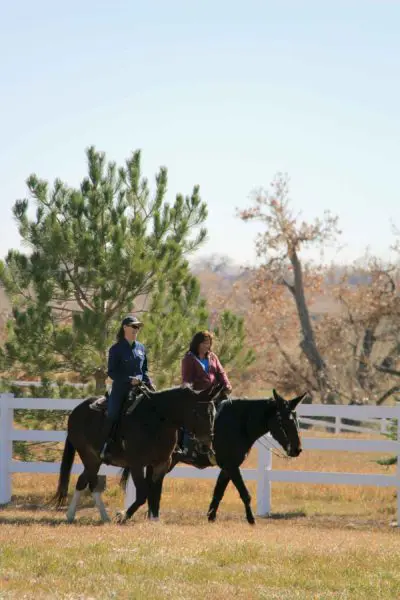 Over the past few decades, through trial and error, we equine owners and trainers have discovered that, when communicating with our equines, harsh bits are not really necessary. Rather, it is safer and more beneficial to use milder tack and equipment, to concentrate on learning correct body language and to give clear cues with our hands, seat and legs to elicit the desired response from our equines.
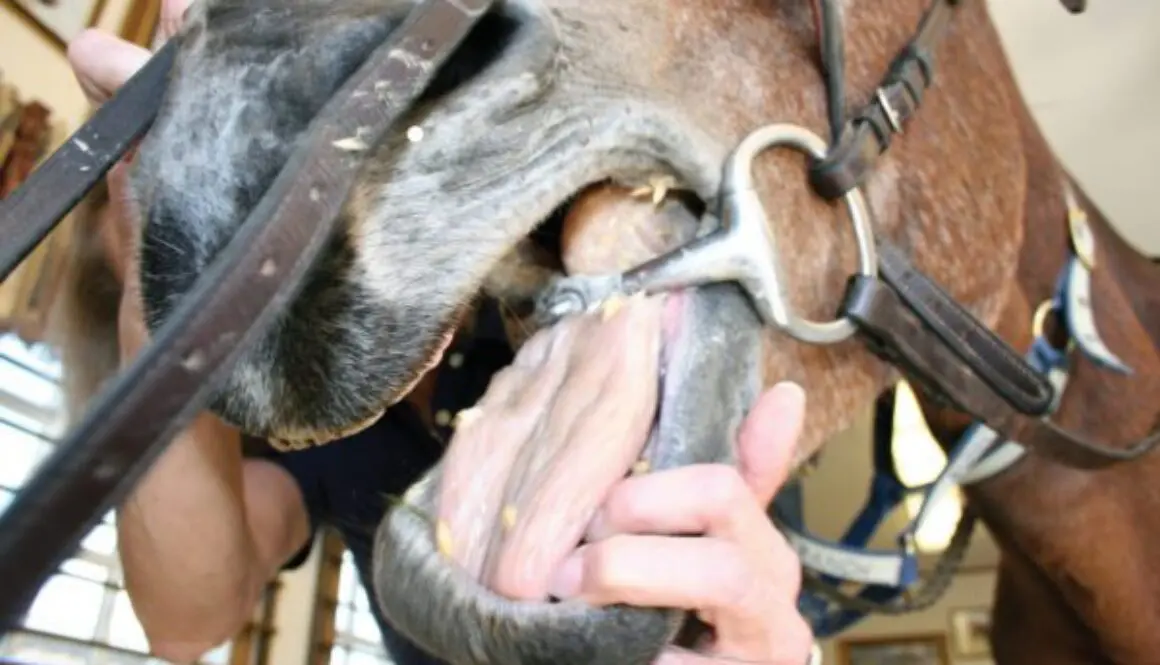
 When it comes to rider/equine communication, bitless and/or brideless techniques do not work as well as the simple, direct rein action of the snaffle bit in concert with your seat and legs.Many people are under the impression that having a bit in the mouth is painful for an equine, and the seeming “nutcracker” action of the snaffle bit when it is in your hands suggests that it might pinch your animal’s tongue when you pull on the reins. The mouthpiece of the snaffle bit actually “breaks” in the middle, allowing it to slide easily across the top of your equine’s tongue. It does not pinch his tongue, but it does put pressure on the corners of his mouth. The snaffle bit is correctly defined as a bit that promotes “direct rein action,” meaning that when you pull right, you go right and when you pull left, you go left. A snaffle bit does not have a shank. If it did have a shank, it would be considered a curb bit, regardless of how short the shank really is (as is the case with a Tom Thumb bit).
 Learning to go forward in the beginning of your equine’s training in a snaffle bridle is paramount to properly developing his body so he will learn to carry a rider in a strong and solid frame and in good equine posture. The forward training teaches him to stretch his head and neck forward, to step well underneath his body to propel himself forward, and to elongate his overall frame to keep the vertebrae in his back from becoming compressed and rigid. When he is moving correctly in a straight line, he will have more suspension and flexibility to his gait, and when he turns he will be able to bend easily through his rib cage.
 Although it would seem that a bitless bridle could achieve this same end, it has a different action on your equine’s head and neck, which inhibits proper bending through turns. The straight forward motion can be achieved with a bitless bridle. However, reins on a bosal (a type of braided rawhide noseband used with the hackamore-type headstall), bitless bridle reins, and other bitless configurations do not have the same lateral effect on the equine’s head and neck as does the snaffle bit. The equine’s head and neck form two sides of a triangle. The rope reins on a bosal, although lower on the nose of the equine than reins that come from the corners of the mouth, can cause the equine’s head to twist slightly sideways during the turn because, during any directional indication, the rawhide bosal around the nose twists through the rope reins which are both secured together underneath the jaw. The rope reins pull the underside of the bosal in the direction of the turn, but the nosepiece goes the opposite way and can cause your equine to improperly tilt his head through the turns. On bitless bridles, the reins are attached substantially higher than the corners of the equine’s mouth. When you pull on the reins attached higher on the equine’s jaw than where the bit would be as is the case with a halter or bitless bridle, the angle of pull is sharper and more abrupt, since the head side of the “triangle” is so much shorter than the length of the neck. It will cause the equine to try to turn his head too sharply from the poll, which can cause kinks and pain in his neck.
 To prove the point, try this experiment. Preferably using an untrained animal, take hold of the halter and gently but firmly pull on the halter in an attempt to make him bend his head and neck to the side. The higher position of the halter is like a bitless bridle and you will feel slight tension and resistance to this action before the animal finally complies. Next, gently insert two fingers into one corner of the equine’s mouth while standing at his shoulder and by squeezing and releasing your fingers, ask him to turn his head and neck to the side toward you. If done correctly, without yanking on him, he should give easily to your cue to submit and turn his head and neck. You will notice that he extends his head and neck slightly forward before turning it to the side.
 Now try this action on yourself. Stand in good posture and, without extending your neck, turn your head to the side. Do you feel the tension at the brainstem on the back of your neck? Now, stand in good posture, stretch your neck in an upward and forward arc and then look around the turn. Can you now feel the release from tension in the back of your neck? Your equine experiences the same feelings. The shorter angle of the side-pulls and bitless bridles will have a more abrupt pull and can cause some pain, while the longer angle coming from the snaffle bit at the corners of his mouth will allow a smoother and painless response. NOTE: Any bit can be painful to an animal when in the hands of an inexperienced rider who uses only the bit for control.
 The equine that has not had this kind of advanced training will possess neither genuinely good posture nor the knowledge of how to respond correctly in an abrupt and unpredictable situation. He will be more apt to be frightened and, as a result, may bolt and run, putting you and everyone around you at risk. However, the equine that is properly and conscientiously taught how to communicate through the snaffle bit will be a safer and more reliable animal to ride and to take into public places. He has learned to stop and wait for cues (communication through the bit) and is less likely to bolt and run if frightened because he understands and trusts the communication coming from his rider. He will now be more correct and solid in his good posture, yielding confidence in his attitude, and he will be a more reliable pleasure and show animal to ride.

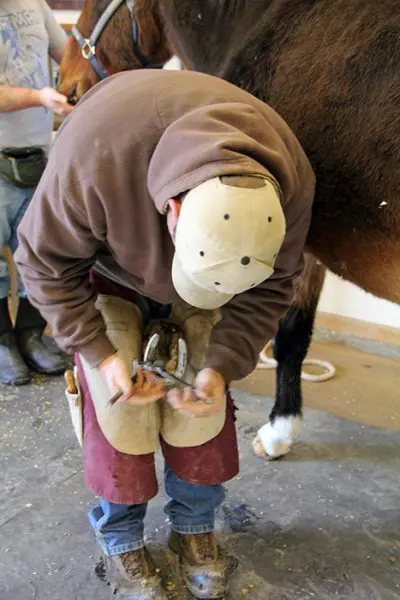 For better or worse, an equine inherits his hooves through his genes. If your mule has inherited good feet—black, oily-looking, and with good shape—then you are fortunate and hoof care and maintenance should be relatively simple. If he has inherited a softer or misshapen foot, you will need to discuss more specialized care with your farrier.
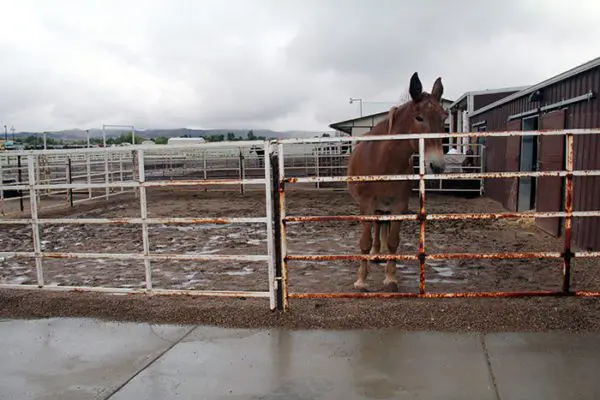 lubricate your mule’s hooves as needed with one of the commercial products available. But before you use an artificial hoof lubricant, first check with your farrier to make sure that it is actually needed. Many people use hoof products too frequently, which can cause hooves to become too soft. When this begins to happen, you will see horizontal rings appear around the hoof wall, and sometimes, vertical lines. Try not to let the hoof get to this point by using lubricants sparingly, but if you see that these rings are beginning to appear, immediately discontinue use of the lubricant and allow the hoof to harden. Then check with your vet to make sure it is not a founder condition. It does not take much to adequately soften the hooves of an animal with rock-hard feet. During the really dry seasons, lubricant application once a week is usually sufficient.
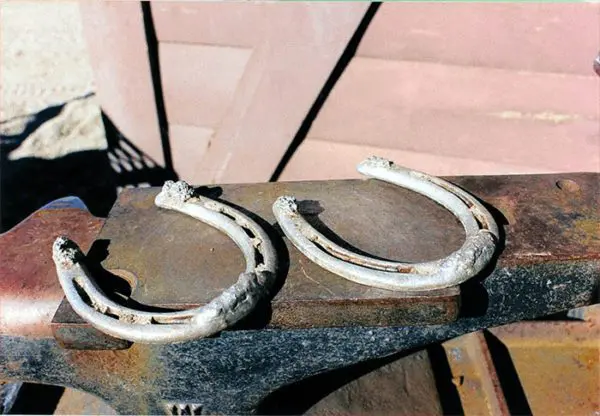
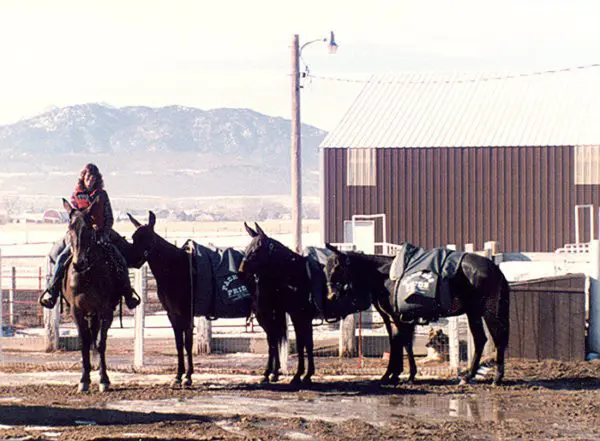 Assuming that your mule has a normal set of dark, healthy hooves, he will probably not need to be shod, as long as he is used strictly for pleasure or only sporadically. However, if you are going to use your mule on excessively rocky or hard ground, you might want to look into getting shoes for him. Mules that repetitively participate in more stressful and demanding activities (such as parades, showing and endurance events) should be shod to protect their feet and to keep them healthy. Prevention of bruising or cracking and maintenance of good foot and leg posture is critical to the equine athlete.
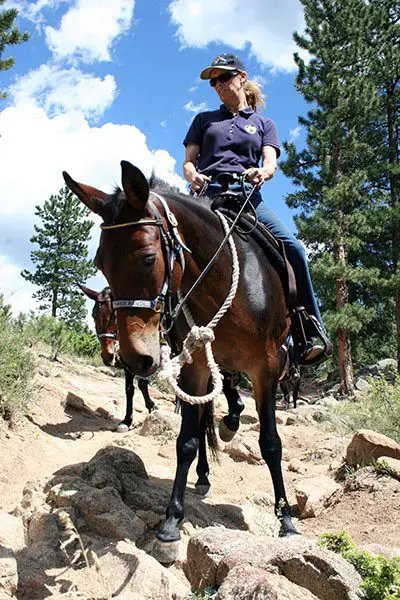 I believe that horses and mules, doing what they would naturally do alone—on terrain that is neither hard nor rocky—do not need to be shod. But mules that are asked to repetitively perform with a human on-board in varying surface situations should be fitted with the proper kind of shoes to help protect them from the additional weight and other demands that will be put upon their bodies. For example, my trail mules wear regular shoes on all four feet when they are being regularly used for trail riding and a variety of other activities, lessening the potential for injury. Then, when there is an occasional misstep on hard ground or rocks or when we trail-ride in the more challenging mountains, the shoes help to absorb some of the shock that would otherwise be absorbed by the hoof itself. It is my experience that young mules (and horses from two to four years of age) bear most of their weight on their front legs until their bodies are carefully and properly conditioned, and this is when you will see the most wear and tear on their feet. Because of this, my young mules that are just beginning saddle training wear regular shoes on the fronts only until their bodies are balanced and their activities clearly defined. Our broodstock, youngsters (under three
  years of age) and equines that are not used under demanding conditions can go barefooted year-round, but they all still get regular trims every six to eight weeks.
 Granted, there are a lot of mules that may not need to be shod, but there are also many that do need shoes, so each individual mule’s feet must be evaluated on a case-by-case basis. Because of this fact, the generalizations that “mules don’t need to be shod” and “all equines should go barefoot” are not always correct. You must take into consideration how your particular mule’s genetics affect his hooves, what he will be used for and how harsh the demands put on him will be on his feet. These important factors will determine whether or not he needs shoes, and if he does need shoes, what kind of shoes will best suit him. And don’t forget to check your mule’s shoes on a regular basis to make sure that all is well and that his shoes are staying on tight, but most of all, that he is comfortable and happy.


