
MULE CROSSING: From Mules to Riches
By Meredith Hodges
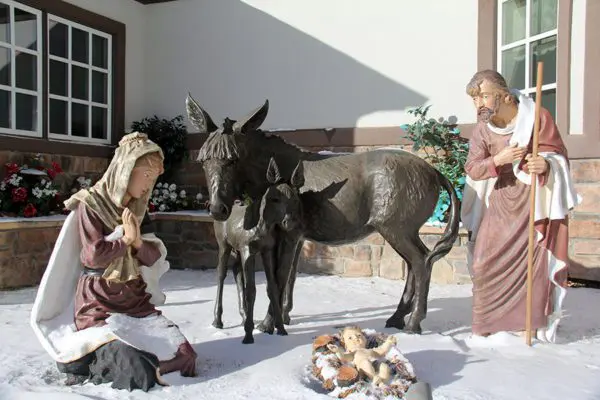
 Long before the Founding Fathers drafted our constitution, America began as a religious nation under God, and the mule has his roots in religion just as does the country he has helped to build. The mule of today’s ancestor is the donkey, mentioned in the Bible numerous times as an animal respected by God and blessed by Jesus Christ. The donkey was even chosen to bring Mary and Joseph to Bethlehem and, later, acted as the mount Jesus himself used for his ride into the city of Jerusalem.
Here is an ancient story, quoted directly from the Bible, illustrating the mule’s wonderful sense of humor: “So Zadok the priest, and Nathan the prophet, and Benaiah the son of Jehoiada and the Cherethites, and the Pelethites, went down and caused Solomon to ride upon king David’s mule, and brought him to Gihon.” I Kings 1:38
“And Absolom met the servants of David. And Absolom rode upon a mule, and the mule went under the thick boughs of a great oak, and his head caught hold of the oak, and he was taken up between the Heavens and the earth, and the mule that was under him went away.” II Samuel 18:9.
 Mules are the true professionals of slapstick humor and professional psychotherapy! When you get into an altercation with a mule, you will seldom get hurt, but you will surely be set straight in a most humiliating way.
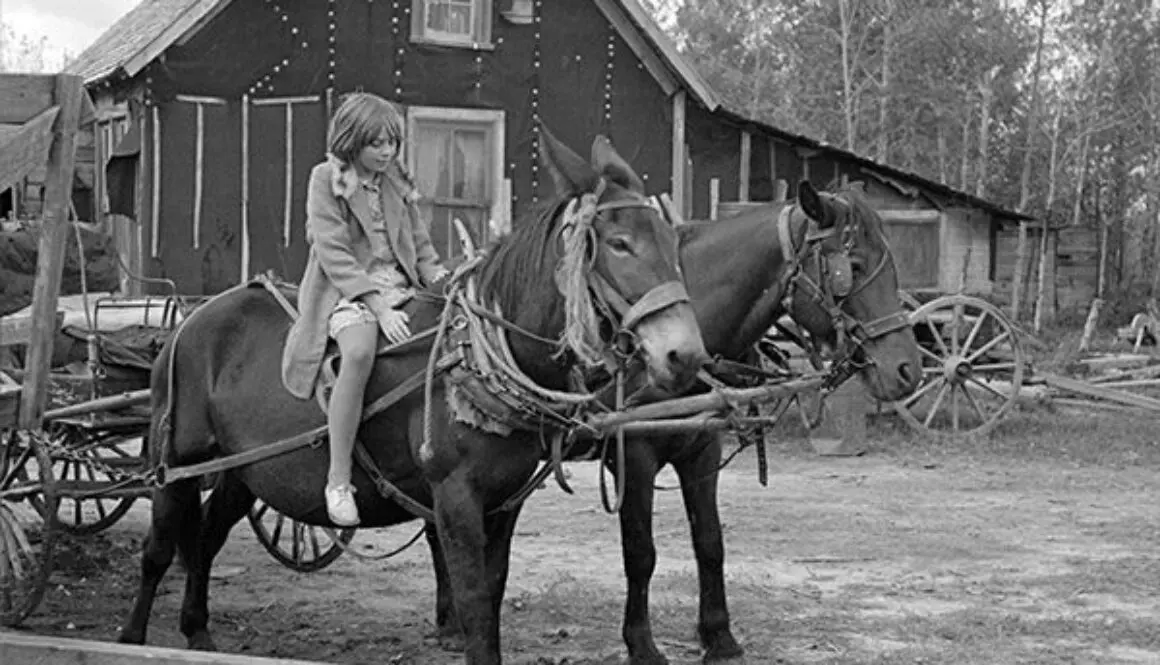
In the early days of what was to become the United States of America, mules and horses perpetuated the expansion of the colonists into the Western territories of America. Since these early times, the American mule has acted not only as a pack animal for miners and fur traders penetrating the West, but it has also played an important part in our country’s defense, being able to cross terrain not accessible by any other means, and carrying and pulling heavier loads of weaponry than horses could even begin to carry.
When the fight for freedom from England’s rule was launched with the American Revolution, donkeys and horses were used in varying capacities to help win the battle for our country’s liberty.
Freedom was won as a result of the combined efforts of humans, animals and faith. One need only examine the humble traits and character of mules and donkeys to see that they indeed possessed the faith and the strong constitution to make some very important contributions to this country’s independence.
As they say, an army “marches on its stomach,” so it was a natural for Americans to progress further and delve into agriculture. Because of the extraordinary ability of mules to work for longer periods of time in sometimes harsh and unrelenting climates, their surefootedness and resistance to parasites and disease and with their ability to work long hours, the mule became the gem of agriculture. He learned his job quickly and put his heart and soul into every task.
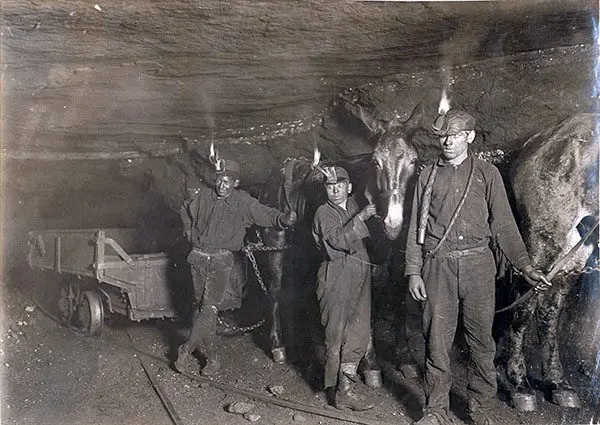
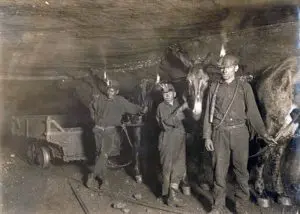
When American coal mining was booming, the mule was such a valuable member of the mining process, that a good mining mule was considered to actually be more valuable than a human miner. Mining has always been a dangerous business, and the mining mule’s innate sense of self-preservation was well known. “Mules are very smart…They know what they can do and would never do anything they couldn’t or would not want to do. Mules were known to pull at least three full mine cars full of coal. If you hooked up a fourth car they would balk at any commands and just stand there. No way would they pull the fourth car!” 1
 “Mules are the living symbols of the historic and pioneer spirit of the West. Mules were the pack animals of Spanish padres and grizzled prospectors. These animals have a dominant place in frontier history. From 1883 to 1889, the 20-mule teams moved 20 million pounds of borax out of Death Valley, California, to Mojave—165 miles away—traveling 15 to 18 miles a day. The 20-mule teams, the dramatic solution of a transportation problem, soon became a world-famous symbol, the trademark first of the Pacific Borax Company and, today, of the many products made by U.S. Borax.” 2 So began the mule’s vital contributions to industry and the economy.
In 1976, under the direction of the North American Trail Ride Conference, the Bicentennial Wagon train became a notable event in American history. Commemorating the trek West that was made so long ago by brave and adventurous pioneers, the Bicentennial journey went from California east to Valley Forge, retracing the steps of these first U.S. settlers. The outriders brought back scrolls of signatures signed by enthusiastic citizens to reaffirm their belief in the principles upon which America was founded. State by state, wagons met up with the main train and joined the trek. No doubt, many of these Bicentennial wagons were pulled by our beloved mules. “Going through my deceased folks’ stuff, I found an ‘Official Souvenir Program’ of the Bicentennial Wagon Train Pilgrimage. It’s interesting reading about the program in 1995–‘96, to have a Conestoga wagon or Prairie Schooner from each of the 50 states across the country on historic trails, ending up at Valley Forge on July third.” 3
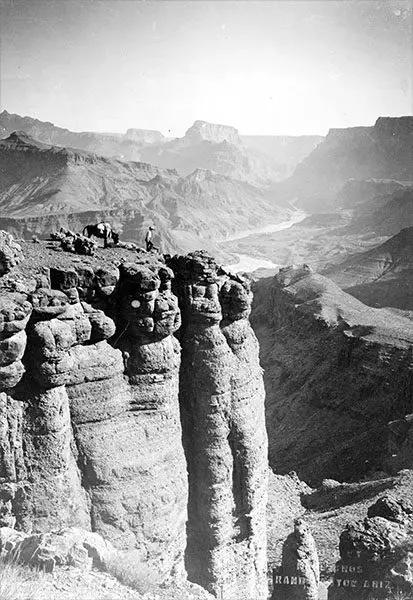
Although some Americans have become concerned about the impact donkeys may have on the environment and, in particular, on our state parks, there is no evidence that the burro will reproduce at a rate that will threaten the ecosystem, especially that of the Grand Canyon. In fact, it is possible that the burros have already been in the Grand Canyon for centuries. There is evidence that the erosion attributed to the burros is more often due primarily to other invasive forces, such as humans and the natural erosion that occurs from geological forces and the canyon’s climate. There is also some concern that the donkeys pollute water holes, but the defecation of burros (and mules) has never actually been proven to pollute anything in their environment. Currently, there is an effort to prevent mules from being used in the Grand Canyon, but they are clearly the safest way to traverse and enjoy the beauty of this American natural wonder. Mules and donkeys learn their jobs well and cannot be dissuaded from their purpose of carrying inexperienced tourists to the bottom of the canyon and back up again—with a remarkable safety record. Their smaller hooves do little damage to the trails, and their handlers have the integrity to maintain the trails just as they maintain their precious mules. Cyclists, hikers and motorized vehicles in the parks have the potential to do much more irreparable damage to the environment than any mule or donkey. In truth, it is the human element, rather than mules and donkeys, which does most of the damage to our delicate ecosystem.

America’s journey has been one of courage, determination and great faith. It has been defined by its sequential growth phases of religion, defense, freedom, agriculture, economics, industry and ecology. We have worked alongside mules and donkeys for centuries and have often taken their generous contributions for granted in the course of our fast-paced growth. But the mule and donkey are likely to remain with us as long as they can find a way to make their contributions to society.
Those of us who attend Bishop Mule Days every year and many Longears lovers across this country are very well-acquainted with the incredible assets of the mule, and look forward to singing his praises every year on October 26th, when Mule Appreciation Day rolls around. Let us never forget to thank our trusted equine companions for all they have done to make possible this great country of ours!
To learn more about Meredith Hodges and her comprehensive all-breed equine training program, visit LuckyThreeRanch.com, MEREDITH HODGES PUBLIC FIGURE Facebook page, or call 1-800-816-7566. Check out her children’s website at JasperTheMule.com. Also, find Meredith on Pinterest, Instagram, MeWe, YouTube and Twitter.
Covered in TRAINING MULES & DONKEY: A LOGICAL APPROACH TO TRAINING, TRAINING WITHOUT RESISTANCE, EQUUS REVISITED and A GUIDE TO RAISING & SHOWING MULES at www.luckythreeranchstore.com
© 2012, 2016, 2024 Lucky Three Ranch, Inc. All Rights Reserved.
1Mine Stories, The No. 9 Mine & Museum,Lansford, PA
2Mr. Longears, Volume 6, Number 21, Summer 1979
3ruralheritage.com email thread

 My favorite holiday of the year has always been Christmas! The sights, sounds and smells of Christmas transport me to a magical place for the whole month of December, and the excitement and joy of yesterday still ring true today. I cannot think of a more deserving holiday than one that celebrates the birth of Jesus Christ and promotes so much hope and serenity throughout the world, if only for a day. Christmas reminds us all that the spirit of sharing and giving is timeless and takes only a willing attitude and a little bit of creativity.
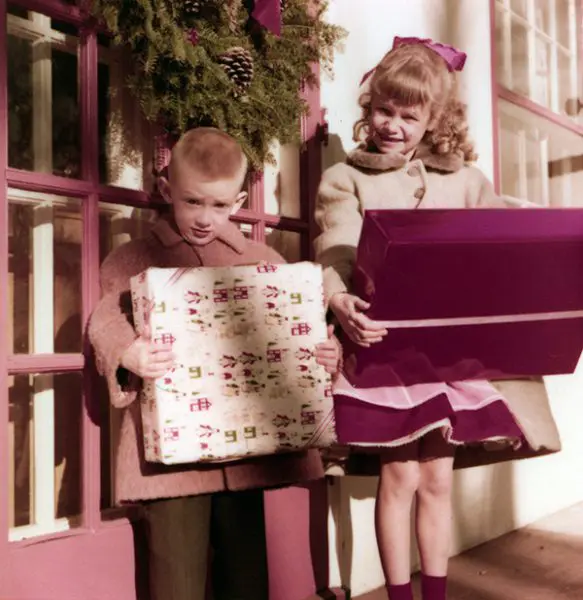 watched a 1955 film called On The Twelfth Day of Christmas. As you might guess, it was based on the old English song, “The Twelve Days of Christmas.” Every year, the film brought wild bursts of laughter, as we watched a proper Edwardian lady’s townhouse in England become filled to overflowing with gifts from her suitor. Not only did she get the gift designated for each day, but also the same gifts from prior days plus the new one. By Christmas, her little townhouse was filled with 12 partridges in pear trees, 22 turtle doves, 30 French hens, 36 calling birds, 25 gold rings, 30 geese a laying, 28 swans a swimming, 32 maids a milking, 27 ladies dancing, 30 Lords a leaping, 22 Pipers piping and 12 drummers drumming! Laughter filled our house daily from that day forward, all the way up to Christmas. Of course, as children, we were also reminded of the “naughty and nice” list.
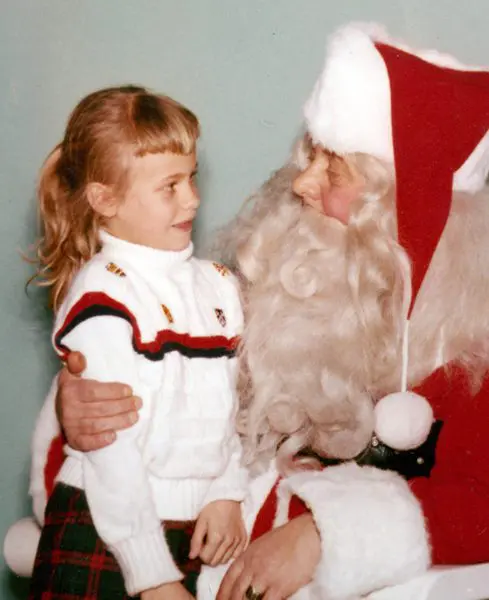 Christmas baking for days on end with my Grandma is a favorite memory. We got to bake great gifts for many friends and family members (and we all knew there would be time to exercise and take off the weight…LATER!). We children were wide-eyed and filled with wonder as we passed the evenings listening to our favorite Christmas carols and our elders’ stories of Christmases past. And we absolutely knew that Santa really could drive eight tiny reindeer across the sky, with Rudolph lighting the way with his red nose, bringing presents to little children all over the world. All of these experiences bonded our entire family together.
 We kids always awoke extremely early on Christmas Day, bouncing down the stairs to see what Santa had left us. The cookies and milk were gone and the presents from Santa were under the tree, but we were not allowed to touch them until our parents and grandparents got up. That wait was excruciating, but it was oh so much fun when the adults finally got up! After opening presents, everyone had a light breakfast, because the early afternoon would bring our traditional Christmas dinner with friends and family. My mother made the most amazing spread of perfectly roasted turkey and stuffing, mashed potatoes and gravy, an incredible salad filled with everything you can think of from the garden, sweet potatoes and a lovely cranberry sauce. The meal was always topped off by my grandmother’s unique and decadent chocolate roll, a light chocolate cake with real whipped cream and homemade chocolate sauce on top.
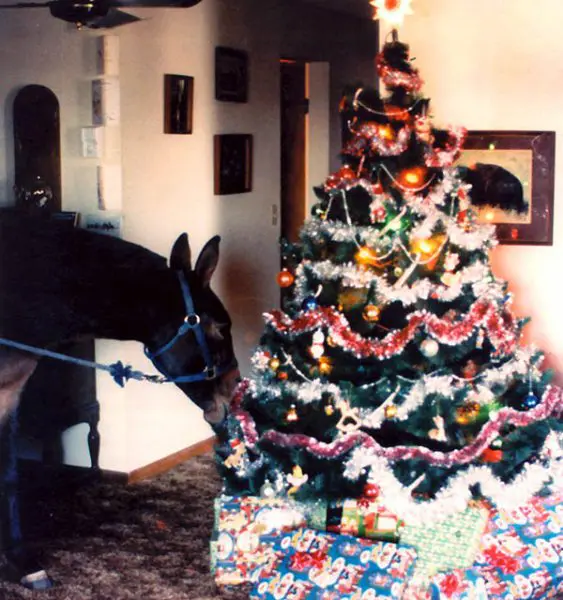
 original farmhouse at Lucky Three Ranch, the old floors were sturdier than those in my present home, so the mules were actually allowed to help with the decorating of the Christmas tree!
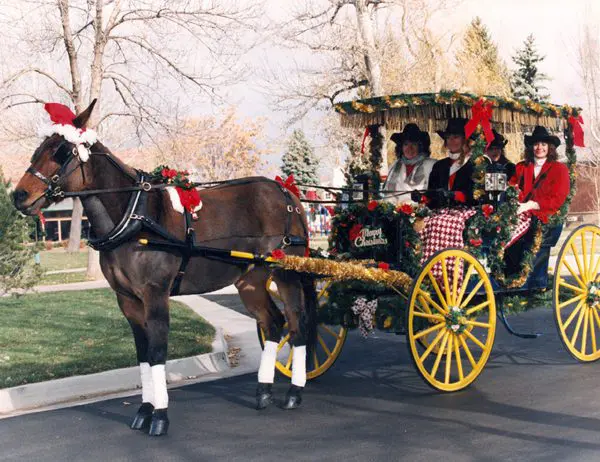
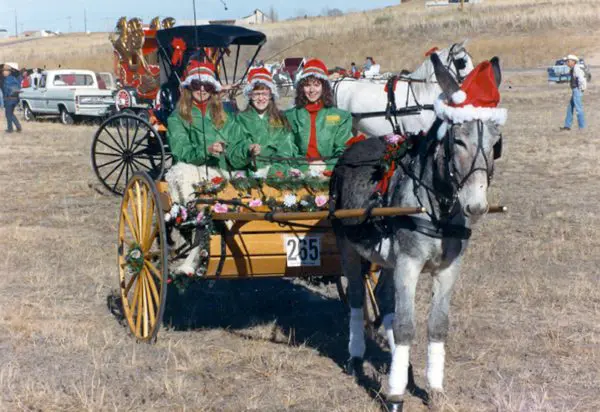 my mules, horses and donkeys became an integral part of each holiday season. My favorite tradition now is the time spent sharing a warm hug with each of my equines and giving them an extra measure of oats on that very special day that we call Christmas!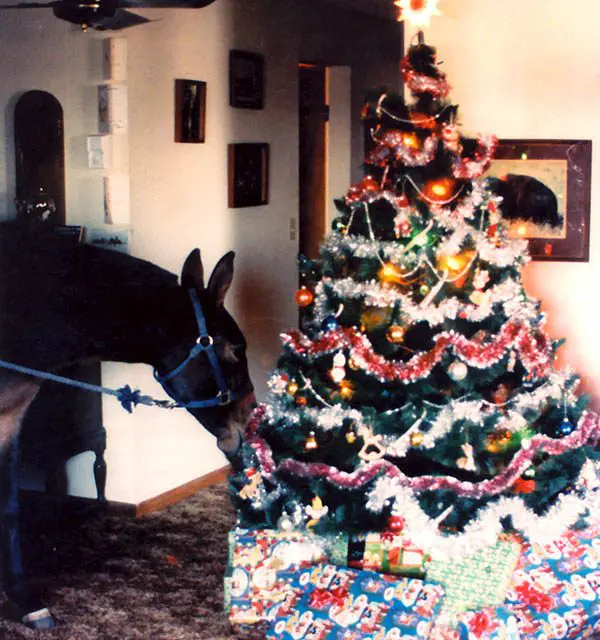
 Long before the Founding Fathers drafted our constitution, the roots of America were as a religious nation under God. Today’s mule also has his roots in religion. The mule’s ancestor—the donkey—is mentioned in the Bible numerous times as an animal acknowledged by God and blessed by Jesus Christ. The donkey was even chosen to bring Mary and Joseph to Bethlehem and, later, as the mount Jesus himself used for his ride into the city of Jerusalem.
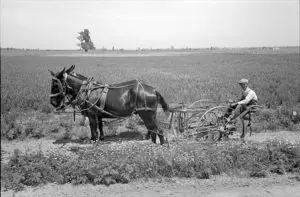 As early-nineteenth-century America continued to develop and its population grew, the American people came to depend more and more on self-sustaining agriculture. Because of the mule’s extraordinary ability to work long hours in sometimes harsh and unrelenting climates, his sure footedness which allowed them to cross terrain not accessible by any other means, and his resistance to parasites and disease, he became the prized gem of agriculture and remained so for the next hundred and fifty years.
 In 1882, the Harmony Borax Works opened with one big problem—how to get their product 165 miles across the treacherous Mojave Desert from Death Valley to the nearest railroad spur. The answer? Mules! “The borax wagons were built in Mojave at a cost of $900 each…When the two wagons were loaded with ore and a 500-gallon water tank was added, the total weight of the mule train was 73,200 pounds or 36 and a half tons. When the mules were added to the wagons, the caravan stretched over 100 feet. The Twenty Mule Teams hauled more than 20 million pounds of borax out of Death Valley between 1883 and 1889.” 1
 Because of their traits of strength, intelligence and loyalty, mules were a crucial part of our country’s greatest conflicts, from the Civil War through the Spanish American War, and in both World War I and World War II. A well-known tale from the Civil War states that, “In a battle at Chattanooga, a Union general’s teamsters became scared and deserted their mule teams. The mules stampeded at the sound of battle and broke from their wagons. They started toward the enemy with trace-chains rattling and wiffletrees snapping over tree stumps as they bolted pell-mell toward the bewildered Confederates. The enemy believed it to be an impetuous cavalry charge; the line broke and fled.” 3 During World War I, mules and horses were still the primary way that artillery was carried into battle. Although the 75mm Howitzers proved too heavy for most horses, it was a common sight to see the big guns strapped to the back of a sturdy mule.
 One of the world’s greatest natural wonders, the Grand Canyon, has been home to mules since the 1800s. First brought in by prospectors, it was soon realized that the tourists wanted a way down to the Canyon floor, and so began the Grand Canyon mule pack trips. Famous mule-riding visitors to the Grand Canyon have included Presidents Theodore Roosevelt and Howard Taft, famed naturalist John Muir and painter/sculptor Frederic Remington.