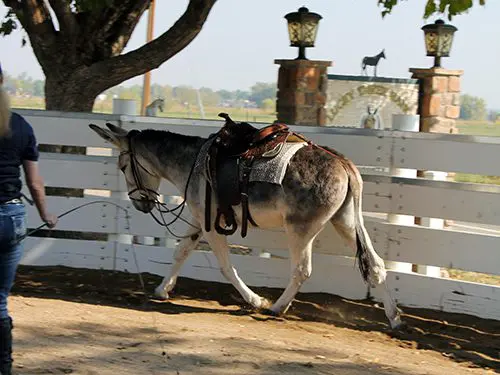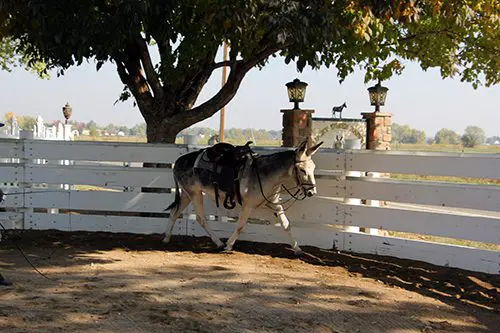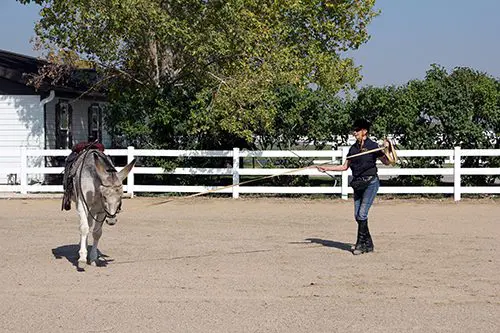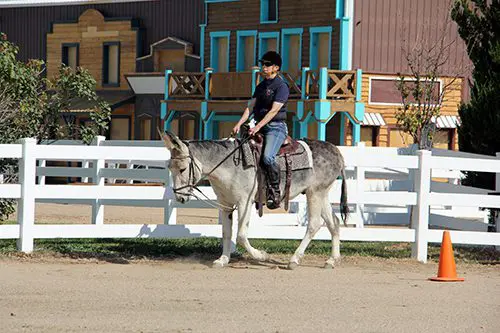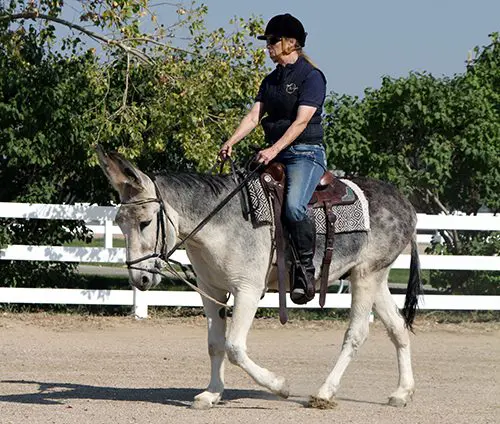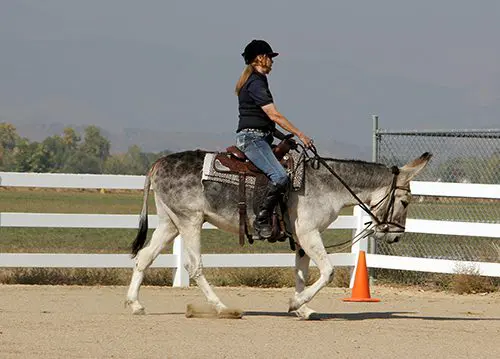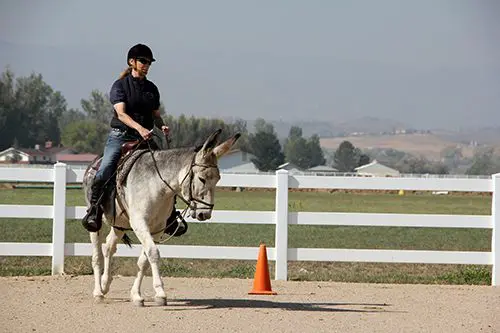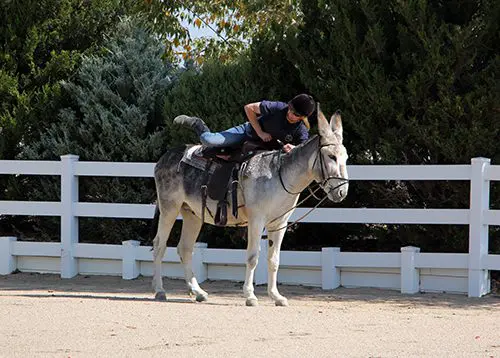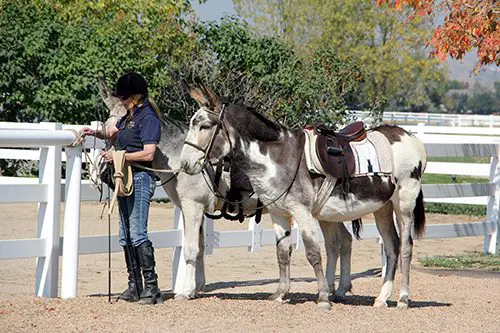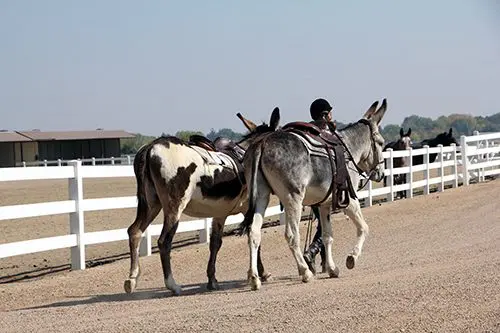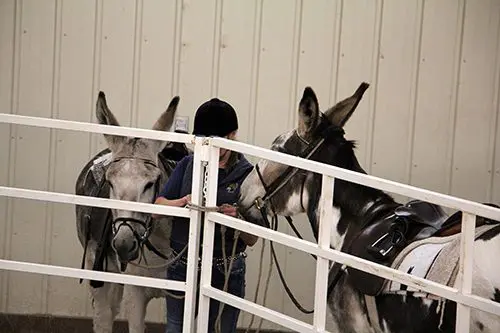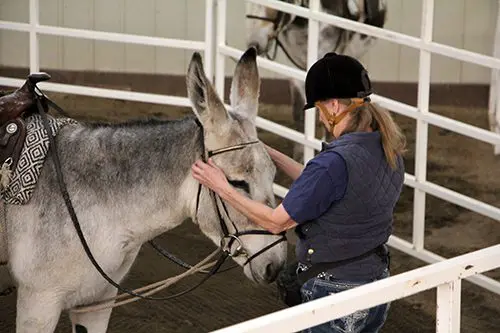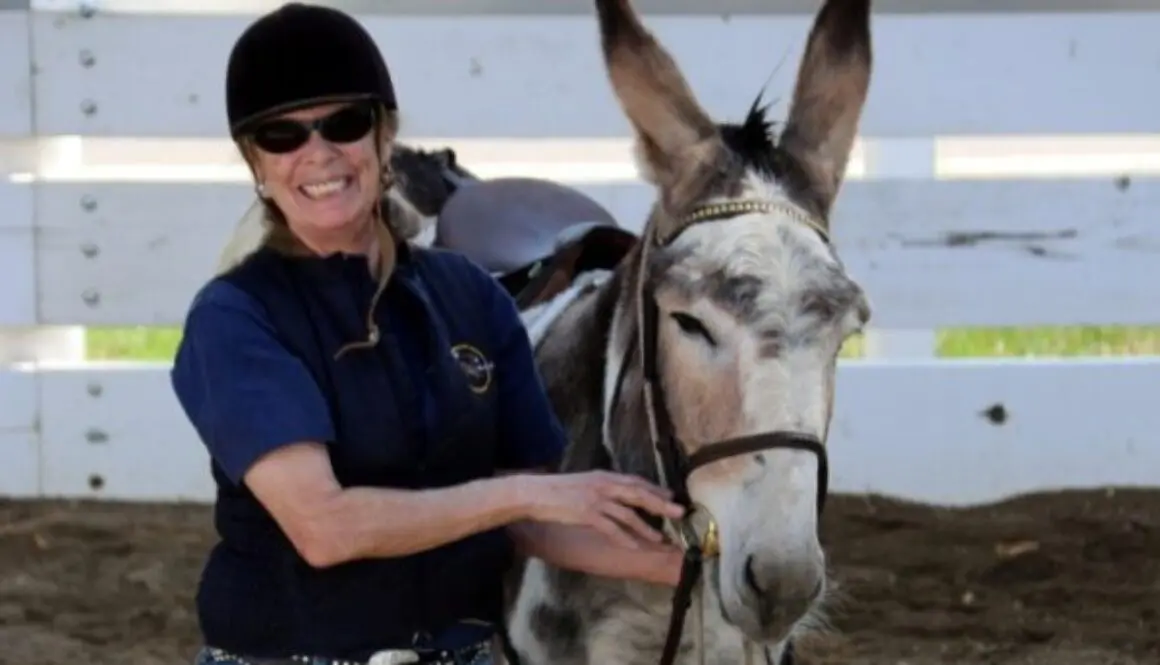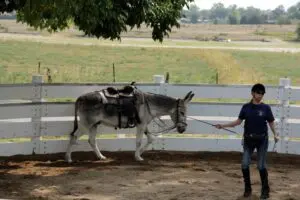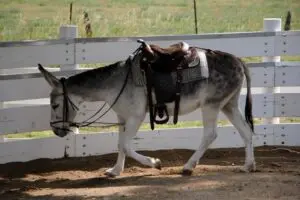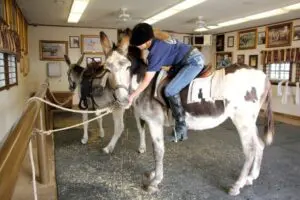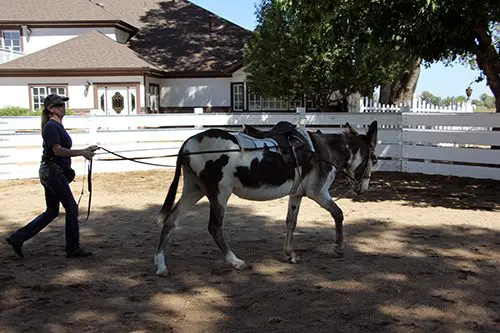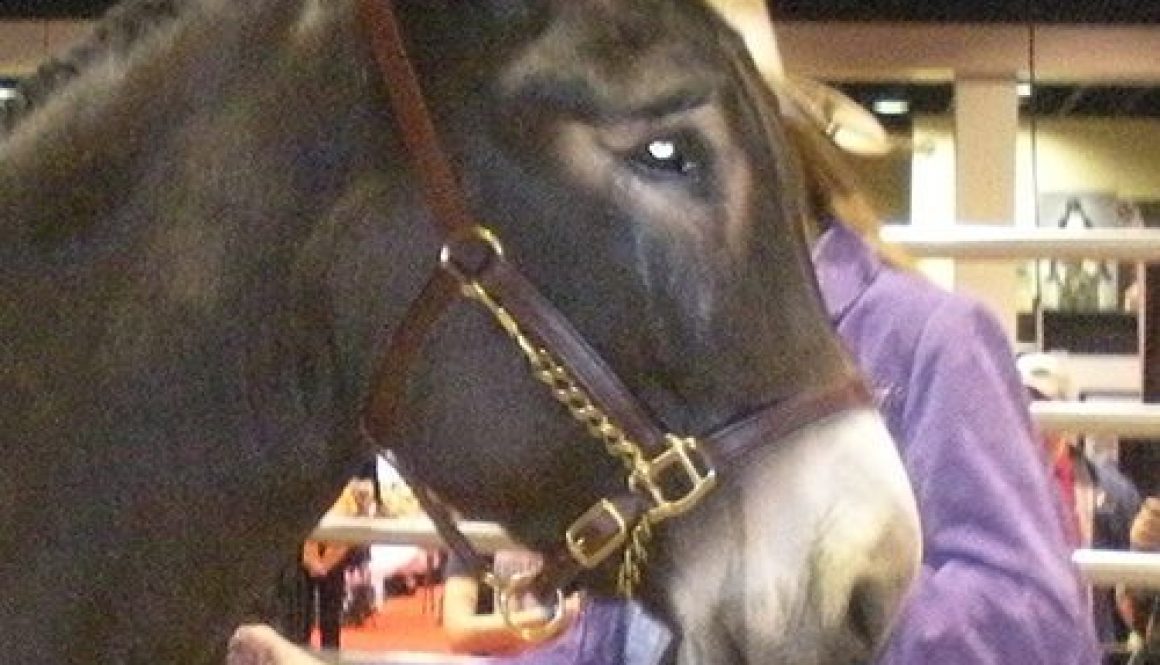
LTR Training Tip #15: Grooming Basics
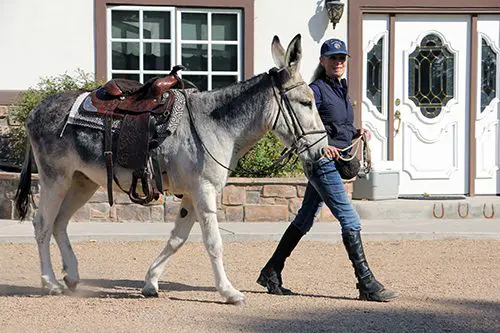
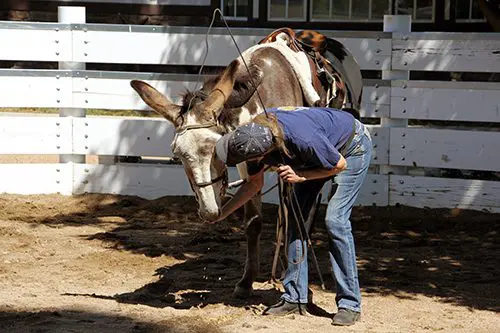
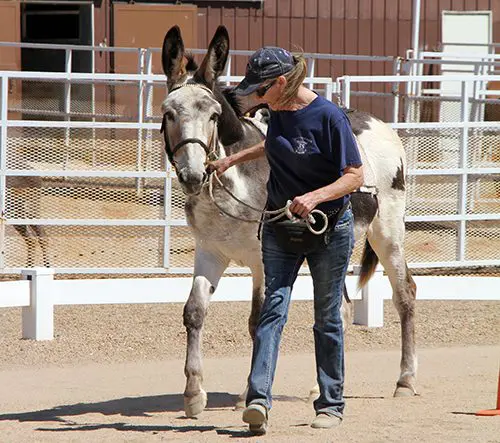
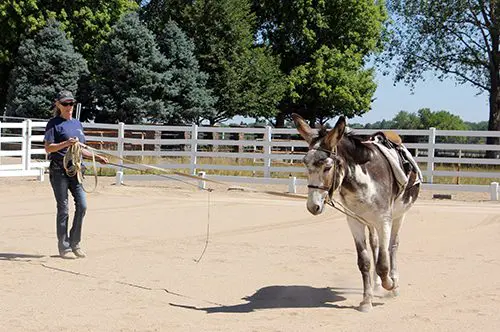
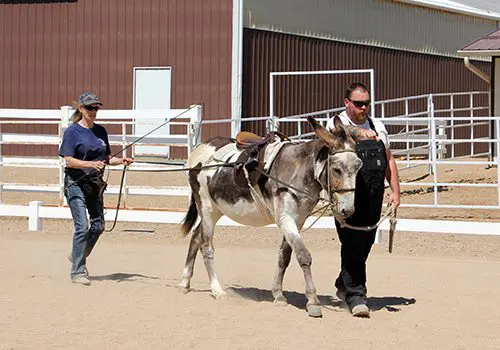
Keeping your animal well groomed is an essential component of equine care. Meredith shares some tips on the basics.
Posts to share on the LTR blog
Keeping your animal well groomed is an essential component of equine care. Meredith shares some tips on the basics.
Chasity continues to improve, however, the drainage from her teats was not receding and began to look suspicious to me so I called our veterinarian out to take a look at her. It has been two weeks since she arrived and had it been the result of a weaned foal, she would have been drying up by now. When he arrived, I told Greg Farrand that I suspected an infection of some sort and then I went to get Chasity.


Greg took a look at the discharge and agreed that is was not as we had originally thought, This was not milk, but a small amount of pus and some very hard teats.


Chasity was a star while we poked and prodded to get a sufficient sample to test. Greg and my Ranch Manager, Chad, finally got a large enough sample to be a viable test sample.


In the light, one could see that it was clearly pus and not milk. Greg put the sample in the holding receptacle and took it with him to be tested. He would call with results.


Not all my jennets from past experience were so cooperative and we truly appreciated Chasity’s quiet demeanor! Greg commented how much better she was looking after only two short weeks!


I mentioned to Greg that I had found some spots on her chest that could have been an old bot-hatching ground. I told him that I had scraped off the crusty scabs and applied Neosporin to the affected area. Most of the scabs were gone, but he said that she probably aggravated the area by scratching her chest on the fence. Donkeys will do that! I showed him her diary. He said that doing the core exercises would also help get rid of the infection.

Greg prescribed a regimen of Uniprim for the next 14 days along with daily hot water soaking.


Chasity tolerated the water, but was not thrilled with the water continuously running down her legs.


I decided if it was going to be a prolonged therapy, I would need to modify my future soaking approach to make her more comfortable during the process. This time, despite her displeasure, Chasity had cooperated and was happy to obtain her reward of crimped oats when it was all over!


By Meredith Hodges
You can often tell a horse what to do, but you have to ask a mule. Mules and donkeys are intelligent, sensitive and affectionate animals. Although they have been stereotyped as stubborn and difficult to control, members of the equine family can actually be quite responsive and compliant when they’re handled properly. Their intelligence, strength and natural athleticism make them well suited for virtually any equine activity or sport. With proper training and care, they bond closely with humans and make wonderful companions.
To work successfully with these bright, inquisitive animals is to understand the ways in which they differ from horses. Mules derive the best physical and psychological traits from both the horse and the donkey. Once you understand both the donkey half and the horse half, you’ll be well on your way to a successful relationship with your long-eared partner.
Redeeming Characteristics of Longears
The modern donkey is descended from the Nubian Wild Ass of North Africa.
Domesticated around 3,000 B.C. and has served man well ever since. Donkeys are surefooted, durable and have incredible strength for their size. They are very sociable animals and enjoy the company of their own kind, people and some other animals. They will most likely chase an animal that is smaller than them, so management must include careful consideration when they are in close proximity to smaller animals. Unlike horses, in the face of perceived danger, donkeys are inclined to freeze or hide rather than flee. However, mules being part horse and part donkey will either freeze or flee.
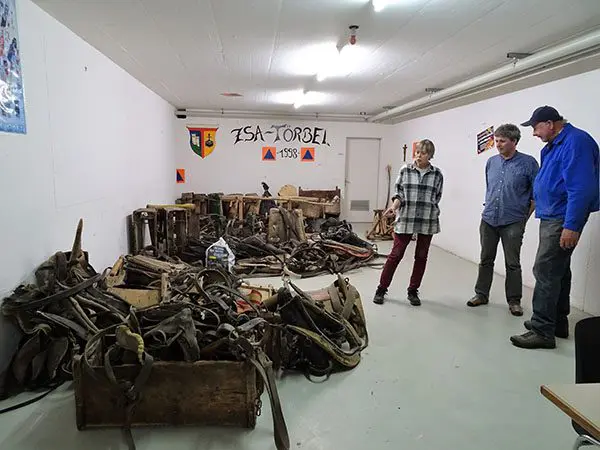
Mules inherit their instinct for self-preservation from the donkey, along with their innate intelligence and a number of unique physical traits. Mules may be either male or female and are primarily sterile. Horses have 64 chromosomes and donkeys have 62 chromosomes. The resulting offspring called a mule generally has 63 chromosomes, an uneven pairing, missing the conception pair. On occasion, some molly mules have conceived to jacks and stallions and have produced offspring as was the case in America with “Old Beck” and “Krause,” but this is rare. Typically, a mule foal will grow to the size of its dam, although he may be two inches taller or two inches shorter. Both mules and horses are very strong, but the mule has smoother muscling and more endurance and strength for its size. Mules also eat less, are less susceptible to parasites and disease, and will typically live longer than horses. “Hybrid vigor” gives mules some advantages over their equine cousins, but only proper management, care and training will enable them to reach their full potential.
Physical and Mental Conditioning
Mules and donkeys will bond most closely with the person who trains them. Work with your equine one-on-one to build that critical bond of trust between the two of you. Remember that patience, kindness and consideration will determine the success or failure of your training program. Longears can be obedient and reliable when they feel you have their best interests at heart. If you treat them harshly, you’ll encounter resistance at every turn. Mules and donkeys have an incredibly strong sense of self-preservation and will not do anything that they perceive is dangerous to their health.
Ideally, you’ll have the opportunity to work with your mule or donkey from the time he is born. However, regardless of your animal’s age or ability, it is critical that you always begin your training with imprinting, carefully planned, adequate groundwork and work forward in a logical and sequential way that will naturally make sense and is doable for the equine at every stage. Be sure to work with a knowledgeable trainer and use a comprehensive training program such as I offer. Begin with the basics and don’t skip any steps. The training information included in my training and management program is geared toward mules and donkeys, but also pertains to all equines. Generally speaking, it’s best to add an extra measure of patience, creativity and good humor when you work with a donkey.
Like all children, a mule foal will take after his parents to some extent. Be careful when you select a mare for breeding. Be sure she possesses correct conformation and a nice, calm mare sets the example for a nice, calm baby. From the time of his birth, pay attention to the way you touch your foal and his mother to make them both comfortable with your presence. This is called “imprinting.” A good time to practice imprinting in the beginning is at feeding time. Pick up the foal’s feet while he is unrestrained and touch, scratch and stroke him all over to discover what he does and doesn’t like. Give him time to relax and get comfortable with you. Let him choose to be with you, and you’ll find that is where he will prefer to be.
This is also a good time to introduce the concept of the “reward.” Offer his dam a reward of crimped oats when she comes to you. Your foal will see his mother’s acceptance and will learn to do the same. He is most likely already eating the oats with his dam if he readily accepts the oats. A consistent system of appropriate and prompt reward is a crucial part of your foal’s life-long resistance-free training program. Mules and donkeys will work harder for a pleasurable payoff and a handful of crimped oats serves the purpose best for equines.
At the beginning of training, you should offer rewards often, although only after a requested task is performed or assimilated. This will strengthen the bond between you and encourage good behavior. If your equine pulls away, don’t chase him. Simply let go of the rope, reins, drivelines, etc., and offer him oats when he returns to you. Your task is to be clear in your intent, fair in your expectations and prompt with rewards when tasks or assimilations are completed. When your animal understands which behaviors result in a reward, those behaviors will be repeated. This is called “Behavior Modification.”
Mule foals are not much different than human babies when it comes to their need for attention, love, guidance and praise. Giving your foal plenty of time to be a “kid” will help him as he grows, and playtime can do double duty if you play games that give him a sense of security, set boundaries and build the trust between you.
Once your foal is comfortable with being handled, you should be able to halter him with little trouble. Feeding time is a good time to start. Teach your foal about the halter and leading while he is still young. You’ll be using halters and lead ropes with him all his life and carefully
planned leading exercises are critical to your equine’s core muscles development in good equine posture. The balance he attains will serve him well as his tasks become more difficult. This makes for a more pleasurable experience between you.
Tying your foal comes next and is comprised of a series of brief, methodical lessons. First, halter your foal with the mare tied nearby. Attach a thick cotton lead rope to his halter and tie him to a stout hitching post using a safety knot. Be sure to use a flat nylon webbed halter to avoid undue pressure points on his face and to prevent breakage. Approach him every 10 minutes and wait for him to slacken the rope before you release him. Keep lessons to no more than 30 minutes and repeat for as many days as necessary until he doesn’t pull back. Once he’s standing quietly, you can brush him with a soft brush and pick up his feet. He may struggle a bit at first, but as long as he isn’t hurting himself, he’ll be learning how to “stay cool.”
When you can easily halter and tie your foal, and he ceases to pull back upon your approach, untie him and ask him to follow. If he refuses, just tie him up again, wait 10 minutes, untie him and ask him again. When he finally follows you for a few steps, praise and reward him, so he knows he’s doing well. There’s no need to jerk, pull hard or hit his rump. Keep your voice calm and use the simple command to “Walk on.” Be patient, work with him and reward him when he does what you ask.
When he walks when you say, “Walk” and stops when you say, “Whoa,” you’re ready to do more. Keep verbal commands VERY SIMPLE in the beginning. Always hold the lead rope in your left hand while standing on his left side (the “near side”), and point in the direction of travel with your right hand to keep him in proper position with his head at your shoulder. Look where you are going and match your steps with his front legs. Your foal should stop when you verbally say “Whoa” and he feels the resistance of a slight drag on the lead rope. Always stop with your feet together and he will learn to do the same. When he stops, ask him to square up such that he has equal weight over all four feet with the front and rear legs standing together. He should stand straight and still on a loose lead to receive his reward.
Until now, you’ve kept your foal in a confined area such as a corral or paddock. Now you can move to a larger area, keeping in mind that this will affect his behavior. Use a calm reassuring voice to let him know that everything’s okay as you introduce him to simple obstacles. Use the lead rope to guide him through each obstacle. If he gets frightened, put yourself between the obstacle and your equine. Keep tension on the lead rope and give him plenty of time to investigate each new object. Encourage him to move forward by showing him the oats reward and then praise him with the reward when he touches the obstacle with his nose. We are trying to change his fear into curiosity. This is a time for positive interaction between the two of you. Take your foal with you often to discover new things together. Teach him to trust your judgment during training now and he will trust you always.
Once your animal will stand calmly when tied and willingly follows you over and around different obstacles, you can then introduce him to the trailer. If you’ve built a trusting relationship with him, he should load with little or no resistance. Never get in a hurry! It will only take longer. If he refuses to cooperate with a reward as an enticement, you might need to make use of a lunge line and whip used as described in my books and DVDs in conjunction with the reward.
Mules are typically about a year or more behind horses in their overall development. Even at two years of age, your mule is still growing and the cartilage in his joints is still soft and being shaped. He is a rambunctious youngster and not inclined to be easily restrained. Because the cartilage is soft, he’s more susceptible to physical and psychological injury at this stage, so proceed with caution—only the simplest of leading lessons is appropriate at this point.
Basics of Resistance-Free Training
During these early lessons, some discipline may be required. If your youngster gets a little bold and jumps or nips at you or kicks, you must correct the behavior so it doesn’t become a bad habit. With the flat of your hand, give him a brisk slap on the side of mouth if he bites or on the rump if he kicks, and in a strong voice say, “No!” Then continue to play with him so he knows that everything is okay. When an older animal tries to bite you, slap him on the side of the mouth and very loudly say, “No!” and then raise your hand like a stop sign in front of his face. He will raise his head, begin to turn to the side and be ready to leave, or simply will back up. Immediately take a step toward him, tell him, “Good boy,” and reward him for giving you your space. Be consistent and use only the word “No” to correct him. Correcting kicking through training is covered in DVD #2 of my resistance-free training series, Training Mules and Donkeys.
It’s very important to understand that negative behaviors on your part, such as yelling and hitting, when used in isolation, don’t really work with any equine. Abusive behavior will shut the animal down, pushing him into a freeze response and severing the connection between you. If there is any opportunity to do so, he will simply leave you standing alone.
In rare cases when negative reinforcement is required, always immediately follow the negative correction with positive verbal praise and a reward him when the he responds to the correction. He may test you again, but a raised hand and verbal, “No!” should curb the behavior. He should back off and wait for the reward. When being disciplined for aggressive behavior in the future, you should only have to raise your hand like a stop sign and say “No!” If the slap was done smartly the first time, he should automatically take a step back and wait for his reward.
Set the stage for success to encourage good behavior. Just as you’ve established a feeding schedule, also design a training routine. Equines will work better when they know what is expected. Set up a workstation where you start each lesson.
Each day that you train, always bring your animal to the designated work station. Tie him, then groom him and tack up. At the end of each lesson, return to the workstation to un-tack and groom.
Ideally, you should have a round pen, arena and obstacle course to work in, but whatever facilities you have, be sure that the training and grooming areas are clean and safe. The familiarity will keep him calm and receptive.
Also get in the habit of covering everything your mule or donkey has previously learned before going on to something new. A quick review will boost his confidence and prepare him to go on to the next level.
Athletic Conditioning for Optimum Performance
Training begins by building a positive relationship with your animal, establishing a consistent reward system, and maintaining a safe, comfortable environment. Another often-overlooked but critical component is the need to physically condition your equine, so he can safely do whatever you ask of him. This is probably the toughest part of training. Our inclination is to rush through the basics to get to the “fun stuff,” but without thorough athletic conditioning with balance and strength in good equine posture, your animal simply won’t have the physical capacity to properly do what you ask. On the contrary, he’ll be more prone to injury and more likely to develop behavioral problems.
The work to develop core muscles, tendons and ligaments in good equine posture doesn’t start in the round pen—it begins on the lead line. Showmanship work on the lead line helps to develop strength and balance on the flat ground, in a controlled situation. Leading over obstacles adds coordination to the strength and balance. Take plenty of time at each leading stage of training before moving your animal to the round pen to learn balance at all three gaits on the circle. It takes months to develop muscles.
Physical loss of balance is the biggest problem in under-conditioned animals and the most common cause of bad behavior. When you design your training program to fully develop muscles, tendons and ligaments in good equine posture, your equine will feel good all over and be more willing to comply. Stretching is also important for the equine athlete—young or old. Make sure you incorporate appropriate passive and active stretches throughout your training program to protect your animal from injury. It takes years for an equine to grow and develop properly. Give him the benefit of patience, kindness, respect and proper care, and you’ll both reap the rewards.
Breeding and Training for Performance
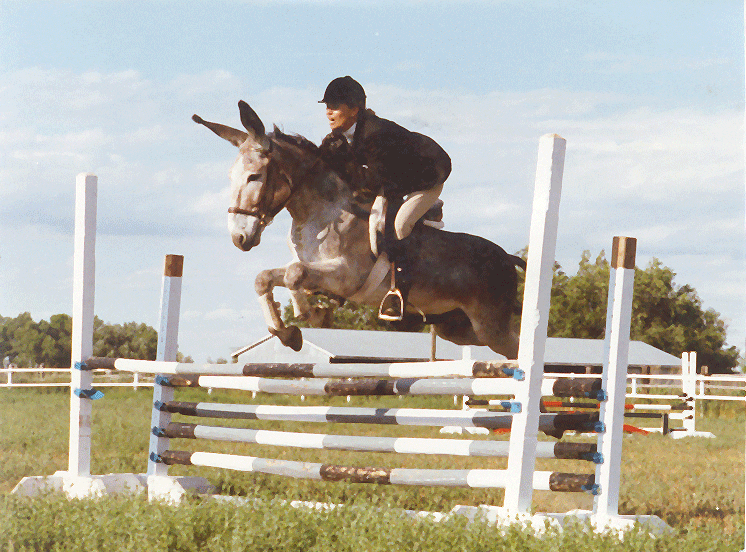
When you think of mules and donkeys, activities such as driving, packing and trail riding probably come to mind. But these days, mules, in particular, perform in an amazing variety of events including Reining, roping, Pleasure classes, Endurance events, Hunter classes, Jumping and even Dressage and Combined Training. In fact, in 2004, the United States Equestrian Federation voted to allow mules into their Dressage Division with provisions.
Better breeding, better training and renewed interest bolstered the popularity of Longears as pets and performance animals in modern times. By selecting your mare carefully, you can help to determine your animal’s athletic potential. Choose the breed of mare that most closely exemplifies talent in the specific events that you desire. By choosing and adhering to a comprehensive, sequential training program, you can help your equine to reach his potential in a way that keeps him healthy and happy.
Regardless of how you plan to use your mule, basic Showmanship training lays the foundation for all future training. In Showmanship, your mule or donkey must learn to follow your shoulder at a walk and a trot, stand squarely and quietly, and do a turn-on-the-haunches. Each time you lead your mule, do it as if you were in a Showmanship class. The walk to and from the barn or pasture is THE place to start.
After you and your mule master Showmanship, you can begin to vary your training routine. For example, you might practice showmanship one day, rest the next, work with obstacles the next day, rest for a day, go for a trail walk, rest and then add lunging and so on. Your mule needs time to think, so keep it fun for both of you. Keep your expectations reasonable and remember that short, frequent lessons (20-40 minutes) with a day’s rest in between are better than long, repetitive drills. Also, understand that disobedience is an honest response to YOU and what you’re asking. If you’re not getting the response you want, ask a different way.
Training for Saddle
After you have built core strength in good equine posture on the lead rope, and after your equine has finally learned to stay erect while bending his body through the rib cage during turns as he walks at your shoulder, he is now ready to move on to the round pen for lessons in lunging on the large circle. This is where he will learn more complex verbal commands and where he will begin to develop bulk muscle, balance, rhythm and cadence through the walk, trot and canter on the circle.
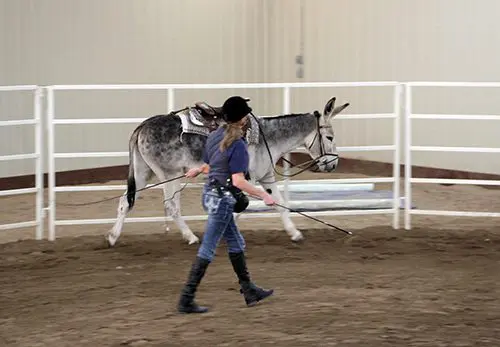
Begin lunging your mule in the round pen first in the bridle, and then in the bridle and saddle for ten-minute intervals. Then add the “Elbow Pull” to put him in his proper postural frame to correctly develop his muscles. Follow your trainer’s instructions about body language as you practice at all three gaits and the reverse. When you and your mule have perfected your lunging technique, you’re ready for ground driving in the round pen.
Ground driving builds your mule’s confidence and teaches him the fundamentals of riding without the stress of a rider. Here, the animal learns verbal and rein cues from the drive lines that set the stage for more advanced resistance-free training. You will begin to develop the synchronization of your own body with his by following the steps he takes with his back legs. Then when you ride, your seat will be more flexible and better able to follow the motion of your equine’s body. If your goal is to ride your Longears, keep in mind that these animals mature more slowly than horses. A Longears might not be physically or mentally ready to carry a rider until he’s four years old. When your equine is physically prepared, comfortable with the saddle and bridle, and proficient in lunging and ground driving, he will then be ready to ride.
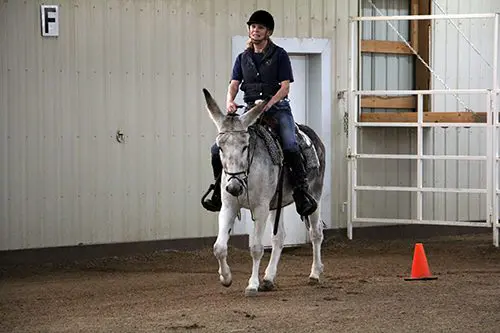
You will need to give your animal plenty of time to adjust to new sensations and directions. Always wear a helmet and work with an assistant until you’re confident your equine can calmly walk, trot and lope with you on board, first in the round pen and then in the open arena. As your animal advances, remember to work on your own “Horsemanship” techniques and the accuracy of your aids – your hands, seat and legs.
Driving Training
Driving your equine can be great fun, but driving is very different from riding and the details are paramount. Driving can be hazardous for you and your animal, not to mention whatever or whomever is in your path. Choose an appropriate prospect—one who will stay fairly calm in the face of new situations. If you’re inexperienced, be sure to work with a trainer before setting off on your own.
Of course, before you tack up, you’ll need to desensitize your animal to the sound and feel of the harness, blinders and other equipment. Take your time and follow your trainer’s instructions carefully. Be careful because too much desensitization can cause your equine to become bored and disinterested. Instead, use the introductory techniques you used in leading training and appeal to his natural curiosity and sense of adventure to bolster his confidence.
Once he’s comfortable with the equipment, practice lunging and ground driving your equine in harness. Eventually, you can add a PVC pole to mimic the shaft, then a drag (such as an old tire) for weight, then a travois of two poles and a crosspiece. Clear verbal commands are positively essential here. Used in combination with the drive lines and a suitable driving whip, they will be your primary means of communication. Take your time and remember that each individual animal is different. Safety should always be your primary concern. The “fun stuff” will come in time.
Importance of Logical and Sequential Training
This article is only an overview of my resistance-free training basics for all equines and especially for mules and donkeys. If you’re serious about working with any of these smart, strong and intelligent animals, you’ll need to invest in a complete training program. Any equine training program worth its salt will address not only the exercises and assimilations required for performance, but also the physical, mental and emotional well-being of the animal.
Even abused or neglected animals can be rehabilitated using resistance-free training methods that include slow and methodical body conditioning. With love and patience, mistreated animals can learn to trust again and injured animals can recover enough to thrive. Training an equine should be like making a friend—it’s something no one else can do for you, and the experience teaches you as much about yourself as it does about your animal. So, remember to keep it fun and enjoy the journey.
To learn more about Meredith Hodges and her comprehensive all-breed equine training program, visit LuckyThreeRanch.com or call 1-800-816-7566. Check out her children’s website at JasperTheMule.com. Also, find Meredith on Facebook, YouTube and Twitter.
© 2008, 2016, 2020 Lucky Three Ranch, Inc. All rights reserved.
Meredith explains the lifelong benefits of teaching your equine to behave with good manners.
Meredith discusses how to desensitization works in your training with your mule.
Imprinting is an important part of your equine’s life–and not just for foals. Meredith discusses how to approach imprinting with an equine of any age.
It was the end of March when Chasity first arrived and the weather was much too cold to even think about giving her a bath, even with our indoor facility. Even though the equines come in to us with Health Certificates and a Coggins Test, we are still very careful about keeping them in quarantine for 30 days and bathing them for hygiene purposes. Chasity would be no exception.

Finally on April 10, it was warm enough to bath her. The water at the outside hitch rail would be too cold, so I opted to bath her in the Tack Barn where there was warm water. Chasity was about to experience her first bath at the Lucky Three Ranch! I began with the lower part of her front legs, then moved to her forehead and worked my way down her neck after spreading a line of shampoo across the full length of her body. I did not use the shampoo on her face.


Ordinarily, I do not use soap during the yearly bathing, but since she had come from another location, I used my Tres Semme Breakage Defense shampoo. It is not as drying as some shampoos and does not require any conditioning. As I sprayed her with water, the suds came up and I followed the sudsy water with my shedding blade to eradicate the dirt from her body as she was rinsed.


As I scraped her with the shedding blade, I just kept the water flowing until no more dirt and suds came from each area. Chasity was not exactly thrilled and moved into me and up against the hitch rail where I could not reach her. I just adjusted the spray to more power and aimed it at her flanks until she moved over. Then I adjusted the spray to be lighter and less penetrating again.


Once she was willing to stand still, I was able to check some questionable spots on her body. He chest had completely healed from the old bug bites, but I did notice a bald spot on her right hind leg. It didn’t look like much and I thought it would probably fill in with hair as her good hygiene was maintained. If need be, I would treat that with Neosporin, too. It works well on most things like this that donkeys seem to get quite often, including “jack sores.”

After the right side was all done, she was rewarded for being a good girl! After chewing her reward of crimped oats, we resumed first with her forehead on the left side.


I worked my way down the left side the same way as I had done on the right side…covered the length of her body with shampoo, followed by water and scraping the suds and dirt from her body with the shedding blade.


She was much better on this side! I sprayed her teats clean and she stood like a trooper!


She now knew what to expect and was amply rewarded for her efforts!

I had prepared to dry her with a hair dryer, but it was so warm, I decided to try her on the hotwalker. I wasn’t sure about how she would take it, but I took it slow, tied her with the chain looped through the ring on her halter and not under her chin. She walked right off as if she had done it all her life!


She dried much more quickly than she would have had I used the hair dryer! I was so proud of Chasity! I think she is finally beginning to trust us!!!

Your horse, mule or donkey isn’t born with good posture–so Meredith has some tips on how you can ensure he’s moving his body properly as you train.
4-6-20: Today, Chasity did much better after two days of rest over the weekend. Her hair coat is much softer and her color is becoming more brilliant. She was moving around quite a bit while being groomed and had to be corrected. After being corrected and rewarded, she stood still.


4-8-20: Today she was much better during grooming after being corrected the last time, although she was still a bit impatient. She wanted to continue forward before she finished chewing during her lesson in the Hourglass Pattern. I expect that will change in time.


She stood still while I wiped the dried milk-like drainage from her teats and scraped off her legs.


I also found dried bug bites of some sort on her chest that I thought could be old scars from hatched bots. I scraped them off with the shedding blade and treated them with Neosporin. It worked well.


It has only been a week of lessons, but we have made some progress with her neck. It is difficult to tell much from looking at the left side of her body. But now, when you look at her neck from the right side, you can see her mane sticking up across the top. We could not see it at all before.


The neck sweat Velcro is overlapping a bit more and I am able to tighten the adjustment on the “Elbow Pull” since she is now more flexible in her neck.


Her back is beginning to look better even from the start of the lesson. Although she still leans on it, she is randomly submitting to the “Elbow Pull” and matching my steps more easily.


Chasity continues to improve. She is happy to stand quietly, is more balanced over the ground rails and squares up much more easily with only slight indications from the lead rope.


4-10-20: With each new lesson, Chasity continues to improve. It is only necessary to do the Hourglass Pattern once in one direction and then cross the diagonal and do it in the other direction, at least once per week and no more often than once every other day. She is now learning to bend through her rib cage while remaining erect around the turns in both directions.


Again, she is balanced over the ground rails, squares up nicely and maintains her good posture. She resumes the pattern and goes over the ground rails again for a balanced finish! There was no need for pulling on the lead rope at all, just slight indications!


Chasity’s overall balance and core strength is progressing faster than I would have thought. This is the reason I tell people that these lessons on the flat ground will need to be done for 3-6 months to gain ultimate postural balance and core strength before moving on to obstacles for the addition of coordination. Some equines do progress faster than others. Chasity appears to be one of the faster ones!


Meredith gets a lot of letters and emails from people with training questions about their equines. Here, she discusses the importance of keeping clutter-free stalls.
4-1-20: I led Chasity from the stall and introduced her to her new work station. It was clear that there would be a lot of work ahead. Her neck crest was fallen to one side, but was not yet permanently broken, as far as I could tell. She had fat pockets across her body and her hooves were overgrown with shoes on the front feet. At least her feet could be balanced after removing her shoes and having her trimmed. For now, I would introduce Chasity to her new routine of grooming and exercise.


Since I wanted a clean place to set the crownpiece of the bridle without it getting tangled in her hair, I went ahead and clipped her bridle path. She was very good about having the clippers behind her ears.

I wasn’t thrilled to have to do the workout with her feet so unbalanced, but I knew the farrier would be here the very next day, so I opted to get started. I had my Ranch manager, Chad, clean her feet.


Then I proceeded to groom her with the multi-bristled human hairbrush and scrape with the shedding blade what I thought was dried milk from the insides of her hind legs.


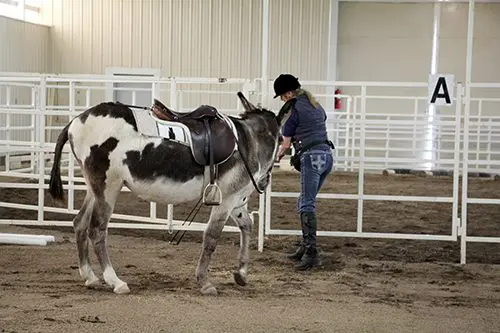
I tacked her up in a light weight surcingle, Eggbutt snaffle bridle and a neck sweat to help keep the crested neck stabilized and encourage shrinkage during the workout. Then I added and adjusted my “Elbow Pull” self-correcting, postural restraint to support good equine posture during her workout.


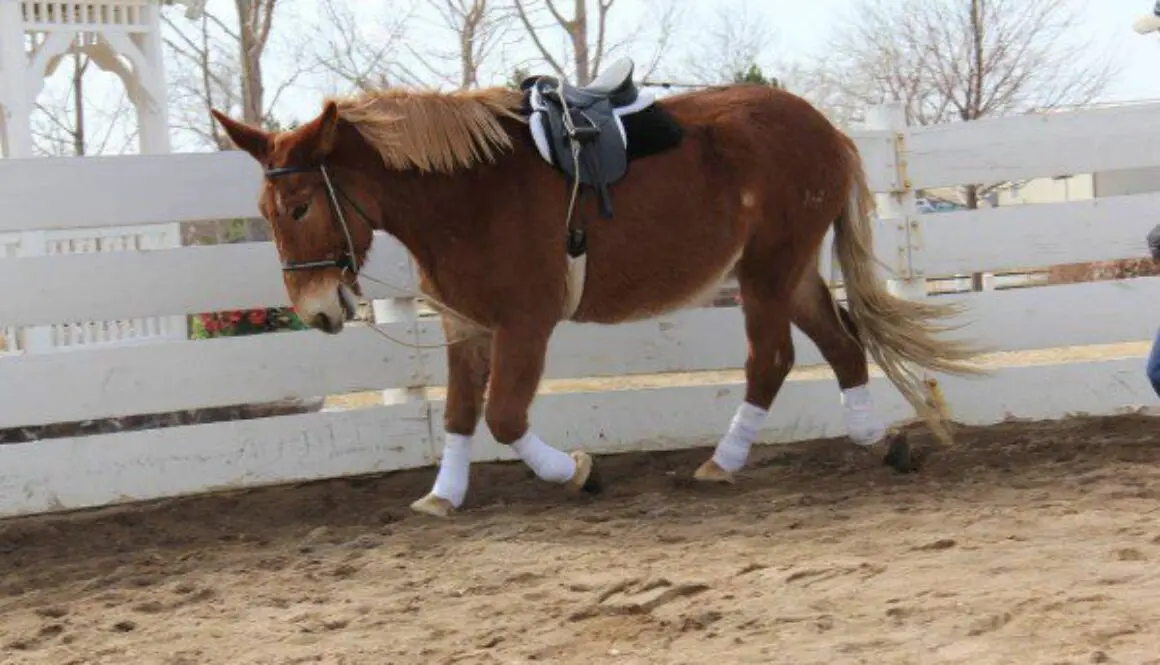
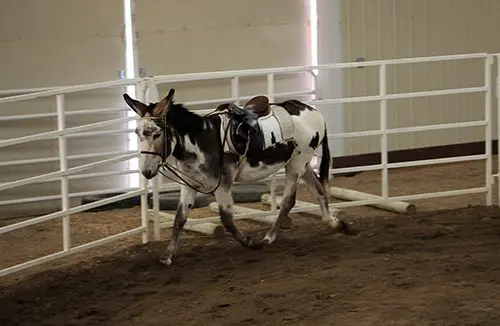
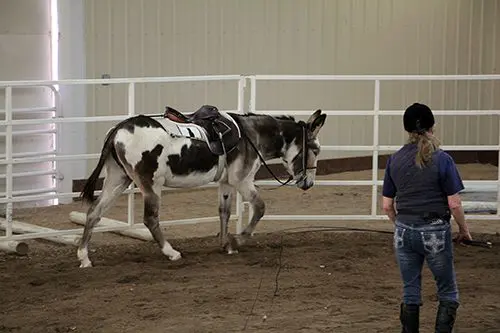
Then it was time to go to the indoor arena where I had the Hourglass Pattern with ground rails set up for her therapy sessions. She hollowed her neck and back, and “trailered” her hindquarters behind when she walked. It was the same when she stood still with an inverted neck and back and camped out behind.


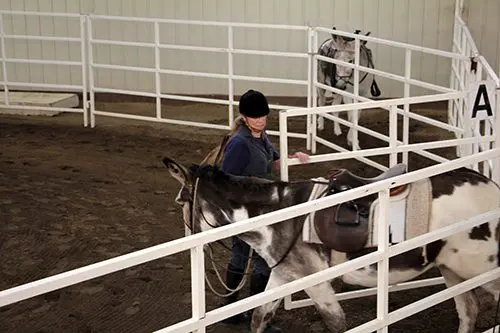
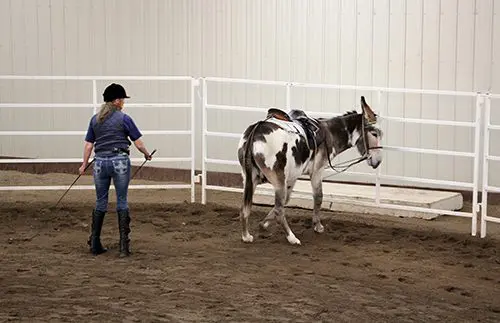
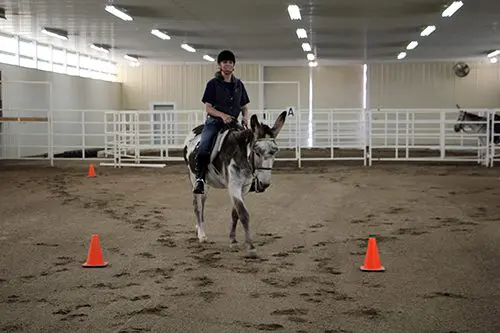
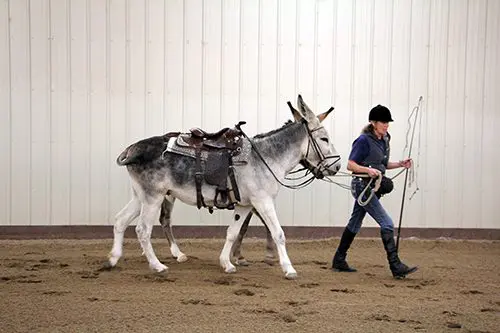
I began her postural therapy…leading her through the Hourglass Pattern in the “Elbow Pull” restraint to encourage her good posture. The neck sweat would begin to shrink the crest on her neck. She didn’t know exactly what was expected at first, but soon “got with the program” of walk and halt in designated places. She was asked to square up with equal weight over all four feet and then be rewarded for her effort. I waited each time for her to finish chewing her crimped oats before proceeding again along the track of the Hourglass Pattern.


As she walked, she submitted to the pressure from the “Elbow Pull” restraint which meant she was holding her own good posture when it was loose. She would lean against it when she could not hold that posture, but I encouraged her to relax and “give” to it each time we halted.


Chasity tracked once around one way and then once around the other way. She walked over the ground rails in the center of the pattern and stopped at strategic places between the cones to do square halts and stand still. I also stood still after dispensing her rewards so she would never feel rushed. She learned to stretch her back and engage her abs, and slowly began to improve even after only one session!


One of my ranch hands, Steve, said that he noticed her back and overall posture looked ever so slightly better when she was done, even after only one session! I think I see some very subtle improvement from the beginning to the end of the workout as well. It will take a long time to get her REALLY correct in her posture, but it is truly exciting when it begins to happen!

4-3-20: I went ahead and did Chasity’s therapy session in the Hourglass Pattern again. She did well in her workout and I noticed that her hair coat is already considerably softer. She had some difficulty squaring up, but it could be soreness from the previous workout. Standing squarely is unnatural for her and it will just take some time before it becomes comfortable. After having her hooves trimmed, she is moving a bit more balanced…not quite as awkwardly. Going forward, I will be doing her workouts at least once a week, but no more than every other day. Muscles need to be appropriately stressed during the workout, but not fatigued, a day of rest is needed in between to fully recover. I expect it will probably take six months before we have redistributed the fatty tissue and solidified her balance in good equine posture. I am fortunate to have such a nice indoor arena in which to work during inclement weather.

Our veterinarian, Greg Farrand, came to do a health check on Chasity the day after she arrived. She obviously needs a lot of core strength work, but it will improve her health and keep her occupied while she is in quarantine. Simple core strength leading lessons will have a dramatic effect on her overall health and welfare both physically and mentally. Wrangler looks on with interest as the vet surveys her condition.

He thought because of her enlarged, fallen crested neck and all the fatty deposits over her body that she may have foundered. But her feet were in pretty good shape…no stress rings from founder.


She did have Borium shoes on the front feet (maybe previously used for parades on asphalt?). They were inordinately grown out and her hooves behind were also a bit long in the heels. She was definitely out of balance.


When we looked at her udder, we noticed that she had possibly been nursing before she came to us. She had what looked like milk dripping from extended teats and dried fluid caked on the insides of her legs.


She has cataracts starting in her eyes which made her a bit head shy…


…but, her teeth had just been floated and they were good.

Her posture is terrible with substantial Lordosis (sway back) even though she is only 13 years old! She exhibits the posture of a jennet after several foals. Her fallen, crested neck will be another challenge. However, she is a very sweet and cooperative girl! She is obviously the victim of some negligence… intentional or not.


When Chasity begins her lessons, we will be employing a reward system of training called “Behavior Modification.” This is a more complex way of training than Clicker Training in that your voice is an important communication element that fully engages the animal’s attention and promotes a more intimate bond between you. She has already been exposed to this training process by asking her to come to be haltered, follow at my shoulder and to stand quietly for the veterinarian. It is the simple beginning to a lifetime of good manners.

When we train, we carry the crimped oats reward in a fanny pack around the waist. When the equine knows you have them, they don’t try to run off and are willing to follow you anywhere. Animals need to be rewarded for the good things they do with more than just a pat on the neck to insure that their good behaviors will be repeated. Food is the animal’s ultimate payment for doing a good job. You just need to learn what food is best to use and how to dispense rewards appropriately for the best results. For equines, the food is crimped (rolled, cracked, or steamed) oats. Contrary to popular belief, the equine that is rewarded with crimped oats is less likely to bite than one that does not get the practice of taking them gently from your hand. Your equine will always continue to work for a reward of crimped oats and the oats will give your equine the extra energy he needs during training. Carrots and other “treats” do not work the same way and will not yield the same results.

The most important thing when training your equine is to learn to dispense the crimped oats reward promptly and generously in the beginning, and only when your equine is complying. This will solidify the connection between you, insure that the positive behaviors will be repeated, and will begin to facilitate a strong, and mutually satisfying relationship. If your equine tries to pull away, just let go of the rope (if he is already haltered), call his name, reach in your fanny pack and offer the oats to coax him to return to you. Do not chase him! Be patient and do not try to progress through lessons too quickly as this is usually what causes disobedience.

It will take some time to strengthen Chasity’s core (the muscles, tendons, ligaments and soft tissue that support the skeletal frame), get her into good equine posture so her joints work properly and obtain her trust, but I see no reason that it cannot be done…and I am pretty sure I can do it!

Meredith gets a lot of letters and emails from people with training questions about their equines. Here, she discusses the optimal method of rewarding your equine’s behavior.
Meredith gets a lot of letters and emails from people with training questions about their equines. Here, she talks about how to incorporate hay and the salt lick into your equine’s feeding regimen.
Meredith gets a lot of letters and emails from people with training questions about their equines. Here, she discusses how to best utilize pasture time for a happy and healthy equine.
We hope you enjoy Part 2 of the translated historical Longears article written by Elke Stadler, originally printed in German in the SWISS BULLETIN that comes to us from Switzerland. More articles to follow!
By Elke Stadler
Further evidence of mules in ancient times is shown by finds from various archaeological excavations. The identification of hybrids is more and more illuminated by archaeological research. The finds of mule bones on civil and military sites are scattered throughout Europe.
In Pompeii
Pompeii was an ancient city located in the modern commune of Pompei near Naples in the Campania region of Italy. https://en.wikipedia.org/wiki/Pompeii
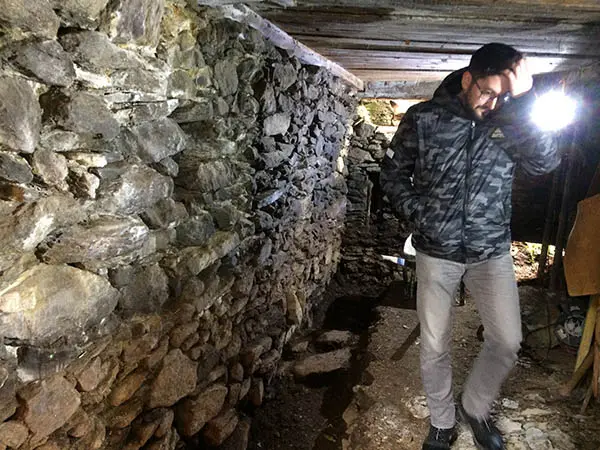
In the stable of the house of “Casa Amanti” the remains of equine skeletons were found, five in total, including four donkeys between 4 and 9 years old and one male mule between 8 and 9 years old. The equines were probably used as pack animals for the transport of pastries. An analysis of the food remains in the stable was also taken.


Left: Plan of a horse stable in Pompei, Anthopozoologica 31,2000, pp. 119-123.
Right: Pompeii, Casa Amanti, houses 6 and 7, Insula 12, region IX, Genovese A, Cocca T.

Pompeii, Insula 9, house 12, room 4, region I, (casa amarantus)
(Berry J., The conditions of domestic life in pompii in AD 79: A case study of houses 11 and 12, insula 9, region I, Papers of the British School at Rome)
In the stable on this area, probably originally a “Kubikulum” (side room), the skeletons of a mule and a dog were found. On the northern wall, remains of wood can be seen, which indicate a feeding rack. The palynological examination of the plant remains showed a variety of grasses and weeds as well as cereals, olives and nuts, indicating forage, litter and dung. Two fortified iron rings near the mule’s head suggest that it was tied up at the time of death.
The large number of amphorae in the “Impluvium” (water collection basin) of the nearby atrium (Roman dwelling house), as well as the remains of a broken amphora in the stable, indicate that the mule was intended to transport amphorae to the city. The remains of a dilapidated “Caupona” (bar, sales room) in the adjacent Insula 11 indicate commercial activity. An inscription on the western front (AMARANTUS POMPEIANUS ROG (AT) and three painted inscriptions, one on the neck (EX POMPEI AMARANTI) and two on the belly of several amphorae found in the building, indicate that Amarantus was a wine merchant, which required the keeping of a mule to transport the amphorae.
Great Britain, London

The mule jaw was found in a landfill. It dates from the Roman period (period II, phase 3) around 125-160 A.D. Age at death of the animal: more than 5 years, perhaps between 11 and 14 years.
The age determination is inaccurate, as the jaw is broken at the level of the incisors. The age can only be determined more accurately on the basis of the wear and tear of the incisors. It was also not possible to determine the sex because of the missing canines, the sex index. They are more developed in males than in females. The pronounced wear in an area of the jawbone (circle) is probably the result of the damaging pressure from a halter or muzzle.
Examination of the molar profile of the jaw made it possible to determine the London jaw more reliably than mule jaws. It has a very accentuated “V” shape of the lateral cavities of the first molars (cheek teeth). The comparison with the lower jaw of another mule (Dangstetten) shows a strong similarity.
According to Armitage P, Chapman C, Roman Mules, The London Archaeologist, 3/13,1979, S. 339-359)

Kalkriese, Niedersachsen, Germany
The finding region Kalkriese is an area in northwest of Germany, where large quantities of Roman archaeological finds were made. https://en.wikipedia.org/wiki/Kalkriese
Archaeologists have identified the bones of eight horses and about thirty mules on the site of the Battle of Kalkriese, which took place in 9 A.D., including two skeletons in good condition at the trenches dug by the Germans to capture the Roman vanguard. The first mule was found in the trench, its bones (head, neck and shoulders) and its harnesses are in adequate position. The animal was therefore not completely exposed to natural decay (which explains the good osteological and anatomical preservation conditions).
The mule had an iron bridle and harness with metal elements and stones, and a bronze bell with iron clapper. The inside of the bell was stuffed with oat straw wrapped around the clapper so that the bells were not heard in enemy territory. The growth of the roots on the stems indicated late summer – early autumn, which made it possible to determine the date of the ambush around September.

In 1999 the fragmentary remains of a second 4-year-old mule were found. It carried a smaller bronze bell and an iron bridle. The animal died of a broken neck, probably while trying to climb the German wall in the general panic of the fight.
According to: Rost A, Wilbers -Rost S; Waffen auf dem Schlachtfeld von Kalkriese, Gladius XXX; 2010, pp. 117-135 and Harnecker J, Franzius G, Kalkriese 4th Catalogue of Roman Finds from the Oberesch. Die Schnitte 1 bis 22; Römisch-Germanische Forschungen vol. 66. 2008 and Wells P.S., Die Schlacht, die Rom stoppte, Kaiser Augustus, Arminius und das Abschlachten der Legionen im Teutoburger Wald, 2003)
Carnuntum, Austria
It is the most important and most extensively researched ancient excavation site in Austria 28 mi east of Vienna. https://en.wikipedia.org/wiki/Carnuntum
Horses and mule bones were discovered in the outer ditch and in pits on the edge of the first ditch of this Roman legionary camp. Four mules could be identified from the remains. The sex could be determined based on the development of the canines on the lower jaws. They were only male animals. Two of them died at the age of 6-7 years, the other two at about 15-17 years. The age is estimated on the basis of the abrasion of the teeth. Since mule teeth are harder than those of horses, the age had been underestimated and had to be reassessed.
The height at the withers was determined in relation to the length of the bones found. It was approximately between not less than 140 cm and maximum 155 cm. Apart from one mule, the other three suffered from diseases of the limbs and/or the spine caused by frequent heavy loading. A pathological change in the spinal column of a mule also indicates this. One shows a pathology (exostosis) on the jaw, which is caused by repeated rubbing of a bit or harness.
According to: Kunst G. K., Archäozoologischer Nachweis für Equidengebrauch, Geschlechtsstruktur und Mortalität in einem neuartigen Hilfskastell (Carnuntum-Petronell, Niederösterreich), Anthropozoologica 31; Ibex J. Mt. Ecol 5.2000
Weissenburg, Bavaria, Germany, Biriciana Roman Fort
The Roman fort at Weissenburg, called Biriciana in ancient times, is a former Roman Ala castellum, which is a UNESCO World Heritage Site located near the Upper Germanic-Rhaetian Limes. https://en.wikipedia.org/wiki/Biriciana
Four skeletal remains of mules were found during an excavation in this Roman camp. The age was determined to be 160 AD after the discovery of eleven coins. They were found in a bag that was left with the mules. The authors raise the question of a possible local breeding or traditional import of mules from Mediterranean countries. When examining the teeth of an 8-year-old mule, it was found that the food in the mule’s environment must have changed until the time of its death. The animal spent part of its life at high altitude, according to the proximity of the camp, probably in the Alps. The investigations show that the animal must have been born and bred in northern Italy. It must have been used for work in the Alps for a while and later on until the end of its life near Fort Weissenburg.
According to Berger T. E., Peters J., Grupe G. Life history of a mule (ca. 160 AD) from the Roman fort Biriciana/Weissenburg (Upper Bavaria), as revealed by serial stable isotope analysis of dental tissue, International Journal of Osteoarchaeology Volume 20, Issue 2, March/April 2010, pp. 158-171.
Further Sources: https://leg8.fr/armee-romaine/mulet-du-ier-siecle-qui-es-tu
I hope all of our friends and fans will enjoy yet another translated historical Longears article written by Elke Stadler, originally printed in German in the SWISS BULLETIN that comes to us from Switzerland. More articles to follow!
By Elke Stadler
The French national stud farm had a collection of different documents compiled to determine the profile of mules in ancient times. One particular difficulty was that the historical evidence was all too often misinterpreted. Often the mules were confused with their parents, horse or donkey, or generalized as such. Furthermore, the term “lumenti” (beast of burden) was often used, which was then understood as “mare” or “horse”. Therefore, a large quantity of historical, iconographic and archaeological data had to be examined in order can clearly define the physical characteristics.
Historical sources
The agricultural and veterinary studies of the ancient authors, from Columella, Pliny, Palladius to Vegetus, show how accurate the knowledge of the mule was, from breeding to handling, and they highlight all its advantages. Historians like Suetonius, the Roman poet Martial or the Greek Aesop show the widespread use of the mule in their fables.
Iconographic sources
Iconography (the science of the interpretation of motives in works of art) has collected numerous proofs of the existence of mules since the earliest antiquity. These are engravings, drawings, illustrations on vessels, reliefs and figures, which can be seen on buildings and monuments in various countries or are exhibited in museums. Bones and teeth have been found and analyzed during excavations. Some of the interesting mule representations and archaeological finds are presented here:
A depiction of an engraved mule from the Assyrian period shows that mules already wore richly decorated harness with metal or textile ornaments (pompons) in this period. (in: John Clark Ridpath Cyclopedia of Universal History Cincinnati: The Jones Brothers Publishing CO., 1885).

Picture on a vase with red figures representing a loaded mule. (in: P. Hartwig, Die griechischen Meisterschalen, Berlin 1883, p. 63).

Drawings that clearly show the basic equipment of a mule with military equipment: Baskets on both sides to balance the weight (the basket is deliberately drawn flatter and wider to make the contents visible) and the bridle to guide the mule.

Ladies riding mules. Greek-Persian relief, Erdemli Yörük Museum, Province Mersin, Turkey.

Mule with amphorae. Clay figures from Cyprus, from the time of the Hellenic kingdoms, around the 3rd and 2nd century BC, in the Louvre, Paris.


Mule with handmade saddle. A broken bronze votive plaque found at the height of the Gotthard pass. Archaeological Museum Bavay, France.

A cart pulled by mules. Scene on the Trajan Column, Relief, Archaeological Museum Strasbourg.

An honorary column erected in 112/113 AD for the Roman Emperor Trajan (98-117 AD) at his hometown Rome.

Light two-wheeled cart (open wagon for short distances) pulled by two mules. Relief picture on the reconstructed and colored “Igeler Säule”, UNESCO World Heritage Site. Tomb monument of a rich cloth merchant family, which is in the Rheinisches Landesmuseum Trier, Germany.


Rhyton, single-cornered drinking vessel for drinking sacrifices. Red ceramic figure, ca. 475-450 BC. Pre-Roman necropolis from Casabianda, Corsica. Archaeological museum of the department of Gilort (Jérôme) Carcopino.

Operation of the famous harvesting machine known as the “Trevires” or “Vallus” harvester, described in particular by Plinius. Facsimile of a fragmentary relief found in Buzenol, Belgium.
Drawing that brings together two different fragments from the collections of Arlon and Buzenol, showing the farm workers and the mule harvesting spelt with the harvesting machine.


Some numismatic finds: the mule is depicted on many Roman coins, often pulling a two-wheeled carriage (Carpentum). Below: grazing mules, behind them the two shafts of a wagon with reins.
Source:
Meredith gets a lot of letters and emails from people with training questions about their equines. Here, she offers some advice on making the most of feeding time with your animals.
Meredith gets a lot of letters and emails from people with training questions about their equines. Here, she talks about how to best communicate with your equine.