LTR Training Tip #22: Gate Training
Including good manners and routine practices while teaching gate training makes your job—and your equine’s—a lot easier, now and far into the future.

Posts to share on the LTR blog
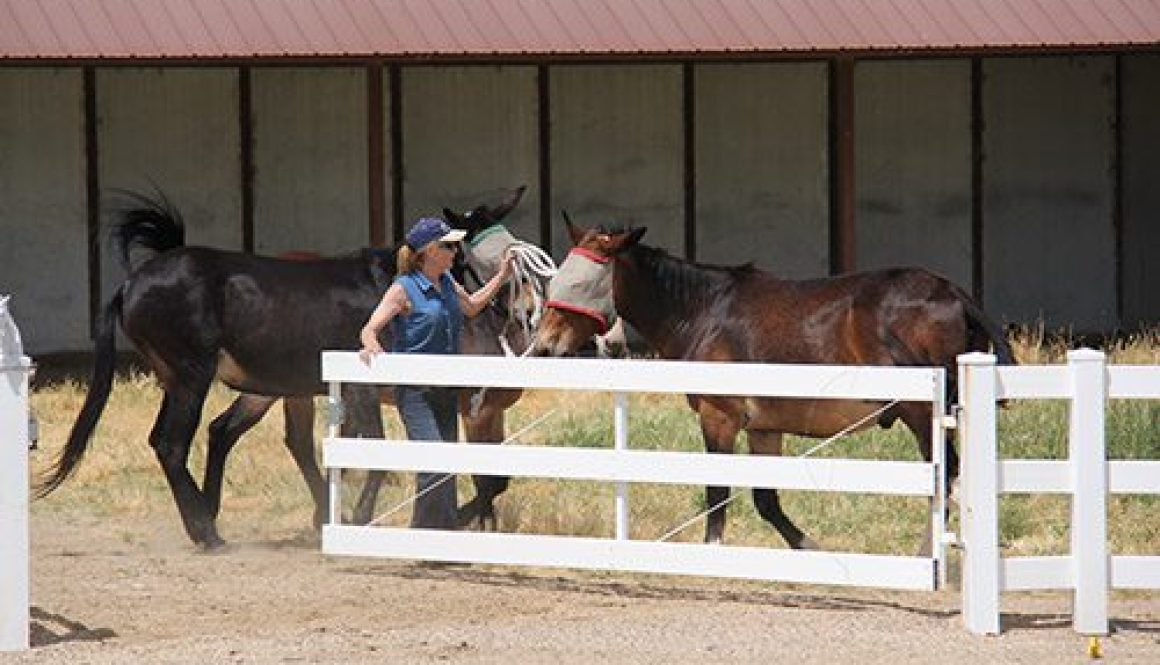
Including good manners and routine practices while teaching gate training makes your job—and your equine’s—a lot easier, now and far into the future.
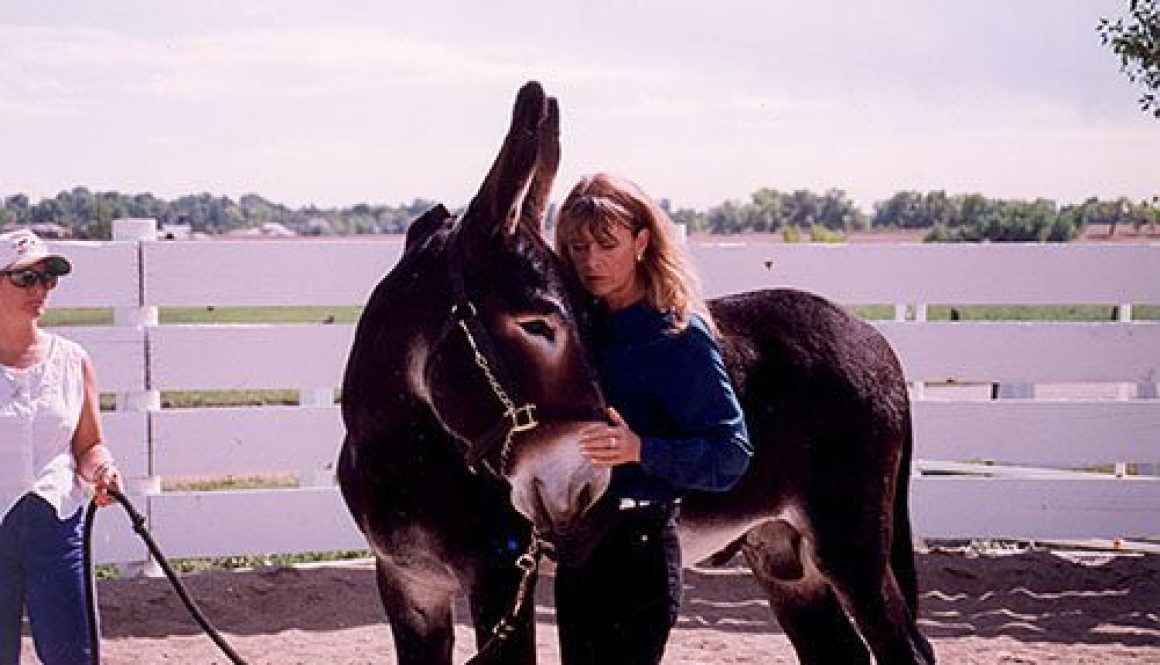
Determining your animal’s athletic ability is a useful guide in the training of your equine. Here, Meredith breaks it down into both a physical and mental assessment.
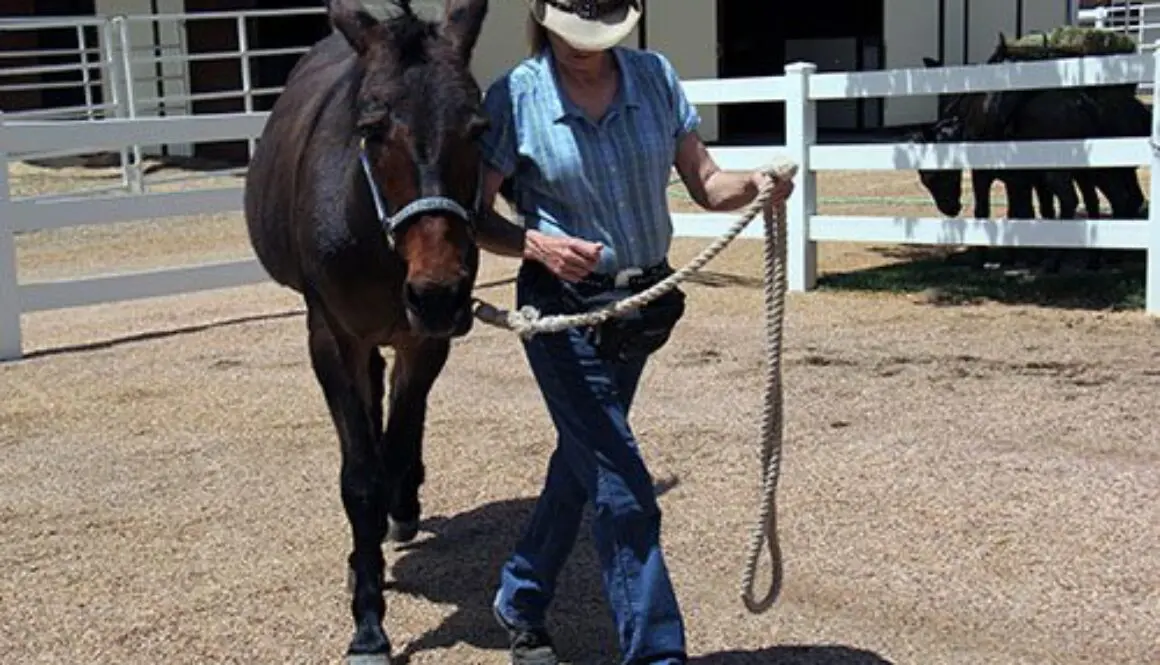
By Meredith Hodges
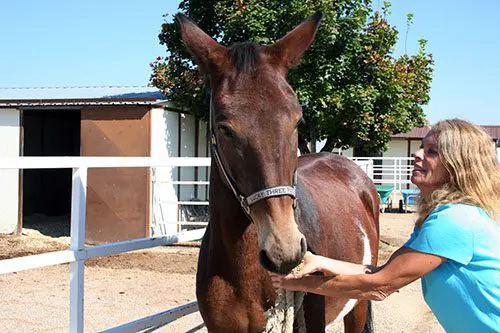 Mules and donkeys are very gregarious and affectionate animals and have a need to really bond with their owners. It is important to know the steps involved in this bonding process to get the best from your mule or donkey, and even horses. Routine management and our training process called Behavior Modification (Reward System Training) will make your time together safe and enjoyable.
When mules and donkeys are treated with patience and kindness, they can be as capable as horses in all kinds of equine activities. The fun you can have with your mule, or donkey, is only limited by your own imagination and your approach to training. Mules can do…and donkeys, too!
Since mules and donkeys bond to the person who trains them, we encourage owners to do the training themselves with the help of our resistance free video training series that provides a solid base for any equine activity.
This series will help you get the best from your equine whether he is large or small, a donkey, mule, or even a horse. It is designed like grade school is for children.
Although we begin our DVD series with Foal Training, no matter how old, you should always begin training with imprinting and move forward from there with attention to feed as well. This will insure a positive introduction and will help to build a good relationship with your equine. Our methods are meant to be done in a sequence and taking shortcuts or changing our method in some way will not yield the same results. After many years of training for other people, I have found that equines, especially mules and donkeys, bond to the person who trains them. When they go away to other people, they do not get the benefit of this bonding and can become resistant over time when they return home. After all, you wouldn’t ask someone else to go out and make a friend for you, would you? This is the primary reason I put my entire training program in books and videos, in a natural order like grade school is for children, for people to use as a resistance-free correspondence training course instead of doing clinics and seminars. People are encouraged to use the series and to contact me via mail, email or telephone for answers to any questions. This way your questions can be answered promptly.
No matter how old or how well trained the equine, they still need time doing the simplest of things to get to know you before they will learn to trust and have confidence in you. The exercises that you do should build the body slowly, sequentially and in good equine posture. No human or equine is born in good posture. It is something that needs to be taught and practiced repetitively if it is to become a natural way of moving the body. When the body is in good posture, all internal organs can function properly and the skeletal frame will be supported correctly. Just as our children need routine, ongoing learning and the right kind of exercise while they are growing up, so do equines. They need boundaries for their behavior clearly outlined to minimize anxious behaviors and inappropriate behavior, and the exercises that you do together need to build their strength and coordination in good equine posture. The time spent together during leading training and going forward builds a good solid relationship with your equine and fosters his confidence and trust in you because you actually help him to feel physically better. A carefully planned routine and an appropriate feeding program is critical to healthy development.
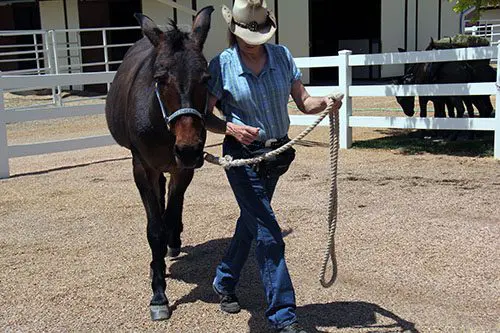 Most equines never experience core muscle strength and this becomes even more important as they age. We do leading training for a full year to not only get them to learn to lead and to develop a good relationship with them, but also to develop good posture and core muscle strength in preparation to carry a rider.
Leading lessons for postural strength and balance need only be done for 15-20 minutes once a week to be certain that they aren’t fighting balance problems later when you mount and ride. Even an older equine with previous training would still need this for optimum performance and longevity. During the time you do the leading training strengthening exercises, you should NOT ride the animal as this will inhibit the success of the preliminary exercises. If you ride while you do these exercises, it will not result in the same proper muscle conditioning, habitual behavior and new way of moving. The lessons need to be routine and done in good posture to acquire the correct results. Hold the lead rope in your LEFT hand, keep his head at your shoulder, match your steps with his front legs, point in the direction of travel with your right hand and look where you are going while you track straight lines, gradual arcs and square him up with equal weight over all four feet EVERY TIME you stop. We are building NEW habits in their way of moving and the only way that can change is through routine, consistency in the routine and correctness in the execution of the exercises. Since this also requires that you be in good posture as well, you will also reap the benefits from this regimen. Along with feeding correctly (as described below), these exercises will help equines to drop fat rolls and to begin to take on a more correct shape and become strong in good posture.
 Today’s general horse training techniques do not generally work well with mules and donkeys. Most horse training techniques used today speed up the training process so people can ride or drive sooner and it makes the trainers’ techniques more attractive, but most of these techniques do not adequately prepare the equine physically in good posture for the added stress of a rider on his back. Mules and donkeys have a very strong sense of self preservation and need work that builds their bodies properly so they will feel good in their new and correct posture, or you won’t get the kind of results you might expect. Forming a good relationship with your equine begins with a consistent maintenance routine and appropriate groundwork. Most equines don’t usually get the well-structured and extended groundwork training on the lead rope that paves the way to good balance, core muscle conditioning and a willing attitude. This is essential if he is truly expected to be physically and mentally prepared for future equine activities. With donkeys and mules, this is critically important.
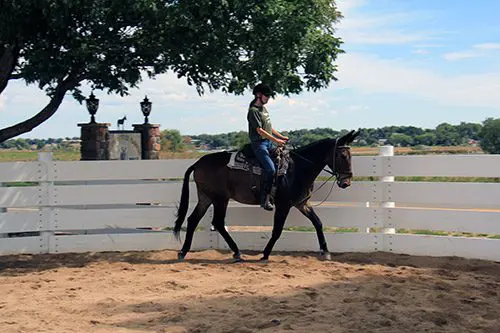 The equine should be at least four years of age when the rider is finally introduced to insure that there is no undue stress on his body at the earlier stages of development. Equines generally run through the bit and exhibit other bad behaviors because they become anxious, lose their balance and don’t really have complete physical control of their bodies. They are unable to physically comply with your wishes without losing their balance, which makes them nervous and causes resistance. Changing bits or rushing through groundwork training so you can ride or drive sooner NEVER really works. Training is more than just teaching the equine to do “movements.” You should be creating an environment for success and conditioning his muscles to do movements easily and with minimal stress. This produces an equine with a happy and healthy working attitude. In order to get your mule to be soft and submissive in the snaffle bit, you need to be prepared to spend six months on flatwork leading training (also known as Showmanship training for strength in good posture) and another six months leading through obstacles (turning fear into curiosity and then adding coordination to his strength and balance) before moving to the round pen work in DVD #2. Longears and horses do much better in a number of ways when you are patient enough to do this: a calmer attitude because they know what to expect, development of symmetrical muscle strength in good equine posture, a better response to verbal commands, better balance, better coordination and the ability to perform correctly.
The information about equine management and training materials that we offer are listed below.

Training Mules and Donkeys: A Logical Approach to Longears is the first book to be published, has a more abbreviated view of the overall training process and general information about the psychology of mules and donkeys.

The book, Donkey Training is basically the same as DVD’s #9 and #10 without the benefit of the moving pictures (and has bonus information that the DVDs do not have) and illustrates the things that are different about training donkeys as opposed to horses and mules. Donkeys often do things in a different order and sometimes, they don’t need to learn to lunge at all until much later in their training…after they are already going well under saddle, or in harness. This DVD is designed to be used in conjunction with DVD #1 through DVD #8 when training donkeys.

The book, A Guide to Raising & Showing Mules has a lot of valuable general information that complements the resistance free DVD training series with more about breeding, mare and foal care, and general mulemanship and maintenance issues. It is the perfect complement to the video series and a must-have for beginners and 4-H projects.

In DVD #1: Foal Training, you will not only be imprinting your animal and training for the simple tasks such as tying and leading, but you will also learn how to be prompt and appropriate with your rewards. The exercises will start your equine on a program that will begin to strengthen his muscles and promote coordination. Imprinting is not just something you do with a foal and then it’s done. Imprinting is the way you touch and handle your animal every time you are with him throughout his entire life. As you learn how he likes to be touched, you can use this to help him to stay calm and accepting. How you touch him will determine whether, or not, he develops confidence and trust in you! When your equine is approached with patience and kindness, and is rewarded for standing quietly, it will be easier to handle him for such things as deworming and doctoring and he will be more willing to stand still to be mounted. The leading exercises in this DVD will start your equine on a program that will begin to strengthen his muscles and promote balance and coordination.

In DVD #2: Preparing for Performance: Groundwork, you will begin your lunging and ground driving lessons. The exercises will increase in their demand and begin to develop more bulk muscle in preparation for work in harness and riding. Equines will be introduced to the snaffle bit and other tack in this DVD. We use English bridles with a noseband and drop noseband over a mild snaffle bit right from the beginning, so they never even try to get their tongue over the bit. This teaches them to accept the bit easily and to form the good habit of taking contact with the bit instead of avoiding it and allowing bad habits to start. It is easier to prevent a bad habit than it is to try to break it later.
You will see how putting the animal in the correct frame (or posture) from the beginning in the round pen with what we call the “elbow pull” enables him to build his muscles correctly and symmetrically throughout his body You will learn how your body language affects his movement in the round pen and on the drivelines. Your equine may begin to be aggressive for his reward and you will learn how to set limits to these aggressive behaviors to set the stage for a polite and well-mannered equine. If biting, or kicking, has been a problem in DVD #1, you will learn how to correct these behaviors in DVD #2.

DVD #3: Preparing for Performance: Driving, provides all the information you need to safely train your equine to drive. It covers carts and carriages, hitching training, Reinsmanship, Pleasure Driving, Obstacle Driving, working in harness, lateral exercises, obstacles, driven dressage and driving rules. You can begin this DVD after you have completed the foundation work in DVD’s #1 and #2.

DVD #4: Basic Foundation for Saddle. If you don’t wish to drive, you can go straight to DVD #4 and begin your equine’s riding training in a natural and non-stressful manner that eliminates adverse behaviors such as bucking or running off. We address both the needs of the rider and the equine as a team focusing on the right approach, good balance and coordination of both equine and rider. You can begin this DVD after you have completed DVD’s #1 and #2.
When you finally mount your equine and start riding, the only thing left for him to do is to get used to your shifting weight on his back and the new leg cues he will feel on his sides. Because he has learned to carry his own body in good, strong equine posture and has already learned what rein cues mean through ground driving, he will be better able to do all the different moves that you ask of him under saddle without being generally overwhelmed by too many things happening all at once. As you progress under saddle, you will be better able to perfect your own riding skills and your equine will become lighter in the bridle and more responsive to your cues. You both will not have to deal with the weakness, awkwardness, confusion and disobedience that originate from a lack of preparation for the tasks.

In DVD #5: Intermediate Saddle Training, we help the rider fine tune his own skills and begin to cultivate a harmonious rapport between equine and owner with fun, safe and simple exercises that will enhance your riding experience whether it is for show, or pleasure. You can begin this DVD after you have completed DVD’s #1 and #2 and #4.

DVD #6: Advanced Saddle Training will begin to prepare the rider for specific disciplines and help them to make choices about what they might enjoy more. It demonstrates how the simple elements of Dressage are the basis for all equine disciplines including Gymkhana, Reining, Cutting, English and Western pleasure, Trail, or even simply weekend trail riding. This kind of training is not just for show, but to keep both of you safe and happy during your time together. You can begin this DVD after you have completed DVD’s #1 and #2, #4 and #5.

DVD #7: Jumping gives the owner the opportunity to learn the fundamentals of jumping and condition their equine in a safe and methodical manner and… how to ride, build and evaluate jump courses. It covers exercises to prepare your equine to carry him safely over any obstacle, multi-level terrain or jumps. You can begin this DVD after you have completed DVD’s #1 and #2, #4, #5 and #6.

DVD #8: Management, Fitting & Grooming. Of course, your equine needs to be fed and maintained properly to get the best response from him during training and this is done in DVD #8. We also offer grooming tips and more advanced lessons in showmanship at the end of this video.

DVD’s #9 and #10 cover techniques that are specific to donkeys and these two DVDs are designed to be used in conjunction with the other video tapes.
DVD #9: Keys to Training the Donkey: Introduction and Basic Training covers groundwork technique that is specific to donkeys, how to train jacks to breed mares for mule production and how to measure your animal for athletic potential and should be used in conjunction with DVDs #1 and #2.

DVD #10: Keys to Training the Donkey: Saddle Training & Jumping covers saddle training and jumping and should be used in conjunction with DVD’s #4 through #7. You can also purchase our book, Donkey Training which is the same as DVD’s #9 and #10, but sometimes having the moving pictures can be more helpful than still shots. Also, if you want to teach your donkey to drive, you would also need DVD’s #1, #2, and #3.

Training Without Resistance (DVD’s #1 – #7) and Equine Management & Donkey Training(DVD’s #8 – #10) are exactly the same as the electronic workbooks that accompany the DVDs. These two manuals are also helpful to those who cannot afford the DVD series or for those who would like a professionally published workbook. They are both translated into French, German and Spanish, so our non-English speaking friends can read along with the DVD series in their own language.

Equus Revisited: A Complete Approach to Athletic Conditioning. This comprehensive 4-part DVD and companion manual explains WHY it is so important to spend plenty of time on groundwork and development of the core strength of your equine. It covers multiple aspects of your equine’s care in great detail with a team of experts. It has a lot of special features about various subjects and in-depth explanations about the anatomy and physiology of the equine.


Why So Many Different Books and Videos?
I do offer Packages because each of the materials covers the elements of management and training from a different perspective with a different focus:
Training Mules and Donkeys: A Logical Approach to Longears book is an overview or summary of the entire training program
Donkey Training book is mostly about what things are done differently with donkeys than with horses and mules during the training process at each stage
A Guide to Raising & Showing Mules book includes management (housing, fences, disease, teeth, hooves, etc.), breeding and showing information with some regard to training
10-DVD Training Mules and Donkeys DVD series is a collection of the exercises that you DO in what order with each DVD representing roughly 1 year of training (except for 8, 9 and 10…see explanations in detail above)
Training Without Resistance manual is a collection of DVD’s #1 through #7 with extra detailed information in print and available in French, German and Spanish translations.
Equine Management & Donkey Training manual is a collection of DVD’s #8 through #10 with extra detailed information in print and available in French, German and Spanish translations.
Equus Revisited manual/DVD combo addresses WHY you are doing all the things that you do in the books and videos. If you had to pick just one book, I would suggest the Equus Revisited manual AND the companion DVD.
However, buying the Horse/Mule Complete Package (at a discount rather than buying products individually) would give you all you need because basically the Donkey Training book (that is left out) is exactly the same as DVD #9 and #10 and the Equine Management and Donkey Training manual only the manual has extra information that the book does not have.
 For more information and purchase of our products, you can call 1-800-816-7566 or visit our website at www.LuckyThreeRanch.com. Our website is also translated into French and Spanish for foreign convenience. Under “Training,” be sure to read archived articles posted in the “Mule Crossing” section, peruse commonly asked questions in “Ask Meredith,” get more details in our “Training Tips” and watch our new shows and past RFD-TV shows with Video on Demand. If you don’t have a computer, you can go to a library and use their computer, or ask a friend to help you out. Take time to peruse our Classified Ads section (this is a free service and an open forum, so we caution buyers to beware and check carefully). Under Resources, we post contact information for mule and donkey clubs and rescue organizations, keep you up to date about Equine Welfare in the news and heavily support Therapeutic Riding. Click our Homepage links for YouTube, Facebook and Twitter. And, don’t forget to check out our children’s website at www.JasperTheMule.com. Join the American Donkey & Mule Society (www.lovelongears.com, adms@lovelongears.com) to receive their bimonthly magazine with even more valuable information for a mere $27/yr. Learn together, enjoy the time with your equine and excel together!
To learn more about Meredith Hodges and her comprehensive all-breed equine training program, visit LuckyThreeRanch.com, MEREDITH HODGES PUBLIC FIGURE Facebook page, or call 1-800-816-7566. Check out her children’s website at JasperTheMule.com. Also, find Meredith on Pinterest, Instagram, MeWe, YouTube and Twitter.
Covered in TRAINING MULES & DONKEY: A LOGICAL APPROACH TO TRAINING, TRAINING WITHOUT RESISTANCE and EQUUS REVISITED at www.luckythreeranchstore.com.
© 1998, 2016, 2024 Lucky Three Ranch, Inc. All Rights Reserved.

Chasity fully enjoys her lessons these days and waits anxiously at the stall door! She knows when I count my blessings, I count my mules (and donkeys!) TWICE! Chasity has been working in the Hourglass Pattern and through obstacles for two months now. Her posture and core strength continue to improve with her weekly lessons. Now it is time to perfect each movement and make sure they are done correctly and in complete balance.


In addition to her weekly stretching exercises, we do abdominal flexion exercises with Chasity every day at feeding time. We ask her to tighten her abdominal muscles, raise her back and hold for sixty seconds. We do this by tickling her belly firmly at the midline underneath while she is eating from her feeder. This makes for marked improvement in her sway back (Lordosis).


We have had her left hind hip adjusted twice and she is now better able to swing through the hip joint and bring her foot underneath her center of balance with each stride. Instead of simply lowering her head and neck, she is now lowering her head and neck and arching across her entire spine. Her stiffness has greatly subsided.


At every halt in the Hourglass Pattern, we stop, square up, reward, arch the spine and reward again. Chasity really enjoys this exercise!


Her movement around the cones continues to progress with the small circles at each cone. She is much more flexible, stays upright and bends to the arc of the turn through her rib cage.


Because of the overweighted crest on her neck, she has more difficulty bedding to the right, so we do a neck stretch to the right, before transversing around the cone to the right. This simple pause allows her to rebalance and keep her upright balance while bending though her rib cage on the circle around the cone.


With the stiffness in her left hip gone, she can now reach underneath, lift her her body efficiently and reach upward and forward with her front legs, adding some increased suspension to her gait.

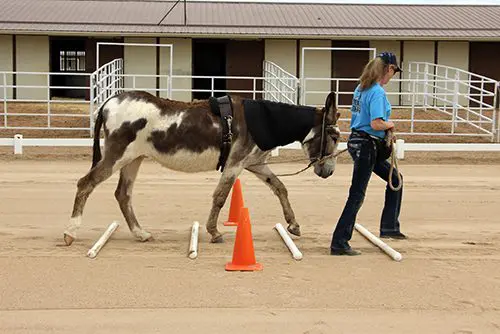
Both hind legs are now reaching well underneath her body and provide the support she needs for her athletic performance to be much more precise and executed correctly.


When her lesson was over, we decided to make a couple of visitations with her new friends, first with Billy Bad Ass, a 26-year-old mule and then with our 10-year-old mini donkeys, Augie and Spuds. When movements are consistently done the same way whether in the training pattern or just going from one place to another, when halts are always squared up and when good behavior is consistently rewarded, there is no anxiety. Standing still and waiting patiently become the norm and this makes for a mutually satisfying relationship between you and your equine!


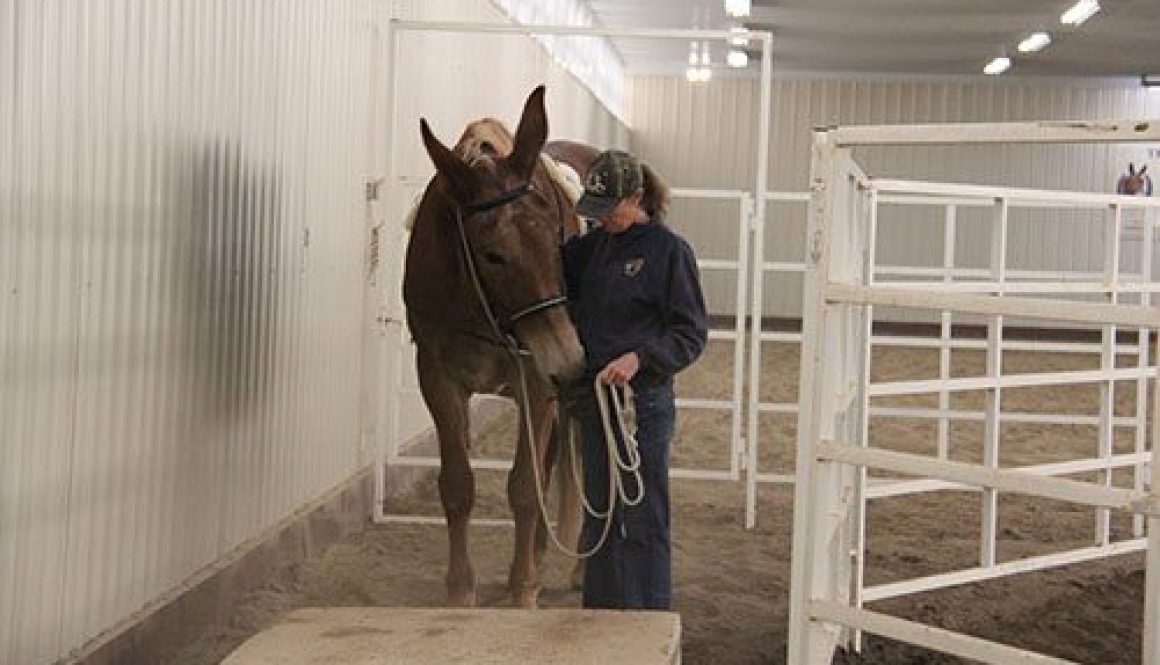
When training any equine at any stage, going slowly and being clear and consistent in your approach is a more rewarding—and much safer—way to train for both you and your equine.

5-22-20
When Chasity first arrived, her hooves were inordinately long in front with Borium shoes and her back feet were worn unevenly and at the wrong angles. Because her body was in such bad posture and her hooves so out of balance, we knew it would take quite a while and lots of frequent trims to get her hooves balanced and aligned properly. This would have to be done in conjunction with getting her body into good posture with the core strength to support that good equine posture. This would be Chasity’s challenges!


Chasity is now standing quietly and picking up her feet easily, but she still wasn’t sure about standing still without being tied up. A small challenge for her would be to learn to stand quietly in the alleyway of the barn while our farrier, Dean Geesen works on her instead of being at her work station in the Tack Barn. Because she stood still, she was rewarded with her favorite crimped oats. The misshapen hoof is beginning to rotate into a more balanced position, but we still have a lot of work ahead before the hoof will be correct.


Dean is a therapeutic corrective farrier that is familiar with Longears. This is a critical element in your Longears’ welfare. Longears have angles and hoof construction that is quite different from a horse and it takes a knowledgeable farrier to keep from doing them harm. Chasity feels the difference in the balance of her feet, however slight, and it affects her whole body!


Chasity’s hind feet appear as if they have been done like a farrier would do a horse. Her rear hooves are not as upright as they should be with insufficient heels. Dean leaves the heels, rasps the front feet and rolls the toes a bit to promote more proper action and healthy growth. As long as I have had donkeys, I have never had to put shoes on them. It is my experience that when they are in good postural balance in their body, they generally wear their feet evenly and vice versa. When fed properly, the hooves remain hard and balanced. They don’t even need to be trimmed all that often if they are not consistently standing on soft ground, or in mud. We use pea gravel in our runs and driveways. In the runs, we put about four inches down. It drains well, is hard enough to promote hard hooves, is rounded and does not chip the feet and is soft enough for the equines to lie down comfortably.


Chasity is tolerates yielding her back feet much better after having a chiropractic adjustment in her pelvis and hip joints yesterday. This is a dramatic beginning for her toward MUCH better balance and posture. She had to be a very sore and uncomfortable animal when she first arrived. She is now feeling some relief and is much more cooperative.


The front hoof on the opposite side reveals the compromised imbalance that she had when she came to us. However, the first trim put her on the road to recovery and her feet are beginning to grow in the correct direction. She has gained a lot more heel in the rear in the past eight weeks.


Chasity has learned to be sent into her stall and then to turn and square up for her reward! Her gait has improved substantially in the past two days with chiropractic work and another trim!


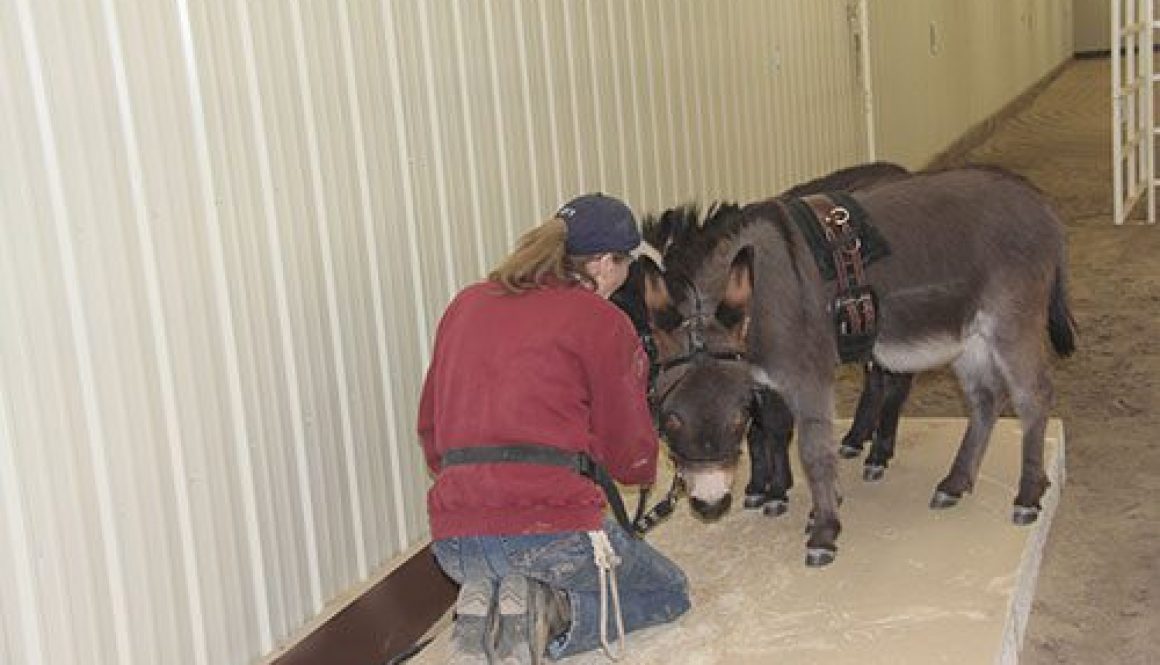
Leading training on the obstacle course is your equine’s initial exposure to real fear. Meredith explains how to turn that initial fear into a curiosity that will positively guide your equine’s future interactions with the world!
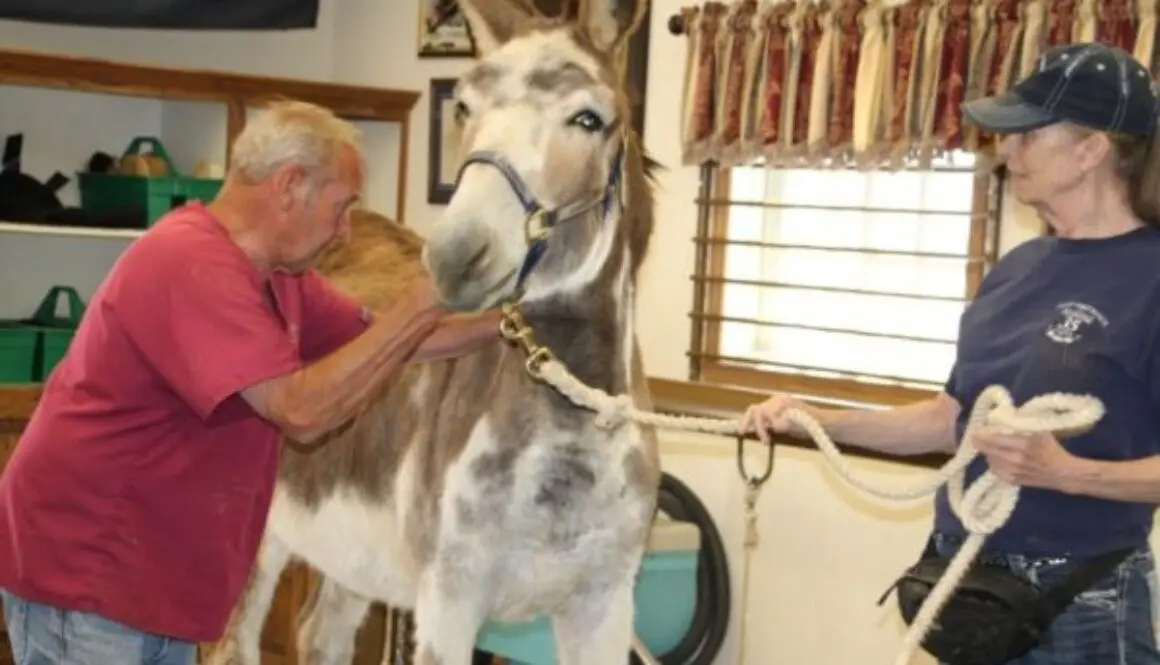
Although we were working on uneven ground in Chasity’s last lesson which made getting in sync very difficult, it was clear that it was time for a chiropractic adjustment of her skeletal system. Doing chiropractic adjustments can put the practitioner in very precarious positions, so it is wise to build trust with the animal before attempting to do these kinds of adjustments to their body. After more than a month of intensive care, Chasity has learned that we have her best interest at heart and is more than willing to cooperate with anything we want to do with her. Even though she is perfect about walking in sync, it is clear that her left hip is locked up, highly immobile and chiropractic adjustment is in now desperately needed!


Chasity walked out in the driveway so our equine chiropractor, Dave McClain, could assess her condition. She had better range of motion in the right hind leg than she did with the left. She was getting better in her spine, but her abdominal muscles still needed more work. Once the left hind leg and the rest of her body is put back in alignment, there will be more of an effect on the abdominal muscles at the walk in her lessons.


Dave agreed that the fallen crest could be straightened out, but it would take some time and serious therapy. Bailey showed Dave the progress in Chasity’s Diary that had been made already since she came to us on March 29th 2020. He was pleasantly surprised at the progress we had made considering we could not use his services during the COVID-19 shutdown. But before we could go any further successfully, we really needed to have her skeleton professionally aligned!


Dave carefully palpated both hip joints…


… and the pelvic area. She was exceptionally stiff and locked up on the left side! He rocked her pelvis to the right…


…and then rocked it to the left. Chasity yielded her hind leg and he adjusted the locked up hip joint! Chasity’s eyes lit up in pleasure immediately! It must have felt REALLY good!


Dave demonstrated to me how her hip joint was not only locked up, but completely misaligned and stuck at an upward angle. Chasity gladly leaned forward to aid in her spinal adjustment!


We then asked Chasity to engage her abdominal muscles, raise her back and then hold for sixty seconds. We will do this once per day, every day. Then it was time to adjust her neck, first on the left side…


…and then on the right side. She was stiff on that side, so I asked her to stretch her neck around my body.


Then Dave did a second adjustment on that side…it was much better! Dave watched her back up. There was marked improvement in her hind quarters and she was finally able to walk easily straight backwards. She had previously been very stiff through the back-through “L” obstacle during her workouts. She will no doubt do much better the next time!


We checked Chasity’s neck again and found that it, too, was much looser and not as hard and immobile as it was before the adjustments. As she left the Tack Barn, it was evident that she was moving much more freely and smiling to herself all the way back to the barn!


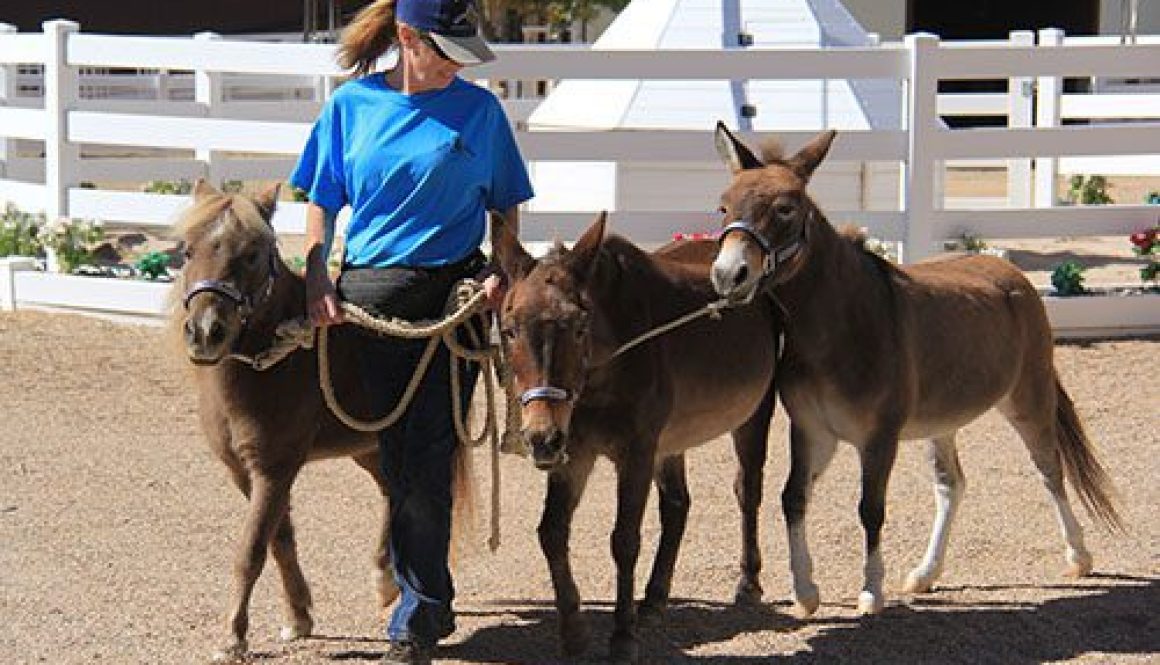
Training miniature equines is similar to their larger brethren, but often requires special approaches to make them comfortable. Find out how to best work with your mini in “Getting Down with Minis.”
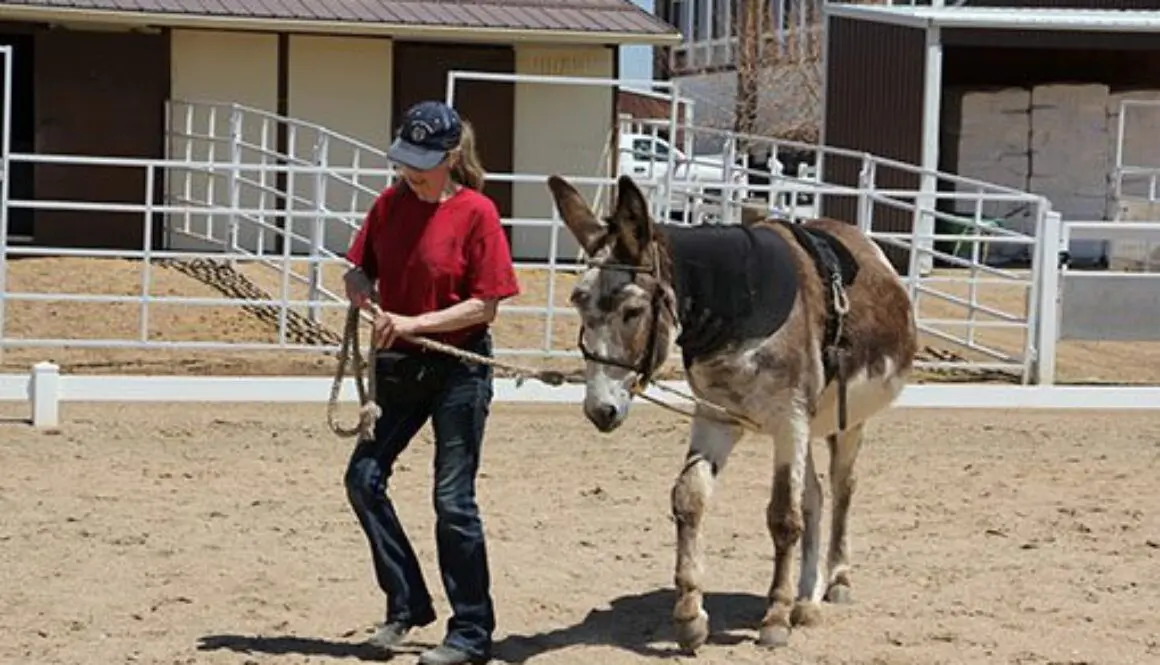
5-19-20
Chasity is continuing to gain core strength, balance and even has a little “prance” in her step these days. The bacterial infection is almost gone and she is eagerly waiting at the stall door for her lessons each week. She gets structured leading exercises in her proper postural “gear” and in between, she has other things happening on other days like daily “soaking” of her infection, vet appointments and the farrier. Today, we will add circles at every cone to increase the intensity of her workout. Stretching is done more frequently now.


Chasity carefully walks in sync with me, no more pulling on the lead rope or charging ahead like she did in the beginning. She is happy on her way to the outdoor dressage exercise arena. Varying the location of her postural core strength leading training keeps her fresh and engaged.


On the way to the dressage arena, we stop to visit with Augie and Spuds, our delightful little mini donkeys. Chasity is intrigued. Where she is stabled, she can only hear them. Then it’s on to the dressage arena.


Since the arena is also used as a turnout area, it is a bit bumpy and the sand is deeper than the other places where Chasity has worked. It will increase the intensity of her work. Still, she is bending nicely through her rib cage while remaining erect in her body and doing her four-square stretches very well indeed!


Chasity is bending her joints well while walking in sync with me, however, I am noticing she is a bit stiff in her left hind leg, especially around the turns to the left. We added circles at every cone in the Hourglass Pattern to help to enhance her bending technique.


She steps out nicely with her right front, but as she brings the left hip forward, her gait is stilted and limited in it’s range of motion. The abdominal muscles are only moderately engaged and she stops short of reaching underneath her body to her center of gravity.


The right hind leg moves forward into it’s correct position, but she is just lifting and swinging her left hind leg forward instead of bending adequately through her joints, particularly in her hip joint.


As she steps forward with the right hind foot, the left hind has an abnormal look to the extension of the leg. It appears stuck in the hip joint and pelvic area, and is not swinging freely. Still, she is bending fairly nicely through her spine.


Another good stretch while standing four-square was in order and Chasity let me know that it felt VERY GOOD!


On straight lines with no rails, Chasity is able to reach underneath her body to the center of gravity, but going around the turns reveals some stiffness in her pelvic area while the rest of her spine bends easily.

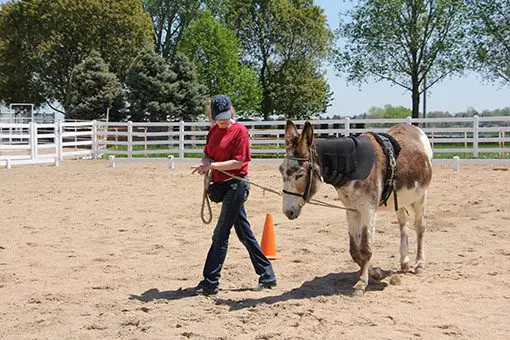
Chasity really enjoys her stretches and does them with no problem at all. Then we begin to track in the other direction and it is clear that bending to the right is particularly difficult for her.


As we proceed around the cones to the right, her bending gets a little better and the right leg moves easily under her center of gravity. But when she approaches the rails, her pelvis appears to stiffen and inhibit her movement again.


There is plenty of “reach” in her front legs, but the rear legs do not seem to be able to consistently follow her forward movement. Her abdominal muscles are engaged and she is attempting to round her back, but her stiff pelvic area is inhibiting the ability to reach well underneath her body.
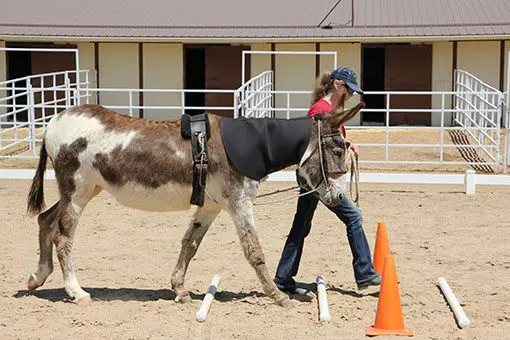

Traversing the rails is making it apparent that she should probably have a visit from our proficient equine chiropractor. Since she just arrived a short time ago, I did not think it would be prudent to expose her to chiropractic until I could loosen her stiff body a little bit and gain her trust first.


We finished traversing the rails and she had to “lean” on the “Elbow Pull” to keep her balance. She did pretty well circling to the right for the last time, but it was now clear that she would need to be adjusted with chiropractic before any further lessons could take place and be beneficial to her.


We ended the lesson with one more four-square downward stretch, then a stretch to the right…


…then she did a stretch to the left and left the arena in perfect synchonization with each other. Still, she didn’t have the “reach” behind that I thought that she should.
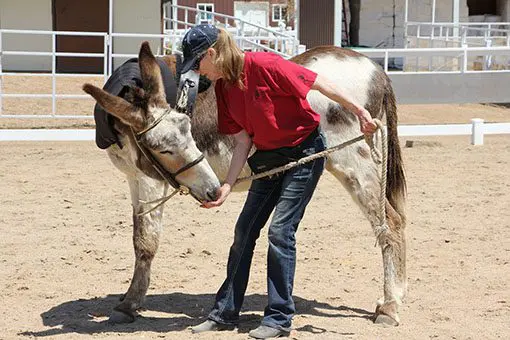

Just to make things a bit more interesting, we opted to investigate the lane to the small park to look at this new area. Chasity thought the steps looked particularly strange, but she was not fearful.


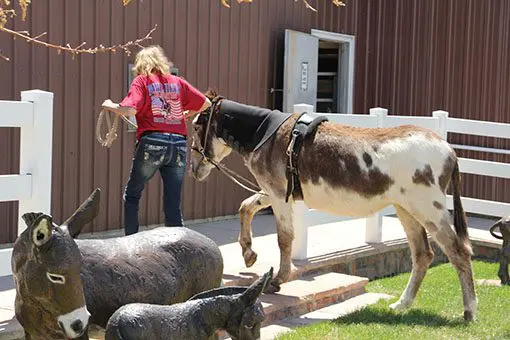
She navigated the steps like a champ and stood quietly while we took in the sights. She saw Robin Laws’ “Donkey Talk” to her left and J. Payne Lara’s “Love Me Tender to her right.This was a major accomplishment for Chasity since standing still was NOT something she wanted to do when she first arrived.


Then we went back up the steps, left the area and went to see the pack mules, “A Friend to Lean On” by Robin Laws. Chasity played “cute” for the camera. Then we went to see Bonnie Shields’ “Friends,” a bronze statue of Kylie, Moxie and Jasper from our children’s series. As you can see, her posture is greatly improved…the “Elbow Pull” is staying LOOSE most of the time now!


5-13-20
After 14 days on antibiotics, our veterinarian Greg Farrand came out to see how Chasity’s bacterial infection was doing. He was pleasantly surprised to find that the old, incredibly swollen infection in her udder and teats had gone down a significant 70%! We knew it would take quite some time to deal with something that had been wrong with her for so very long. When we first began treatment, it was as hard as a rock and as big as a grapefruit, but it was now softening into very smaller lumps and shrinking more rapidly than we had originally thought.

Greg asked me what I had been doing with her and I showed him her “diary” where I had documented in text and photographs all the workouts and everything else that we were doing with her.

He asked if we had kept up on the soaking with warm water and we showed him pictures of the rigging we had for her to hold a heated wet towel between her legs and up against her teats and udder.


We all discussed what the protocol would be going forward. I asked if we needed to change the antibiotics to another type, or if it would be okay to continue with what had been working. We decided that another 14 days of the same antibiotics would be okay.

Greg gave my Ranch Manager, Chad, and I another 14 days of EQUISOL-SOT and explained that we would give it once a day in her feed as we had been doing.


Chasity was given a handful of her favorite crimped oats for standing still and for waiting so patiently while we finished our conversation with Greg. She was very grateful!

I asked Chasity to stretch to the right and she did very well indeed…

Then I asked Chasity to stretch to the left and she did well that way, too!

Our final stretch was downward and she does this with ease, following my hand as low as I would like her to go… and she is always rewarded for her efforts!

Then we walked in sync back to the barn, quietly and obediently! Chasity knows we have her best interest at heart and is happy to comply! She is beginning to really trust us!


Bathing can be a challenging endeavor for equines that are afraid of water or the hose. Meredith explains how to teach your equines to enjoy bath time.

 By Meredith Hodges
We have our animals professionally trained primarily to allow them to perform to the best of their ability, but once we have decided to put them into training we are faced with the dilemma of selecting a trainer. With mules, selection of the trainer is of the utmost importance due to his psychological makeup. Remember that your mule cannot learn from someone he doesn’t like, and mules do have their preferences!
So, where do you begin looking for a trainer? The best place to begin would probably be at a mule show – study the animals and see who is winning the performance classes. Talk with those owners if they do not do the training themselves. They will probably be able to put you in touch with someone who does. Other good sources for trainers are the various equine publications that are popular in your area. Trainers, as in any business, will usually post ads. If no trainers are listed as such, study the ranch ads and contact the ranch owners – they should be able to help.
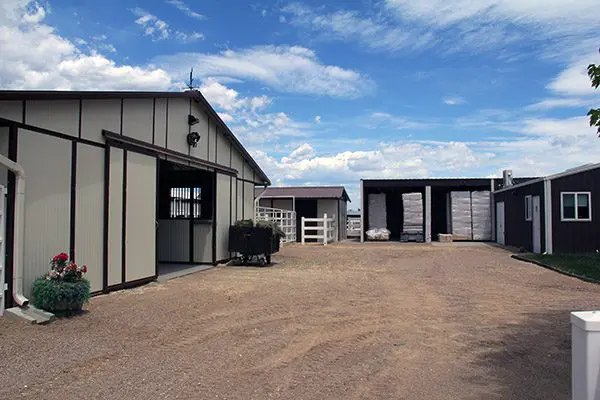 Once you have accumulated a few names, call and make appointments to visit the various trainers. The interview with the trainer is as important to you as it is to him. You will have an opportunity to discuss finance, goals and general care. An appointment will also give you the chance to see his facility and allow you to draw your own conclusions before you make a commitment. There are many good horse trainers available today, but they are not necessarily qualified to train mules. The mule trainer must be a person of extraordinary patience and be well versed in technique… and just as a precaution, you might ask if he’s ever trained a donkey. The mule trainer must know how to appeal to the donkey half of the mule as well as the horse half of the mule to be successful.
When you visit the trainer’s facility, there are several ways to get the information you require. First, pay attention to the general condition of the facility. Is it clean, free of debris with safe fencing? Check to see that water and mineral salt blocks are available to the stock. Does the trainer have a good working area available to him? In bad weather, an indoor arena is essential. If he does not have access to an indoor arena, he may not be able to work your mule as often as needed for a good sound training program. Next, check the general condition of his stock. Are they well fed? Are there any obtrusive scars or bruises on the animals, and what is the condition of their feet? Are they properly trimmed or shod? The condition of a trainer’s animals can tell you a lot about the trainer.
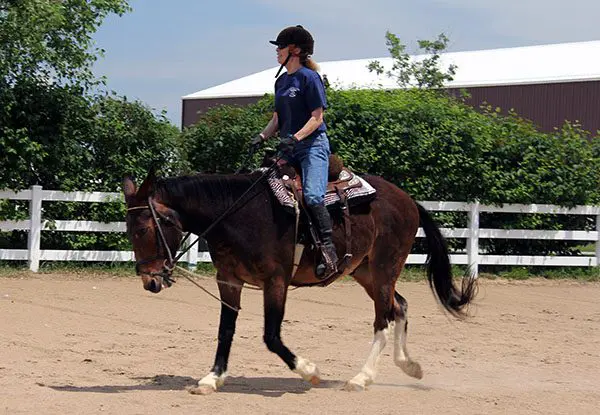 As a consideration to yourself and your mule, do not be afraid to ask the trainer if he will ride for you. You might want to mention the fact that you wish to see him ride at the time you make your appointment. The trainer can then be sure to allot the time necessary to ride for you. As he rides, watch the way he handles the animals. Are his hands light, yet firm? Does he ask for collection and cause the animal to travel smoothly and fluidly? Do his animals move away from leg pressure? Do the animals bend through their circles? Vertical flexion, impulsion, and lateral bend are all the elements of proper shape and any truly good trainer will know and practice these techniques. Beware of the person who claims to be a trainer, but only “rides” your animal. He could conceivably do immeasurable damage.
After touring the facility and watching the trainer at work, it is time for discussion. You have had a chance to determine the overall character of the trainer. If he is the least bit short-tempered or gruff, he is not trainer for your mule. If he seems patient and even-tempered, it is now time to discuss your goals and the way they will be financed. Be realistic about your expectations. An animal can be taught the basics in 60-90 days, but unless you are an experienced rider, the training cannot be maintained. Remember, training is primarily teaching the animal to respond to cues in a habitual manner and it takes time to build good habits. If you haven’t the finances for any more than 60-90 days and you are not experienced, ask the trainer if he would be willing to spend time in the last month, or so, teaching you how to ride your mule correctly. Any good trainer would insist that you do!
When you discuss your goals with the trainer, be concise and to the point. Ask him to clarify terms so that you understand exactly what he will be doing with your mule. Ask the trainer for a copy of the contract to take home with you and to study. To avoid any misunderstandings, ask the trainer about terms concerning the veterinarian, the horseshoer, hauling expenses, and any showing that you wish him to do. To clarify these responsibilities in advance will help to assure a good rapport with your prospective trainer.
If you are still unsure about a trainer after visiting his facility and talking with him, ask for references. While at home, you can check these references and go over the contract to see if he will, in fact, fit your needs.
Following these guidelines will enable you to locate the right trainer for your mule. Granted, it takes a little time to visit and discuss these things, but it is time well spent. The right trainer can produce a happy, healthy and well-mannered mule… but more than that, he can produce a satisfied owner!
To learn more about Meredith Hodges and her comprehensive all-breed equine training program, visit LuckyThreeRanch.com, MEREDITH HODGES PUBLIC FIGURE Facebook page, or call 1-800-816-7566. Check out her children’s website at JasperTheMule.com. Also, find Meredith on Pinterest, Instagram, MeWe, YouTube and Twitter.
Covered in TRAINING MULES & DONKEY: A LOGICAL APPROACH TO TRAINING, TRAINING WITHOUT RESISTANCE and EQUUS REVISITED at www.luckythreeranchstore.com.
© 1986, 1991, 2015, 2016, 2024 Lucky Three Ranch, Inc. All Rights Reserved.
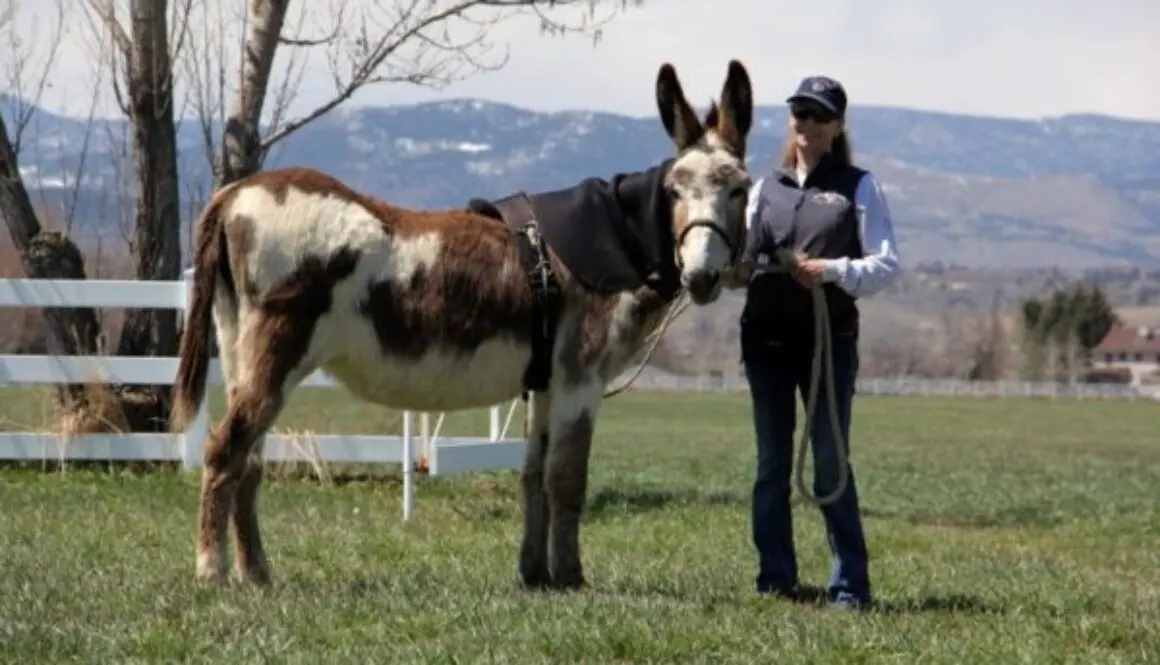
It was a gorgeous spring day and I was so pleased when Chasity came right to the door to meet me again as she had been doing consistently after only two lessons in her initial training. As I cleaned her nostrils and smelled the clean spring air, I thought it might be nice to forego the indoor arena lessons and go out and enjoy this lovely spring weather. Sometimes just doing things a little differently with the same basic lessons can give you both a new perspective on training and make it a lot more fun!
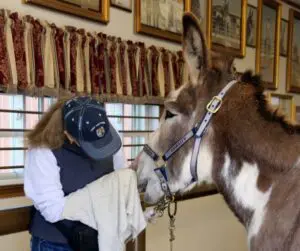
It is shedding season and the multi-bristled human hairbrush was doing its job of removing the excess hair and aerating her coat. Then, I added a sprinkle of Johnson’s baby oil to her mane and tail while she stood stock still! She was definitely learning to enjoy our time together and her friends in the barn were forgotten for the moment.
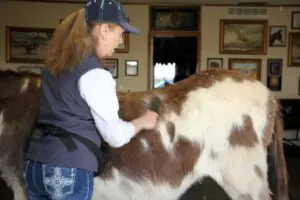
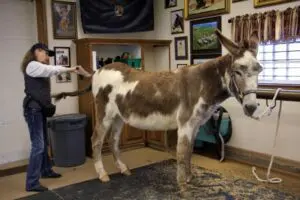
As I got her tacked up in her gear, I chatted with Chasity and told her I thought we would go for a walk outside today. She thought it would be a great idea! I noticed that her cresty neck was decreasing in size…very slowly. I put on her surcingle and only took it up a bit so it wouldn’t be too tight at the start.
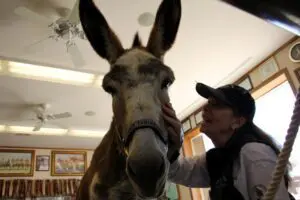
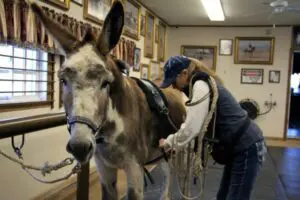
I put on the bridle carefully over her ears, adjusted the “Elbow Pull” and put on her neck sweat. She even helped a bit by lowering her head. Then I did a last check on the girth of the surcingle.
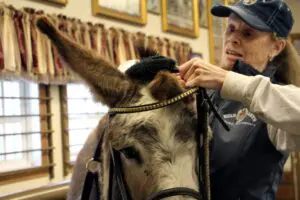
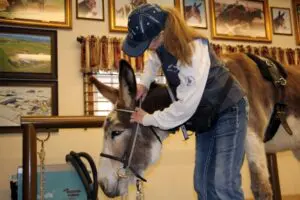
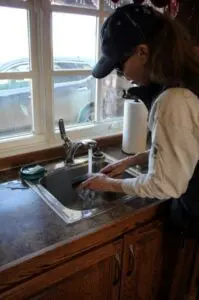
I quickly washed her brushes and we were on our way down the road! Chasity was very excited!
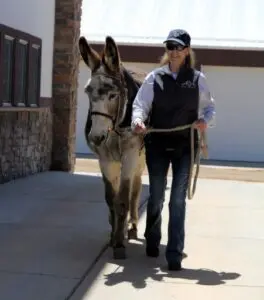
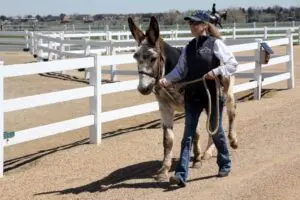
Our first encounter was the Lucky Three Ciji Side Saddle Champion statue. And then the Lucky Three Mae Bea C.T. Combined Training Champion statue. Chasity was fearless and very curious about them!
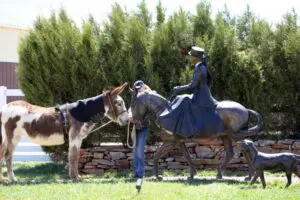
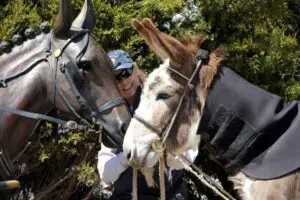
She met the fountain statue, “Dreaming of Friends” and another “Lucky Three Ciji” statue.
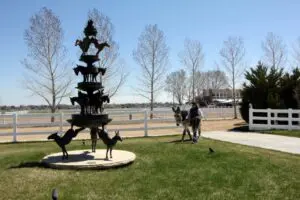
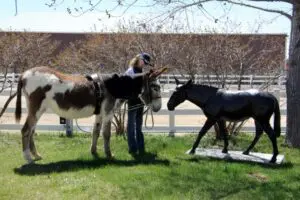
She wasn’t sure about “Lasagna” lying at the base of the cottonwood tree, but she loved the OLD WESTERN TOWN that was in construction!
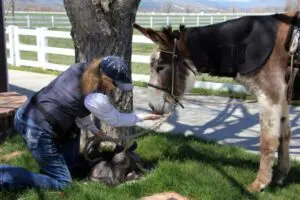
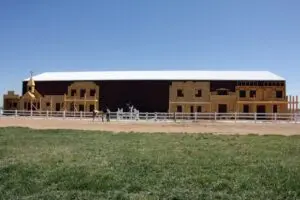
During the course of the walk, we made gradual turns, straight lines and squared up at the halt at several intervals to continue her lessons in core strength and good posture. I noticed a lot of improvement in her back and her abs! She told me she thought the MULE CROSSING sign should say DONKEY CROSSING, but she posed nicely anyway!
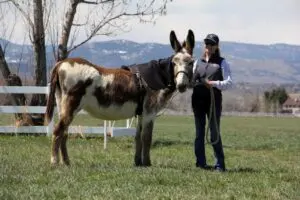
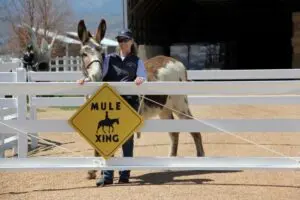
When we got back to the work station, we did a couple of stretching exercises for her neck in one direction only, since doing them the other way would only exacerbate the present condition. When we get more of the fat off her crest, the stretches will have value in both directions.
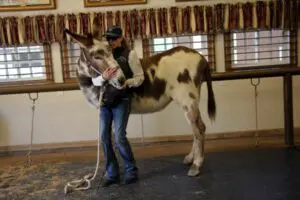
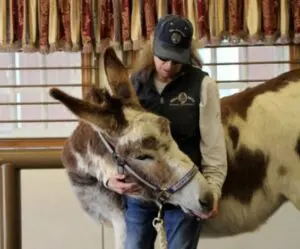
When we were finished, we went back to her stall. She was “sent” into the stall, turned around to face me to get her halter removed and received her just reward! It was a great day!
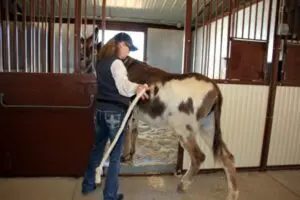
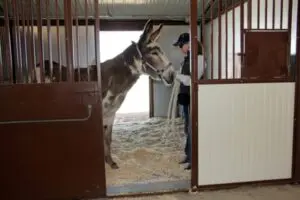

Chasity did not enjoy the soaking of her teats with the hose, so I opted to change my approach to make her more comfortable. Her posture has improved considerably with her postural core strength exercises in the “Hourglass Pattern” and with negotiating some of the obstacles to add coordination. She is now coming to the stall door to be haltered. She’s a very quick learner!


The infection is still draining and that is good. Each soaking, I groom her and scrape the discharge from her hind legs while she stands quietly.


I thought I might be able to make a “diaper” out of an old sheet to hold a wet towel wrapped around a hot pack instead of running a warm water hose underneath. First things first…I politely introduced her to the sheet, then began to wrap it around her!


This would solve two issues for me. She would not be aggravated with the water running down her legs and I wouldn’t be wasting water for ten minutes! She stood like a trooper while Chad and I wrapped the sheet into a useable position while Chasity looked on with a certain curiosity. “What do you think you are doing? Very odd things these people do!”


Once in place with the hot pack held in the sheet, we realized it was heavy and was pulling the sheet down, so I still had to stand there and hold up both sides to bring it up to her udder. At least I didn’t have to bend over! Chasity received her oats once again for being a trooper!


After ten minutes of soaking, Chad and I released the “diaper” carefully so as not to startle Chasity. We now knew what we would have to do to modify the “diaper” for future use.


Chasity had her first lesson in neck stretches after her soaking. This would be another aid in shrinking the fat roll over her neck…first to the left…and then to the right.


She was hesitant to do another stretch to the left, so I put her up against the hitch rail and tried again. She was still uncomfortable about doing a really good stretch, so I asked her to wrap her head around my waist. She complied and was amply rewarded for her efforts.


The next soaking on 4-20-20, I had the diaper modified and left the job to Steve and Bailey to execute to make sure that Chasity would accept help from everyone and not just me. Steve led her from the barn and cleaned the crust from her eyes.


Bailey began work scraping off the dried pus on her back legs with the shedding blade while Chasity stood quietly.


I had told Bailey that she might try giving Chasity a massage on her neck to see how she would tolerate it. She loved it!


I also asked Bailey to try using the massager on the infected area with only the hot pack (without the wet towel) to see if it would break up the infection in the hardened teats. The new “diaper” design worked like a charm! Unfortunately, the massager really didn’t make much of a difference on the hardened teats, so we will just use it on her neck and body going forward.


After the soaking, Greg Farrand, our vet called and told us the lab work was back. Chasity has a bacterial infection and not mastitis. She will be on antibiotics and daily soaking for quite some time. When she is done with the Uniprim, she will go on a second antibiotic regimen. As always, Chasity was generously rewarded for her compliance! She is such a dear donkey!

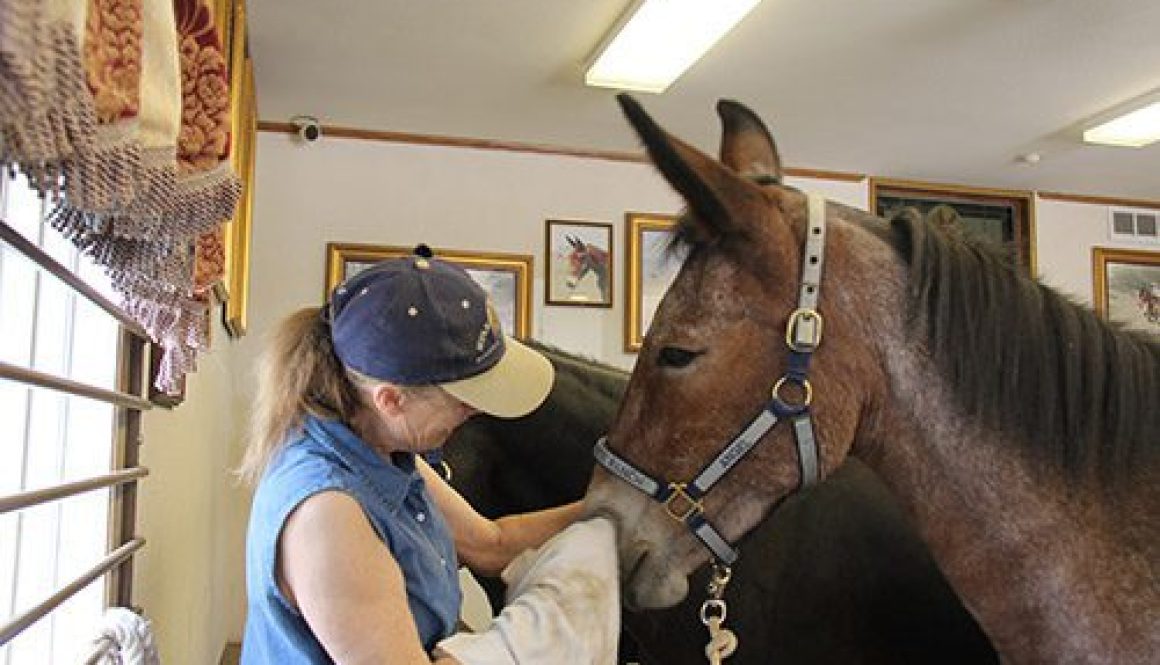
Keeping your animal well groomed is an essential component of equine care. Meredith shares some tips on the basics.

Chasity continues to improve, however, the drainage from her teats was not receding and began to look suspicious to me so I called our veterinarian out to take a look at her. It has been two weeks since she arrived and had it been the result of a weaned foal, she would have been drying up by now. When he arrived, I told Greg Farrand that I suspected an infection of some sort and then I went to get Chasity.


Greg took a look at the discharge and agreed that is was not as we had originally thought, This was not milk, but a small amount of pus and some very hard teats.


Chasity was a star while we poked and prodded to get a sufficient sample to test. Greg and my Ranch Manager, Chad, finally got a large enough sample to be a viable test sample.


In the light, one could see that it was clearly pus and not milk. Greg put the sample in the holding receptacle and took it with him to be tested. He would call with results.


Not all my jennets from past experience were so cooperative and we truly appreciated Chasity’s quiet demeanor! Greg commented how much better she was looking after only two short weeks!


I mentioned to Greg that I had found some spots on her chest that could have been an old bot-hatching ground. I told him that I had scraped off the crusty scabs and applied Neosporin to the affected area. Most of the scabs were gone, but he said that she probably aggravated the area by scratching her chest on the fence. Donkeys will do that! I showed him her diary. He said that doing the core exercises would also help get rid of the infection.


Greg prescribed a regimen of Uniprim for the next 14 days along with daily hot water soaking.


Chasity tolerated the water, but was not thrilled with the water continuously running down her legs.


I decided if it was going to be a prolonged therapy, I would need to modify my future soaking approach to make her more comfortable during the process. This time, despite her displeasure, Chasity had cooperated and was happy to obtain her reward of crimped oats when it was all over!


By Meredith Hodges
 You can often tell a horse what to do, but you have to ask a mule. Mules and donkeys are intelligent, sensitive and affectionate animals. Although they have been stereotyped as stubborn and difficult to control, members of the equine family can actually be quite responsive and compliant when they’re handled properly. Their intelligence, strength and natural athleticism make them well suited for virtually any equine activity or sport. With proper training and care, they bond closely with humans and make wonderful companions.
To work successfully with these bright, inquisitive animals is to understand the ways in which they differ from horses. Mules derive the best physical and psychological traits from both the horse and the donkey. Once you understand both the donkey half and the horse half, you’ll be well on your way to a successful relationship with your long-eared partner.
Redeeming Characteristics of Longears
The modern donkey is descended from the Nubian Wild Ass of North Africa.
Domesticated around 3,000 B.C. and has served man well ever since. Donkeys are surefooted, durable and have incredible strength for their size. They are very sociable animals and enjoy the company of their own kind, people and some other animals. They will most likely chase an animal that is smaller than them, so management must include careful consideration when they are in close proximity to smaller animals. Unlike horses, in the face of perceived danger, donkeys are inclined to freeze or hide rather than flee. However, mules being part horse and part donkey will either freeze or flee.
Mules inherit their instinct for self-preservation from the donkey, along with their innate intelligence and a number of unique physical traits. Mules may be either male or female and are primarily sterile. Horses have 64 chromosomes and donkeys have 62 chromosomes. The resulting offspring called a mule generally has 63 chromosomes, an uneven pairing, missing the conception pair. On occasion, some molly mules have conceived to jacks and stallions and have produced offspring as was the case in America with “Old Beck” and “Krause,” but this is rare. Typically, a mule foal will grow to the size of its dam, although he may be two inches taller or two inches shorter. Both mules and horses are very strong, but the mule has smoother muscling and more endurance and strength for its size. Mules also eat less, are less susceptible to parasites and disease, and will typically live longer than horses. “Hybrid vigor” gives mules some advantages over their equine cousins, but only proper management, care and training will enable them to reach their full potential.
Physical and Mental Conditioning
 Mules and donkeys will bond most closely with the person who trains them. Work with your equine one-on-one to build that critical bond of trust between the two of you. Remember that patience, kindness and consideration will determine the success or failure of your training program. Longears can be obedient and reliable when they feel you have their best interests at heart. If you treat them harshly, you’ll encounter resistance at every turn. Mules and donkeys have an incredibly strong sense of self-preservation and will not do anything that they perceive is dangerous to their health.
Ideally, you’ll have the opportunity to work with your mule or donkey from the time he is born. However, regardless of your animal’s age or ability, it is critical that you always begin your training with imprinting, carefully planned, adequate groundwork and work forward in a logical and sequential way that will naturally make sense and is doable for the equine at every stage. Be sure to work with a knowledgeable trainer and use a comprehensive training program such as I offer. Begin with the basics and don’t skip any steps. The training information included in my training and management program is geared toward mules and donkeys, but also pertains to all equines. Generally speaking, it’s best to add an extra measure of patience, creativity and good humor when you work with a donkey.
Like all children, a mule foal will take after his parents to some extent. Be careful when you select a mare for breeding. Be sure she possesses correct conformation and a nice, calm mare sets the example for a nice, calm baby. From the time of his birth, pay attention to the way you touch your foal and his mother to make them both comfortable with your presence. This is called “imprinting.” A good time to practice imprinting in the beginning is at feeding time. Pick up the foal’s feet while he is unrestrained and touch, scratch and stroke him all over to discover what he does and doesn’t like. Give him time to relax and get comfortable with you. Let him choose to be with you, and you’ll find that is where he will prefer to be.
 This is also a good time to introduce the concept of the “reward.” Offer his dam a reward of crimped oats when she comes to you. Your foal will see his mother’s acceptance and will learn to do the same. He is most likely already eating the oats with his dam if he readily accepts the oats. A consistent system of appropriate and prompt reward is a crucial part of your foal’s life-long resistance-free training program. Mules and donkeys will work harder for a pleasurable payoff and a handful of crimped oats serves the purpose best for equines.
At the beginning of training, you should offer rewards often, although only after a requested task is performed or assimilated. This will strengthen the bond between you and encourage good behavior. If your equine pulls away, don’t chase him. Simply let go of the rope, reins, drivelines, etc., and offer him oats when he returns to you. Your task is to be clear in your intent, fair in your expectations and prompt with rewards when tasks or assimilations are completed. When your animal understands which behaviors result in a reward, those behaviors will be repeated. This is called “Behavior Modification.”
 Mule foals are not much different than human babies when it comes to their need for attention, love, guidance and praise. Giving your foal plenty of time to be a “kid” will help him as he grows, and playtime can do double duty if you play games that give him a sense of security, set boundaries and build the trust between you.
Once your foal is comfortable with being handled, you should be able to halter him with little trouble. Feeding time is a good time to start. Teach your foal about the halter and leading while he is still young. You’ll be using halters and lead ropes with him all his life and carefully  planned leading exercises are critical to your equine’s core muscles development in good equine posture. The balance he attains will serve him well as his tasks become more difficult. This makes for a more pleasurable experience between you.
Tying your foal comes next and is comprised of a series of brief, methodical lessons. First, halter your foal with the mare tied nearby. Attach a thick cotton lead rope to his halter and tie him to a stout hitching post using a safety knot. Be sure to use a flat nylon webbed halter to avoid undue pressure points on his face and to prevent breakage. Approach him every 10 minutes and wait for him to slacken the rope before you release him. Keep lessons to no more than 30 minutes and repeat for as many days as necessary until he doesn’t pull back. Once he’s standing quietly, you can brush him with a soft brush and pick up his feet. He may struggle a bit at first, but as long as he isn’t hurting himself, he’ll be learning how to “stay cool.”
 When you can easily halter and tie your foal, and he ceases to pull back upon your approach, untie him and ask him to follow. If he refuses, just tie him up again, wait 10 minutes, untie him and ask him again. When he finally follows you for a few steps, praise and reward him, so he knows he’s doing well. There’s no need to jerk, pull hard or hit his rump. Keep your voice calm and use the simple command to “Walk on.” Be patient, work with him and reward him when he does what you ask.
When he walks when you say, “Walk” and stops when you say, “Whoa,” you’re ready to do more. Keep verbal commands VERY SIMPLE in the beginning. Always hold the lead rope in your left hand while standing on his left side (the “near side”), and point in the direction of travel with your right hand to keep him in proper position with his head at your shoulder. Look where you are going and match your steps with his front legs. Your foal should stop when you verbally say “Whoa” and he feels the resistance of a slight drag on the lead rope. Always stop with your feet together and he will learn to do the same. When he stops, ask him to square up such that he has equal weight over all four feet with the front and rear legs standing together. He should stand straight and still on a loose lead to receive his reward.
 Until now, you’ve kept your foal in a confined area such as a corral or paddock. Now you can move to a larger area, keeping in mind that this will affect his behavior. Use a calm reassuring voice to let him know that everything’s okay as you introduce him to simple obstacles. Use the lead rope to guide him through each obstacle. If he gets frightened, put yourself between the obstacle and your equine. Keep tension on the lead rope and give him plenty of time to investigate each new object. Encourage him to move forward by showing him the oats reward and then praise him with the reward when he touches the obstacle with his nose. We are trying to change his fear into curiosity. This is a time for positive interaction between the two of you. Take your foal with you often to discover new things together. Teach him to trust your judgment during training now and he will trust you always.
Once your animal will stand calmly when tied and willingly follows you over and around different obstacles, you can then introduce him to the trailer. If you’ve built a trusting relationship with him, he should load with little or no resistance. Never get in a hurry! It will only take longer. If he refuses to cooperate with a reward as an enticement, you might need to make use of a lunge line and whip used as described in my books and DVDs in conjunction with the reward.
Mules are typically about a year or more behind horses in their overall development. Even at two years of age, your mule is still growing and the cartilage in his joints is still soft and being shaped. He is a rambunctious youngster and not inclined to be easily restrained. Because the cartilage is soft, he’s more susceptible to physical and psychological injury at this stage, so proceed with caution—only the simplest of leading lessons is appropriate at this point.
Basics of Resistance-Free Training
 During these early lessons, some discipline may be required. If your youngster gets a little bold and jumps or nips at you or kicks, you must correct the behavior so it doesn’t become a bad habit. With the flat of your hand, give him a brisk slap on the side of mouth if he bites or on the rump if he kicks, and in a strong voice say, “No!” Then continue to play with him so he knows that everything is okay. When an older animal tries to bite you, slap him on the side of the mouth and very loudly say, “No!” and then raise your hand like a stop sign in front of his face. He will raise his head, begin to turn to the side and be ready to leave, or simply will back up. Immediately take a step toward him, tell him, “Good boy,” and reward him for giving you your space. Be consistent and use only the word “No” to correct him. Correcting kicking through training is covered in DVD #2 of my resistance-free training series, Training Mules and Donkeys.
It’s very important to understand that negative behaviors on your part, such as yelling and hitting, when used in isolation, don’t really work with any equine. Abusive behavior will shut the animal down, pushing him into a freeze response and severing the connection between you. If there is any opportunity to do so, he will simply leave you standing alone.
 In rare cases when negative reinforcement is required, always immediately follow the negative correction with positive verbal praise and a reward him when the he responds to the correction. He may test you again, but a raised hand and verbal, “No!” should curb the behavior. He should back off and wait for the reward. When being disciplined for aggressive behavior in the future, you should only have to raise your hand like a stop sign and say “No!” If the slap was done smartly the first time, he should automatically take a step back and wait for his reward.
Set the stage for success to encourage good behavior. Just as you’ve established a feeding schedule, also design a training routine. Equines will work better when they know what is expected. Set up a workstation where you start each lesson.
Each day that you train, always bring your animal to the designated work station. Tie him, then groom him and tack up. At the end of each lesson, return to the workstation to un-tack and groom.
 Ideally, you should have a round pen, arena and obstacle course to work in, but whatever facilities you have, be sure that the training and grooming areas are clean and safe. The familiarity will keep him calm and receptive.
Also get in the habit of covering everything your mule or donkey has previously learned before going on to something new. A quick review will boost his confidence and prepare him to go on to the next level.
Athletic Conditioning for Optimum Performance
 Training begins by building a positive relationship with your animal, establishing a consistent reward system, and maintaining a safe, comfortable environment. Another often-overlooked but critical component is the need to physically condition your equine, so he can safely do whatever you ask of him. This is probably the toughest part of training. Our inclination is to rush through the basics to get to the “fun stuff,” but without thorough athletic conditioning with balance and strength in good equine posture, your animal simply won’t have the physical capacity to properly do what you ask. On the contrary, he’ll be more prone to injury and more likely to develop behavioral problems.
The work to develop core muscles, tendons and ligaments in good equine posture doesn’t start in the round pen—it begins on the lead line. Showmanship work on the lead line helps to develop strength and balance on the flat ground, in a controlled situation. Leading over obstacles adds coordination to the strength and balance. Take plenty of time at each leading stage of training before moving your animal to the round pen to learn balance at all three gaits on the circle. It takes months to develop muscles.
 Physical loss of balance is the biggest problem in under-conditioned animals and the most common cause of bad behavior. When you design your training program to fully develop muscles, tendons and ligaments in good equine posture, your equine will feel good all over and be more willing to comply. Stretching is also important for the equine athlete—young or old. Make sure you incorporate appropriate passive and active stretches throughout your training program to protect your animal from injury. It takes years for an equine to grow and develop properly. Give him the benefit of patience, kindness, respect and proper care, and you’ll both reap the rewards.
Breeding and Training for Performance
When you think of mules and donkeys, activities such as driving, packing and trail riding probably come to mind. But these days, mules, in particular, perform in an amazing variety of events including Reining, roping, Pleasure classes, Endurance events, Hunter classes, Jumping and even Dressage and Combined Training. In fact, in 2004, the United States Equestrian Federation voted to allow mules into their Dressage Division with provisions.
Better breeding, better training and renewed interest bolstered the popularity of Longears as pets and performance animals in modern times. By selecting your mare carefully, you can help to determine your animal’s athletic potential. Choose the breed of mare that most closely exemplifies talent in the specific events that you desire. By choosing and adhering to a comprehensive, sequential training program, you can help your equine to reach his potential in a way that keeps him healthy and happy.
Regardless of how you plan to use your mule, basic Showmanship training lays the foundation for all future training. In Showmanship, your mule or donkey must learn to follow your shoulder at a walk and a trot, stand squarely and quietly, and do a turn-on-the-haunches. Each time you lead your mule, do it as if you were in a Showmanship class. The walk to and from the barn or pasture is THE place to start.
 After you and your mule master Showmanship, you can begin to vary your training routine. For example, you might practice showmanship one day, rest the next, work with obstacles the next day, rest for a day, go for a trail walk, rest and then add lunging and so on. Your mule needs time to think, so keep it fun for both of you. Keep your expectations reasonable and remember that short, frequent lessons (20-40 minutes) with a day’s rest in between are better than long, repetitive drills. Also, understand that disobedience is an honest response to YOU and what you’re asking. If you’re not getting the response you want, ask a different way.
Training for Saddle
 After you have built core strength in good equine posture on the lead rope, and after your equine has finally learned to stay erect while bending his body through the rib cage during turns as he walks at your shoulder, he is now ready to move on to the round pen for lessons in lunging on the large circle. This is where he will learn more complex verbal commands and where he will begin to develop bulk muscle, balance, rhythm and cadence through the walk, trot and canter on the circle.
Begin lunging your mule in the round pen first in the bridle, and then in the bridle and saddle for ten-minute intervals. Then add the “Elbow Pull” to put him in his proper postural frame to correctly develop his muscles. Follow your trainer’s instructions about body language as you practice at all three gaits and the reverse. When you and your mule have perfected your lunging technique, you’re ready for ground driving in the round pen.
 Ground driving builds your mule’s confidence and teaches him the fundamentals of riding without the stress of a rider. Here, the animal learns verbal and rein cues from the drive lines that set the stage for more advanced resistance-free training. You will begin to develop the synchronization of your own body with his by following the steps he takes with his back legs. Then when you ride, your seat will be more flexible and better able to follow the motion of your equine’s body. If your goal is to ride your Longears, keep in mind that these animals mature more slowly than horses. A Longears might not be physically or mentally ready to carry a rider until he’s four years old. When your equine is physically prepared, comfortable with the saddle and bridle, and proficient in lunging and ground driving, he will then be ready to ride.
You will need to give your animal plenty of time to adjust to new sensations and directions. Always wear a helmet and work with an assistant until you’re confident your equine can calmly walk, trot and lope with you on board, first in the round pen and then in the open arena. As your animal advances, remember to work on your own “Horsemanship” techniques and the accuracy of your aids – your hands, seat and legs.
Driving Training
 Driving your equine can be great fun, but driving is very different from riding and the details are paramount. Driving can be hazardous for you and your animal, not to mention whatever or whomever is in your path. Choose an appropriate prospect—one who will stay fairly calm in the face of new situations. If you’re inexperienced, be sure to work with a trainer before setting off on your own.
Of course, before you tack up, you’ll need to desensitize your animal to the sound and feel of the harness, blinders and other equipment. Take your time and follow your trainer’s instructions carefully. Be careful because too much desensitization can cause your equine to become bored and disinterested. Instead, use the introductory techniques you used in leading training and appeal to his natural curiosity and sense of adventure to bolster his confidence.
 Once he’s comfortable with the equipment, practice lunging and ground driving your equine in harness. Eventually, you can add a PVC pole to mimic the shaft, then a drag (such as an old tire) for weight, then a travois of two poles and a crosspiece. Clear verbal commands are positively essential here. Used in combination with the drive lines and a suitable driving whip, they will be your primary means of communication. Take your time and remember that each individual animal is different. Safety should always be your primary concern. The “fun stuff” will come in time.
Importance of Logical and Sequential Training
 This article is only an overview of my resistance-free training basics for all equines and especially for mules and donkeys. If you’re serious about working with any of these smart, strong and intelligent animals, you’ll need to invest in a complete training program. Any equine training program worth its salt will address not only the exercises and assimilations required for performance, but also the physical, mental and emotional well-being of the animal.
Even abused or neglected animals can be rehabilitated using resistance-free training methods that include slow and methodical body conditioning. With love and patience, mistreated animals can learn to trust again and injured animals can recover enough to thrive. Training an equine should be like making a friend—it’s something no one else can do for you, and the experience teaches you as much about yourself as it does about your animal. So, remember to keep it fun and enjoy the journey.
To learn more about Meredith Hodges and her comprehensive all-breed equine training program, visit LuckyThreeRanch.com or call 1-800-816-7566. Check out her children’s website at JasperTheMule.com. Also, find Meredith on Facebook, YouTube and Twitter.
© 2008, 2016, 2020 Lucky Three Ranch, Inc. All rights reserved.

Meredith explains the lifelong benefits of teaching your equine to behave with good manners.
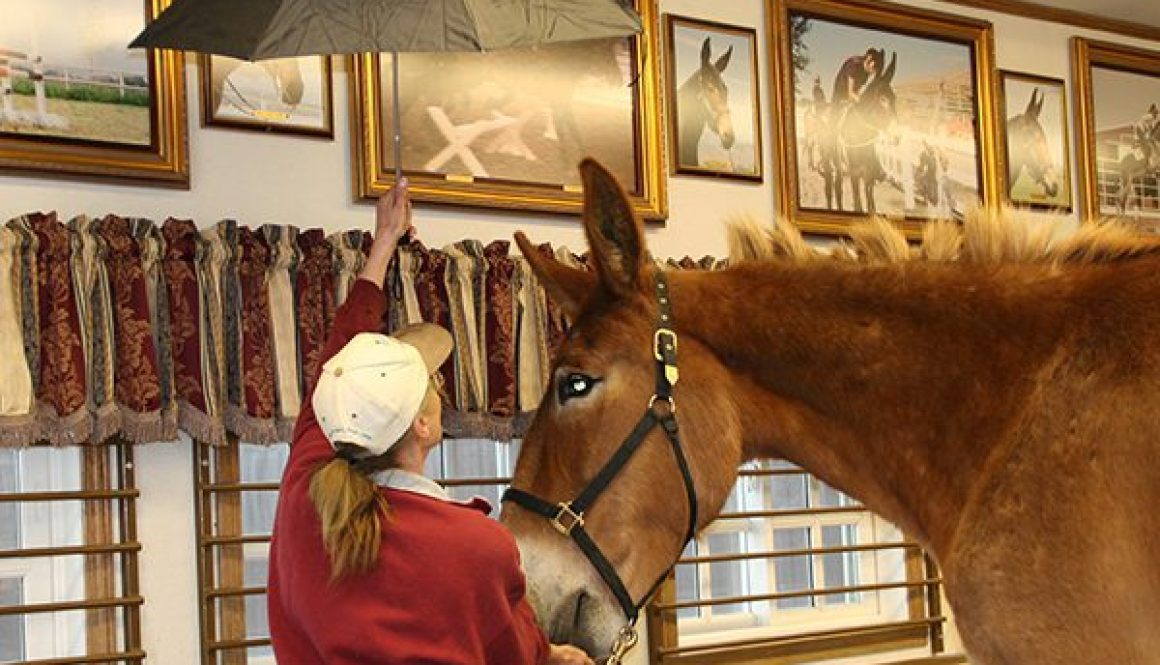
Meredith discusses how to desensitization works in your training with your mule.

