
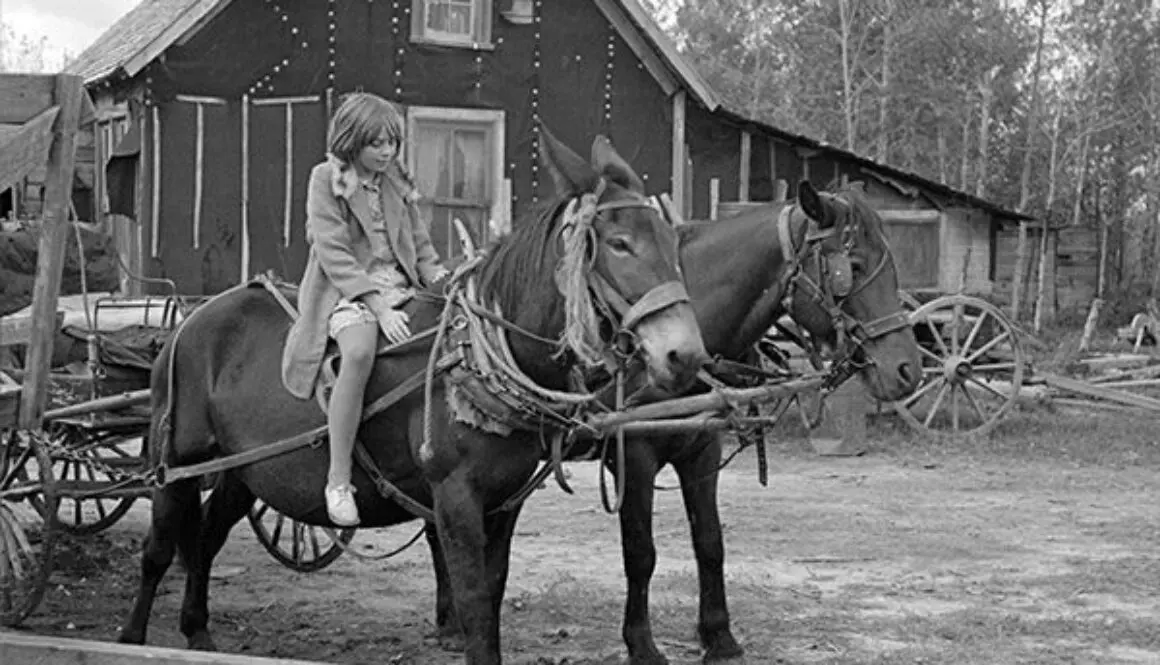
MULE CROSSING: From Mules to Riches
By Meredith Hodges
 Long before the Founding Fathers drafted our constitution, America began as a religious nation under God, and the mule has his roots in religion just as does the country he has helped to build. The mule of today’s ancestor is the donkey, mentioned in the Bible numerous times as an animal respected by God and blessed by Jesus Christ. The donkey was even chosen to bring Mary and Joseph to Bethlehem and, later, acted as the mount Jesus himself used for his ride into the city of Jerusalem.
Here is an ancient story, quoted directly from the Bible, illustrating the mule’s wonderful sense of humor: “So Zadok the priest, and Nathan the prophet, and Benaiah the son of Jehoiada and the Cherethites, and the Pelethites, went down and caused Solomon to ride upon king David’s mule, and brought him to Gihon.” I Kings 1:38
“And Absolom met the servants of David. And Absolom rode upon a mule, and the mule went under the thick boughs of a great oak, and his head caught hold of the oak, and he was taken up between the Heavens and the earth, and the mule that was under him went away.” II Samuel 18:9.
 Mules are the true professionals of slapstick humor and professional psychotherapy! When you get into an altercation with a mule, you will seldom get hurt, but you will surely be set straight in a most humiliating way.
In the early days of what was to become the United States of America, mules and horses perpetuated the expansion of the colonists into the Western territories of America. Since these early times, the American mule has acted not only as a pack animal for miners and fur traders penetrating the West, but it has also played an important part in our country’s defense, being able to cross terrain not accessible by any other means, and carrying and pulling heavier loads of weaponry than horses could even begin to carry.
When the fight for freedom from England’s rule was launched with the American Revolution, donkeys and horses were used in varying capacities to help win the battle for our country’s liberty.
Freedom was won as a result of the combined efforts of humans, animals and faith. One need only examine the humble traits and character of mules and donkeys to see that they indeed possessed the faith and the strong constitution to make some very important contributions to this country’s independence.
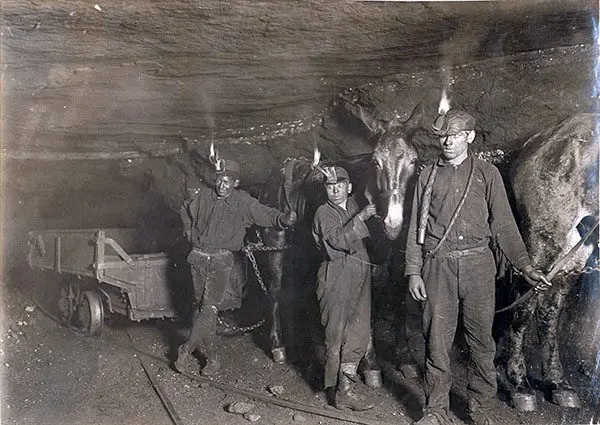
As they say, an army “marches on its stomach,” so it was a natural for Americans to progress further and delve into agriculture. Because of the extraordinary ability of mules to work for longer periods of time in sometimes harsh and unrelenting climates, their surefootedness and resistance to parasites and disease and with their ability to work long hours, the mule became the gem of agriculture. He learned his job quickly and put his heart and soul into every task.
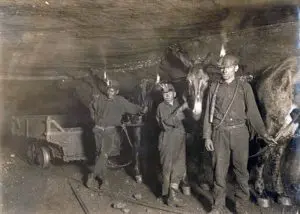
When American coal mining was booming, the mule was such a valuable member of the mining process, that a good mining mule was considered to actually be more valuable than a human miner. Mining has always been a dangerous business, and the mining mule’s innate sense of self-preservation was well known. “Mules are very smart…They know what they can do and would never do anything they couldn’t or would not want to do. Mules were known to pull at least three full mine cars full of coal. If you hooked up a fourth car they would balk at any commands and just stand there. No way would they pull the fourth car!” 1
 “Mules are the living symbols of the historic and pioneer spirit of the West. Mules were the pack animals of Spanish padres and grizzled prospectors. These animals have a dominant place in frontier history. From 1883 to 1889, the 20-mule teams moved 20 million pounds of borax out of Death Valley, California, to Mojave—165 miles away—traveling 15 to 18 miles a day. The 20-mule teams, the dramatic solution of a transportation problem, soon became a world-famous symbol, the trademark first of the Pacific Borax Company and, today, of the many products made by U.S. Borax.” 2 So began the mule’s vital contributions to industry and the economy.
In 1976, under the direction of the North American Trail Ride Conference, the Bicentennial Wagon train became a notable event in American history. Commemorating the trek West that was made so long ago by brave and adventurous pioneers, the Bicentennial journey went from California east to Valley Forge, retracing the steps of these first U.S. settlers. The outriders brought back scrolls of signatures signed by enthusiastic citizens to reaffirm their belief in the principles upon which America was founded. State by state, wagons met up with the main train and joined the trek. No doubt, many of these Bicentennial wagons were pulled by our beloved mules. “Going through my deceased folks’ stuff, I found an ‘Official Souvenir Program’ of the Bicentennial Wagon Train Pilgrimage. It’s interesting reading about the program in 1995–‘96, to have a Conestoga wagon or Prairie Schooner from each of the 50 states across the country on historic trails, ending up at Valley Forge on July third.” 3
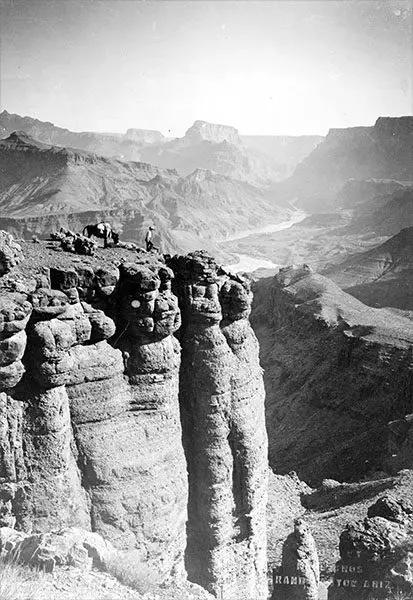
Although some Americans have become concerned about the impact donkeys may have on the environment and, in particular, on our state parks, there is no evidence that the burro will reproduce at a rate that will threaten the ecosystem, especially that of the Grand Canyon. In fact, it is possible that the burros have already been in the Grand Canyon for centuries. There is evidence that the erosion attributed to the burros is more often due primarily to other invasive forces, such as humans and the natural erosion that occurs from geological forces and the canyon’s climate. There is also some concern that the donkeys pollute water holes, but the defecation of burros (and mules) has never actually been proven to pollute anything in their environment. Currently, there is an effort to prevent mules from being used in the Grand Canyon, but they are clearly the safest way to traverse and enjoy the beauty of this American natural wonder. Mules and donkeys learn their jobs well and cannot be dissuaded from their purpose of carrying inexperienced tourists to the bottom of the canyon and back up again—with a remarkable safety record. Their smaller hooves do little damage to the trails, and their handlers have the integrity to maintain the trails just as they maintain their precious mules. Cyclists, hikers and motorized vehicles in the parks have the potential to do much more irreparable damage to the environment than any mule or donkey. In truth, it is the human element, rather than mules and donkeys, which does most of the damage to our delicate ecosystem.

America’s journey has been one of courage, determination and great faith. It has been defined by its sequential growth phases of religion, defense, freedom, agriculture, economics, industry and ecology. We have worked alongside mules and donkeys for centuries and have often taken their generous contributions for granted in the course of our fast-paced growth. But the mule and donkey are likely to remain with us as long as they can find a way to make their contributions to society.
Those of us who attend Bishop Mule Days every year and many Longears lovers across this country are very well-acquainted with the incredible assets of the mule, and look forward to singing his praises every year on October 26th, when Mule Appreciation Day rolls around. Let us never forget to thank our trusted equine companions for all they have done to make possible this great country of ours!
To learn more about Meredith Hodges and her comprehensive all-breed equine training program, visit LuckyThreeRanch.com, MEREDITH HODGES PUBLIC FIGURE Facebook page, or call 1-800-816-7566. Check out her children’s website at JasperTheMule.com. Also, find Meredith on Pinterest, Instagram, MeWe, YouTube and Twitter.
Covered in TRAINING MULES & DONKEY: A LOGICAL APPROACH TO TRAINING, TRAINING WITHOUT RESISTANCE, EQUUS REVISITED and A GUIDE TO RAISING & SHOWING MULES at www.luckythreeranchstore.com
© 2012, 2016, 2024 Lucky Three Ranch, Inc. All Rights Reserved.
1Mine Stories, The No. 9 Mine & Museum,Lansford, PA
2Mr. Longears, Volume 6, Number 21, Summer 1979
3ruralheritage.com email thread


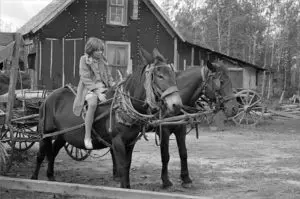
 Since a donkey can become quite stubborn when treated poorly, it is important that you take the time to help your child and donkey get started properly. Even an untried donkey, with proper help, can be a wonderful mount for a child. In the first few weeks together, the child and donkey should simply spend quality time getting to know each other. Teach your child the correct way to handle and groom the donkey. The personal bond between them will develop on its own. This is also a good way to start with mules.
 When your child and donkey have developed confidence in each other, you can begin to teach them the fundamentals of riding. Tack up the donkey in a small saddle suitable for his size and a snaffle bridle and then take him to a small pen to work on the lunge line. Allow your child to sit astride the donkey as he walks around you. Explain to you child the basics of turning and stopping with the direct snaffle rein contact, commonly called “plow-reining.” be sure to instruct the child not to pull hard, or jerk the reins. Donkeys have very sensitive mouths and do not respond well when they are in pain.
 Love and caresses are an excellent reward and the reward of crimped oats certainly does no harm, but tell the child to keep his hands flat so the donkey doesn’t accidently get his fingers! Donkeys are very appreciative animals. If the child and donkey are supervised correctly, it can greatly enhance the entire riding experience. The donkey will protect your child with his excellent judgment and the child will learn to be a patient and understanding person through the interaction with his donkey. The reason is simple: donkeys will not respond unless treated fairly. Many an equestrian in Great Britain has spent his early years astride a donkey and have become better riders because of it! So, if your child expresses an interest in riding, consider starting him with a donkey gelding, or maybe even a jennet. Besides being patient with children, his size is more suitable, he has ample strength to carry children and is an easy keeper, so feed and vet bills can usually be kept to a minimum.
 and will generally get his disposition from the mare. So, if you wish to get a mule for your child, make sure it is an individual with a quiet disposition. Then you can consider such things as size, color and other traits. Be advised that mini mules can be very strong and hyperactive with alpha personalities. IN some cases it might be better to get a larger, quieter mule for your child. The right mule can be just as good a babysitter as the right donkey, and usually more reliable than any horse!
 When you are tacking up your equine, stay in close to put on the saddle and bridle, but when walking around and behind them, give them a wide berth out of kicking range. Give the child detailed lessons on how to bridle and saddle the equine without hurting him, around the ears, eyes, etc. and never use the ears to hold his head still! Teach the child to WALK around equines and not run, or be abrupt, in their movements. Get your child a saddle that they can feel secure in, that has stirrups that will adjust to their short legs, or an alternate set of stirrups that will fit onto an adult saddle for them.
 Children and donkeys, or mules, have not been together much in this country in the recent past. Perhaps it is because we have not given children a chance to show their Longears publicly. Realizing this need, as in horse shows, youth classes have been included in the Longears shows of today to encourage our youth to take an active interest in the promotion of Longears. The jobs these “kids” are dong with their mules and donkeys are wonderful and their contributions are extensive. The values learned by children when dealing with donkeys and mules will stand them in good stead throughout their lives, not to mention the joy they will discover in having such an interactive and affectionate companion.


 Mules played an important role in our country during the Reconstruction Period: they patiently worked the fields, packed necessary artillery for the army, and served as a durable riding and driving animal in the westward movement. With the coming of the industrial age, their uses were minimized and they were faced with the possibility of extinction in the march of progress. Today, through the persistent determination of mule enthusiasts, mules are once again emerging as a conceivable asset to our economy and a unique form of athletic achievement and entertainment.
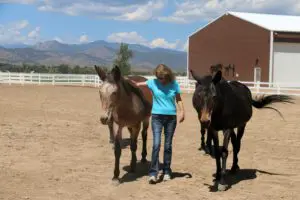 They will generally follow you around until you leave the field, begging for attention or simply observing you closely from a safe distance. Mules have a genuine desire to make friends with those other than their own species. Also, they are a very sensitive animal and can read your intentions through the tone of your voice and your body language.
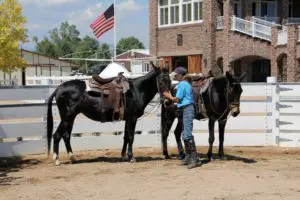 Still, the most important thing to remember is to praise the mule with caressing and scratching when he does what you desire and back it up with the food reward. Mules love this kind of attention and will do their best to get it. If they are rewarded immediately when they are behaving as desired, the desired behavior will eventually become the norm. If bad behavior is ignored or gently reprimanded, it will fade to a minimum. The result is a pleasant, affectionate, and dependable animal.
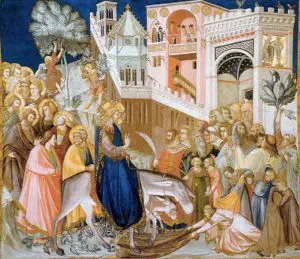 Long before the Founding Fathers drafted our constitution, the roots of America were as a religious nation under God. Today’s mule also has his roots in religion. The mule’s ancestor—the donkey—is mentioned in the Bible numerous times as an animal acknowledged by God and blessed by Jesus Christ. The donkey was even chosen to bring Mary and Joseph to Bethlehem and, later, as the mount Jesus himself used for his ride into the city of Jerusalem.
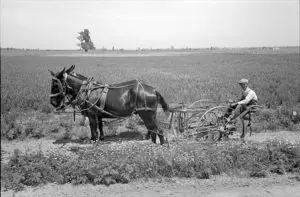 As early-nineteenth-century America continued to develop and its population grew, the American people came to depend more and more on self-sustaining agriculture. Because of the mule’s extraordinary ability to work long hours in sometimes harsh and unrelenting climates, his sure footedness which allowed them to cross terrain not accessible by any other means, and his resistance to parasites and disease, he became the prized gem of agriculture and remained so for the next hundred and fifty years.
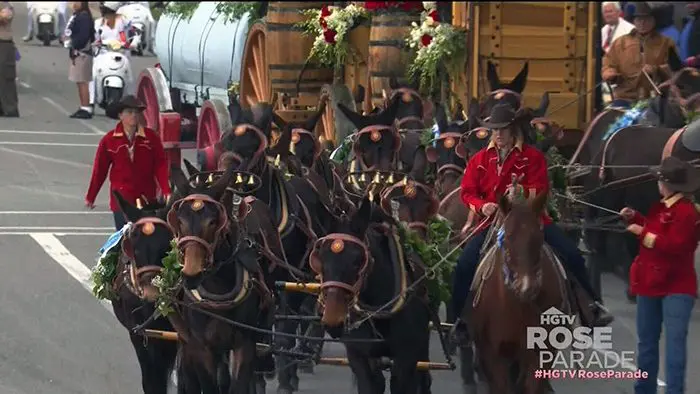
 In 1882, the Harmony Borax Works opened with one big problem—how to get their product 165 miles across the treacherous Mojave Desert from Death Valley to the nearest railroad spur. The answer? Mules! “The borax wagons were built in Mojave at a cost of $900 each…When the two wagons were loaded with ore and a 500-gallon water tank was added, the total weight of the mule train was 73,200 pounds or 36 and a half tons. When the mules were added to the wagons, the caravan stretched over 100 feet. The Twenty Mule Teams hauled more than 20 million pounds of borax out of Death Valley between 1883 and 1889.” 1
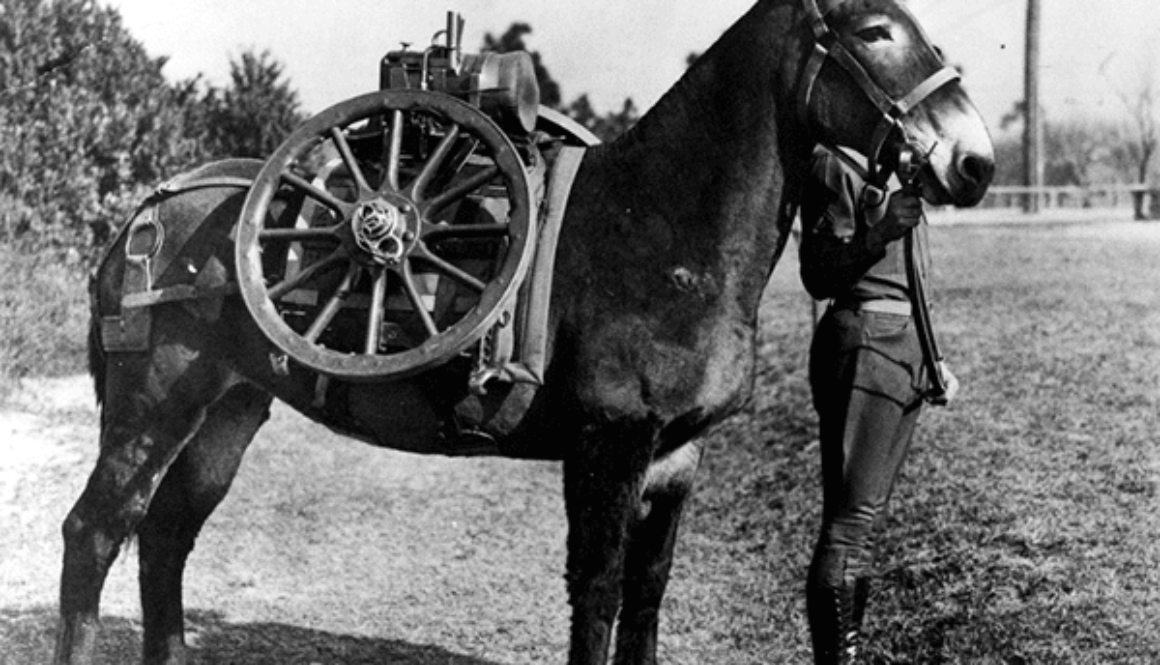
 Because of their traits of strength, intelligence and loyalty, mules were a crucial part of our country’s greatest conflicts, from the Civil War through the Spanish American War, and in both World War I and World War II. A well-known tale from the Civil War states that, “In a battle at Chattanooga, a Union general’s teamsters became scared and deserted their mule teams. The mules stampeded at the sound of battle and broke from their wagons. They started toward the enemy with trace-chains rattling and wiffletrees snapping over tree stumps as they bolted pell-mell toward the bewildered Confederates. The enemy believed it to be an impetuous cavalry charge; the line broke and fled.” 3 During World War I, mules and horses were still the primary way that artillery was carried into battle. Although the 75mm Howitzers proved too heavy for most horses, it was a common sight to see the big guns strapped to the back of a sturdy mule.
 One of the world’s greatest natural wonders, the Grand Canyon, has been home to mules since the 1800s. First brought in by prospectors, it was soon realized that the tourists wanted a way down to the Canyon floor, and so began the Grand Canyon mule pack trips. Famous mule-riding visitors to the Grand Canyon have included Presidents Theodore Roosevelt and Howard Taft, famed naturalist John Muir and painter/sculptor Frederic Remington.
 By Meredith Hodges
 In 1967, concerned Paul and Betsy Hutchins founded the American Donkey & Mule Society, designed to spark the fires of interest in these longeared animals. The A.D.M.S. quarterly journal continues to remind the American public of all the extraordinary things that had been accomplished in history by donkeys and mules. They plowed the fields, pulled the covered wagons and worked in the coal mines. They pulled barges on the canals and packed munitions for the military. They built the Rose Bowl in Pasadena, California. Wild Bill Cody rode a mule named Mouse that put General Custer’s fancy Thoroughbred to shame over long distances and rough terrain. The crowned heads of Europe rode mules as a statement of class and Jesus rode into Jerusalem on the back of a small and humble donkey! Although the horse was revered and given the credit, mules and donkeys were always right there, too – strong, steady and humble!
 Thanks to Paul and Betsy Hutchins, we have been reminded of Longears’ great legacy and there are those, including myself, who would find a way to appreciate their efforts and would help to make donkeys and mules an important part of modern-day society.
 Mules and donkeys are becoming the equine of choice in many areas today. The California Sierra Nevada Pack Stations are populated with mules trained to take tourists on pack trips through the scenic mountain areas. The only equines safe enough to carry tourists down the steep rocky trails at the Grand Canyon and at Molokai are mules! Hunters are using mules as riding and pack animals due to their incredible strength, endurance and intelligent nature. They can handle rougher terrain and adverse weather conditions better than can the horse. Donkeys are finding new uses in guarding sheep from unwanted predators. Mules and donkeys are used in handicapped riding and driving programs, and molly mules are being used for embryo transplant. Third world countries are being educated in the care and feeding of their donkeys and mules to enhance economic growth. Mules and donkeys have even become viable 4-H projects for young people who enjoy the challenge. We are finding that there are actually very few things these longeared equines can’t do!
 Skeptic that I am I have always attempted to find the limitations of these incredible individuals. Here at the Lucky Three Ranch, we continually challenge our mules and donkeys with new and innovative tasks. They have continually met these challenges with success! With each new success, our mules and donkeys have brought many new and wonderful friends into our lives, making life full and very rewarding. To this day, I am still amazed when an animal has met his challenge and accomplished what I have asked. I suppose part of me would still like to believe that if they could have done all these things, then they would have already been done. But I can see now that that isn’t necessarily so. Need has a lot to do with it. No one ever NEEDED an upper level Dressage mule before! But I did!
 Since we have yet to find any serious limitations in these Longears’ ability, at the Lucky Three Ranch we concerned ourselves with documenting these three unique successes. Training Mules and Donkeys: A Logical Approach to Longears is a book documenting the training techniques we have used that led to the ultimate success of our mules and donkeys. It will was first released in May 1993 and was revised in 2013. As far as I know, it is the only book of its kind with training from foal to adulthood and has subsequently been supported by more books, DVDs and television shows and our extensive and comprehensive website at www.luckythreeranch.com. The intent is always to help mule and donkey enthusiasts to get the best from their animals and to avoid the common pitfalls that would sour an otherwise stimulating and rewarding experience with Longears. It just goes to show that MULES CAN DO, AND DONKEYS, TOO! Seeing IS believing and dreams really CAN come true!



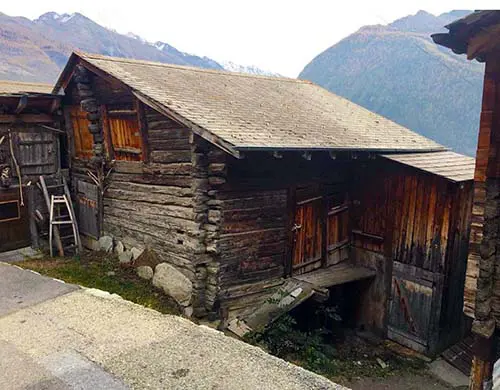


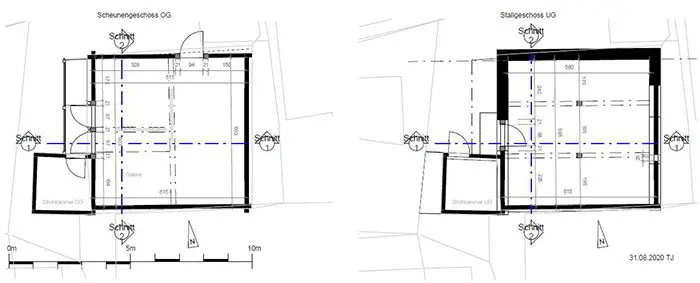
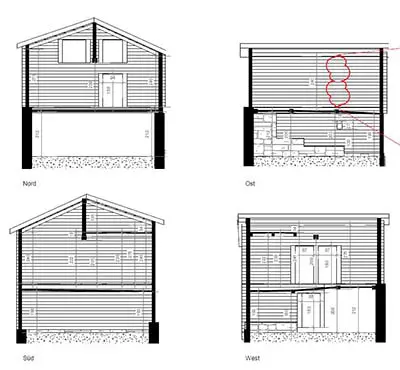


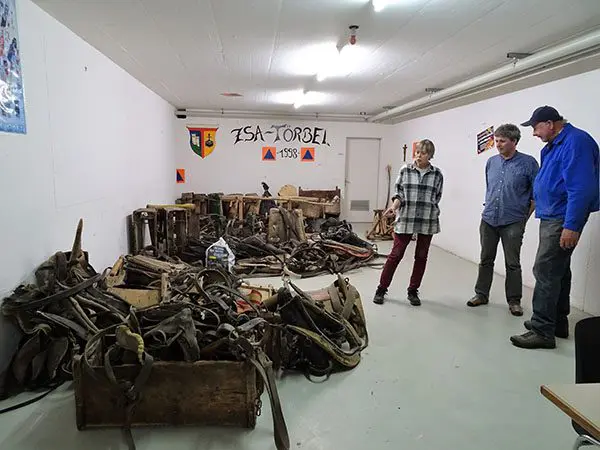
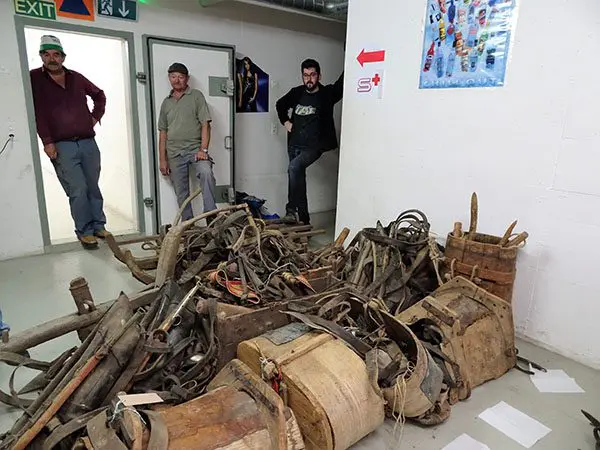


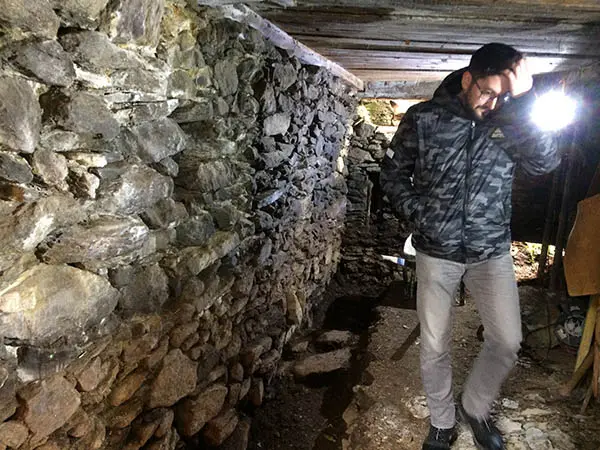

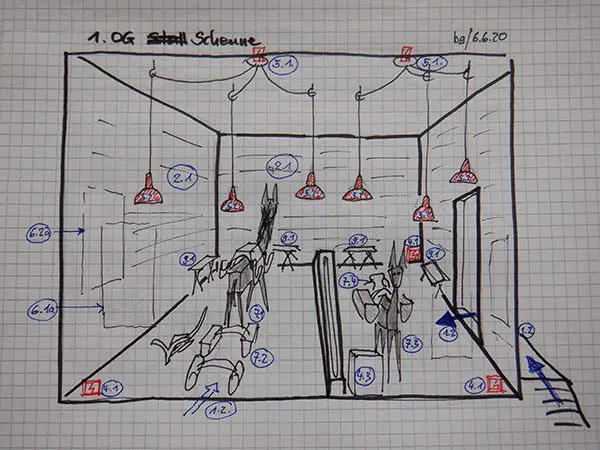
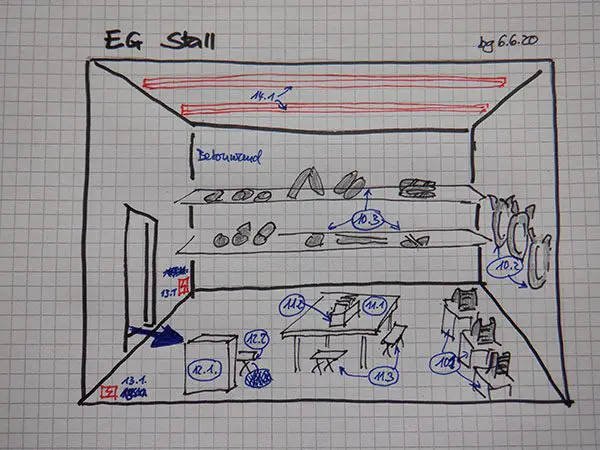


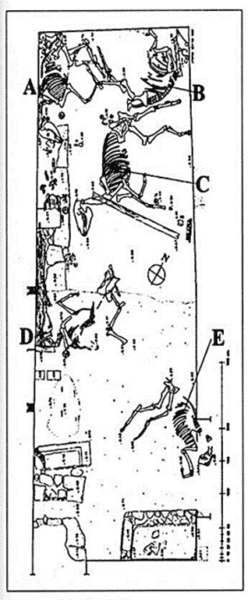

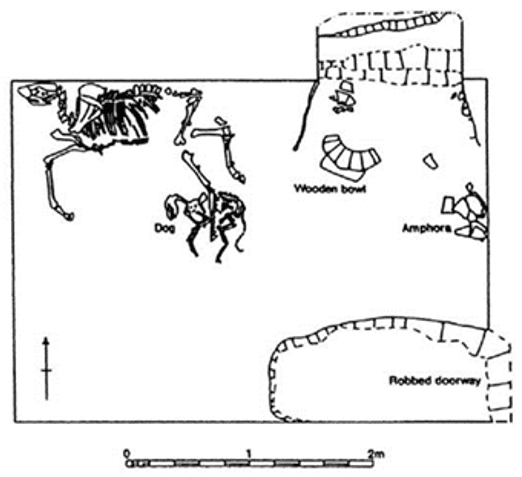
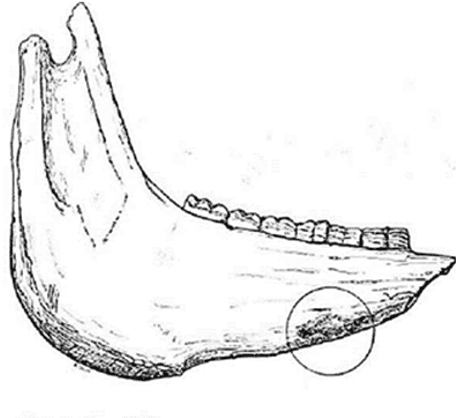
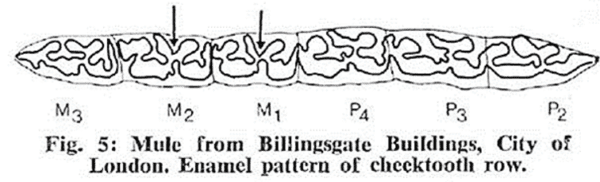

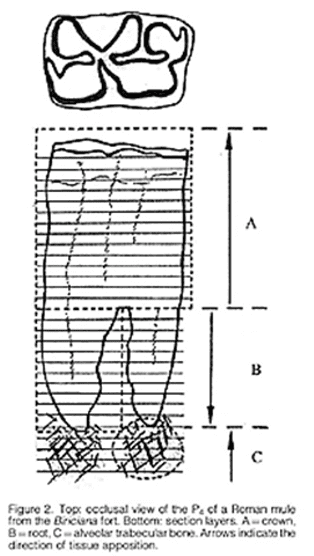 The Roman fort at Weissenburg, called Biriciana in ancient times, is a former Roman Ala castellum, which is a UNESCO World Heritage Site located near the Upper Germanic-Rhaetian Limes.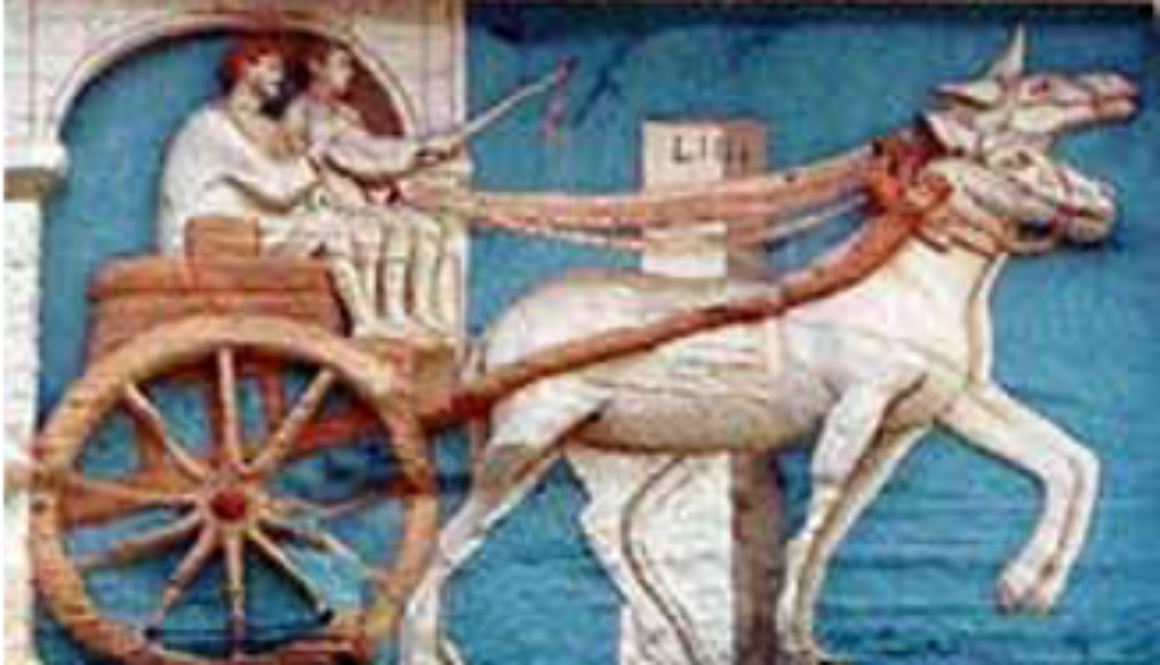








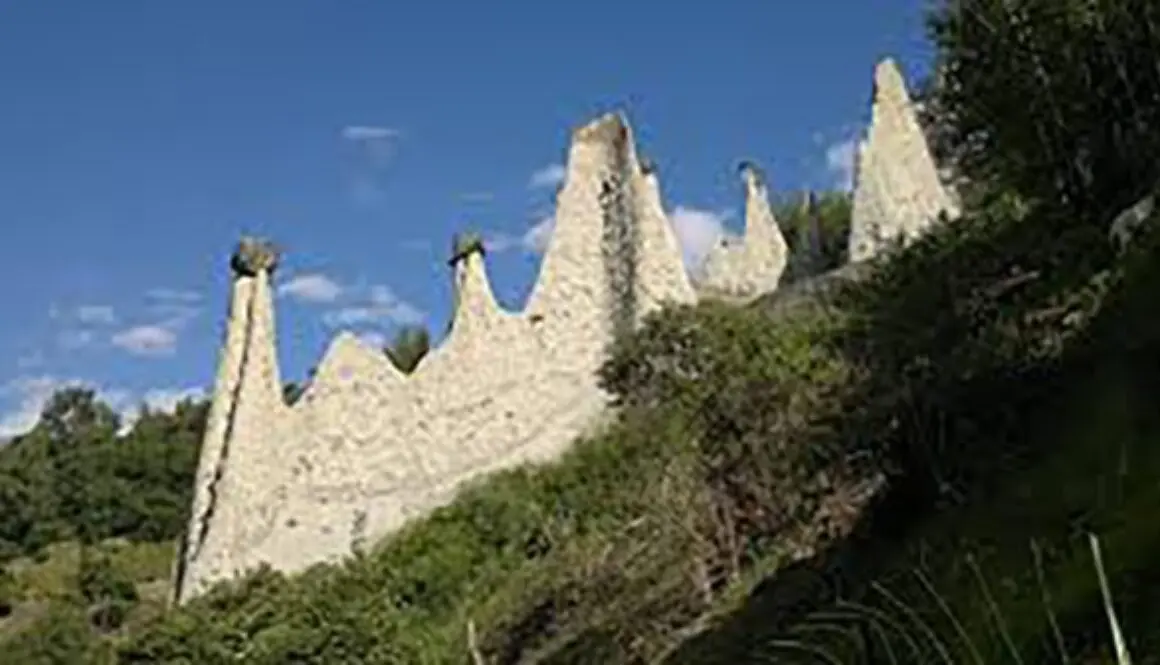
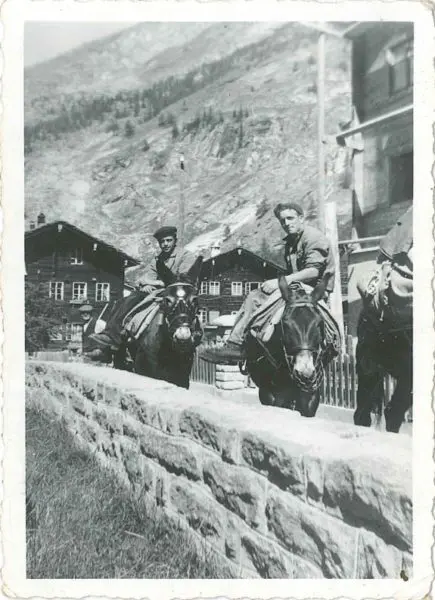
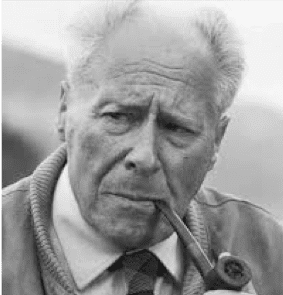 Pierre Bovier tied the rope around the iron bar that follows the wall; with the back of his hand he hit his mule on the back, as a sign of his friendship. He pulled a crackling piece of hay out of the oat sack, took his two cheeses under his arms and walked away. It was still winter up there, no relief was to be seen anywhere; dirty snow, half melted from the wind, covered the whole slope with a lifeless blanket. Perhaps the young grain’s stalks were already trembling beneath him. The grass sounded like the call of spring. The roots trembled in the frosty earth. Impatience ate the souls of the people. But the plain shone in the bright spring light. Pierre Bovier saw spring from his village Euseigne. Every day he watched for a long time the triangle of sap-laden earth between the sloping columns of the valley entrance. He would have loved to dig his working hands into the humid cold of the revived vines. He stretched his head, he looked and looked. Then he couldn’t stand it any longer. He could no longer stay in this house surrounded by death. He took his mule and he went away. So he went down to the valley and pulled his animal by the reins. The mule stretched his neck towards spring. Two small cheeses hung in the oat sack. He
 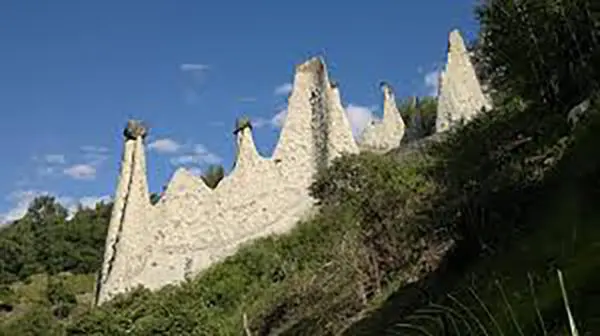 would sell this cheese, he would pay his debts to the bank. Two twenty-franc notes, a few glasses of wine to drink with one he meets in the bustling city before climbing back up to his village. This is our life. The reins are stretched, the mule hurries forward. Now Pierre Bovier is looking for a place in the city to put up his cheese. It is wonderfully warm. The sun makes its bright spots dance on the roadsides, the light stops on the groups of women, hangs on the yellow wicker baskets dangling from its arms. In the fishmonger’s display the sun delicately silvered the scales, sticking tinsel gold into the fur of the thick rabbits that are destined for the cooker. “What is the cheese?” “Twenty-five francs a piece.” The deal was closed, and Pierre Bovier walked straight to the bank, pulled out of his pocket a green, dirty envelope; paid. When he was back on the street he suddenly felt a strong thirst at the bottom of his throat and he decided, to satisfy it immediately.
 It struck eleven o’clock. The landlady refused them the last half liter. So they had no choice but to leave. They rose and were outraged at this heartless creature, that had placed them in front of the door, stumbled between the tables, swayed down the street in all its width, finally trusted the walls, and when the walls stopped, they supported each other’s disturbed balance. They would have liked to drink another glass, equalize the other glasses. But all the doors were closed. So they had to do without, for better or for worse, and they did it by scolding the bad times. They decided to return home, the one from Ayent to Ayent and Pierre Bovier to Euseigne. “Where do you have your mule?” “There he is, next to yours.” The mules waited in the cool night. Swaying, the fathers (lads) gave each other their hands and then loosened their animals. It was no small thing for them to get on the saddle. After all, Ayent’s succeeded first, after some unsuccessful attempts. And the mule rode off with the hasty step of a hungry animal. Euseigne, for his part, managed to climb the animal after many attempts and violations of the second commandment. A lucky fool shortened the way home. Almost at the same time, the two companions felt their animals stop. We have arrived, said the mule’s frozen gestures. “Where am I,” stammered the one from Ayent, for he no longer knew his barn. “But I am in Ayent,” the one from Euseigne suddenly sobered. After they had confused the radical doctrine with the conservative, then their glasses, they had now also confused their mules. But the mules had not been wrong in their way home.
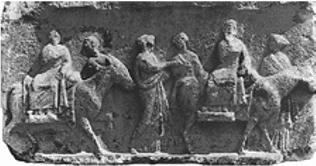
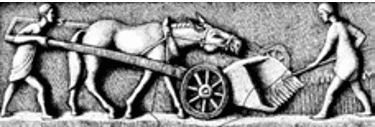
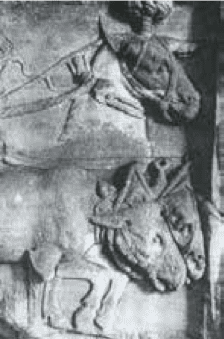 At that time, cattle were the most important draft animals, less for meat production, and milk was also of little importance. Cattle were mainly used in agricultural traction work or heavy transports with wagons. Oxen were indispensable for long-distance transport. No person, no matter how much they preferred mules, camels or even elephants, could do without cattle. They were much less demanding of food and care than the sensitive horse, which was expensive to keep. The mule took a special position because of its outstanding qualities. Horses are hardly mentioned in the old writings as draft animals for heavier loads. Mostly, they were used for light wagons. Horses were the mount of the high-ranking men, both civilian and military, and also served as a pack animal.
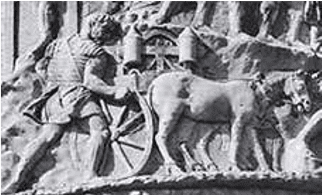
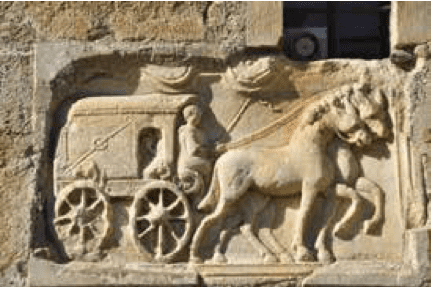 Female animals were used primarily for pulling wagons because of their agility, while male mules were used to carry loads. Various documents show this division for different purposes. Emperor Serverus Alexander gave his provincial leaders six female mules, two male mules and two horses. It is obvious that the female mules were intended for specific use as draft animals, the male mules as pack animals and the horses for mounts. The female mules were reserved for pulling which is evident from the fact that they were normally traded as a team. If one had a flaw, the seller had to take back both animals. It was especially popular when all the animals in front of a cart had the same color. The veterinarians gave recipes for dyeing the hair of the draft animals when it was not appropriate. To make white hair black, three ‘scripula’ (Roman unit of weight) cobbler’s blacks, four ‘scripula’ oleander’s juice and some goat fat are mixed, crushed and then applied. To make black hair white, a pound of wild cucumber root and twelve ‘scripula’ soda are crushed into powder, a cup of honey added, and then applied.
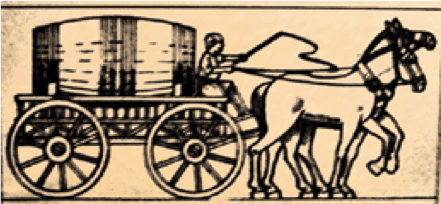 Most mules were not used as valuable draft animals in private passenger transport, but in public transport by rental car companies or by cargo. The provisions of Codex Theodosianus (late antiquity collection of laws) the ‘cursus publicus’, can give an approximate impression. Two car types are mentioned, the four-wheeled ‘raeda’ and the two-wheeled ‘birota’. The ‘raeda’ was fitted with eight mules in summer and ten in winter, 1000 pounds could be carried. When used by people, this corresponded to seven to eight passengers. For the ‘birota’ on the other hand, three mules and a maximum load of 200 pounds were prescribed, for a person’s use, this was two passengers.
 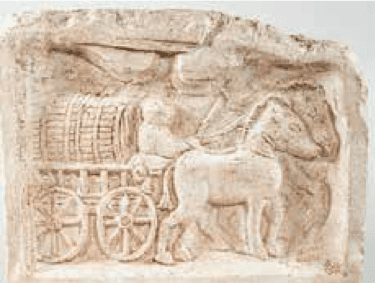 The journey with such public transport was accompanied by wild screams, whip cracks from a drunken coachman and clouds of dust, reports a letter writer named Eustathios: A trip with mules that were boisterous by doing nothing and feeding too much he avoided – and prefered to walk.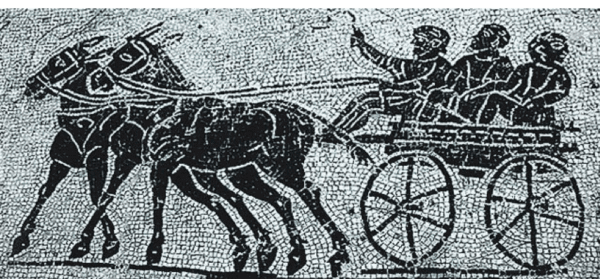
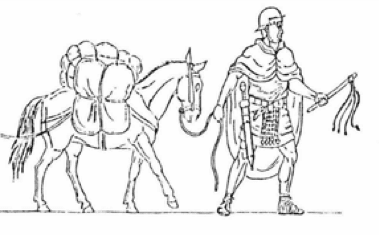 Male mules were used to carry less extensive loads in cities and agriculture because of their greater strength. The typical work was the transport of pole wood for plantations. Traders kept their mules directly in their shops. There is a case described in the Digests (scripts of ancient legal scholars) where a horse was led into a shop and was sniffing at the mule there. It kicked and broke the back of the horse’s leader. In the troop, each centurion had one such pack mule, which had to carry the heavier parts of the equipment on the marches.
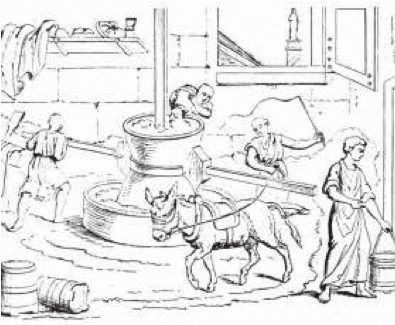 Mules were often used, as donkeys and horses were, to drive mills when they were no longer usable for other services. They were harnessed with a hard grass rope in front of the mill beam, the head was usually masked. They trotted in a furrow, always pushed by blows in the circle around. The bad condition of the animals corresponded to the gruelling work. In the “Methamorphoses”, Apuleius describes that the necks were swollen of wound rot, the nostrils were flaccid and dilated from coughing and dusty air. The body was disfigured by the constant blows and mange, the feet clumped by traveling permanently in a circle. These sufferings are also reflected in the veterinary writings, but the mill animals were certainly no longer treated.
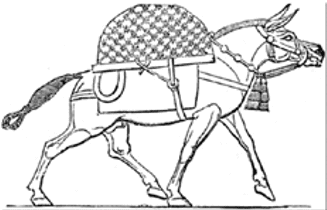
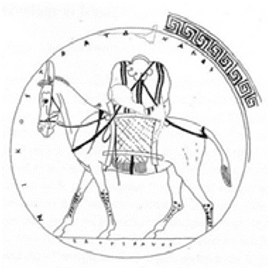
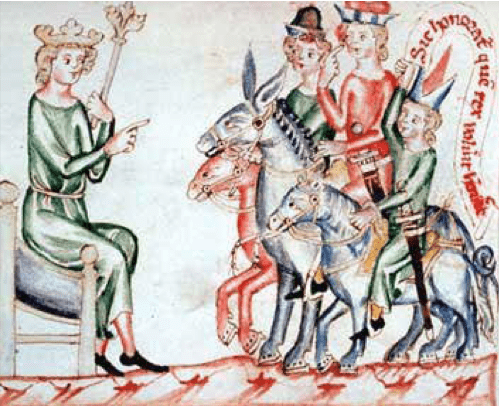 The mule was used rarely for riding in Antiquity, it was the simpler mount. Horace (poet) illustrates a simple but also free life in this way: He could bridle a mule at any time and head all the way to Taranto, even if the loins of the animal were rubbed sore by the heavy coat bag and the sides by the weight of the rider. The veterinarians list these specific injuries caused by riding, as well as, by loads being too heavy. The wounds are treated with ointments mixed from salt, wine, oil, raisin wine, pork fat and onions. In more severe cases, blood is taken from the veins of the groin area and mixed with salt, pork fat and oil. This is applied, and if necessary, plastered with ointment. For wounded skin caused by pressures, a dough-like mixture made of fine wheat flour, incense dust, egg yolk and vinegar is applied to the sore spots.
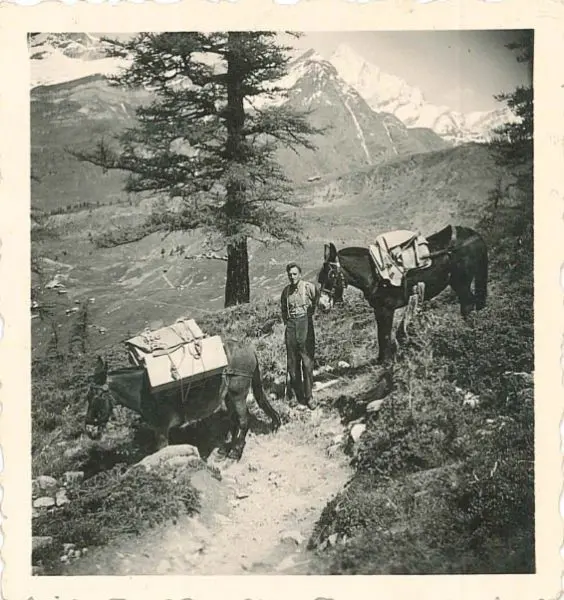
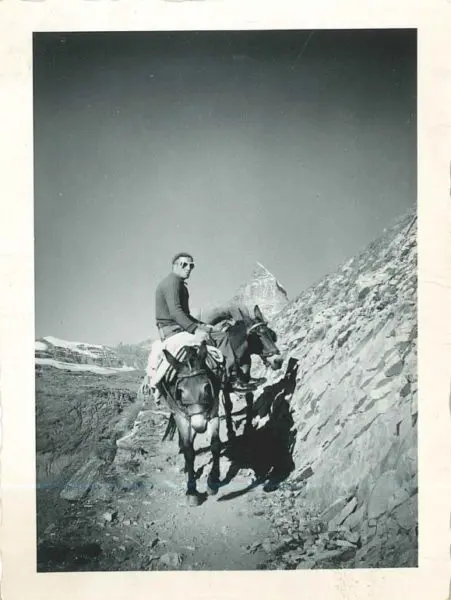
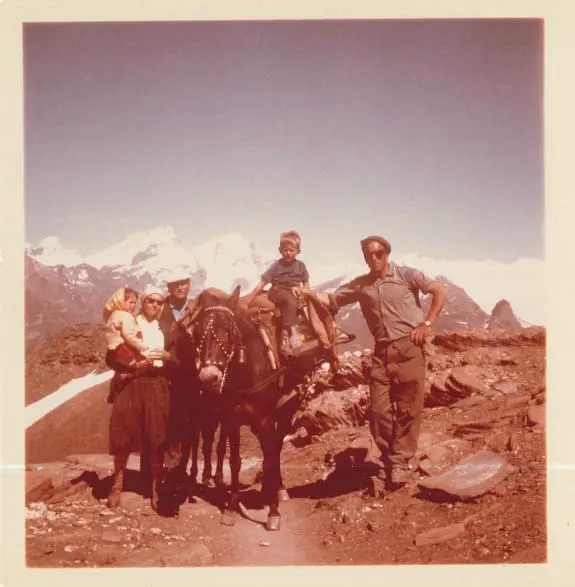
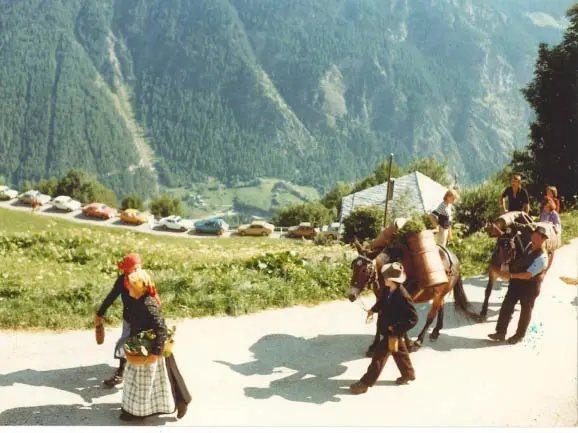
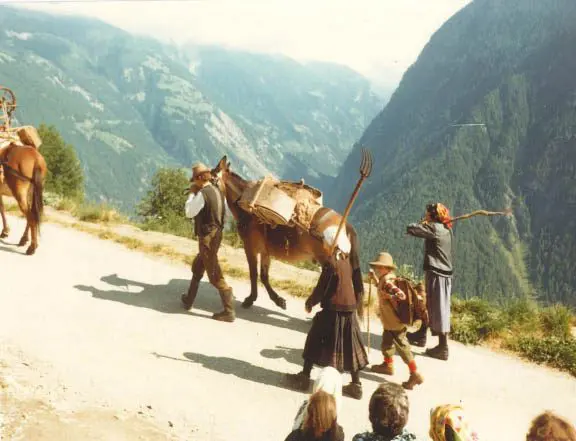
 Although mules were regarded by the church leaders as originating from an unnatural connection, and thus had a bad reputation, the mule nevertheless experienced a great appreciation in the early Middle Ages. Since Spanish mules are a noble gift, Emperor Charlemagne sent them to Caliph Harun Rashid. Mules and their Saracen guardians were bestowed by Robert Guiscard (Norman leader) to the Abbot of Montecassino. The mule is often mentioned as a mount of clergy. Gallus, for example, uses a mule for his journey to the Swabian ducal court. Also, for the journey of Goar (Priest, later holy spoken) to the royal court, a mule or a donkey is intended. Bishop Gregory of Tours, mentions mules among the farm animals of the monastery St. Martin, which were obviously riding animals. Because of the clergy’s preference for mules, the devil – as Notker (poet and scholar) tells us he turns into a mule to tempt the bishop to buy him, seduces him and kills him on the way out. A degree accordingly acts against the excessive dealing of clergy with mules. Of course, mules were often used as pack animals in the early Middle Ages, just like horses. Already Isidor from Sevilla (Archbishop) speaks about the ‘mulus sagmaria’ (Latin: pack mule) beside the ‘caballus sagmarius’ (packhorse). Some of the mules and horses with which the Irish bishop Marcus returned from his trip to Rome must have been pack animals as books, gold objects and robes are mentioned as transported goods. In the Vita Hludovici (anonymous biography of Louis the Pious) mules are also mentioned beside horses, working a mission as they transported ship parts through the woods. Mules are also considered a pack animal in custom regulations.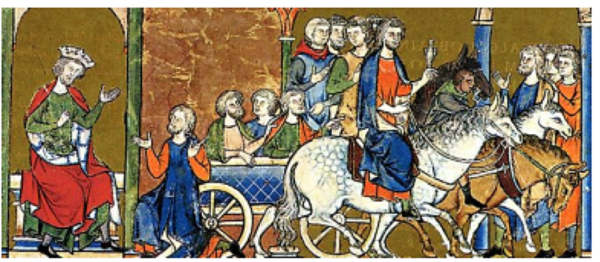


 Revere rode about 20 miles through what is now Somerville, Medford, and Arlington, Massachusetts, knocking on doors to raise people to defend Lexington. Another rider, William Dawes, was sent by another route to do the same thing. A third, Samuel Prescott, was also pressed into service. Only Prescott completed the night’s work and reached Concord; Revere was captured and Dawes was thrown from his horse while evading British soldiers, forcing him to walk back to Lexington.
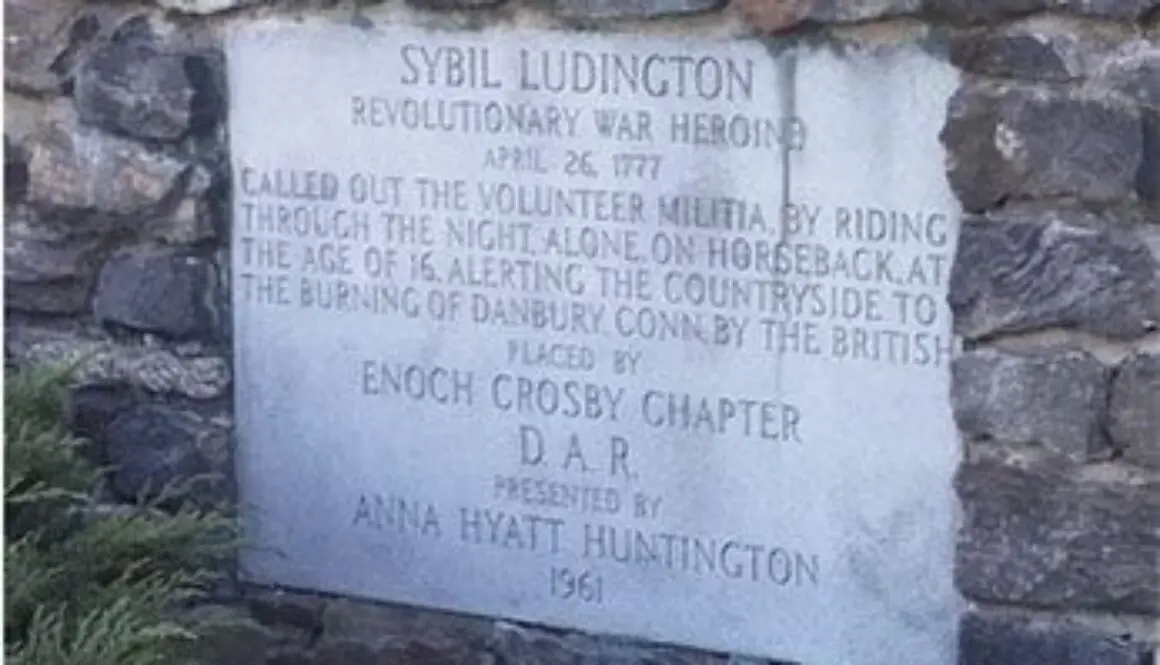
 Sybil spent the night traveling down narrow dirt roads in the rain with nothing but a stick as protection. To add another element of danger, there were many British loyalists in the area and more than a few “


