CHASITY’S CHALLENGES: After the Winter Break: 3-29-21
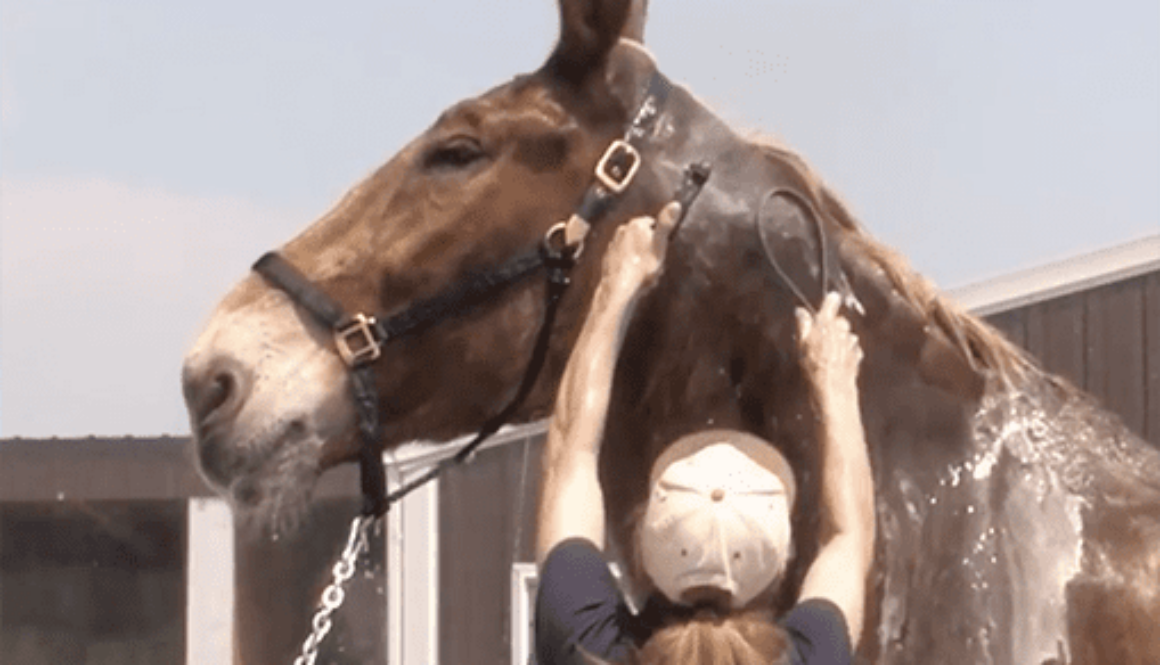
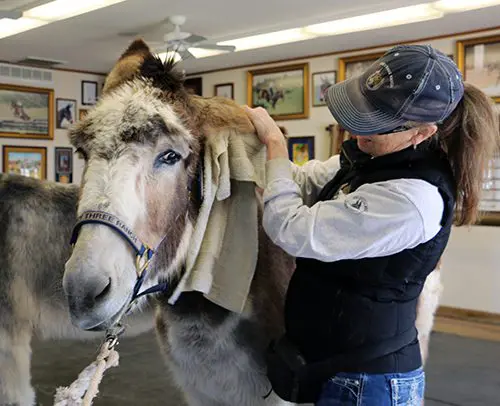
Due to the colder and more inclement weather here in Colorado, Chasity has been off her exercise program for about three months. It was time to get back to work! No matter how long it has been between lessons, when you have a specific routine, the equines seem to comply easily because they know what to expect, beginning with going to their regular work station to be groomed and tacked up. In order to keep upper respiratory disease at bay, eye infections and ear problems to a minimum, it is advisable to clean these areas with a damp towel regularly. Be polite and wipe the towel in the direction that the hair lays and clean the nostrils with a circular motion. This repetition will prevent them from getting head shy.

Chasity still thinks the vacuum cleaner is questionable, but she tolerates it now. Not only does it pull the dirt from the skin for healthy hair growth, it also promotes circulation better than massage and does a better job at softening her “fat roll.” I used massage in the beginning when Chasity first came here with her enlarged crest (photo below on the right).


It had become somewhat enlarged again about three weeks ago, but after two sessions with the vacuum cleaner, it has decreased substantially already.


Another valuable therapeutic grooming tool is this simple human, multi-bristled hairbrush. It is not only VERY helpful during shedding, but also works to further stimulate the hair coat and promote better circulation, as well as efficiently removing dirt from the skin. I have found it to be more helpful for healthy hair than any equine grooming tools. The long, thick hair coats of winter and spring stay soft and healthy when I use this hair brush over the entire body. I only clip bridle paths when the weather gets warmer and I leave body clipping for showing. The only other grooming tools I use are a shedding blade to remove mud and a dandy brush to finish the coat. They can have balding spots from rubbing during the shedding season and may even get sores, but I just treat those with Neosporin and they recede quickly. A healthy hair coat will insulate your equine from the heat and cold and protect them from insects better than any artificial products or practices.


Equines do like feeling clean all over and really do appreciate your efforts at keeping them this way…although, they don’t necessarily show it when the first thing they do after a good grooming is to go for a good roll in the dirt!!! Still, they do seem to realize that you care and will show their appreciation in a multitude of other ways…like being happy to leave their companions to go with YOU and stand quietly during grooming, tacking and hoof care!
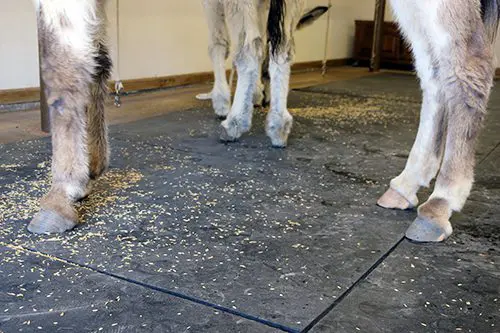
Feeding is a very important consideration for healthy hooves as are regular trims when needed, usually every 8-10 weeks. For donkeys, it can even be longer between trims when they wear their hooves in good balance. Chasity had hoof issues when she first arrived, but is now sporting healthy balanced feet! Remember that Longears will be more upright and have more heel than horses and ponies…and donkeys will typically be more upright and have more heel than mules.

Fitting saddles can be tricky. Make sure the saddle makes even contact behind the withers and over the back with relief from pressure over the spine. Many saddles sit too high and cause centralized and uneven pressure across the back. Pressure points are easily identified after a workout. The back will be sweaty, but the pressure points will be dry.


Place the saddle in the center of the back, behind the shoulder blade, the girth falling 4” behind the forearm where the skin is thicker and body begins to swell. I have successfully used cruppers with the buckles set away from the tail to hold it in place. The crupper is adjusted with just enough tension so the tail will still be able to rest comfortably.

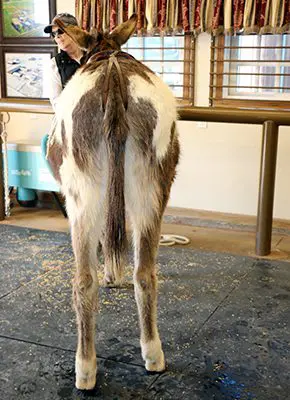
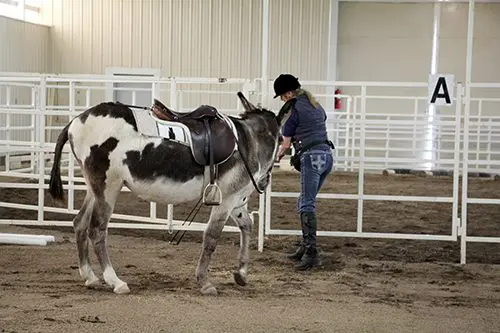
I am using the neck sweat on Chasity for lunging to promote a decrease in the crest. When bridling, I press my thumb on the bars of her mouth to get it open and protect her ears with my hands as I pull the crown piece to the poll. This promotes trust and keeps any equine from getting ear shy.


[one_third_last]

[/one_third_last]
On an English saddle there is a small d-ring that I use to tie up the reins.


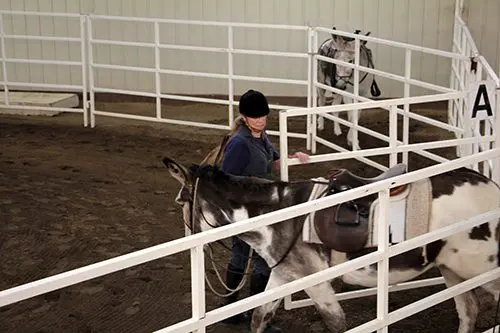
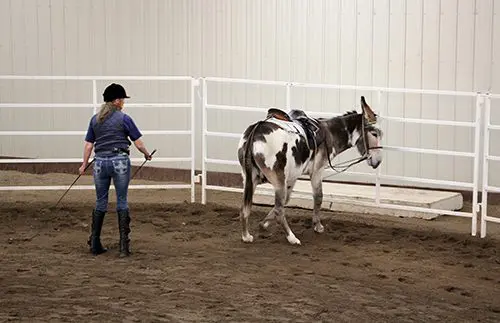
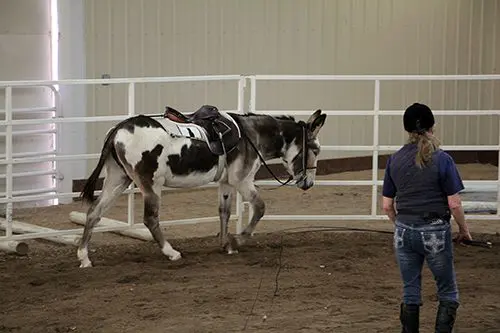
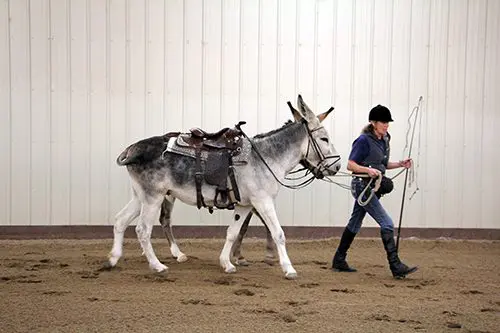
Then it is off to the Round Pen. I always stay in sync with their front legs when we walk and execute the gates EXACTLY the same way EVERY TIME! All movements are predictable, never abrupt. They comply due to trust.


I adjust Chasity’s postural restraint, the “Elbow Pull,” and then remind her to give to the tension to get the release with a reward of oats for flexing at the poll. Wrangler, “Mr. Curiosity” watches intently…they do learn from each other!


Chasity’s overall posture has changed dramatically as has her movement. She uses her body much more efficiently.


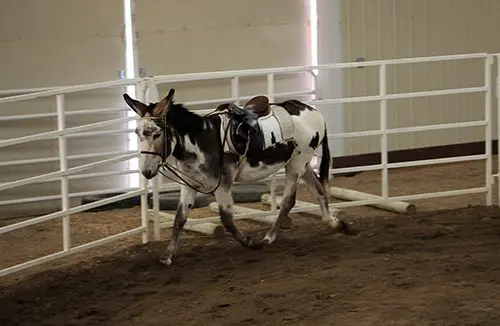
Chasity has strong hind quarter engagement with an uphill balance to promote enthusiasm, endurance and stamina.


A reward is always in order for a job well done. Her forward stretch has improved greatly in one short year.


The lateral stretches are also much improved. After five rotations of walk, then trot, then reverse and repeat the other direction, 3 sets with a 3 minute break in between, then stop. Done once a week is adequate to maintain conditioning.


I hold the halter crown strap in my hand and protect her ears as I remove Chasity’s bridle. Then I slip the bridle onto my left arm, bring the noseband over her nose with my left hand and fasten the halter to the strap in my right hand. This ensures that I can keep hold of her should she try to pull away. Last, I fasten the tie strap from the hitch rail.


[one_third_last]

[/one_third_last]
I always unfasten the girth on the left, then tie up the girth on the right, slide the saddle back, loosen the crupper from the tail and take off the saddle on the right side. This gets the equine used to being handled from BOTH sides. I always rinse the bits and wipe any dirt from the bridles and saddles before putting them away…saves work in the long run!


I remove Chasity’s neck sweat to see how much sweat is underneath…encouraging! We are definitely making progress!


To end, we do a few more stretches in each direction. These are improving immensely, too!


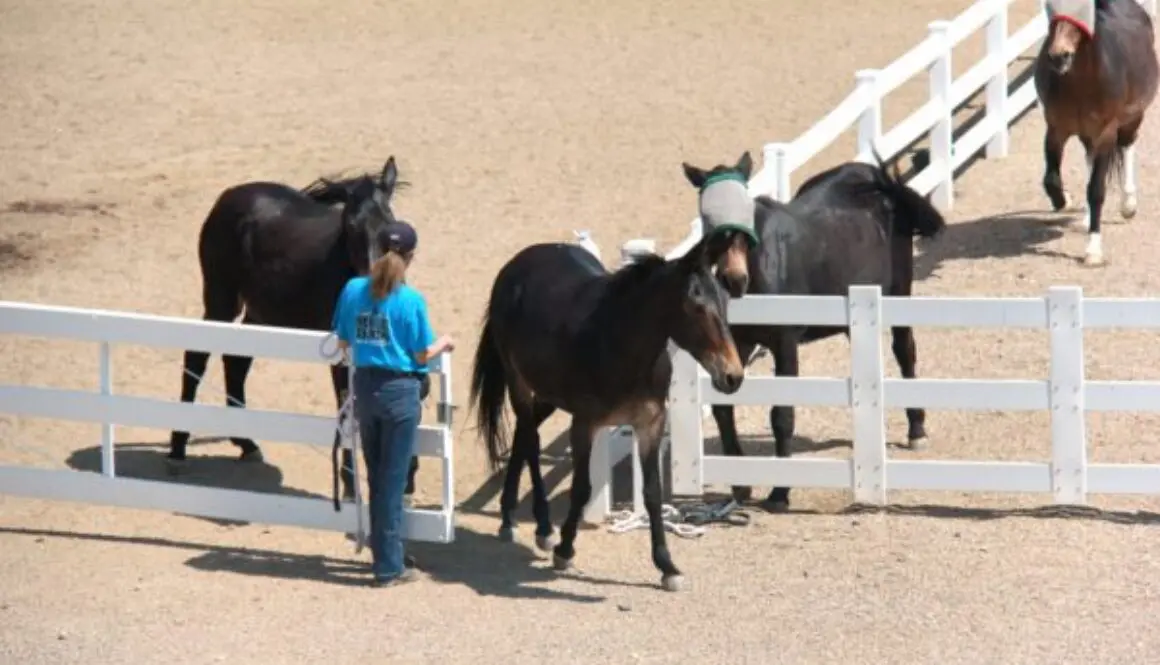
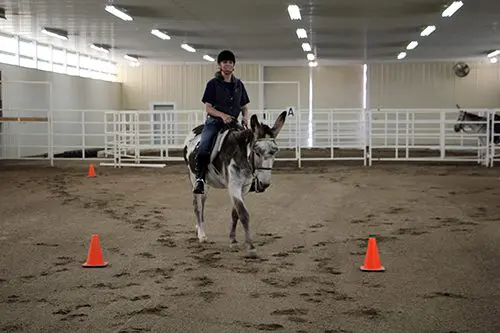
Then it’s walking IN SYNC back to the barn for turnout in the larger dry lot. They enter the stall, ladies first, and then they both turn around to allow me to remove their halters and to enjoy their last reward. I keep all my donkeys off grass most of the time. I find that they stay healthier and do not run the risk of getting obese that way. They do have large dry lots for turnout on pea gravel every day and a couple of acres of dirt pen for really stretching their legs every other day. They do get some grass when we go for walks, but do not seem to miss it most of the time. They are too busy playing and resting with each other…and looking forward to our next lesson TOGETHER!















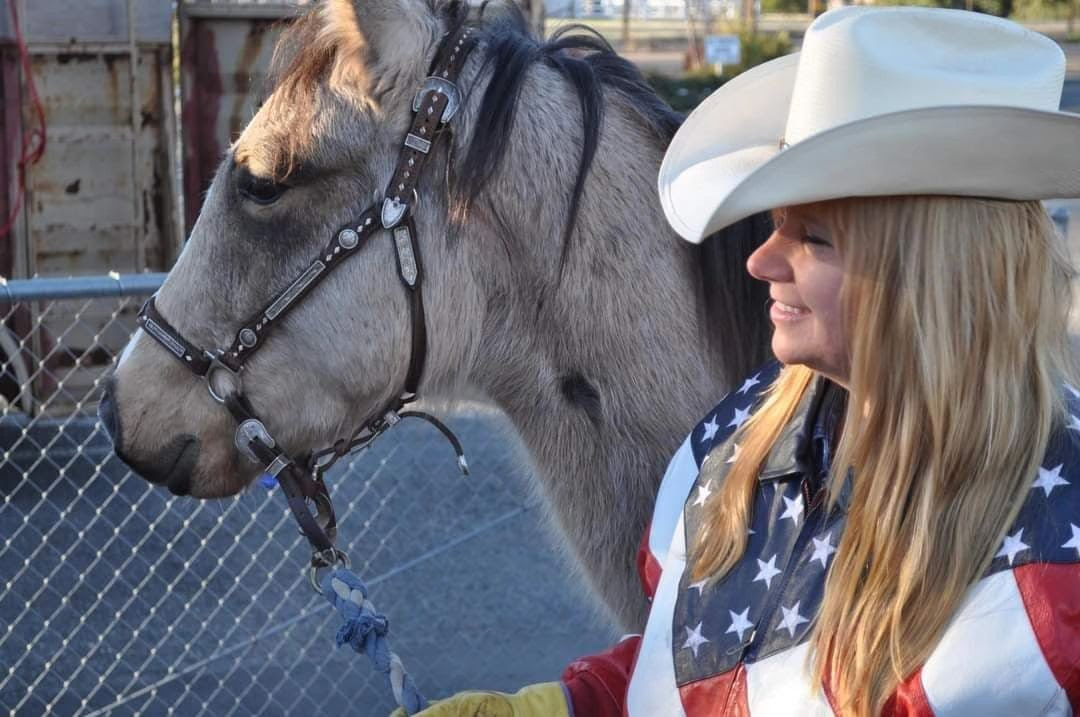


 By Meredith Hodges
 Instead, it’s healthier for him, both physically and mentally, to be active and maintained year-round. This does not mean you need to ride him three or four days a week throughout the winter. There are lots of other fun, diverse activities you can enjoy together that will adequately maintain his body condition while keeping him interested and happy.
 Since most inclement weather produces slippery ground surfaces, if your equine is to be used extensively, it is important that he have appropriate shoes on his feet during the slippery seasons. On strictly muddy or slippery surfaces, tapping and drilling studs into his shoes can help immensely in giving him added traction. If cared for properly, you can remove these studs when you don’t need them. If you get snow in your area, you may want to go with Borium shoes and rim pads. The Borium shoes supply good traction, while the rim pads prevent snow from balling up in your equine’s feet. I also suggest using splint boots on all four of his legs. This will protect against injury and give him added support and protection of his fetlock joints. Riding on the treacherous winter ground CAREFULLY can actually enhance core strength and postural balance.
 learn and practice without the added stress and anxiety of showing and other warm weather activities. But even if you want to forego the lessons, there are numerous stables that will rent the use of their indoor arenas for a nominal fee and there are places where you can trail ride through beautiful winter scenes.
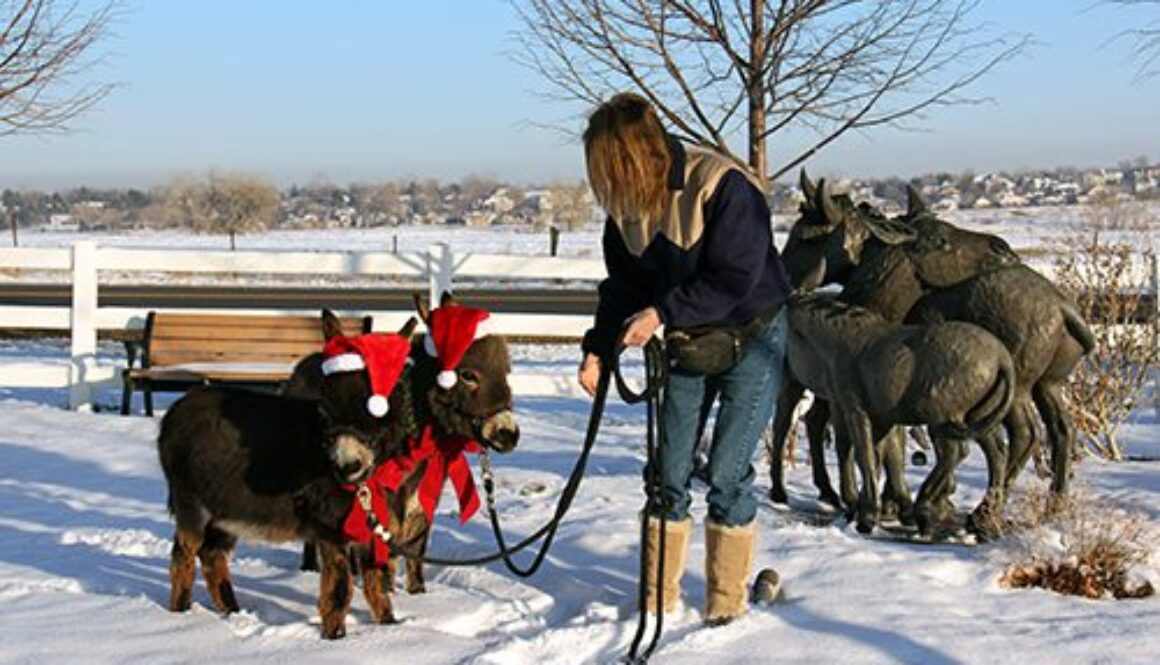
 Another great way to have fun with your equine is participating in winter games and holiday parades. Christmas is always a joyous time to bring your equine out of the barn. Consider decorating your equine, dressing up yourself and then riding or driving with friends and family in your local Christmas parade. This can be loads of fun!
 Before considering gifts for your family and friends, spend time getting to know their likes and dislikes. It would be better to find out if they even have any interest in live animals and then get them an appropriate book or a video about their interest. If they do show an interest in live animals, plan to spend time together so you can introduce them to the right way to feed, interact and maintain live animals. This approach will provide you all with the warmth and affection that you deserve. With the onset of computers and so much technology, people forget that you can literally travel the world through books and videos. You can learn to communicate better and enjoy deeper relationships. This will greatly expend horizons and offer brighter futures for everyone. This is a much more appropriate way to offer a suitable gift. Have a very Merry Christmas and a Happy New Year!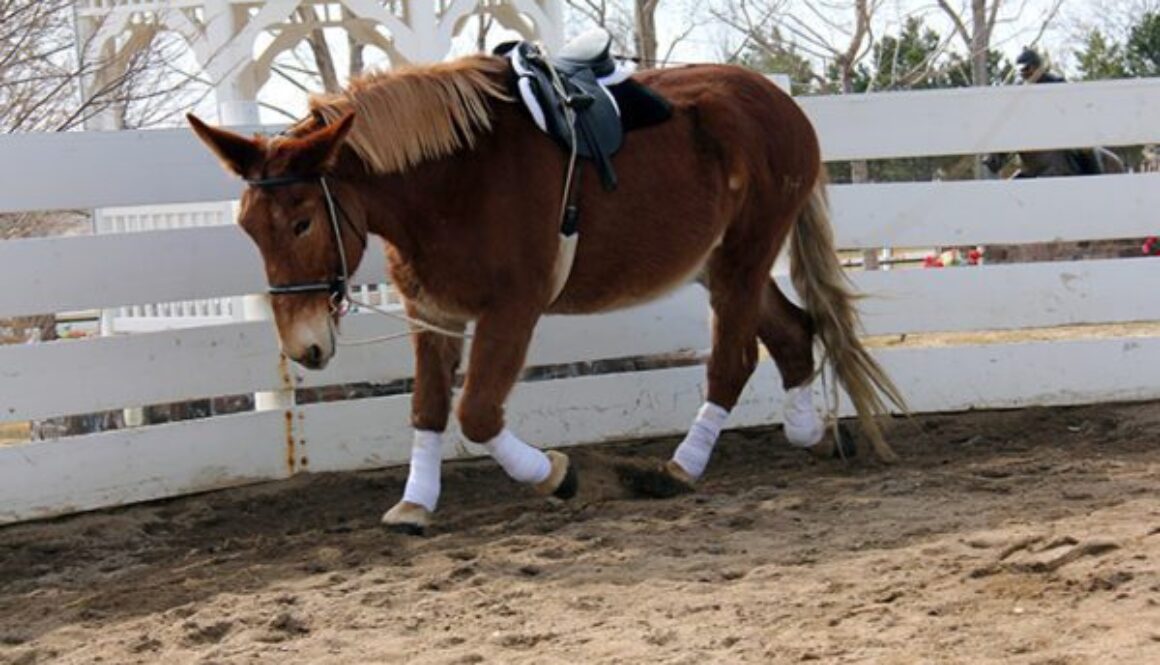
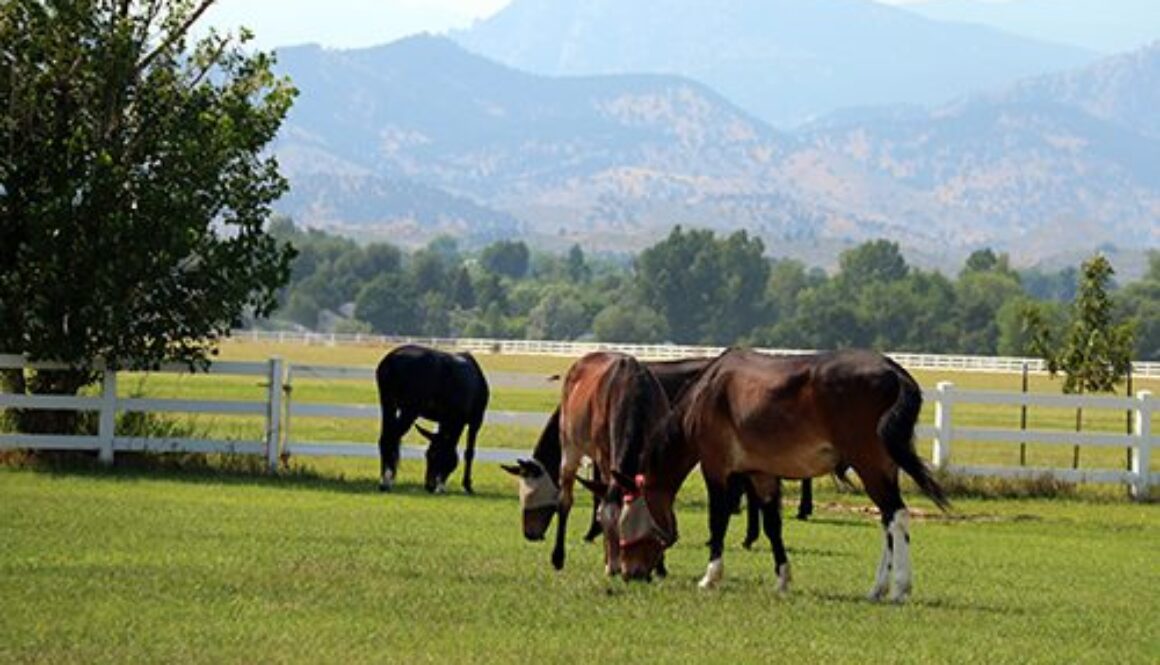
 So that prompted me to get really meticulous about what I did. That’s why I launched into what I did establishing the Loveland Longears Museum and Sculpture Park at Lucky Three Ranch as a 501 (c) 3. We had to develop a “mission statement” to make it legitimate. We did that to teach people, at risk-kids and younger children about the care, maintenance, handling and training of equines in general and not just mules…but, with the primary focus on mules. The focus being like that would ensure that my animals would be part of the 501 3 (c) 3 and would be guaranteed a place in the whole foundation. They would be taken care of!
 I hear from people every day that tell me they can’t find good grass hay for their animals. Mules and donkeys, being desert animals have to have a very specific diet or they can easily become obese and then you have all sorts of problems and vert bills up the ying-yang, if they don’t just die. It is really easy to mess up that program. The people that have been with me have been here for more than 20 years. We all operate as a team and not by how many hours are put in. Rather, each day is gauged by the tasks needed to be performed and we do not call it a day until the list is completed each day. We all pitch in to help each other when one person has more to do than the others. Each person has their own specific job description, but we all pitch in together when it is time to do the hay during the hay season.
 The two of us girls welcome the opportunity to get out of the office during hay season. The weather is always lovely and working together is a lot of just plain fun. Doing house and office work can get rather tedious when it is so repetitive each day throughout the year. We try to keep up morale by changing up the schedule every so often. There are a lot of things to do like answering the phone, answering peoples’ questions, taking orders, booking tours, distributing orders, keeping the book-keeping straight each day, making Social Media posts regularly, checking the websites connections, both the LTR website and the Jasper website, keeping up the inventory cards in the warehouse and updating all the records for the attorneys and accountants. We also celebrate birthdays
  with our fellow workers, including our remote graphics artist, videographers and with our JASPER MASCOT, Social Media and behind the scenes website help. It is important to keep a happy and enthusiastic crew!
 One cannot make any assumptions about what should happen upon your death after you are gone. If you don’t do the things as meticulously as I have done, anything can happen and your animals will suffer. It is better to have it all clearly laid out and in such a way that your designated recipients will be fully aware of what they are signing up for. You will need a clearly stated document about the way YOU care for your equine, so the recipient will know exactly what to do with your animal when they inherit it (How to feed (hay and oats mixes, worming, minerals, exercise, maintenance in a dry lot with limited turnout, social time, training expectations, etc.). This is critical for health of your mules and donkeys. Otherwise, you animals may not be cared for as you desire. Your assets will be at the mercy of other people’s opinions and desires. People can be very selfish in this way. People often believe that you can just turnout in a pasture and that is good enough…NOT! Mules and donkeys are very susceptible to obesity that will usually follow with founder and other things like ringbone and side bones. Poor management is generally due to owner laziness and misinformation that is freely passed around. Beware of advertising and markets techniques. They are not necessarily based in the overall welfare for your equine. Beware of dehydrated cubes and pellets, different oils, minerals, amounts and types of grains, treats, etc. I did my “field” research with 32 equines over a period of 40 years.
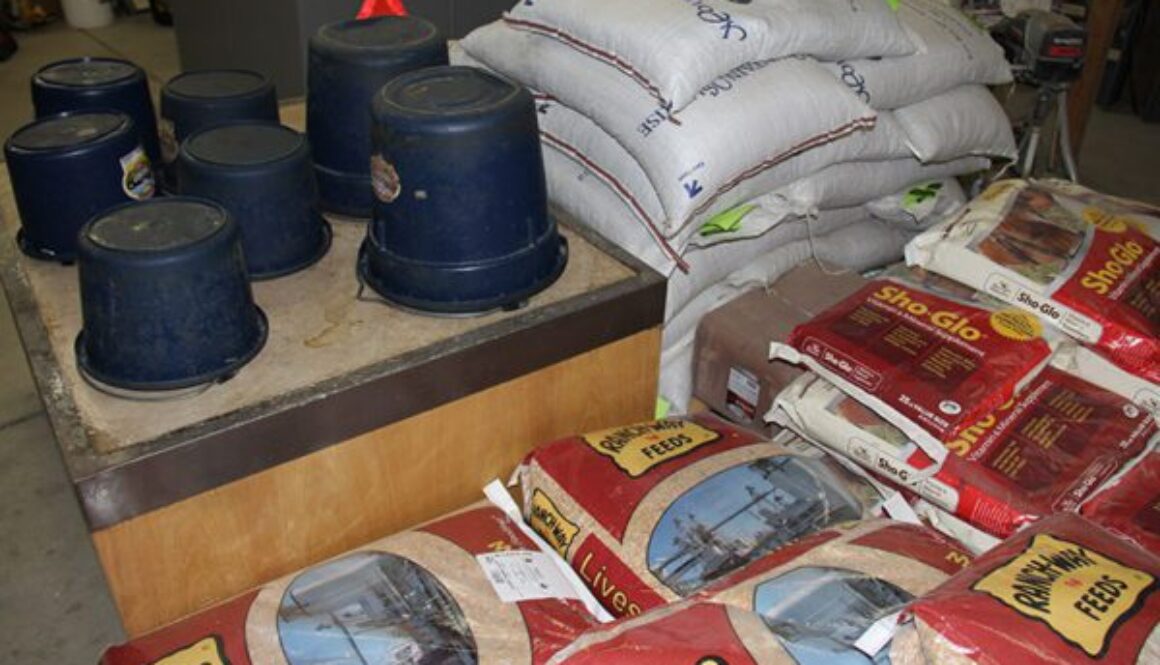

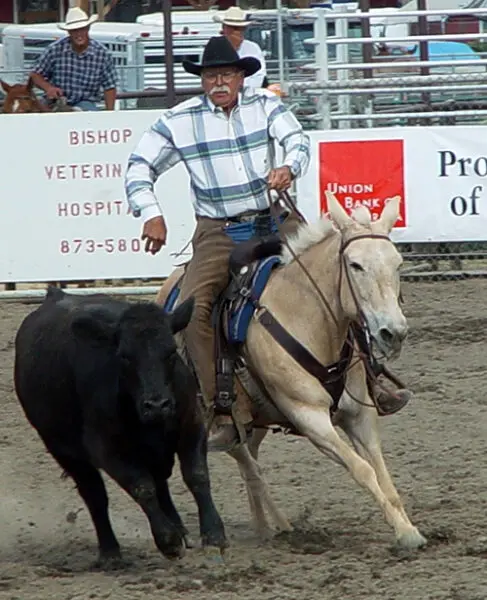
 The modern contemporary mule of the late 1970s has emerged as a fine saddle, driving and pack animal. No longer does he come from exclusively low grade mares. With the upgrading of mule breeding, the mule is a new, gentle and versatile animal capable of performing well in all forms of equine athletics. He can do cow work, work and pleasure driving, packing, jumping and is better suited for long trails, yet he still possesses all the traits that have made mules popular throughout the centuries: a willingness to work, an easy keeper, more resistance to parasites and disease, extremely surefooted and his indubitable intelligence that is often confused with stubbornness.
 particular kind of horse to match the desired ability. A mule out of any breed of horse will be stronger and more durable than the horse out of which he came.
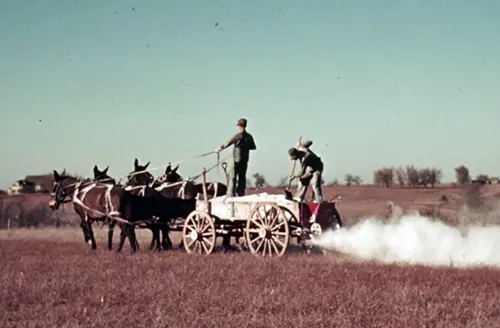
 With the coming of the industrial age, their uses were minimized and they were faced with the possibility of extinction in the march of progress. Today, through the persistent determination of mule enthusiasts, mules are once again emerging as a conceivable asset to our economy and a unique form of athletic achievement and entertainment.
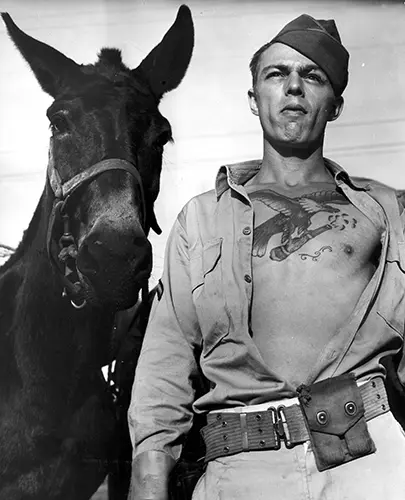 Even the army has conceded that mules could make their contribution to the economy through their use in mountain light infantry divisions. The only problem that arises is educating people on mule psychology so that they can train them properly.
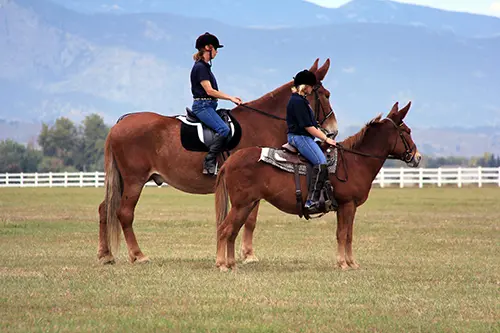 Yesterday’s mules sturdy and strong
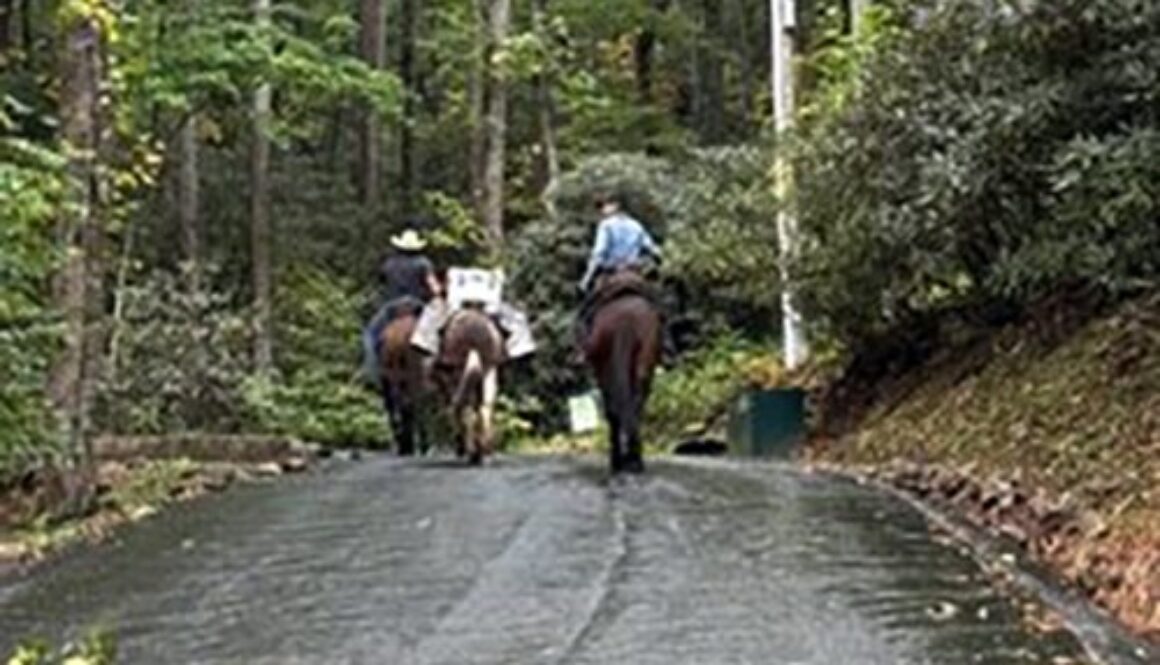
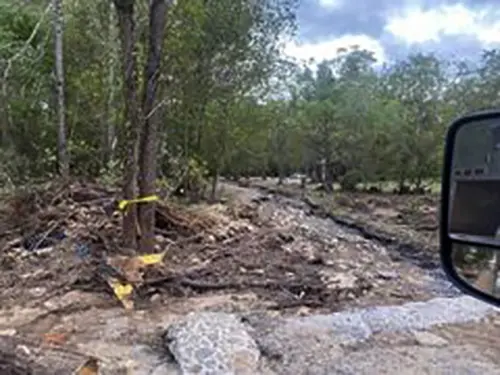 WEAVERVILLE, N.C. — After Helene isolated western North Carolina communities with landslides, flash flooding and road damage good Samaritans have had to find creative ways to bring in much-needed supplies.
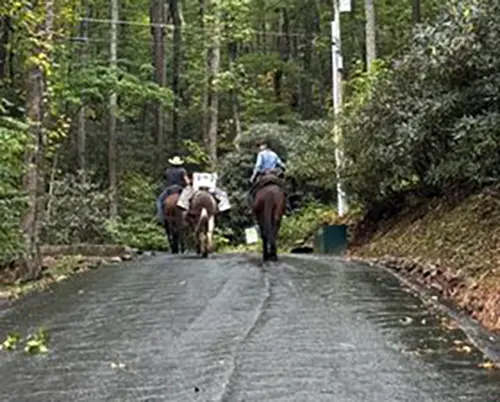 “We will be setting up a staging area and beginning to assist this afternoon,” they wrote on Monday, “and will be bringing up additional loads of supplies once mules are in place!”
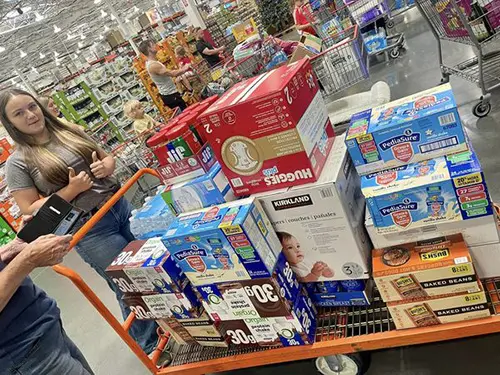 Mountain Mule Packer Ranch is based out of Mount Ulla, which is located between Lake Norman and Salisbury in North Carolina. They have been using their Facebook page to announce when they will be at the Food Lion, located at 11745 Statesville Blvd. in Cleveland, NC, to collect donations.
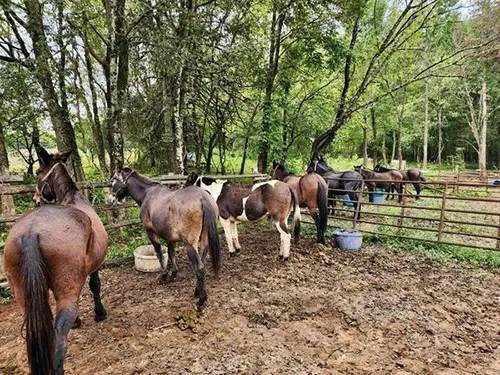 The Mountain Mule Packer Ranch partnered with the Cajun Navy, another group of civilian volunteers, to deliver insulin to a family on Monday, according to their Facebook posts.
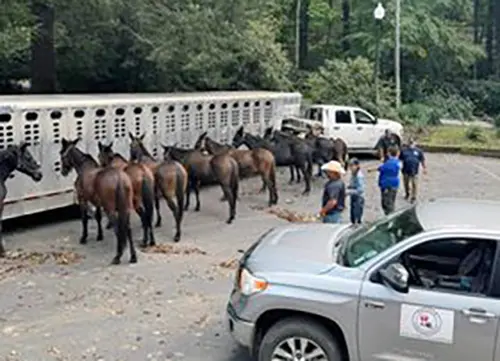 8:30am update 10/1/24 Mike and the mule team made it to their staging area in Montreat yesterday and have already been helpful to families in need! They will be doing all they can in Black Mountain today. Thankful to Five 11’s Livestock Hauling for offering help in hauling mules so we could bring more supplies up! And appreciate being able to help support Cajun Navy 2016 on their efforts as well!
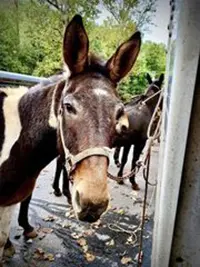 The team here at the ranch will be shopping for more supplies today, to restock them tomorrow! We appreciate the huge outpouring of requests on how to get supplies to us. Because of the conditions in the mountains and the way the team will be moving around, that is hard to coordinate. I will bring a trailer to the Food Lion Shopping Center this afternoon at approximately 4pm if there is anyone in the area that wants to add to the supplies we are bringing! Please let me know if this is something you’d like to do, and we can be there between 4-5pm today to collect what you have!! God bless you all, and thank you for keeping prayers lifted up!!