The Bureau of Land Management (BLM) is planning to authorize a 44,000-acre expansion of an open pit gold mine in Nevada. The massive expansion will negatively impact wild horses in four Herd Management Areas by significantly reducing their habitat and subjecting them to increased vehicle traffic, noise, and human activities in the project area. The mine will also consume massive amounts of water in an area where water is already scarce, and where the BLM often uses lack of water as an excuse to remove wild horses from public lands. The agency is seeking public comments on an Environmental Impact Statement for this project – get your comments in today by clicking below.
Last month marked the second anniversary of the signing of our cooperative agreement with the State of Nevada for the humane management (via PZP birth control) of the historic and beloved Virginia Range wild horses near Reno. This community-based program has been a success and exceeded our established target goals. The Virginia Range horses are challenged by habitat loss due to encroaching development in this fast-growing area of northern Nevada. The program’s goal is to reduce the removal of horses from the range by humanely slowing population growth rates and reducing population numbers over time. Read more about this exciting public/private partnership that is Keeping Wild Horses Wild in Nevada by clicking below.
Last week, we scored another major legal victory when the Ninth Circuit Court of Appeals upheld the dismissal of a lawsuit filed by the Nevada Association of Counties, the Nevada Farm Bureau and others seeking the removal of thousands of wild horses and burros from Nevada public lands. It was our third appellate court win in less than a year! The battle in federal court goes on, however, as wild horse opponents shift legal strategies in an attempt to force massive wild horse roundups. Read more about the ongoing battle and how you can help below.
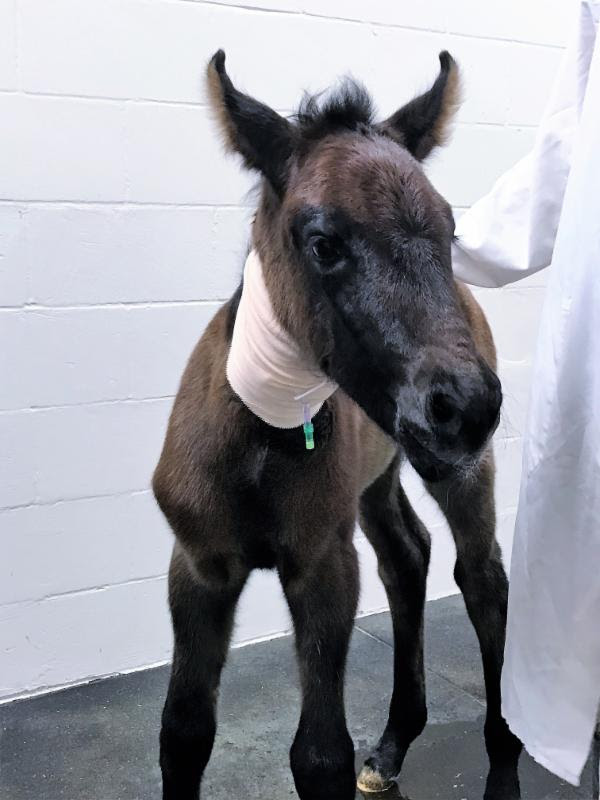
In the hustle and bustle of our busiest time of year, we have a critical case, an orphan filly that was not only rejected by mom, but reeling from the effects of mom’s rejection, malnourishment and selenium deficiency, topped of by stress of transport and dehydration. She needs your help!
We go the call yesterday (4/5), a plea for assistance with an orphaned foal who was just a few hours old. She had been rejected by mom and needed help.
So transport was arranged and off we went. She was about 4.5 hours away, but we met in the middle. Gosh, what a precious lil’ filly we met, but it’s been a really rough start! Unfortunately, she was very weak, and definitely in a fragile state. She plopped down on the ground to rest, so we layed her down in the back seat and hightailed it back to Loomis Basin Equine Medical Center (LBEMC) to check her out.
Turns out she looked better than she was. Her blood values were not good, and she was hospitalized.
Lots of attention and supportive measures were taken. A catheter was placed, blood drawn, and meds administered.
We left her looking fairly good and feeling hopeful.
But with foals, things can change quickly. A call at midnight informed us her blood values moving in wrong direction, and we were being prepared for not so good news by morning. HOWEVER, she was up and drinking milk replacer on her own, so that was good!
This morning, she was holding her own, but still quite sick. She was still getting up on her own and drinking her milk replacer with a good appetite. That offered some optimism to keep pushing forward. This afternoon, she was up, she was eating, and her blood levels were finally trending in the right direction, and the 9p update is things are still moving in the right direction.
She wants to live! She’s a FIGHTER and AAE wants to support her as she continues her battle.
Although she’s not out of the woods, the docs think she’s moving in the right direction. It likely she’s dealing with the results of being rejected by mom, and secondary effects resulting from mom’s malnourishment and selenium deficiency, as well as stressors from long transport and dehydration. It’s a lot for any young, new life to endure. Docs are hopeful that with 5 +/- days of hospitalization and supportive care, she has a good shot at a relatively normal life. However, there is a chance there will be some long lasting effects, but it’s too early to know. We need a few more days to have a better picture, but so far, the trend is good.
A BIG THANK YOU to the docs at LBEMC for their quick actions and the outstanding care provided for this little filly. We are all hoping for continued progress.
Without hospitalization, she has little chance of survival at this point. The unfortunate reality is that we are looking at a big expense for this one little life, well over $5,000 to get there. She needs your help.
If our big community can help in little bits, the hit isn’t so hard to any one, and for those that need, AAE is a 501(c)(3), so donations are tax deductible.
No donation is too small. If everyone that can will help just a little, we can give this precious girl a chance to live a full life.
Some folks may think because of the costs that euthanasia is the better choice. Fair enough, and if you feel that way, you are under no obligation to donate. But if you are like many others and believe every life counts as long as there’s a good chance for a good quality of life, please help if you can. Because this little girl has a good chance for a good quality of life, we think she deserves the opportunity. This girl wants to live!
This little girl thanks YOU for caring enough to help her live.
“By saving the life of one horse, we may not be changing the world, but we are changing the world for that one horse.” – Author Unknown
Please note, should there be excess funds, they will apply to future AAE veterinary needs.
The UHC welcomes two new members, the Retired Racehorse Project and Palmetto Carriage Works. Each will be featured in future editions of the UHC Roundup. Member organizations help make programmatic decisions in the areas of education, programs, funding, and visibility.
Photo: Courtesy of the American Society for the Prevention of Cruelty to Animals
Veterinarians must know how to properly document findings and avoid destroying evidence while still putting the horse’s welfare first.
How a veterinarian goes about examining and treating allegedly abused horses can mean the difference between a successful or unsuccessful case against the owner. He or she must know how to properly document all findings and avoid destroying evidence while still putting the horse’s welfare first.
Nicole Eller, DVM, a Minnesota-based field shelter veterinarian with the American Society for the Prevention of Cruelty to Animals’ Field Investigations and Response team, described the veterinarian’s unique role in animal crime scene investigations during her presentation at the 2016 American Association of Equine Practitioners Convention, held Dec. 3-7 in Orlando, Florida.
First, she reviewed the basics of evidence identification, collection, and preservation. “Evidence is generally defined as anything that can demonstrate or disprove a fact in contention,” said Eller. In equine abuse investigations, this can include anything from photos of a horse’s injuries or body condition to the moldy hay in his feeder.
Veterinarians must view these cases through the lens of someone looking for and collecting evidence. As the equine expert, the veterinarian will recognize key pieces of evidence that other investigators might overlook.
Eller then described the four phases of processing an animal crime scene.
Phase 1: Document the condition of the facility or farm upon arrival
The area will most likely have already been secured by law enforcement and documented via photos and video by the time the veterinarian arrives on the scene.
Phase 2: Document each animal and its environment
The veterinarian will conduct what Eller called “critical triage” during the initial walk-through of the property.
“Critical triage is a rapid visual sorting of animals for treatment priority,” she said. “It’s done to identify animals in immediate need of medical care.”
The practitioner should classify horses needing immediate care as “red animals.” Eller said this might include horses with open fractures, seizures, hemorrhaging, etc.
“Document everything as fast as possible before treating, because the live animal is evidence, and treatment alters evidence,” she said.
After caring for the red animals, Eller said the veterinarian should perform a second walk-through and color-code the remaining animals as yellow (in need of treatment before transport), green (ready for transport), or blue (exhibiting signs of infectious disease).
“Given how horses are typically housed, if one has infectious disease, they may all have it,” said Eller. “But if a few are obviously infectious, you would want to handle them last and have an isolation area set up at the clinic or place where the horses are being transported.”
Once the horses have been documented and tended to, then it’s time to document their living conditions and environment. “Demonstrate how that environment may have directly affected the animal,” she said, including taking photographs or directing the person who is.
Any dead horses, carcasses, or skeletal remains on the property must also be catalogued as physical evidence. Once all horses have been removed from the property, the veterinarian should perform a more thorough documentation of the living space. Note the dimensions of each enclosure or shelter as well as how many horses shared each space, said Eller. Take mid-range and close-up photos of “any receptacles, presence or lack of good and water, quality of food and water, shelter and fence construction and possible hazards, feces, and urine,” she added.
The report from Julie Girling MEP sets out to stop the abuse of horses across Europe and ensure their welfare is catered for.
Major steps to halt the abuse and cruel exploitation of horses and donkeys, set out in a report from British MEP Julie Girling, were approved this week by a key committee of the European Parliament.
The package of measures for equine welfare received the approval of the European Parliament’s Agriculture and Rural Affairs Committee on Wednesday (January 25).
“We are on our way to a better deal for donkeys and horses. Cruelty and neglect is a problem across the continent and we must tackle it,” Mrs Girling declared.
Julie Girling, Conservative MEP for the South West and Gibraltar
The report sets out to stop the abuse of horses across Europe and ensure their welfare is catered for, whether they are used in farming or sport, for breeding or in tourism and entertainment.
Measures include:
Comprehensive guides on horse and donkey care, including responsible breeding and end of life care;
Better information for tourists on how animals are treated by attractions such as rides and sideshows;
Increased inspections of farms;
A pilot project awarding funding to farms committed to good welfare practices;
A shorter maximum journey time for all movements of horses for slaughter.
Mrs Girling, Conservative MEP for the South West and Gibraltar, said: “Horses and humans have been best friends for thousands of years.
“Responsible ownership and care of horses should always be expected as a minimum but given the number of health and welfare problems faced by Europe’s horses and donkeys today, it is clear that it is too often neglected. Action is therefore not only necessary, but also overdue.”
She continued: “This is an important first step to ensuring fully that welfare is sufficiently upheld. The report does seek additional legislation. I want to improve and strengthen the rules that already exist and to tackle ignorance through putting together guidance based on best practice across Europe.
“It is in everyone’s interest for the animals involved in these businesses to be healthy and productive. Many of the measures I propose are simple to introduce but would make a big difference to both the welfare of equines and their economic potential. It is a win-win for all involved.”
The measures include better information for tourists on how animals are treated by attractions
The EU equine sector is worth more than £80 billion a year and the equestrian sports industry alone supports 900,000 jobs, often in rural areas.
The report is expected to be considered by a full session of the European Parliament in March. If approved, it will be passed to the European Commission with a recommendation for action.
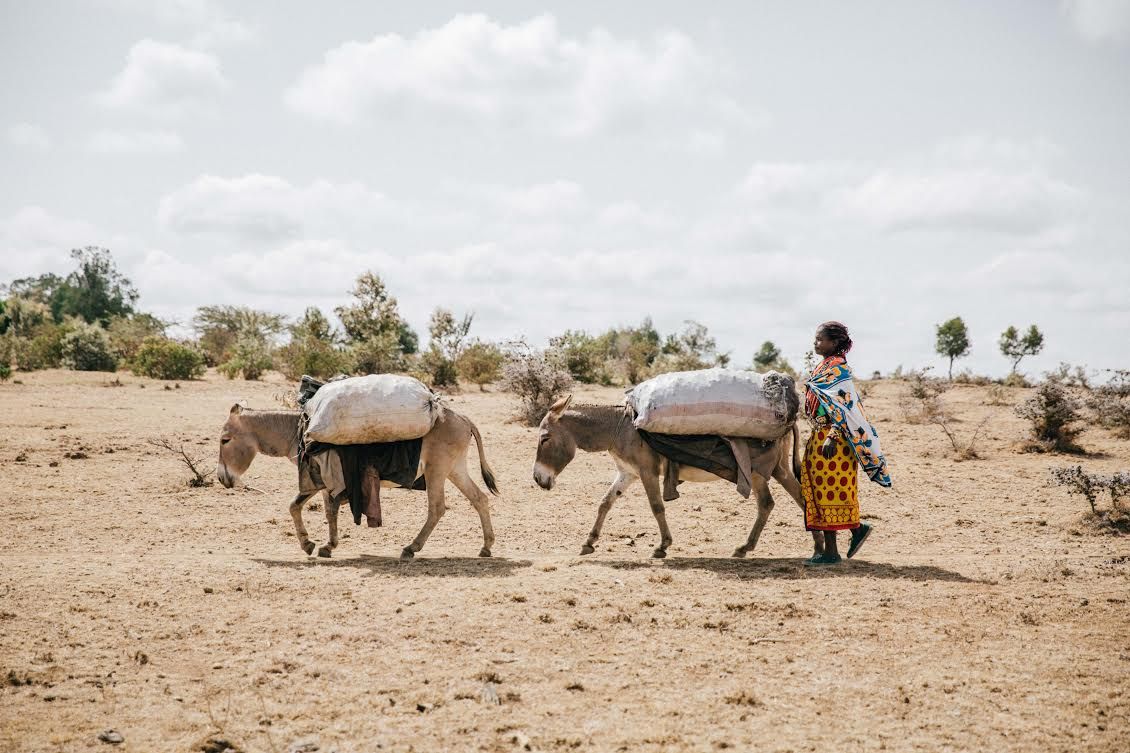
There are 100 million working horses, donkeys and mules in the world. They are the tractors, taxis and engines that power developing economies, working in the construction industry, carrying food and water, and transporting goods to market. It’s estimated that each animal can support a family of six, so around 600 million people’s lives are supported by a working equine – 8% of the world’s population. Without healthy working horses, donkeys and mules, they wouldn’t be able to put food on their tables, send their children to school or build better futures for themselves and their families. However, it’s estimated that more than half of these animals suffer from exhaustion, dehydration and malnutrition as a result of excessive workloads and limited animal health services
Brooke is an international charity that protects and improves the lives of working equines. The UK based charity works to deliver significant and lasting change, even in some of the world’s most challenging areas. Their teams concentrate on training and support for owners of owners and handlers, as well as local vets, farriers, harness makers and animal traders to improve standards of care. They operate in 11 different countries, and fund small projects in others. Brooke also conducts research, and works with policy makers to make overarching changes to the way governments tackle working equine welfare.
One of the countries that Brooke works in is Kenya, a country with almost 2 million donkeys. Around 50% of people live below the poverty line, so these animals support many people’s lives in both urban and rural areas, transporting food and fuels. Brooke has been working through local partners in the country since 2011, and opened an office in Nairobi in 2013, with programmes stretching from Turkana County in the North to Kajiado in the South. The work focusses on bringing communities together to make donkey welfare a group priority, with a financial focus.
The Kamara Self Help group in a rural location near the town of Molo, Nakuru was set up with Brooke and Farm Systems Kenya (FSK). This group was registered in 2008, with the original aim that group members would help each other through a group micro-credit (“Merry-Go-Round”) scheme. Group savings are lent out to members at low rates of interest, allowing them to buy donkeys and other items. There are around 300 members, organized into four separate groups. Each member in the group has at least two donkeys, and some have up to eight.
FSK members visit the group once a month, implementing training sessions according to a curriculum they have developed. These cover basic animal care, hygiene and first aid as well as handling skills. They also address common myths about how to look after donkeys. For example, people have little knowledge of how to prevent disease, and branding and ear cutting for identification is common.
The members are mostly women who in many cases are the main breadwinners in their family. Although as donkey owners, they are not the worst-off section of society, by UK standards they would be considered very poor. They earn money by collecting firewood from a forest in the area, and then selling it. A timber company fells the trees, allowing the women to harvest the branches for a small monthly fee, which are then carried back by the donkeys. The women have to walk an 18 mile round trip each day that can take up to seven hours, before taking into account the hours of work they need to do when they reach the forest. They do this six days a week, earning up to £3.50 per day for this work.
These earnings cover family expenditure including food, school fees, medical expenses, clothing, savings, and donkey-related expenses including de-worming, hoof trimming and other treatments. They also carry out small scale farming, growing peas, carrots and cabbages to supplement their income. One group member explained that she has just half an acre of land, so the income from her donkey is essential to her family.
In fact, several of the group members explained that the income they get from work with their donkeys was the only thing that allowed them to pay for their children’s education. One said that she had used it to educate her son, who is now studying to be a vet.
According to FSK staff, the women have come a long way in developing their knowledge of donkey welfare and in adopting practices that promote this. They mentioned for instance that group members are now much more likely to seek out professional treatment from vets, and that they have organized themselves to bring all their donkeys together for a day for hoof trimming and de-worming. The meeting was also attended by a farrier and two vets who now work regularly with this group.
Because the donkeys are so essential to people’s livelihoods, groups like this play a vital role in providing a form of insurance to make sure people don’t struggle if a donkey dies or needs medical treatment.
Brooke recently hit a key milestone, now reaching over two million working horses, donkeys and mules each year. In 2016 they also launched a new global strategy to reach even more animals, provide better support for owners, and create lasting change.
“You don’t have to be very bright to see if an animal looks like it’s on Death Row,” says Jeremy Hulme, Chief Executive of animal welfare charity SPANA. “If you’re looking at a horse or mule, and it’s head is down, it’s looking thin and its bones are sticking out, it’s obviously not right. If it’s limping, you know it’s got problems.”
Most savvy travelers are now clued up on how animal experiences, from elephant rides to tiger temples, might be harmful to animals. Less attention is paid, though, to horses, donkeys, mules and camels put to work in the tourism industry, which is why SPANA has launched a Holiday Hooves campaign.
Thousands of animals are used in travel experiences, from camel rides and horse-drawn carriages to mules carrying gear on expeditions. The animals are often essential to their owners’ livelihoods, but in some cases are cruelly treated, neglected or kept in poor conditions.
“We have no problem with animals working, as long as they are looked after well,” says Hulme (pictured, right). “They need to be well fed, well looked after and not cruelly treated.”
Horse trekking is just one popular activity where travelers should look out for the state the animals are in. “If someone knows about horses, they can tell from a distance if the animals look good or not. That’s the critical thing.
“You should only use an animal that looks well fed, healthy, fit and happy. You can often tell by the way it looks at you, whether its ears are sharp, whether its coat is shiny, or whether it looks dull, lethargic, thin and bony. You don’t have to be a vet to know whether an animal looks good or not.”
“Maybe you turn up to a group tour and there are nine horses that look fine and one that doesn’t look well,” Hulme continues. “I know people don’t like to be confrontational, but they should have the confidence to say to their tour guide, “Hey, that horse doesn’t look fit enough to be ridden.”
Hulme also suggests checking out the state of the stables and gear, if possible. “Those things will reflect on the state of the animal itself. It will still be dirty if it’s been lying down in feces at night, or soaking wet if it’s been out in the rain all night. You’ll be able to see that, and you’ll be able to see the quality of the gear, whether the saddle is falling to pieces or the harness is held together with a piece of wire.”
Check out animals’ stables (Dreamstime)
SPANA operate currently in nine countries, including Morocco, Ethiopia, Zimbabwe and Jordan, providing free veterinary treatment to working animals, as well as running education, training, outreach projects and emergency treatment in other parts of the world.
It’s not just horses SPANA look out for. “In Petra in Jordan, for example, there are boys that run donkey rides. Some might be fine, but we should be intelligent enough to say: “No, that’s not right for big adults to sit on a little donkey.” We need to have a bit of common sense.”
Children enjoying donkey rides (Dreamstime)
Travelers should also check out the condition of any camels they plan to ride on, Hulme suggests. “I personally love camels, but they need to be looked after like any other animal.”
How do you tell if a camel, famous for looking grumpy, is ‘happy’? “Perhaps you wouldn’t be able to tell if it’s happy or not. But you can see if they are thin, or their humps have disappeared and their ribs are sticking out. The same common sense rules apply. People can see if it can hardly stand.”
Travelers riding a camel (Dreamstime)
On hiking trips and trekking expeditions, horses, mules and other animals are often loaded – or overloaded – with food supplies and travelers’ luggage. At what point does that become a problem?
“Have a look at the animal’s back and sides before they put the stuff on,” Hulme suggests. “You will see if the harness is bad and has been rubbing. Some animals have open wounds, so it’s an easy thing to check. Then check the general condition. You can see whether it’s a really thin animal, or if it looks well fed and strong. That’s important. And when it’s got the stuff loaded on, you can see if they’re hugely overloaded or not.
Tourist taking the easy way uphill (Dreamstime)
“Mules are strong and noble creatures. I’m really fond of them. They can happily carry the weight of a man. If it’s carrying a couple of backpacks, I’m sure they would cope well. But if they’re trying to carry half a ton of cement, that’s different. You can look at how readily they carry the weight. Does the owner keep beating it to make it move? Is it limping? If it is, say something to the owner or your guide.”
According to a SPANA survey, 28 per cent of British adults who’ve been on holiday abroad have taken part in animal activities like camel rides or horse-drawn carriage trips, where they’ve been concerned for the welfare of the animals involved.
SPANA’s produced a Holiday Hooves guide to help people choose responsible animal tour providers and to advise people on what to do if they see animals being mistreated abroad, the campaign backed by Simon Reeve.
Simon Reeves who’s backed the Holiday Hooves campaign (SPANA)
“Traveling around the developing world, I’ve seen for myself how families rely on working animals for their livelihoods,” says Reeve. “But a life of work shouldn’t mean a life of suffering. These animals work hard and they deserve to be treated with respect and compassion.”
The Holiday Hooves campaign, says Reeve, “is about helping holiday-makers to make informed choices, recognize healthy animals and know what to do if they see mistreatment. It’s also about encouraging tour operators, animal owners and governments around the world to take the issue seriously and – with the public’s support – sending a message that only the highest standards of animal health and welfare are acceptable.”
A happy-looking camel? (Dreamstime)
SPANA’S survey also found that over one in five British adults have seen animals being mistreated when on holiday, but over three quarters of them made no attempt to report the incident.
In the countries where they work, Hulme suggests contacting SPANA if they see signs of mistreatment or neglect. Elsewhere, he suggests using positive pressure, that travelers should praise, use, promote and re-use companies they felt treated animals well, and report negative experiences to local tour operators and hotels, so they don’t use the bad companies.
Horse trekking in the desert (Dreamstime)
“People should go to the tour operator and say, “I’m really disappointed. We went there to have a ride and the horses looked awful. No one is going to use them, so it’s bad for everybody. It’s bad for the owners who wont get any income. It’s bad for the horses because they don’t get fed properly. It’s bad for you guys because it looks bad that you’ve recommend them.” Tour operators will be able to speak the language and try to get something sorted out.”
Above all, Hulme says, it’s about travelers being aware and using common sense. People shouldn’t be put off or stop taking part in thee kind of experiences, Hulme argues. “We need to realize that a lot of these animals are working in countries, like Egypt, where there’s been a drop in tourism and there’s less money. People there absolutely depend on these animals to make a living. We are absolutely not saying, “Don’t use these animals”. We’re just saying, “Use common sense and use a good company.”
In a groundbreaking move, Australian racing authorities have declared a nation-wide ban on the use of whips in harness racing.
Harness Racing Australia (HRA) announced Dec. 10 that no whip use will be tolerated on any of its tracks as of September 2017, making it the second country worldwide to ban whips in harness racing (Norway was the first to implement a ban).
However, an important distinction is that the Norwegian ban came down from a government decision, where as in Australia, the interdiction results from a decision by the national racing authority itself, a leading equitation scientist said.
“In Norway, the move was triggered by animal welfare legislation, but the HRA announcement represents the first time a racing authority has taken the lead and voluntarily walked away from the whip,” said Paul McGreevy, BVSc, PhD, MRCVS, MACVS (Animal Welfare), professor of animal behavior and animal welfare science at the University of Sydney.
Starting Sept. 1, 2017, HRA will no longer allow whips in racing or training, a decision that “was not taken lightly, but was made on our own initiative because we believe it is the right decision at the right time,” said HRA Chairman Geoff Want.
“We have been moving down this path for six years by limiting (whip) use with a strong focus on health and welfare of horses,” he said. “We see the ban as a vital way of demonstrating our responsibility as an industry, and to earning and maintaining the social acceptance and sustainability of harness racing.”
Their thought processes included a recognition of the fact that whips have not actually made horses run faster, McGreevy added. “The HRA announcement is a win for the sport and for horse welfare. It comes as industry figures show that, even though whip use has been increasingly limited, race times have been improving,” he stated in an online commentary.
This could be related to simple basics of equitation science—negative reinforcement and habituation, he told The Horse. If horses are whipped, then go faster, then are whipped again, they could quickly learn that going faster doesn’t make the whipping stop.
“The decision is welcome news,” McGreevy said. “The HRA has recognized that you can—and should—have an even playing field without whipping tired horses in the name of sport.
“This is the prime example of what can be achieved for animal welfare when the industry wakes up and smells the coffee and works with welfare organizations to arrive at decisions that are good for both the industry and animal welfare.”
While the decision is a victory for trotting and pacing horses in Australia, whips remain allowed in Thoroughbred racing, McGreevy added. But, he added, “the Thoroughbred racing industry is presumably feeling a lot more pressure than it did before because of this groundbreaking gesture in the name of animal welfare.”
A group of equine advocates in Louisiana have filed a federal lawsuit to halt the Army’s plan to remove estray horses that roam property at Fort Polk, in Vernon Parish, Louisiana, and the Kisatchie National Forest, which spans seven central and northern Louisiana parishes.
Last year, the Army issued a public notice of intend to conduct an environmental assessment in advance of a proposed action to remove the so-called “trespass horses” at Fort Polk. In April the Army released the final assessment, which stated that, due to herd growth, the horses interfered with Army training operations at the base and in the national forest and presented a safety concern to nearby communities.
On Dec. 14, the Pegasus Equine Guardian Association (PEGA) filed a lawsuit asking the court to prevent the Army from removing the horses on grounds that the animals had roamed the base and national forest property since the 1600s, and that the removal plan threatens the horses’ long-term survival.
“The Army’s plan sets a dangerous precedent for future viability of these unique horses,” said Amy Hanchey, PEGA president. “The unique herds of truly wild horses are of value both environmentally and culturally, especially to the inhabitants of the area, but also to all Americans. They should be preserved and protected.”
Meanwhile, Lieutenant General (Ret.) Russel Honoré, a Louisiana native who served in the Army for more than 30 years, said the horses are part of the region’s ecosystem.
“They were here before we got here and we just have to figure out how we’re going to deal with that,” he said.
Kim Reischling, information strategies officer for the Fort Polk Public Affairs Office, said Fort Polk’s Commander was aware of the lawsuit, and that the right to file such litigation is a critical part of Americans’ freedom.
“Everyone is entitled to due process and we stand behind that right,” Reischling said. “We shall follow the letter of the law.”
Equine charity Brooke has met its goal of reaching two million working horses, donkeys and mules in a single year.
The ambitious goal to reach this vast number of working horses and donkeys to relieve their suffering and improve welfare through training, research and treatment was set almost six years ago.
It is estimated that at least 100 million equines are supporting more than 600 million people in the developing world. The majority of those animals are suffering from exhaustion, dehydration, malnourishment, crippling injuries, lameness, and/or contagious diseases, nearly all of which can be prevented with proper training for their owners.
Measuring the impact of its work is a key focus for Brooke. In 2016, in Nepalese brick kilns where Brooke works the number of animals with eye problems fell by 42%. In Brooke projects in Nicaragua the number of severely underweight animals was reduced by 31% and Brooke Pakistan reduced by 16% the number of animals in their coal mine projects with severe wounds. In the UK, Brooke now has 30 community fundraising groups passionate about raising money for the cause, and almost 10,000 new supporters have jumped on board this year alone.
“Reaching two million horses, donkeys and mules in a year is one of our proudest achievements,” said Chief executive Petra Ingram said.
“We’re so grateful to our donors for enabling us to offer support to so many animals. This success paves the way for the future of Brooke. By 2021 we want to reach even more working horses, donkeys and mules in the greatest need. And we want to ensure that Brooke makes a lasting difference to animals’ lives – so they continue to benefit for generations to come.”
US donors had also contributed to the year’s success, through its American fundraising affiliate Brooke USA.
Brooke USA Chairman Dr David Jones said the organisation would rely on its donors in coming years “as we strive to expand and reach our next goal of five million animals each year by 2021.”
In a huge milestone for Brooke’s global animal welfare and advocacy work, the World Organisation for Animal Health (OIE) announced this year the first set of welfare standards for working horses, donkey and mules. Furthermore contribution of working equines to food security was officially recognised by the UN in livestock recommendations formally endorsed by the Committee on World Food Security (CFS).
“This means that the needs of countless horses, donkeys and mules who have laboured for so long without recognition can no longer be ignored. They’re on the international agenda – giving Brooke a hard-won opportunity to reach more of the world’s 100 million working equines than ever before,” Ingram said.
Heralding this new chapter, Brooke launched its new brand in 2016, including the new strapline “Action for working horses and donkeys” to create instant understanding of the charity’s work and the role of animals in the everyday life in a world where fewer than 20% of people have access to a motor vehicle.
Brooke currently works primarily India, Nepal, Pakistan, Afghanistan, Kenya, Egypt, Ethiopia, Senegal, Guatemala, Nicaragua, and has pilot projects in several other developing countries.
Brooke appointed five new trustees including three from countries where it works, helping to bring it closer to the communities that rely on working animals.
Brooke’s new overseas trustees are CEO of Change Alliance in India, Belinda Bennett, CEO of Emerge Africa Ed Rege, based in Kenya, and Cheikh Ly, from Senegal, a veterinary school full tenure professor. The UK trustees are Graeme Cooke, the UK’s Deputy Chief Veterinary Officer and former Veterinary Director of the World Governing body of Horse Sport (FEI) and Sarah Arnold, a specialist trust and estates solicitor.
It’s Thursday, and Matt and I are finally headed home for a break. We are hoping to celebrate Christmas with our family. We have precious cargo with us once again, and Circle Bear, Princess and Leeanna are all special needs babies.
Circle Bear, shown above, was severely underweight and barely hanging on. The severe weather is extremely hard on these little ones and he was by himself. We don’t know where Mom is, but it was life and death for him so we brought him in. He has pneumonia, so please send lots of prayers.
Princess is on the left, and she is recovering from a coyote attack. I know all of us with horse kids have to worry about those beautiful little hunters. It is so hard as the coyotes are doing what comes naturally, but they do not mix well with baby horses. Princess is lucky, as her injuries could have been much worse, and she is hanging in there. She also has a cold and is feeling quite poorly.
Leeanna also has pneumonia. This winter has been brutal, and she also is severely underweight. Due to the severity of the weather, we made a temporary nursery inside the mobile home we were staying in.
The vet is hopeful they will recover, and they have been on meds and we are doing everything we can. I am so excited to get them home and into our nursery. These babies need lots and lots of prayers.
We are heading back to South Dakota after the New Year. As of now we are at the limit of 270 horses allowed to be adopted out per the court order. Matt and I still have to pick up ones that we have adopted but not yet brought home.
On a sad note, Princess Big Girl passed away. She was in labor, (yes she was pregnant and I cannot believe anyone would have bred her. arghhh). She was doing well, all her tests were good and the vet was giving her a bit of peace and quiet. He returned and she was gone. Later that night Lee had a dream she said was the best and saddest ever. Princess and her baby came to Lee and told her how sorry they were to leave, but because Lee loved her so much she could go, and that they would be waiting for her and see her again.
Due to the severity of Lee’s burns, there is a need for another therapy horse asap. Elaine Nash and Fleet of Angels have come up with several options, and I told Lee that Big Girl was sending her a new horse to do her stretches with so she wouldn’t feel guilty about loving a new horse.
Matt took the last load of horses to NV and on his way back the front end of the truck had some serious issues. Another $5,000 repair bill, but she is running perfectly and once again, God made sure we were in a safe place. :)
It’s been an intense year and I want to thank each and every one of you for being part of Chilly Pepper – Miracle Mustang. Thank you and God bless!
Where to begin. Matt and I were supposed to head back to NV together to take horses home, but the reality was I needed to stay so we could load out horses as time was running out. I am glad I stayed, as we have been successful in getting horse kids out, and every single one of them is a life saved.
The horses were scheduled to be taken to auction today and tomorrow and at the last minute we were given more time to keep up the adoptions. So I get to go home for Christmas but have been scheduled to be back sorting and loading up horses after the first of the new year.
Since my last update, the truck was in the shop for a new water pump & repairs to the tune of $1200 +. Matt left about a week ago to head back to NV and bring a load of horses to Chilly Pepper. While on his way back this morning, he heard some crunching and grinding noises, so he is once again sitting in the shop waiting for the truck to be repaired. Praying it won’t be too spendy, but we need it to be in good condition to safely tow the thousands of miles we are running. To date we have about 10,000 miles just on the ISPMB horses between running back and forth (Matt is on his 4th trip) and delivering some of the horses to their new homes. Unfortunately, we are seriously going to need a newer truck at some point. We have about 250,000 actual miles on this one, and she has been working hard for the horses. But prayers are much appreciated for safe travel.
We are a little over half way to meeting the $10,000 challenge. So many folks are helping to make sure we save as many lives as we can. Every penny is appreciated and put to good use. Although I can’t wait to go home, and weather conditions are just getting colder and we have another “blizzard” coming our way, we will continue to load out trailers and sort whatever we can.
We also have 3 little ones in the trailer who need some special care. One was attacked by a coyote, so please send prayers for these kids too.
All I can say is Thank You and God Bless everyone who is helping in any way. Prayers are so appreciated, as it is heartbreaking beyond measure watching these horses and knowing we may not be able to save them all. Obviously financial donations keep us able to pay for help at home while we are gone and to keep doing what we need to do.
Honestly I am praying for such a huge break once this is finally over. Not looking forward to coming back to sorting in blizzard conditions, but whatever we can do to finish out what we started will be done. At least we will all know that together, we gave it absolutely every single thing we could, and saved each and every horse we could. Thank you so much for that.
I know so many folks have already donated and we are so blessed to be able to save these horses. However, as we are a little over half way there, and when an Angel steps up and offers to match up to $10,000, I want to keep y’all updated. God bless and please send prayers for safe travel.
Please keep praying for safety, strength, warmer weather and a miracle. I know miracles can happen, and we truly need one. It seems like we keep getting new kids to take home, including these 3 little ones. Winter here is harsh and can be extremely hard on the little ones. So as usual, everything changes minute to minute.
According to the American Horse Council, the horse industry contributes approximately $39 billion in direct economic impact to the U.S. economy, and supports 1.4 million jobs on a full-time basis. When indirect and induced spending are included, the industry’s economic impact reaches $102 billion.
Some key industry statistics and economic indicators:
Please take action on our petition to the Bureau of Land Management (BLM) Wild Horse and Burro Advisory Board, which is asking its members to oppose the BLM’s dangerous plan to conduct painful and risky surgical sterilization experiments on wild mares.
The experiments will subject mares to the risk of death from hemorrhage, evisceration and infection, and will cause pregnant mares to abort their foals. If implemented in the field, this sterilization method (“ovariectomy” – surgical removal of the ovaries) would take the wild out of wild horses by destroying their natural free-roaming behaviors and causing social chaos on the range.
We will be delivering these signatures in just three days and need to make sure our voices are heard. Will you please help by sending a message to oppose this horrific plan?
The following post in an excerpt from the American Horse Council’s Tax Bulletin.
Circuit Court Affirms Lower Court Finding Horse Activity Not a Business for Profit
By Thomas A. Davis, Esq., Davis & Harman LLP, Washington, DC
The taxpayers, wife and late husband, bred Tennessee walking horses on their farm in Tennessee. They incorporated the horse-breeding operation as LSA, Inc. and claimed substantial losses as deductions from LSA on their personal tax returns. (The husband died in a fire at their residence in January of 2003.) The IRS determined that the horse-breeding operation was not an activity engaged in for profit and therefore assessed taxes and penalties against taxpayers.
Tax Court Finds Horse Training Activity Not Engaged in for Profit
By Thomas A. Davis, Esq., Davis & Harman LLP, Washington, DC
During the taxable years in issue, 2010 and 2011, the taxpayer, Linda Kaiser, operated a financial consulting and insurance business from her home called “Kaiser Consulting/Insurance Sales.” The taxpayer also conducted a horse training activity known as “The Forty Carrot Wisdom Co.” Previously, she had operated a small business, worked in real estate and insurance, and was a sales manager at a multinational financial services company.
Attorneys’ Fees and Other Costs in Tax Cases: Opportunities Exist for Taxpayers to be Reimbursed Their Costs
By Douglas P. Romaine, Esq., Stoll Keenon Ogden, PLLC, Lexington, KYTo date myself, I remember when a rate of $100 per hour for an attorney was a big deal. Today it is not unusual to find hourly professional fees in major metropolitan areas have broached $1,000 per hour and beyond. This article is not intended to examine the vagaries of hourly rates or their steady march up the scale but to make the observation that in the federal tax system where taxpayers generally bear the burden to prove that the determination of the IRS is not correct, it is often an expensive proposition for a taxpayer to contest an assessment.
The best ways a rider can reduce the risk of fatality is to be in tune with their horse, manage him properly through the ride, and voluntarily withdraw when their horse is not performing as expected, Schott said. Photo: Anne M. Eberhardt/The Horse
“Endurance” is an aptly named riding discipline. The sport requires horse and rider to complete more than 50 to 100 miles of trail in a single day. Depending on the competition type, terrain, and climatic conditions, horses might be actively working anywhere from six to 24 hours. Because of the nature of the sport,dehydration, electrolyte imbalances, and heat stress can arise, sometimes leading to fatalities.
To investigate causes of fatality in endurance horses, Olin Balch, DVM, MS, PhD, of North Fork Veterinary Service, in Cascade, Idaho, and Hal Schott II, DVM, PhD, Dipl. ACVIM, professor of large animal medicine at Michigan State University, reviewed 13 years of endurance ride veterinary reports. Schott presented their findings at the 2015 American Association of Equine Practitioners Convention, held Dec. 5-9 in Las Vegas.
For their study, Balch and Schott compiled results from American Endurance Ride Conference post-ride surveys and veterinary reports from 2002-2014. During this time there were 96 fatalities out of 270,070 horses entered in endurance competitions—that’s 0.32 fatalities per 1,000 starts. Of the fatalities, 69 were euthanized and 27 died. Eighty-seven had participated in the ride, while nine others died or were euthanized due to injuries sustained by escape from an enclosure, kick injury, or colic unassociated with the demands of endurance exercise. There were no differences among sex or age and the number of fatalities did not differ over the years studied. Although there were no statistically significant regional differences, the Southwest had more fatalities than the West, which had more than the Mountain region, which had more than the Northeast.
“Despite veterinary oversight, which is arguably the highest of any equestrian sport during competition, fatalities do occur,” remarked Schott, who presented their findings. During endurance rides, horses must stop at mandatory rest points for examination by a ride veterinarian to determine that they are “fit to continue.” At the finish line exam, horses must again be examined and deemed fit to continue in order to receive a completion and placing.
Balch and Schott’s study included all fatalities that occurred over the four-day period from check-in the day before the race to two days following the competition. If a problem developed at the ride, then they investigated that horse’s outcome beyond those four days. “An increase in ride distance often leads to gastrointestinal problems and metabolic compromise,” Schott explained.
They determined that 26 deaths (30%) in competing horses were not fatigue-related. These resulted from falls, catastrophic injury, gastrointestinal disorders, or sudden death, and one horse was lost and later found dead. There were 61 fatalities (70%) attributed to the demands of endurance exercise, including consequences of severe muscle cramping and exhaustion.
“Exhaustion was commonly associated with decreased intestinal function due to a long period of decreased blood flow to the intestinal tract, as blood was diverted to the exercising muscles during exercise,” Schott explained. “Affected horses showed a poor appetite and colic signs, attributable to ileus (poor intestinal motility). A disastrous consequence was stomach rupture in several horses, with no apparent relation to stomach ulcers, while others developed renal failure and/or laminitis.”
Another important finding, he said, was that 20 of these 61 horses actually finished the ride and received completion awards, yet developed signs of exhaustion after the ride with fatalities developing over the next couple of days.
“This finding emphasizes that riders must monitor their horses closely after the ride and seek veterinary attention when any concern over recovery arises,” he said.
“Finally, it warrants mention that owners of 19 horses that ultimately died or were euthanized declined fluid therapy and/or referral to a hospital for further care when recommended by veterinarians at the ride site,” Schott added.
Every day in Ethiopia, 9 million working horses, donkeys, and mules are supporting 54 million poor people who depend on them. Now, as Ethiopia is struggling through its worst drought in 50 years, these animals are not only fighting for their own survival, but doing so while helping people access emergency supplies. While these extremely important animals are being utilized to help people, the Brooke has launched an emergency response to help those animals.
The Brooke is the world’s largest international equine welfare charity, dedicated to alleviating the suffering of working equines in the developing world. Brooke USA, the American fundraising arm of the Brooke, exists to support vital programs like this one, which will supply emergency feed for 600 working equines each day for a month, and will deliver water for up to 1,800 equines each day.
Brooke USA donors make it possible for the Brooke to be ready during natural disasters like this, to provide very practical aid to the animals and to help ensure the livelihoods of their owners by keeping their animals alive until the rains come again. Please help us to continue to be ready in times of crisis through tax-deductible donations: www.BrookeUSA.org/give-money.
Cowboy is doing wonderfully. He has been getting tiny little corrective trims and treatments on his lil hoofers and it is already helping his hind legs. We still need lots of prayers for this little one, but he is progressing a tiny bit each day.
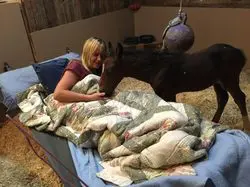
Lately, he has enjoyed being able to spend most nights with his real mama Lacy.
We were truly blessed to find some inexpensive labor and to get more shelter for the critters here, which ultimately is allowing us to take our 24 x 24 shelter over to where the 55 wild horses (less coming adoptions) are going to be spending their winter. We had no hay shelter to protect the hay and desperately needed one. We also were able to raise enough money to buy roofing materials for said shelter.
Unfortunately we still have a very long way to go in procuring a secure future for the wild ones. Our next project is putting up the shelters, fixing fence and adding additional fencing. Then we need to make sure we fill the hay barn and procure enough hay to make it through the upcoming winter for the group of wild ones in NV.
Fundraising is never easy or fun, but unfortunately very necessary as these horses, although thankful they were “saved from slaughter” actually want to eat every single day. :)
We have good news as the minute BLM found out about the 3 orphans needing the emergency hernia surgery they said thank you for the offer, but they would be happy to pay for the surgeries for the 3 orphans. So that just leaves us with Cowboy, (who is technically not an orphan due to the fact his mama is here), but needs special care so I kind of think of him that way, and Cicero and Honey who are “slaughter babies” (their mama’s were killed and slaughtered). Cicero and Honey are ready for their forever homes.



 The following is from
  Lots of attention and supportive measures were taken. A catheter was placed, blood drawn, and meds administered.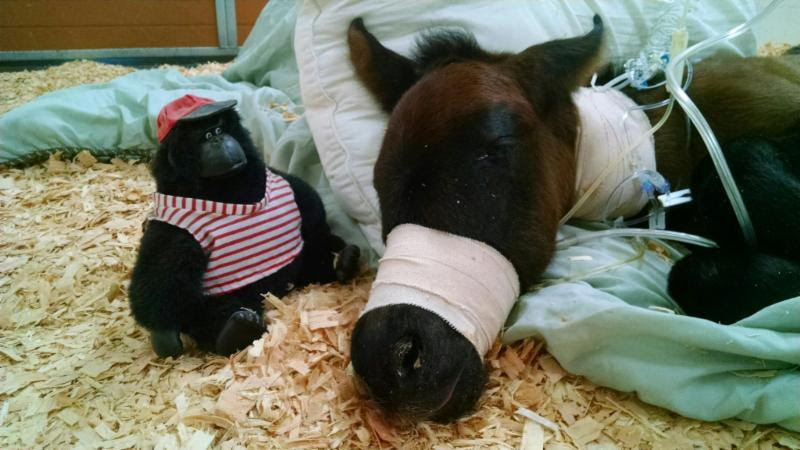
 The following is from the




 looked after well,” says Hulme (pictured, right). “They need to be well fed, well looked after and not cruelly treated.”


%20copy.jpg?width=620)


 In a groundbreaking move, Australian racing authorities have declared a nation-wide ban on the use of whips in harness racing.
 It is estimated that at least 100 million equines are supporting more than 600 million people in the developing world. The majority of those animals are suffering from exhaustion, dehydration, malnourishment, crippling injuries, lameness, and/or contagious diseases, nearly all of which can be prevented with proper training for their owners.
 US donors had also contributed to the year’s success, through its American fundraising affiliate Brooke USA.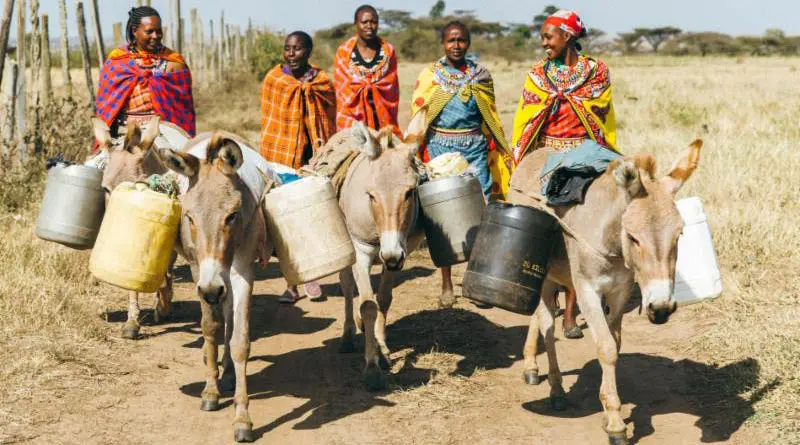
 The following is an update from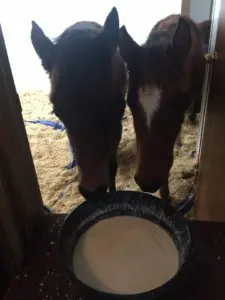
.jpg)


 y, he has enjoyed being able to spend most nights with his real mama Lacy.