
Omnibus Spending Bill Creates Danger for Wild Horses

The following is from the American Wild Horse Campaign:
Danger for Wild Horses and Burros on Capitol Hill
Congress just passed an Omnibus spending bill to fund the government for the next five months – until the end of Fiscal Year 2017. The good news: Congress maintained the de facto ban on domestic horse slaughter and the prohibition against the Bureau of Land Management’s (BLM) sale for slaughter or killing of captured wild horses and burros. More troubling, though, is a provision in Section 116 that allows the BLM to strip wild horses and burros of federal protection and transfer them to state, federal and local agencies for use as “work animals.”
[toggle_framed title=”Continue Reading” variation=”blue”]
We thank the Appropriations Committee leadership for including a prohibition on slaughter and euthanasia of healthy horses in this language. However, we remain gravely concerned that this new law is open for abuse and could become a vehicle for delivering captured wild horses and burros into the hands of state and local agencies that actively lobby for their destruction. Also troubling is report language accompanying the Omnibus that calls for “accelerated” roundups to reduce wild horse and burro populations to the BLM’s “Appropriate” Management Levels. If taken literally, this could mean the removal of as many as 50,000 more wild horses and burros from the range.
Over the last week, AWHC members made tens of thousands of calls and sent 55,000 messages to appropriators expressing concern about threats to wild horses and burros in the Omnibus. This strong show of public support and concern will make it more difficult for opponents of wild horses to exploit loopholes in the new law, and serves as a safeguard against more dangerous threats that may be in store. So far, Congress is holding firm against mass killing and slaughter, but that support is fragile as pressure builds not only for mass roundups but also to upend the federal law that protects these national icons on our Western public lands. Now is the time to make your voice heard.
[/toggle_framed]
 The following is from
 The following is from
  The following is from the
 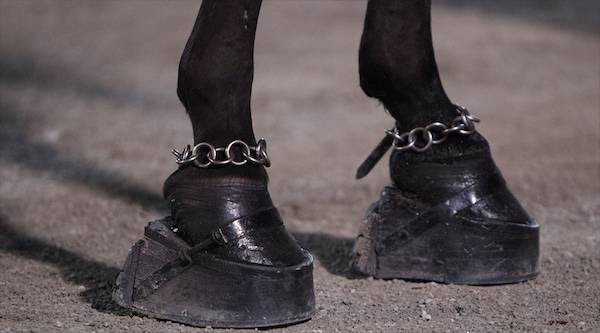 Horse Council (AHC) for the last several years. The focus of these efforts for several years has been passage of the Prevent All Soring Tactics Act or PAST Act in Congress. Additionally, last year the U.S. Department of Agriculture’s (USDA) also began promulgating new regulations governing enforcement of the Horse Protection Act (HPA), intended to strength regulations against soring. President Trump’s government-wide freeze on all new federal regulations pending review has put an indefinite hold on these new HPA regulations. Now many in the horse industry are wondering what is status of these efforts to eliminate soring.
 industry employers have for many years found it difficult to recruit American workers to fill these jobs. For this reason, American immigration policy has been a major concern of the horse industry and the American Horse Council has worked to ensure the H-2B non-agricultural and H-2A agricultural temporary foreign worker programs are a viable option for the industry. However, new pressures threaten the ability of the horse industry to hire these vital workers.
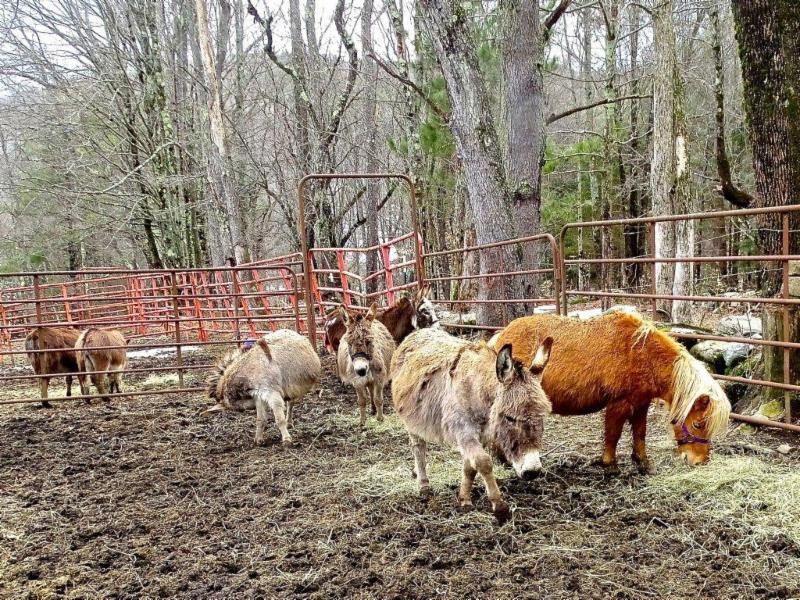 While I am grateful that I did take in his seven animals in addition to the other three that had to come back, one of those being a huge, Belgian mule with a big appetite, it has put a huge dent in the ol’ bank account. All of the seven needed to be vaccinated, have blood drawn for Coggins testing, will need to see the farrier soon and all will be seeing the vet for much needed dental work this week. That, in addition to major overhauls being done to the existing fencing of the rescue, which has been in place for over twenty years, we have had a few other big projects on tap trying to spiff things up in time for our open house.
 The following is from


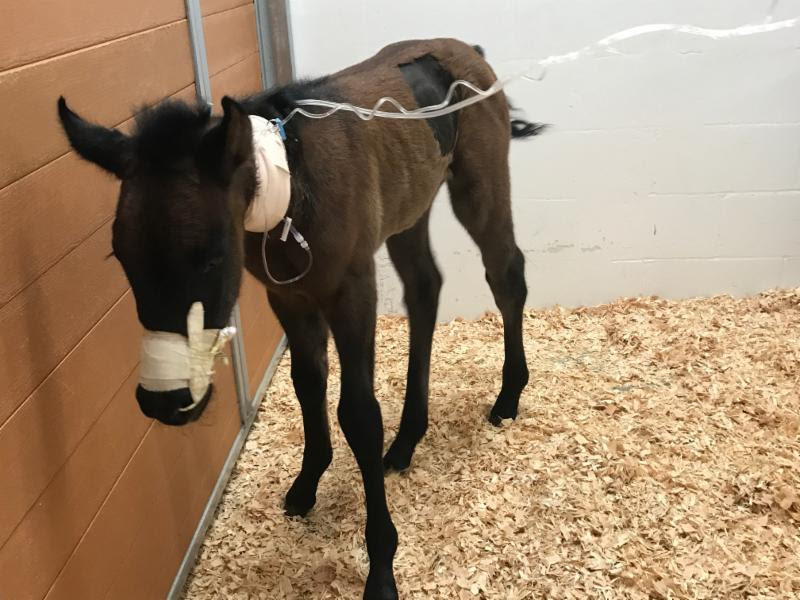
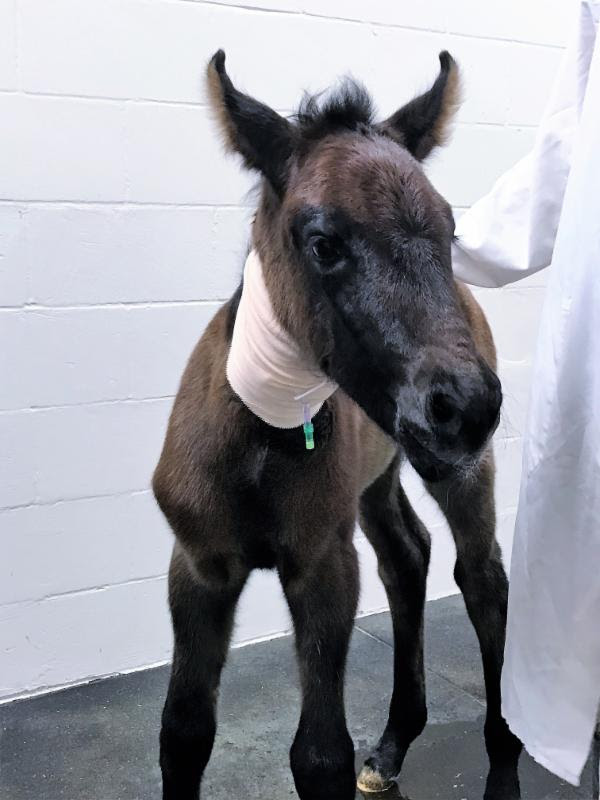 Lots of attention and supportive measures were taken. A catheter was placed, blood drawn, and meds administered.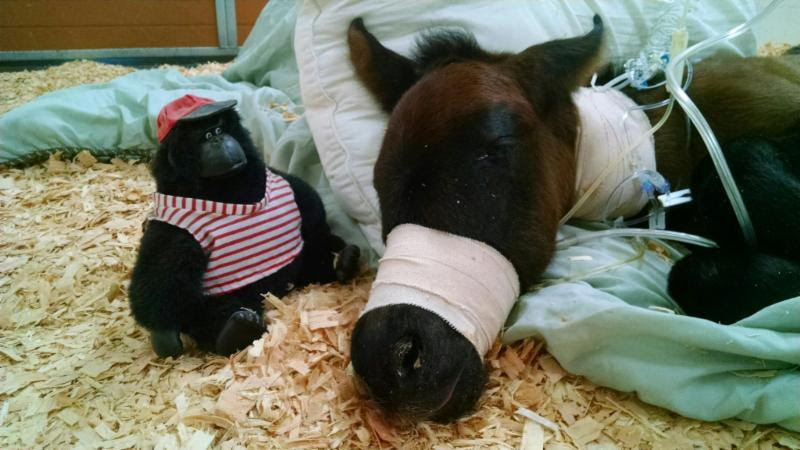
 The following is from the