By Meredith Hodges
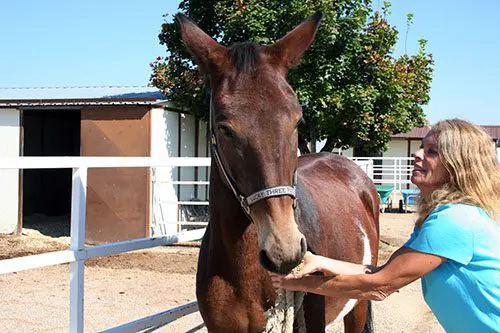
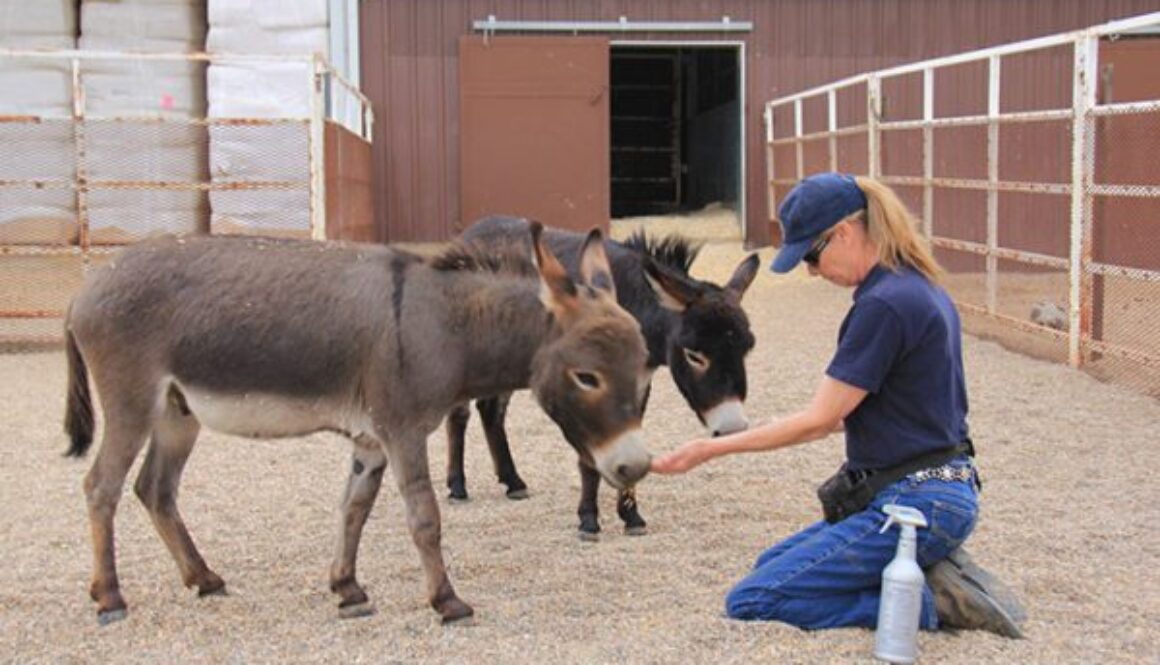
 Mules and donkeys are very gregarious and affectionate animals and have a need to really bond with their owners. It is important to know the steps involved in this bonding process to get the best from your mule or donkey, and even horses. Routine management and our training process called Behavior Modification (Reward System Training) will make your time together safe and enjoyable.
When mules and donkeys are treated with patience and kindness, they can be as capable as horses in all kinds of equine activities. The fun you can have with your mule, or donkey, is only limited by your own imagination and your approach to training. Mules can do…and donkeys, too!
Since mules and donkeys bond to the person who trains them, we encourage owners to do the training themselves with the help of our resistance free video training series that provides a solid base for any equine activity.
This series will help you get the best from your equine whether he is large or small, a donkey, mule, or even a horse. It is designed like grade school is for children.
Although we begin our DVD series with Foal Training, no matter how old, you should always begin training with imprinting and move forward from there with attention to feed as well. This will insure a positive introduction and will help to build a good relationship with your equine. Our methods are meant to be done in a sequence and taking shortcuts or changing our method in some way will not yield the same results. After many years of training for other people, I have found that equines, especially mules and donkeys, bond to the person who trains them. When they go away to other people, they do not get the benefit of this bonding and can become resistant over time when they return home. After all, you wouldn’t ask someone else to go out and make a friend for you, would you? This is the primary reason I put my entire training program in books and videos, in a natural order like grade school is for children, for people to use as a resistance-free correspondence training course instead of doing clinics and seminars. People are encouraged to use the series and to contact me via mail, email or telephone for answers to any questions. This way your questions can be answered promptly.
No matter how old or how well trained the equine, they still need time doing the simplest of things to get to know you before they will learn to trust and have confidence in you. The exercises that you do should build the body slowly, sequentially and in good equine posture. No human or equine is born in good posture. It is something that needs to be taught and practiced repetitively if it is to become a natural way of moving the body. When the body is in good posture, all internal organs can function properly and the skeletal frame will be supported correctly. Just as our children need routine, ongoing learning and the right kind of exercise while they are growing up, so do equines. They need boundaries for their behavior clearly outlined to minimize anxious behaviors and inappropriate behavior, and the exercises that you do together need to build their strength and coordination in good equine posture. The time spent together during leading training and going forward builds a good solid relationship with your equine and fosters his confidence and trust in you because you actually help him to feel physically better. A carefully planned routine and an appropriate feeding program is critical to healthy development.
Most equines never experience core muscle strength and this becomes even more important as they age. We do leading training for a full year to not only get them to learn to lead and to develop a good relationship with them, but also to develop good posture and core muscle strength in preparation to carry a rider.
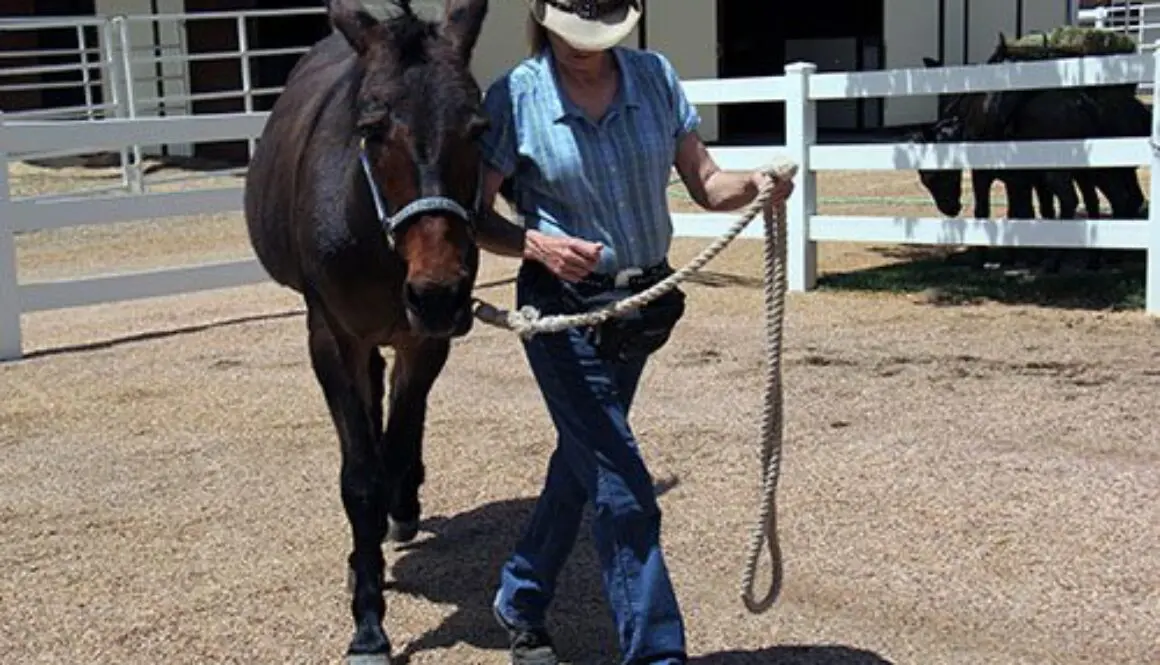
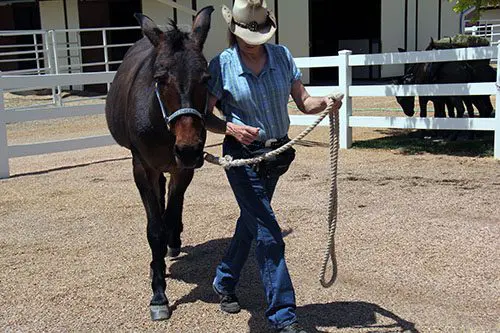
Leading lessons for postural strength and balance need only be done for 15-20 minutes once a week to be certain that they aren’t fighting balance problems later when you mount and ride. Even an older equine with previous training would still need this for optimum performance and longevity. During the time you do the leading training strengthening exercises, you should NOT ride the animal as this will inhibit the success of the preliminary exercises. If you ride while you do these exercises, it will not result in the same proper muscle conditioning, habitual behavior and new way of moving. The lessons need to be routine and done in good posture to acquire the correct results. Hold the lead rope in your LEFT hand, keep his head at your shoulder, match your steps with his front legs, point in the direction of travel with your right hand and look where you are going while you track straight lines, gradual arcs and square him up with equal weight over all four feet EVERY TIME you stop. We are building NEW habits in their way of moving and the only way that can change is through routine, consistency in the routine and correctness in the execution of the exercises. Since this also requires that you be in good posture as well, you will also reap the benefits from this regimen. Along with feeding correctly (as described below), these exercises will help equines to drop fat rolls and to begin to take on a more correct shape and become strong in good posture.
Today’s general horse training techniques do not generally work well with mules and donkeys. Most horse training techniques used today speed up the training process so people can ride or drive sooner and it makes the trainers’ techniques more attractive, but most of these techniques do not adequately prepare the equine physically in good posture for the added stress of a rider on his back. Mules and donkeys have a very strong sense of self preservation and need work that builds their bodies properly so they will feel good in their new and correct posture, or you won’t get the kind of results you might expect. Forming a good relationship with your equine begins with a consistent maintenance routine and appropriate groundwork. Most equines don’t usually get the well-structured and extended groundwork training on the lead rope that paves the way to good balance, core muscle conditioning and a willing attitude. This is essential if he is truly expected to be physically and mentally prepared for future equine activities. With donkeys and mules, this is critically important.
The equine should be at least four years of age when the rider is finally introduced to insure that there is no undue stress on his body at the earlier stages of development. Equines generally run through the bit and exhibit other bad behaviors because they become anxious, lose their balance and don’t really have complete physical control of their bodies. They are unable to physically comply with your wishes without losing their balance, which makes them nervous and causes resistance. Changing bits or rushing through groundwork training so you can ride or drive sooner NEVER really works. Training is more than just teaching the equine to do “movements.” You should be creating an environment for success and conditioning his muscles to do movements easily and with minimal stress. This produces an equine with a happy and healthy working attitude. In order to get your mule to be soft and submissive in the snaffle bit, you need to be prepared to spend six months on flatwork leading training (also known as Showmanship training for strength in good posture) and another six months leading through obstacles (turning fear into curiosity and then adding coordination to his strength and balance) before moving to the round pen work in DVD #2. Longears and horses do much better in a number of ways when you are patient enough to do this: a calmer attitude because they know what to expect, development of symmetrical muscle strength in good equine posture, a better response to verbal commands, better balance, better coordination and the ability to perform correctly.
The information about equine management and training materials that we offer are listed below.
Training Mules and Donkeys: A Logical Approach to Longears is the first book to be published, has a more abbreviated view of the overall training process and general information about the psychology of mules and donkeys.
The book, Donkey Training is basically the same as DVD’s #9 and #10 without the benefit of the moving pictures (and has bonus information that the DVDs do not have) and illustrates the things that are different about training donkeys as opposed to horses and mules. Donkeys often do things in a different order and sometimes, they don’t need to learn to lunge at all until much later in their training…after they are already going well under saddle, or in harness. This DVD is designed to be used in conjunction with DVD #1 through DVD #8 when training donkeys.
The book, A Guide to Raising & Showing Mules has a lot of valuable general information that complements the resistance free DVD training series with more about breeding, mare and foal care, and general mulemanship and maintenance issues. It is the perfect complement to the video series and a must-have for beginners and 4-H projects.
In DVD #1: Foal Training, you will not only be imprinting your animal and training for the simple tasks such as tying and leading, but you will also learn how to be prompt and appropriate with your rewards. The exercises will start your equine on a program that will begin to strengthen his muscles and promote coordination. Imprinting is not just something you do with a foal and then it’s done. Imprinting is the way you touch and handle your animal every time you are with him throughout his entire life. As you learn how he likes to be touched, you can use this to help him to stay calm and accepting. How you touch him will determine whether, or not, he develops confidence and trust in you! When your equine is approached with patience and kindness, and is rewarded for standing quietly, it will be easier to handle him for such things as deworming and doctoring and he will be more willing to stand still to be mounted. The leading exercises in this DVD will start your equine on a program that will begin to strengthen his muscles and promote balance and coordination.
In DVD #2: Preparing for Performance: Groundwork, you will begin your lunging and ground driving lessons. The exercises will increase in their demand and begin to develop more bulk muscle in preparation for work in harness and riding. Equines will be introduced to the snaffle bit and other tack in this DVD. We use English bridles with a noseband and drop noseband over a mild snaffle bit right from the beginning, so they never even try to get their tongue over the bit. This teaches them to accept the bit easily and to form the good habit of taking contact with the bit instead of avoiding it and allowing bad habits to start. It is easier to prevent a bad habit than it is to try to break it later.
You will see how putting the animal in the correct frame (or posture) from the beginning in the round pen with what we call the “elbow pull” enables him to build his muscles correctly and symmetrically throughout his body You will learn how your body language affects his movement in the round pen and on the drivelines. Your equine may begin to be aggressive for his reward and you will learn how to set limits to these aggressive behaviors to set the stage for a polite and well-mannered equine. If biting, or kicking, has been a problem in DVD #1, you will learn how to correct these behaviors in DVD #2.
DVD #3: Preparing for Performance: Driving, provides all the information you need to safely train your equine to drive. It covers carts and carriages, hitching training, Reinsmanship, Pleasure Driving, Obstacle Driving, working in harness, lateral exercises, obstacles, driven dressage and driving rules. You can begin this DVD after you have completed the foundation work in DVD’s #1 and #2.
DVD #4: Basic Foundation for Saddle. If you don’t wish to drive, you can go straight to DVD #4 and begin your equine’s riding training in a natural and non-stressful manner that eliminates adverse behaviors such as bucking or running off. We address both the needs of the rider and the equine as a team focusing on the right approach, good balance and coordination of both equine and rider. You can begin this DVD after you have completed DVD’s #1 and #2.
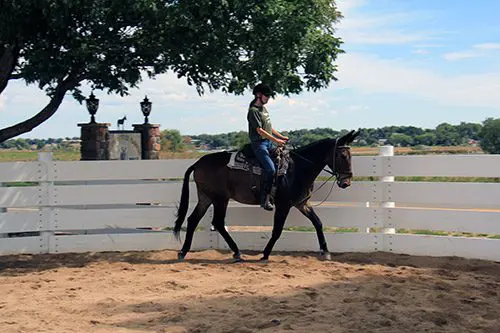
When you finally mount your equine and start riding, the only thing left for him to do is to get used to your shifting weight on his back and the new leg cues he will feel on his sides. Because he has learned to carry his own body in good, strong equine posture and has already learned what rein cues mean through ground driving, he will be better able to do all the different moves that you ask of him under saddle without being generally overwhelmed by too many things happening all at once. As you progress under saddle, you will be better able to perfect your own riding skills and your equine will become lighter in the bridle and more responsive to your cues. You both will not have to deal with the weakness, awkwardness, confusion and disobedience that originate from a lack of preparation for the tasks.
In DVD #5: Intermediate Saddle Training, we help the rider fine tune his own skills and begin to cultivate a harmonious rapport between equine and owner with fun, safe and simple exercises that will enhance your riding experience whether it is for show, or pleasure. You can begin this DVD after you have completed DVD’s #1 and #2 and #4.
DVD #6: Advanced Saddle Training will begin to prepare the rider for specific disciplines and help them to make choices about what they might enjoy more. It demonstrates how the simple elements of Dressage are the basis for all equine disciplines including Gymkhana, Reining, Cutting, English and Western pleasure, Trail, or even simply weekend trail riding. This kind of training is not just for show, but to keep both of you safe and happy during your time together. You can begin this DVD after you have completed DVD’s #1 and #2, #4 and #5.
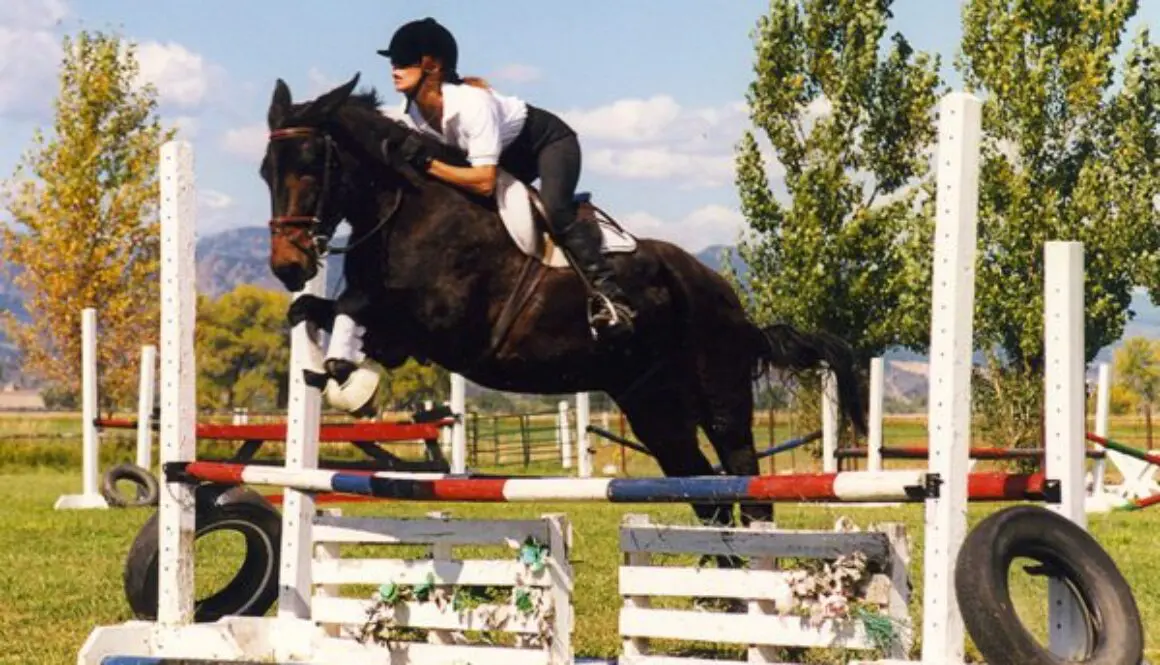
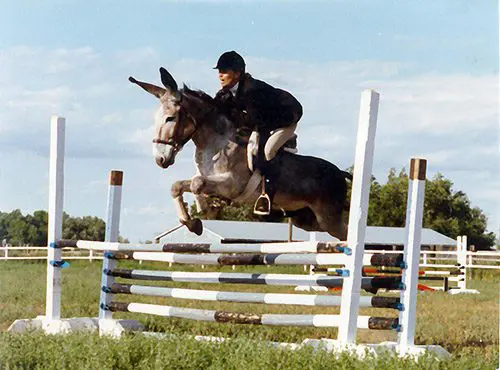
DVD #7: Jumping gives the owner the opportunity to learn the fundamentals of jumping and condition their equine in a safe and methodical manner and… how to ride, build and evaluate jump courses. It covers exercises to prepare your equine to carry him safely over any obstacle, multi-level terrain or jumps. You can begin this DVD after you have completed DVD’s #1 and #2, #4, #5 and #6.
DVD #8: Management, Fitting & Grooming. Of course, your equine needs to be fed and maintained properly to get the best response from him during training and this is done in DVD #8. We also offer grooming tips and more advanced lessons in showmanship at the end of this video.
DVD’s #9 and #10 cover techniques that are specific to donkeys and these two DVDs are designed to be used in conjunction with the other video tapes.
DVD #9: Keys to Training the Donkey: Introduction and Basic Training covers groundwork technique that is specific to donkeys, how to train jacks to breed mares for mule production and how to measure your animal for athletic potential and should be used in conjunction with DVDs #1 and #2.
DVD #10: Keys to Training the Donkey: Saddle Training & Jumping covers saddle training and jumping and should be used in conjunction with DVD’s #4 through #7. You can also purchase our book, Donkey Training which is the same as DVD’s #9 and #10, but sometimes having the moving pictures can be more helpful than still shots. Also, if you want to teach your donkey to drive, you would also need DVD’s #1, #2, and #3.
Training Without Resistance (DVD’s #1 – #7) and Equine Management & Donkey Training(DVD’s #8 – #10) are exactly the same as the electronic workbooks that accompany the DVDs. These two manuals are also helpful to those who cannot afford the DVD series or for those who would like a professionally published workbook. They are both translated into French, German and Spanish, so our non-English speaking friends can read along with the DVD series in their own language.
Equus Revisited: A Complete Approach to Athletic Conditioning. This comprehensive 4-part DVD and companion manual explains WHY it is so important to spend plenty of time on groundwork and development of the core strength of your equine. It covers multiple aspects of your equine’s care in great detail with a team of experts. It has a lot of special features about various subjects and in-depth explanations about the anatomy and physiology of the equine.
Why So Many Different Books and Videos?
I do offer Packages because each of the materials covers the elements of management and training from a different perspective with a different focus:
Training Mules and Donkeys: A Logical Approach to Longears book is an overview or summary of the entire training program
Donkey Training book is mostly about what things are done differently with donkeys than with horses and mules during the training process at each stage
A Guide to Raising & Showing Mules book includes management (housing, fences, disease, teeth, hooves, etc.), breeding and showing information with some regard to training
10-DVD Training Mules and Donkeys DVD series is a collection of the exercises that you DO in what order with each DVD representing roughly 1 year of training (except for 8, 9 and 10…see explanations in detail above)
Training Without Resistance manual is a collection of DVD’s #1 through #7 with extra detailed information in print and available in French, German and Spanish translations.
Equine Management & Donkey Training manual is a collection of DVD’s #8 through #10 with extra detailed information in print and available in French, German and Spanish translations.
Equus Revisited manual/DVD combo addresses WHY you are doing all the things that you do in the books and videos. If you had to pick just one book, I would suggest the Equus Revisited manual AND the companion DVD.
However, buying the Horse/Mule Complete Package (at a discount rather than buying products individually) would give you all you need because basically the Donkey Training book (that is left out) is exactly the same as DVD #9 and #10 and the Equine Management and Donkey Training manual only the manual has extra information that the book does not have.
For more information and purchase of our products, you can call 1-800-816-7566 or visit our website at www.LuckyThreeRanch.com. Our website is also translated into French and Spanish for foreign convenience. Under “Training,” be sure to read archived articles posted in the “Mule Crossing” section, peruse commonly asked questions in “Ask Meredith,” get more details in our “Training Tips” and watch our new shows and past RFD-TV shows with Video on Demand. If you don’t have a computer, you can go to a library and use their computer, or ask a friend to help you out. Take time to peruse our Classified Ads section (this is a free service and an open forum, so we caution buyers to beware and check carefully). Under Resources, we post contact information for mule and donkey clubs and rescue organizations, keep you up to date about Equine Welfare in the news and heavily support Therapeutic Riding. Click our Homepage links for YouTube, Facebook and Twitter. And, don’t forget to check out our children’s website at www.JasperTheMule.com. Join the American Donkey & Mule Society (www.lovelongears.com, adms@lovelongears.com) to receive their bimonthly magazine with even more valuable information for a mere $27/yr. Learn together, enjoy the time with your equine and excel together!
To learn more about Meredith Hodges and her comprehensive all-breed equine training program, visit LuckyThreeRanch.com, MEREDITH HODGES PUBLIC FIGURE Facebook page, or call 1-800-816-7566. Check out her children’s website at JasperTheMule.com. Also, find Meredith on Pinterest, Instagram, MeWe, YouTube and Twitter.
Covered in TRAINING MULES & DONKEY: A LOGICAL APPROACH TO TRAINING, TRAINING WITHOUT RESISTANCE and EQUUS REVISITED at www.luckythreeranchstore.com.
© 1998, 2016, 2024 Lucky Three Ranch, Inc. All Rights Reserved.

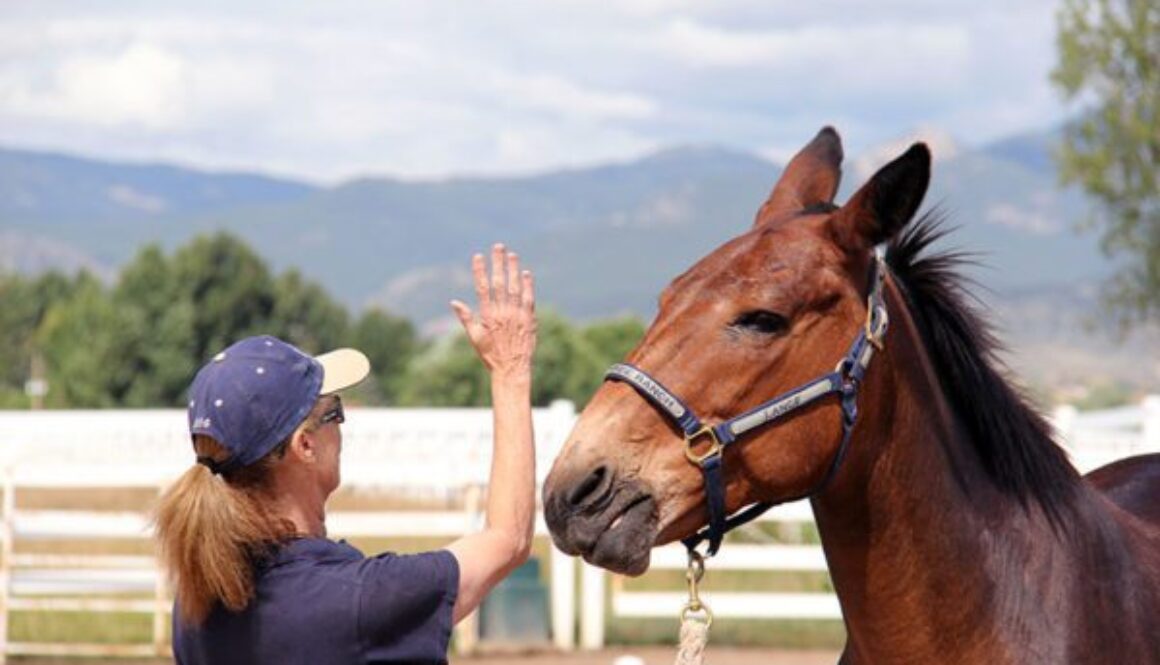

 When proper attention is given to the development of balanced, postural core muscle strength from the very beginning, the equine develops strength symmetrically throughout his body as he grows. Muscles are stressed and relaxed at critical intervals, allowing for healthy mental, physical and emotional growth. When the equine feels good in his body, it clears his mind to concentrate on his performance. The result is an equine that is happy in his work and in his world.
 Dressage training has evolved from a useful tool to strengthen and balance a useful horse to just another name in Big Business. Today, equines are thought of as economic commodity, or a breeding investment, and are used in events such as Reining, Cutting, Stadium Jumping, Racing, Steeplechase, Eventing, Hunting, Dressage and just-for-pleasure riding. Monetary investment is high, and never was the old adage of “horse poor” more prevalent than now!
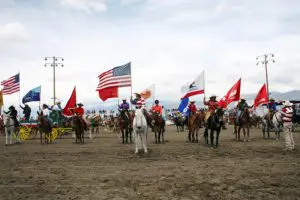 Owners can expect to spend thousands of dollars in a year for no more than a pleasure riding equine, and the cost increases with the status of the activities. The cost of supporting an equine provides economic success to a multitude of businesses such as feed stores, tack and equipment, truck and trailer sales, drug companies, motels, gas stations, county fairgrounds, breed registries, brand inspection, clothing stores, veterinarians, farriers, and the list goes on.
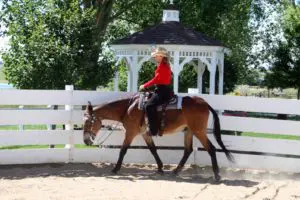 Breeding for bigger, better and faster equines, has given people the false idea that these horses perform almost solely from their heredity. This has changed how they are being trained and judged. Today, many equine competitions are no longer judged by an expert who really knows the definition of correct movement. We are inundated with terminology from the Masters that is most often misunderstood and distorted.
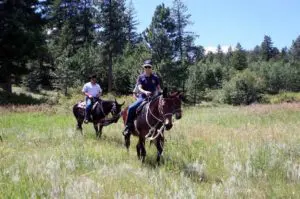 To those who are not schooled in Dressage, collection can mean a lot of things that are contrary to the actual definition, including the belief that it means to merely break at the poll and arc the head and neck. People also believe that an equine is on the bit if he arcs his head and neck and flexes at the poll. What this actually means is that the equine has taken contact with the bit, and can feel the hands of the rider through the reins, and respond lightly and obediently whether his head and neck are arched or not. Vertical flexion is the result of correct collection that involves the entire body of the equine, when the equine is flexible from head to tail with the hindquarters properly engaged. It is not the act of bringing the equine’s chin to his chest. Lateral flexion is when the equine bends his whole body through his rib cage to the arc of a circle, and is not just bending his head and neck to your knee.
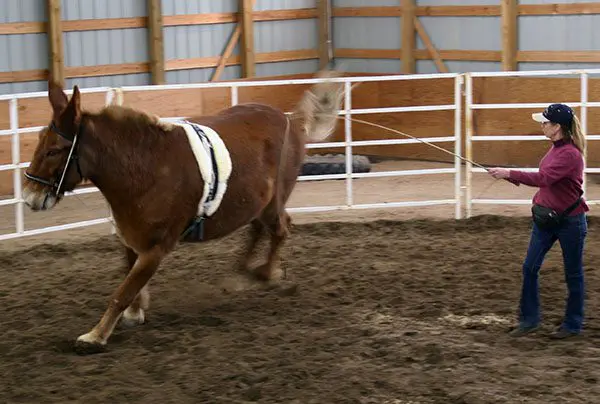
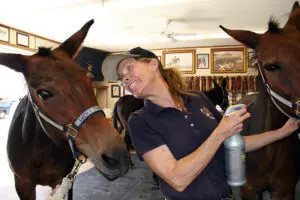 You would teach him to lunge on the lunge line in the Round Pen first with enough slack in the line so it drags on the ground as he circles. Keep a slightly open fist on the line and close your first as the outside front leg comes forward into suspension. He will feel this pressure and bring that front leg onto the circle instead of going straight forward with it. This is the cue you will use when lunging him on the line in the open arena.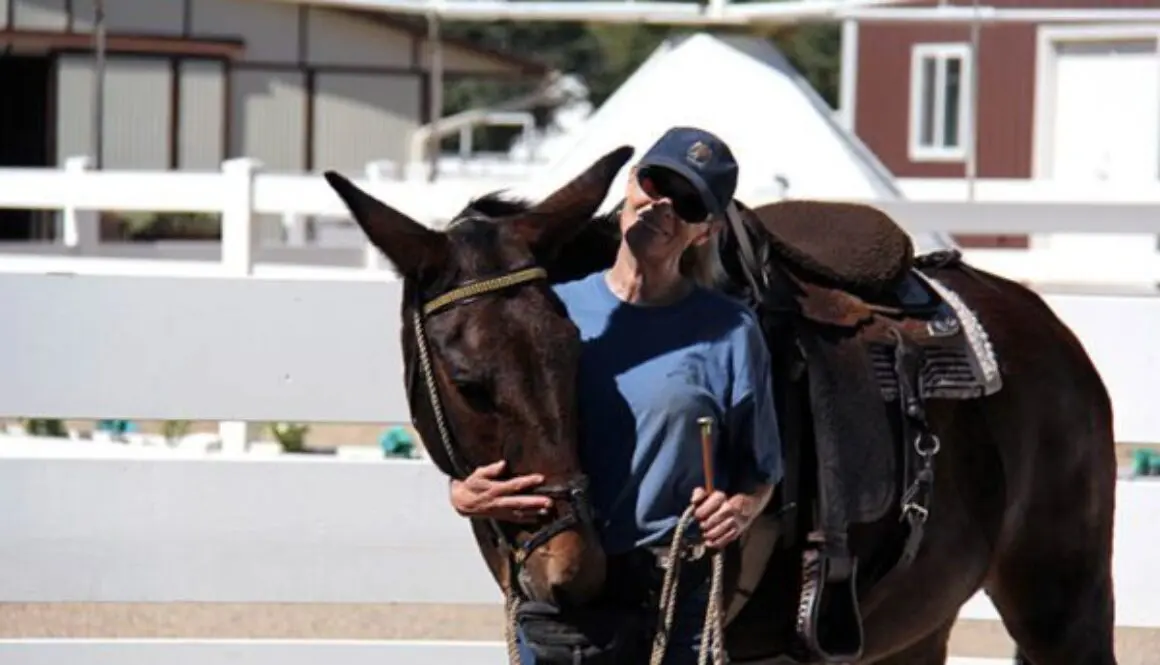
 Shaping behaviors takes reinforcement to the next level. Now you are working with the tendency of an animal to perform in the right way and guiding that performance toward your ultimate goal. This is called successive approximation. For example, if you are teaching a turn on the haunches on the lead line, you must first ask for one step forward. Then walk toward your animal’s shoulder and ask for the turn. In order to teach him to plant his rear pivot foot before the turn, the process must be broken down into smaller steps. First, ask for the step forward and reward him immediately when he complies. Then move on and ask for one step forward and one to the side, rewarding him again when he’s successful. Then ask for one step forward and two to the side and reward, and so forth.
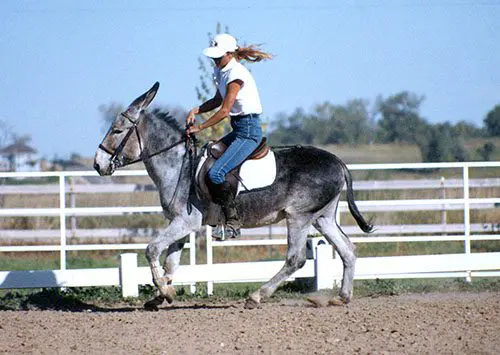 An example of shaping a behavior by breaking it down into a string of very small steps is how I taught my donkey, Little Jack Hornerto canter. Although many people tried to tell me that donkeys don’t canter, I had seen donkeys canter when they ran free, so I knew it was possible. First, I set the goal of cantering a circle. No one could run ahead of my donkey fast enough to reward him with oats and negative reinforcement such as the crop didn’t work well at all, so I had to find another kind of reinforcement. Using the pleasure principle of finding the best motivation for an action, I put my cycling broodmares into a pen at one end of our hayfield and I took my jack to the other end. When asked to canter toward those mares, he did so eagerly. He first learned to canter in a straight line. I reinforced the action verbally with, “Good, good,” while we cantered, and then I gave him a food reward once we reached the pen.
 The next time I did the same thing, but this time I turned my donkey in a large half-circle route to the pen, and I rewarded him again the same way. The third time, I asked for a little more of a circle and I got it. Several times later, I was able to get an entire circle before we ran the line to the pen with the mares in it. Once my donkey learned that he could canter easily with me on his back, I didn’t need the mares anymore.
 to trot, I would finish the circle, stop him and praise him with the food reward. It was slow going the first few tries, until I started counting strides and realized the jack was adding one more stride at canter with each attempt. Before long, he was cantering the full circle with ease on command.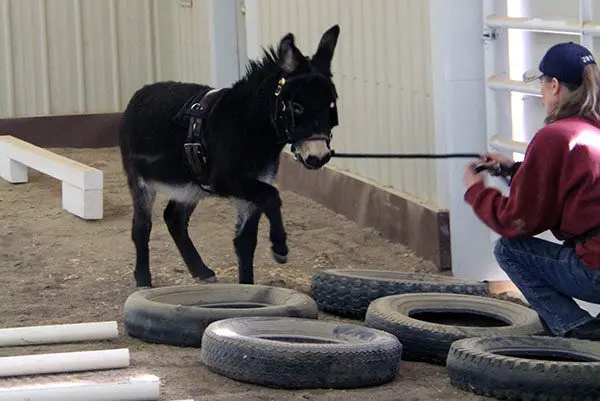
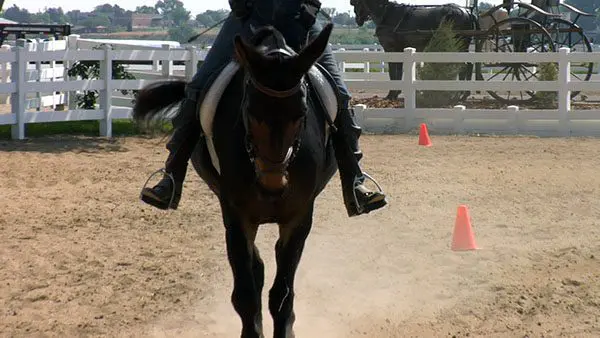
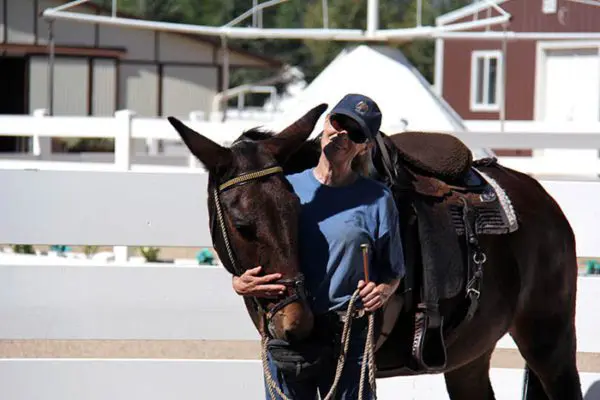
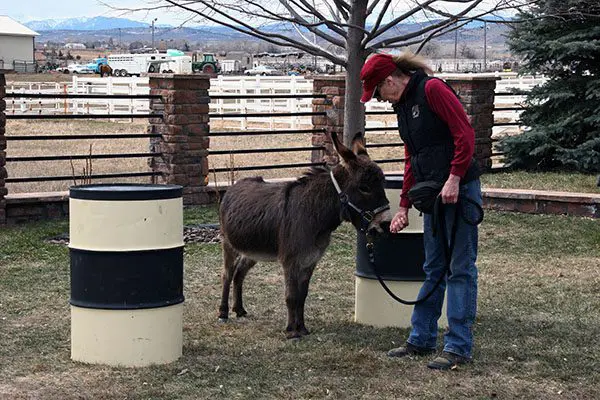
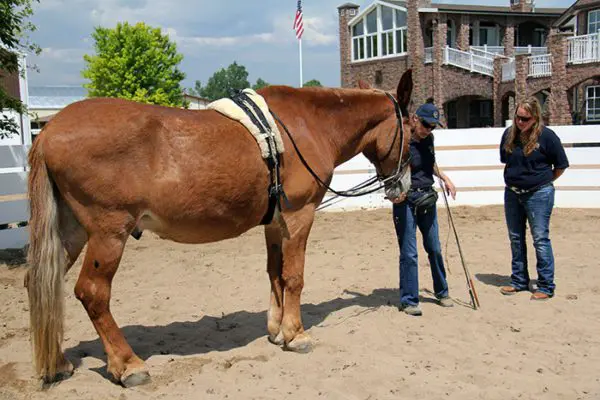
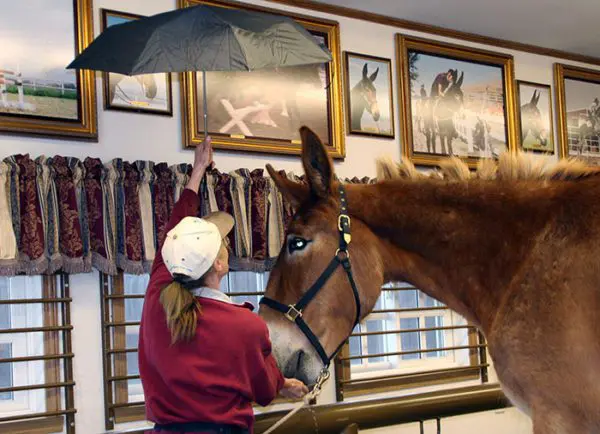 As you begin to understand the principles of shaping and modifying behaviors, it is important to realize that it is a lot like dancing, cooking or any other learned skill—the only way forward is with practice. The more you practice, the better trainer you will become. You have the opportunity to practice positive reinforcement every moment of your life, reinforcing behaviors in everyone—the cat, the dog, your husband or wife, your children. It becomes a game of noticing and praising positive accomplishments while setting clear boundaries to all behaviors, large or small. With practice, you will increase your awareness and, thus, your skill. The success or failure of your efforts to shape behavior in any animal does not depend upon your expertise, but on your patience, respect, consideration and consistency during the process. This may not be the easiest way, but it is extremely effective—and it’s fun!
 When I began working with mules and donkeys, I quickly realized there would be no shortcuts to successful training. I steered clear of fads, trends and shortcuts and, instead, based my training program on Behavior Modification techniques developed by world-famous behaviorist B.F. Skinner over a century ago. For many years now, I have used these techniques to successfully train my own champion mules and donkeys, and I continue to share my method with millions of people through my books, an award-winning DVD series, multiple television shows, my comprehensive website and on Social Media.
 Animals, like humans, need a predictable routine in order to learn. Just as children progress through grade school, building on their knowledge with each successive grade, animals learn best when a solid foundation is laid for each new skill. By creating a logical program from the outset, we avoid the confusion that can lead to resistance.
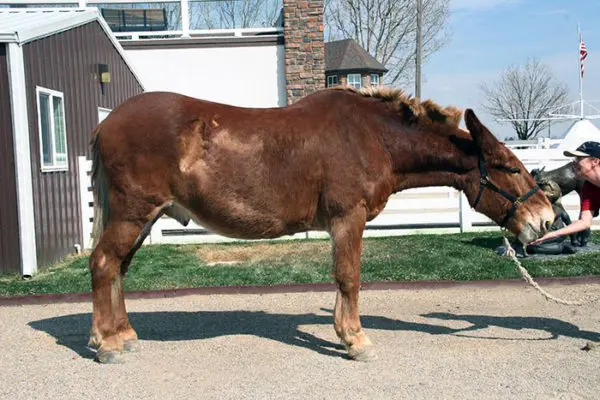 Everything we do, every behavior we choose, is based on an instinctual desire to experience pleasure and avoid pain. Our choices reflect our experience. They are “reinforced” by the pain or pleasure they have given us in the past. Behavior Modification uses the same principles of positive and negative reinforcement with an emphasis on positive reinforcement.
 Positive reinforcement also takes the form of verbal cues. When your animal performs the desired behavior, you should, simultaneously and with appropriate enthusiasm, say the word, “Good!” This works well when it isn’t possible to give a food reward right away. Clicker training, which has become a popular and effective means of audible reinforcement, is similar and applies the same concept. It’s immediate, it’s consistent, and it can be used with all mules, donkeys and horses to reinforce behavior. However, I feel that it is better to use your voice than a clicker, as the sound of your voice promotes engagement with your equine on a more intimate level, so your voice will yield better results than clicker training.
 As your equine learns certain behaviors, you can reinforce the learned behaviors less frequently and focus on frequently rewarding new achievements. Gradually, your animal will become satisfied with a verbal reinforcement for established behaviors, and he will comply for longer periods between food rewards. This shift from a predictable, or fixed, schedule of reinforcement to a variableschedule helps with skill progression. For example, in the transition from lunging when your animal was initially given a reward after each set of rotations in the round pen, to riding, he can eventually be ridden through his entire 30 to 40 minute session before receiving a reward.


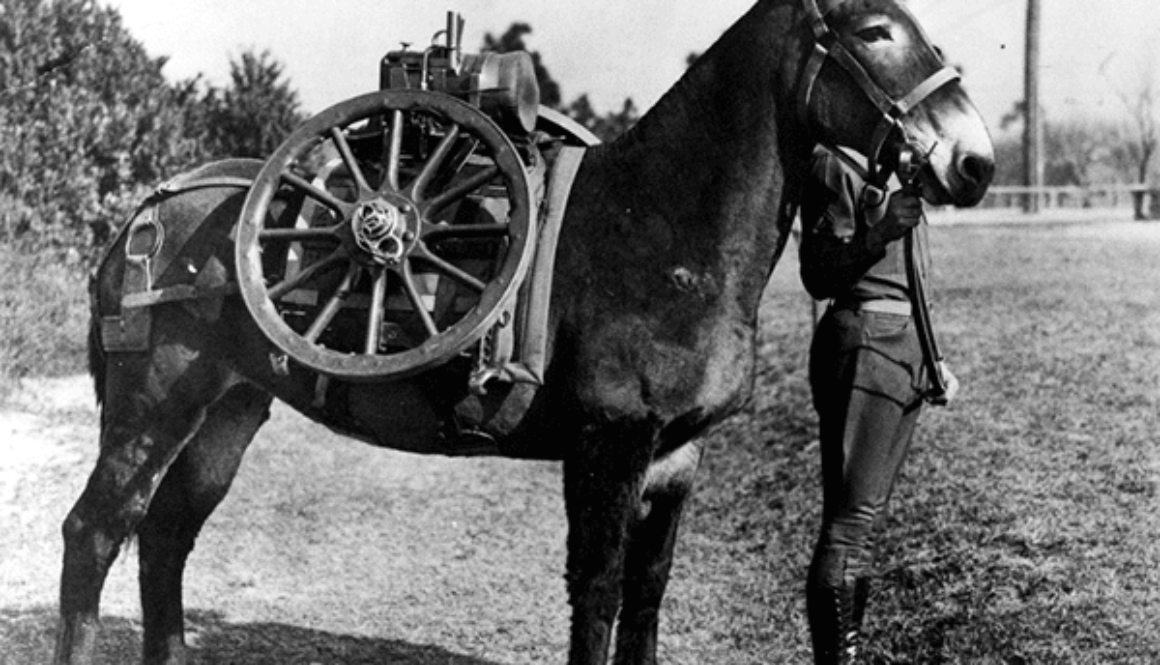
 Mules played an important role in our country during the Reconstruction Period: they patiently worked the fields, packed necessary artillery for the army, and served as a durable riding and driving animal in the westward movement. With the coming of the industrial age, their uses were minimized and they were faced with the possibility of extinction in the march of progress. Today, through the persistent determination of mule enthusiasts, mules are once again emerging as a conceivable asset to our economy and a unique form of athletic achievement and entertainment.
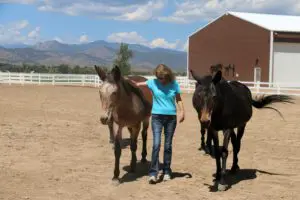 They will generally follow you around until you leave the field, begging for attention or simply observing you closely from a safe distance. Mules have a genuine desire to make friends with those other than their own species. Also, they are a very sensitive animal and can read your intentions through the tone of your voice and your body language.
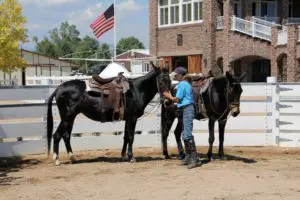 Still, the most important thing to remember is to praise the mule with caressing and scratching when he does what you desire and back it up with the food reward. Mules love this kind of attention and will do their best to get it. If they are rewarded immediately when they are behaving as desired, the desired behavior will eventually become the norm. If bad behavior is ignored or gently reprimanded, it will fade to a minimum. The result is a pleasant, affectionate, and dependable animal.
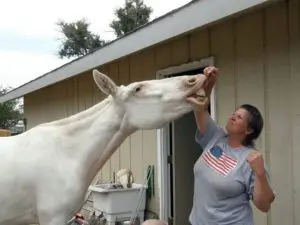 Mules and donkeys are wonderful animals. They’re strong, intelligent and what a sense of humor! But training a mule or donkey is different from training a horse. They require love patience, understanding and a good reward system. Negative reinforcement should be used sparingly and only to define behavioral limits. The result is an animal that is relaxed, submissive, obedient, dependable and happy with his work.
 long ago when there was virtually nothing published on this subject. Those of us who were training needed to use educational resources published on horse training and modify those techniques to better suit our Longears. This still left a lot of room for trial and error…and frustration for both the trainer and the animal.
 increased interest has come an increase in the numbers of animals that need to be trained each year. The few trainers who are competent with Longears could not possibly train even most of the animals that need it, even if it were geographically possible
 home and become a problem within as little as three months. It is important to take an active part in the training of your Longears. The more you can be a part of the training, the better for both you and your animal. Even if your mule or donkey is with a competent trainer, you need to plan on spending at least two days a week with your animal and the trainer so that your animal learns to trust you as well as the trainer. Being present and interactive with your animal at feeding time will solidify the trust he gains.
 series proves that this was a great way to reach people and help them to reach new levels of communication with their animals. People who never before had the courage nor confidence to even attempt such a thing are discovering the self satisfaction and elation of training their own mules and donkeys. Most people tell me it is the best part of their day when they can work with their animals. They are quite surprised at how easy it is to establish a routine that fits with their other weekly activities…thanks to the intelligence and forgiveness of these wonderful animals.
 At first, you might think there just isn’t enough time to spend with your animal to accomplish all this, but somehow we all manage to make time for these things when we have children. We learn to experience and grow with our children, as we can also do with our animals by being realistic with our expectations at each stage of growth and training. We give ourselves the time to do this without the pressure of being hurried. There are few times in this world when we are really able to “stop and smell the roses.” Longears can afford us this very special time if you only let them. Look upon the time with your donkey or mule as you would look upon the time you spend with your child. Some days will be for learning and some for just plain fun. When there are learning days, try to make them fun and stress-free. Someday you’ll find yourself saying: “I can’t believe he has turned out to be so good. I never really felt like I was ‘training’ him!”
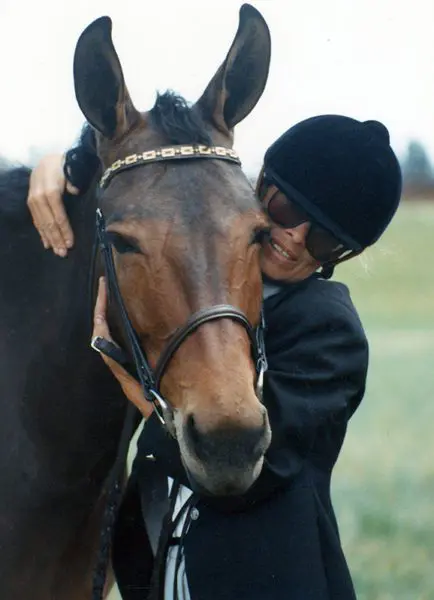 No training series would be complete without examination of the principles and philosophy behind the training techniques. The philosophy of my training techniques is based on the principle that we are not, in fact, training our equines. In fact, we are cultivating relationships with them by assigning meaning to our own body language that they can understand.
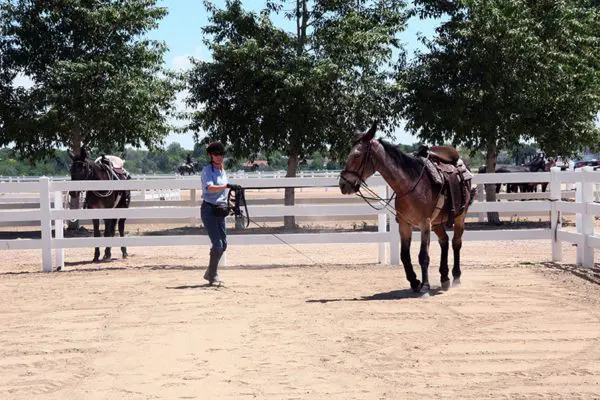 For instance, we had a 3-year-old mule learning to lunge without the benefit of the round pen. The problem was that she refused to go around you more than a couple of times without running off. Assess the situation first by brainstorming all the probable reasons she might keep doing such an annoying thing. Is she frightened? Is she bored? Is she mischievous? Has she been calm and accepting of most things until now? And most important, is my own body language causing this to occur?
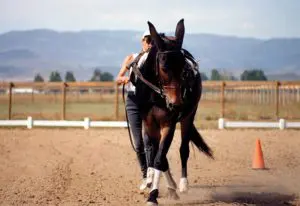 As mental changes occur, so do physical changes. As muscles develop and coordination gets better, the animal will gain confidence. As a trainer, you will need to do less and less to cause certain movements. For example, in the case of the leg yield, you may have to turn your mule’s head a little in the opposite direction to get him to step sideways and forward. As he becomes stronger, more coordinated, and understands your request, you can then begin to straighten his body more with less effort. Granted, we have begun by doing this the wrong way, yet we have put our mule “on the road” to the right way. We have assimilated an action in response to our leg that can now be perfected over time. In essence, you have simply said, “First you learn to move away from my leg, then you can learn to do it gracefully!”
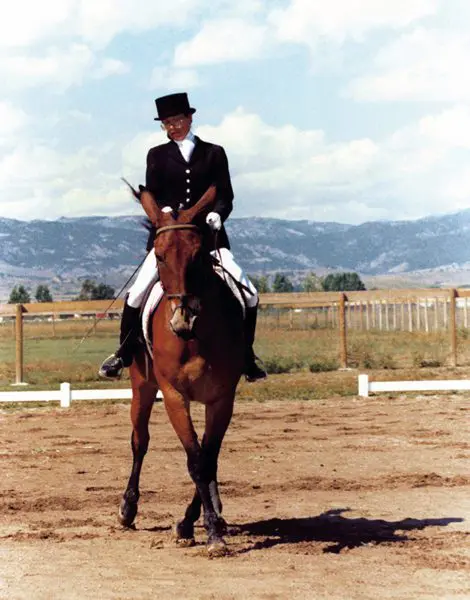 In training horses and mules, there is really little difference in one’s techniques or approach, provided we maintain patience and understanding and a good rewards system. The major difference between these two equines is their ability to tolerate negative reinforcement, or punishment. The mule, being part donkey, does not tolerate punitive action very well unless he is fully aware that the fault was his own and the punishment is fair. For instance, you ask for a canter lead and your mule keeps trotting, one good smack with the whip, or one good gig with the spurs, is negative reinforcement that will bring about the desired response, but be careful of an over-reaction from an overdone cue. More than one good smack or gig could cause either a runaway or an extremely balky animal. This kind of resistance comes from the donkey and requires a much different approach when training donkeys. The horse part of the mule allows us an easier time of overcoming this type of resistance in mules, making them different and easier to train than donkeys.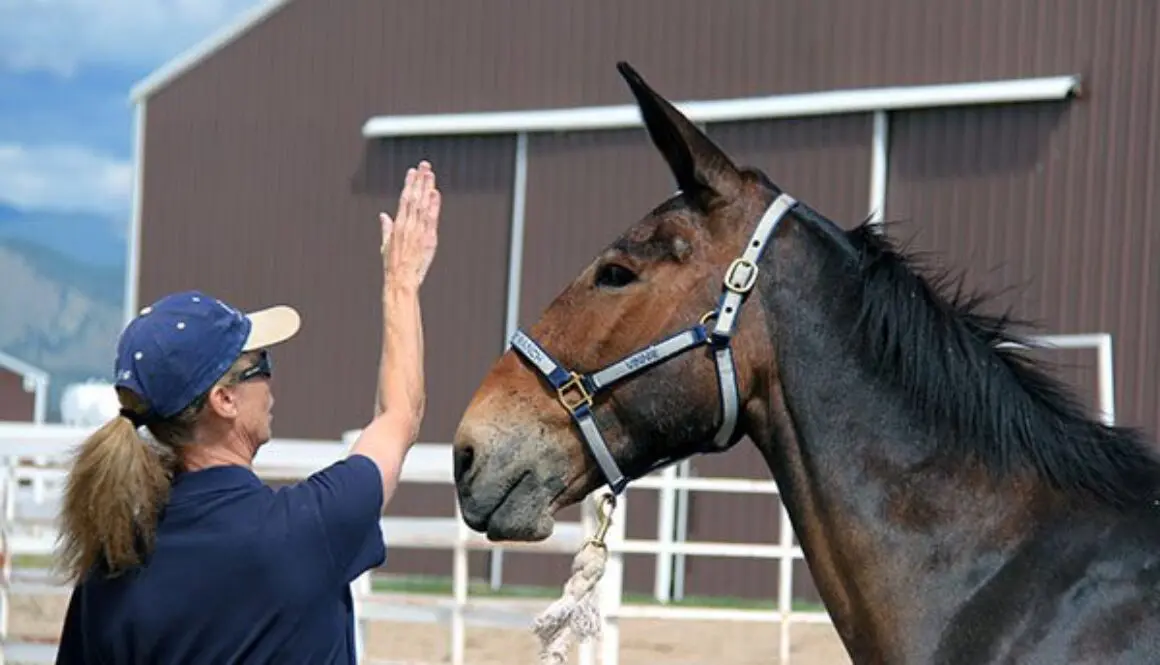
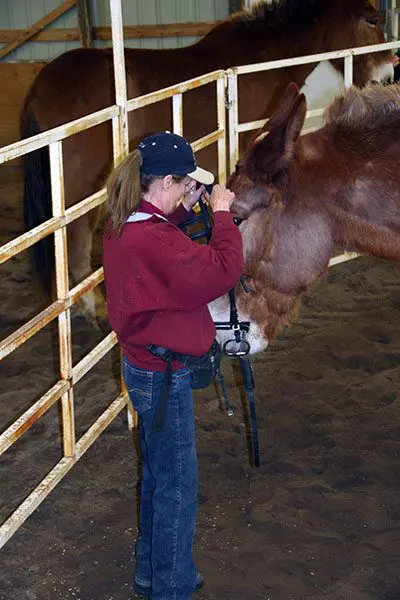 When people think of Behavior Modification, most people think of the basest idea of rewarding good behaviors with treats which is commonly called positive reinforcement. A common misconception is that if positive behaviors are rewarded, then negative behaviors should not occur, but in reality, they do. Negative behaviors need to be negatively reinforced, or discouraged, but the negative reinforcement should be punitive, but not abusive. Learning how to employ Behavior Modification can be easy and fun.
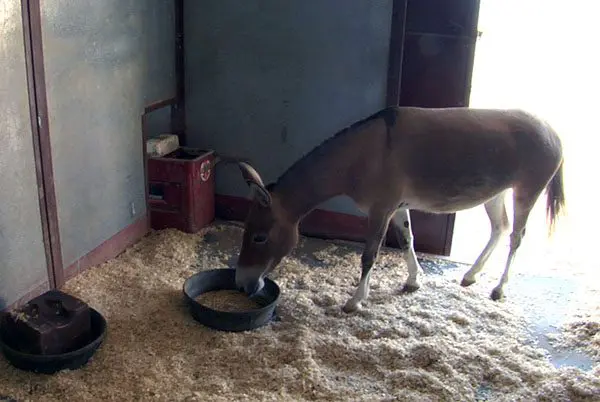 When using Behavior Modification, one needs to take into account all the things that can make that individual comfortable and happy. In the case of equines, we need to take into account the feeding and nutritional programs we use. Certain feeds can actually cause problems like nervousness, anxiety and hypertension that can result in an inability to be calm and receptive to incoming information. From this evolves negative behaviors that block the learning process.
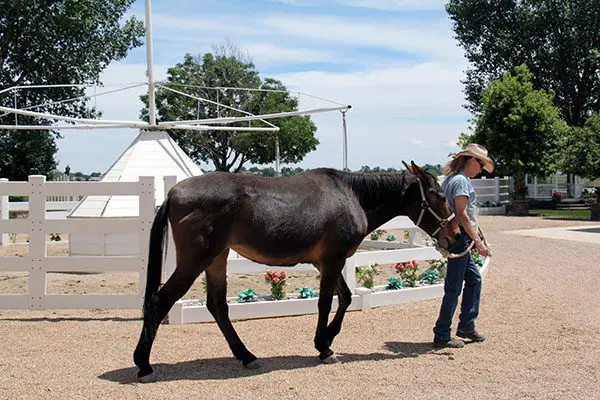 It is easy for natural athletes, but as I said before, we are dealing with individuals and each one is unique. Not all individuals are physically able to carry their bodies in good equine posture, and perform athletic movements correctly without some guidance. When they do not carry their bodies in good equine posture, certain muscle groups are not conditioned symmetrically throughout the body. This will cause compensation from other muscle groups that will eventually become over-used, stressed and they will give way to soreness, lameness, or worse. The uncomfortable individual will begin to exhibit negative behaviors as a result.
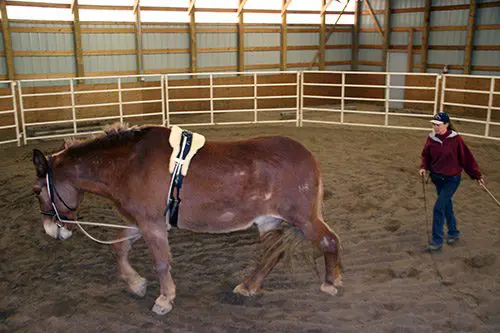 is something that must be taught, it prevents this bad posture, but allows the equine completely free movement in every other direction. Good posture is difficult to hold when you are not used to it and this aid gives him support at the poll to encourage him to round his back and neck, and relax the poll. He can lean on the “Elbow Pull” at the poll when he has difficulty holding his own good posture and the device will be snug at the poll, the bit rings, behind the forearms and over the back. When he holds his own good posture, it is completely loose. The equine is the one who controls his own good posture. An equine that does not have natural acceptable posture will soon give to the aid because he will feel more comfortable than he has ever been in his incorrect posture. Those who have naturally acceptable posture will succumb to the device faster. No equine is really in their ideal posture to start. Restraints play an important role in the hands of competent trainers, but they should only be used to suggest certain behaviors, and then they should be phased out over time. They should not be used to force the equine to do anything.
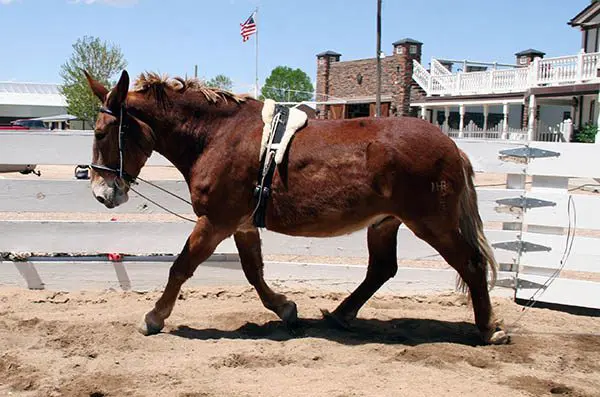 synchronize his own body language with what he is asking from the equine so his signals are clear. This is especially important for novice animals and trainers.
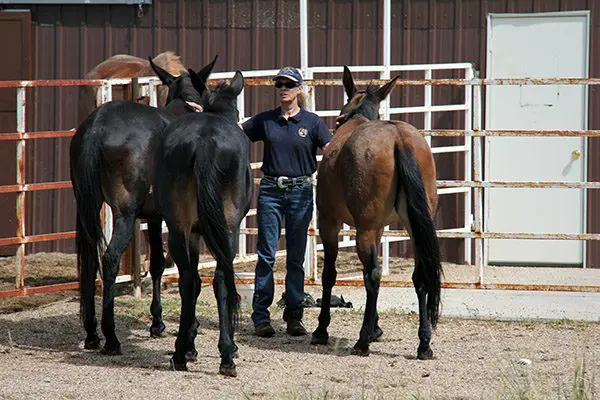
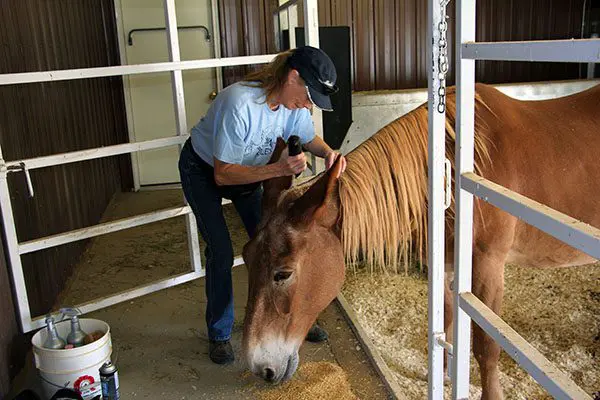 During this time, your equine’s ground manners will begin to develop. If you are consistent with what and how you ask, when the rewards are prompt and appropriately given, you should experience minimal adverse behaviors.
 The strike on the fetlocks will not hurt him. It will only startle him and get his attention. Your voice will also startle him when you say, “NO!” and will cause him to turn his head to you and THAT can be rewarded. Biting is handled the same way with a firm slap of your palm on the side of his mouth, a loud “NO!” and then put up your hand like a stop sign in front of his face. He will raise and turn his head to flee at which time you simply step forward and offer the oats reward with an open hand for giving you your space. The next time he becomes aggressive (and he will!), you will only need to raise your hand like a stop sign and he should step back to receive his reward. The first-time slap applied smartly was simply to clarify the boundary to his behavior. So, if you do not want to slap him again, you have to make a firm impression on him the first time! It is well worth the few minutes of training that it takes in the beginning to ensure that your animal does not become dangerous later. This may literally make the difference between life and death.
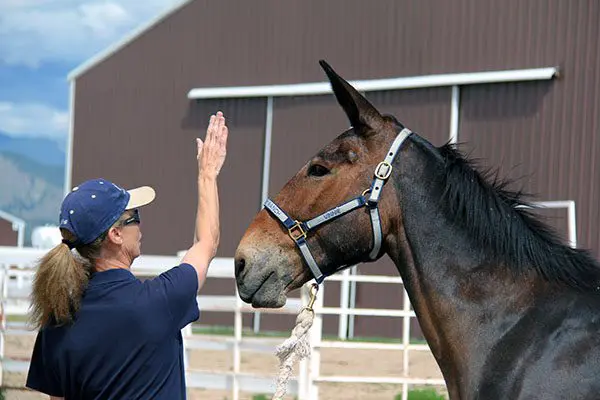 The result of this early limiting of the negative behaviors (of biting and kicking), will pave the way for you to set boundaries to any other questionable behaviors that might arise in the future. All it should take is the raising of your hand and a firm “NO!” It teaches the equine to think before he acts. It might mean the difference between a real bite, or nip, and a soft nudge, or a kick, and a soft shove with a hind foot when he experiences discomfort. Early negotiation of obstacles on the lead rope will also help to engage his curiosity, help to solidify his responses for rewards, passively build and condition the muscles closet to the bone, and will encourage trust in his trainer. Now we can safely proceed to a more open area to play and learn with our equine.
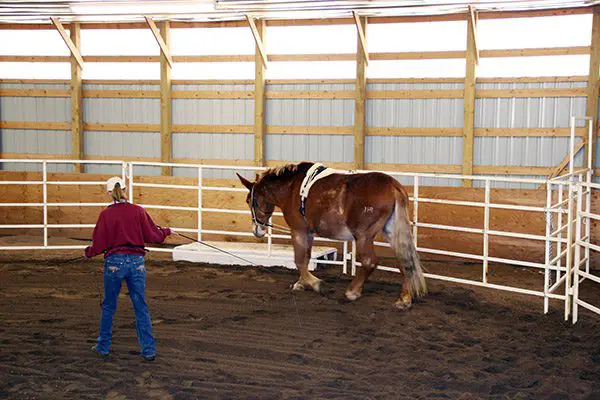 The same goes for the equine that had problems getting started. Send him back to the rail again and build the number of expected rotations slowly and over time. Be consistent with your rewards for the “Whoa.” Learning the consistent, “Whoa” will give you a safe zone from which to work and play. This will translate to trust and confidence, and will temper the flight reflex to a controllable level. It can make the difference between the freeze and flight reflex if the equine is spooked under saddle.
 into your program. As they say, “You can always learn something from everyone!” It is our job to sort through what only works for the short term, and what really works for long term success. Don’t be afraid to make mistakes. It’s just one more way to learn. The more we think we know, the more we learn that there is so much more to learn!