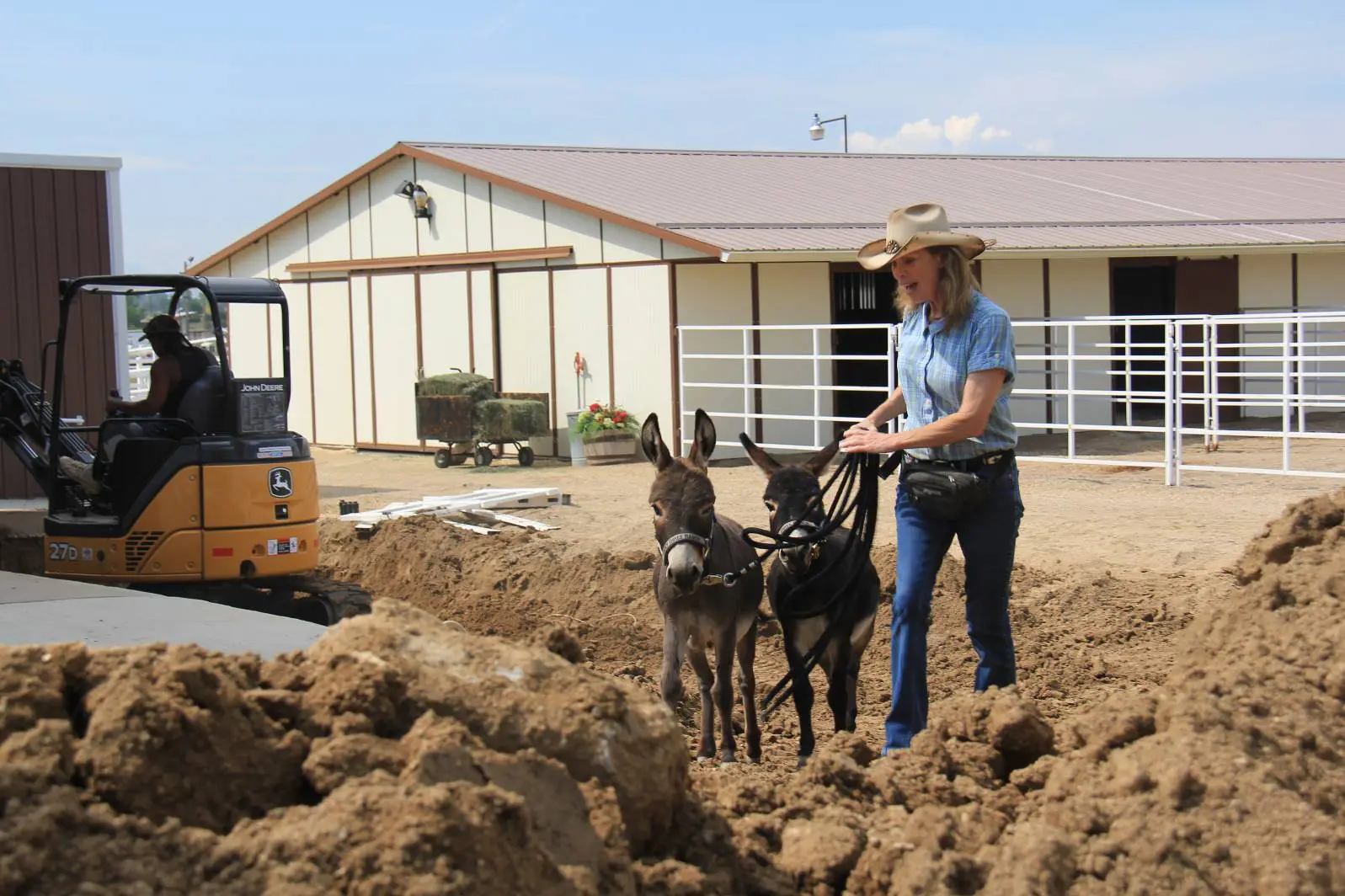
Mule Crossing: Moving Beyond Prey vs. Predator
By Meredith Hodges
 In the past, when equines ran free, they were unencumbered by human interaction and could build and condition their muscles naturally. Today, with increased population but reduced open lands, their activity is often restricted. It then becomes our responsibility to not only train them, but to prepare them physically to perform and keep them happy in their environment. This responsibility becomes even more important when we ask them to exert more energy than normal, in activities like long trail rides, endurance events, showing and equine-related work. Proper preparation for this modern-day lifestyle will help to minimize your equine’s stress, both physically and mentally.
Natural Horsemanship techniques, based on the equine’s natural behavior and status as a prey animal, promote an awareness we often overlook. They give us a wonderful way to learn how to connect with the equine mentally and communicate with him using our own verbal and body language. Many people get intimidated simply by the equine’s size. These techniques instill a sense of confidence and understanding, and without them, fewer people would take an interest in these animals and want to learn how to interact with them. A relationship with an equine can be incredibly satisfying, and equine companionship can enhance any life. This is why therapeutic riding programs for the disabled, at-risk youth, and those with other physical and mental disabilities are so successful.
Understanding the equine’s natural evolution and behaviors can help us give him what he needs to thrive in captivity. It would be nice if we could provide a habitat akin to what the wild equine used to enjoy: room to run, with an abundance of soft dirt and occasional hard ground under his feet. Unfortunately, today’s equine must deal with a multitude of unfamiliar challenges, including extreme activities, exposure to crowds of people, and more prolonged exposure to hard surfaces such as asphalt and cement, not withstanding the sometimes unrealistic demands that we put on him.
 Understanding the prey-predator responses can help to guide us in the training of our equines, but because of the change in the environment, it shouldn’t completely define our training methods. The prey animal that is uncomfortable with making direct eye contact with the human “predator,” for instance, is virtually trapped in a confined environment in which he has no control and can therefore become anxious and difficult to handle. We are taught not to make eye contact with him until he is willing to face us. We are taught to “chase” him in a round pen until he does.
When he finally gains the confidence to approach, we are then taught to disengage his hind quarters and keep him at bay so he doesn’t breach “our space.” This can be very confusing to any intelligent being because you are telling him to “come” and then to “go away!” And, we are handicapping him by disengaging his survival ability for flight. His response over time is to give in, but under these circumstances, he will not always to learn to trust.
The equine’s natural flight reflex is strong and takes him away from conflict. However, when man intercedes without taking into consideration the physical, mental and emotional needs of the equine, it can result in resistance wherein the equine is trapped into conflict. He is then labeled disobedient and often punished for that perceived disobedience. For  instance, the equine that is “trapped” on a lunge line and asked to reverse toward the handler will inadvertently be improperly set up to take the new trotting diagonal, or the new lead at canter, from a position that actually “tangles” his hind legs and causes him to fumble into the new diagonal or lead. This mistake can become painful and even detrimental to the stifles as he jumps out of the entanglement and can cause resistant behaviors which are often punished on top of the physical pain he is already experiencing.
The equine body needs to be properly prepared for his athletic endeavors, as does any athlete. We prepare our human athletes with exercises that address muscle groups throughout the whole body before they actually play the games to avoid acute injury to muscle groups that are not normally used in the game. Why would we not give our equines this same consideration. Teaching the reverse in the beginning should always be done in the round pen where you can ask him to turn away from you, which will set up his hind legs properly for the new direction and strengthen  his body symmetrically in good equine posture. Once he has established good equine posture and balance over a long period of time doing appropriate exercises, he will then be better able to efficiently reverse towards you on the lunge line by changing direction from a position of balance rather than an awkward imbalance.
Despite the varied differences in personalities and approach, the one thing that we can all learn to do is to communicate with respect, set clear boundaries and apply good manners in order to make friends when we accept their true nature, respect it, understand it and negotiate rather than “command.” It really is that simple, although training ourselves to be that way isn’t always simple. Animals do this with each other all the time, but they are clear communicators where we humans are not always clear in our intent. That is why you will often see animals of completely different species getting along with each other, whether prey or predator.
By setting up our equine’s environment so he is able to relax, and by behaving in a polite, respectful and considerate way, the equine can learn to respond more appropriately. When we pay close attention to the healthy development of his body and provide the right kinds of exercises to strengthen his core muscles in good equine posture, we can ultimately gain the trust and respect from the equine that we need for him to deal with all situations and obstacles the same way every time—to trust and look to us for guidance before reacting. Everything that we do for him should make him feel good, and that is what real friends are for! The equine will bond to the person who trains him, so make sure you are honestly engaged with your equine.
 Be a true leader and learn to set boundaries for your equine with appropriate corrections for bad behaviors (which can be found on our website and in our products). Make these corrections quickly and then immediately return to a clear definition of what you expect and make sure that it is easily doable for your equine at each step. Every animal on the planet will correct another’s misbehaving with a very clear and undeniable gesture that will stop the abuser promptly in their tracks. Take note. This is not abusive, but rather a very clear communication of what’s right and what’s clearly wrong. In fact, in the case of the mule attacking the puma that has circulated the internet for the past few years, it was clearly a case of the mule engaging in the hunt with his human “friend.” So, who is really prey and who is predator in this particular scenario? Sometimes we just need to change our perception or understanding of things and deny all-encompassing generalizations and stereotypes.
Reward good behaviors as per the laws of Behavior Modification, or “appropriate reward system training.” The oats reward that we use ensures that the good behaviors will be repeated and will become the animal’s new natural way of  being. In the practice of true Behavior Modification, all five senses should be employed: sight, hearing (voice), smell, touch and taste. These are all innate ways to communicate effectively. Any distractions should be eliminated when communicating with your equine—put away the electronic devices, clickers and loud whips, and avoid abrupt noises.
The way that you manage and train your equine can be set up in a logical, sequential and predictable routine that your equine can rely on thereby dispelling his anxiety and maximizing his trust in you. Exercises that prepare his body slowly and over a long period of time to carry a rider ensure that he will not overexert or compromise muscles that could otherwise become sore, or worse. Interaction with him that is more conversational using the five senses will elicit a more conversational response from your equine, developing a close relationship comprised of negotiation and mutual respect where both partners participate on equal ground. We spend 12 years preparing our children to become responsible adults. How could it effectively take much less for our equines to learn to live and work in their new and more crowded environment? If you have any doubts about the real success of this kind of approach, you need only visit the Lucky Three Ranch where we all make direct eye contact with each other and see the results for yourself! When our equines are spooked into flight, they run towards us, then stop and ask, “What do we do now?!”
To learn more about Meredith Hodges and her comprehensive all-breed equine training program, visit LuckyThreeRanch.com, MEREDITH HODGES PUBLIC FIGURE Facebook page, or call 1-800-816-7566. Check out her children’s website at JasperTheMule.com. Also, find Meredith on Pinterest, Instagram, MeWe, YouTube and Twitter.
Covered in TRAINING MULES & DONKEY: A LOGICAL APPROACH TO TRAINING, TRAINING WITHOUT RESISTANCE, EQUUS REVISITED and A GUIDE TO RAISING & SHOWING MULES at www.luckythreeranchstore.com.
© 2016, 2024 Lucky Three Ranch, Inc. All Rights Reserved.


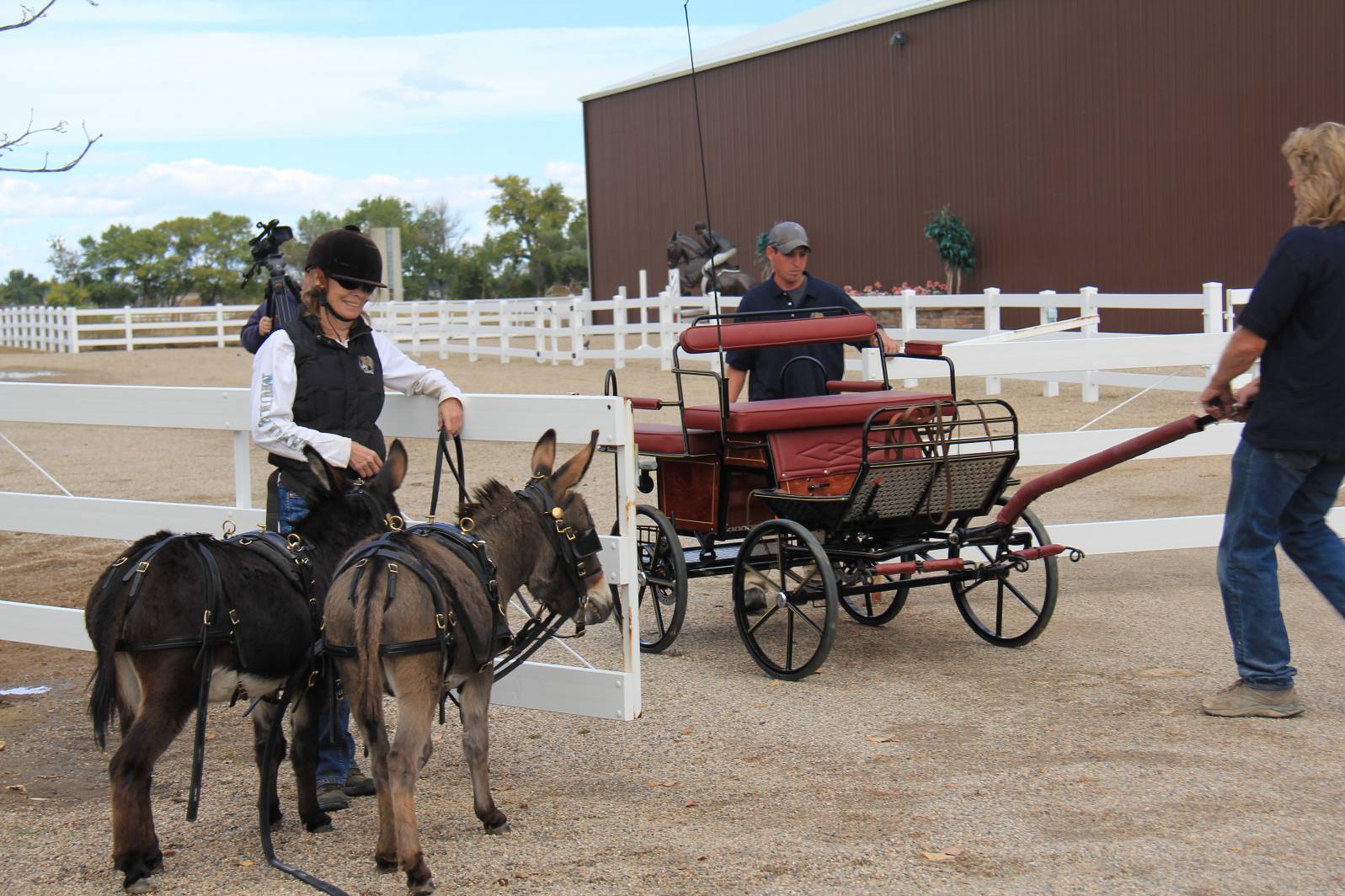
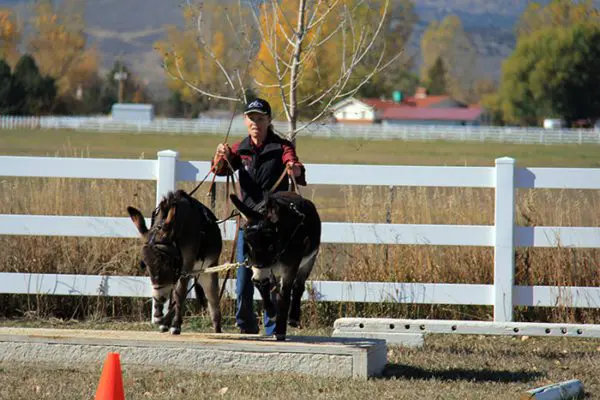 In Part 1 of Getting Down with Minis, you learned how to begin the relationship with your miniature equine in a positive and natural way that fosters good behavior and a solid relationship between you. You also learned the importance of getting down to your mini’s eye level so that he can make eye contact with you, which discourages striking, jumping on you and other bad behaviors that are common when working with miniature equines. In Part 2, I discussed how important it is to successfully complete the tasks in Part 1 before moving on to Part 2 and explained why it is advisable to work minis in groups, as they perform better when they are with their friends. You also learned how to train minis to go over and around various obstacles. Remember that all of this is to be done with no expectations that may overwhelm your mini—it is better if you maintain an attitude of fun and games. In Part 3, we got down to some serious groundwork training so your mini can be used for the purpose of driving and showing in hand. He learned to lunge and to be ground driven in the round pen and in the open arena through the hourglass pattern and if part of a team, how to do these things as a team. In Part 4, you worked on obstacle exercises on the drive lines to increase strength and coordination.
 Spend as many tire drag lessons as it takes in the round pen to be sure your mini is driving easily and smoothly before graduating him to the open arena with the tire. Just as you did with simple ground driving, once he is ready, let your mini drag the tire while ground driving him through two rotations of the hourglass pattern, and then cross the long diagonal and do two more rotations in the opposite direction. Make halts often so rewards can be dispensed for a job well done. Do not make any abrupt turns or try to add speed before you are completely competent with the lines and your mini is responding obediently. Ground driving is as much for you to learn good Reinsmanship as it is for your mini to learn to drive correctly. If training more than one mini, just tie whichever mini you’re not working with at the moment off to the side and have him wait his turn before ground driving the two as a team. The frequent halts with rewards will teach him to stay clam and remain still when asked.
 Before actually hitching your mini to the vehicle, be sure to check all harness straps and make sure they are correctly adjusted. While you do this, you will also be teaching your mini (or minis if a team) to stand still in the cross ties, which will make hitching much easier. Checking all harness straps can be done anywhere that your fences or hitch rails are close enough together to accommodate the cross ties and still allow enough room for a single mini (or team) and the vehicle. During this lesson, all you need to do is put on and adjust the harness, hitch to your vehicle, have your mini (or team) stand quietly while being rewarded and then take everything back off. Before leading your mini(s) away from the vehicle, spend some time rewarding again for standing still and staying in position.
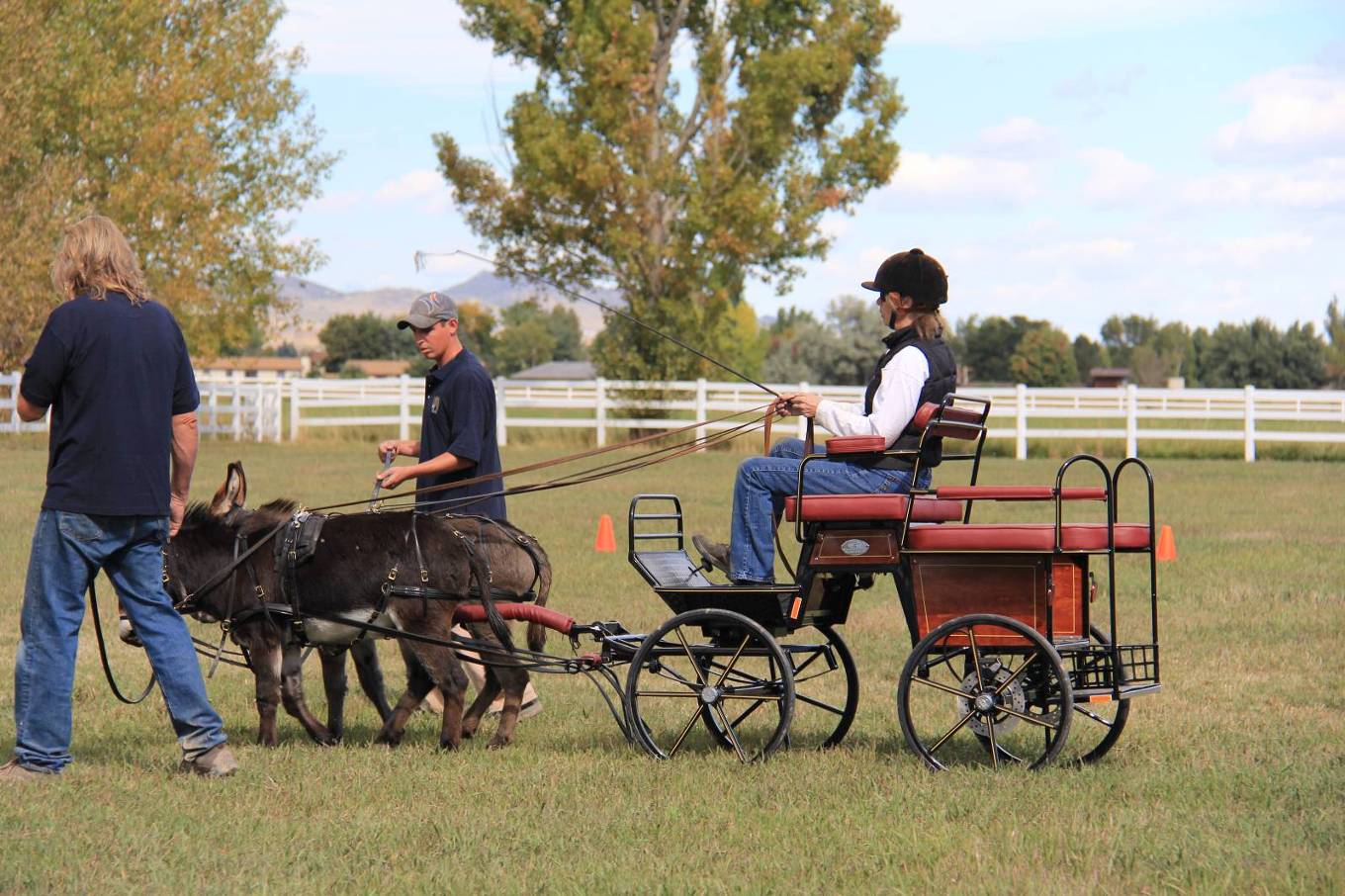
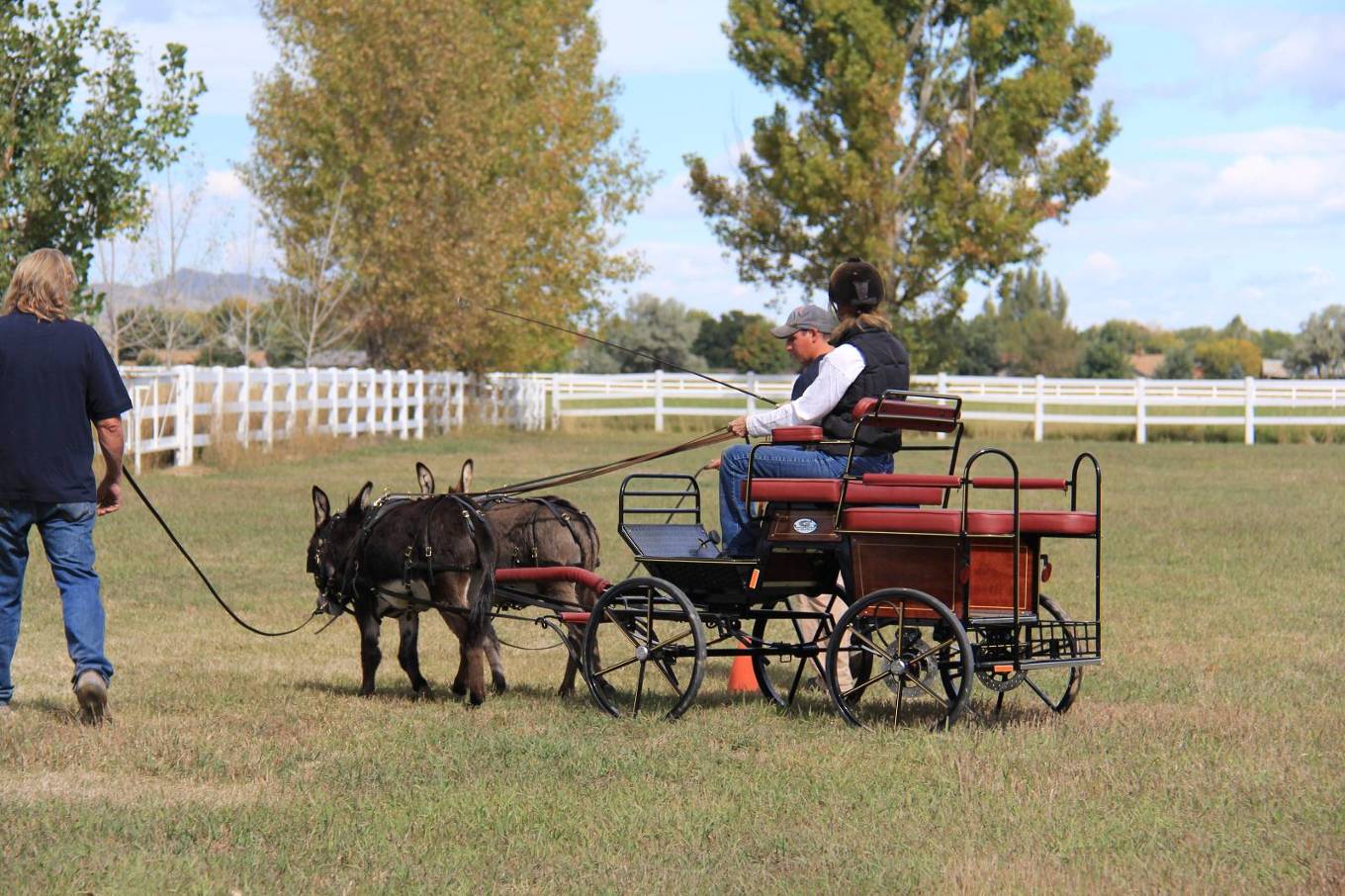
 your assistant to stand in front and to the side of your mini with a lead rope attached to a ring on the noseband (not the bit) of your mini’s harness bridle. When ground driving a team, you will need to use two assistants. Ask each assistant to stand on either side of the team. Once your mini is harnessed, and when you are seated in the vehicle and ready to go forward, ask your assistant to unsnap the cross ties and release your mini while your assistant stands at his head. Now ask your mini to “walk on.” Let him go just a few steps and then ask him to “Whoa.” If your mini does not stop promptly, your assistant can help by pulling back on the lead rope with a pull/release motion while, at the same time, you pull back on the drive lines with a pull/release motion. When he does stop, have your assistant give him his oats reward. Let your mini settle before asking him to back a couple of steps and halt again. Reward him for halting and end the lesson there. The object is to allow your mini enough time to understand what you are trying to teach him and respond accordingly so he can be rewarded without spending so much time that he gets bored and sucks you into a confrontation.
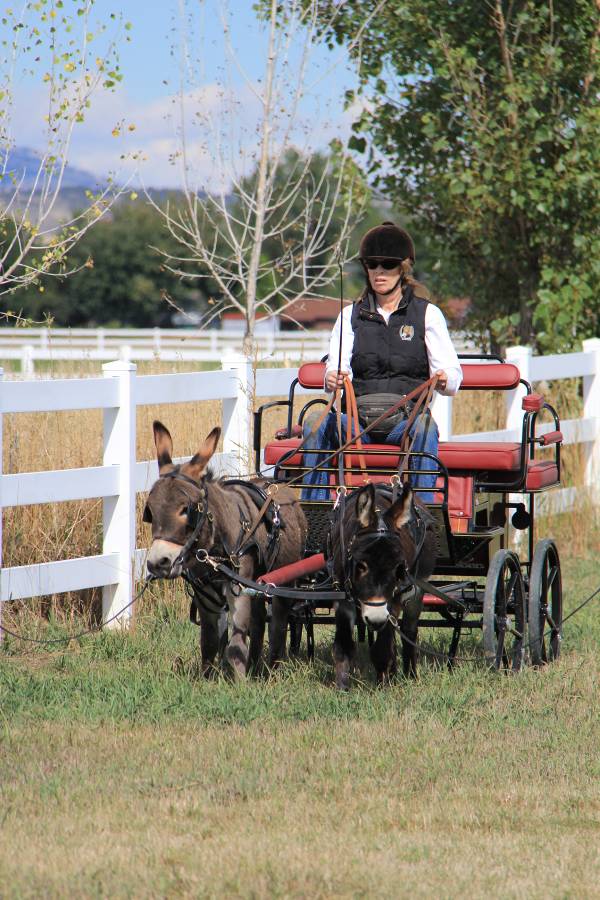
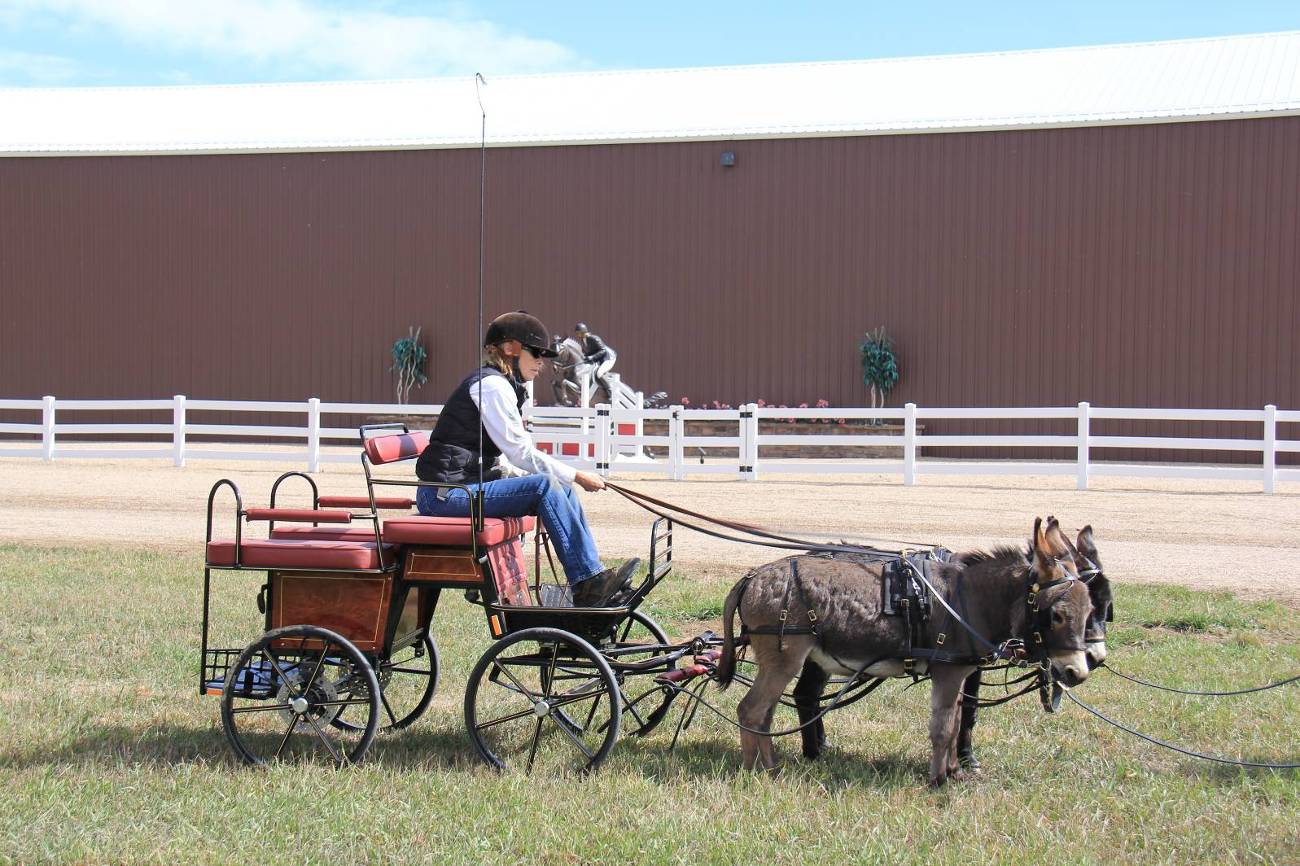
 When your mini is hitched to a vehicle, make a very large hourglass pattern to accommodate your vehicle. His familiarity with this pattern will help him to feel calm and gain confidence while being driven. Every time you end a lesson, keep your assistant at your mini’s head until your mini is fully unhitched from the vehicle. NOTE: Always remove the harness bridle last. Once he is unhitched, make your mini stand where he is while you come to him, then reward him and lead him away. This is how he will learn to wait for you and will not become antsy and uncontrollable. Routinely practicing good manners, setting up an environment for success and approaching your mini with a calm and deliberate attitude will all help him to become a quiet, safe and reliable driving animal.
 In Part 1, you learned how to begin the relationship with your miniature equine in a positive and natural way that fosters good behavior and a good relationship between you. You also learned the importance of getting down to your mini’s eye level so that he can make eye contact with you, which discourages striking, jumping on you and other bad behaviors that are common when working with miniature equines. In Part 2, I discussed how important it is to successfully complete the tasks in Part 1 before moving on to Part 2, and I explained why it is advisable to work minis in groups, as they perform better when they are with their friends. You also learned how to train minis to go over and around various obstacles. Remember that all of this is to be done with no expectations that may overwhelm your mini—it is better if you maintain an attitude of fun and games. In Part 3, we got down to some serious groundwork training so that your mini can be used for driving and showing in hand. He learned to lunge and to be ground driven in the round pen and in the open arena through the hourglass pattern and, if part of a team, how to do these things as a pair.
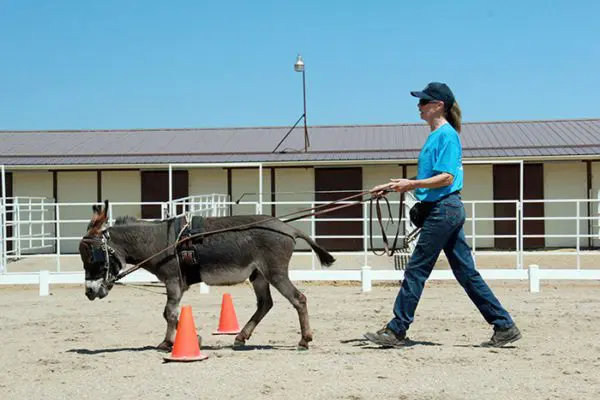 The “Elbow Pull” supports good equine postural balance and acts much like the balance bar that is used by a ballet dancer until she or he is strong enough to hold any postural position in the middle of the room without support. This becomes very important when your mini is in draught (pulling an obstacle or vehicle) in order to make sure he will pull correctly, and symmetrically condition his body’s muscles to avoid future injury to the internal structures within his body.
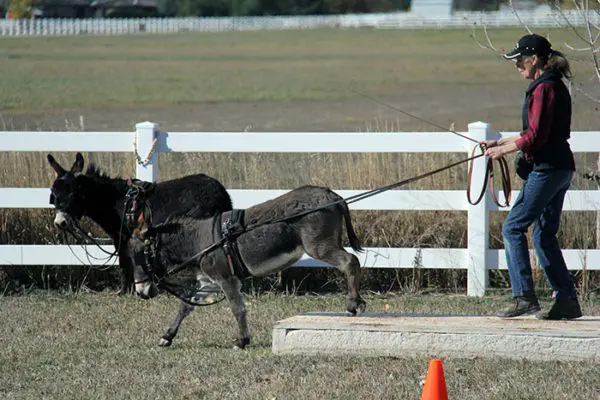 By now your mini has already learned to ground-drive the hourglass pattern and has negotiated the obstacle course on the lead line. There are still more obstacle exercises you can do to strengthen your mini and improve his strength and coordination to prepare him for driving before he is ever hitched to a cart or carriage. Now he is ready to learn to ground-drive the obstacle course. The obstacle course exercises will increase his confidence in being in the lead and help him to go bravely ahead of you upon command.
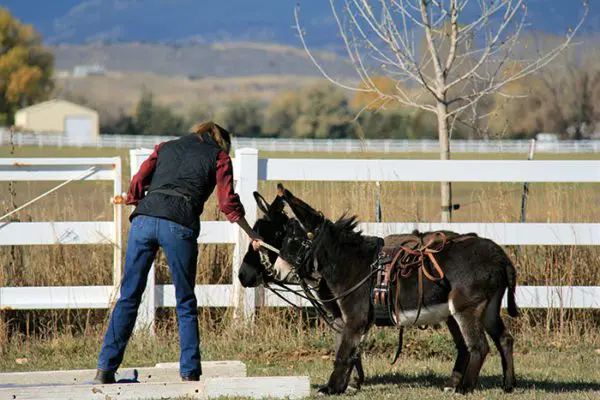 Approach each obstacle on the drive lines and if he balks and refuses to go forward, just stop, gently lay the lines over his back and then lead him through. Then go back and try again on the drive lines. In order to alleviate any fear or confusion your mini may feel, remember to “get down” to his eye level whenever possible. NOTE: Don’t forget to always reward him with his favorite crimped oats for compliance.
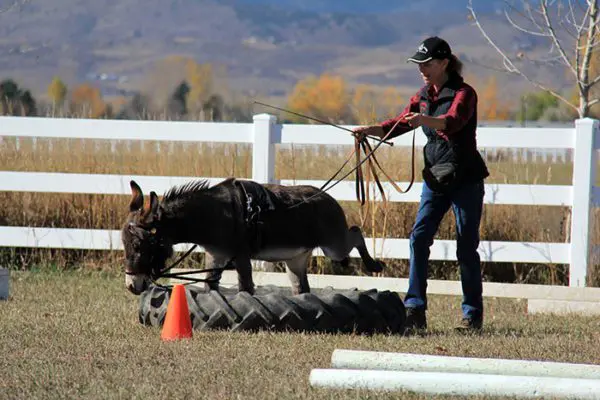 Once your mini is willing to go straight through the obstacle with a calm attitude and no balking, you can then begin to break each obstacle down into smaller, easier steps, rewarding and praising him for each success. If he is apprehensive about any obstacle, you should lead him through these smaller steps with frequent halts before attempting to ground-drive him through. He may need these detailed “explanations” before he is willing to “take the lead.”
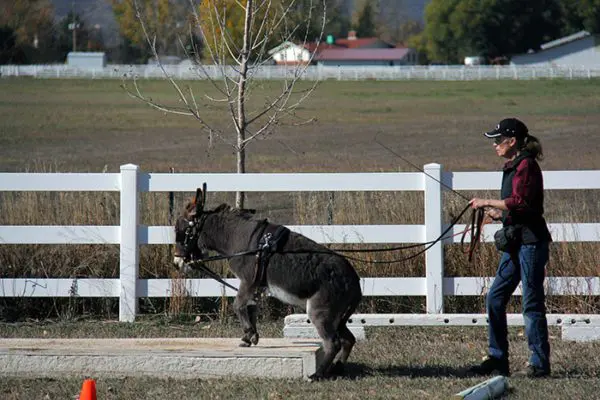 If you are training him on the bridge obstacle, go to the landing, stop, square up, put the lines up and reward, then resume your position and drive him up onto the bridge, but with only his front feet on the bridge, and then stop again. Put up the lines, walk forward and reward. Then drive him completely onto the bridge, stop, square up, put up the lines and reward. If he is having problems squaring up on the lines, then just square him up when you get to his head before you reward him.
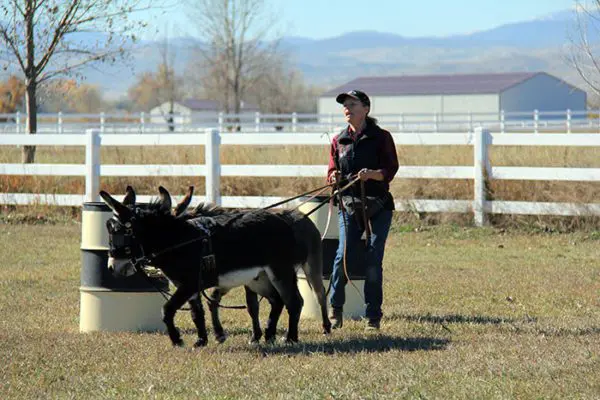 You can ask him to take full responsibility for perfect balance and negotiation of the obstacle later. For now, your primary task is to help him get through the obstacles successfully and with as little help as possible. Breaking obstacles down into smaller steps will increase his balance, coordination, agility and self-confidence. Even after he has become competent while hitched to the vehicle, you can use ground-driving obstacle exercises in the “Elbow Pull” to finesse his movements during future lessons. It will add variety to your mini’s lessons and continue to promote health, coordination and good equine posture.
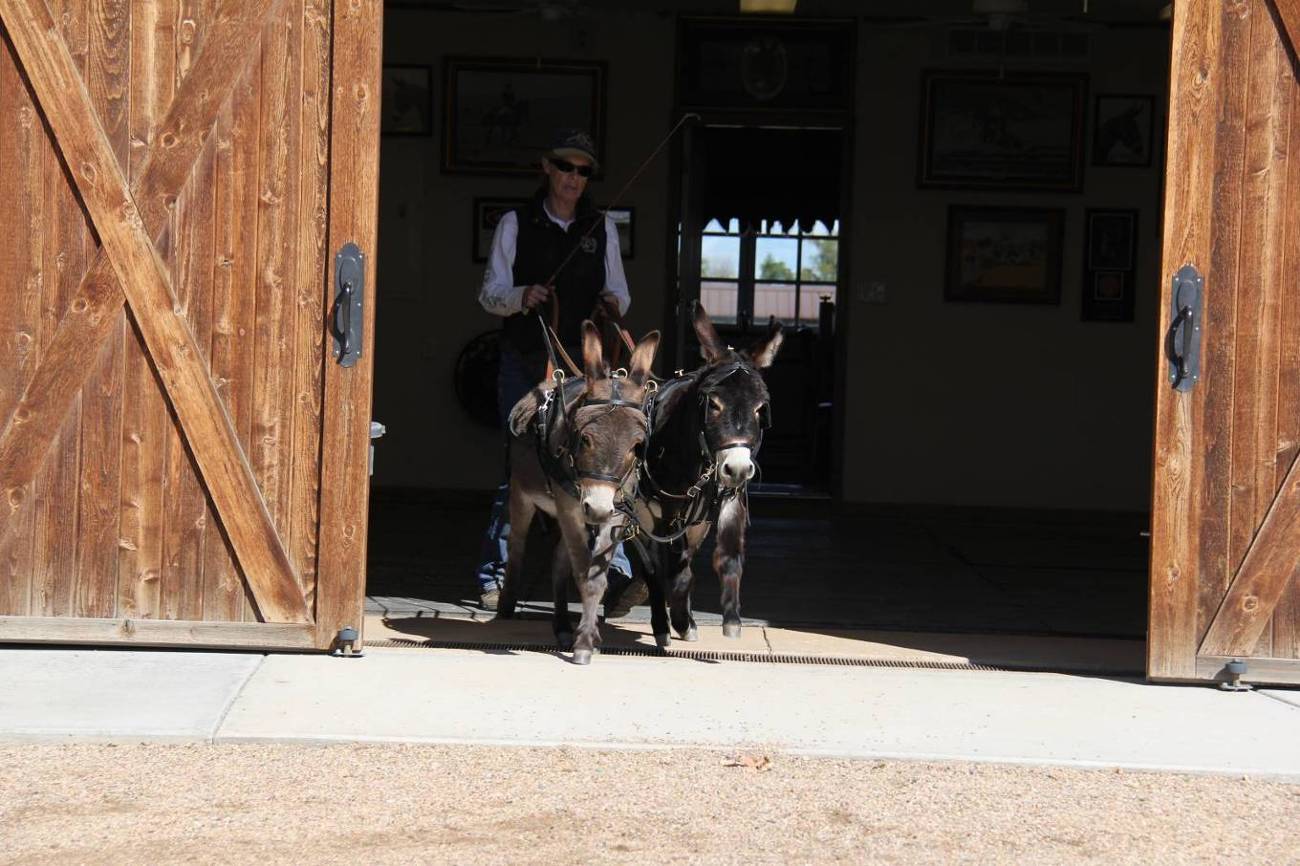
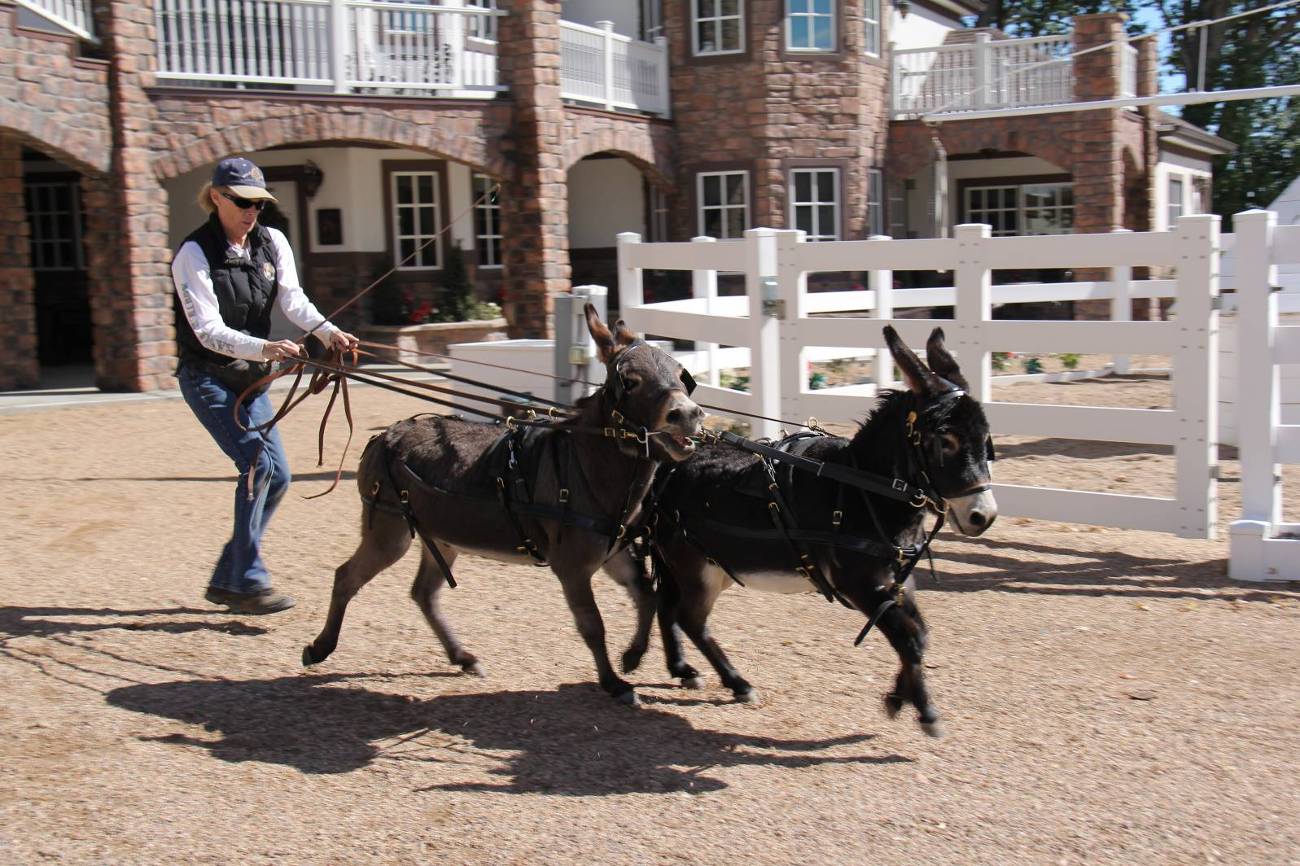
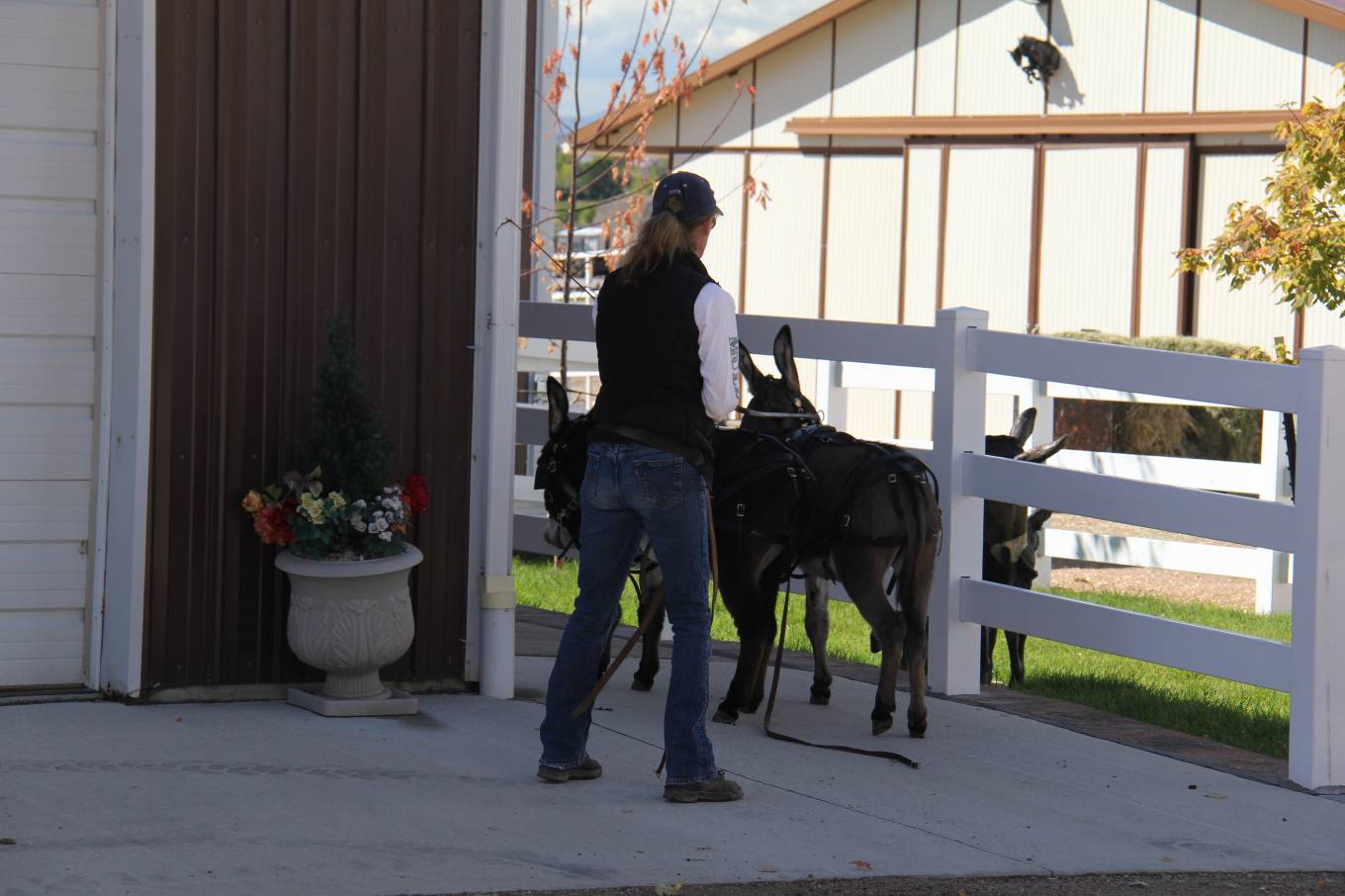
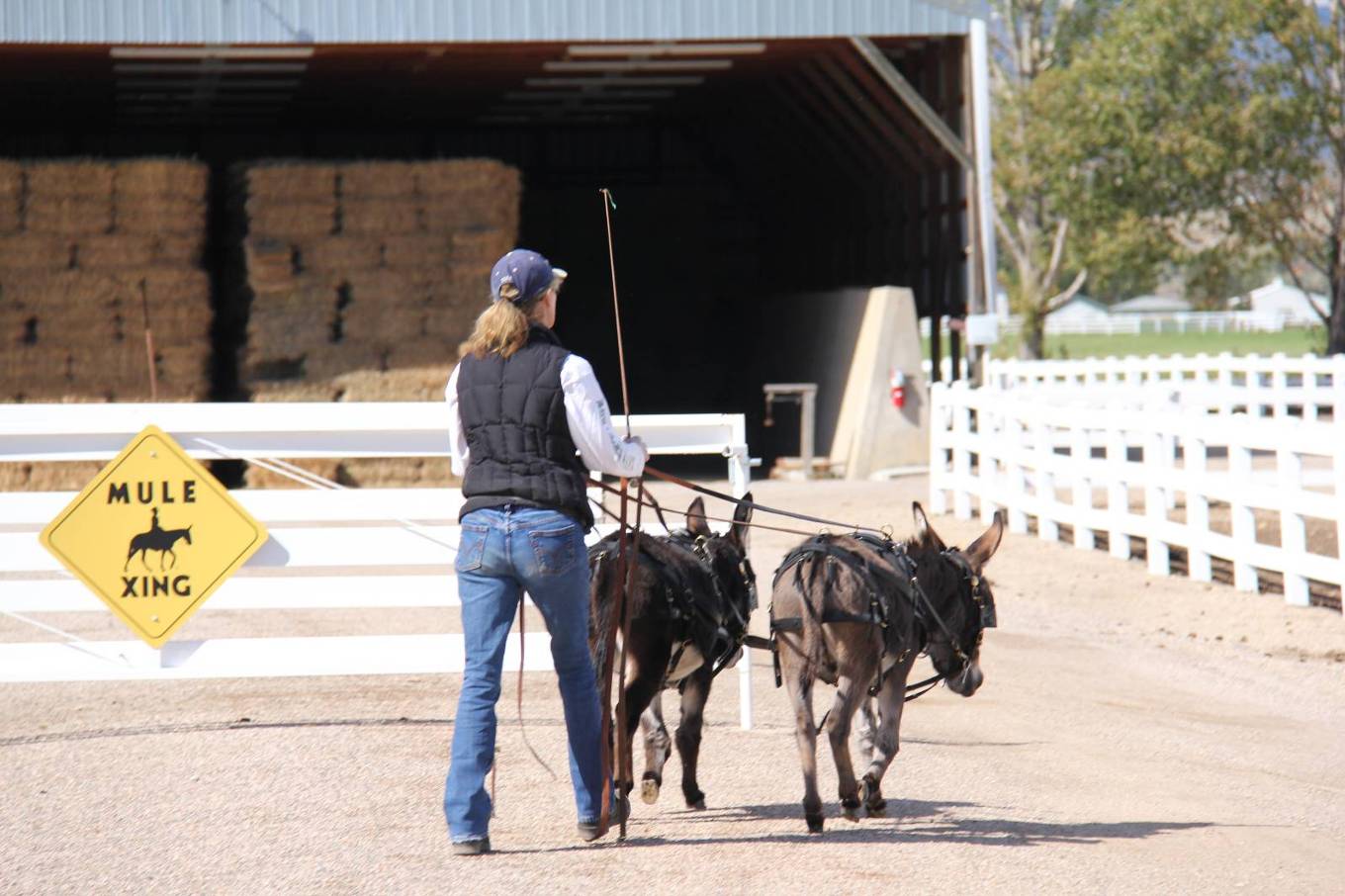
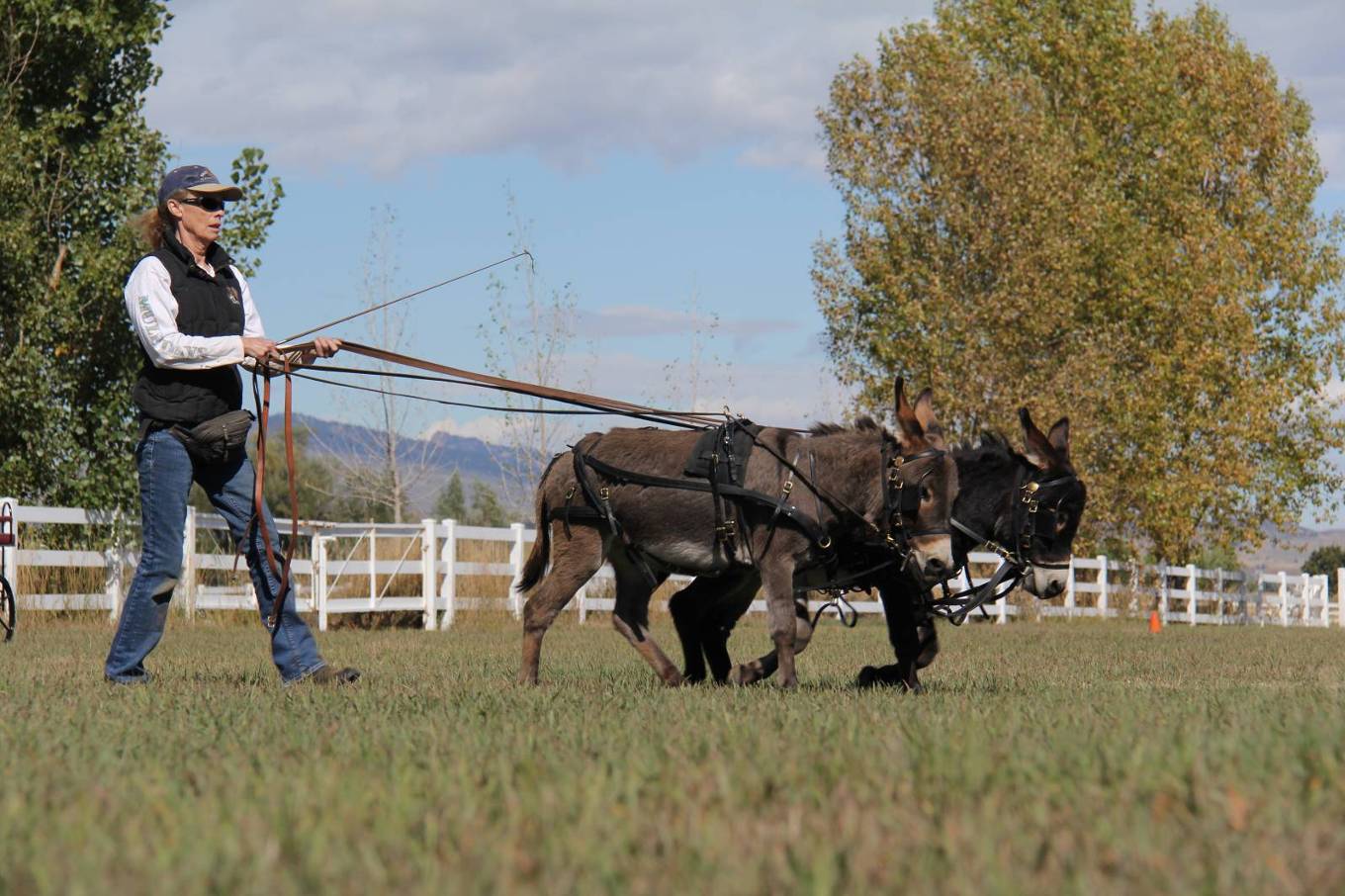
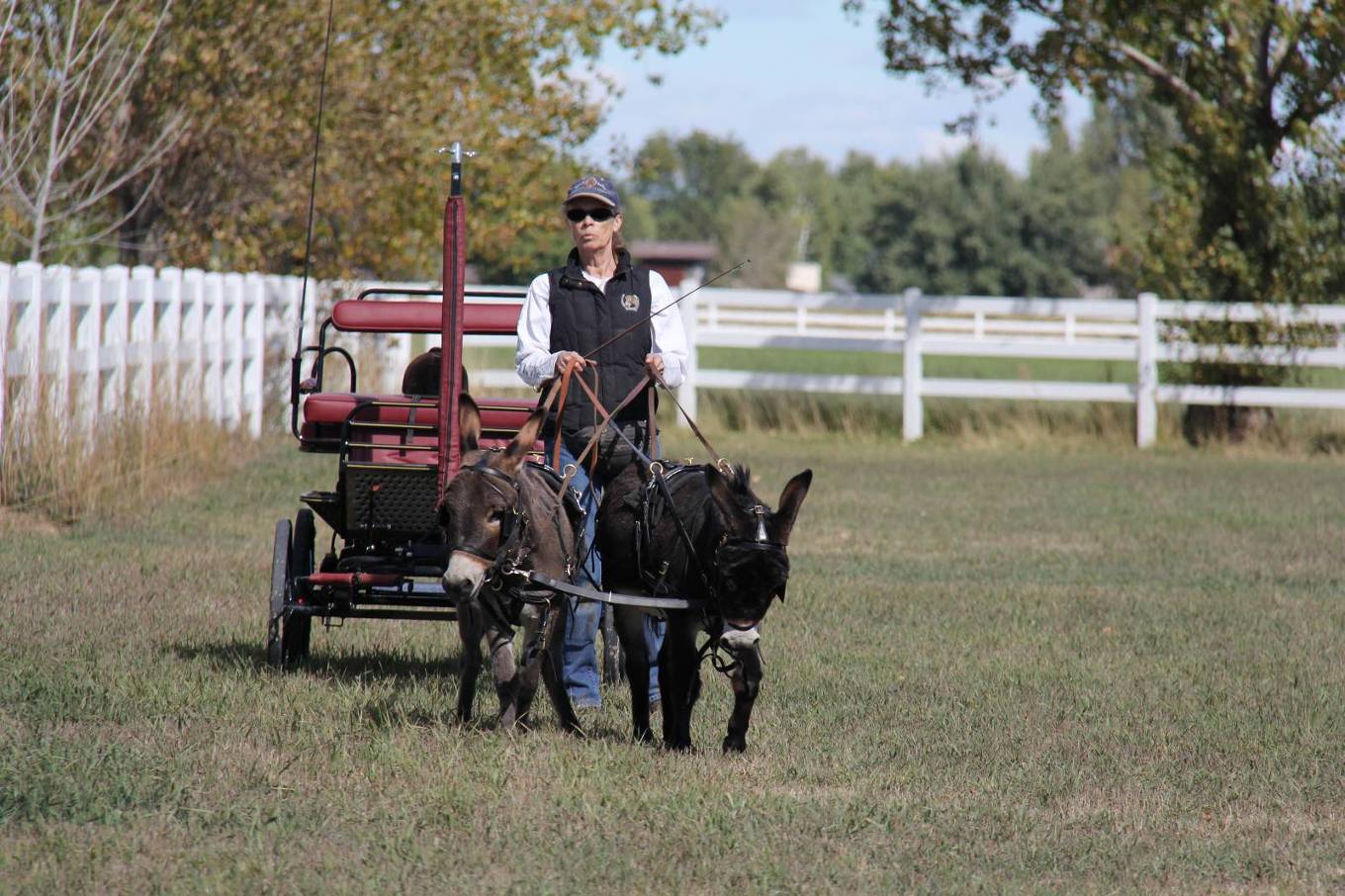
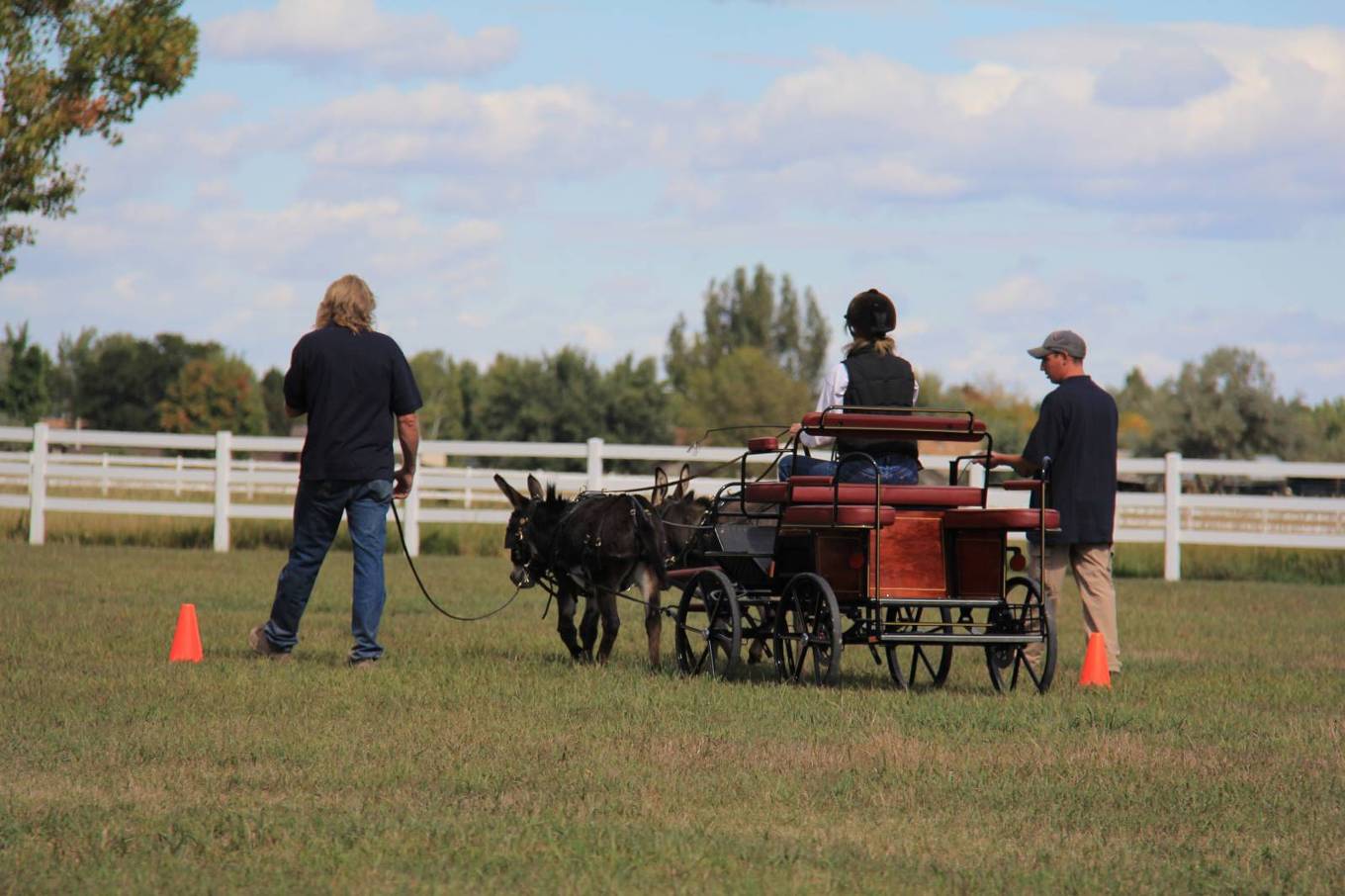
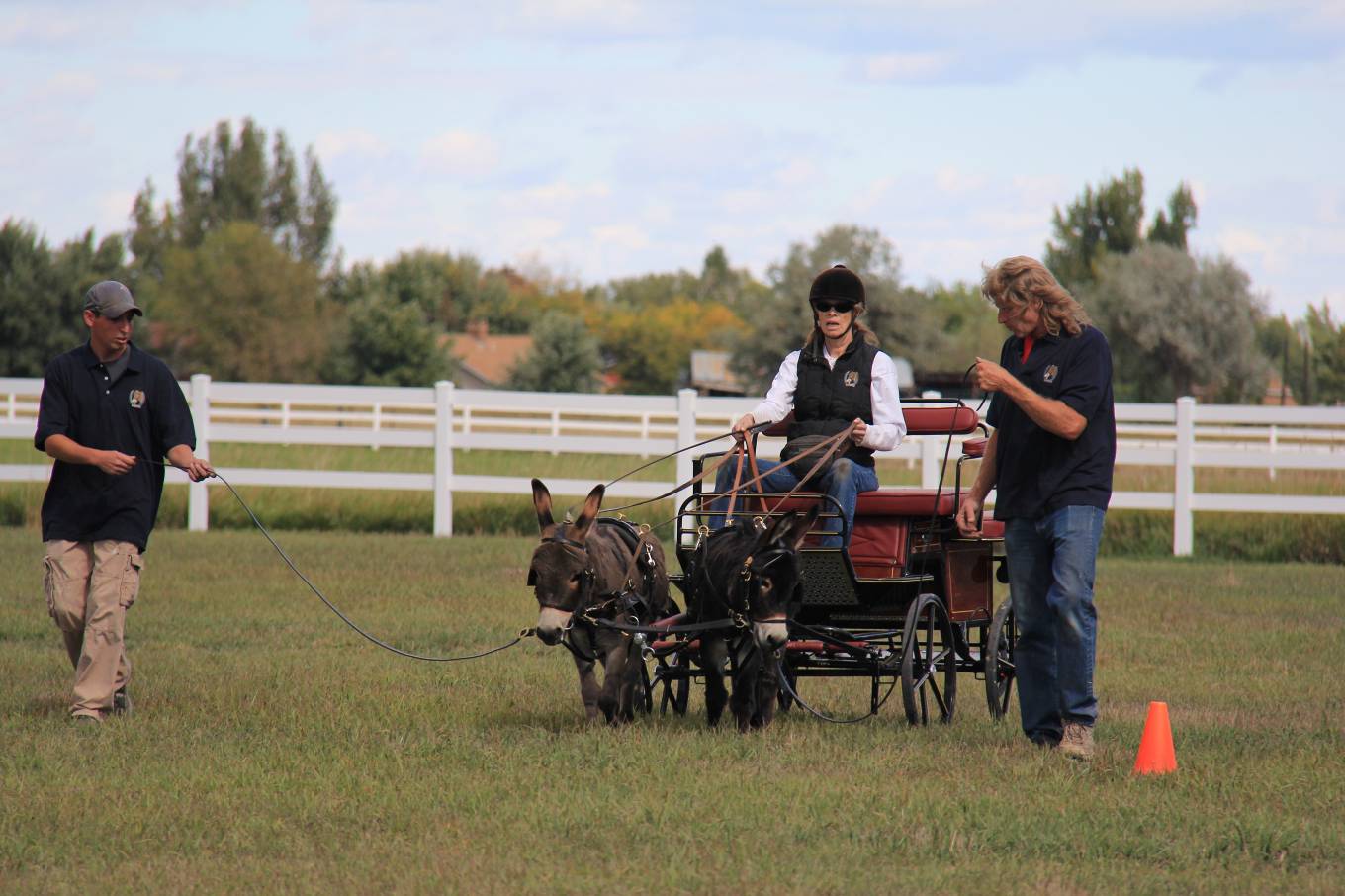

 In Part 1 of this article, you learned how to begin your relationship with your miniature equine in a positive and natural way, and how “getting down” to their eye level so they can make eye contact with you discourages striking, jumping on you and other bad behaviors that are common when working with miniature equines. Be sure you have successfully completed the lessons in Part 1 before moving on to the lessons in Part 2 or training may not yield the desired positive results. Also, if possible, it is best to work minis in groups if they are used to being with other equines, as they perform better when they are with their “friends” and it doesn’t hurt to train their friends in the same way.
 in Part 1), but this time you will be in the work station and you will have a guest…the farrier. Before the farrier attempts to pick up the first foot, ask him to sit down beside your mini in front of the shoulder on the left side and offer a handful of oats as a way of introducing himself. Next, while you sit at your mini’s head and offer the oats reward for good behavior, have the farrier begin with the near side (left) front foot and work his way around from front to back, and then from back to front on the other side (right). While the farrier is working, talk calmly and encouragingly to your mini, and as long as he is doing what is asked of him, offer rewards generously. He should yield his feet easily, but if he does not don’t offer the reward until he complies.
 Don’t shove your mini when you want him to move over. Rather, give him some oats and use your index finger to tap or poke him on the side of his ribcage. If he doesn’t move over, use your whole hand to give him a slight push, always using a “push and release” movement, which is non-confrontational. You don’t want to keep steadily pushing up against him, because as soon as you give him anything to push against, he will and you could find yourself in a pushing match or, worse, a confrontation with him. As soon as he complies and moves, give him the oats reward and slide your body in next to him to help hold him in position for the farrier as he works with each foot. Don’t be afraid and always stay on the same side as the farrier. If the mini decides to make an abrupt move, he will try to slide around you because equines really don’t like stepping on, or running over, soft, squishy things like our bodies, so if your mini can get out of your way, he will. Even if he was to jump up in the air, he would more than likely jump over or around you, taking the path of least resistance. Trust your mini, stay calm and avoid becoming tense or exhibiting fear and things should go smoothly.
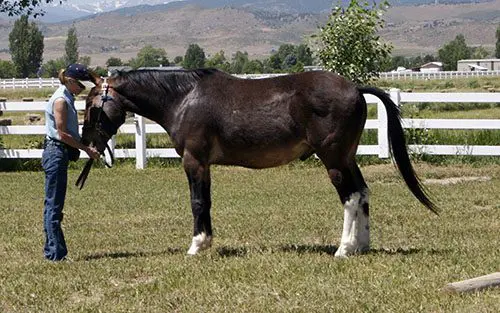
 This approach becomes particularly important when negotiating something like a dock or a bridge where you are not only dealing with an obstacle, but an obstacle that makes you substantially taller than you already appear to your mini. This is another instance when you can “get down” on your mini’s eye level the way you did in the pen and at the work station. Remember to do things in small steps. When you walk onto the surface of the dock or bridge or any other large, flat surface, leave enough room for your mini to come up. When you get to the end of the lead rope, take up the slack and then sit down and offer the reward. Then, once your mini has negotiated the obstacle, give him the oats reward and just have another picnic. If a companion equine is accompanying you, be sure to tie the companion animal in front of the obstacle so your mini can always see him. If you tie him behind, your mini will worry and want to go back instead of forward.
 When you are ready to step down off the dock or bridge, it would be unsafe to be lower than your mini, so at this point you should stand up, go to the end of the obstacle and ask him to come forward off the raised obstacle, making sure he has plenty of room to come off the obstacle without you having to move. Stand quietly and keep the lead rope taut as you verbally encourage him and invite him to come down off the bridge. As soon as he jumps down, ask for a halt and reward him for jumping down and stopping right in front of you. (He will learn to negotiate the obstacle more slowly with practice.) Once he has finished negotiating the obstacle and halted and is chewing on his reward, you can then proceed to the next obstacle. Having definite, purposeful and timely pauses will help alleviate anxiety and resistance in your mini.
 longer he must go without making eye contact with you, the greater the chance of resistance, but eye contact on his level will give him confidence in your judgment and will help to facilitate a real bond between you. If negotiating an obstacle such as a tractor tire or six tires, just extend the lead rope over the tire or tires, sit on that side, keep the rope taut and proceed as you did with the bridge obstacle.
 I call this technique “OATS.” (Observe, Approach, Touch and Sigh). It allows your mini time to observe each situation, then approach and touch the obstacle, finally giving a sigh as a signal that he is relaxed and not afraid. Always reward him for his efforts so he can begin to gain confidence and trust in you. By following the OATS technique you are turning your mini’s fear into curiosity, which will serve to keep him calm in future situations.
 By Meredith Hodges
 The show secretary is responsible for taking minutes of all show committee meetings and often acts as liaison to the show manager. It is the secretary’s duty to see to it that mailing lists are complete and potential exhibitors are notified of the impending show and are kept up to date. The secretary checks the public relations work done on the show by the public relations person, and in some cases, assumes this duty himself. The secretary records entries and receives funds sent in by exhibitors. Any program changes, protests, etc. are recorded by the secretary. The secretary is responsible for recording show results and mailing them to appropriate recipients, and to see that the results are released to the public in a timely fashion. The treasurer is responsible for handling and depositing funds used for the show and often aids the secretary in his duties. It is the treasurer’s duty to see to it that all expenses for the show are accounted for and paid and that a detailed report of such is given to the secretary.
 Judges are selected by the show committee and are paid for their expert opinion. Judges should be briefed by the show secretary as to the duties they will be expected to perform which sometimes may include designing courses for the competitions. A set of rules should be sent to the judge well in advance of the competition to allow for any questions that might need to be answered. The judge should not be asked to interpret the rules. Rules should be made clear enough that he can make his decisions easily, which are in turn deemed final. Judges are given the power to combine, or split classes where appropriate. The judge should not socialize with exhibitors until the competition is over to preserve his objectivity and integrity. When time permits, the judge should give reasons for his decisions to give credence to his choices and to help exhibitors learn. The judge should be knowledgeable, congenial and professional about his duties.
 The ring steward, or judge’s aid, has many varied duties. First and foremost, it is his duty to see to it that exhibitors adhere to the rules of the competition. It is his duty to interpret the use of the rules and not the duty of the judge. The ring steward is responsible for listening to and reporting complaints or protests. Although he has no authority in connection with the management or the judging of a competition, he should point out in a diplomatic manner any instance where rules are not being adhered to and report any violations to officials.
 He needs to be available to judges, officials and exhibitors at all times. He is to supervise and record any timeouts for tack changes or equipment breakage, and to measure animals where required. He is to conduct the breaking of ties in classes and to deliver the judge’s decisions to reporting officials. The ring steward is responsible for all medication forms, reports, and testing, with the aid of the secretary and the veterinarian. He is responsible for the accuracy of competition lists of entries and their class placements as reported by the judge and is to see to it that completed lists are given to the show secretary. The ring steward should protect the interests of the exhibitors as well as the integrity of the show. The ring steward should see that the competition moves along in a timely fashion. He, with his various duties, is a key entity for the success of the show.
 Scorekeepers and timers are used to record scores and times for specific classes and should be equipped with the proper tools to facilitate their jobs. Flags, stopwatches, time sheets, calculators, and writing utensils are necessary items. Scorekeepers should be prepared to keep times and scores updated continually so that championship classes can be announced quickly and easily.
 provided by the Ring Steward. It really helps if he has that “announcer’s voice” and is an animated character!
 Parking Attendants and Stable Managers should be used when necessary to assist exhibitors in loading and unloading, and in the parking of their trucks and trailers. They can make the difference when it comes to traffic congestion at the show. Parking attendants may also be requested to take note of the owner’s vehicles, so that they may be notified quickly in the event of an emergency with their vehicles. This can help prevent theft or vandalism. The Stable Manager sees that each animal is efficiently unloaded from the trailer and is escorted to his respective stall. If the show is providing hay, he will make sure each exhibitor has as much hay as they need and that any other needs are provided. Newt Elsdon was the model Stable Manager and Show Committee member for the Bishop Mule Days Celebration for many years.
 Last, but certainly not least, are the show veterinarian and farrier whose expertise are to be used for emergency show situations. An exhibitor should not expect to use their services for regular maintenance at the show unless pre-arranged. Veterinarians and farriers should be booked well in advance of the show to allow for their busy schedules. Alternates should also be booked and at the show, their areas should be clearly marked and they should be easy to locate.





 By Meredith Hodges
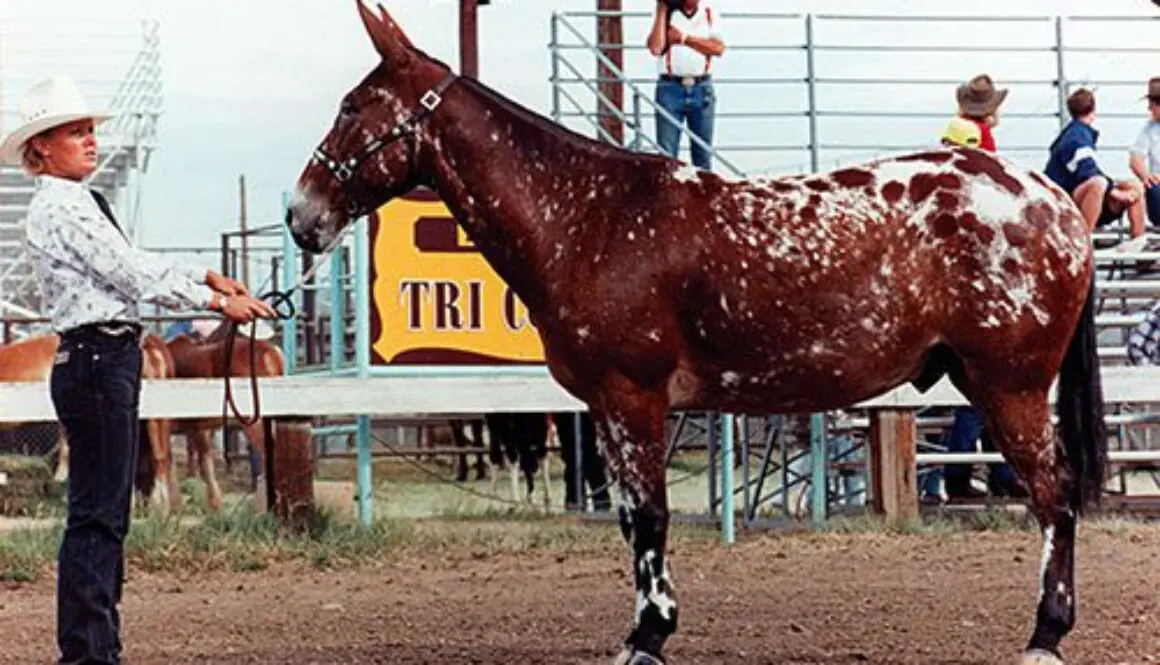
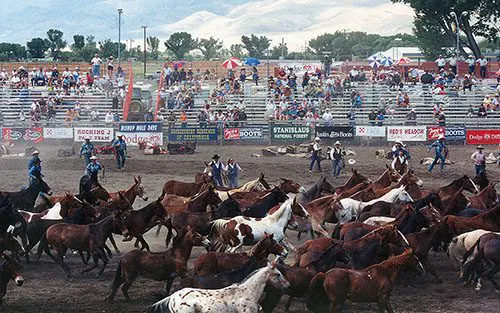
 The gift we have found with Longears is one that needs to be shared with others that they might also experience the joy and pleasure of these animals. In this hustle-and-bustle world, it is easy to miss out on the things that are really important like love, sharing and simple pleasures derived from personal growth. Mule and donkey shows are the vehicle we can use to bring these things to light and revitalize the appreciation of Longears. The show ring is a place where mules and donkeys can exhibit the results of experiments in a new realm of performance. Challenges are made and met with both humor and enthusiasm.
 transportation, inopportune geographical locations and the fear of politics. We must remember, however, that this intimidation was born of the horse show formats. There are literally millions of horses being shown all over the world and out of necessity the shows were divided and specialized according to ability and breeding. This is the only fair way to progress and still accommodate the growing numbers of equines and their owners. In the midst of this overwhelming competitive spirit, we sometimes lose sight of the true benefits of showing. Showing should be an opportunity to test your equestrian skills and to share new ideas and concepts with others. It should be fun and enlightening.
 Because mule and donkey showing is relatively new, there is much to be gained by participation. Those who feel that their animal is not of show quality can still attend shows and learn a lot about Showmanship, grooming and training skills. This development of new skills can make all the difference between show quality or not, particularly in performance events. Newcomers to showing also give the audience something extra-special. Their enthusiasm is often contagious and the audience is subtly invited to virtually join in the show. This is something that they too could manage and enjoy. Those who feel they just cannot get in enough training time can still participate in today’s donkey and mule shows as the class roster will usually include a lot of fun classes. If they do not, it is a relatively simple matter to contact show representatives and request these classes for your area. There are enough mule and donkey clubs today to sponsor all kinds of shows and one need only contact any one of then to acquire any information needed.
 Time and money are a great hindrance to showing today. Economic problems are quite prevalent these days, but as they say…”where there’s a will, there’s a way!” With careful planning and setting of priorities, one can determine the number of shows to attend in a season. Those of us who sponsor and work on shows are sensitive to the needs of our exhibitors and are willing to help in every way we possibly can. Most donkey and mule shows are not all that expensive and can be managed fairly easily. At most of the larger shows, those who wish can tie up to their trailers and save the stall fees. This is true in a lot of regions. Entering fewer classes will also save money and still provide you with the important learning and social benefits of showing. There are so many different sizes, colors, and abilities in mules and donkeys that we really need as many to participate as possibly can to properly represent our longears breeds.
 ast, but certainly not least, a word about politics. In the mule and donkey industry, we are promoting donkeys and mules. As individual animals meet new challenges and succeed, we should all feel a little warmth and joy for that individual who has obviously worked long and hard, and who stands as a representative of his breed. We can all be proud of his contribution to a greater cause. When in competition, compete against yourself and learn to derive joy and pleasure from your own improvements. There is a lot that showing has to offer besides ribbons and trophies. Showing gives you the opportunity to test your skills and to measure successes. It affords one the opportunity to assess different skills, make personal choices and to expand social interaction and education among those of similar interests. But most of all, showing gives each of us the opportunity to do our part in support of our beloved donkeys and mules!


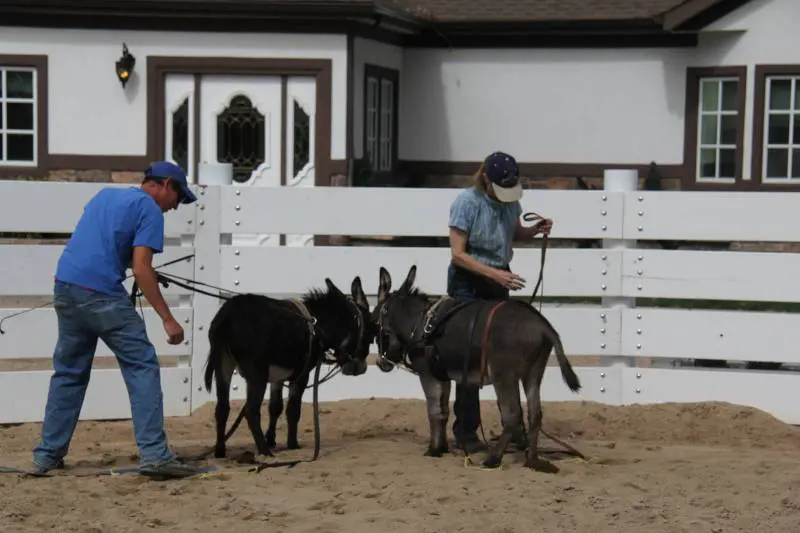


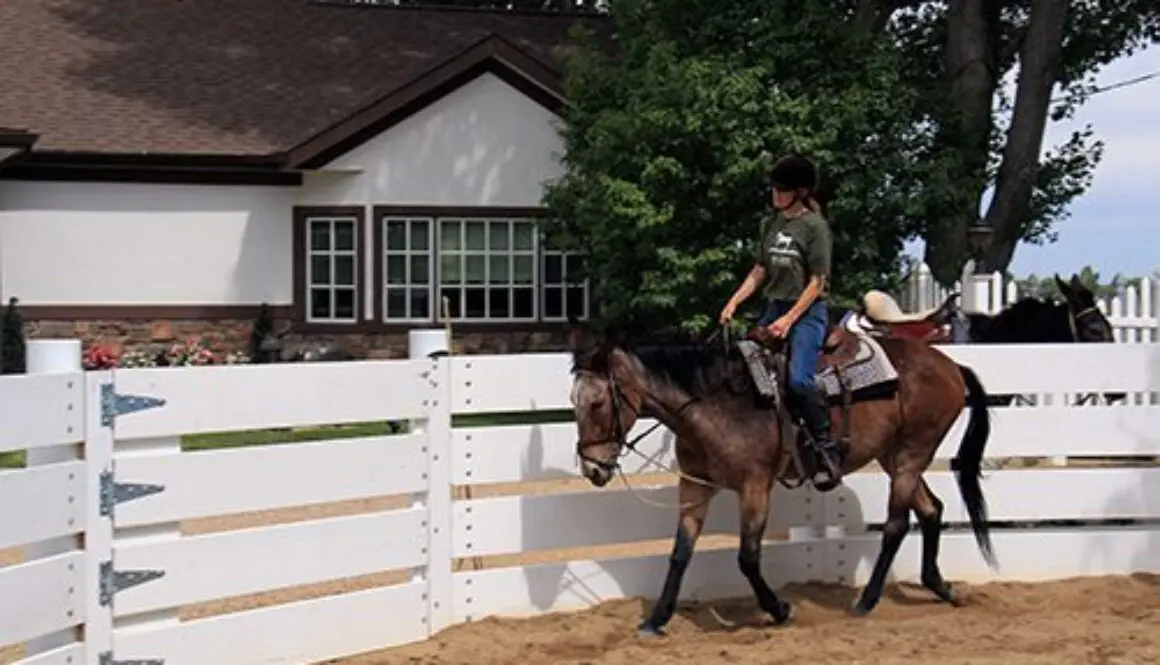


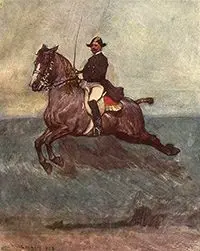 Why does Dressage training lend itself so well to training mules? In order to answer this question, we need to have a clear understanding of what Dressage really means and how it pertains to the mule’s mental and physical development in relationship to our own expectations. When most of us think of Dressage, we picture in our minds those elegant Lipizzaner stallions of the Spanish Riding School in Vienna, Austria.
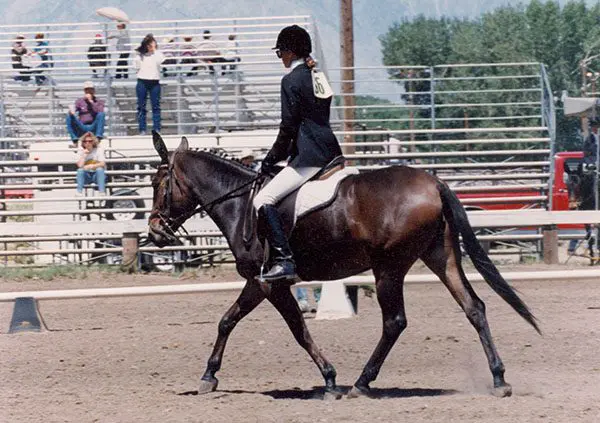 I have found that my mules will exhibit resistant behavior when they are confused or frightened, but never out of “stubbornness.” Often, we take it for granted that, since a young mule can walk, trot, canter, back up, etc. by himself, he should be able to do all these things with us astride. What many people don’t realize is that mules are born with as diverse postures as humans, and there are few mules that will exhibit good equine posture without being constantly reminded. People compensate continually for deficiencies in their own body structure, and posture will vary from person to person and situation to situation. For example, a straight-backed chair will cause most of us to sit up straight, which is healthy for the spine and neck. On the other hand, the sinking comfort of a plush couch will produce a collapsed posture, which can eventually produce sore back and neck muscles. In a similar way, a mule will have to sacrifice his good posture to accommodate an unbalanced and inexperienced rider.
 By taking the time to condition and strengthen their muscles, we allow our mules to engage in physical exercise that is not taxing and painful, thus, keeping their mental attitude fresh and happy. By conditioning your mule in a carefully sequenced pattern of exercises, you will more often avoid the possibility of throwing him off balance and into the confusion and fear that will lead to resistance and disobedience. With your own posture in mind, you can develop the rider and mule as one unit. The process is slow but thorough, and mutually satisfying.
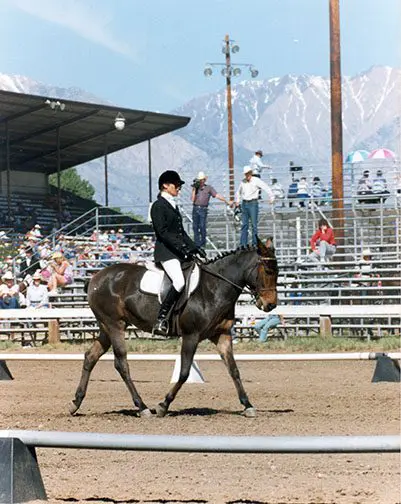 Equipment use plays an important part in the breaking saddle used, but many trainers today will agree that the less complicated equipment is used in the beginning, the better. The Western saddle may certainly be used for breaking but, from the mule’s standpoint, the Western saddle is heavier and there is quite a lot of leather between you and your mule, which can cause a certain amount of interference in communication. If the mule cannot “feel” his rider well, often times a leg or rein aid can come as a surprise and produce a response that is predisposed to resistance. For this reason, I prefer to start training in an all-purpose—or Dressage—saddle. However, I would recommend training in a Western saddle for the less-experienced rider, or if you are training a more easily excitable animal.
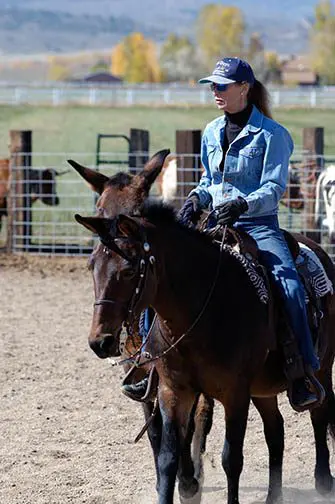 As in any exercise program, it is not advisable to drill and repeat every day. With a mule, as with any athlete, muscles need to be exercised and then allowed rest for a day or two between workouts to avoid serious injury. In between Dressage days, you can take your mule for a simple trail ride or just let him rest. The time-off and a variety of activities will keep him fresh and attentive. Three times a week is usually sufficient, with Dressage training for his proper development and conditioning, two days of simple hacking or trail riding and two days of rest. This also takes the pressure off of you. If you’re not into riding on a particular day, you won’t feel like you have to because your mule will retain his learning without the added stress of drilling day after day. Try to think of your mule’s training in terms of yourself: Would you care to be drilled to exhaustion day after day? How would you feel mentally and physically if you were? Dressage—whether it is basic or the most advanced—is a French word for training. It is thoughtful, considerate and kind, and will produce a mule that is mentally and physically capable of doing anything you might like to do with a relaxed and willing attitude. It may take a little longer, but the result speaks for itself.
 There are so many equine-related products on the market today that it is often difficult to decide which ones you really need and which ones you don’t. For instance, the subject of Splint Boots and Leg Wraps can be very confusing. How do you know when to use them? What types of Leg Wraps or Splint Boots are best? Do they really help? In what ways do they help? What kind of material should they be made from? And the list of questions goes on.
 are also used for support during training. These types of wraps are commonly used during Dressage training and typically only cover the Cannon Bones and not the fetlocks and pasterns. If you use Polo Wraps, or quilted cotton pads and wraps, learn to wrap them correctly to avoid pressure points that could cause circulation problems. Begin the wrap by placing the quilted pad or cotton pad in place around the Cannon Bone. Start the wrap at the center of the Cannon Bone, measure the tension on the wrap to make sure it does not interfere with circulation, that it is just snug and wrap down to the Fetlock joint. Then wrap upwards to just below the knee and Velcro the wrap in place. To keep the wrap from sliding down, use Duct tape just below the knee with one rotation of a tighter wrap to keep it in place. Consult with a professional to learn the proper wrapping technique. It is usually a hands-on lesson with a lot of practice! When they have lost their elasticity, it is time to throw them out.
 After his basic training, when your equine is participating in more stressful activities such as Jumping, Endurance, Reining and Racing (or in the case of an injury), it may become necessary to use a more supportive boot to lightly support already conditioned muscles and tendons. Support boots are designed to provide even support over the entire area that they cover. Be careful that they are neither too tight, nor too loose. You don’t want the boots so tight that they cut off the blood supply to the covered area, or not flexible enough to allow the joints to move freely. However, you don’t want them so loose that they ride down the legs.
 lameness if damaged, even by a small, seemingly insignificant cut or bump. If a hoof is unusually dry, severe cracks can occur. It is advisable to routinely use a hoof dressing in addition to the “Bell Boots’ to prevent traumatic cracking during repeated concussion.
 You might be asking yourself, “How can I tell a minimal support boot from a fully-functional medical support boot?” This can be quite confusing considering all the different kinds of leg wraps and splint boots that are out there. Some even look identical, but are not. Off-brand Splint Boots look a lot like Pro Choice Splint Boots, but they are made from inferior-quality materials that do not afford the degree of support and flexibility needed for successful therapy. Although these off-brands are designed for support and do cover the joints, they should be considered as more of a protective boot than a Therapeutic Boot. Splint Boots are strictly for the protection of the Cannon Bones because they do not cover the joints and offer very little support.