Raising the Barn
Hearts and Horses broke ground on a new arena where they will continue to change lives through therapeutic riding. The new arena will be called Lucky Hearts, as much of the funding for the arena was given by Lucky Three Ranch.


Hearts and Horses broke ground on a new arena where they will continue to change lives through therapeutic riding. The new arena will be called Lucky Hearts, as much of the funding for the arena was given by Lucky Three Ranch.

The following post comes from Steve Edwards of Queen Valley Mule Ranch. Working with equines can be a rewarding and life-changing experience, but, as with all animal-related activities, accidents can happen. However, exorbitant insurance rates are currently threatening trainers’ ability to provide clinics for equine owners, forcing them to cancel or drastically limit these sessions due to cost. Steve is one such trainer, and below he discusses his experiences with insurance companies, coming to the conclusion that his only option moving forward may be to forgo future clinics.
I recently received a letter from the State of Arizona. It seems that working with equine livestock and with people in a clinic setting represents the same degree of professional risk as being a police officer of a fire fighter. In light of this, insurance through the State Insurance Fund is no longer available to me for my professional work. I am sure this is related to claims analysis and the like, but it sure puts a different spin on how I will proceed with my work!
Over the years I have been in a expert witness for cases involving equine accidents. I will give you overview of one of the cases to which I contributed.
The case involved two women who had been very good friends for over 30 years . One lived in California the other in Arizona . The woman from California drove to Arizona to a nice horse facility with corrals, RV parking lots of trails to ride t meet up with her friend. One lady rode a mule the other rode a horse, The mule was a fine trail mule but had one problem: the mule was very difficult to put in the trailer. After a wonderful week of riding and after enjoying each other’s company riding together as they had for over 30 years, the incident occurred.
On the morning the ladies decided to head home, the lady with the mule started to load the mule into the trailer. Her friend chose to hide behind the truck and trailer peeking around the corner. Yes, the mule was once again giving the owner a hard time not wanting to load in the trailer.
A person watching the lady load the mule came over to help. She started waving her arms to get the mule to go in the trailer. So at this point, there is the person who owns the mule trying to load it, and a “helper” waving her arms to try to encourage the mule to go forward onto the trailer. It is likely that many of us have seen this very same scenario and we may have even participated in this task. But long story short, the mule started pulling the lady away from the trailer pulling her backwards and despite her efforts, the mule backed over the friend who was hiding between the truck and the trailer.
In most states, there are State laws that are there to protect the equine owner in such cases. Arizona has such a law. Being in the business, I post signs reflecting this all over my ranch. From the gate to the corrals I have these notices and I think everyone should do the same, even if you just keep your animals for your own use.
You may be interested in rest of the story. The lady that the mule backed over went through several months in the hospital and several years of physical therapy, She did not sued for damages but the insurance company did, and in the lawsuit the person helping load the mule who was waving her arms, the owner of the stable, and the lady who owned the mule all had to pay portions of the award either by their insurance or by their pocketbook.
It is pretty clear that no matter what the State laws say or what insurance you might have (home owners or otherwise), suits are likely to result in damages that any participant may have to pay. Even if you only had to pay 1% of a one million dollar claim, that still amounts to $10,000.
Finding insurance for the equine trainer or owner is very difficult especially when you are training equines and people. I am sad to say that my insurance just tripled in price due to the “risky occupation”. Even though I have never been hurt, nor has anyone in any of my clinics or training sessions that have spanned 25 years or more, the rate is truly unreasonable. So to make a long story short, there is a very good possibility that this will be my last year for training mules, donkeys or people because of the expense of trying to cover my butt.
I love training. I love seeing people try my training techniques and I especially like witnessing the mule and donkey owners use these techniques that make dramatic changes in their animals. But as the world changes we must change. Now I’m sure that there’s always going to be people that will train without insurance. Some have nothing to lose and some just flat don’t care. When you are looking for a trainer, there is so much more to it than just climbing on the mule and riding. There is more to it than just putting the donkey to the cart. Finding a true professional trainer is very difficult. I hear from many people who have had mules trained and have had nothing but problems. I can tell you this is not always the mule and donkey at fault. When I used to take a mule with me on the circuit, I would have someone climb on the mule and ride it. Just before this I would do the demonstrating of turn on the forehand, turn on the hindquarters side passing. Then I would ask the audience who has been riding for 25 years. Hands would go up and I would choose someone to ride the mule that I just rode. In a matter of minutes, it would look like the mule was not even broke!
I was talking with Dr. Robert Miller one day and we were saying how much of a joy it was to contribute to the equine community, not just the United States but all over the world. Dr. Miller has traveled to more countries than I have, but we both enjoy seeing the equine community changed for the good. But we both noted with sorrow that the cost of being a professional trainer and teacher is a rapidly growing concern. It will change the future of the industry for sure and not necessarily in a good way.
I would be interested in feedback from attorneys and insurance adjusters. Please give me a call (602-999-6853) or e-mail me, here. I want to stay in business but as it goes right now my last clinic will be in Fredericksburg, Missouri and I will head back to the ranch because that is all I can afford for insurance for the year.
This has become a very litigious society for sure. I am not sure who can do anything about the fact that some people refuse to accept responsibility for their actions. It is not always someone else’s fault that an animal exercises its own will or that the student does not do as he or she is directed. There is inherent risk in riding an animal. We can do a lot to try to limit our risk. We can train well. We can follow instructions. And when we feel that something might not work out for us, we can just say “no”! But ultimately, it is one’s own decision to come work with an animal. If you are working with a professional trainer or teacher, you may be somewhat safer. But when we hear a little inner voice saying “don’t do it”, we should probably listen.
One other point I would make is that there are times when a professional trainer may suggest to a student that the animal that he or she has may not be the best choice for that person. When I say this, I may see tears from some. I may hear others say, “well that is why we are here – so you can make this work”. Still others will take the information and agree. But know that such advice is not given lightly and is only given after I have had time to observe the animal, observe you, and observe the two of you together. Some things can be fixed. Others are more difficult. A few are impossible. The comment is never meant to be mean or ill spirited. It is for everyone’s safety. Any trainer worth his salt will tell a student if there is clearly a mismatch of animal and owner. But this is just one little piece of this new and bigger puzzle.
I encourage equestrians to accept the inherent risk of their activities and to let their local and state governments know that they do acknowledge that risk. If we cannot find a way to make professional trainers able to do their jobs while being covered reasonably with insurance for the job, we will see fewer quality trainers and have less help available to riders. Your professional trainer is a huge resource to you and your equine.
Please visit Steve’s website for the original post.
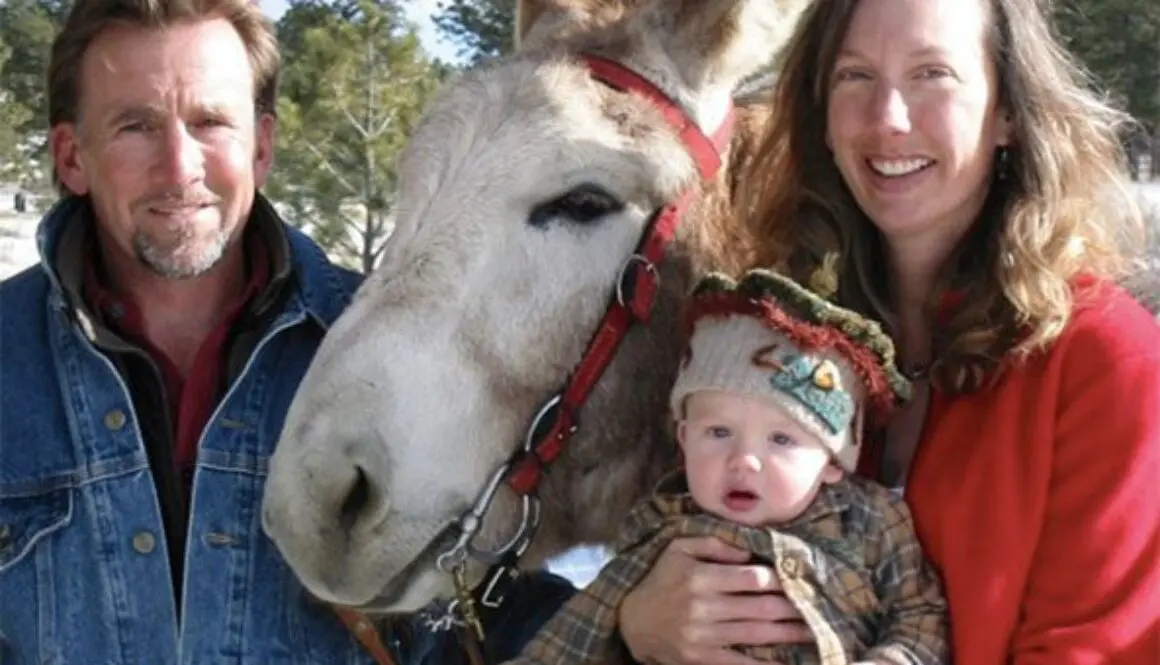
For most people, racing nearly 30 miles and climbing 13,000 feet up a mountain—and back down again—alongside a pack burro might be the most challenging experience of their life. But for world champion pack burro racer Hal Walter, raising an autistic son has brought many new unexpected trials that were much more serious than a 900-pound donkey barreling down a mountain path. Hal recognizes and explores the parallels between these two important elements of his life, pack burro racing and fatherhood, in his new book, Full Tilt Boogie.
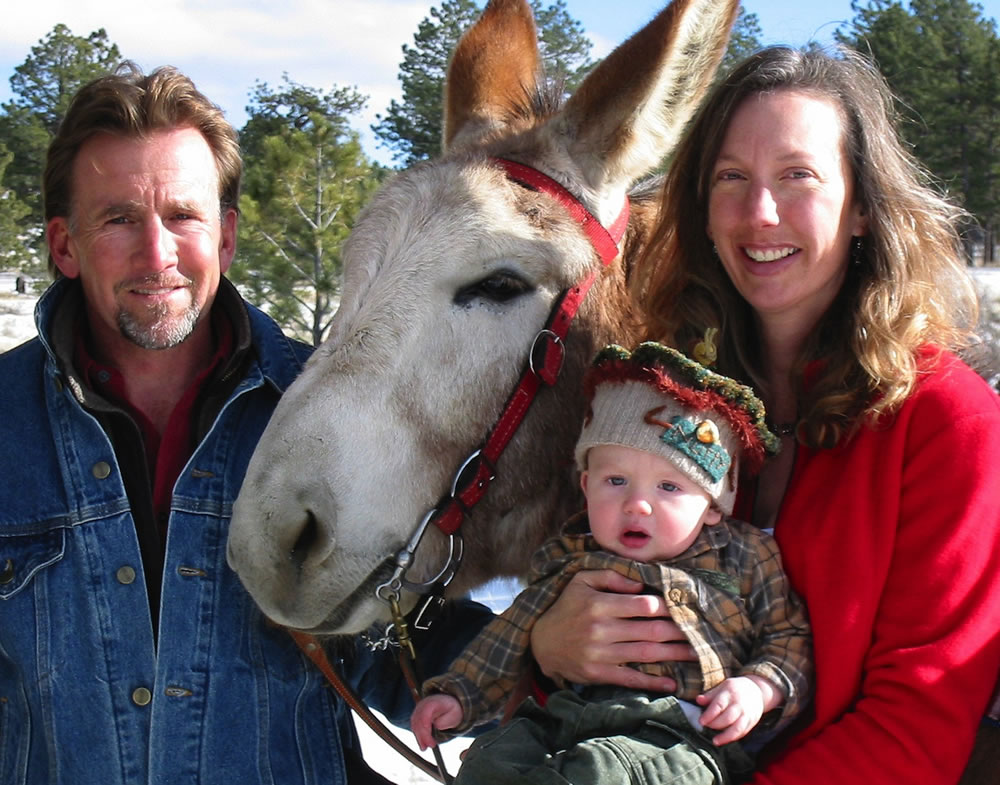
Autism is a neurodevelopmental disorder that affects people’s ability to communicate and understand certain social interactions—some people with autism may have trouble interpreting sarcasm, or understanding the facial differences between a smile and a grimace. Hal’s wife, Mary, is a nurse, and started recognizing potential signs of autism, such as sensory issues, early on in their son, Harrison. They ultimately received an official diagnosis from Denver Children’s Hospital when Harrison was almost four, which Hal describes as a “certain comfort,” despite initially resisting the necessity of the label.
In raising Harrison, Hal was able to draw on his experience as a pack burro racer, noticing the similarities between the two situations. “The real key to success with either burros or autistic children is extreme patience and allowing them to find their own way,” Hal writes in Full Tilt Boogie. “Each is a unique individual and one cannot exert command over either one with good results.” The “patience” approach has proven useful in both Harrison, who is now 10, and Hal’s career as a pack burro racer, which has spanned 30 years and multiple world championships.
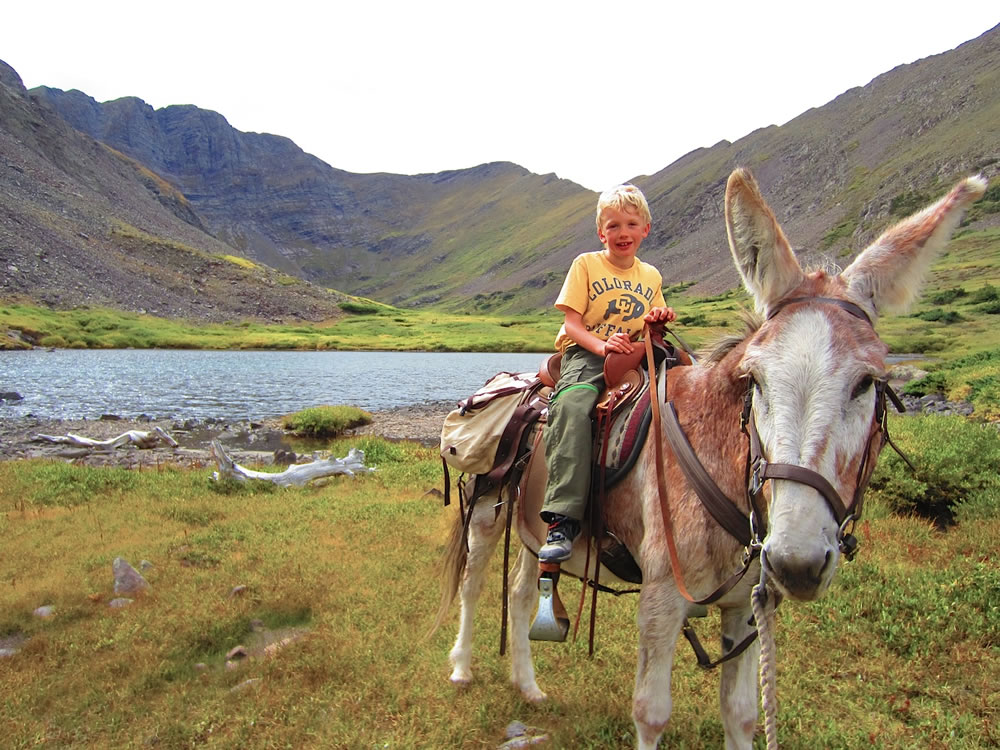
Hal introduced Harrison to donkeys at a young age—his first overnight packing trip took place the summer after he turned three—and drew on the established benefits of hippotherapy (or in this case, asinotherapy). Although, like most kids, Harrison might now say he’d prefer to be playing Angry Birds on the iPad than riding burros, his parents have seen a change in him after riding. “We noticed right away that on the days when Harrison rode, and even on days following a ride, there was a marked improvement in his disposition and behavior, and fewer tantrums,” he says. Hal isn’t sure exactly what it is about the donkey riding that helps Harrison—whether it’s the soothing motion, the fresh mountain air, or a combination of several things—but the positive effect is undeniable.
According to Dr. May Dodd of the Donkey Shelter of Australia, donkeys work well as therapy animals because “their gentle and affectionate nature brings a calming effect over all those they come into contact with.” She says donkeys are particularly useful for distressed people, as their relaxed nature can balance and calm anxious, agitated emotions. Hal has noticed his donkeys’ caring nature, especially as his son was just starting out as a rider. “I think the better ones have a sense of taking care of the less capable riders,” he notes.
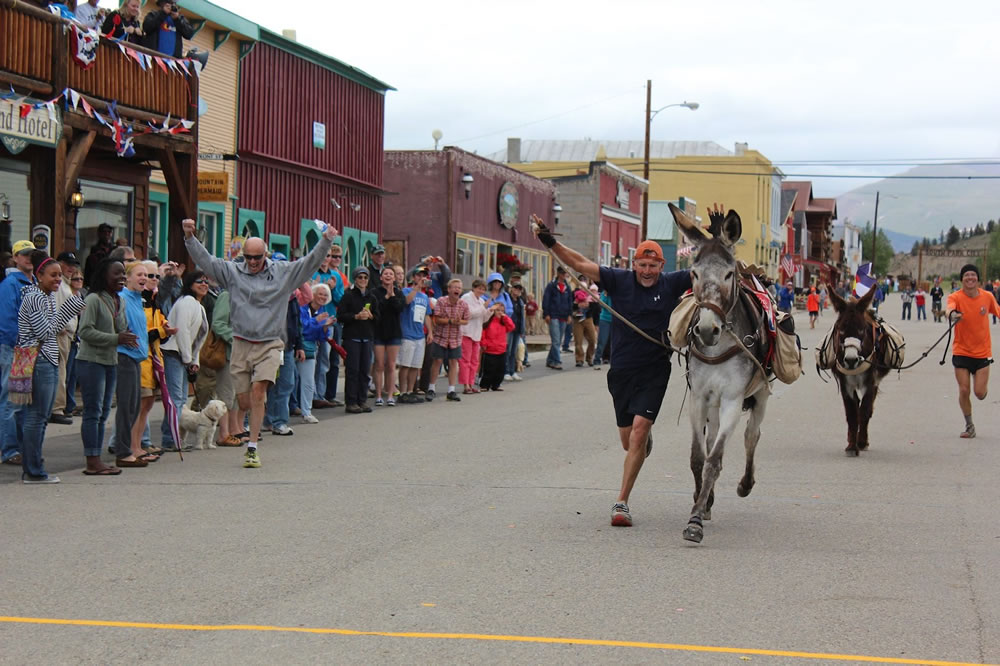
In pack burro racing, Hal attributes his multiple wins and places as being skilled—but perhaps not the best—at both the running and animal training elements. He notes that in order to get a win, “everything has to come together on that day for me,” down to the smallest variables and pieces of luck—and those can’t always be predicted, or even planned for. “The unpredictability of raising an autistic kid is a lot like burro racing,” he adds. “Only when they believe something was their own idea do they truly excel.”
Click here to find out more about Hal, Mary and Harrison on Hal’s website, and get your own copy of the ebook or paperback on Amazon. Full Tilt Boogie recently topped Competitor’s list of 13 Running Books You Should Be Reading Now.
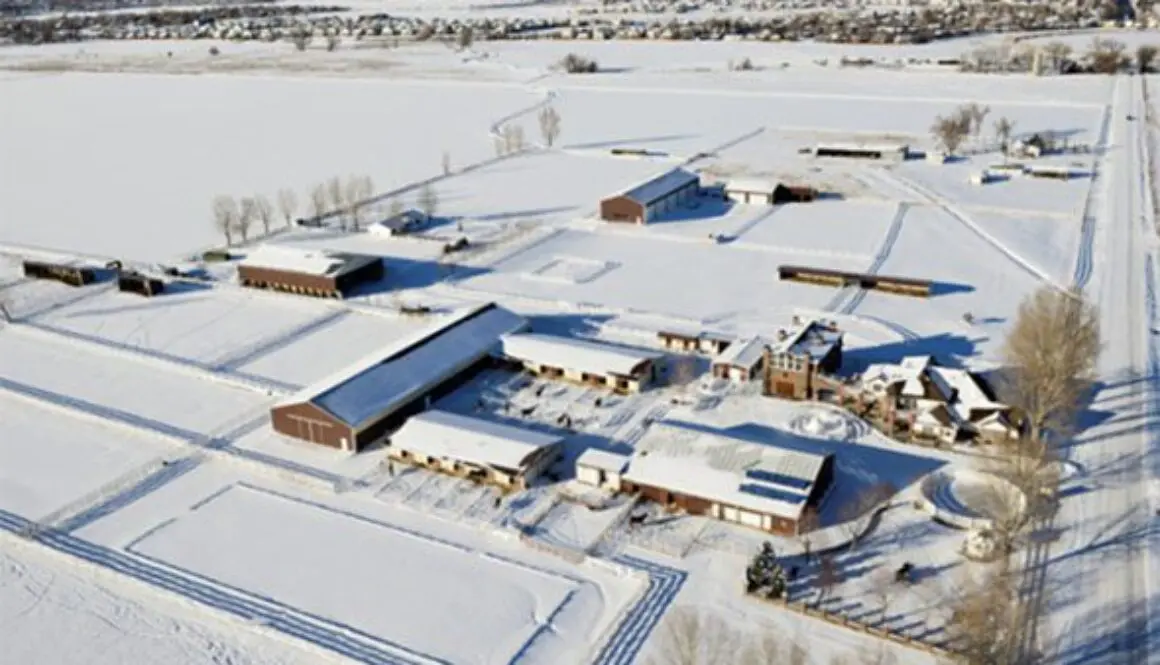
A lot has changed at Lucky Three Ranch since 1980—and sometimes the only way to see all that progress is from the sky! Luckily, aerial photographer Ryan Hofmeister, of Heaven’s View Photography in Sterling, Colorado, has had his camera focused on the ranch since the very beginning, and has captured some truly amazing images from the air throughout that time.
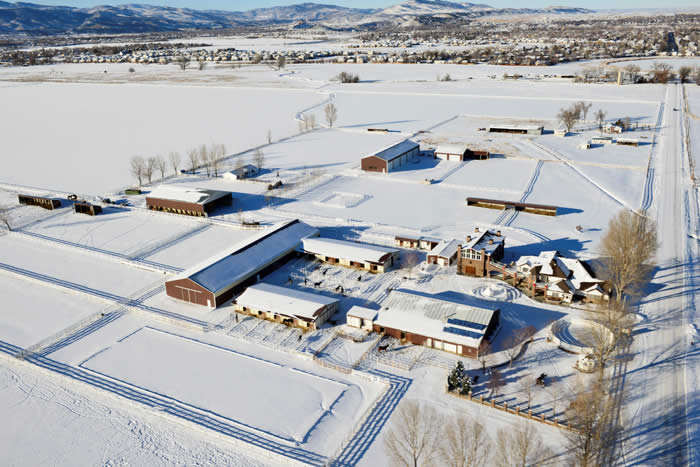
Ryan first met Meredith shortly after she moved in to Lucky Three Ranch. He had captured an image of the young ranch on one of his routine fly-bys, and stopped by to inquire if she wanted the photo. She did, and that image became the cover of Lucky Three Ranch’s first Christmas card. Unfortunately, Ryan didn’t print Meredith’s name on the cards that first year, and she had to sign all 300 cards individually by hand. “I never made that mistake again!” he joked.
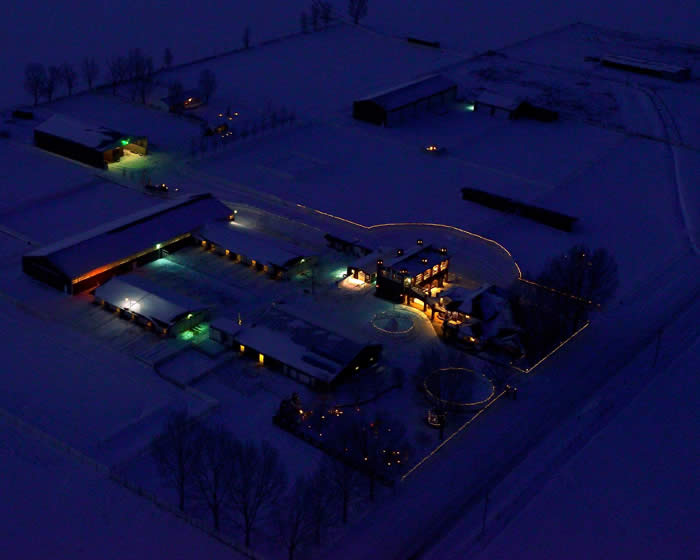
For his most recent shoot, Ryan also included a rare bonus: nighttime shots of the ranch. All photographers know how challenging it can be to capture images in low light, as even the slightest shake of the elbow can cause a blurry image—trying to do the same from the air requires a special technique. “It can be done with a tripod,” Ryan says, “but that doesn’t do much good when you’re moving 100 miles per hour through the air.” Ryan flies with another pilot, and they position the aircraft in a way that the plane is almost suspended in motion as Ryan holds his breath and takes the photo, trying to keep as still as possible. Ryan takes each and every photo himself on a handheld camera, including manually focusing it for each shot.
This photo session took around three hours to complete, progressing from day to night, and resulted in more than 600 photos on Ryan’s trusty Nikon. By the end of the session, they were flying in complete darkness, but the day certainly resulted in some incredible photos.
For more information about Ryan Hofmeister and Heaven’s View Photography, please visit heavensviewphotography.com.

Meredith Hodges was recently interviewed by Anna Roth for Modern Farmer, a website and magazine for people interested in global agricultural issues, as part of a series of donkey-themed articles! Meredith discussed her training methods and philosophies, and specifically how they relate to—and must sometimes be altered for—donkeys.

It wouldn’t be inaccurate to call equine specialist Meredith Hodges a “donkey-whisperer,” considering that she’s spent most of her life coaxing donkeys and mules into unprecedented acts. She fought to get them incorporated into competitive equine events around the world, and is a firm believer in the animals’ intelligence, thoughtfulness and the fact that a donkey or mule can do everything just as well as a horse can.
From her Lucky Three Ranch in Colorado, she’s created a small empire of books (including the influential Training Mules and Donkeys: A Logical Approach To Longears), TV shows, charitable programs, and animal welfare and advocacy groups. Her training approach — culled from other equine experts, including Richard Shrake, as well as behavior modification techniques she learned during her time as a psychiatric technician in the ‘70s — includes patience, mutual respect and plenty of oats. It works, and now Hodges is a much sought-after sage for donkey owner woes.
Modern Farmer: How did you get started with donkey training?
Meredith Hodges: I started with my mother’s ranch out in Healdsburg. That was my introduction to mules. I found out real quick that the horsemanship training techniques that I had learned before were just too expedited and not detailed enough [for donkeys].
I thought everything that everyone else does, that [donkeys] were stubborn and don’t want to do things. It took me about three months to realize that they are just simply looking out for themselves. They have a very high sense of self-preservation. They’re extremely intelligent, sure-footed, resistant to disease and when they get into a situation, get tangled into a fence or something, they won’t thrash around but wait quietly to get themselves out of it.
Mules do exactly what you teach them. If you chase them they think they’re in a game and supposed to run away. They think it’s pretty funny. They have a tremendous sense of humor and love to humiliate human beings. We’re pretty foolish, we don’t realize we’re getting sucked into a game here.
MF: How do you get them to do the things you want them to do?
MH: I realized that every equine we were working with would respond and repeat good behaviors when they were rewarded with the oats. I used to feed the animals who go for [pasture] turnout oats in the morning, and when I turned them out for an hour they wouldn’t want to come in from the pasture. I decided to shift the oats to the evening feeding, and as long as the oats were there waiting for them they always come in to the dirt pen. I never had to chase them, it was just, here they come. I thought, there’s something to this.
Check out the full interview here.

 Earlier this week, Meredith Hodges made a special guest appearance on Jim Swanner’s All About Horses radio show on WKAC, to discuss mules, donkeys, and horses. Click here to listen to the archived show, which airs every Monday at 9:30am on WKAC or streaming online.
Check out Jim Swanner on Facebook and his radio website here!

Can you believe it? A mule has made it to the US Dressage Finals! Laura Hermanson and her champion mule Heart B Dyna are heading to Kentucky to represent longears in the national competition—for the first time ever. But they are asking for your help to make it there. Here is their story in Laura’s own words:
A MULE makes it to the US Dressage Finals in Kentucky! I am Laura Hermanson and I have been training and working with mules for over 10 years. I have enormous passion for these incredible equines and believe anything is possible with them. This has been proven true! My own dear mule Heart B Dyna competed throughout the year at 3 star sanctioned shows earning scores up to 75% and qualifying for both the CDS state and USDF regional championships. We had an incredible time at the Championships educating people about mules and being able to ride along side Olympians! I was thrilled to be living my dreams, and then my dream became even greater. The US Dressage Finals invites the top two equines at each level from every region throughout the country as well as a wildcard based on scores. It all comes together for an incredible showcase of the best Dressage horses in the US. And then the unbelievable happened, Dyna and I received an invitation!!! This is the first time in history a mule has been invited to the USDF Finals! This is a once in a lifetime opportunity to expose people to mules on a huge national platform. I have put this together to ask for help making this possibility become a reality. Anyone that knows me is aware of how hard I work and how extremely dedicated I am to mules and the sport of Dressage. It is VERY hard for me to ask for help, but the expenses to travel across the country and attend this show are beyond my reach. I would GREATLY appreciate any financial help to make this pioneering journey possible!
Congratulations and best of luck to Laura and Dyna! If you would like to help them make it to Kentucky and make us proud, check out their GoFundMe page here.
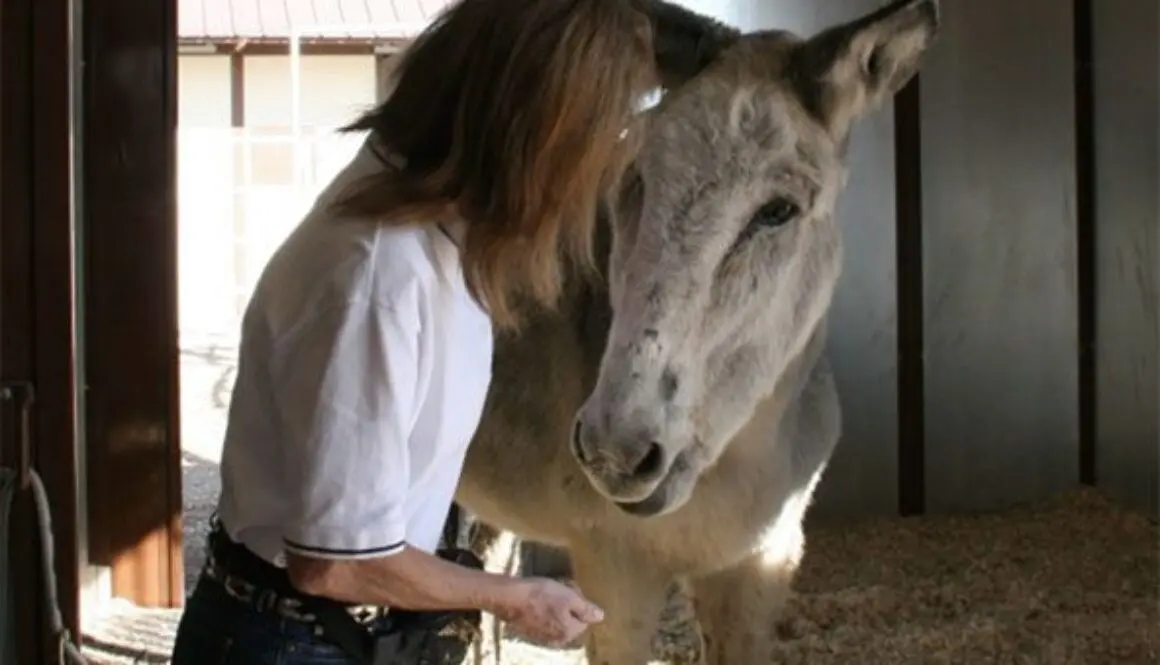
It is with profound sadness that we announce the passing of our courageous and talented 34-year-old Sire-Supreme, Little Jack Horner (1980 – 2014).
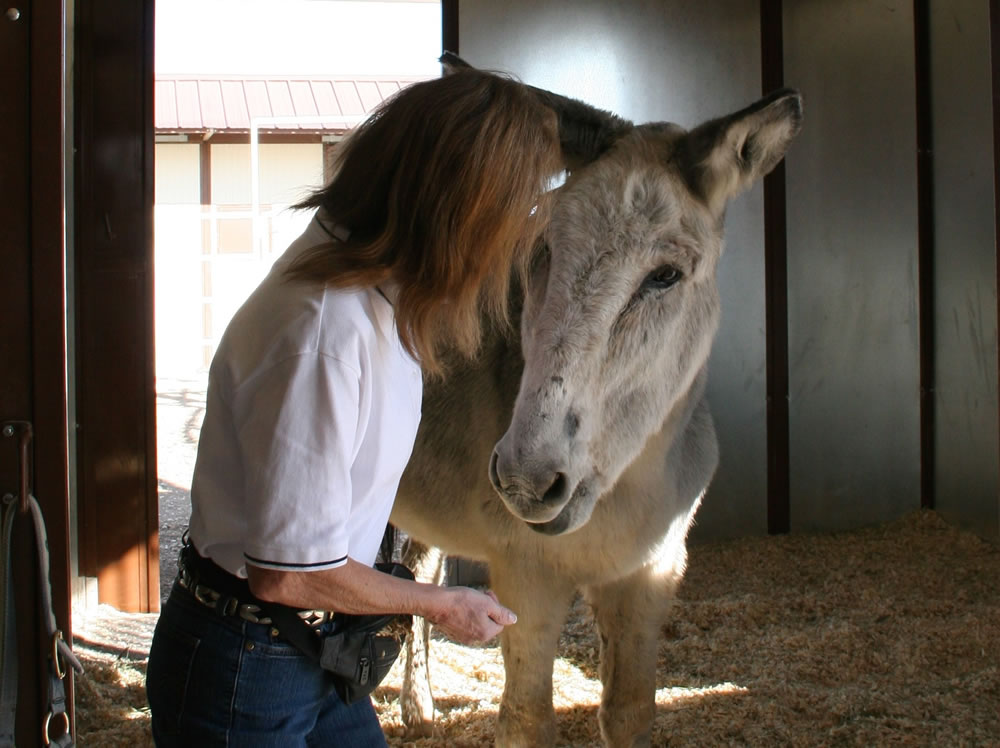
He is survived by hundreds of mule and donkey offspring, leaving an amazing legacy of performance in Gymkhana events, English and Western Pleasure, Trail, Reining, Driving, Dressage Driving, Second Level Dressage and Stadium Jumping to four feet in exhibition. He was an affectionate jack with impeccable manners right to the end. On the eve of his passing, I left him standing like a statue with ears pricked and a fixed stare toward the Rocky Mountains. I glanced over my shoulder and as the sun went down, it cast a halo around his entire body as if God was beckoning him home…I knew in my heart he would not make it through the night…he will be sorely missed!
 ___
___

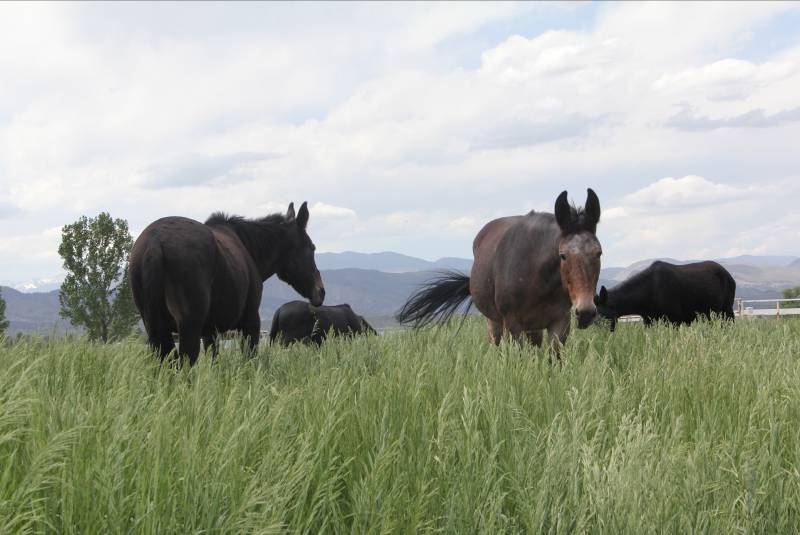 Years ago, I believed that all I needed to have an equine was a halter, bridle and saddle, a water bucket and a patch of grass with a fence around it. I didn’t even think about shelter until much later when I finally decided that a garage would do. I now know that there is a lot of responsibility in taking care of equines and that it is an ongoing learning experience. Like most of us, I was a little lazy and wanted shortcut ways to deal with my equines so I could get right to the pleasure of riding. After many heart wrenching experience, I discovered that I did not have to be overwhelmed with management and training responsibilities, just more organized and practical. Finding simple, logical and appropriate answers to management and training questions became my mission.
Mules and donkeys, contrary to popular belief, are sensitive to colic and founder when left on pasture. They can develop fat rolls and patches all over their bodies when allowed to graze freely. This eventually will become a very expensive and potentially devastating condition if left unattended. Muzzles have been developed to keep equines from grazing too voraciously and hopefully, this can prevent the incidence of colic and founder, but I can’t help but think that there will be a certain amount of frustration involved when using such short cut devices that can manifest itself in other areas of interaction with your equine. The animal will take to the muzzle because there is a reward of grazing to follow, but to be prevented from fully enjoying their grazing has to be frustrating at times.
Beyond the incidence of possible frustration is the simple threat of them getting the muzzle caught on something with no one around to help them if they do get caught on anything. One of my strictest safety rules is to never leave a halter on an unsupervised animal for the same reason. I have seen too many animals maimed, paralyzed and even killed by leaving anything around their neck and head.
The muzzle encircles the delicate muzzle of the equine where the skin is very thin and sensitive. The lips can become scabby and sores can develop on the tongue.
A muzzle can chafe and burn these sensitive areas with prolonged use and create a very sore mouth. Again, if they do get sore, using a bit can become painful and cause resistance in training.
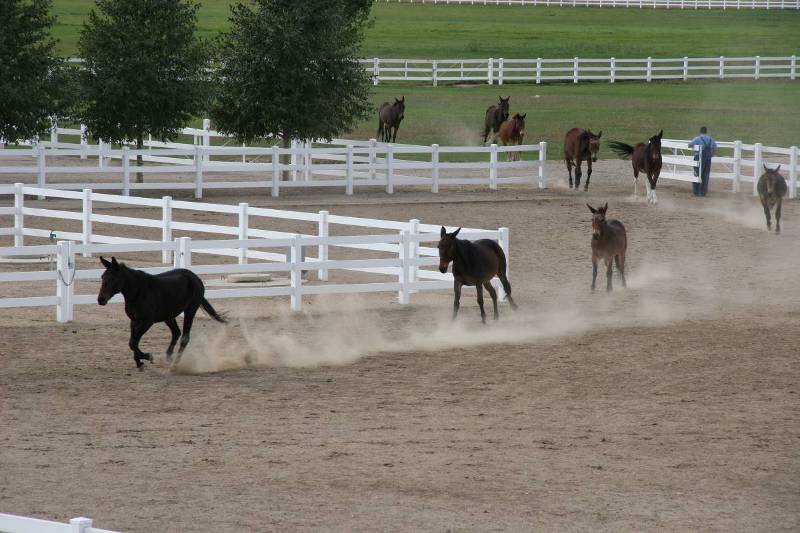 It is easier to employ simple management practices to keep your equine healthy and happy. Your equine should be kept in a smaller area for evening feedings, overnight and for morning feedings. This has several benefits: 1) Each animal can be checked every day for any injuries or anomalies, 2) He will not have to fight for his food, he can sleep uninterrupted and be more calm and fresh each day, 3) You will then be able to turn him out at specific times for grazing during the day and he will willingly come back from the pasture each night. This way you can monitor his grazing intake so he will not be able to overgraze and colic, or founder, 4) the smaller area affords you a confined space for beginning training so there is no need to chase him, or be interrupted by other animals.
If you feed only grass hay in the mornings and feed his oats mix in the evenings with grass hay, you can monitor his pasture time easily. In the spring when the grass is growing and very rich, you can begin to turn him out an hour before feeding time and he will happily come back in to get his evening oats. Then add an additional hour each week to slowly accustom his digestive tract to the new grass until you have worked him up to a maximum grazing time of five hours. This will generally produce a healthy, happy animal of any age that can maintain his ideal weight and body condition.
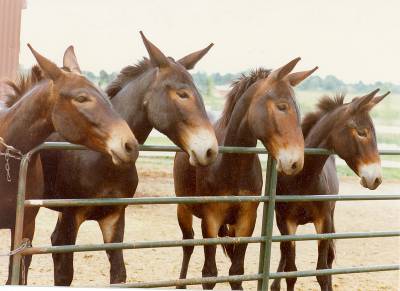 When you feed only grass hay in the mornings, he will look forward to his lessons with you and be waiting at the gate, knowing there are oats rewards to be earned. What your animal is eating can have a direct impact on his response to training. Many feeds can cause hypertension in Longears (and horses, too!) and an inability to focus for any length of time. Mules and donkeys require a lot less feed than horses because they are half donkey and donkeys are desert animals. Too much feed or the wrong kind of feed and you run the risk of colic, or founder.
 We feed an oats mix to our average sized mules of 1-2 cups of crimped oats, 1 oz. of Sho Glo vitamins (by Manna Pro) and 1 oz. Mazola corn oil (for hooves, coat and digestive tract regularity). The oats must be broken open in some way (crimped, steamed, rolled, etc.) as equines cannot digest whole oats. We feed this once a day in the evenings, grass hay twice a day and we monitor weight gain with the hay and pasture intake. Miniatures get one fourth as much of the oats mix and grass hay, and draft animals will need twice as much. Do not alter or modify this with other products in any way for the best results.
Also, make sure they have access to a trace mineral salt block for their salt and mineral needs. We worm our equines with Ivermectin in January, March, May, July and September and then break the cycle with Strongid in November. We vaccinate in the spring and fall. Consult your veterinarian for the types of vaccines you will need for your area. You should never feed Longears (donkeys, or mules) any pre-mixed sweet feeds, or products high in alfalfa. This is actually a very easy and inexpensive way to manage the feeding and grazing of your equines without the worry of muzzles. It’s just a matter of getting into this healthy routine.
 Even though I know how well trained my equines are, they never cease to amaze me! I can be dog tired and know that this is the day they must be groomed, wormed and vaccinated…all thirty of them! The very thought is quite literally exhausting on occasion. Though my staff helps with maintenance doctoring what are now mostly older and geriatric individuals, I still basically train and manage all my equines by myself. When I am tired and a job must be done, I am repeatedly reminded of how well I have done with all of them. All the worry and stress about having to go out and work is washed away the minute I get out to the barn with their never ending affection, interactive neighs and brays and ultimate compliance.
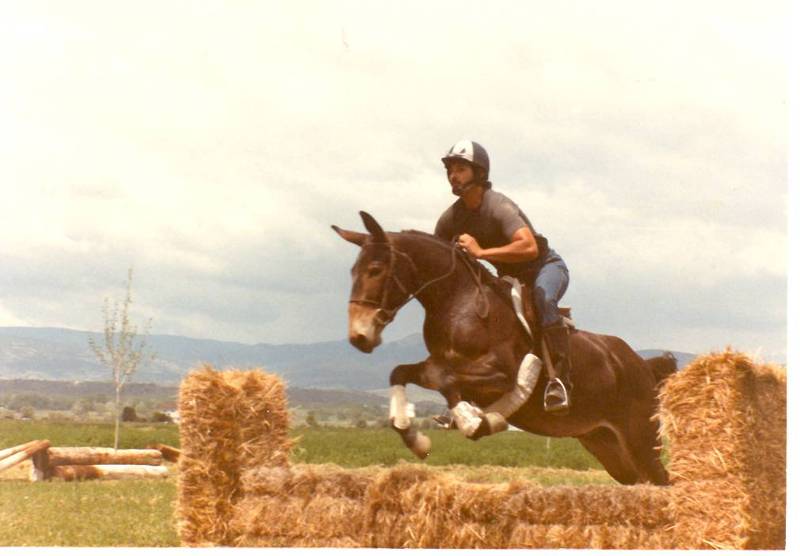
 Lucky Three Cyclone is a thirty-one year old, 14.2 hand Arabian mule, the very first mule born here at the Lucky Three Ranch. When he was first born, his mother dropped him on the ground and turned to look at him in total puzzlement. He had long fuzzy ears that she certainly did not recognize that caused Angelique to bolt away from him. Being her very first foal and a mule at that, she was not interested in him at all. I had to restrain her to get her to allow him to nurse. This was his first introduction to LIFE!
Cyclone was trained in English and Western Pleasure, Reining, Second Level Dressage and even carried my185-pound husband over two and eventually three-foot jumps for several years. He was kind of a spooky “Little Feller” as I affectionately called him and he used to scare our farrier half to death when he went to trim the back feet. Cyclone had a ticklish butt, so if you touched him on his behind and he wasn’t expecting it, he would quickly tuck his butt and scoot out of the way. Of course the farrier thought he was getting ready to kick, but he never kicked anyone ever. He was just trying to be polite and get out of the way.
 Four years ago, Cyclone began to develop little nodules on his upper left front leg, on the right side of his neck and shoulder, and on his right cheek. The one on the cheek was the largest although with a simple application of Neosporin, they did not seem to be spreading or getting larger until just recently when four more popped up within three months. I was concerned that they could become too numerous to manage if we didn’t at least get a biopsy and find out exactly what we were dealing with. My amazing veterinarian Greg Farrand and I thought they were sarcoids and he later said he had done some research and that they could be “cattle warts” which is another name for certain sarcoids. He too was concerned that they had begun to propagate so quickly all of a sudden so we opted to do a biopsy. I apologize for not having photos of the biopsy surgery for you, but my staff photographer faints at the sight of blood!
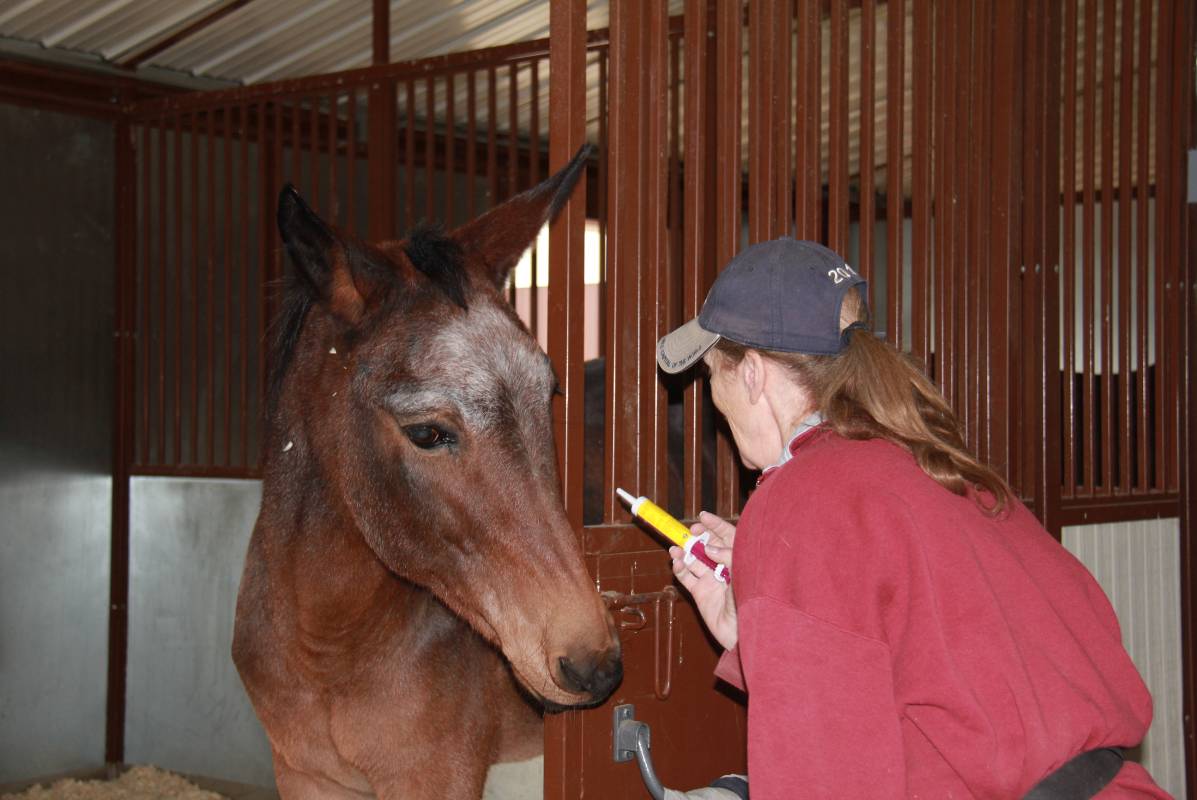
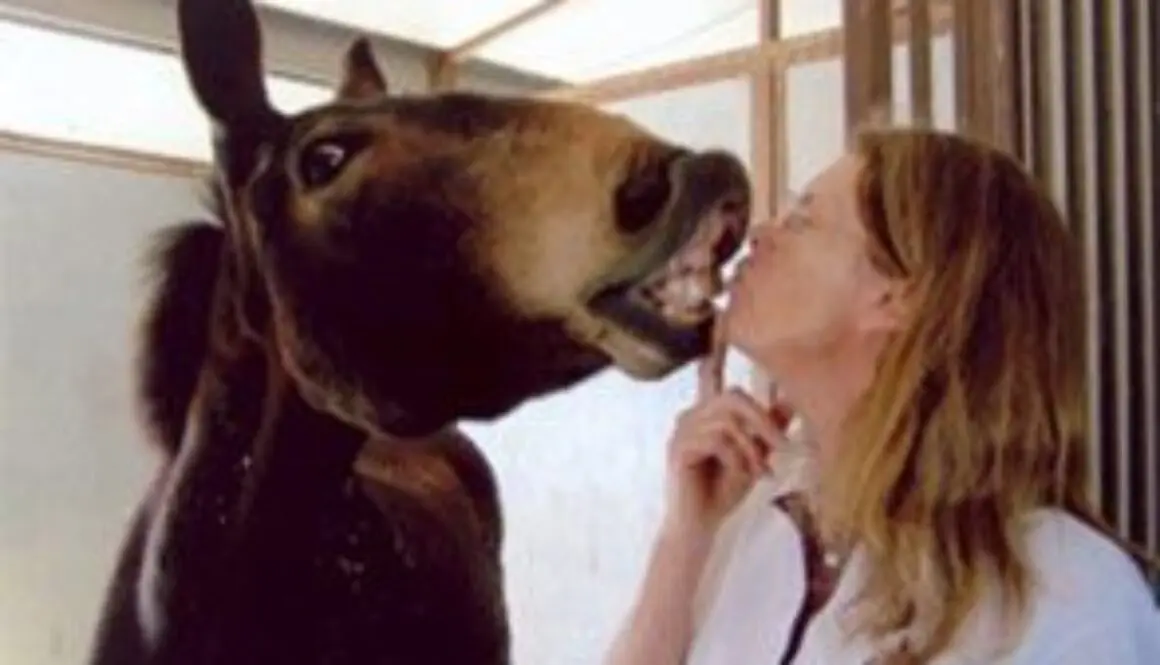
 We decided to biopsy the one on Cyclone’s cheek since it was the most mature nodule. Rather than sedate him, we opted to give Cy the opportunity to cooperate with our plan. Cyclone loves to give kisses and was busy giving me kisses in exchange for oats just before the surgery. Greg asked if I could get him to hold his head a little higher, so I carefully lifted Cy’s nose to my shoulder and set it there. He affectionately leaned his head into mine where we met eyeball to eyeball. I took a deep breath and closed my eyes as Greg approached with a syringe of Xylocaine to numb the area locally.
As Greg poked and prodded the needle into the nodule, Cy never moved a whisker. I would open my eyes at intervals to find him comfortably relaxed upon my shoulder with not a hint of stress in his body. When Greg walked away to get the scalpel, Cy gave me another kiss and I responded with another handful of oats. Greg returned and began cutting, but Cyclone was still chewing. When Greg said, “It’s a little hard to do this while you’re chewing,” Cy abruptly stopped chewing and again stood stock still, returning his chin back to its place on my shoulder. Greg had to clamp a bleeder vessel, but even that didn’t bother Cy. When that was finished, he again gave me a kiss and I gave him more oats. As soon as Greg approached with his florescent pink stitches, Cyclone again stood like a soldier while Greg carefully stitched up the wound. Another kiss…more oats…and he was happily taken back to his stall. I am so glad I took the time to train slowly and develop this mutually satisfying relationship with all my equines. Being older and much more vulnerable than I was in my youth, I truly appreciate what I have learned from my equines so we can all grow old together and be safe, happy and healthy doing it!


 Meredith is pleased to have contributed an anecdote to the first edition of a new book series featuring humorous, equine-related stories called Horse Tales for the Funny Bone, Volume 1. The tales were collected by Bonnie Marlewski-Probert at Whitehall Publishing, who also put together the Horse Tales for the Soul series. Horse Tales for the Funny Bone features stories about all breeds, all styles of riding, and all age groups—60 in all. This book is sure to brighten your day and put a smile on your face, and makes the perfect gift for all the equine lovers in your life! Also, the book will be used to help fundraising efforts for therapeutic riding centers. Get your own copy of Horse Tales for the Funny Bone, Volume 1, here!
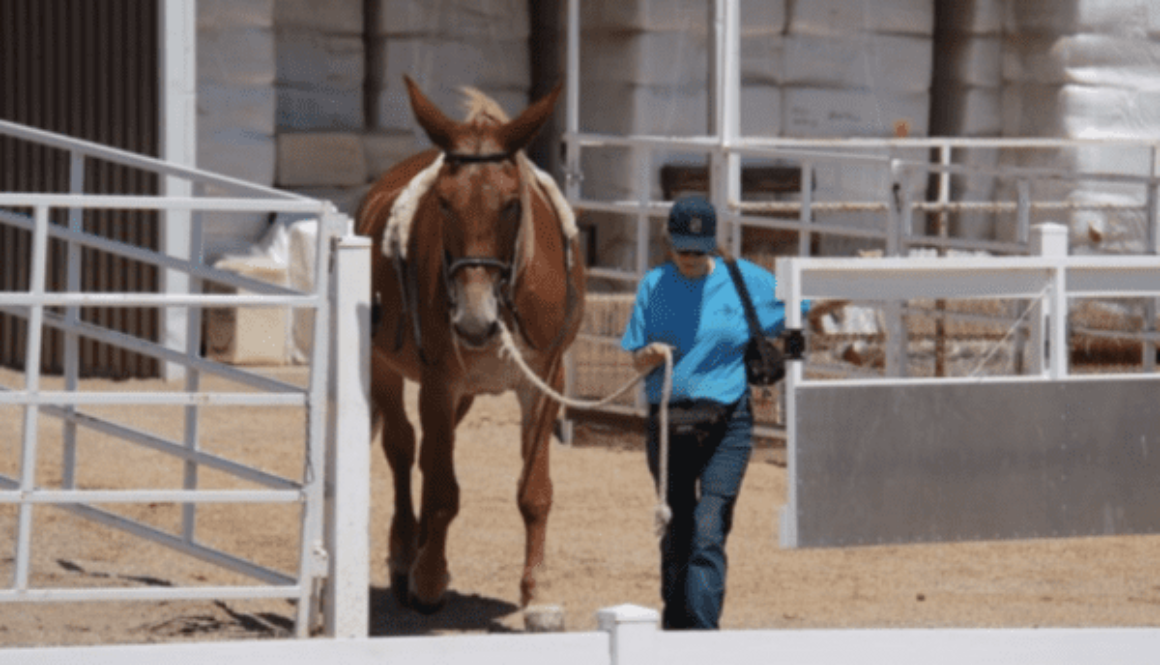
Roll had a really good leading workout today. He did do very well negotiating the gate.
Roll stayed in sync almost without a misstep during the whole lesson!
He did bend his body nicely through the rib cage around the cones.
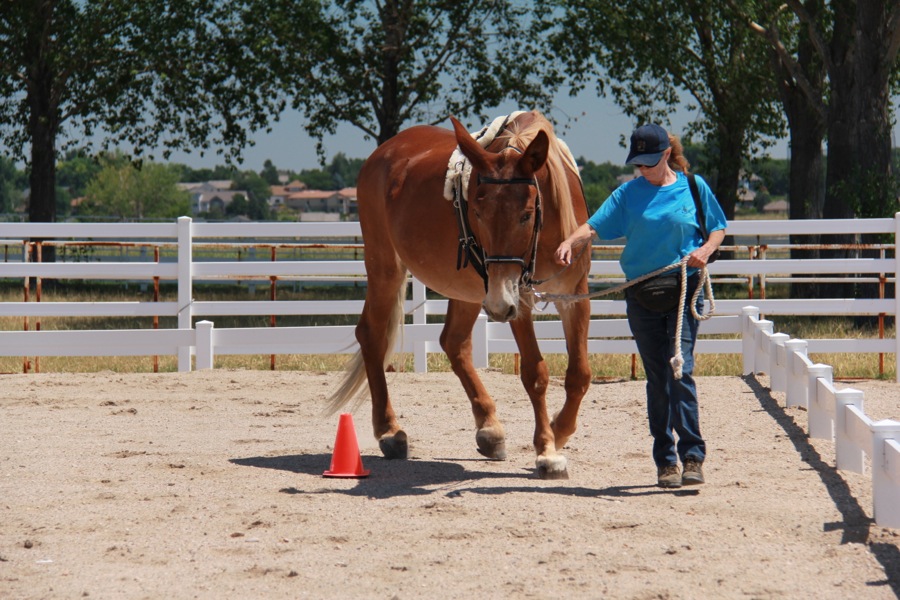
He did seem to have a little trouble aligning his back feet. He kept getting them a little closer to each other than he has in the past, but it will improve with practice.
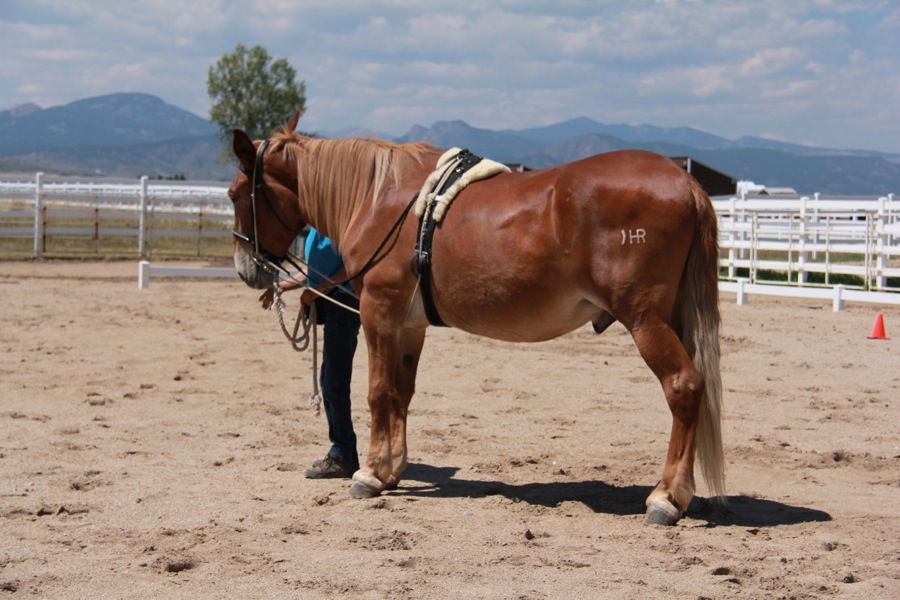
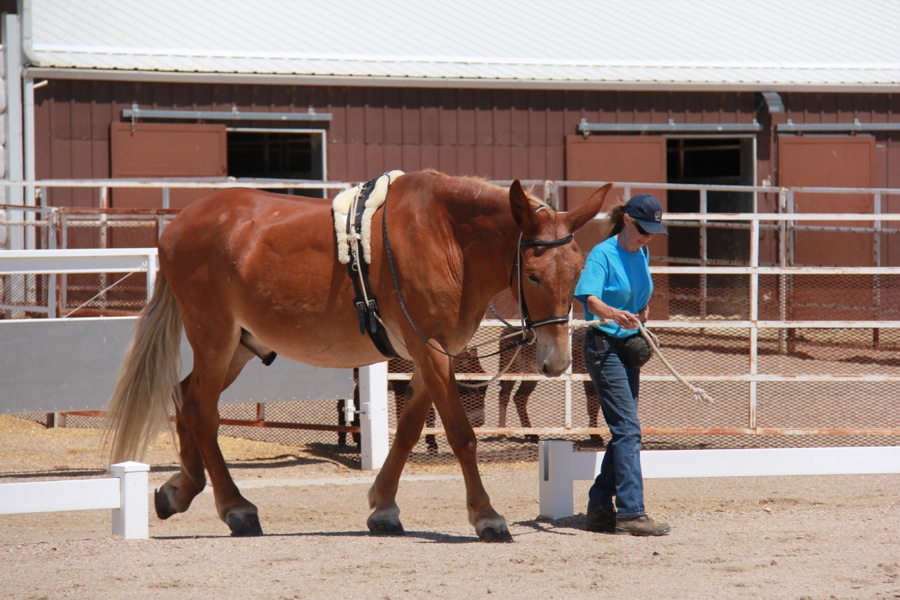
When I asked for more energy, he had it! A marked improvement from the beginning of his training!
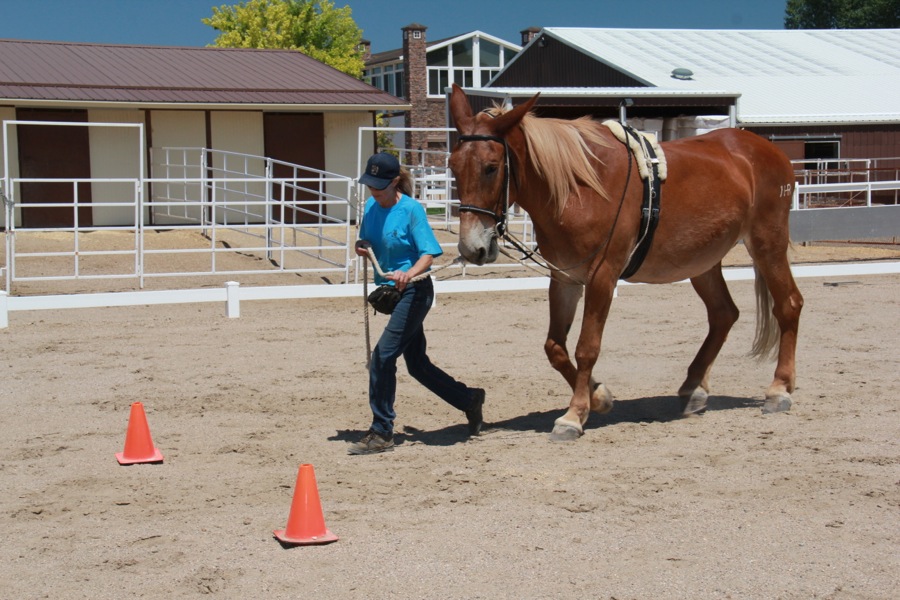
Roll is rounding across the top line and stepping well underneath with his hindquarters.
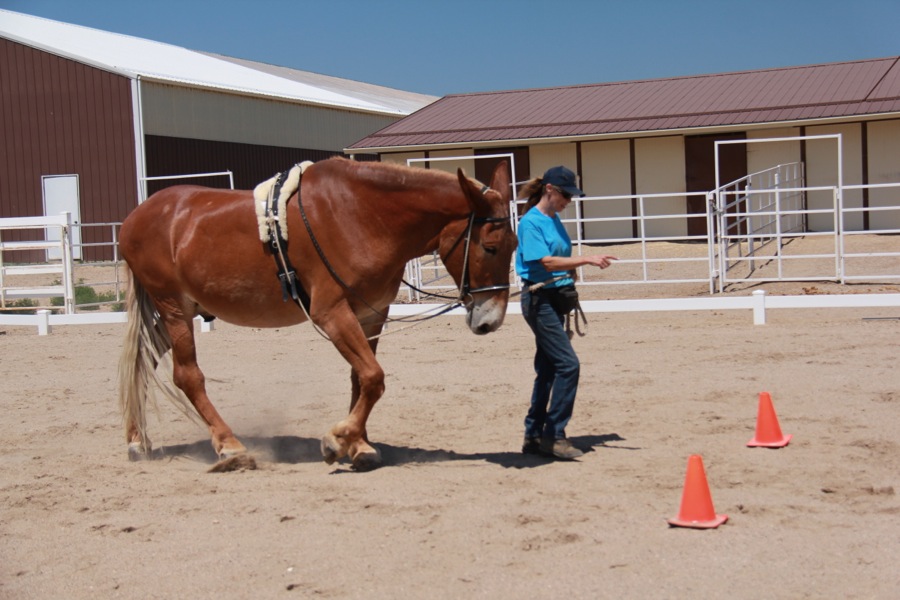
Roll gets more gorgeous every day! For a mule, his mane and tail are amazing!
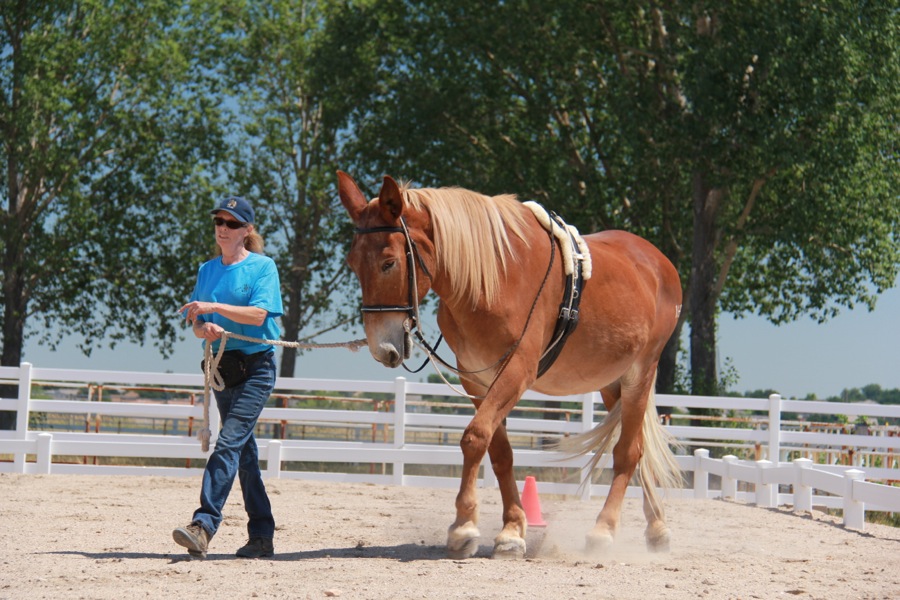
Lengthening his stride is no longer an issue!
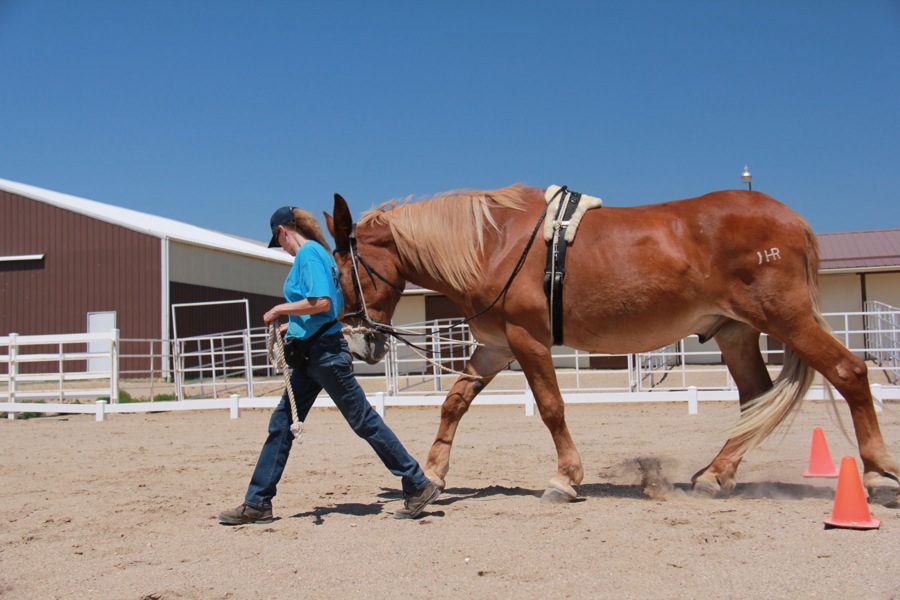
He stays in sync with every step I take.
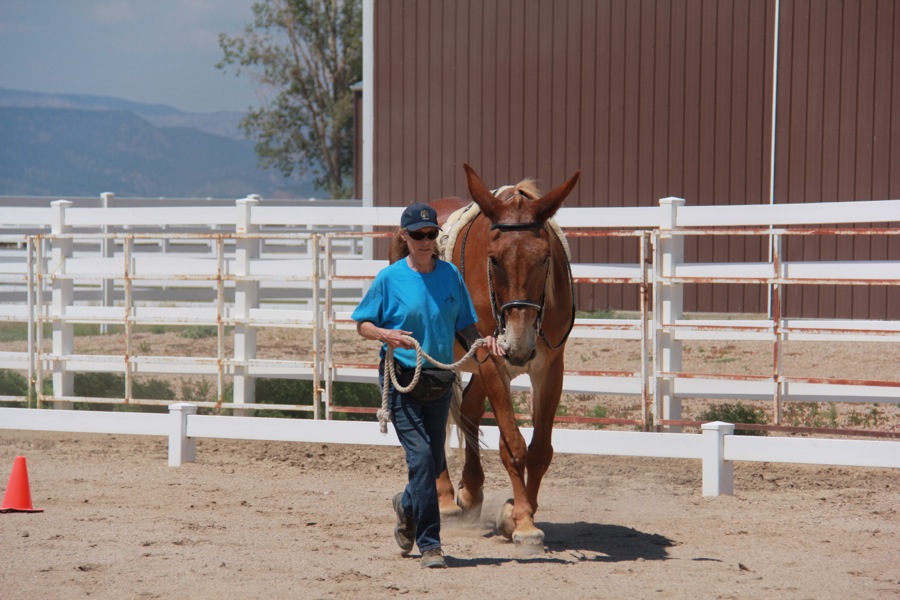
With nice clean halts…
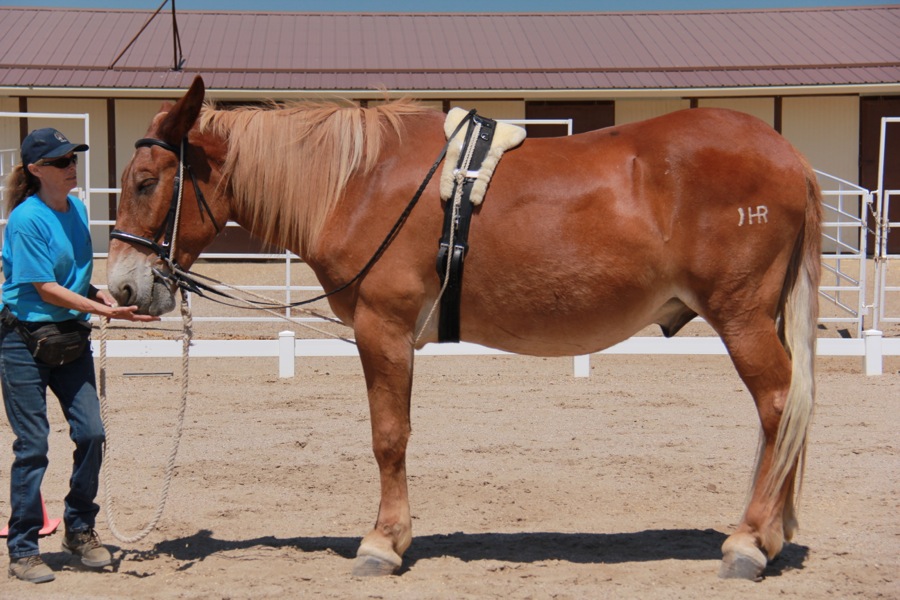
…and exceptionally straight rein backs…
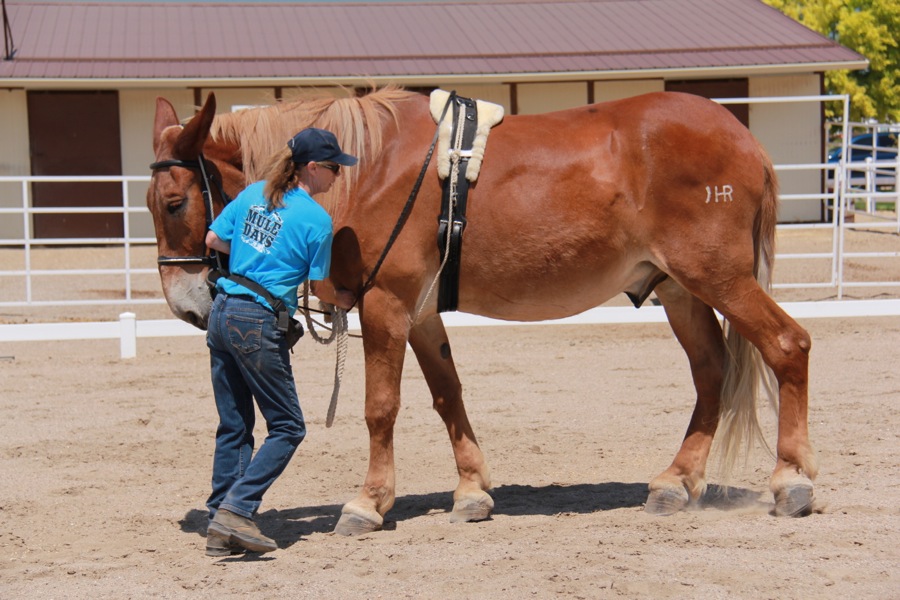
…he’s a STAR!
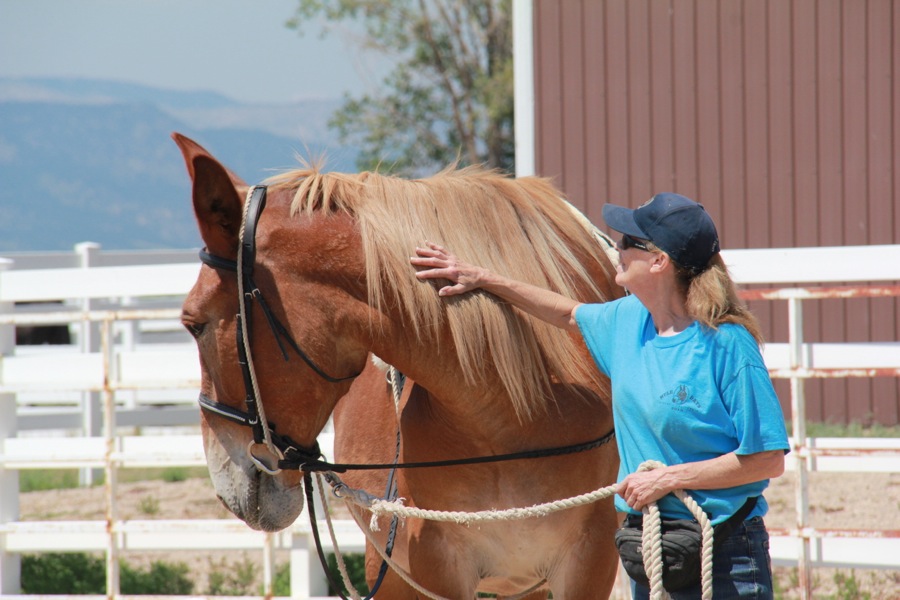

 Jasper the Mule stops by your TV screen once again this Christmas! Celebrate Christmas with Jasper and all his friends as Jasper: A Christmas Caper airs on Rural TV (Dishnet Channel 232) on Christmas Eve.
It’s the Christmas season and Jasper and his human family are in high spirits as they travel to visit far-away friends a few towns over. When Jasper and his pal, Moxie the dog, get out of the yard and wander down a strange alley, the two friends are headed straight for one big adventure!
Presents disappear, mysterious strangers appear and friends go missing. But junior detectives Jasper and Moxie are on the case. With the clock ticking, Jasper has to use his “mule smarts” to tackle this puzzle of a mystery and put the pieces together before the big parade. But will he solve the mystery in time?
Airing on Rural TV (Channel 232 on Dish Network or check your local listings).
Tuesday, December 24 at 7pm and 11pm ET (4pm and 8pm PT)
If you don’t get Rural TV or miss the airings, all Jasper episodes are also available for rental on demand.

 Jasper the Mule returns to your TV screen this holiday season! Celebrate Thanksgiving with Jasper and all his friends as Jasper: A Turkey Tale airs on Rural TV (Dishnet Channel 232) this week.
As the gang prepares for the big Thanksgiving celebration, Jasper the Mule and his pal, Moxie the Dog, are hot on the trail of adventure! A mishap with a truckload of turkeys turns into a real live mystery, as the boys solve the case of “The Beady Eyes in the Bushes!”
When they make a new friend who is lost and alone, Jasper’s mule-y sense of loyalty kicks in and he is determined to help, no matter what. Will Jasper and Moxie save the day? Will their new friend find his “forever home?” All the fun and warmth of Thanksgiving come to life in Jasper: A Turkey Tale.
Airing on Rural TV (Channel 232 on Dish Network or check your local listings)
If you don’t get Rural TV or miss the airings, all Jasper episodes are also available for rental on demand.
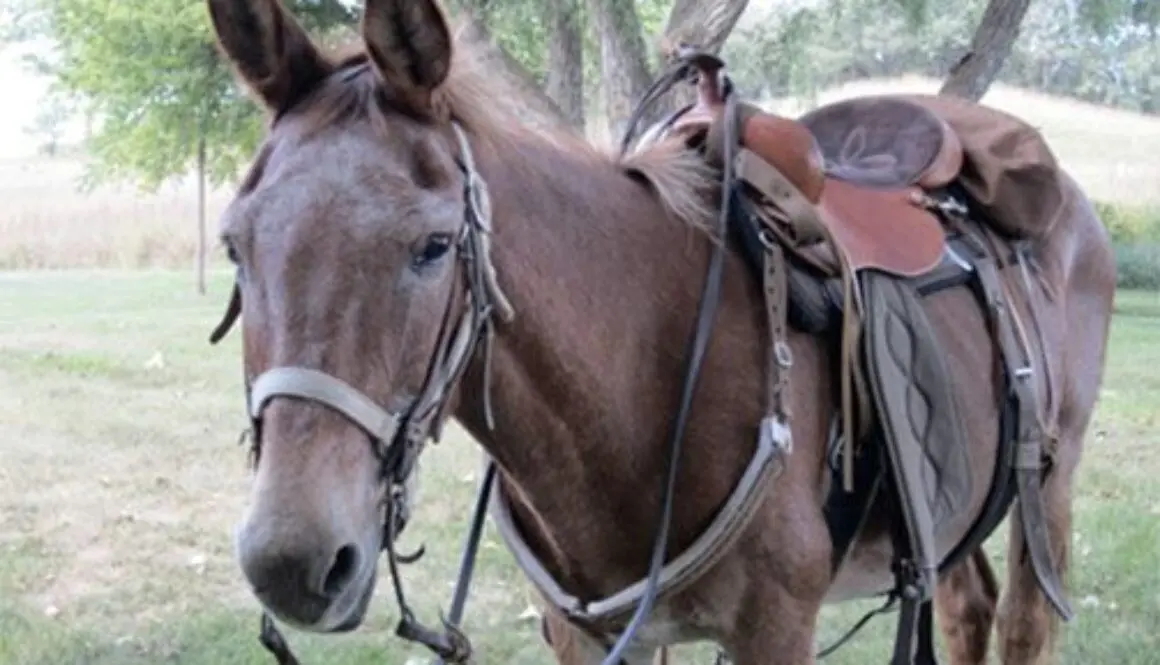
Our hearts go out to Connie Bartels for the loss of her beloved Homer, longtime friend and loyal companion. He will be missed.

“Sunday when we rode while I was taking his tack off I was talking to him telling him what a good boy he is and what a good ride we had. Then I hugged him tightly as I always do….he knew me, and he liked me a lot. To think that I will never ride him again is heart wrenching to me. He was my good friend and buddy…..and I would never find another Homer. I am very sad today, but I am thankful for the many years we were friends. Only mule people would understand this.”
-Connie

To celebrate the 100th anniversary of the Los Angeles Aqueduct, artist Lauren Bon, in collaboration with Metabolic Studio and the LA Department of Water and Power, is retracing the steps of the aqueduct’s original construction, from Owens Valley to LA–with a 100 mule pack train. Their journey started on October 18, and the convoy is expected to arrive at the Los Angeles Equestrian Center in Griffith Park on November 11, with stops along the way at the Lone Pine Rodeo Grounds, Jawbone Canyon, and the Hansen Dam.
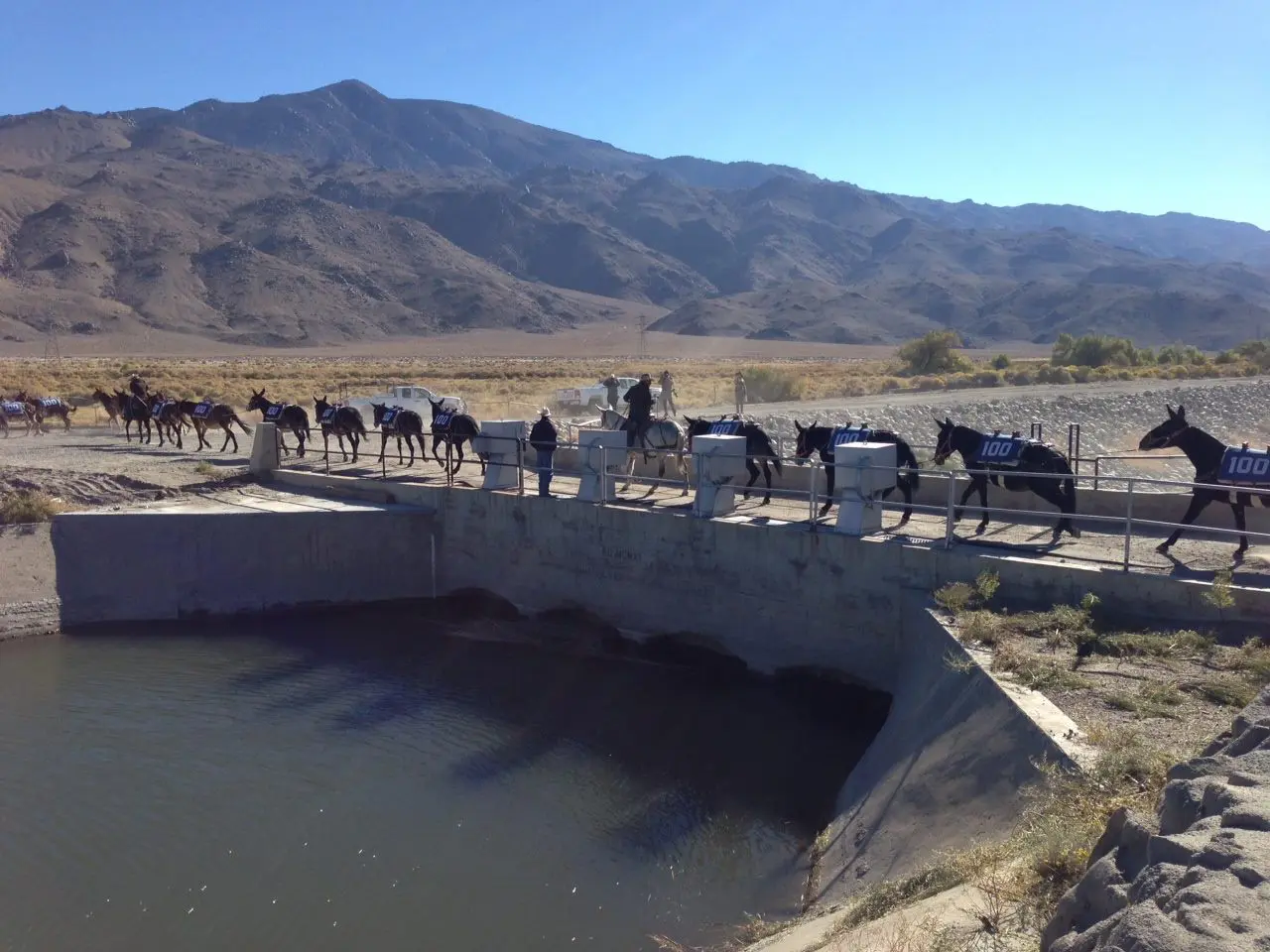
The mules are being cared for by Jennifer and Lee Roeser, who run the McGee Pack Station in the Eastern Sierra range, and who received the “Most Honored Packers” award at Bishop Mule Days in 2010. They are utilizing one wrangler per 10-mule string, with about 35 people total on the support staff and 10 support vehicles to supply the mules with food, water, gear, and medical care.
The pack train will be passing through three counties and over 50 California communities before reaching their final destination. It’s appropriate that this project will be sharing and celebrating mules’ contributions to the country, especially in anticipation of Mule Appreciation Day on October 26.
For more information, check out the LA Times article about the project.
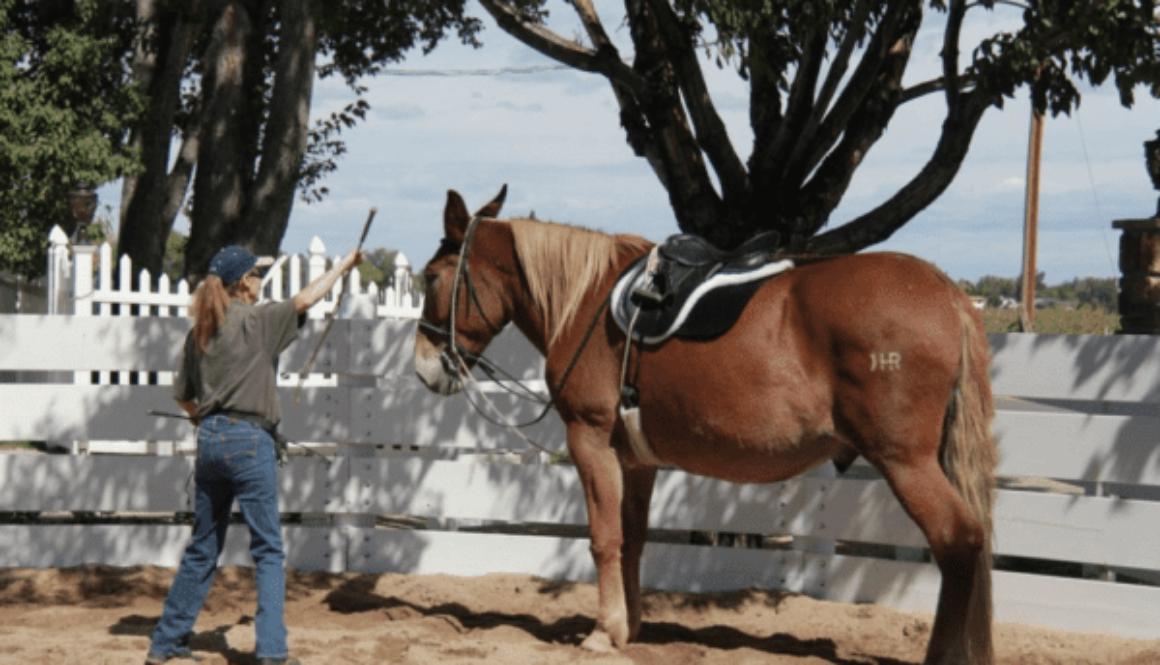

Roll continues to be a happy camper and always looks forward to any time he can spend with us outside of his pen and pasture areas. It has been several months since he has been worked because we have been busy with construction all summer, however, the core muscle, good posture training that he had for the past three years has drastically changed his overall health.

Because it has been so long in between workouts, I began his workout by walking him around the round pen five rotations before asking for trot. As he walked I made note of the way he was moving through his body. He was a little weak in strength, but still maintained a good rhythm and cadence to the walk with his feet landing only slightly behind his front footsteps. This was to be expected.

When he was asked to trot, he responded promptly and energetically and showed no signs of lameness even though he is still dealing with side bones on both sides of all four feet and ring bone, top and bottom in his hooves. It’s very encouraging at the age of twenty that he is sustaining good balance throughout his body such that he is not putting undue stress on those areas.

I was particularly surprised at how good his posture and balance was after so long with no work when he came to an almost perfect halt when asked to whoa.
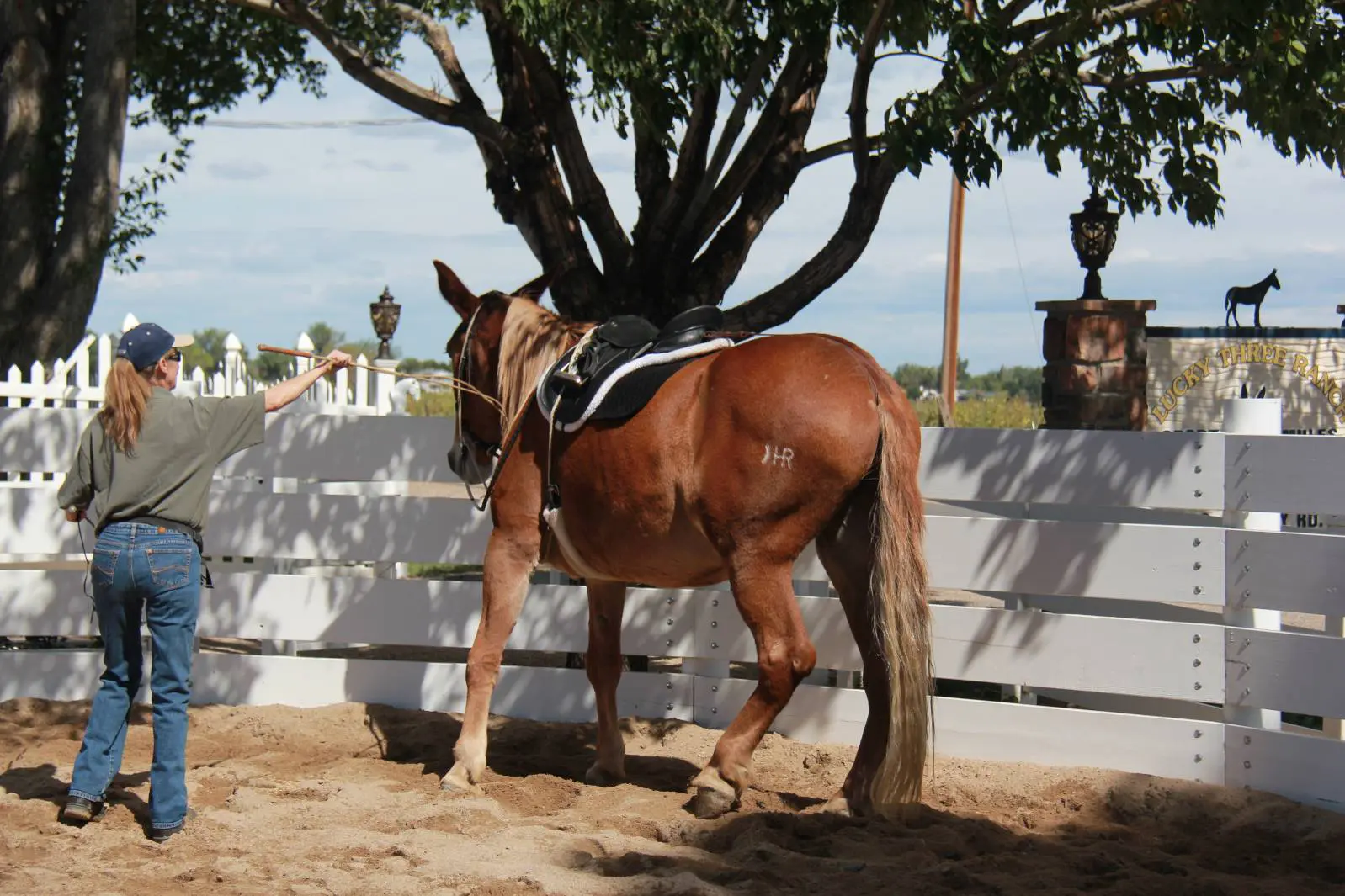
When asked to reverse, he executed it with the finesse he had previously learned to do by first planting the pivot foot and then making a smooth turn against the fence and crossing the front legs over correctly.

He then walked in the opposite direction with regularity of cadence and rhythm and complete willingness to perform, though I could tell he was beginning to tire in the sandy ground.

When asked to trot, he responded promptly with good energy, but had to lean on the elbow pull a bit just as a ballet dancer would need to lean on a balance bar for exercises after being away from dancing for a while.

When asked to halt, again it was smooth, balanced and nearly perfect.

Roll was so proud of himself that I thought we should stop in front of the new construction for a photo op!

Dean the Shoeing Machine came by a few days later to reset Roll’s hind shoes. The shoes help him to sustain his balance and keep from wearing his toes on the hind feet. In addition, having the shoes has really helped to steady the right hind foot that used to twist when he moved.

Roll’s stretches have greatly improved as well. Where he used to have to twist his head sideways to look at me, he can now reach and keep his head straight while bending through his neck and shoulders. This is a really tough move!
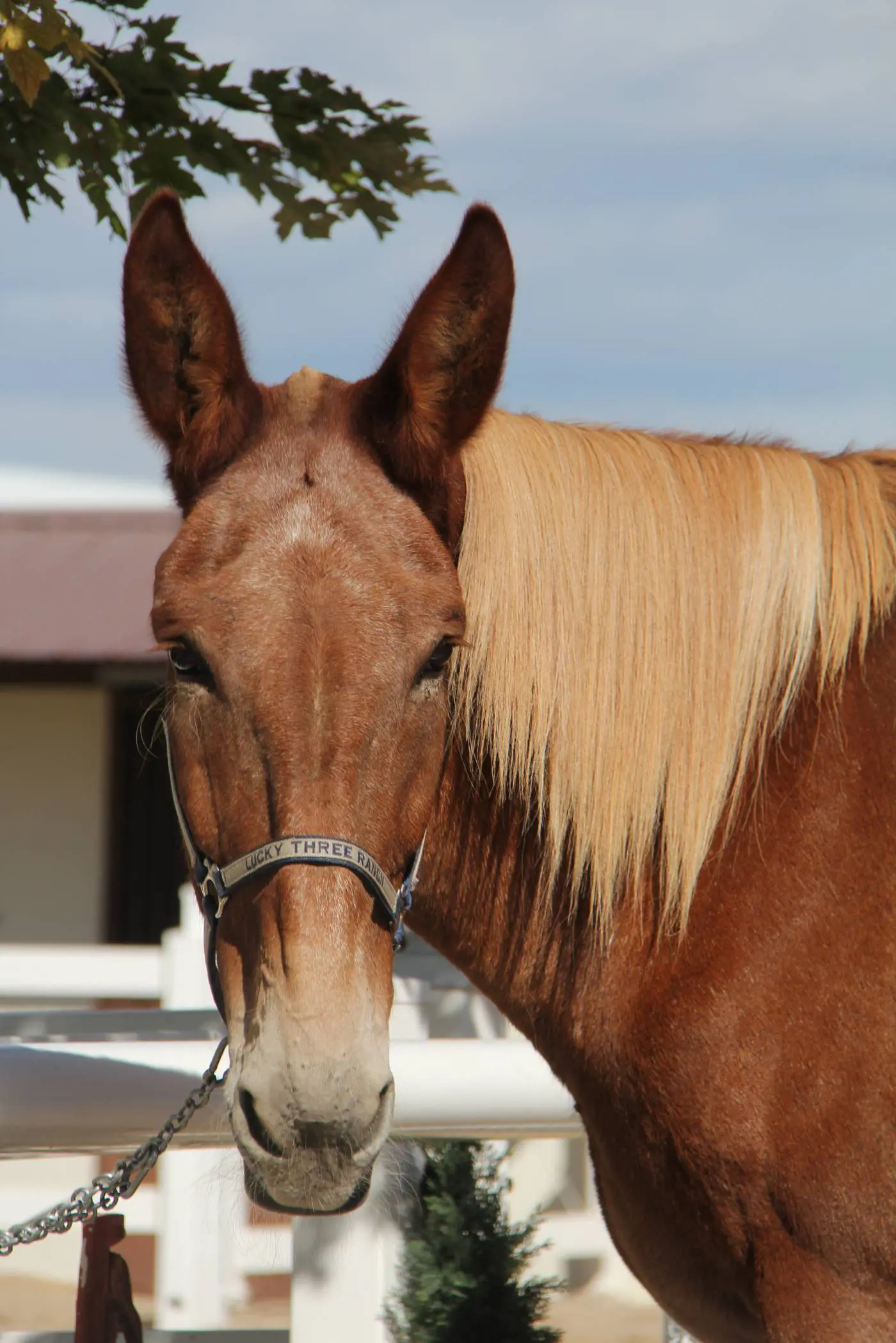
Roll’s mane continues to grow long and soft with his weekly applications of Johnson’s Baby Oil that I used to soften and train his coarse mule hair to lay over like a horse’s mane. It would otherwise just keep growing straight up and fall on both sides in a rather unruly manner. That is why so many people roach the manes on mules! Roll is a beautiful boy at twenty years old and really loves being a Lucky Three mule!

This is a special entry by Phil Yellott, owner of Romulus, who has been certified by the Guinness Book of World Records as the World’s Largest Donkey.
 Cara and I wanted to get a couple of donkeys for guard animals. We saw a couple of mammoth donkeys on Craigslist, who were very skinny and underfed. We contacted the owner, and were able to negotiate a price so we could get them. We named them Romulus and Remus after the legendary founders of the Roman empire. Romulus is 9 years old, and his little brother Remus is 7.
The two brothers are very close, most of the time it is like having one donkey with eight feet! We love them very much. We have been working very hard to get them healthy. We contacted the American Donkey and Mule Society (ADMS) about whether they were registered, and were told that if they were as tall as we thought, that they might be a candidate for the world’s tallest donkey. After researching the record, we saw that Oklahoma Sam was 15.3, and it seemed like Romulus was a good bit taller than that.
 At about 3:30 PM on Friday, February 8th, 2013 at 4C Stables, Dr. Valerie Jaffe, D.V.M., measured Romulus three times, each time finding his height to be 17 hands, or 68 inches tall. This is 172.72 centimeters in height.His brother Remus was also measured, and he was measured at 16.2 hands, 66” in height.
If you would like to have them at your event, please contact us. -Phil
Romulus’s information:
Size: 17 Hands (68 Inches, 172.72 CM)
Weight: about 1200 pounds
Age: 9
Breed: American Mammoth Jackstock
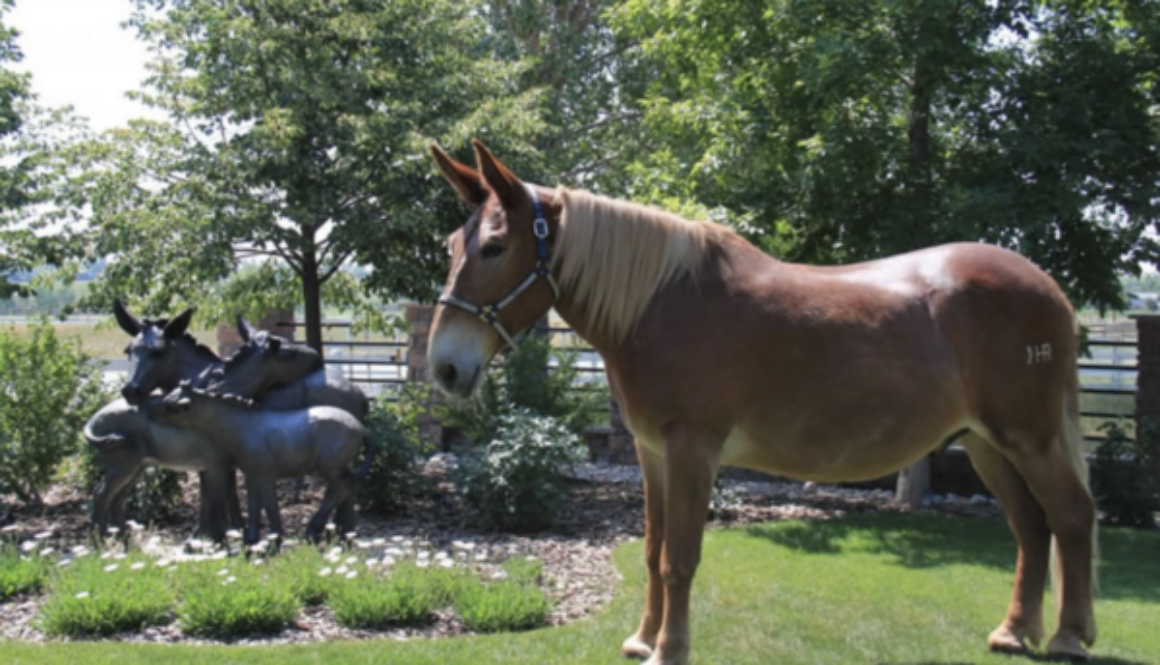

Roll has learned so much since he came to us in December of 2010 and he continues to learn more each and every day. When he first arrived, he was spooky and hid behind Rock almost all the time. Since, he has learned about how important good manners are and that he will always be treated with kindness and consideration being a part of the Lucky Three Ranch. Roll enjoys his studies of “Emily Post’s Book of Etiquette!”
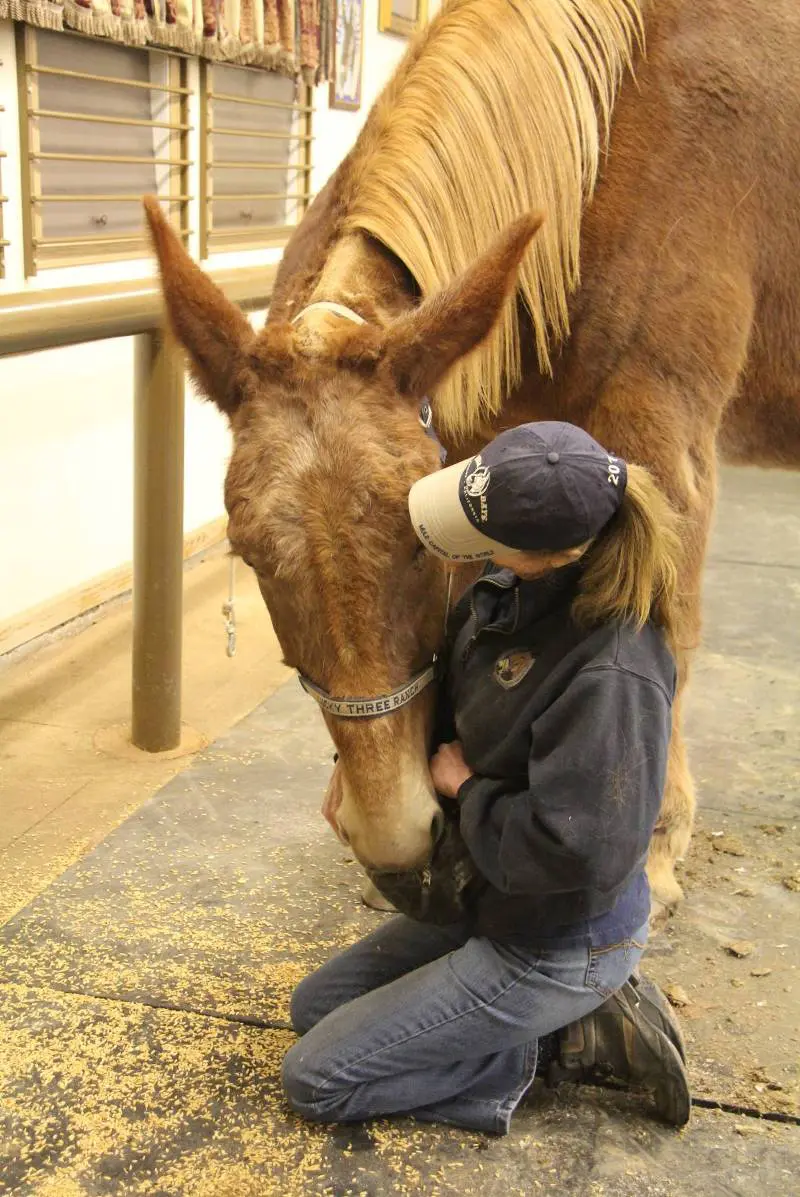 |
Roll is not only healthy and strong at 20 years old, but his entire attitude has changed dramatically. He is calm, quiet, accepting and very careful about being around his human friends. He has been exposed to major construction and all kinds of new and potentially scary things, but he now trusts us and we trust him. Trust takes a long time to build and should not be taken for granted. Never get on your knees like this around your equine until you are absolutely sure of their good behavior and your solid relationship with them. As I said before, this takes a long time and the correct steps to reach this kind of intimate communication with your equine, but it is well worth the time invested. |
| Using baby oil in Roll’s mane and tail during weekly grooming has allowed his generally coarse mule mane to soften and grow long and beautiful. Mule manes are known for being really coarse and growing straight up and falling on both sides in no particular fashion. This is why they are generally roached and cut short. The fuzzy hairs at the top of his tail are now also sleek and smooth like a horse’s tail. Roll really likes looking like Fabio! | 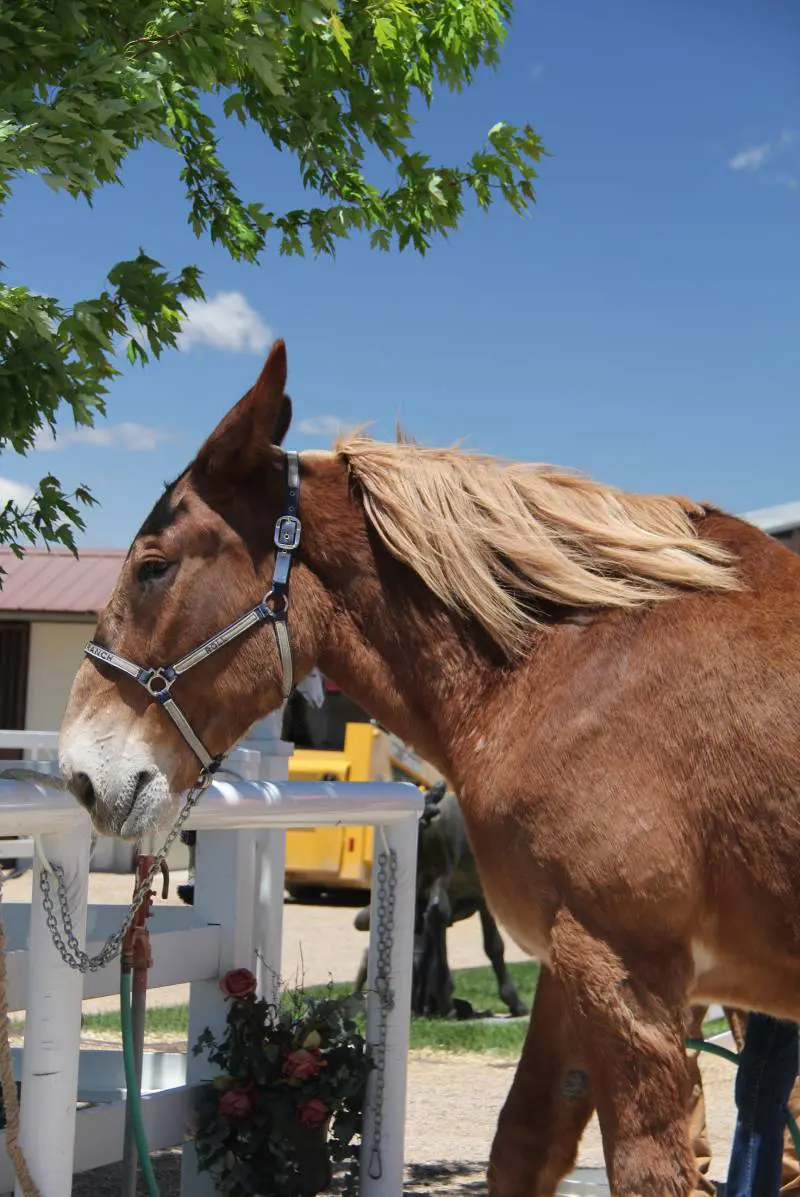 |
 |
Roll really likes his farrier Dean Geesen. The founder, side bones and ring bone he experienced in all four feet has been under control since a year after he arrived and he continues to stay sound because of the strengthened core muscles and good posture training that he received routinely for 3 years. |
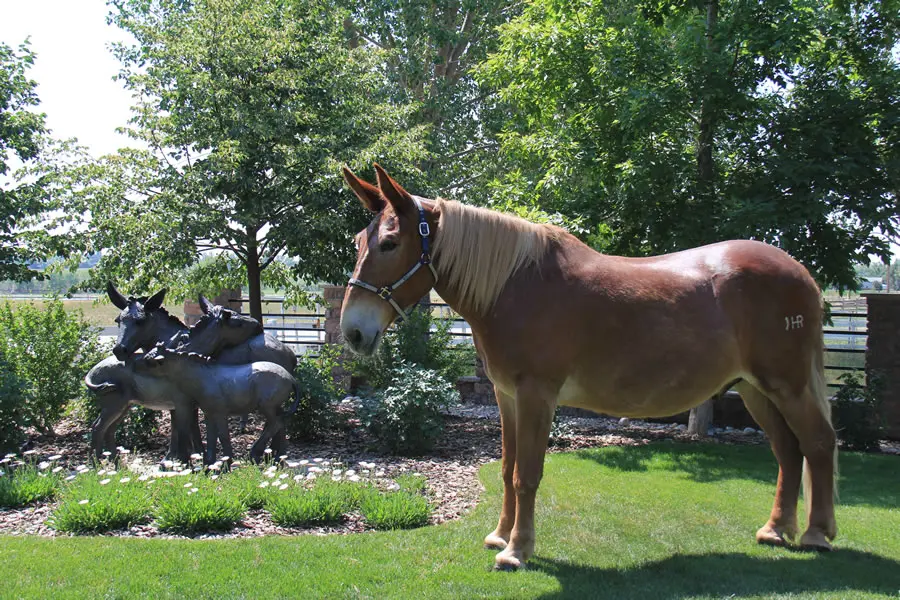
Roll enjoys being a part of the Lucky Three Tours and loves to have his picture taken in the park with the statues! He makes quite an elegant statue himself and we couldn’t be more proud of him!