We are very excited to announce that our gorgeous revised edition of Training Mules & Donkeys has won the GOLD medal in the Pets & Animals category of the Independent Publisher Book Awards. We’re very proud of the work we’ve done on the book, and it’s great to see it being recognized. Many congratulations to our hardworking staff and to the longears that inspired the book!
This story comes from our friend, Luzma Osorio, of Criadero Villa Luz in Colombia. You may remember her previous posts about the mule mother on their ranch!
A Paso Fino Hinny
Very little has been written about Hinnies–most of the time it is unfavourable comments and myths due to lack of knowledge about them. Until now, very few people have bred Hinnies because of speculation about their size and behavior; they are said to be very small and difficult. Typically a breeder or a farmer may only have one Hinny and several mules; consequently his opinion is based on limited experience.
A Hinny is a domestic equine hybrid that is the offspring of a male horse and a female donkey. It is similar to the more common mule, which is the product of a female horse and a male donkey.
Most of the times Hinnies are the result of an accident, which is why they are less common than mules and there is a lack of information about them.
Moms-to-be
At our Stud Farm, Villa Luz, in Colombia, South America, we have been breeding mules and donkeys for more than fifteen years. There has been a big demand for our Paso Fino male donkeys (Jacks) to produce gaited mules through the years. But we were left with many female donkeys (Jennies), and nobody would buy them to produce mules even though they have the same good genetics and Paso Fino gait of their brothers. So we thought, let’s breed Hinnies–and the project began! This was twenty months ago.
Romero, the proud father
First we selected twelve of our beautiful female donkeys (Jennies), 13 hands height average, with good womb and physical conformation. Then we needed a horse, so we bought a three and a half year old Paso Fino stallion and called him Romero. He is 14 hands. But it wasn’t easy; he didn’t like the Jennies to start with. This is normal, as horses prefer mares and donkeys prefer Jennies. But with much patience and after three hours waiting, Romero finally went for his first Jenny. Now he loves his harem of twelve, four of which have given birth to beautiful Hinnies and six are pregnant! So we expect to have at least ten Hinnies at the end of this year.
Hinnies are thought to be smaller because female donkeys are, for the most part, smaller than mares, but like mules, Hinnies come in many size–it depends on the size of their dam and also the sire.
Female donkeys range from miniatures to Mammoth Jennies that may be over 15 hands at the withers. At Villa Luz farm the Jennies are 13 hands average and the horse stallion is 14 hands so we are expecting the Hinnies to grow around 14 hands in height.
There are now four baby hinnies.
We now have four Hinnies, two females and two males: Romance, Romancera, Ronaldo and Rosarito. They are seven, six, five and four months old respectively. Their mothers had good deliveries without any problems.
The pregnancy time differed a little; Romance was born after 12 months, Romancera after 12 months 21 days, Ronaldo after 11 months 19 days and Rosarito after 12 months and 23 days. The pregnancies of Jennies are normally longer than mares.
We do the imprinting process as soon as they are born; it allows us to mould their personality and make them friendly and well-trained adult Hinnies!
The babies are born with Paso Fino gait
It is said that Hinnies often have shorter ears, although they are still longer than those of horses, and more horse-like manes and tails than mules. Well, our Hinnies certainly have the ear shape of their sire–they are beautifully pointed at the top just like his, but bigger. Up until now the behavior and characteristics of our Hinnies don’t differ much from the mules, they are lovely animals. It is our goal to study Hinnies and help to understand them better.
The good news is, the Paso Fino gait has passed to the Hinnies! This gait is natural and we have seen it in our baby Hinnies shortly after birth! Paso Fino is a lateral gait, four beat footfall, which provides a constant, rhythmic cadence. The rider should not experience any bumping or jolting. They say you can carry a tray with a glass of champagne on a Paso Fino equine as they are so smooth!!
We don’t know if they got the Paso Fino gait from the sire or the dam because both have it, but we certainly will have Paso Fino Hinnies! Very smooth, intelligent and well behaved!
An article in the U.K.’s Daily Mail reports that one-third of recreational riders are too obese for their equines, putting the animals at risk for health problems including lameness and back pain, citing a study from the Journal of Veterinary Behavior.
This is a big issue for equine health, as an equine expected to carry a rider that is too heavy for him can cause both physical and behavioral problems. Rules like “the rider’s weight should be 10% of the equine’s” are often used as a general guideline, but are by no means absolute–there are many other factors to consider. Below, Meredith offers her advice in how to choose the correct equine for the rider.
The maximum weight a horse or mule can carry will depend on a lot of variables. Mules and donkeys can carry proportionately more weight than a horse of the same size, because of the unique muscle structure of the animal. However, you do need to be careful about making broad generalizations. Obviously, an equine that has not been conditioned properly will not be able to efficiently carry as much weight as one who has been conditioned properly, so it is all relative to the situation. Also, the rider with better balance and riding ability is going to be easier for the equine to carry than one who is not balanced regardless of the difference in actual weight. The size of the equine and the proportion of the equine to the rider will also affect balance and carrying ability.
The amount of weight an equine can comfortably carry or pull depends on many things, beginning with the animal’s overall fitness. If he is fit, he will be able to carry more than those who are not, but conformational abnormalities will also have an effect. If he has any deviations in his bone structure (i.e. crooked legs), it can compromise how he moves and put undue stress on certain areas depending on the defect. The easiest way to test for weight tolerance is to watch the way the animal moves. If he is halted and seems to be have difficulty moving, the weight is obviously too heavy. If he is unable to trot, or is resistant to trotting, the weight is too heavy. This would be the same in harness. If he cannot move freely, the load is too heavy. So, it’s not just a matter of how old he is, but rather how he is conformed and how fit he is at any given stage of training and the weight and ability of the rider that will dictate how much he can carry, or pull. Be careful about generalizations, because there are always hidden variables to be considered.
For instance, it is commonly believed that an equine should be able to carry 10% of his weight. But if a 2000 lb. animal is carrying the 200 pounds over a back that has not been physically developed correctly, it could be very difficult for him. If he possesses more strength over his topline and through the croup, then he may actually be able to carry more than 10% of his body weight. Any additional weight (as with saddle bags) also needs to be considered. If he is weak over the topline and in his back, then he shouldn’t be carrying even a 150 lb. person, much less anything behind the saddle. The weight does need to be placed and balanced over the bearing areas and the shoulder and hips do need to be kept clear for optimum movement. Anchoring the saddle with a crupper is always a good idea to keep loads from shifting and placement and security of the foundation tack to which you secure all these things needs to be assessed as well. When you add weight to the saddle, check to see if the girth you are using is adequate to keep the saddle in place without rubbing sores on your animal’s body.
We love seeing people with great relationships with their equines, and here’s a thrilling example of what training and teamwork can really accomplish. Ray Woodside and his mule, Willie, made a great showing in the Extreme Cowboy Race at the Washington State Horse Expo–check out the video below, and thanks to Jehnet for passing it along!
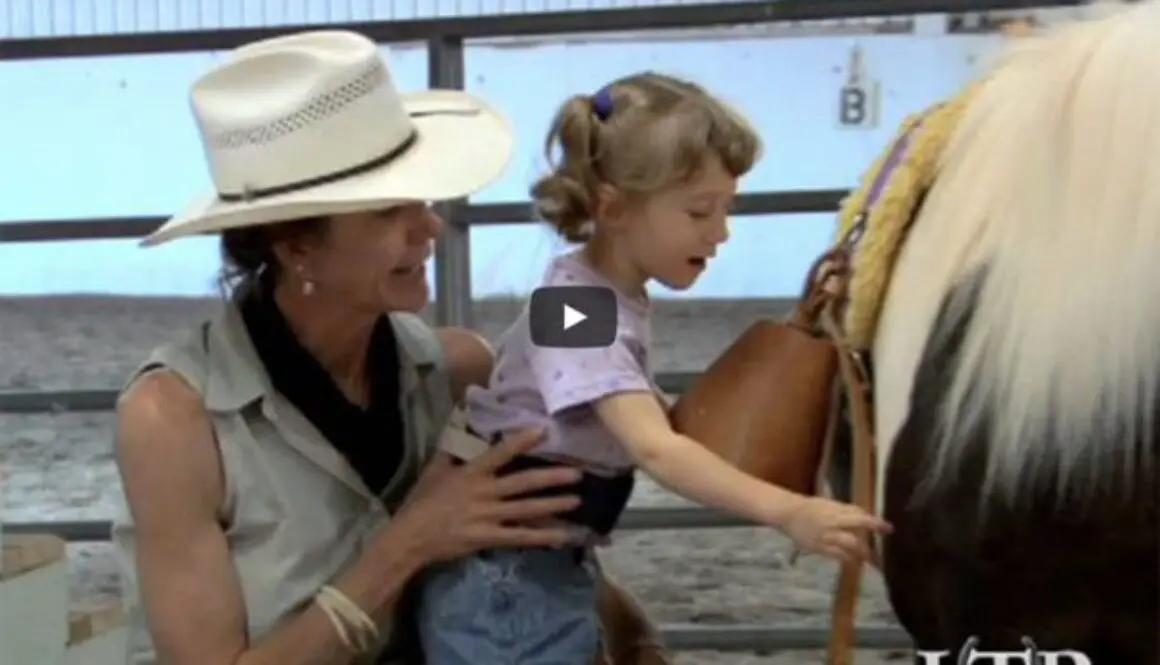
With heavy hearts, we at Lucky Three Ranch say goodbye to our good friend, Cliff Uber. Cliff was an inspiration to everyone who knew him. His grace, courage and sense of humor will be missed.
A selection of the official statement from Hearts and Horses is below:
It is with an incredibly heavy heart that we announce the passing of our rider, volunteer, trainer and dear friend Cliff Uber. For ten years he has graced us all with his beautiful presence, infectious smile, sense of peace and patience and a wonderful sense of humor. The grief we are experiencing can not be described.
This world was a better place with him in it, and saying he will be missed dearly just doesn’t even touch the tip of the iceberg of love we have for him.
Rest in Peace our dear friend…
A Celebration of Cliff’s life will be held at Hearts and Horses on Saturday, December 8th at 3:30. Attire is casual western wear. We will have a potluck dinner, please rsvp to carrie@heartsandhorses.org with what you are bringing.
The family has requested that In lieu of flowers, memorial donations be made to Hearts and Horses. Details can be found under the giving tab on their website: www.heartsandhorses.org.
Cliff Uber has been recognized as the 2012 PATH Intl. Independent Adult Equestrian award winner! He will be honored as a special guest at the PATH Intl. Awards Banquet held at the 2012 PATH Intl. Conference & Annual Meeting on November 2, 2012 in Bellevue, WA. Thanks to Purina Mills for providing travel schloarships for the equestrian award winners. As the Independent Adult Equestrian National Award Winner he receives scholarship reimbursement funds of up to $1500.
You may recognize Cliff from his appearance on the “Walk On, Part 1” episode of Those Magnificent Mules, and we are extremely proud of his success!
Bud (Sir Rocko) has earned the PATH Intl. Horse of the Year for Region 10 and will also be honored at the awards banquet. As a regional winner, he is a finalist for the 2012 PATH Intl. National Horse of the Year Award, which will be announced and celebrated at the awards banquet. Bud has been with Hearts & Horses since 2005 and is a most deserved recipient of this award!
As a proud representative of the American Donkey and Mule Society, Lucky Three Ranch is deeply saddened to say goodbye to our close friend, and co-founder of ADMS, Betsy Hutchins. She was one of a kind and shared our love for longears. We will miss her very much.
Betsy with Frosty
Statement from the ADMS:
It is with great sadness that the ADMS announces the loss of one of our co-founders, Elizabeth “Betsy” Hutchins. For over forty years, Betsy devoted her life and her home to the promotion of longears around the world. She and her family spent time not only in the daily operations of the ADMS (originally housed in their hundred-year-old farmhouse in Denton) but raised, trained and showed donkeys and mules as well. All four of her children were brought up with the animals and can be found in pages of the older Mr Longears and Brayer magazines.
Betsy and husband Paul converted part of their home into the operations center for ADMS. The BRAYER magazine used to be hand-typed and copy pasted up on the dining room table. Large built-in shelves all around the house were filled with donkey and mule figurines of every type. As the ADMS grew over the years, it began to encompass the sun porch of the house, gaining more equipment and taking up more time. Betsy and Paul ran it solely for many years, with the occasional volunteer for help. Betsy wrote many articles on donkey and mule care, much of it taken from her own experiences dealing with the longears living in their large acreage property.
Betsy with husband Paul
While Betsy always maintained she loved air conditioning, if animals needed care, she was outside taking care of them. If a friend came by needing a place to unload a donkey for the night, she’d make sure the gates were closed, the water tubs full and the hay brought out. She would stack hay if needed, hold heads or hooves for hoof trims, give medicines or baths to the animals, whatever was needed. She truly loved all animals, whether longears, dogs, cats, or guinea pigs, which she raised for years as a hobby.
When Paul and Betsy retired some 12 years ago, her involvement in ADMS slowed, but never stopped. She still joined the staff (by then hired on to continue to run ADMS) at shows, sitting at the information table and talking to everyone with a smile. She often handed out ribbons at shows, while husband Paul was judge or ring steward. Even though she had retired, she could still be counted on to answer questions that just couldn’t be solved, except through experience.
Betsy at a Donkey Show in the 1960s
She loved to travel the world, and went on cruises over the years, the latest just last month. With a passion for gardening, she found lovely plants and had over 160 cuttings potted at last count. A friend recounts that she heard the news of Betsy’s passing while watering cuttings from tea roses Betsy had
cultivated.
Betsy is survived by husband Paul, children Scott and wife Tammy, Melissa “Missy” and S.O. David, Melinda “Mindy” and husband Steven, Patrick and wife Katie, grandchildren Clayton and Audrey, and friends around the world too numerous to count.
Long time friend Becky perhaps has put it best in her note to ADMS: I know there is an ass or two in heaven braying in happiness that Mom has come over the Rainbow Bridge to be with them. And no, that was not thunder. It was a stampede of critters running to meet their Mom. Godspeed, Betsy.
The Telly Award statuette is produced by the company that makes the Oscar and Emmy awards. They receive over 13,000 entries annually from some of the finest agencies and corporations in the world, so it is a remarkable achievement to be selected for recognition by their judging committee. The Silver Telly Council is comprised of many top industry professionals, including past winners of the Silver Telly, which is their highest honor. We previously received Silver Tellys in 2005 and 2007 for the “Lucky Three Ranch” and “Walk On” episodes from our documentary series, Those Magnificent Mules.
We’re proud of you, Jasper! Make sure that you’re part of the fun by checking out all of Jasper’s adventures On Demand!
Remember Chuchureña, the mule who gave birth to a healthy baby mule last September? Our friend Luzma Osorio sent us this update from Colombia, on the mule mama and her daughter, “La Bien Querida”:
I took some new pictures of the mule and her offspring last week, the baby is now three months old and she has grown a lot! They are gorgeous!!
Photos by Luzma Osorio, Criadero Villa Luz
What a beautiful, loving pair! Chuchureña truly proves that mules are good mothers, too!
An excerpt of an amazing story from a friend of Lucky Three Ranch, Luzma Osorio, on the birth of a new mule in Colombia–and her mule mother!
Mule mama “Chucurena” with her daughter, “La bien querida.” Photo courtesy of Criadero Villa Luz.
They say mules cannot give birth and are hostile to foals, but the mule Chucurena has proved completely the opposite. On 25 September 2011, she gave birth to a beautiful baby mule in Colombia, South America, and she is proving to be a great mother!
Chucurena is a 3 ½ year old black mule from Hacienda El Cerro in Bucaramanga. She is very affectionate, produces lots of milk and she is always looking after her baby.
This miracle was achieved thanks to the Embryo transplant technique. An eight day old embryo was extracted from a mare and implanted in the mule’s womb to develop it. Embryo transplants are a complicated process that requires synchronizing the ovulating time in both females, in this instance it was carried out by the specialized Colombian veterinarian Hector Mendez.
The embryo was from a Paso Fino Mare called La Querencia and the Paso Fino Donkey Cosaco XVI de Villa Luz. The pregnancy was 11 months and the delivery was normal with no complications. The mule knew exactly what to do and behaved as an expert mother even if it was her first time! The baby is a female and it was called “La bien querida” (The much loved).
For more information on the Criadero Villa Luz, visit their website here.


 We are very excited to announce that our gorgeous revised edition of Training Mules & Donkeys has won the GOLD medal in the Pets & Animals category of the Independent Publisher Book Awards. We’re very proud of the work we’ve done on the book, and it’s great to see it being recognized. Many congratulations to our hardworking staff and to the longears that inspired the book!