MULE CROSSING: Equine Industry Trends
By Meredith Hodges
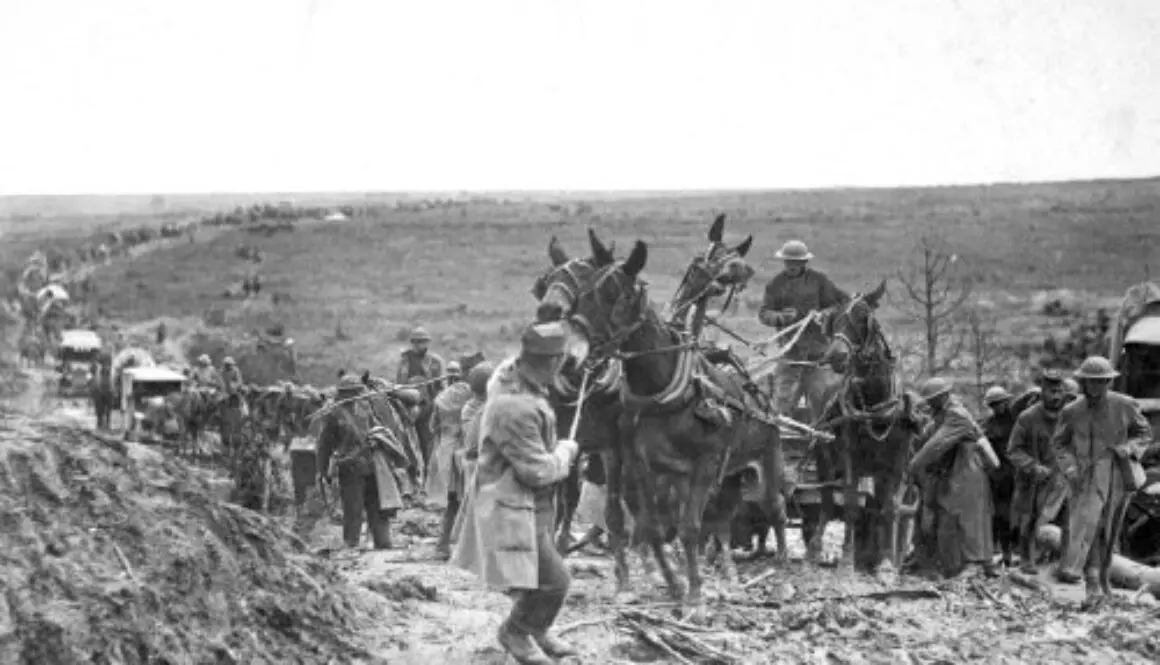
- Military Horsemanship began with Xenophon who was born c. 430 BC, in the deme Erchia of Athens. Xenophon’s father, Gryllus, was a member of a wealthy equestrian family and worked on many of the principles of classical dressage. Xenophon emphasized training the horse through kindness and reward. These principles made their way to the Spanish Riding School in Vienna, Austria where Colonel Podhasky rode for General Patton after WWII. This style of riding, Dressage, made its way to the West and was been transformed into Western Dressage.
- The object of Dressage is “the harmonious development of the physique and ability of the horse. As a result, it makes the horse calm, supple, loose, and flexible, but also confident, attentive and keen, thus achieving perfect understanding with his rider.” In Dressage, one is not concerned with time in training. Rather, it is measured in progress from one step to another. Dressage requires a discipline of the mind and body. This slow and methodical way of training lends itself nicely to mules.
 “Mules separate crude trainers from artistic trainers.” The mule handled by a crude trainer will generally epitomize the traditional belief that mules are stubborn and ornery. The mule handled by an artistic trainer will not.
- The Indians of America were subtle with their horse training. They would lie across their backs to get them used to being not only ridden, but also so they could hang off the side of the horse and remain hidden while chasing the huge bison herds. In order to be bale to steer the horse, they would attach a strap around the lower jaw or configure a “War Bridle” that also had a loop around the head and jaw.
- Horse training techniques began in America with the cowboys by using blindfolds for mounting, forceful restraints, lying the animal down and put tarps over them to impress human dominance.

- “Breaking” horses and mules was the trend of the early West. The equine was restrained for saddling and bridling instead of using a slow and polite approach. Cowboys would try to ride them out until they gave up and quit bucking.
- Training “secrets” happened “behind the back fence. Lots of trainers used rope tricks to train by leading with a front foot, or by lying them down, or just roping them to catch them. Beware of these sorts of things when buying your equine!
- Horse training trends have evolved from Buck Branaman, Pat Parelli, Clinton Anderson, etc. and their Round Pen training techniques using ropes on the equines. Natural Horsemanship rose from these methods, using less restraint on the equine.
- Some mules could tolerate this, but it didn’t always yield the most positive results. Natural Horsemanship was an attractive trend. However, since equines are not born in their ideal posture any more than humans are, it fails to put the equine into an ideal posture. Lordosis (sway back) and Kissing Spine can occur as the animal ages. We have been able to improve some cases of Kissing Spine where the calcification was able to be broken loose, but if it is too solid, it would require a dangerous surgery to correct it.
- With their approach, Monte Roberts and Richard Shrake developed even more humane training techniques with horses. Equines were approached in a more calm and relaxing way with attention to patience, good posture and core strength development.
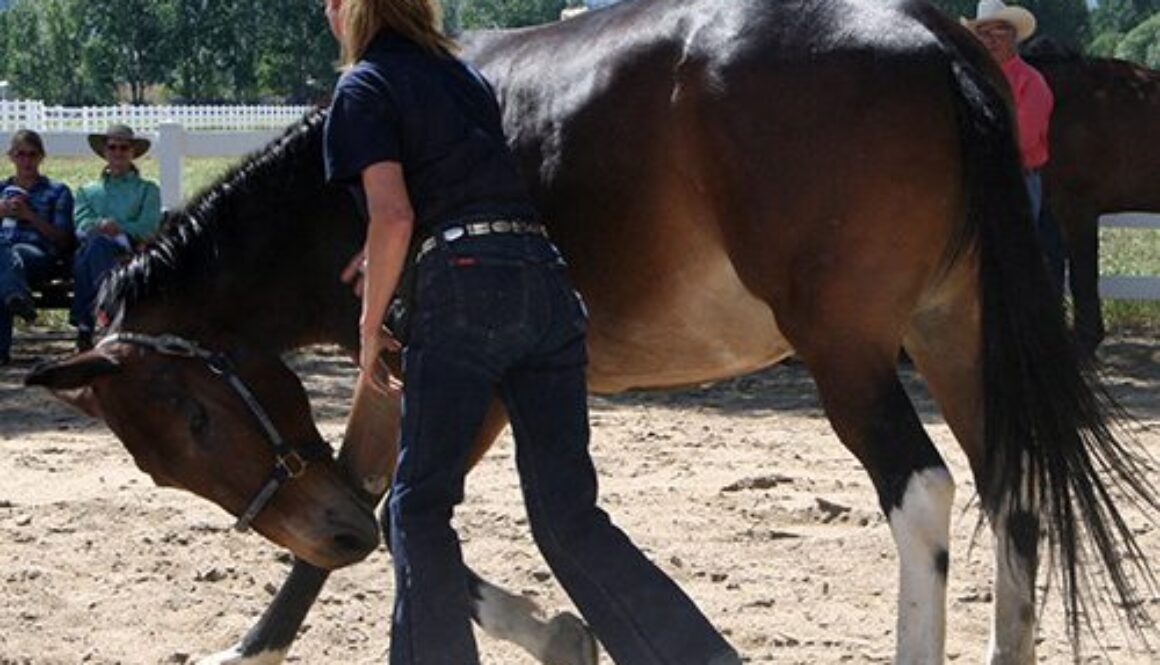
- This gave way to the new trend of teaching them to lie down. Equines do not lie down easily, so it wasn’t always used as an easy way to mount. It really shouldn’t be used that way because of the added stress put on the equine’s body that can cause arthritis and other problems with the hooves, and joints, as they age.
- Having your equine lie down can be an exercise in bonding in a relaxing way. Just be careful to position yourself in a safe spot.
- In order to get the equines to lie down, they were first taken down forcefully with ropes.
- Mules being more easily convinced were compliant to a tap behind the knee and one rope from the offside to suggest lying down.
- I saw a horse being exhibited at the WEG that was forced to bow with ropes. I thought it could be beneficial to find out how long it would take for an equine to learn to bow of his accord with his own muscle strength. Lance learned to do it by himself with only slight encouragement from me in 18 months.
- People thought this was good for mounting, but common sense told me that a mounting block would be better. Putting extra weight on the animal and then asking him to get up would only exacerbate the stress on his body as he was rising. Equines are built to carry weight underneath the spine, but not so much on their back.
- If the argument is that amounting block can’t be brought along for trail riding, it makes more sense to simply acquire a shorter animal.
- If you do want a taller equine, he can be taught to stretch out and lower his back like a Park Horse with a lot less stress on his body. He can hoist his body up much easier from this position. There are also stirrups available that can be lowered and then reset once you are in the saddle.
- This worked better with mules, but still not as well as Behavior Modification and reward system training. Behavior Modification was abbreviated and gave way to Clicker Training.
- Clicker Training made Trick Training much easier. Trick Training can be fun, but you should still do the postural core strength exercises so he does not hurt his body when engaging in trick training.
- Towing tires in the snow, or people on water skis in a lake might be fun, but consider the amount of resistant weight against the animal’s good posture during these kinds of activities. I opted to tow tires through the snow, or roller blade, from directly behind my mules so as not to offset their balance in a harmful way. The hind quarters can provide even power from behind to pull straight. This can be fun if your animal is properly prepared.
- Learn to think about the consequence of your actions in relationship to the effect it has on your equine’s body and prepare accordingly.
- Restraints are helpful in dealing with mules but must not be applied so they cause pain. Hobbles, leg straps, and scotch ties are generally all that is needed in dealing with difficult mules. Even if the mule has led a life of abuse, their ability to determine just who is responsible for their pain means that with love and kindness, they can be taught to trust again. It just takes a lot of time and patience.
- If you find restraints are not sufficient to help with your equine, you may be dealing with an outlaw, in which case it is best to put him out of his misery before he injures someone. Be careful however about blaming the animal for his response to an inhumane trainer. Some can be rehabilitated, some cannot, but you will need to know what you are doing. Kindness alone is not the answer.

 Horse training trends have evolved from Buck Branaman, Pat Parelli, Clinton Anderson, etc. and their Round Pen training techniques using ropes on the equines. Natural Horsemanship rose from these methods, using less restraint on the equine.
 This gave way to the new trend of teaching them to lie down. Equines do not lie down easily, so it wasn’t always used as an easy way to mount. It really shouldn’t be used that way because of the added stress put on the equine’s body that can cause arthritis and other problems with the hooves, and joints, as they age.
 I saw a horse being exhibited at the WEG that was forced to bow with ropes. I thought it could be beneficial to find out how long it would take for an equine to learn to bow of his accord with his own muscle strength. Lance learned to do it by himself with only slight encouragement from me in 18 months.
 If the argument is that amounting block can’t be brought along for trail riding, it makes more sense to simply acquire a shorter animal.
 If you find restraints are not sufficient to help with your equine, you may be dealing with an outlaw, in which case it is best to put him out of his misery before he injures someone. Be careful however about blaming the animal for his response to an inhumane trainer. Some can be rehabilitated, some cannot, but you will need to know what you are doing. Kindness alone is not the answer.
- People like to do wild and crazy things with their animals. I am not saying “don’t,” just try to be responsible and think about the consequences of your actions and the effect it has on your equine’s body. Doing preparatory core strength and postural body work can assure that the equine is using his body in the correct way. When he is not prepared, there can be all kinds of damage done to his hooves, joints, ligaments and tendons such as ring bone and side bones.
- Longears do not seek to impress, nor do they have inflated ideas of importance. They are humble, not greedy or selfish, and are content to give freely all that they have to give. There is no limit to their endurance and no end to their trust. Unpleasant moments are undoubtedly remembered, yet forgiven when requested. Owners should be inspired to be more constructive in their management and training approach. Within Longears, there is a hidden hope of happiness, contentment, peace and brotherhood. The inspiration of these noble characteristics does not go unnoticed as they ennoble those around them.
- Mules and Donkeys are very appreciative animals. If a child and Longears are supervised correctly, it can greatly enhance the entire riding experience. The mule, or donkey will protect your child with his excellent judgment and the child will learn to be a patient and understanding person through the interaction with his Longears. The jobs these “kids” are dong with their mules and donkeys are wonderful and their contributions are extensive. The values learned by children when dealing with donkeys and mules will stand them in good stead throughout their lives, not to mention the joy they will discover in having such an interactive companion.
- Today good mule trainers apply the basic techniques of Behavior Modification (reward system training) in their programs. That is, getting the desired response through positive reinforcement and ignoring, as much as possible, the undesired behavior. Negative reinforcement, or punishment, is used sparingly, is never severe and is only used to set boundaries to behavior.
- With new and improved training techniques, the mules of today are known for their beauty and outstanding athletic ability, their durability and their intelligence. Their uses are limited only to the imaginations of their owners. It is now commonly known that with proper training, a mule can perform better than the horse it was bred from. Subsequently, mules are not only competing in mule shows, but horse shows as well.
- Although mule racing has just begun to take hold as a national sport, it had its beginnings in the Eastern Sierra Nevada Mountains of California in 1851, when Captain Boling’s cavalry troop was forced to halt for two months in the Yosemite Valley. Horse racing was one of the major sports used to keep up the spirits of the men during this unexpected respite. Army mules were included in these races to add to the entertainment. Much to the chagrin of some of the horse owners, the mules could actually beat some of the cavalry’s favorite mounts.
- Captain Boling purchased one Maltese, Kentucky-blooded mule (known as The Vining Mule). He was particularly impressed and bought him for one thousand dollars in gold from Lee Vining. He then went on to make many more thousands in match races with this mule against horses. To quote from the official racing program: “The Indian war of 1851 was the catalyst that started the first running of mules in California.” The first actual pari-mutuel mule meet was held in Bishop, California in July of 1978. Match races and Western-style races included at county fairs exhibit the true versatility of the mule. With increased interest, mule racing now assumes the professionalism of horse racing with the introduction of jockeys, trainers, and starting gates.
- At Bishop Mule Days, Longears perform in Pleasure classes, Reining classes, Trail, Musical Tires, Barrel Racing and Pole Bending. Also Jumping, Cattle Penning, Steer Stopping, Team Roping, and a Balloon Bust. For the packers: Pack Train classes, Packing contests, Box Hitch and Diamond Hitch packing contests (pro and non-pro), Team Packing and the Team Packing Scramble which you have to see to believe! There are Halter classes, Pulling, Driving classes, and for you race fans: Chariot races, Flat Track races, and even a Backwards race!
- It was Maryster Farm’s Kit who had inspired me to try Combined Training with a mule! We spoke for about twenty minutes and Susan at the Abbe Ranch Horse Trials kindly put my fears to rest. I assured her that we would do anything necessary to keep from interfering with the other competitors. All we wanted to do was to test our skills and to learn all we could from those with similar interests. The next day our ride times came in the mail and we were in! After three years of intensive schooling, we finally won our event against the horses!
- Counties have been taking initiative to include mules and donkeys in the county fairs, and local riding clubs are inviting them to participate in annual All-Breed shows. Increased understanding and appreciation for the positive qualities of Longears brings more and more people together all the time. Their generous ways have positively influenced people toward a genuine pursuit of happiness.
- People agree that the best part of their long journeys with their mules was all the wonderful people they met along the way who did everything they could to help them reach their destination. People extended their hospitality, allowing them to bed down at their ranches along the route. Others met them at strategic points with feed and water and other necessary supplies that would be difficult to carry along with them. Many new friendships have been made on the trail.
- Mules are excellent mountain partners. They are a strong and durable animal. Due to the cupped shape of their hooves, they can cover the rough mountain terrain with much more surefootedness than their cousin, the horse. Mules’ superior intelligence and strong sense of survival helps him to negotiate careful placements of his feet, ensuring the safest possible ride. This is both important and comforting when looking for a relaxing ride in the mountains. The mule’s strength and endurance is sometimes unbelievable, and always incredible.
- The trends of equine training have certainly improved by leaps and bounds through the centuries, but we are still plagued by those who are too naive to really assess how their behavior influences that of their equine and are subsequently influenced by substandard training practices. It is always best to learn from past mistakes and try to do better going forward. Cindy K. Roberts and I hope that we can share our experiences with all of you so you too can experience the same kind of joy and pleasure that we do with our equines! Wishing you all HAPPY TRAILS!
 Today good mule trainers apply the basic techniques of Behavior Modification (reward system training) in their programs. That is, getting the desired response through positive reinforcement and ignoring, as much as possible, the undesired behavior. Negative reinforcement, or punishment, is used sparingly, is never severe and is only used to set boundaries to behavior.

To learn more about Meredith Hodges and her comprehensive all-breed equine training program, visit LuckyThreeRanch.com, MEREDITH HODGES PUBLIC FIGURE Facebook page, or call 1-800-816-7566. Check out her children’s website at JasperTheMule.com. Also, find Meredith on Pinterest, Instagram, MeWe, YouTube and Twitter.
Covered in TRAINING MULES & DONKEY: A LOGICAL APPROACH TO TRAINING, TRAINING WITHOUT RESISTANCE, TRAINING DVD #2 and EQUUS REVISITED at www.luckythreeranchstore.com.
© 2024 Lucky Three Ranch, Inc. All Rights Reserved.
 By Meredith Hodges
 Once the heavier coat is eliminated, a weekly grooming will keep his coat nicely maintained. Daily grooming before a show, or every other day, is even better. Each time you groom him before riding, check and clip as needed the muzzle hairs, around the eyes and ears, and around the coronet bands. Leave the hairs inside the ears to prevent irritation from bugs and flies, but trim the outside edges and backs of the ears. An ounce of corn oil in his feed daily will assure a healthy sheen in his coat on show day without the use of artificial highlighters. Trimming, or shoeing, your mule on a regular six-eight week schedule will assure that his feet will not need attending at the last minute. A routine vaccination, deworming, Coggins testing and a permanent brand inspection will make sure he is ready for transport to any show anywhere at any time. Then, all that remains to be done right before the show is minor clipping, bathing, and polishing hooves.
 Then, tack up your animal, checking each piece of equipment to make sure that it is in working order. Go ahead and practice the class. Then, as you unpack your mule, set the tack aside from the rest in your tack room for cleaning later. Do this for each animal in each class. Your animals will do better at the show if they get plenty of rest before the show, so it is wise to spend the day before the show cleaning your tack, clothes, and equipment. Before you begin to clean, load all the items into your trailer that are all ready to go without cleaning. Then, as you clean the remaining items, load them directly into the trailer as you finish them.
 can be left until morning, or last minute, provided that you put them in a highly visible spot with a list of what is to be put in attached. Do not try to rely on your memory, as it will be clouded by the excitement and anticipation of the show.
 If classes are spaced fairly close together and you are using more than one animal, it is wise to tack up the other animals ahead of time so they are ready to go. If you are using only one saddle for more than one animal, the other animals can still be bridled with the halter slipped over it, so they can be tied and waiting. Be sure to tie up the reins so they will not be chewed or stepped on. If you are using the same mule throughout the show, tacking and stripping should not be too time-consuming if your equipment is well organized.
 Miniature mules and horses settle into their lunging lessons very well, but miniature donkeys (and donkeys in general) really don’t like to be lunged. They just don’t seem to see much purpose in it unless you make it fun for them. If you have a mini donkey, when teaching him to lunge it is helpful if you employ the aid of another type of equine of comparative size (such as a miniature horse or mule) to help “lead” your mini donkey through the lessons. Before I first began lunging my two mini donkeys, Augie and Spuds, I introduced them to Franklin the mini mule, Francis the mini molly mule and Mirage the mini horse by putting them altogether in the larger indoor arena space, and then I put them all in the round pen together. Before I began giving any of them specific instructions, they were all allowed some time to investigate each other and establish their pecking order. Before long all five were lunging cooperatively together, although Spuds did feel the need to kick at Mirage a few times so Mirage would allow him enough space to perform. (Mirage can be a bully sometimes and needed to be put in his place.)
 It is important that your tack and other “mini” equipment fit well. Check the harness to make sure the bridle fits and the bit is placed correctly, and be sure to adjust the blinders on your harness bridle so they don’t rub against your mini’s eyes. Fitting miniature donkeys for harness can sometimes be difficult, but I was fortunate to find Chimacum Tack, a tack and harness manufacturing company that does a fantastic job with miniature donkey, mule and horse harness. I suggest that you make the fitting a lesson in itself—you can even introduce your mini to the cart he will be pulling without actually hitching him up to it. Just as you have with all other obstacles, first let him inspect the tack. Then, once you have put it on him, have him stand quietly in the spot in front of the cart where he will eventually stand. Don’t forget to amply reward him and he should be more than willing to comply.
 At this stage of training, lessons over obstacles can now be done with more finesse. You can begin lateral work over small rails placed in front of a fence, backing through the walk-through “L” and doing lateral work in the tractor tire. In advanced tractor tire work, if you judge it to be safe, get down on your knees so you are on your mini’s level. Now ask your mini to put all four feet inside the tractor tire, and to then make a turn on the haunches. Direct his head in the direction you choose to go first and ask him to slowly turn while all of his feet are still inside the tire. Do this by poking him in the shoulder with your index finger (just as you did when repositioning him for the farrier) and asking him to move his front end over and around the inside of the tire. Do this in one direction and then in the other direction. Stay low, maintain eye contact and don’t be too forceful in your movements.
 By now you have taught your mini to follow on the lead while you both explore and have all kinds of adventures around your property, inspecting new things and having picnics everywhere imaginable. If your mini is to learn to be driven, he now needs to have the confidence to take the lead. When you begin this process, review (with your mini) leading together from the work station to the round pen. If you are training a team and dealing with two minis, tie their halters together at the side rings with about eighteen inches of 3/8-inch nylon rope with small snaps on each end between them, and use one lead rope snapped to the center of the tie rope between them. Begin by taking your position in the lead while carrying a dressage whip. Slowly work your way in beside them on the near (left) side, tap them each once gently on the hindquarters with the whip to let them know you expect them to continue forward and ahead of you (even though you are moving more slowly than they are on an angle to gradually work your way in behind them). Pretty soon, you should be directly behind them, encouraging them both forward if they do stop with a gentle tap of the dressage whip, but only one tap for each balky step.
 In subsequent lessons going forward, the next steps are to attach the drive lines and ground-drive your mini in the round pen. Ground-drive around the rail in each direction at the walk and do smaller circles from the rail and back to the rail around the larger circle. Execute an “S” turn through the middle to change directions and do the same going in the opposite direction. End each lesson with a square halt and a back. If he does not do any of these moves with ease, just be happy with what he offers and stop the lesson there. This will give your mini a lesson in communication through the bit. It is imperative that he learns this. You always have the next lesson to continue forward and you want to avoid any confrontation that will cause resistant behavior. It is easier to prevent the behavior from occurring than to have to correct it later. If you are ground-driving two minis, work each mini alone first and then follow this exact same procedure with your team.
 Moving to an open arena changes your mini’s perception of space and he will often feel like playing, so set up the cones of the hourglass pattern for him. Ground-driving through the hourglass pattern will help to maintain his attention and give him a point of focus for his lessons. Ground-drive your mini as you did in the round pen, but now he will be driven through the hourglass pattern with random halts. If you have any balking, just stop, reward for stopping, regroup and try again. Remember to go slowly and use frequent halts and backs in order to reward your mini. This helps him to stay attentive to your hands. Remember to do a full halt yourself—in good posture—before you step forward to reward him. If you pay attention to your own posture and the quality of your walk and halts, he will pay attention to his.
 There are classes at various shows (both open horse shows and miniature shows), where minis are not only driven in harness with a variety of carts and small carriages, but they also do trail courses and jumping on the lead line. Miniatures enjoy performing and have personality-plus, which audiences love! How well-trained your mini is will determine his willingness to do a multitude of fun activities, so make training fun and exciting for your mini. Enjoy the small victories along the way, use your creativity, reward lavishly and look forward to your adventures together.




 mules once again exhibited the potential for a wide variety of uses. Spectators were awed at the beauty and grace of our modern-day saddle mules and old myths about Longears were soundly refused.
 again do more in support of Longears. We can be proud and thankful for the support and hard work of these dedicated folks.
 active contributors to the success of our own Colorado Donkey and Mule Society.
 Colorado Donkey and Mule Society. His primary contributions include working on show committees and doing screens for mule and donkey clothing sales.
 We all owe a debt of gratitude to Diane Hunter of South Pasadena for putting together the ADMS entry for the Rose Parade. This woman has always worked long and difficult hours for the promotion of mules and donkeys. Her contributions as an American Donkey and Mule Society co-founder, inspector, judge and promoter cannot go unnoticed or unappreciated since they have been so numerous and so important. We thank you, Diane, for allowing us to take part in this very special event. As Diane is loaning her lovely sorrel mule, Tea Party to one of the other riders, we are bringing “Lucky Three Ciji” for Diane to ride “to the hounds!” We hope you will all tune in on New Year’s Day when mules and donkeys do the Rose Bowl Parade!

 Practice for our exhibition went smoothly and the following day many visitors toured the stable area in order to meet with the stars of the afternoon’s exhibition. The mules, as always, were among their favorites. We were bombarded with interested folks asking questions and offering complimentary remarks about our Longears. Blue Zebulon, our fearless leader, handsome jack that he is, even managed to line up a photo session with a local photographer. The exhibition itself went quite smoothly. Zebulon, ridden by Fran Howe, led an entourage of mules into the arena cheered on by enthusiastic spectators. After our introduction, we lined up and watched while three demonstrations were performed. First, Gayle Gardner-Mahler gave a jumping exhibition on Diane Hunter’s Tea Party. This was followed by a “Pas de Deux” Dressage exhibition with Gayle again on Tea Party and Meredith Hodges on Lucky Three Sundowner. Vince Silverman finished the exhibition with a Reining pattern on Millie. Then we all exited behindBlue Zebulon to the sound of cheering and applause for our beloved longears. We were all so very proud!
 On December 28th, we all dressed “to the max” for a reception for all the Rose Parade equestrians held at the Tournament House in Pasadena. Celebrity guests included Iron Eyes Cody, Monty Montana, and Richard Farnsworth. Good food, good drink, and good company made for a memorable time, lifting our spirits with the promise of an exciting parade and a better new year for mules and donkeys!
 January 1st, 1988, 2:30 A.M. came early as we made preparations to make our way to the parade route. When we arrived at 3:30 A.M., the freeway was buzzing with excitement. Finally at 7:00 A.M, we were escorted to our final waiting area, where we were eventually fed into the parade. The mules and Zebulon were just great, and they seemed to know that they were representing Longears everywhere. They marched proudly in line: Fran Howe on Zebulon, Reggie Register on Tea Party, Diane Hunter on Lucky Three Ciji, Meredith Hodges on Lucky Three Sundowner, Gary Hodges on Lucky Three Mae Bea C.T., Joan Triolo onRambling Rose, Vince Silverman on Millie, Bill Wolever on Big Red Loretta, Gayle Gardner-Mahler on Frances Bess Scott, Susan Lowery on Joker B’s Jitterbug, and Janet Luke on Joker B’s Jigsaw. Despite noise makers, cheering, bands playing, helicopters, and the like, the Longears made their way proudly down the parade route while we all smiled and waved to the millions of people who decorated the street. Five miles we covered, and for five miles spectators complimented our Longears and bid us a “Happy New Year,” which we joyously returned.
 By Meredith Hodges
 If they had been giving a trophy for High Point Performance Mule, Rambling Rose would certainly have sewn it up with her spectacular series of first places in Ranch Riding, Sidesaddle, Drive & Ride, Youth Pleasure (14-17), and Youth Pleasure (13 and under). Congratulations on a splendid job of showing to all of you at Mountain Shadow Mules in Longmont! Congratulations to Bill and Evelyn Blair of Longmont for winning Grand Champion Model Mule with their lovely Two Eyed Bunny, and to Reserve Champion Model Mule, Cody owned by Gale Fortney of Colorado Springs! Congratulations to Ann Green-Rankine and Scott’s Gallant Eagle, this year’s Grand Champion Model Donkey and to Oliver Toole’s, Red Boy, Reserve Grand Champion Model Donkey! Have a successful breeding season, jack owners!
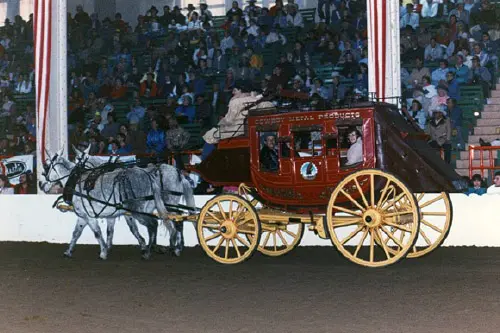 As the Denver Broncos were leaving for the Super Bowl, the mules were arriving in Denver for their debut at the National Western Stock Show held January 22-25, 1987. Mules had been absent from the Stock Show for 30 years, until 1983 when they were cordially invited by the Draft Horse Association to show between the draft horse classes. This arrangement has proven to be equally beneficial to both the draft horses and the mules. It allows for more time for tack changes between classes as well as giving the spectators a more varied show. The mules and draft horses do complement each other quite nicely and I wish to express my gratitude and appreciation to Coors and the Draft Horse Association for extending this invitation to mules. We truly appreciate your support.
 Preparing for a show such as the National Western Stock Show is probably a lot more difficult than most people realize. Preparations for next year’s show begin immediately following this year’s show. There is a lot of careful planning and time-consuming work to be done, and the efforts of those involved often goes without thanks. Thank you all who have helped make this show the success that it is! Our special thanks to Tom Mowery, a man who has worked hard in support of mules and who has almost single-handedly brought mules before the public in Colorado with his continuous willingness to do what needs to be done. Thank you, Bill Rossman for all your efforts in coordinating the mule show and for doing a great job keeping most of the exhibitors happy and contented throughout the show. This is a tough job and your gracious, diplomatic attitude was duly appreciated. And thank you so much to mule judge Ernie Fanning from Sparks, Nevada, who did a sensational job in judging our mules and more. He inspired us all to keep trying to improve!
 Still, what is a show without the exhibitors? The folks who show at National Western Stock Show are probably among the hardest working people in the country. It is a real art to be able to groom and condition an animal well enough to compete in the dead of winter, yet our hearty National Western Stock Show competitors showed that it can be done under a variety of living conditions. Mule exhibitors ranged from those with heated barns to those who must winter their animals outdoors. Collectively, they all did a great job! I would like to introduce a few of these exhibitors to you:
 eight animals this year, and although Bea was our star performer, the others did very well which was reflected in the show results. Our animals are kept in an insulated barn under lights and blankets to enhance the condition of the hair coats. They are in training every other day year round with a week or two off after each show. All the training is done by me and the riders consist of my husband, Gary, my daughter, Dena and my riding students when needed. We have a minimum staff, but those who work with us, work very hard. We wish to show the public that… Mules can do!
 More youth in the news! Fifteen-year-old Kimberly Nordyke rode her mule, Wonder Judy to a fifth place victory in the Ladies Side Saddle class against thirteen other competitors! Good going, Kim! Her younger sister, Crystal (11 years), rode to Grand Champion on Nordyke’s Tuffy in the Youth Pleasure class for those thirteen years old and under. Both girls have been taking lessons at the Lucky Three Ranch for several months and it seems their hard work and dedication is paying off! Congratulations, Crystal! Amy Wilfong riding Ramblin’ Rose for Hal and Diane Walston of Longmont, Colorado, captured Grand Champion in the Youth Pleasure (14-17) and a splendid ride it was! Good job, Amy! And “Hats Off” to all of our dedicated youth!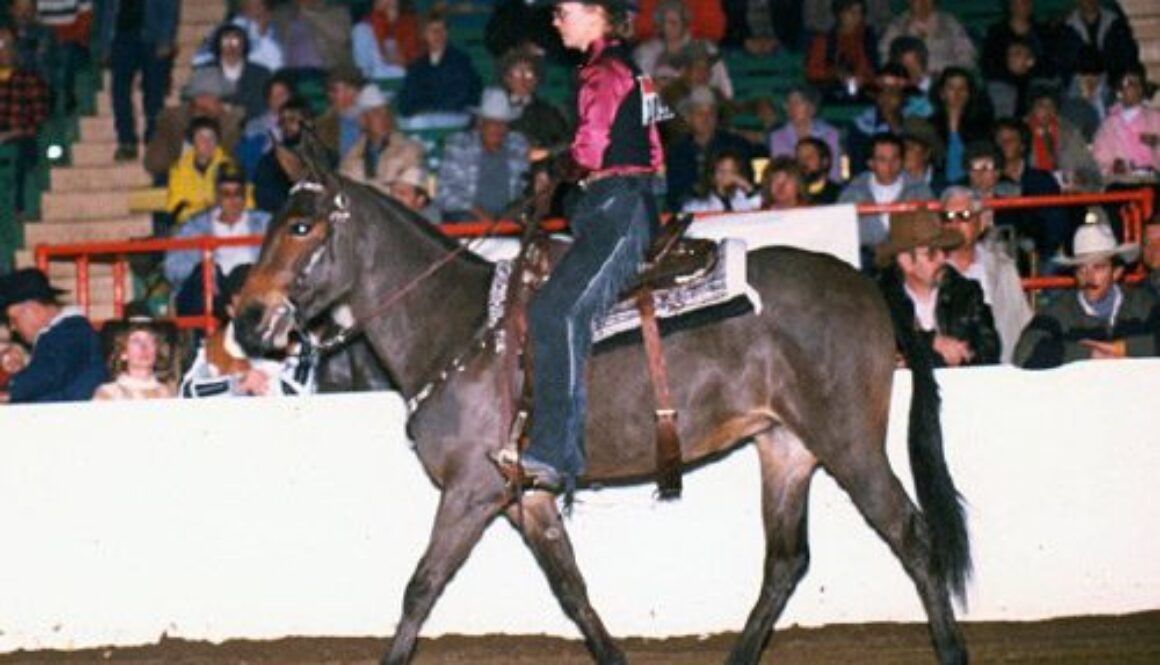
 By Meredith Hodges
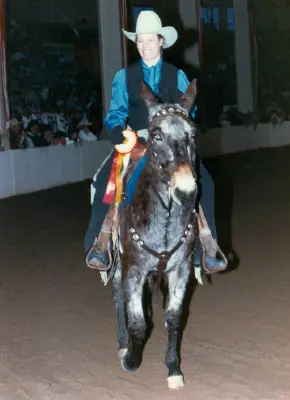 Friday morning, the stable area was thick with curious spectators and busy exhibitors, yet they all had one thing in common… that curious grin that Longears bring to one’s face. Spectators commented on the resemblance some mules had to their relatives, then laughed at their own clever jokes. In the face of all the noise and chaos, the mules themselves radiated the character and sense of humor that is a mule! Each mule was host to a multitude of mule-scratching fingers—just imagine getting a 16-hour massage! Colorado Poncho reveled in bliss, Scott’s Gallant Eagle excitedly played with his chain and Little Jack Horner brayed with enthusiasm. The barn reverberated with the musical voices of over a hundred donkeys and mules, and the spectators all made new friends!
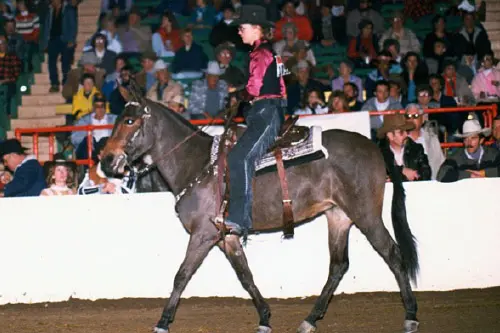 Mules and exhibitors wish to express their deepest appreciation to the sponsors and supporters of this year’s National Western Stock Show Mule Show. First, our gratitude to Coors and the National Western Stock Show for making this show possible. Also our thanks to our class sponsors for their loyal support: Adopt A Burro, Bennett Hardware & Lumber, Bennett Vet Clinic, Bitteroot Mule Co., Colorado Poncho Syndicate, Cooper’s Haulin’ Ass Ranch, HW Leasings, Jackson’s Jackasses, Lucky Three Ranch, Nordykes Circle Bar N Mules, Plumsilly Stables, Potestio Bros. Equipment, Sherer’s Auto Parts, Thunderbolt Jack Station, Ranch Supply of Evergreen, VL7 Mule Ranch, and Watkins Feed & Supply.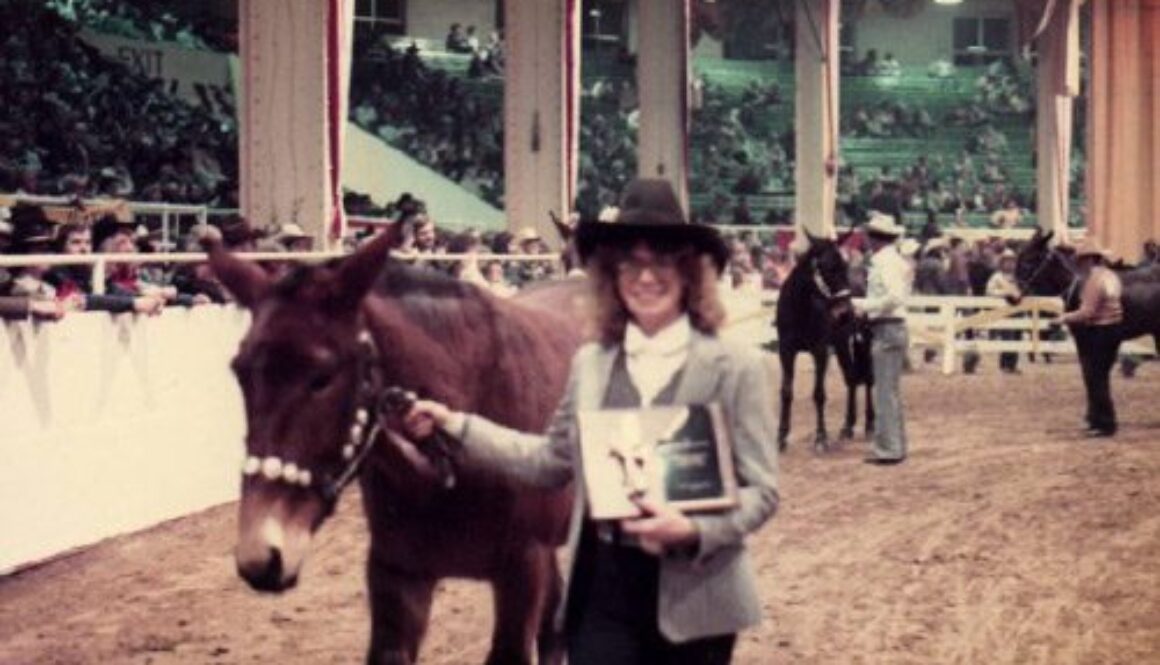
 By Meredith Hodges
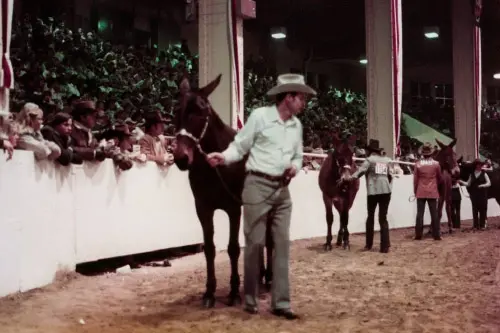 Yes, there is no doubt that all this mule stuff can be pretty confusing, but everyone seems to have such fun trying to understand it all! The Lucky Three Ranch of Loveland, Colorado, reaffirmed its reputation for the production of high quality saddle mules by placing in every class they entered, and by winning most of them. Lucky Three Sundowner took first place in Halter for mules 56” & over, three years and older, first in Western Pleasure, first in Reining, and then was named Grand Champion Model Mule of the show! In addition, Lucky Three Ciji won the halter class for mules 48” to 56”, three years and older; Lucky Three Mae Bea C.T. took sixth at halter for mules 56” & over, three years and older, then third in the Single Mule Hitch driving class. Little Jack Horner, Sire-Supreme of the Lucky Three Ranch, completed the picture by taking fourth in the Drive & Ride class against seven mules, first in Halter for Large Standard Jacks and finally named Reserve Champion Jack of the show!
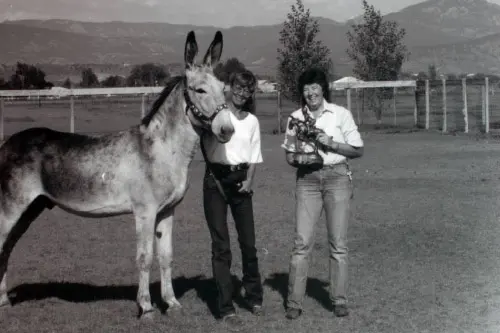 Grand Champion Jack of the show was Laramie, owned by Bud and Georgia Andrews of Northglenn, Colorado, and shown by Georgia Andrews. He was also shown under saddle in the Mule Western Pleasure class. Reserve Champion Model Mule was awarded to Jewel, owned and shown by Ray Godfrey of Rapid City, South Dakota. Jewel also took first at Halter for Draft Mules, first in the Single Mule Hitch driving class, and first in the Mule Pull with her teammate Roy in the class for mules 2001 lbs. and over. Taking first in the Mule Pull class for 1200 lbs. and under went to Six and Seven, owned and shown by Bud Stockwell of Loveland, Colorado. First in the Mule Pull class for 2101 lbs. to 2000 lbs went to Eenie and Meenie, owned and shown by Jess Johnson of Ft. Collins, Colorado.
 Arthur Silvester for sharing Blue Moon, the mule out of a mule, with this year’s National Western Stock Show. Everyone enjoyed meeting this extra-special celebrity!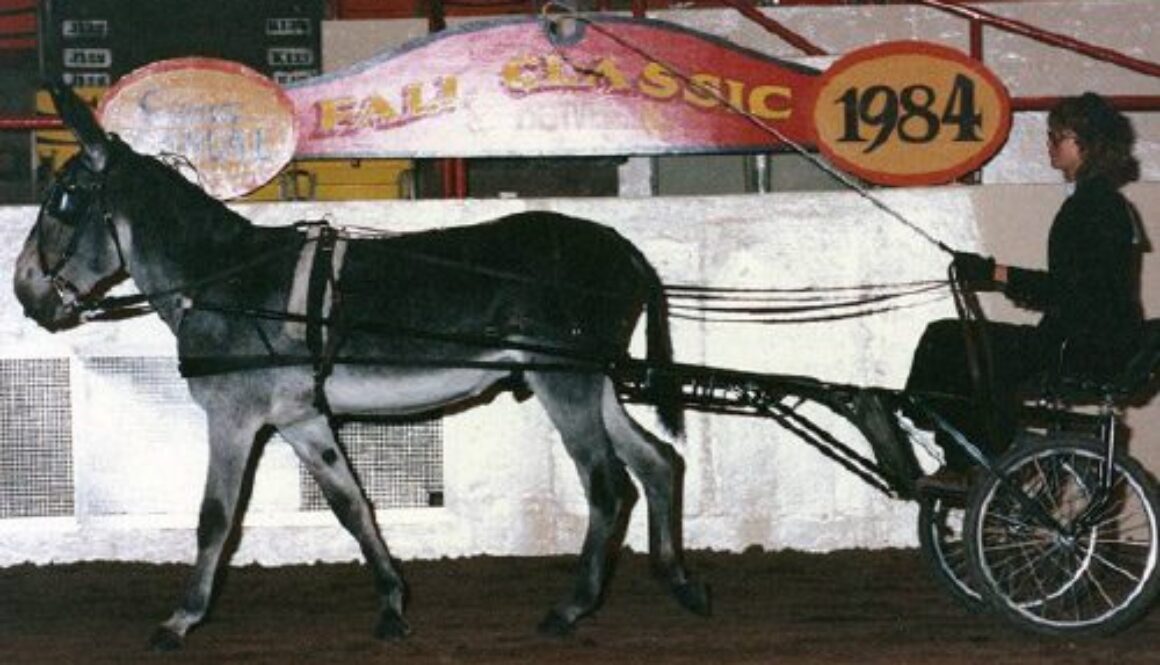
 By Meredith Hodges
 Careful selection of classes for the show enabled spectators to get a broader view of what is actually being done with both mules and donkeys, as well as giving exhibitors a chance to put the true talents of their animals to the test. Improvement in all areas of performance, obviously due to hard work and dedication, was quite apparent at this show. The beauty of these animals was amply exhibited in the halter classes, relaxation and control emanated from the pleasure classes, and style and grace governed the driving classes. Still, humor, suspense, and excitement were maintained in packing and gymkhana events. All these things combined made for the best show that Colorado has ever
  hosted! The true talents of the donkey and mule trainers showed through the incredible performances of their Longeared counterparts. Patience and ingenuity are the name of game. These are special people with very special animals!
 Following the Donkey and Mule Show, on Saturday, October 13, was the Segelke Dispersal Sale, where over 75 head of Mammoth jacks and jennets were auctioned off to the highest bidder; the quality of these donkeys reflected a careful and deliberate breeding program, obviously aimed at upgrading the breed. The bidding was fast and furious as buyers form such states as Iowa, Arkansas, Arizona, Wyoming, Montana, Texas, and California fought to take possession of this quality stock. Now these beautiful animals will go to their respective new homes and continue to help upgrade the quality of donkeys and mules in America.
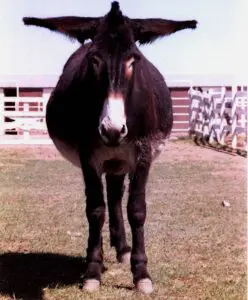 The donkey and mule industry is still a young industry, and I would like to encourage all of you to ask yourselves if you might want to contribute your talent to help in its growth. What was once just a novelty, is no more a novelty; the rapid growth of these animals in California and Missouri denotes that these Longears are here to stay this time, as we find many new and interesting uses for them. Besides the obvious uses such as riding, driving, and packing, these animals are now being used as embryo transplant recipients—who can predict what other uses we may find in the future? As in any industry, we need people with many different talents: we need people in advertising, communication, transportation, and the list goes on! This business has something for nearly everyone and our Longeared friends are giving each of us a tremendous opportunity to help ourselves regain the dignity and self-confidence that we might have lost through the years of economic hardships—so if you have talents to contribute, please don’t let them go to waste. We need you!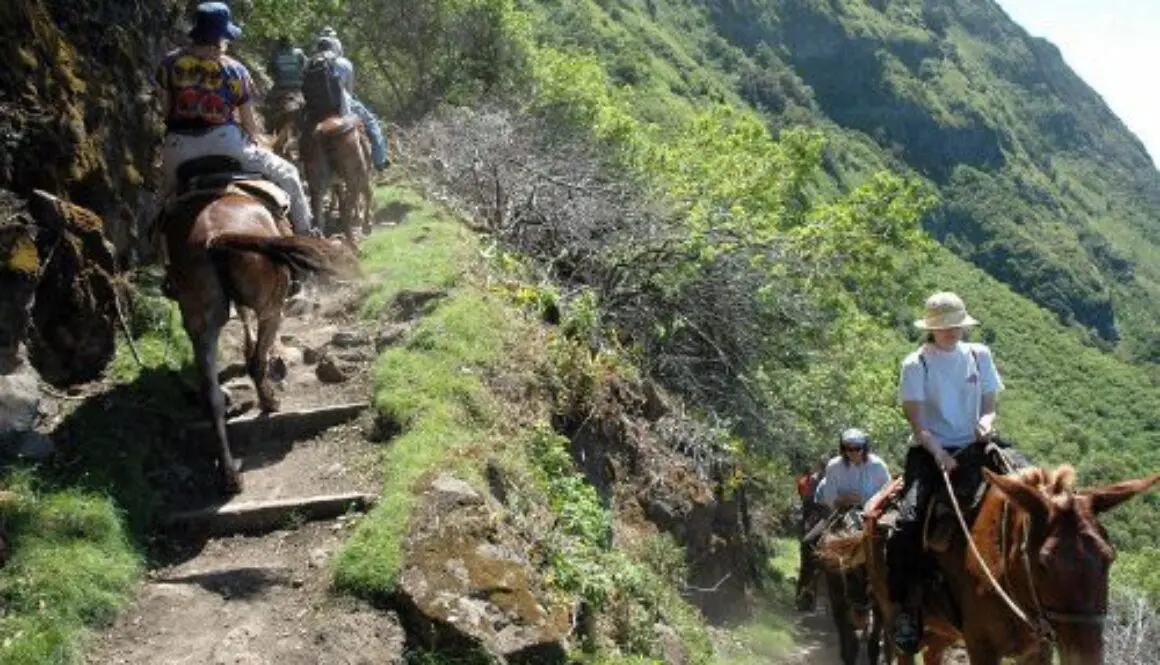
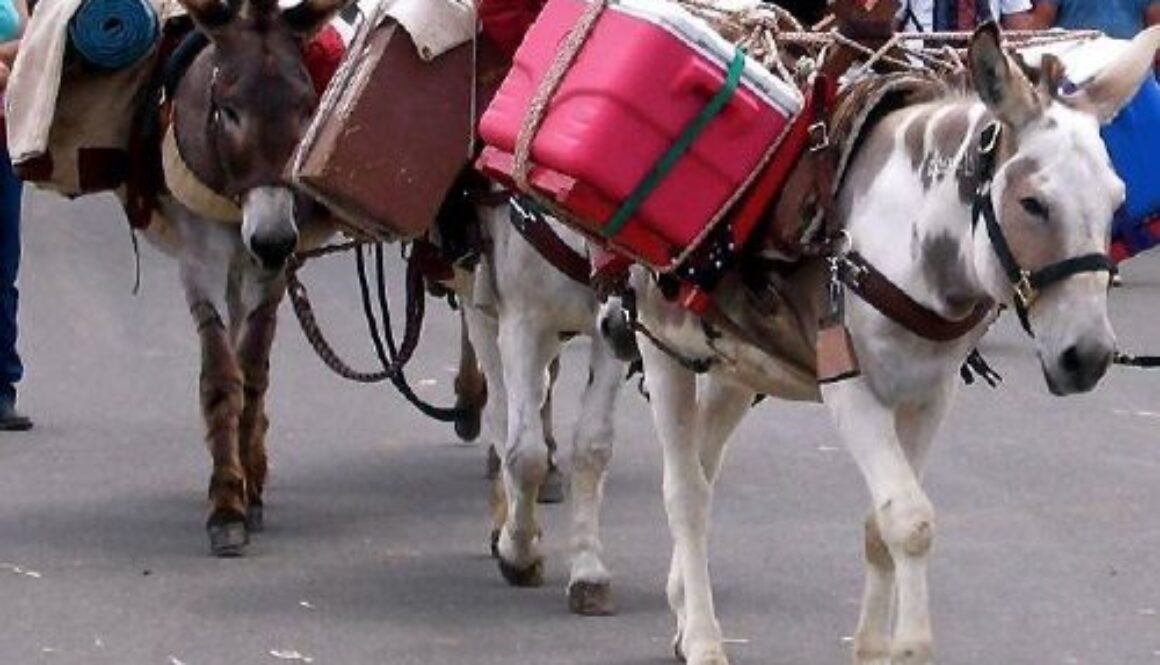
 It is no secret that mules, due to their innate sensibility and incredible surefootedness, are the equine of choice for packing and riding into untamed wilderness areas. Dependable mules carry thousands of tourists down the steep trails of the Grand Canyon each year. This enables many to take in the splendor and beauty of an otherwise nearly inaccessible corner of the world.
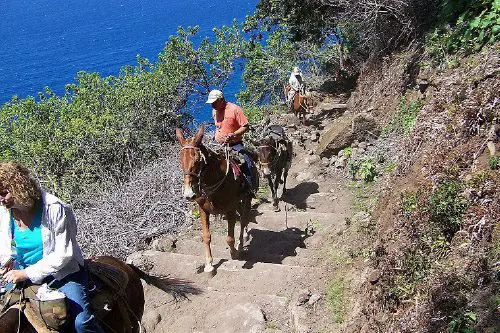 conveniences. Though the settlement is only 12 square miles, there are cars and mini-buses to aid in transportation. After the mule ride down the cliff trail, mini-buses give personal tours around the settlement where you can learn about everyday life then and now. You’ll see their homes, general store, dock, medical facilities, lonely graveyards, the old settlement of Kalawao, and Father Damien’s church, St. Philomena.
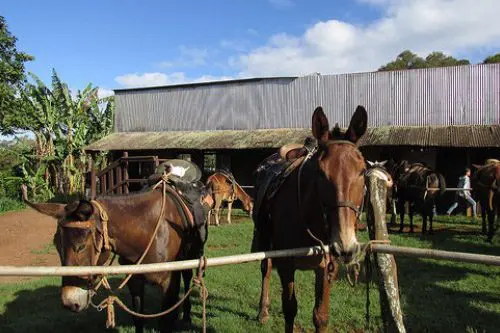 The mules were trained for the cliff trail primarily by Buzzy. He would lead them down and ride another animal, or let them follow back up the trail the first few times. The mules are not broke to reins and are expected only to walk and follow. Passing is discouraged. Should a mule decide that he prefers to speed over the trail, Clyde enters the scene and quickly puts any thought of speed out of the mule’s head. If the mule wishes to “run” the trail, Clyde will oblige him…over and over, until the mule decides that slow is better! Any that do not comply, they will not use. With all the inexperienced riders with which they must deal, these mules must be fail-safe!
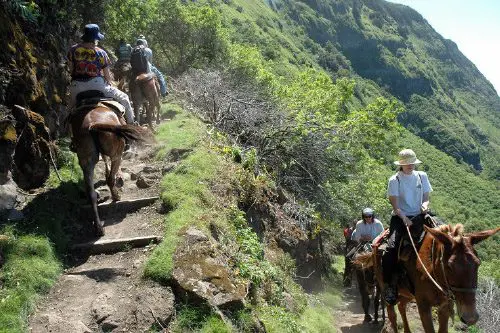 If you thought that Hawaii was only for those who love lolling on the beach in a tropical paradise, think again. The mules of Molokai can contribute a lot more diversity to your tropical vacation. They can take you on quite an historic adventure through the most beautiful and spectacular scenery in the world. Without the mules, this would not be as safely possible. These trail trips, of course, must be limited to those who are physically fit, weighing no more than 225 pounds and not too advanced in age. A minimum age of 16 years is required by Hawaii State Law to enter the Kalaupapa Settlement. The owners of the Molokai Mule Ride, Buzzy and Clyde Sproat, took every reasonable precaution to help make this an enjoyable and unforgettable experience. Should you be interested in taking this excursion, you can contact them for further information through your travel agent. “Wouldn’t you rather be riding a mule on Molokai?”
 1993 was a good year for
  competition, and the horse establishment—the U
 My
My
 With some reservation
 their established Western, English
 just at home alone.
 had been in D
 The C
The C Now that it’s done, the U
 It is no secret that the popularity of mules in this country is on the rise and their uses are quite varied. Many people believed that mules were used solely for packing and pulling, but modern-day mule lovers have competed successfully with mules in all areas of equine athletics, exhibiting the mules’ true abilities and versatility. Western style riders were the first to catch on to mules, but English riders soon followed suit. Perhaps the most elite form of English riding, Dressage was avoided for many years. There could have been any number of reasons for this, however, an adventurous lady from Montana chose to train her more than 16 hand mule, Baby Huey, for Dressage and competed successfully in many shows. This opened still another door for mules.
 One of the basic differences between training mules and training horses is the essential maintenance of a calm attitude by the trainer. Mules will not respond positively to a bad temper. The calmer and more deliberate the trainer, the more responsive the mule. Training in this manner will reveal the true abilities of the animal. His paces will be free and regular and his movements will be harmonious, light, and easy. Impulsion from the hindquarters is reflected by lightness on the forehand with quiet acceptance of the bridle with no tenseness or resistance. An animal trained in Dressage will appear to be doing of his own accord what is required with an air of confidence and always attentive. The walk is regular and free, and unconstrained. The trot is free, supple, regular, sustained and active. The canter is united, light and cadenced. These all reflect active and animation of the four quarters. He is never sluggish. He will respond to the slightest cue from the rider and thereby, give life and spirit to rest of his body. In all his work, a Dressage animal will be “on the bit” with a light, soft contact and submissiveness throughout. Many good trainers use these basic principles in turning out their best-trained animals. It just doesn’t always get labeled as “Dressage”.
 One need only try to bully a mule once to find out that it simply doesn’t work. The mule, with the strength of the jack, can crook his neck so that no amount of pull can cause him to bend and the wide opening of the mouth leaves you pulling on virtual “rubber!” Consequently, you are left doing primarily what he wants. Slow and methodical training in Dressage can unite a mule and rider in a beautiful, flawless picture. Communication between equine and rider is, after all, what Dressage is all about.
 The mule, as anything but a packing and pulling animal, has not been tried too much in the past. This is why they have not been seen in many places of equine athletics. Mule lovers today are trying mules in all areas of equine sports and are exhibiting that mules can do it all! With the intense training and showing of more mules, more of the uneducated public is able to see that there is far more to mules than was portrayed in the past. Horsemen are continually surprised and amazed… and in some cases, even converted to mules!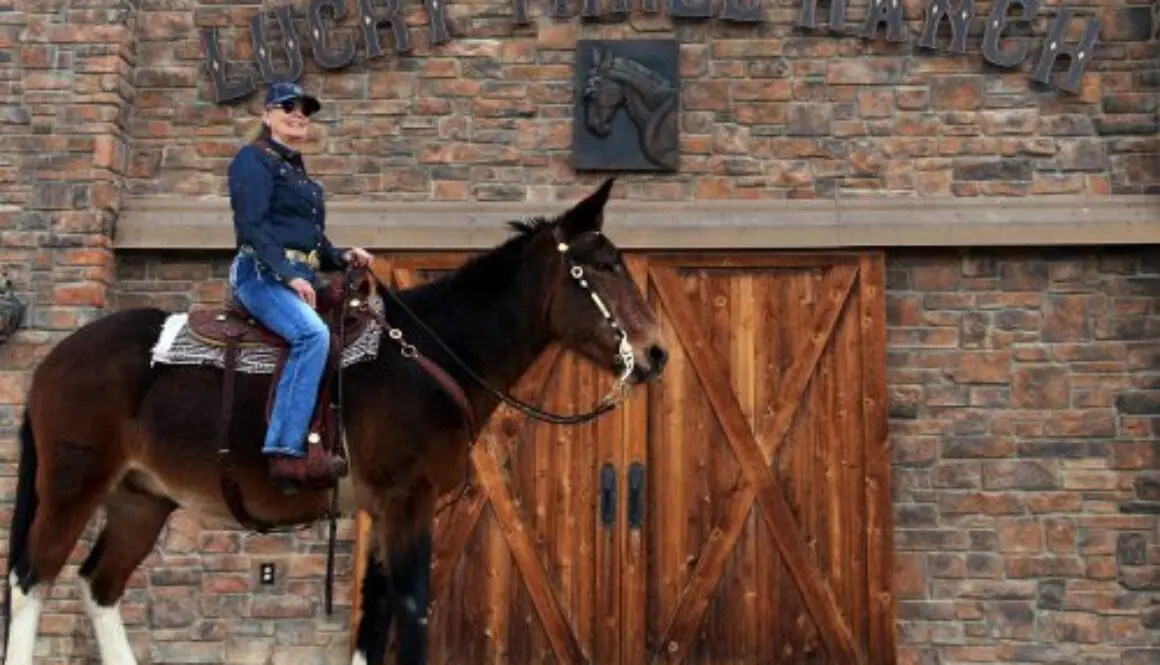




 By Meredith Hodges
 owner would have to paint his face orange and blue and ride a mule all the way around the hotel. Well, guess who won and, guess who the mule was?! Yes, it was our own Lucky Three MaeBea C.T.!
 Although they never finished the movie, DIX Country Pictures chose Beaas Wadi’s understudy from hundreds of applicants.
 In 1998, we did a shoot with the Discovery Channel and Bea can be seen as the mule in their production of “The Ultimate Horse.” What a gal!
 Everyone loves a parade and Bea was no exception! She competed in numerous costume classes and parades, but dressing up for the holidays was her favorite. She placed first in many a parade and had no problem with any theme you might want to try.
 Bea may be a perfectionist, but she was certainly not a prude. She was always willing to try anything you might ask. At home, Bea worked hard checking fences, moving cattle and much more.
 shrubs and bushes. We were headed up one hill behind the cattle and the two cowboys when we came upon a three foot diameter tree that had fallen across our path. The cattle dove into the underbrush on either side of the tree, the cowboys slid to an abrupt halt and Bea came right up the middle, jumped the tree and stayed on the heels of those cattle the entire way! No one was more surprised than those two cowboys, except maybe their horses!
 there, she cleared fences without batting an eyelash. She always took the jumps right over the center and never expended any more energy than necessary to clear the fence in beautiful form.
 Her shortened frame allowed her to make sharp turns and still clear the fences in timed classes where she would ordinarily be at a disadvantage against taller mules.
 In 1986, Bea and I began lessons with instructor/trainer Melinda Weatherford in Dressage. The same year, I went to the United States Dressage Federation Convention and introduced them to the idea of allowing mules such as Bea to compete in dressage schooling shows and competitions. There were some discrepancies in the rules, but they finally decided to allow mules in lower levels at schooling shows with the discretion of the individual show committees. This was a major breakthrough for mules in equine society!
 She has shown dressage in all sorts of different disciplines: Dressage Shows, Dressage Schooling Shows, Two-Phase Combined Training Shows, Three-Phase Combined Training Shows and in Two-Phase Combined Driving Shows. Her scores were always high and she was always in the ribbons right from the start. The most remarkable thing about the training in Dressage was how it enhanced her driving skills so drastically that she won the first, second and the only two Two-Phase Driving Shows she had ever entered. People were always skeptical to start, and the first to applaud her performances after they saw her! The most prevalent comment during the ribbons ceremonies was, “My God! It’s a mule!”
 For a decade, Bea was shown in numerous classes by my daughter, Dena Hodges from the age of six to sixteen. They showed together in Western Pleasure, English Pleasure, Driving, Mule Jumping, and Two-Phase Combined Training shows. They were always in the ribbons and most often first or second in their class.
 Driving was always one of Bea’s strengths. I remember when I broke her to drive. I didn’t really know what I was doing. She took to the harness well, ground drove along side of the cart and didn’t seemed to be bothered by any of it, so within three days, I hitched her to the cart and proceeded to lead her out to the pasture where we would have more room. We were going around a 90-degree turn as I was leading her, hitched to the cart, when one of the wheels caught on the fence. She did a quick little scoot for a step or two which only caused the cart to flip over. She wound up with on of the shafts over her head and the other between her front legs. She stopped cold and allowed me to right the cart and get her untangled. Then we went out to the pasture and had our first drive with me in the cart with no further incidents. No big deal!
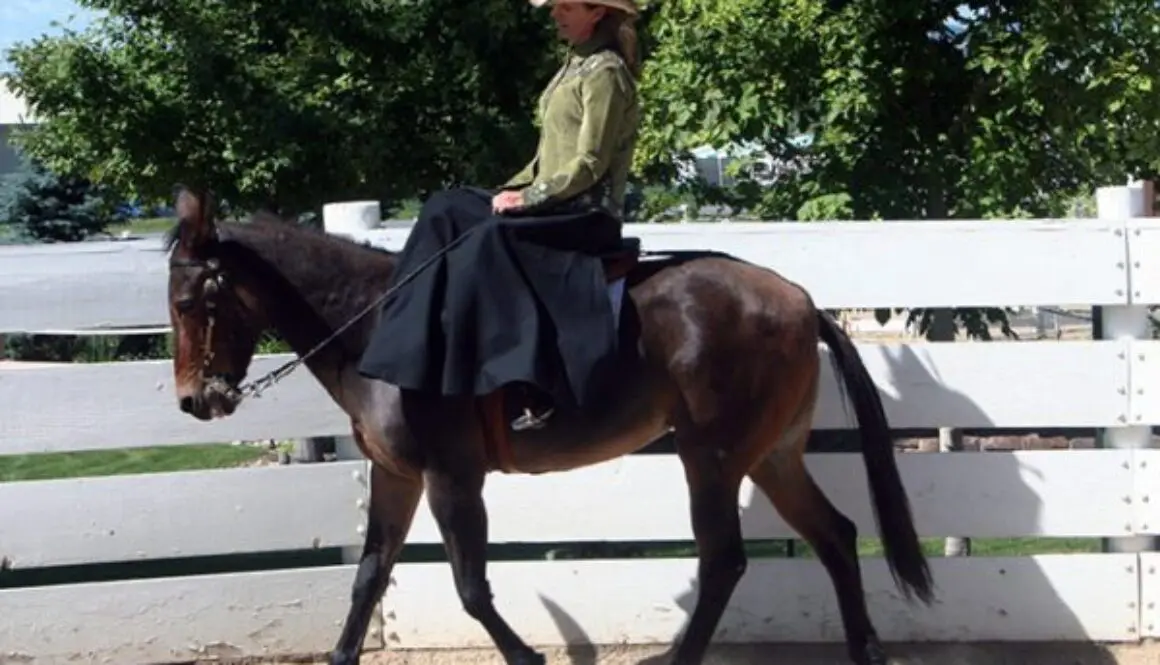
 Bea was always so steady that she was the perfect Side Saddle mount. She competed in Side Saddle at numerous shows and won many of those classes. She competed in Side Saddle at the National Western Stock Show with several different riders, but always placed in the top three regardless of who was riding her.
 In 1993, I rode her Side Saddle in the Inaugural parade in Washington D.C. It was a grueling 24 hours, standing around waiting to go in very cold weather and in the midst of more “mule eaters” than you could count. Bea seemed to take exception to the 50-foot Elvis Presley float, but otherwise handled the whole situation with her usual grace and dignity. Bea must have caught Clinton’s eye as she strolled elegantly past the viewing area because he turned away from the man he was speaking to and gave her a hearty thumbs up! We responded in kind and in her usual style, Bea smiled broadly!
 when we lightly weighted her front legs to encourage some reach. In nine months, she had increased her length of stride by 18 inches!
 the trail disappeared into a rock slide. She was trapped on the narrowest part of the trail with four horses behind her. She couldn’t turn around and she couldn’t back up. After assessing the situation, I asked her to do a 180-degree turn on the haunches and swing her front legs over the 100-foot ledge to get turned around. She did as I asked and got us through that compromising situation with the finesse of a ballet dancer! The people on the horses were nothing short of amazed! When we went trail riding, or down the road, everyone wanted to ride Bea!
 she did Western exhibitions at various local events and was the subject of many a newspaper or magazine article throughout her career.