❗️Urgent Courtroom Update – Wyoming Checkerboard

The following is from the American Wild Horse Campaign:
|
|
|

The following is from the American Wild Horse Campaign:
|
|
|
The following is from the American Wild Horse Campaign:
We’re so grateful to have your support in the fight to protect America’s iconic wild horses and burros. But we know your inbox can get busy, so we want to make sure we’re sending you the right amount of updates about our shared mission.
Would you take just a few seconds to let us know your email preferences by completing this survey?
| Update Your Preferences |
You can choose to:
No matter what you choose, we appreciate you being a part of this movement. Your voice makes a difference for wild horses and burros, and we want to make sure you’re hearing from us in the way that works best for you.
| Update Your Preferences |
Thank you!
– Team AWHC
P.S. if you would prefer to stop receiving emails from us, that’s okay too! Click here to unsubscribe from our mailing list.
The following is from the American Wild Horse Campaign:
March 1 is National Horse Protection Day. To honor the progress made in Colorado to protect wild horses, friends of American Wild Horse Conservation are gathering at the Colorado State Capitol on Friday, Feb. 28.
As one our most dedicated Colorado supporters, we invite you to join us!
When:
February 28 at 1 p.m.
Where:
Capitol Building Foyer
200 E. Colfax Avenue
Denver, Colorado 80203
Why:
March 1 is National Horse Protection Day, which celebrates the nation’s horses and highlights the plight of wild horses in America and beyond. By building upon the work and leadership in Colorado to protect horses American Wild Horse Conservation aims to celebrate the leadership in Colorado.
At this event, we will honor Colorado leadership for their advocacy in protecting Colorado’s wild herds and we’d love for you to join this important celebration. Please RSVP as there are a limited number of spots available.
| RSVP NOW |
Thank you for your continued support and advocacy for wild horses and burros.
Warm regards,
Team AWHC
The following is from the American Wild Horse Campaign:
As a donor to our mission, you probably have heard about our Land Conservancy Project, the bold initiative we pioneered in 2023.
This program was established to preserve key habitats so our iconic wild herds can live wild and free in ecological balance in America’s western landscapes. The funding devoted to this project supports land acquisition, habitat restoration, and humane treatment of the wildlife that lives there.
This transformative, successful project would not be possible without the generous support from advocates like you. Thank you.
The long-term success of this initiative depends on your financial support. That’s why we’d like you to consider becoming a monthly donor. By giving consistently, you provide American Wild Horse Conservation with steady resources that allow us to protect more of our land, restore more habitats for our wild herds, and safeguard wild horses and burros for generations to come.
| MAKE MY GIFT MONTHLY |
The Bureau of Land Management’s (BLM) own range data indicates that private livestock overgrazing, along with fire and drought, has depleted habitats for all wildlife, including federally protected species like wild horses and burros.
This preventable habitat deterioration is one reason we took a huge step forward by acquiring 3,300 acres of prime habitat within Nevada’s picturesque Carson Valley. The land supports a diverse array of wildlife including the federally protected Fish Springs wild horse herd. We aim to use this innovative project to help set a new conservation standard for wild horse and burro protection. Our dedicated land manager, along with a team of passionate experts, works on the ground, actively tracking wild horse movements, studying the intricacies of the land, and undertaking vital habitat restoration projects.
With your support, we can continue to expand this vital work — securing land, restoring fragile ecosystems, and ensuring wild horses and burros remain free where they belong.
| MAKE MY GIFT MONTHLY |
Thank you again for being a champion for our wild herds,
Team AWHC
The following is from the American Wild Horse Campaign:
Did you know that wild horses have the largest eyes of any land mammal? With nearly 350-degree vision, they can spot danger from almost every angle — one of the many ways American wild horses have survived and thrived across the West for centuries. These incredible animals aren’t just running free — they’re carrying the spirit of the open range and keeping nature in balance, one hoofbeat at a time!
| Chip in to Protect America’s Wild Horses |
Saddle up, because we’re about to share seven WILD facts about our cherished icons:
They’ve got spring in their step! Wild horses have a built-in shock absorption system in their legs, helping them cover miles of rugged terrain without breaking stride.
Herds stick together. A lead mare charts the course, while a dominant stallion stands guard. Young bachelors eventually break away to start their own herds.
Foals find their footing fast. Within just one hour of birth, a wild foal is already up and trotting alongside Mom — because in the wild, there’s no time to horse around!
They have a secret language. Wild horses “talk” through ear flicks, tail swishes, and subtle shifts in body posture — but when words fail, a well-placed squeal or kick gets the message across.
Nature’s lawnmowers at work! Unlike cattle, wild horses don’t rip grass up by the roots, keeping grasslands healthy and thriving. You could say they have a knack for natural landscaping.
They don’t hit the snooze button. Wild horses get very little REM sleep and often sleep standing up, ready to flee at a moment’s notice if danger approaches.
They’re a native reintroduced species! Wild horses evolved in the North American continent. Research shows they crossed the Bering Land bridge, going locally extinct, but they never went globally extinct and were reintroduced by Spanish colonizers.
| Chip in to Protect America’s Wild Horses |
The wild horses of the American West are in a race against time. Government helicopter roundups are driving them from their homes, replacing freedom with fences.
In fact, as we speak, more “federally protected” wild horses are living in captivity than roaming free on public lands.
| Chip in to Protect America’s Wild Horses |
One more thing! On March 1 — National Horse Protection Day — we’re taking action for wild horses. You can get a headstart by clicking here to sign our petition to #HaltTheHelicopters and end cruel, costly government helicopter roundups!
For the wild ones,
Team AWHC
The following is from the American Wild Horse Campaign:
In the untamed beauty of Nevada’s Fish Springs Range lives a love story like no other.
Blue and Lady are the king and queen of this wild desert landscape. Blue embodies the spirit of a true wild stallion — fiercely protective and resilient, shaped by grit and molded by the harsh desert sun. Lady, a stunning and wise mare, has raised generations of wild horses, her innate intuition keeping her family safe and free.
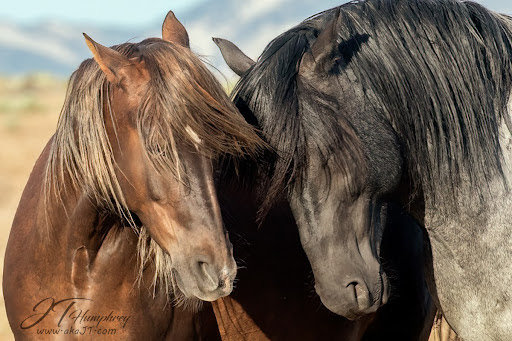

Photos of Blue and Lady at Fish Springs Range by John T. Humphrey
For years, these two remarkable wild horses have stood by each other’s side. When Blue naps, Lady stands watch. When visitors spot Lady, they know that Blue is never far away. Their unwavering love has withstood fierce challenges from rival stallions, bitter winters, and the ever-changing demands of life in the wild.
This Valentine’s Day, will you join us in honoring a love as wild and enduring as that of Blue and Lady by supporting the American Wild Horse Conservation (AWHC)?
| Make a Valentine’s Day Gift Today |
Looking for more Blue and Lady content?! Check out the Wild Hearts Project, which we launched just this month to shine a light on powerful stories of family and freedom — stories like this one.
| Explore the Wild Hearts Project |
Thank you for standing by wild horses and the enduring love stories they inspire.
For love that runs free,
Team AWHC
The following is from the American Wild Horse Campaign:
Happy Galentine’s Day!
My name is Ainsley, and I live on the Virginia Range in Nevada. Life in the wild isn’t always easy, but one thing has always kept me strong: my family and friends.
My daughter Tahula and our dear friend Genevieve are my constant companions. The three of us have stuck together through countless foaling seasons, fierce battles between stallions, and all the wild changes life throws our way.
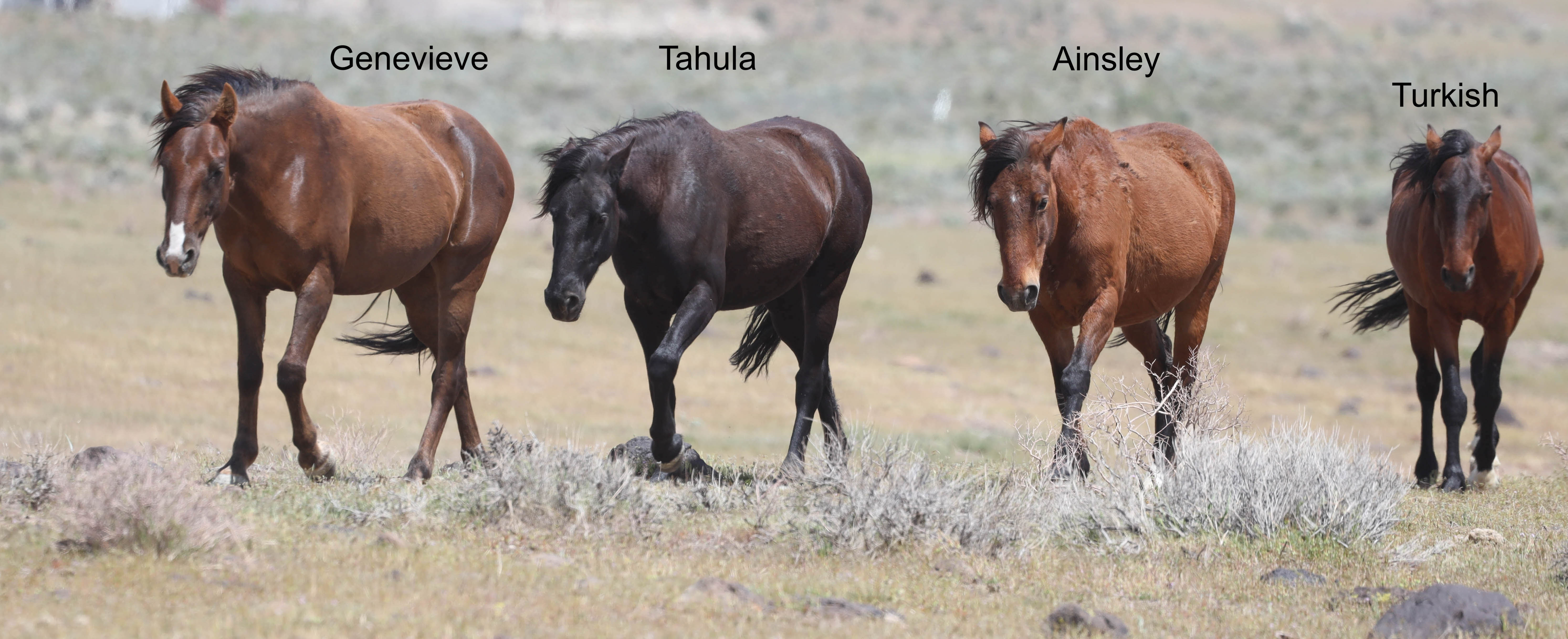
Photo by Deb Sutherland
Frost. Nate. Turkish. Samwise. Granite. Stallions come and go, but our bond is unbreakable.
Our sisterhood gives me the courage to navigate life on the range every day. Our family is proof that love isn’t just about romance — it’s about loyalty, friendship, and standing by the ones who matter most.
This Galentine’s Day, will you join me in celebrating the bond of sisterhood?
| Make a Galentine’s Gift Today |
Thank you for being part of our story.
With love and gratitude — xoxo,
Ainsley
Wild Mare
Virginia Range
The following is from Chilly Pepper – Miracle Mustang:

|
|
|
|
Thank you as always.
| Hugs & love, Palomino |
|
|
|
|
|
|
|
|
|
|
|
|
|
|
|
|
|
The following is from Chilly Pepper – Miracle Mustang:

|
|
|
|
|
|
|
|
|
|
|
|
|
|
|
|
|
|
|
|
|
|
|
|
|
|
|
The following is from Chilly Pepper – Miracle Mustang:


|
|
|
|
|
|
|
Ways to Help:
ZELLE Palominodancer@yahoo.com 530 339 1458 VENMO – @WIN-dba-ChillyPepper Cash Ap. – $ChillyPepperMM Via credit or debit card. 530-339-1458 Paypal – https://www.paypal.com/donate/
Thank you as always.
Hugs & love,
Palomino
|
|
|
|
|
|
|
|
|
|
|
|
|
|
|
|
|
The following is from Chilly Pepper – Miracle Mustang:


|
|
|
|
|
|
|
|
|
|
|
|
|
|
|
|
|
|
|
|
|
|
|
|
|
The following is from the American Wild Horse Campaign:
At the American Wild Horse Conservation (AWHC), we are constantly inspired by the dedication and passion of our supporters.
Today, we want to share the incredible story of Kristie Churchly and her teenage daughter, Layla, whose advocacy for America’s wild horses has sparked meaningful change.
Their journey began with a family trip to Sand Wash Basin Herd Management Area (HMA) in northwest Colorado, where they were captivated by the beauty and strong family bonds of the wild mustangs living there. Seeing the iconic stallion Picasso sealed their passion for wild horse conservation.
That passion continued to grow over the years, culminating in a remarkable moment in Layla’s high school biology class. After a lesson on wild horse management that left out critical details about the challenges these animals face and the humane conservation solutions available, Layla saw an opportunity.
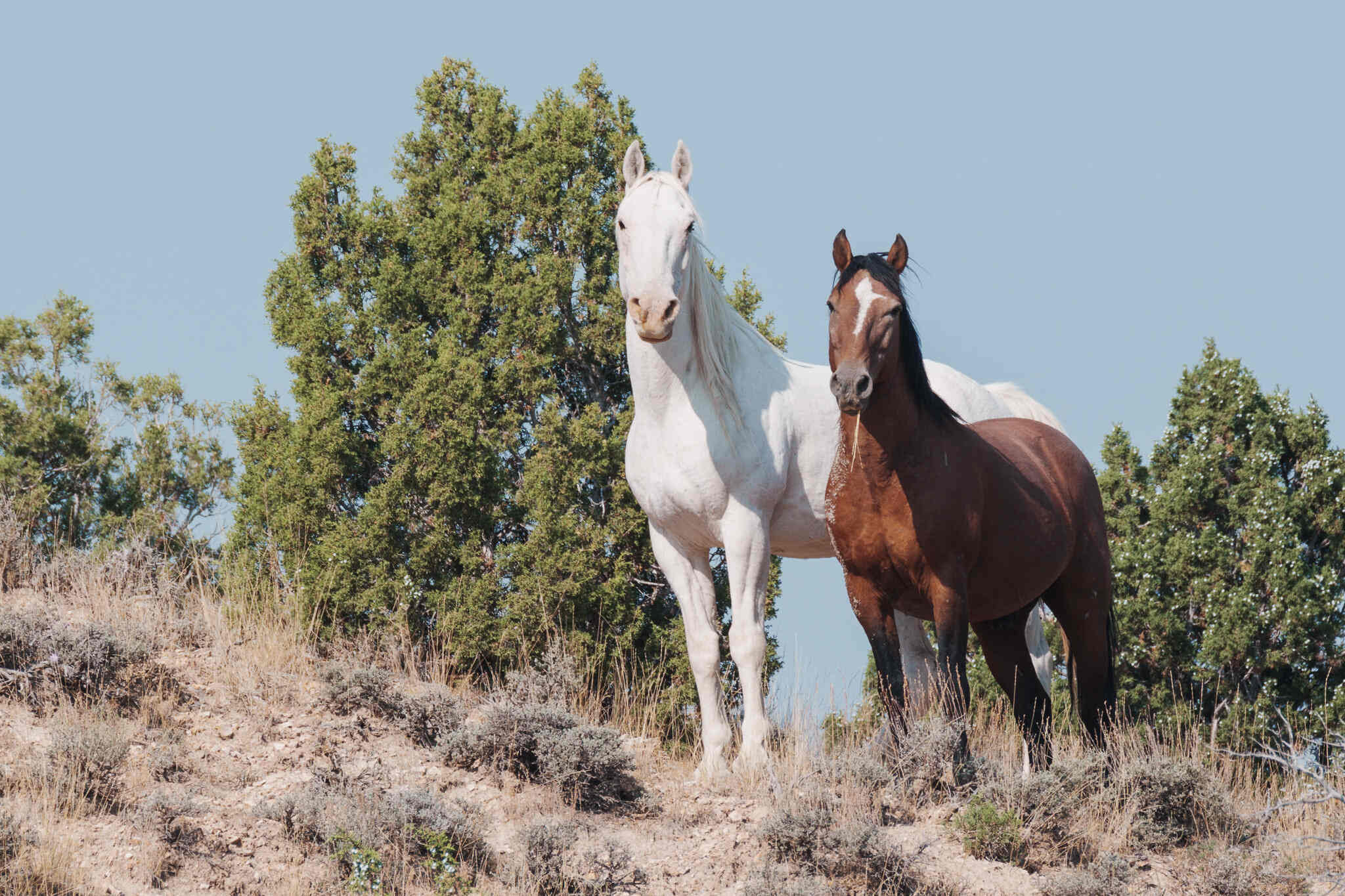
Photo by Tandin Chapman
Determined to make a difference, she conducted research, met with her teacher, and helped expand the curriculum to present a more comprehensive and accurate portrayal of wild horse issues. Her courage and enthusiasm inspired her classmates and demonstrated the power of one thoughtful voice to spark positive change.
Layla’s advocacy didn’t stop there — she even gentled a yearling mustang named Story through the Meeker Mustang Makeover, and her family ultimately adopted him.
At AWHC, we’re proud to work alongside passionate advocates like Kristie and Layla, who show that every action, big or small, can make a difference for America’s wild horses.
There are so many ways you can join this important mission:
Volunteer: Whether it’s participating in events or advocating for humane management practices, your involvement directly impacts the future of wild horses.
Donate: The most powerful way to make a lasting difference is by donating. Your gift supports AWHC’s vital work to protect wild horses and ensure they remain wild and free.
| DONATE |
Together, we can build a future where wild horses continue to roam freely as a living symbol of freedom and resilience.
Thank you for standing with us.
Warmly,
Team AWHC
The following is from Chilly Pepper – Miracle Mustang:


|
|
|
|
|
|
|
|
|
|
|
|
|
|
|
|
|
|
|
|
|
|
|
|
|
The following is from Chilly Pepper – Miracle Mustang:
|
|
|
|
|
|
|
|
|
|
|
|
|
|
|
|
|
|
|
|
|
The following is from the American Wild Horse Campaign:
|
The following is from the American Wild Horse Campaign:
Porcine Zona Pellucida.
Better known as the PZP vaccine, this fertility control tool is a safe, effective, and humane solution for managing wild horse herds. Unlike cruel and costly helicopter roundups carried out by federal agencies, PZP allows wild horses to remain free on the range. Best of all, a single dose costs just $30.
| DONATE $30 ON JANUARY 30 |
Meet Empress, a wild mare from Nevada’s Virginia Range who has greatly benefited from American Wild Horse Conservation’s (AWHC) groundbreaking PZP program. Between 2014 and 2019, she has had five beautiful foals, contributing to the genetic health of her herd. Not only has our PZP program kept her free, but it has also kept her healthy. With a break from pregnancy, she is able to live out her golden years, thriving in the wild where she belongs.
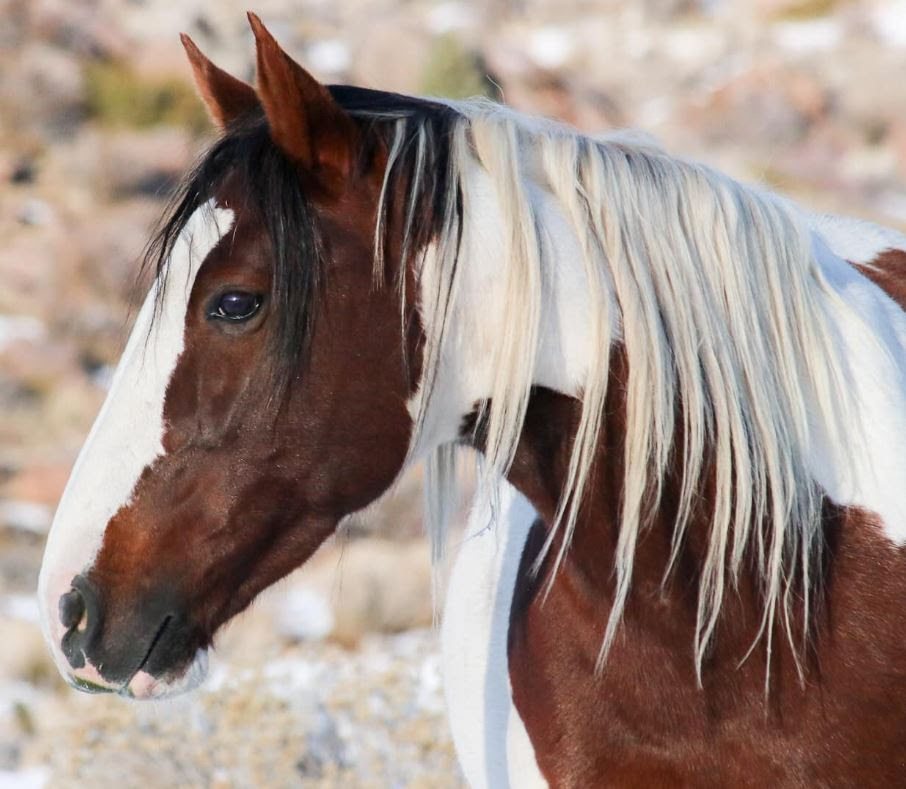
Empress, a Virginia Range wild mare.
Despite PZP’s proven success, the Bureau of Land Management (BLM) is failing to use this humane management strategy at scale. One blatant example is Nevada’s Fish Creek roundup, which ended with nearly 200 horses captured earlier this month. This cruel, costly helicopter roundup could have been prevented.

Photo of Fish Springs HMA roundup taken by an AWHC observer.
Five years ago, AWHC submitted a formal proposal to launch a humane PZP fertility control program in the Fish Creek Herd Managment Area (HMA). The proposal underwent extensive review, but the BLM withheld final approval without explanation.
Despite this, we’re continuing to expand groundbreaking fertility control programs in other areas, proving the safety and efficacy of PZP. Since 2019, our groundbreaking fertility control program in northern Nevada has seen a 67% decline in foal births, stabilizing this population in areas where development is encroaching on their habitat.
The PZP vaccine keeps mares wild and free on the range for a mere lifetime cost of just over $3,500 — pennies on the dollar when you look at the staggering $48,000 it costs to keep just one horse in government holding for life.
| DONATE $30 ON JANUARY 30 |
Thank you for standing with us in defense of these iconic animals.
Sincerely,
Team AWHC
The following is from the American Wild Horse Campaign:
|
12/28/10: Dr. Greg Farrand checked Rock on his visit to the ranch and was encouraged by the way Rock was moving. He said he was sure he saw marked improvement in his gait and particularly in the right hind leg. He is tracking significantly more straight forward and the “hitch” is barely visible.
12/29/10: Rock had his fourth massage today with Joanne Lang and husband Dr. Dave Miller, DVM. First, we took the “before pictures shown below. His “before” stance is looking better and the “reach” of the right hind is improving. He is finally able to bear weight on the right hind leg through the turn.


Bearing weight on the right hind through the trot caused him to give a little “jump” and raise his head for a split second, but he then resumed an even pace. He never pulled on the lead rope and launched into the trot easily. Dave and Joanne then began their work on Rock and he was happy to comply. They worked much more of his body this time. Dave focused on the right hind while Joanne worked critical point throughout his body on both sides (see Joanne’s notes).
Rock was quite content to lower his head upon request and there was significant improvement over the topline. Rock is now reaching to the side by himself through the head and neck when standing free during the massage. He is finally gaining some flexibility through his head and neck. Rock has begun to put some weight against the tail pull which is what we want. To put more pressure on the rear end, we took him into his stall and Dave massaged his rump and then back with his feet (see Joanne’s notes) as Roll looked on. At first, Rock wasn’t too sure about what we were up to, but he stood quietly and all that showed any concern was his face. He did half heartedly try to step away from Dave, but to get a better angle on his glutes, we just repositioned him by backing him into Dave and again he was very cooperative.


Then we took him out to walk and trot again. When bearing weight on the right hind, the hip is noticeably higher on that side, but he is tracking much more forward. When his weight moves to the left hind, the hips are more level. His reach through the turn increased significantly. Trot is much improved!


12/ 5/10: Rock and Roll were delivered via trailer from Fran & Larry Howe of Bennett, Colorado. I had seen them at the National Western Stock Show in January where Fran and Larry showed them in the driving classes. Both animals were underweight and compromised. We saw Roll again in August at the Larimer County Fair and he had gained a lot of weight by that time.


12/5/10 Email from Fran: Here are the supplements that Rock & Roll are on:
Dynamite Vitamin & Mineral Supplement for Horses Dynamite 1 to 1 Free Choice (free choice for grass hay) Dynamite Excel
Dynamite Free and Easy (Glucosamine, Chondroitin)
Rock has been on Dyna-Pro which is a probiocotic and Dynamite Miracle Clay.
They both get a lot of grass hay!
Their feet have been trimmed (November 21 st). I had them tested for worms last spring–none to speak of. Roll is a real easy keeper (gains weight as he breathes!) Needs to be on a diet and more exercise.
Rock had dental surgery in November of 2009 where two teeth were removed. He had them floated November 19th, 2010. He will probably need to be looked at again next year. Rock has been to see Dave McLean for his hips (3 sessions I think!) Probably would be beneficial if he had more. He has a peculiar “hitch” that he does with his right hind (a result of his hip–my opinion.) I do not believe that it is a stifle (sp) (could be wrong–I have not had it x-rayed or diagnosed) Trimming his feet is difficult for him and the farrier. I bute him before I attempt to do anything with his hind feet. The right hind is fairly easy to get off the ground, but he needs to put it down fairly often. His left hind is another story. It is difficult to get it off the ground and when you do he needs to have it supported by a “hoof jack” so that he can put weight on it as his right hind will not hold him. He is gentle and tries really hard to please. He is the willing one and will out work the other one even with his “disabilities” ..
Roll can be driven single but is very lazy. He also moves short behind–could be that he is out of condition or has never used his back correctly. He tends to be a little “bracey” and is quite willful at times. Needs confidence. He is good with his feet. His teeth checked out ok, but I would have him checked next year also.
Their general health is pretty good right now. The stomachs have calmed down and I think that Rock’s upsets have been solved. I put them on Dynamite Miracle Clay for 3-4 days every 6 weeks or so. Then a pro-biocotic frequently. I have been out of pro-biocotic for several weeks and have not kept this up. I have tried to keep from giving them anything that is toxic (wormers, immunizations, etc.) until I am sure that the stomachs are healthy again. Therefore they have not had any wormers, or shots, and I try not to give them any pain killers (a little Bute when I do Rocks feet).
I have noticed that they have been reacting to things a little different since they feel better. They have more energy! They tend to be “heavy” on the lines at times (probably the way that they have been used previously!) I have been re-enforcing the fundamental ground work (not sure that they ever had any!). They are big and they have no idea how to stay out of your space–pushy at times. Rock is easily intimidated by humans but works real hard to please. Roll isn’t as intimidated and is pushy. They are not mean–just BIG and do not know their own strength.

12/5/10: Immediately took both mules off Dynamite feed program and started them with 4 cups each of crimped oats, 2 oz. Sho Glo, 2 oz. Mazola corn oil (once per day) and 4 flakes each, morning and evening of grass hay. When walking, Rock swings his right hip sideways very stiffly and forward when he walks. Rock’s hip and stifle appear locked up.
12/7/10: Light groomed Rock and Roll with dandy brush. Hair coats were coarse and wiry. Put Johnson’s baby oil in manes and tails. Hair was stiff and inflexible. They had their first turnout. Rock tried to trot, but was halted. Roll played and bucked and had a great time.


12/8/10: Morning: Both trimmed by Dean Gleeson. Old abscess found in Rock’s left front hoof. Abscess was nearly grown out with slight discoloration at the coronet band. Rock appears to be a little sore on the front. Supports weight by shifting the left front leg forward to take weight off right hind.
12/8/10: Afternoon: Rock had his first massage with Joanne Lang. She did some work on the right side from the neck back to the right hind. Then concentrated efforts on the right hind. See Joanne’s notes on his condition. Increased crimped oats to 3 cups.


12/9/10: Compared photos from delivery through massage to date.

Rock’s right hip at delivery, 12/5/10

Rock’s right hip before massage, 12/8/10

Rock’s hip after massage 12/9/10
12/14/10: Rock and Roll had a health exam with veterinarian Greg Farrand. Health generally good. Atrophied muscling is guarded, but probably not EPM. Reserve judgement until later. Wait and see how chiropractics and massage progresses. Delay Strongid worming for 3 weeks. Then follow 3 weeks later with another dose of Strongid for 1000lbs. Much improved hair coats. Increased crimped oats to 4 cups. Hip noticeably improved since first massage and he is attempting to track more forward with the right hind leg.
12/15/10: Rock had his second massage by Joanne Lang and Dave Miller. Joanne worked on the right shoulder, withers and hind hip with thumper, Then Dave jumped in and worked the right hind leg with his hands while Joanne thumped the left hip. See Joanne’s notes. Rock’s overall body is looking much better. He is now beginning to track more forward with the right hind leg.


12/21/10: Rock has begun to finish all his hay mornings and evenings and we have increased his oats to 6 cups. His movement is noticeably improved and there are signs (mud on his head) to indicate that he has finally decided to lie down and roll. Fran had indicated that he didn’t lie down often as it was very difficult for him to get back up.
12/22/10: Rock had his third massage with Joanne Lang and Dave Miller. Before the massage, we stood him for pictures and then took video and pictures of his movement at walk and then trot. Where he wouldn’t before, he broke to trot easily, but could not sustain it for very long. He is walking straight forward with the right hind more consistently.


After the pictures and video were taken, we set Rock up for his massage. My job is to control the position of his head and neck during the massage so he will derive the maximum benefit. This cannot be forced. As Joanne and Dave work, I ask Rock to lower his head, or move it from right to left as needed. Joanne resumed work on the right side of his body and into his rib cage while Dave worked on the right hind leg (see Joanne’s notes for details). Roll’s job is Supervisor!
Rock willingly leaned into Dave’s work and was a little worried when Joanne got into his rib cage, but soon relaxed for that as well. When sore, he keeps his ears back and won’t take the oats. When relaxed, he turns his head to me and takes the oats from my hand. Rock is definitely more suspicious and more the worrier than Roll, but he seems to know that we help him to feel better and he never tries to move away. Even when startled, he only took one step. He and Roll both take exception to having their muzzles touched. In Rock’s case, it could be because of the trauma with his teeth abscessing and needing to be pulled. He is much less tolerant around the muzzle than Roll.
This time, we did extensive work on both sides with the thumper and with Dave doing the major hands-on work to his right hind and flanks. Joanne then came back to the left side, then she and Dave both worked the stifle area together for more release. While they were working in back, I was getting his to stretch down and lengthen the muscles along the topline. Then Dave did some finish work over the croup after which Joanne finished up with some tail stretching.
Joanne then worked the hind leg a little more and attempted backward range of motion on his leg. He allowed it to a point, but then quickly drew it back. Can’t quite bring the leg behind yet, but he did try and couldn’t have done that 3 weeks ago. All this time, Roll was playing Director with our camera girl!


12/24/10: Rock and Roll got a haircut and grooming. Both of them stood very well for the clipping and grooming. I didn’t get Rock’s bridle path cut very straight while I was on the stool, but he very willingly lowered his head so I could correct my mistake without the stool.


 Last week, the United States Forest Service (USFS) suddenly restarted the Devil’s Garden wild horse roundup. The restart came with little-to-no notice and troubling restrictions: the USFS limited public observation to just two days and capped attendance at four individuals. AWHC is on alert to ensure this does not signal a change in the public’s already diminished right to view and document wild horse roundups.