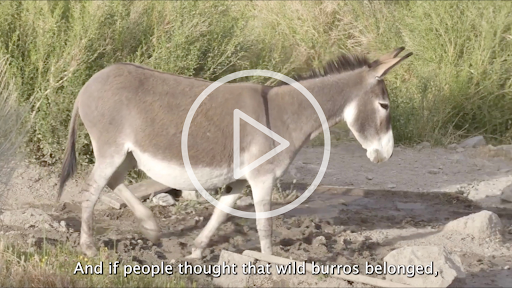
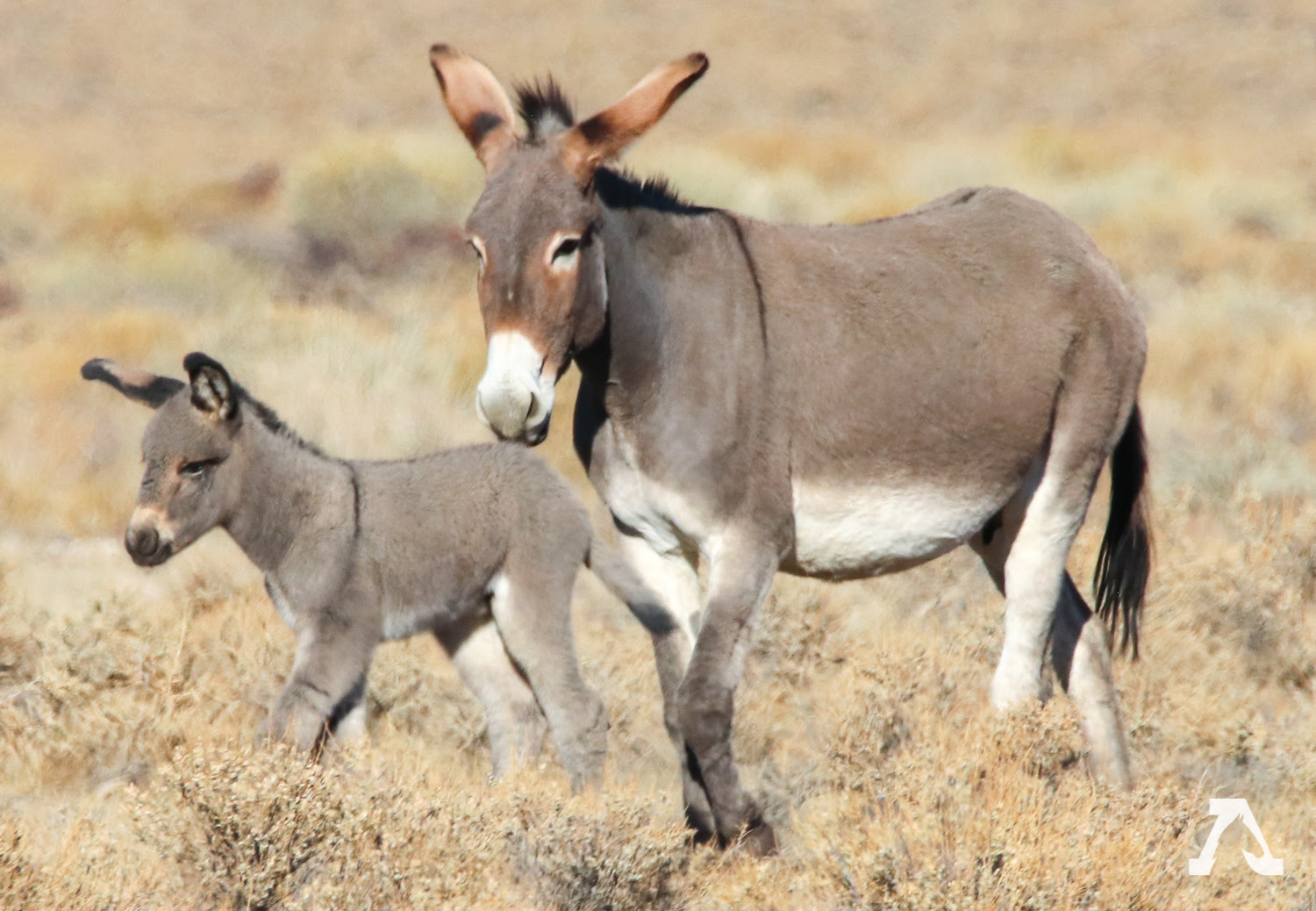
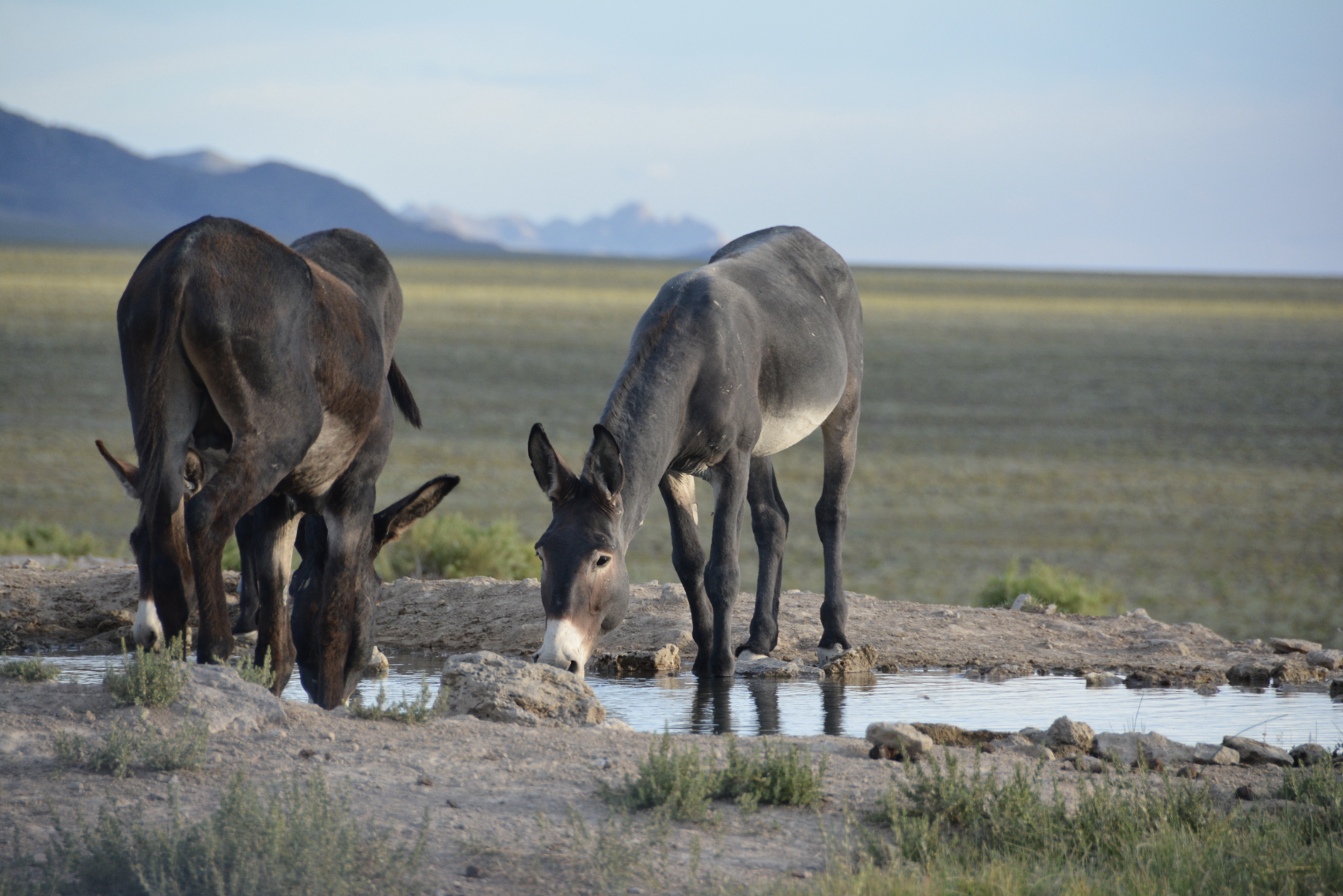
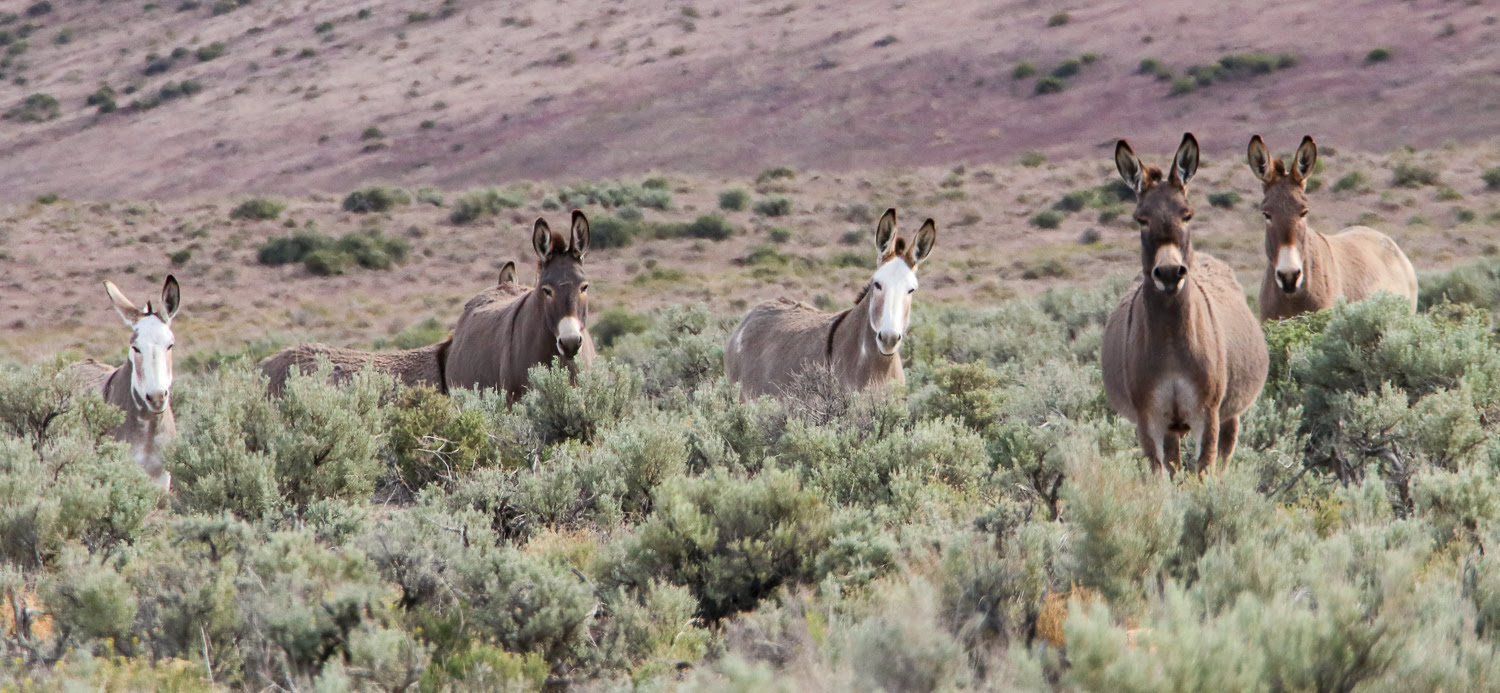
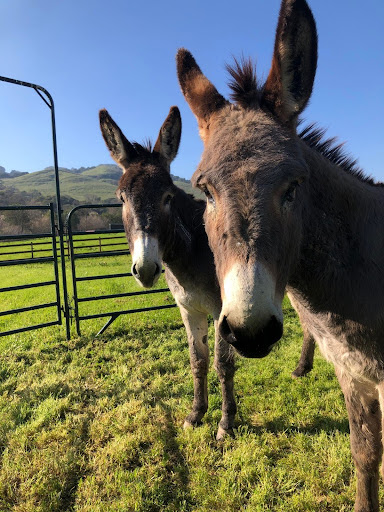
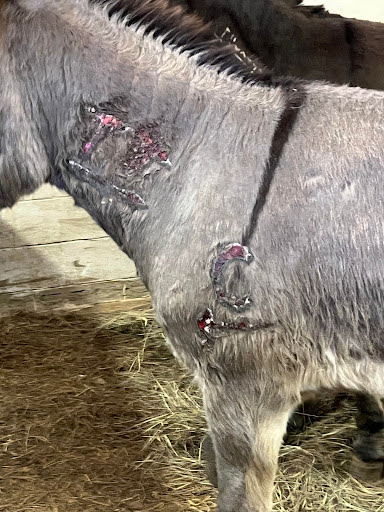
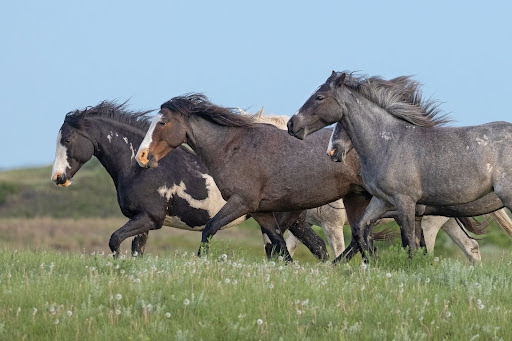
WATCH: Scientific research details the positive impacts wild burros have on their ecology
The following is from the American Wild Horse Campaign:
|
The following is from the American Wild Horse Campaign:
|
The following is from the American Wild Horse Campaign:
Have you heard the incredible news out of North Dakota? Thanks to a strong showing of public support from wild horse advocates, the Three Affiliated Tribes, state leaders, and Congressional representatives — North Dakota’s only wild horse herd will be allowed to continue living in the only home it has known for centuries.
GIVE TO HELP US ADVOCATE FOR WILD HORSES
The National Park Service recently announced it will abandon plans to severely reduce or completely remove the Theodore Roosevelt National Park (TRNP) horse herd. Theodore Roosevelt National Park is one of the only parks in America where visitors can catch a glimpse of free-roaming horses.

Photo courtesy of Sandy Sisti
When we heard about the plans to eradicate the Teddy Roosevelt wild horses, we knew we had to join the elected leaders and wild horse organizations fighting back. So, AWHC submitted public comments, launched awareness-raising billboards, and mobilized over 20,000 members of the public to speak up for the preservation of this historic herd. Strong showings of support, like this one, are key to enacting lasting policy reform in both the National Park Service and the Bureau of Land Management.
| POWER OUR WORK |
Together, we can secure a future of humane management and fair treatment for these historic animals.
Thank you,
American Wild Horse Conservation
The following is from the American Wild Horse Campaign:
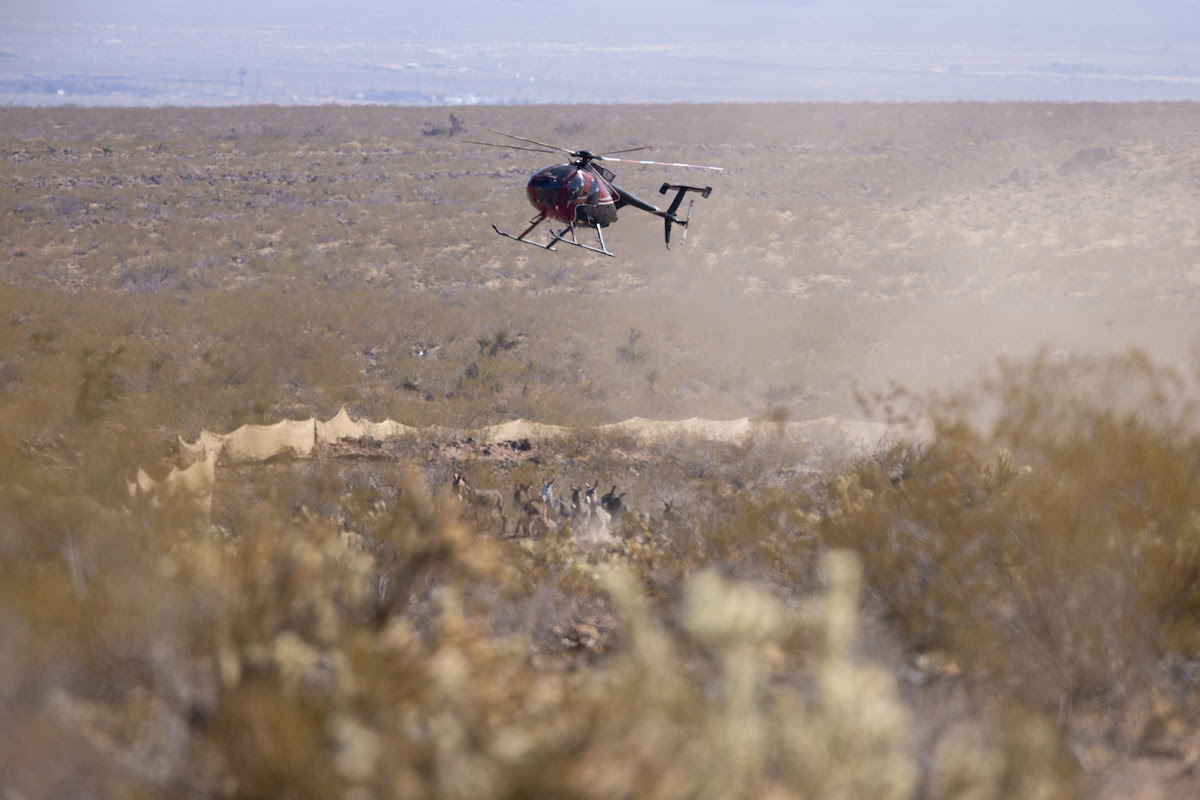
Thanks in part to AWHC’s public awareness campaigns, a growing number of Americans are speaking out against the Bureau of Land Management’s (BLM) cruel helicopter roundup and removal cycle. Despite this growing outrage, the agency continues to conduct these operations – oftentimes in some of the most remote corners of the West and away from the public eye.

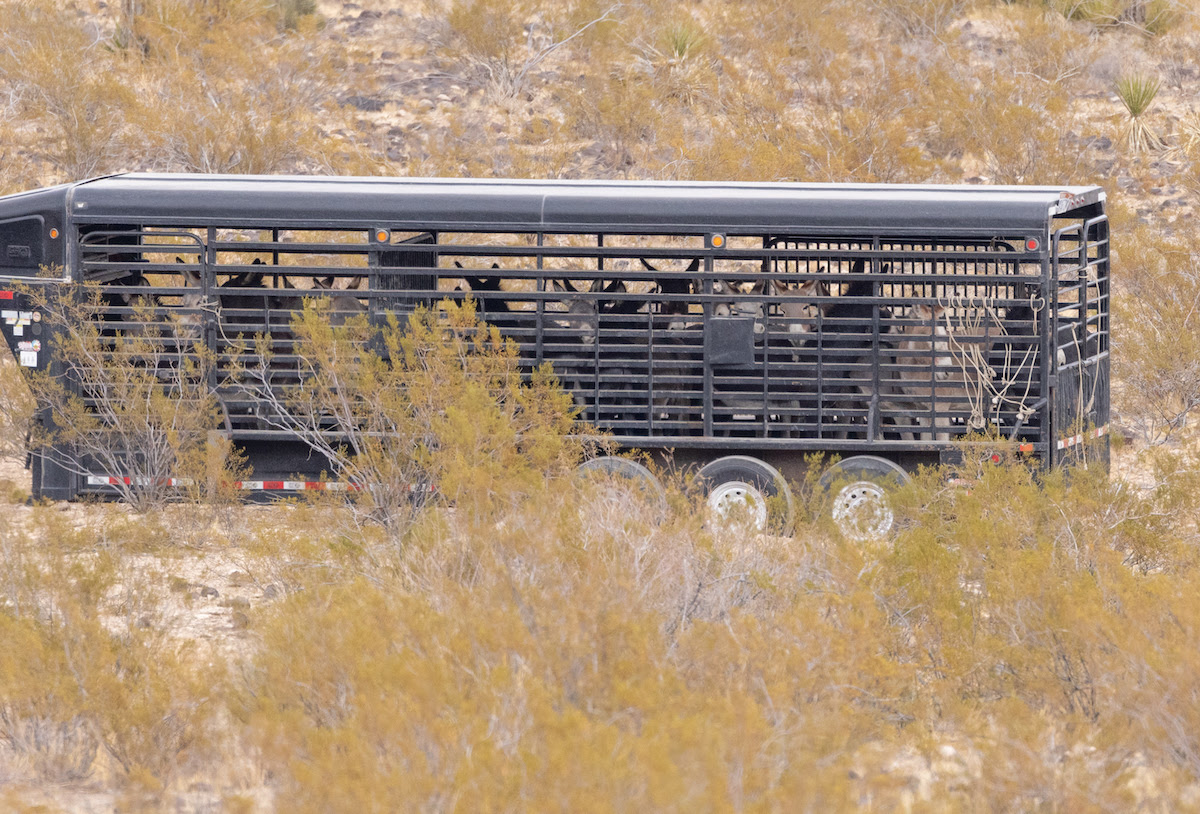
Photo of the January 2024 roundup at Black Mountain by Darlene Smith
While we send observers to document as many of these roundups as possible, the BLM and its contractors enact restrictions on public observation, including placing our observers over a mile away from the trap. This often results in a significant lack of transparency during the roundups.
| SIGN ON → |
The roundups of the Black Mountain Herd Management Area (HMA) burros in Arizona over the past few years are prime examples of why these cameras are so desperately needed.
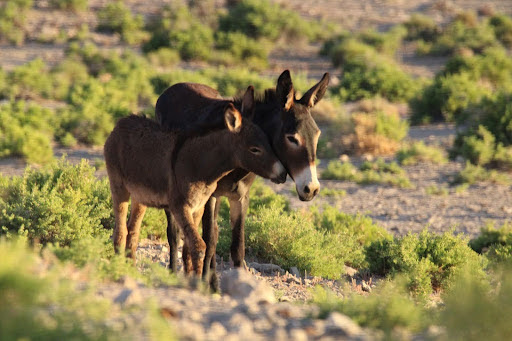
This HMA spans an impressive 1.1 million acres and encompasses public, state, tribal, and private lands in Mohave County, AZ. The BLM estimated the current population of the Black Mountain HMA to be nearly over 800 burros, making it one of the most genetically diverse wild burros herds left in the American Southwest.
Unfortunately, this herd has been repeatedly targeted for removal by the BLM and has suffered tremendously as a result.

Photo of the January 2024 roundup at Black Mountain by Darlene Smith
The agency targeted hundreds of burros for removal from the HMA this year in an attempt to reduce the population to an arbitrary Appropriate Management Level (AML) of just 478 burros. While the BLM did not meet its target, many burros were captured and removed from their homes, and one burro was even euthanized for a pre-existing condition.
This herd was also targeted in a particularly brutal roundup in 2022. AWHC had observers on the ground to document the operation, but it wasn’t until after the roundup had concluded that it was uncovered that the BLM granted its contractors permission to use electric cattle prods on several animals while loading them onto trailers.
According to the agency’s own Comprehensive Animal Welfare Program Assessment, BLM contractor’s staff treated burros in an abusive and inhumane manner, including “aggressively hitting and jabbing the paddle into the sides and sensitive areas of burros.”
The contractor faced little to no repercussions for their actions, and without this report, the mistreatment of these burros would remain unknown. But Meredith, if there were cameras on helicopters and at trap sites, the public could hold the BLM accountable for the the cruelty inflicted upon these animals.
| ACT NOW |
Thank you,
Team AWHC
The following is from the American Wild Horse Campaign:
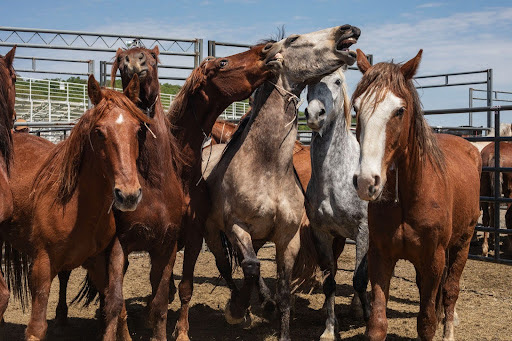
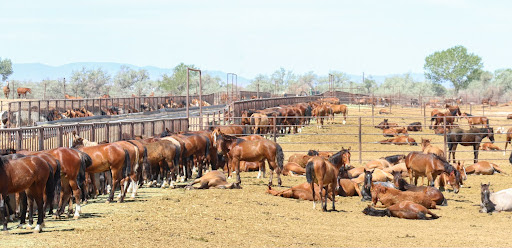
In case you missed it, last month the American Wild Horse Conservation’s investigations team unveiled Bureau of Land Management (BLM) records obtained through a Freedom of Information Act (FOIA) request. These records revealed a deeply disturbing trend at the Indian Lakes Off-Range Corral in Nevada.
In 2023 alone, 267 wild horses died in captivity at this federal holding facility. These deaths — many of them unexplained — represent a staggering 9% mortality rate for just one year.
HELP US CONTINUE RAISING AWARENESS
Here’s some of what our team uncovered through the FOIA records:
Our commitment to changing the BLM’s inhumane treatment of wild horses and burros doesn’t end with just uncovering the truth. So, we took our findings to the media because if we know one thing, it’s that Americans are outraged and want to take action when they learn what’s happening to our wild horses and burros.
Based on AWHC’s findings, both the Las Vegas Sun and 8NewsNow published articles exposing the dark side of the Fallon holding facility. Thanks to our awareness-building media outreach, we are driving real policy change and governmental accountability.
In fact, Representative Dina Titus said it best in the Las Vegas Sun article:
| “This is completely unacceptable treatment of these icons of the West, and I remain committed to ending the mass captivity of wild horses in Nevada.” |
Meredith, our important work is powered by wild horse and burro allies like you. Your donations enable us to take action to reveal the truth about what is happening to American wild horses and burros and then drive reform through public awareness and congressional action. Can you chip in a contribution today to power this vital work?
| POWER OUR WORK |
Thank you,
American Wild Horse Conservation
The following is from the American Wild Horse Campaign:
|
The following is from the American Wild Horse Campaign:
When wild horse advocates allies band together, we can move mountains — or at least make them safer for America’s wild horses and burros. This month, 77 members of U.S. Congress, from both sides of the aisle, called for humane wild horse management in the Fiscal Year 2025 (FY25) House Appropriations legislation.
In the language submitted, they have requested the following:
Give to Support Our Work on Capitol Hill
Why accountability matters: This isn’t the first time Congress has directed BLM to spend up to $11 million on humane fertility control programs. Despite this, the BLM continues to round up tens of thousands of wild horses and burros and funnel them into overburdened federal holding facilities, while historically spending less than 1% of its budget on humane fertility control.
Our advocacy in the federal government represents some of the most impactful work we do. The support by nearly 80 representatives is a clear indication that Congress shares our frustration with the BLM’s failure to reform its inhumane and unsustainable program We extend a special thank you to Representatives Dina Titus (D-NV), Juan Ciscomani (R-AZ), Steve Cohen (D-TN), and David Schweikert (R-AZ) for leading the bipartisan effort to end BLM’s cruel, costly helicopter roundups.
| Give to Support Our Work on Capitol Hill |
Additional requests contained in the bipartisan letter:
We are determined to hold the BLM accountable for continued inhumane and costly taxpayer-funded helicopter roundups. Thank you again to our legion of bipartisan support in Congress, and to YOU for following our fight to conserve our wild wild horses and burros.
Onward,
American Wild Horse Conservation
| DONATE |
The following is from the American Wild Horse Campaign:

|
The following is from the American Wild Horse Campaign:
|
The following is from the American Wild Horse Campaign:
My team let me know that it has been a while since we heard from you, so we wanted to check in. Recently, a lot has been going on in the fight to conserve the freedom and habitat of America’s wild horses and burros. And we want to make sure you are in the loop.
On Capitol Hill, several critical bills are being considered that will advance humane reforms to the federal management of our nation’s wild herds. One of these bills is the Wild Horse and Burro Protection Act of 2023-2024 (H.R. 3656), which seeks to prohibit costly and inhumane helicopter roundups of wild horses and burros. American Wild Horse Conservation (AWHC) is working hard to pass this key legislation. We recently led a Day of Action, leading to over 20,000 letters sent to Congress urging support for the bill.
AWHC is also advocating for provisions to be added to the Fiscal Year (FY) 2025 appropriations bills that would require the Bureau of Land Management (BLM) to enact several key reforms to its Wild Horse and Burro Program, such as:
| FUEL OUR GR WORK |
In the field, we’ve embarked on an exciting new initiative called the Land Conservancy Project. This innovative program aims to preserve and enhance key habitats for America’s wild horses and burros to support self-sustaining wild horse populations in ecological balance with the land and other wildlife. To this end, AWHC recently acquired 3,300+ acres of prime habitat in Nevada’s beautiful Carson Valley to serve as a pilot program for the project.
We’re also expanding our fieldwork, conducting humane, reversible fertility control programs on local wild horse herds. For the past four years, we’ve implemented the world’s largest humane management program for wild horses on Nevada’s Virginia Range. Now, we’ve recently been approved for a federal grant to support the implementation of a fertility control program on Utah’s Cedar Mountain herd!
| FUEL OUR FIELD WORK |
In the courtrooom, we’re taking the BLM head-on to protect wild horses and burros. We have two major ongoing federal lawsuits against the BLM. In Wyoming, we’ve been involved in critical litigation for more than a decade to prevent the eradication of wild horses from the Wyoming Checkerboard in favor of commercial livestock grazing. We are also suing the BLM over the alleged illegal implementation of the disastrous AIP.
| FUEL OUR LEGAL WORK |
Thank you,

Suzanne Roy
Executive Director
American Wild Horse Conservation
The following is from the American Wild Horse Campaign:
We have important updates to share with you in this week’s edition of eNews! Read on to learn about a new Bureau of Land Management (BLM) conservation rule, get a look inside a BLM adoption event, and take action to protect burros and their domestic donkey counterparts!
BLM’s New Conservation Rule and Wild Horses
Photo by Tandin Chapman
This month, the BLM finalized a new rule that aims to integrate conservation into its current public lands management. This final rule affirms that conservation efforts are on equal footing with other multi-uses across the 245 million acres of public lands the BLM manages. Read more to learn about what this means for wild horses.
| READ MORE |
Inside BLM’s Wild Horse and Burro Adoption Event: Poteau Oklahoma
Photo by Nenah Demunster
This month, one of American Wild Horse Conservation’s humane roundup observers attended a BLM adoption event in Poteau, Oklahoma. This was a huge adoption event with about 140 horses and burros available for adoption. Read her observations and see her photos from the day.
| READ THE REPORT |
Photo by Steve Paige
Did you know May is Burro Awareness Month? AWHC started Burro Awareness Month to promote awareness and appreciation for these unique residents of the American Southwest. With May just days away, what better way to get a head start on the month than by taking action to protect both burros and domestic donkeys? Please take a moment to urge your representatives to cosign the Ejiao Act. This bill would ban the importation of products made with ejiao, a gelatin made from boiling the hides of donkeys.
| TAKE ACTION NOW! |
Thanks for reading. And thank you for continuing to stand up for our cherished wild horses and burros!
— Team AWHC
The following is from the American Wild Horse Campaign:
|
The following is from the American Wild Horse Campaign:
Yesterday was National Help a Horse Day!
It’s hard to say just how important holidays like National Help a Horse Day are to the American Wild Horse Conservation team. To celebrate a national holiday specifically dedicated to protecting the animals we hold so close to our hearts means so much to all of us who spend day in and day out fighting to protect the lives and freedom of our wild herds.
And we’re celebrating this Help a Horse Day weekend extra because we’ve got some amazing news to share! After a two-year-long battle, the National Parks Service (NPS) has abandoned its plan to eradicate the historic wild horses from the Theodore Roosevelt National Park (TRNP)!

TRNP Wild Horses by Wild at Heart Images Sandy Sisti
This is a major victory. The Teddy Roosevelt horses have roamed the badlands for centuries, and many believe they are descendants of Sitting Bull’s horses and related to the rare Nokota breed. They are a significant part of the historical and natural heritage of the park, but the NPS’ plan could have reduced the population of this iconic wild horse herd to zero.
AWHC fought for two years alongside a coalition of wild-horse organizations, advocates, and elected officials to stop this proposal from being implemented. We launched billboards to raise awareness about the danger facing the Teddy Roosevelt wild herd and mobilized our grassroots community to send over 20,000 letters to the NPS demanding that it abandon this disastrous plan. And it worked! The NPS could not withstand the pressure of our collective voice.
This is what we are capable of when we stand together for our wild herds. But the truth is, many other wild horse and burro herds out there are still in danger. Over 20,000 animals are still going to be removed this fiscal year. They will be funneled into overburdened holding facilities and may even end up victims of the Adoption Incentive Program’s (AIP) slaughter pipeline.
Our Rescue Fund is often the difference between life and death for some of these innocent animals. That’s why it’s critical that we recharge our Rescue Fund so that we stand ready to answer the call when a horse or burro needs to be rescued.
| DONATE |
Thank you!
Team AWHC
The following is from the American Wild Horse Campaign:
Thanks to AWHC’s rescue fund, our team can spring into action at a moment’s notice to help rescue wild horses and burros in danger of being shipped to slaughter. Our Rescue Fund also ensures we can support local on-the-ground rescues that save mustangs and burros from entering the slaughter pipeline.
Today,and over the next few days we’re going to share some heartwarming rescue stories with you – but first, Meredith, if you can, please chip in to support our Rescue Fund! We’ve set a goal to raise $25,000 to refuel the Fund so we can continue powering this vital initiative. We can’t do this work without your support. >>
| DONATE |
A few months ago, AWHC got word from the U.S. Forest Service (USFS) that four wild mares from California’s Devils Garden Wild Horse Territory needed homes. These mares were considered special needs and have conditions that are not lethal but make them eligible for euthanasia under Forest Service regulations.
Our team acted swiftly and reached out to our local partners to coordinate the rescue. Our friends at Montgomery Creek Ranch (MCR) were able to take two, and we were happy to support this rescue. But to everyone’s surprise, the two mares were pregnant.
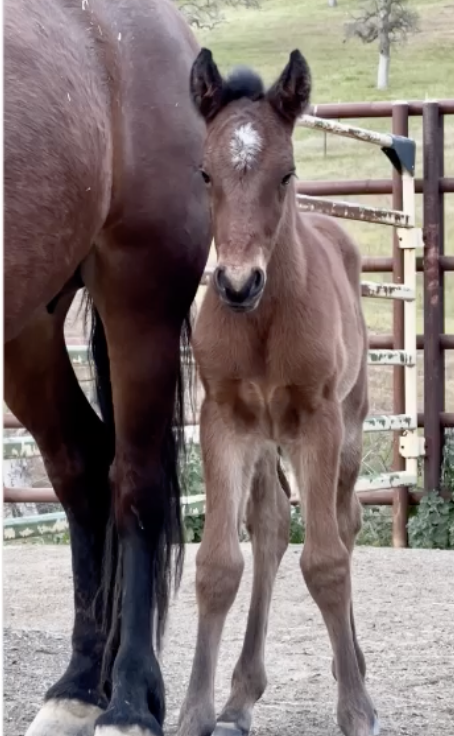
So what was originally a rescue mission for two mustangs turned out to be a rescue of four! The first of the babies arrived recently, a perfectly healthy bay filly with a white star!

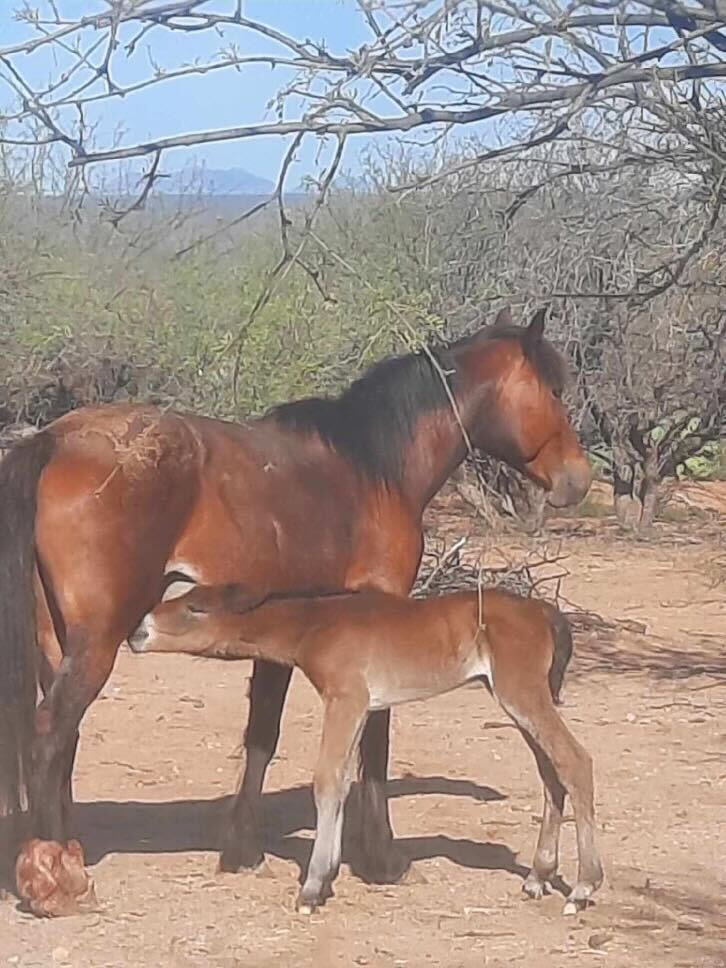
Our friends at Equine Voices agreed to take the other two mares. AWHC supported this rescue with a grant to offset their initial care. One of the mares, Gigi, just had her little baby earlier this month named Eclipse!

The work AWHC and our partners do to help mustangs like these wouldn’t be possible if it weren’t for wild horse supporters like you. You help fuel our Rescue Fund and make these rescues possible. But we need your help to ensure we have the funds to support our partners and our rescues going forward. Reaching our $25,000 goal will help us bolster our Rescue Fund to save more wild horses and burros from slaughter. If you can, will you make a contribution to help us reach our $25,000 goal?
| DONATE |
Thank you,
American Wild Horse Conservation
The following is from the American Wild Horse Campaign:
It’s National Volunteer Week — a time to celebrate people who give back. That’s why we want to (1) share a few words from our incredible Field Volunteers on Nevada’s Virginia Range who work tirelessly to help us prove to the world that fertility control is a sustainable, effective alternative to ensure the conservation of our wild horses and burros, and (2) ask you to sign a thank you card for their tireless service!
|
Michele Einarson “I chose to live on the Virginia Range just for the horses. I love watching them and learning about their herd behavior. Volunteering with AWHC is my best way to support the preservation and protection of the wild ones.” |
| SIGN OUR THANK YOU CARD |
|
| SIGN OUR THANK YOU CARD |
| Margaret Dziolek Through Margaret’s volunteer work with AWHC and other organizations, she has developed invaluable knowledge of the wild herds of the Virginia Range! “I have seen them birth, I have watched them grieve, I have cried many tears over them. I have watched stallions brutally battle other stallions and return to the band and gently nudge a sleeping foal. I have watched foals bound and leap with the pure joy of living. I have found my peace with them, and through them, I have found my strength, as well.” |
| SIGN OUR THANK YOU CARD |
We cannot thank our volunteers enough — from those who help us on Capitol Hill, to the dedicated individuals on our investigations team, to these incredible field volunteers you’ve read about today — we couldn’t do this work without them. So please, take a moment to sign our thank you card to our volunteers for their dedicated service.
| SIGN OUR THANK YOU CARD |
— Team AWHC
PS – If you want to find out how you can join our growing team, click here.
The following is from the American Wild Horse Campaign:

Happy Earth Day, friend!
Every day is Earth Day for our team at American Wild Horse Conservation, BUT that doesn’t mean we won’t take the opportunity to celebrate a little extra on this special day
Today, we invite you to join us in focusing on the conservation of our beautiful planet and all of the amazing creatures who inhabit it — and we can think of no better way than doubling down on our commitment to our cherished wild horses and burros!
Here are 3 ways you can take action for our herds today:
1) For the last two fiscal years, Congress has allocated up to $11 million in funding to implement fertility control initiatives in wild herds managed by the Bureau of Land Management (BLM). Despite this, the BLM continually fails to implement robust fertility control programs, instead relying on its cruel and costly roundup and stockpile system. Thankfully, Representatives Dina Titus (D-NV), Steve Cohen (D-TN), and David Schweikert (R-AZ) are taking a stand. Please ask your representative to sign on to their letter calling for pro-wild horse language in the FY 2025 Interior appropriations legislation!
| TAKE ACTION |
2) Each year, millions of donkeys are brutally slaughtered for the production of ejiao (eh-gee-yow), medicinal gelatin that is made from boiling the skins of these animals. The donkey skin trade is now decimating global donkey populations as well as harming the global communities that rely on them for survival. That’s why U.S. House Representative Don Beyer (D-VA) has reintroduced the Ejiao Act (H.R. 6021), which would ban the knowing sale or transportation of ejiao made with donkey skin, or products containing ejiao made with donkey skin, in interstate or foreign commerce. Please take a moment to tell your U.S. Representative to cosponsor the Ejiao Act!
| TAKE ACTION |
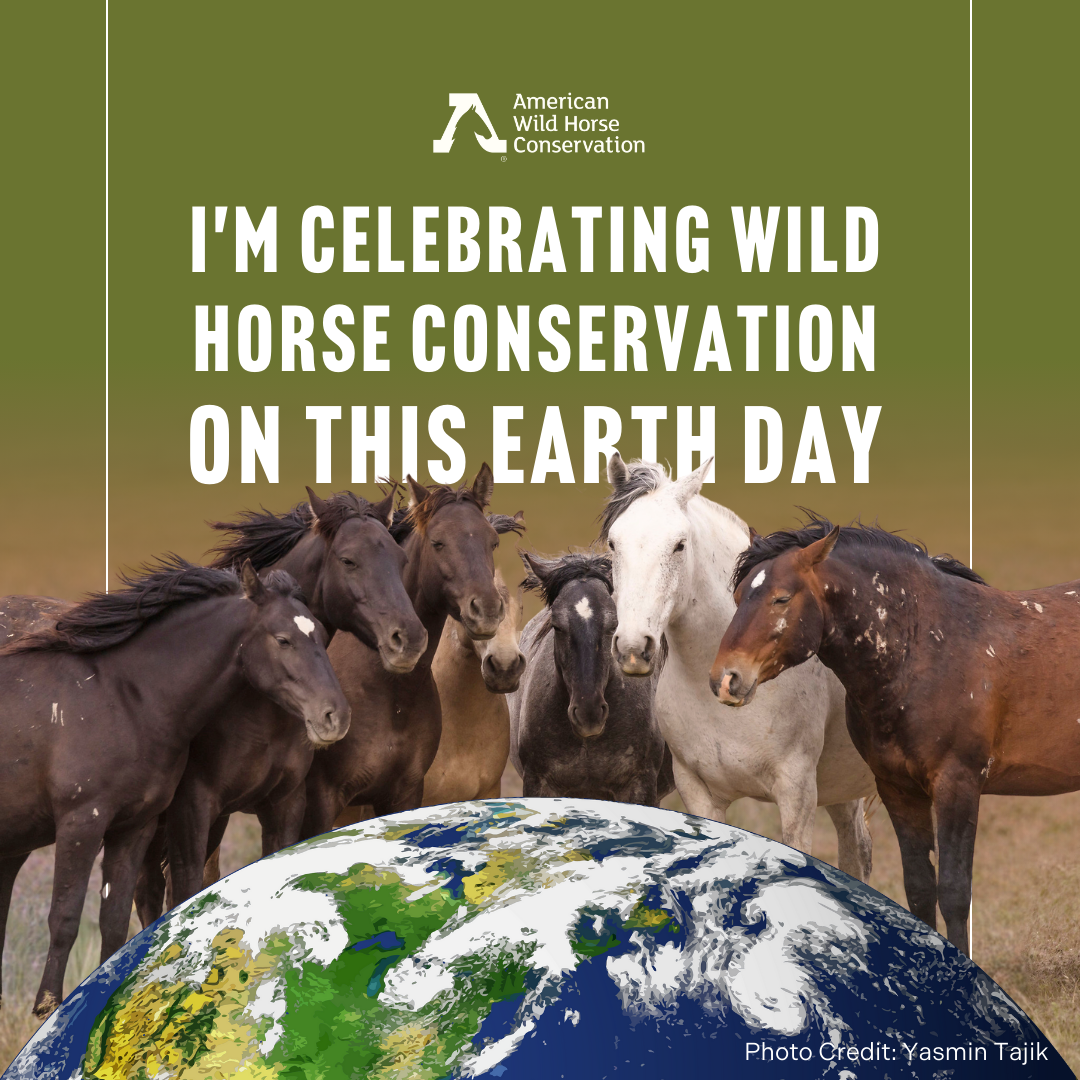
3) When people hear about what’s happening to wild horses, they care. We need you to help educate your friends and family about the plight of wild horses and burros today! Take a second to download and share the below graphic on your social media pages with the hashtags #KeepWildHorsesWild and #FreeWildBurros to show your support for wild horse and burro conservation this Earth Day!

Thank you for standing with our wild herds. Happy Earth Day!
– Team AWHC
The following is from the American Wild Horse Campaign:
Recently we asked you to take action and ask your representative to support pro-wild language in the Fiscal Year (FY) 2025 appropriations legislation. Our records indicate that your representative supported wild horses last year, but has not joined this year in calling for reforms to the Bureau of Land Management’s (BLM) Wild Horse and Burro Program.
| Take Action |
Right now, Representatives Dina Titus (D-NV), Steve Cohen (D-TN), and David Schweikert (R-AZ) are circulating a bipartisan sign-on letter to the Appropriations Committee urging it to support pro-wild horse language in Fiscal Year 2025 appropriations legislation.
This language would hold the Bureau of Land Management (BLM) accountable for the implementation of robust, in-the-wild conservation through the use of fertility control, ultimately reducing helicopter roundups. But we need your help. Can you take a moment to urge your representatives to support wild horse and burro conservation in the FY25 appropriations legislation?
This language will require the BLM to:
– Allocate no less than 10% of the agency’s budget for the implementation of humane fertility control programs in at least five additional Herd Management Areas (HMAs)
– If the BLM fails to do this 120 days after the passage of this bill, it will incur a $100,000 fine per day until it implements acceptable fertility control programs.
– Ensure no funds are used for ovariectomy procedures
– Study humane alternatives to the use of helicopters and manned fixed-wing aircraft
– Stop cash incentive payments for adoptions
– Identify HMAs and Herd Areas that could be redesignated for relocating horses as an alternative to off-range holding
– Continue to prohibit the sale or adoption of healthy wild horses and burros that results in their destruction.
Last year your representative supported pro-wild horse language in the Fiscal Year 2024 appropriations bill but they have not signed on again this year. Will you please take a moment to thank them for their past support and urge them to support this year’s Fiscal Year 2025 language?
Thank you for your advocacy,
Team AWHC
The following is from the American Wild Horse Campaign:
As the nation’s leading wild horse and burro conservation organization, some of the most important work we do for our wild herds is in the courtroom, so we wanted to provide you with a legal update.
Wyoming Checkerboard
AWHC and our co-plaintiffs, the Animal Welfare Institute, Western Watersheds Project, author and Casper College instructor Dr. Chad Hanson, and wildlife photographers Carol Walker and Kimerlee Curyl, continue to pursue a more than decade-long battle to save the iconic wild horses of the Wyoming Checkerboard. Specifically, our lawsuit challenges a Bureau of Land Management (BLM) decision to “zero out” (eliminate all wild horses from) the Great Divide Basin and Salt Wells Creek Herd Management Areas (HMAs) and eliminate wild horses from 2 million acres of designated habitat within the state. We’re up against not only the BLM, but also the powerful Rock Springs Grazing Association (RSGA), which views wild horses as competitors for cheap livestock grazing on public lands.
Adoption Incentive Program
Our lawsuit against the BLM’s notorious Adoption Incentive Program (AIP) is pending a decision in federal court. Filed by AWHC and Skydog Sanctuary, this legal action challenges the agency’s implementation of the AIP, asserting that the failure to analyze the impacts of the program on federally-protected wild horses and to provide the public the opportunity to comment on plan violated several federal laws. As we predicted, the cash-for-adoption scheme has been a disaster for wild horses and burros, sending truckloads of these innocent animals into the slaughter pipeline. We aim to halt the program through this litigation.
Freedom of Information Act
AWHC’s investigations team works to promote accountability and transparency by using the Freedom of Information Act (FOIA) to obtain government records. that shed light on federal wild horse and burro management. We have filed dozens of FOIA requests with the BLM and U.S. Forest Service, but both agencies habitually violate the requirement for a response within 20-working-days. As a result, we are forced to file legal action. We currently have 19 pending federal lawsuits seeking to compel the release of records relating to the Adoption Incentive Program, livestock grazing information, and the transportation of wild horses and burros between holding facilities.
| SUPPORT OUR LEGAL EFFORTS |
RECENT UPDATES:
This month, federal courts have issued rulings unrelated to AWHC’s cases but with potentially positive impacts for wild horses. In Nevada, the court ruled that the BLM violated federal law by failing to prepare a Herd Management Area Plan (HMAP) for the Pancake Complex before rounding up over 2,000 wild horses. During this roundup, a shocking 31 animals died. Forcing the BLM to prepare HMAPs, which allows the public to weigh in on wild horse management, is a positive step. Unfortunately the judge also ruled that the Wild Free-Roaming Horses and Burros Act allows the BLM to remove “excess” wild horses whether or not an HMAP is in place. In short, this is an interesting ruling and a good start, but one that is unlikely slow down the BLM’s harmful roundups, at least in the short term.
In a separate case, a federal court in the District of Columbia ruled that the BLM cannot rely on long-term Environmental Assessments to continue to remove horses after the Appropriate Management Levels (AMLs) have been achieved in HMAs. Instead, the agency must prepare new environmental analyses, as required by the National Environmental Policy Act (NEPA), before conducting “maintenance” roundups to reduce the populations back down to AML. This case is related to roundups in Utah’s Muddy Creek and Onaqui HMAs as well as the Pine Nut Mountains HMA and the Eagle Complex in Nevada. This is a narrow win, but a good win, according to AWHC’s attorneys.
Thank you for standing with wild horses and burros.
American Wild Horse Conservation
The following is from the American Wild Horse Campaign:
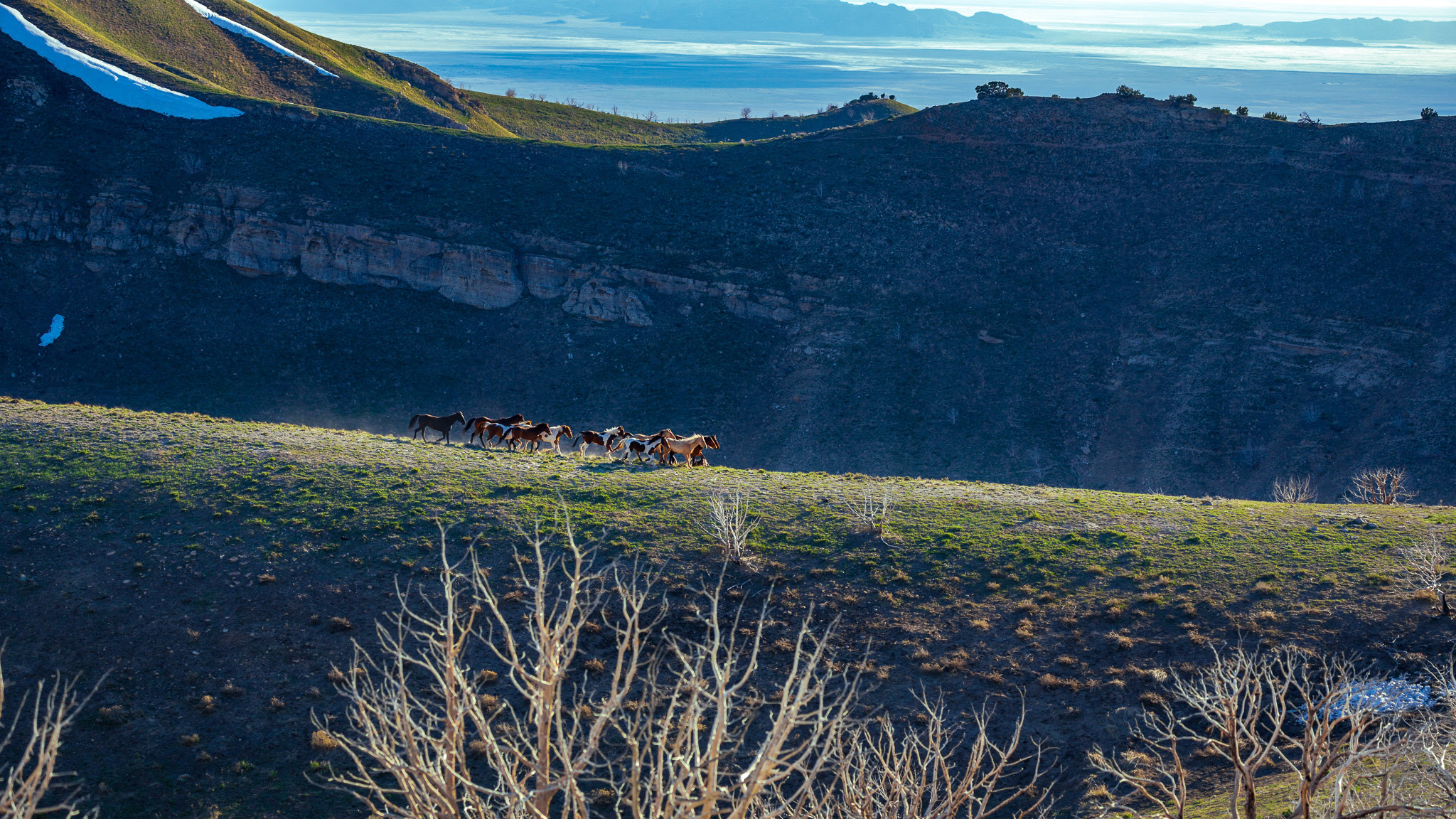
Right now, federal helicopters are grounded for wild horse foaling season. This is a critical time when new babies are born and bond with their mothers and the rest of their families.
But starting in July, the federal government is set to resume the inhumane roundup and removal of thousands of wild horses and burros across the West.
Photo by Brian Clopp
This summer, a staggering 11,114 of these iconic animals will be targeted for capture, and 10,646 will be permanently removed. To make matters worse, all of the scheduled roundups this summer will be conducted using helicopters.
These cruel roundups often leave wild horses and burros traumatized. Young foals are separated from their mothers, horses and burros are often run to exhaustion, injuries are commonplace, and sometimes lives are tragically lost.
The Bureau of Land Management (BLM) conducts these operations in some of the most remote corners of the West, away from the public eye. That’s why AWHC has assembled and trained a team of photographers and videographers who deploy to these locations and serve as our boots on the ground, ensuring transparency and accountability during roundups.
| FUEL OUR OBSERVATION FUND |
The first roundup after the foaling season will take place at North Lander in Wyoming, where 2,806 wild horses are targeted for capture, and 2,766 will be permanently removed. This will be one of the largest roundups of the fiscal year.
It’s vital that our roundup observers are present at this operation and the many more that will follow so that we can tell the stories of our beloved wild horses and burros and fuel change. Take, for example, this inspiring excerpt from a report by our observer at the 2022 South Steens roundup:
|
“The bay mare was determined to save the life of her foal and she charged under the chopper as the pair raced back up the outside of the trap wings with the chopper hot on their heels. They raced into the wings and we thought that they were done. But the desperate mare raced on towards the ridgeline, her foal like a shadow at her side. As the chopper came close to them they finally seemed as if it wasn’t bothering them anymore, they had freedom in their sights and finally the chopper relented, giving up on the pair, and they disappeared over the ridge.” |
These stories of strength, resilience, and pure horsepower are what motivate us to continue to fight for real change through innovative in-the-wild conservation initiatives. Additionally, they give us the evidence we need to educate the public and Congress on the cruel realities of wild horse and burro roundups. So, will you chip in today to support our Observation Fund and help us continue telling the stories of our beloved wild herds?
| CHIP IN TODAY |
Thank you,
American Wild Horse Conservation
The following is from the American Wild Horse Campaign:
In this week’s edition of enews, we have several updates for you. First, there’s a way for you to speak up for our wild herds by urging your representatives to support pro-wild horse language in the 2025 Fiscal Year spending bill. Additionally, we have a concerning update about a Nevada holding facility and a heartwarming story from Nevada’s Virginia Range.
Take Action Now to Support Pro-Wild Horse Language in the FY25 Spending Bill
Photo by Tandin Chapman
We need your help today to ask the U.S. House Committee on Appropriations Subcommittee on Interior, Environment, and Related Agencies to protect wild horses and burros!
Right now, Representatives Dina Titus (D-NV), Steve Cohen (D-TN), and David Schweikert (R-AZ) are circulating a sign-on letter urging the Appropriations Committee to support pro-wild horse language in Fiscal Year (FY) 2025 appropriations legislation. This language urges the Bureau of Land Management (BLM) to invest in humane, in-the-wild conservation initiatives such as fertility control programs. It also urges the agency to study humane alternatives to the use of helicopters, stop cash incentive payments, and more!
| TAKE ACTION |
A Look Inside BLM Holding Facilities: FOIA Reveals 11% of Population Dies in One Year
AWHC’s investigations team regularly files Freedom of Information Act (FOIA) requests to promote transparency and accountability within government wild horse and burro programs. Recently, we received a shocking FOIA back that revealed 267 wild horses died at a Nevada holding facility in just one year. Read on for an in-depth look at our findings.
| READ THE BLOG |
Meet Trident, PJ, Sherwin, and Paulo: The Four Brothers of The Virginia Range
Photo by Deb Sutherland
AWHC volunteer Deb Sutherland has been documenting the wild horses of Nevada’s Virginia Range for years. As a result, she has watched many of them grow up, and find families of their own. This is the case with four brothers Trident, PJ, Sherwin, and Paulo. Read on for their stories!
| MEET THE BROTHERS |
Thanks for reading. And thank you for continuing to stand up for our cherished wild horses and burros!
— Team AWHC
The following is from the American Wild Horse Campaign:
On March 25, the Bureau of Land Management (BLM) released its 2024 wild horse and burro population census numbers, estimating that 73,520 wild horses and burros remain free in the wild compared to the estimated 82,883 last year.
Using these numbers, the BLM is doubling down on its mass roundup plans, targeting 20,000 wild horses and burros for capture and removal from the wild this year. The agency’s ultimate goal is to drive the population down to fewer than 27,000 animals – the number that existed in 1971 when Congress protected them unanimously because they were “fast disappearing.”
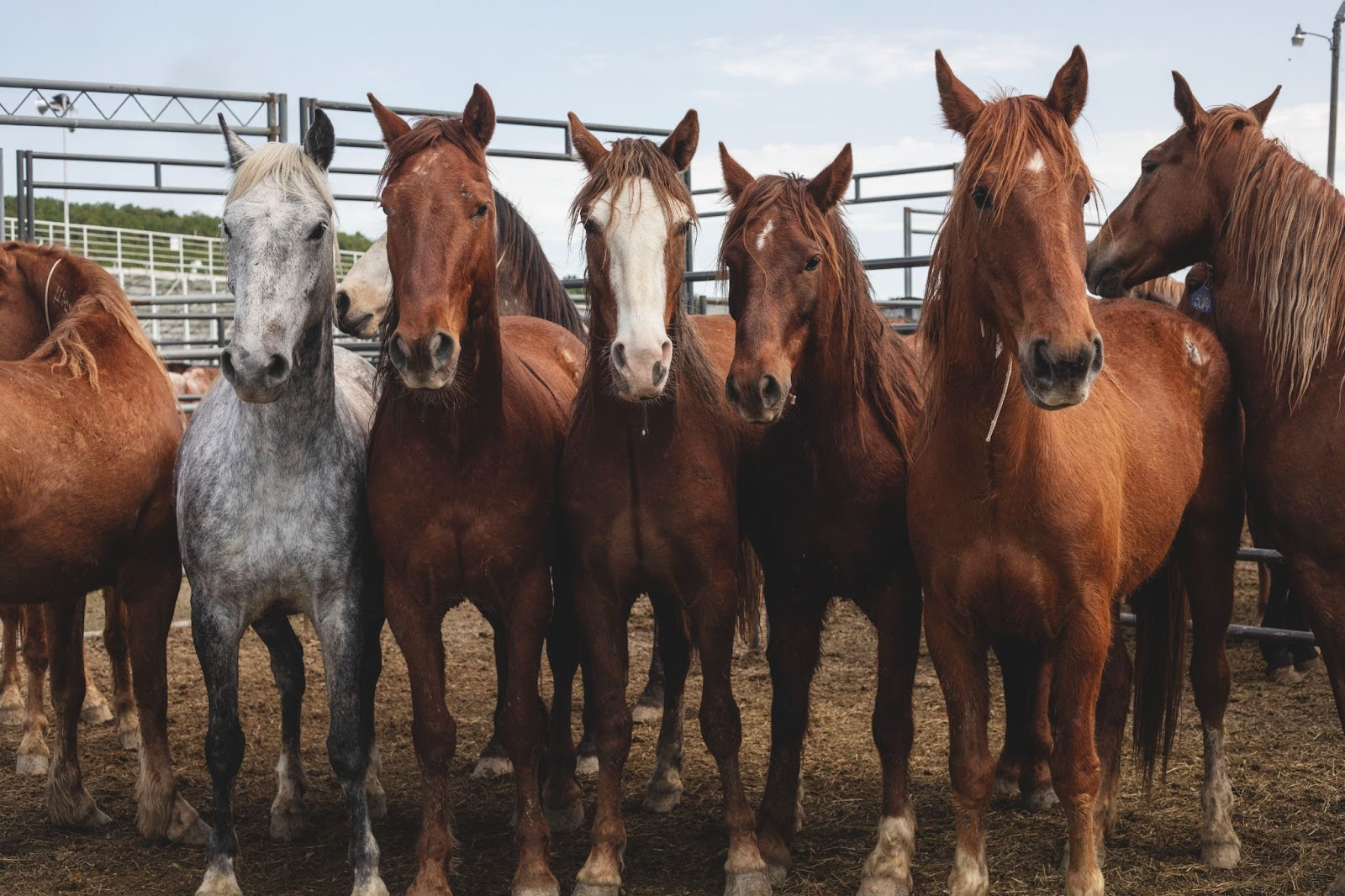
Over the past three years, the BLM has spent $401 million rounding up 50,000 wild horses and burros, with the captive population now exceeding 64,000 and set to rise to over 80,000 this year –meaning that, for the first time in history, the number of wild horses in confinement will exceed the number that remain free on the range!
This waste of taxpayer funds and animal lives serves one purpose: to prioritize commercial livestock grazing on public lands over conservation of our federally protected wild horses and burros.
We believe in a better way. At American Wild Horse Conservation, we’re fighting to reform the BLM’s inhumane practices and offer humane and sustainable conservation solutions.
We’re acquiring habitat through our Land Trust, fostering public-private partnerships, and demonstrating the efficacy of humane fertility control as an alternative to costly and traumatic roundups. Recent peer-reviewed science affirms the success of our Virginia Range fertility control program in Nevada and its feasibility in managing a large wild horse population in an expansive habitat area.
We’re also working with Congress to enact stronger legislation that compels the BLM to prioritize fertility control and prevents the agency from ignoring Congressional directives as it has done in past years.
And we’re raising awareness to counter the influence of the powerful livestock lobbying groups that relentlessly demand more roundups. By harnessing the power of the people, we can ensure that the voices of the 80% of Americans who want to protect our iconic wild horses and burros are heard.
Join us in safeguarding the future of our magnificent wild herds. Our commitment to their freedom is unwavering. Will you stand with us?