Winter: Blanketing Your Equine
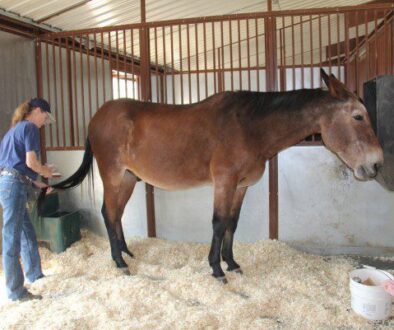
(Page 74) Generally speaking, equines should not need to be blanketed at all. Their natural hair coats adjust to the seasons and will insulate them from heat and cold, and will protect them from fair weather insects. If you blanket when they don’t need to be blanketed, it will interfere with their natural metabolic ability to insulate themselves. As equines age, their circulation isn’t as good and they may need to be blanketed in extremely cold weather. My standard is if they are shivering, if the temperature is below freezing or if they are over 20 years of age, they should be afforded a blanket, and in some cases, even two blankets. Rule of thumb is that the second blanket will only be needed overnight and should be removed during the day. If it is warm enough, remove both blankets during the day. They should always have adequate shelter and easy access to water in inclement weather. The water needs to be neither too hot nor too cold if you want to encourage drinking and maintain hydration. We have trace mineral salt blocks (red) available at all times so they can lick at will and maintain a good balance of salt and minerals. I do not recommend heated barns as a drastic change in temperature from the barn to the outside temperature can cause respiratory illness or chills. I leave the barn doors open unless it drops below 20 degrees. We then close the doors and allow the animals’ breath to heat the barn. We have fans in the alleyways to create a breezeway and keep the barns cool during the summertime. Clipped show equines need to be maintained very carefully and must be blanketed during cold weather. It is important to check and make sure they are staying warm under the blankets, but not sweating. Hoods and leg wraps can be optional according to temperatures. If you want your show equines to maintain the short hair during the show season without frequent body clipping, it is advisable to have them under 16 hours of light as well as blanketing. Body clipped animals will need hoods and leg wraps. Learn much more in the various sections under TRAINING.